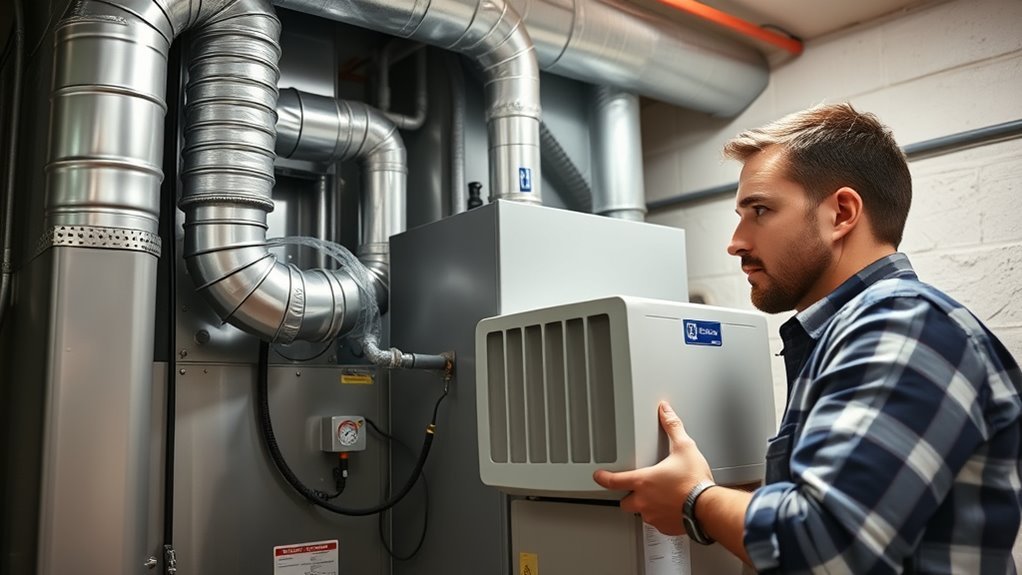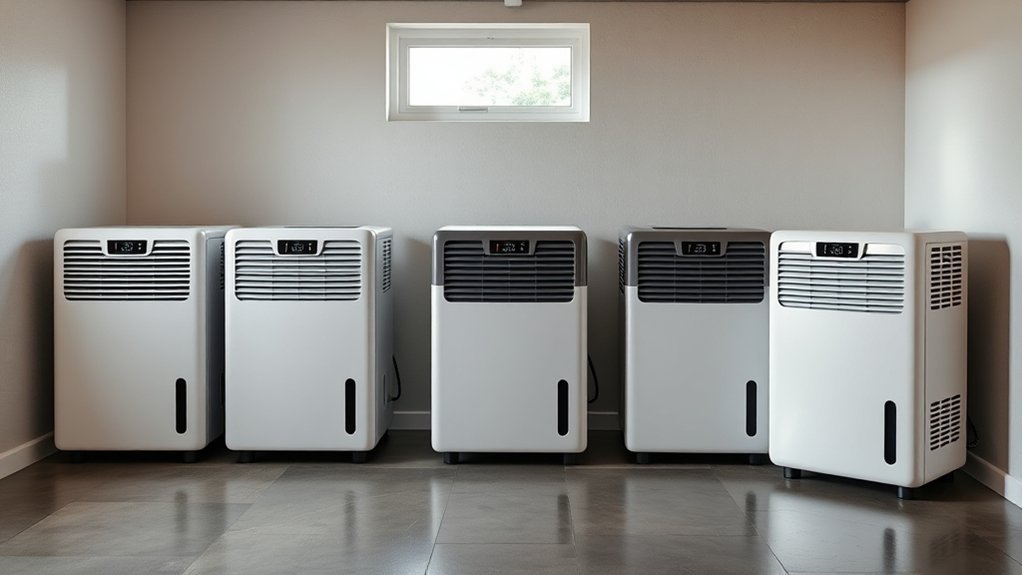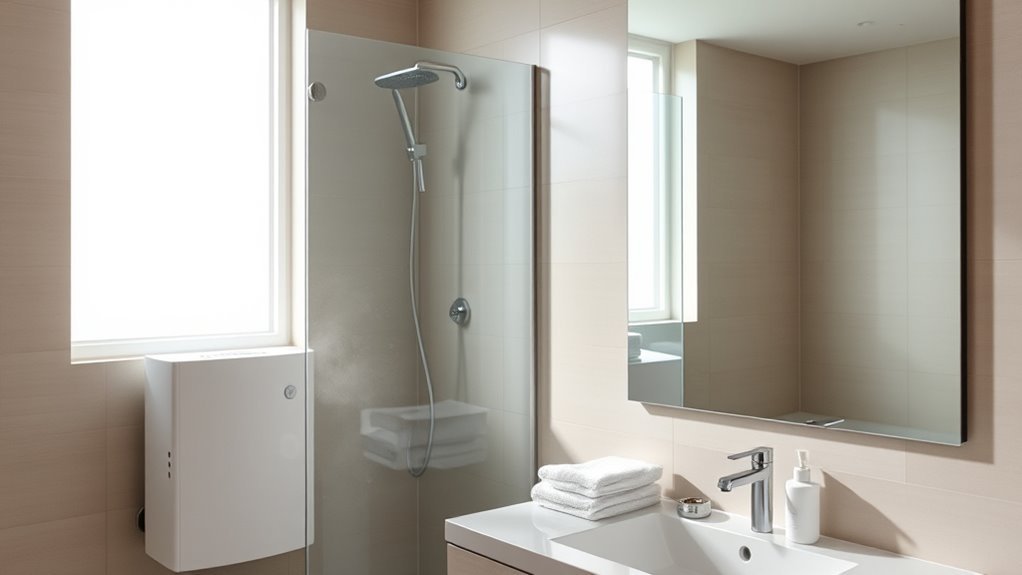
Is it safe to put a dehumidifier in the bathroom? For a standard portable unit, usually not: it is a mains-powered appliance and bathrooms are wet electrical spaces. It can remove moisture, reduce musty smells, and help slow mould growth, but it should stay out of the splash zone. For most homes, the safer setup is to ventilate first, wipe wet surfaces, and, if you need extra drying, run the dehumidifier just outside the open bathroom door.
Quick Answer
You generally should not use a standard mains-powered dehumidifier inside a bathroom. Use an extractor fan, window, and surface wiping first. If damp lingers, place the dehumidifier outside the open bathroom door, or use only a bathroom-rated appliance installed and used exactly as the manufacturer and local electrical rules require.
Key Takeaways
- A standard portable dehumidifier and a wet bathroom are a risky mix because water, damp skin, plugs, and trailing leads increase shock risk.
- The safest first fix is proper ventilation: run an extractor fan, open a window when possible, and move damp air outside.
- A dehumidifier can still help if it is placed just outside the bathroom with the door open after bathing.
- Keep indoor humidity roughly in the 30% to 50% range recommended by the EPA, and avoid letting it stay above 60%.
At a Glance
| Time Required | 5 minutes after each shower, plus 20 to 30 minutes of ventilation or drying time |
| Difficulty | Easy for daily habits; professional help needed for electrical work or fan installation |
| Tools Needed | Extractor fan or window, squeegee or towel, hygrometer, optional passive moisture absorber, optional dehumidifier outside the door |
| Cost | Low for habits and absorbers; moderate to high for a new fan or electrical work |
Is It Safe to Put a Dehumidifier in the Bathroom?
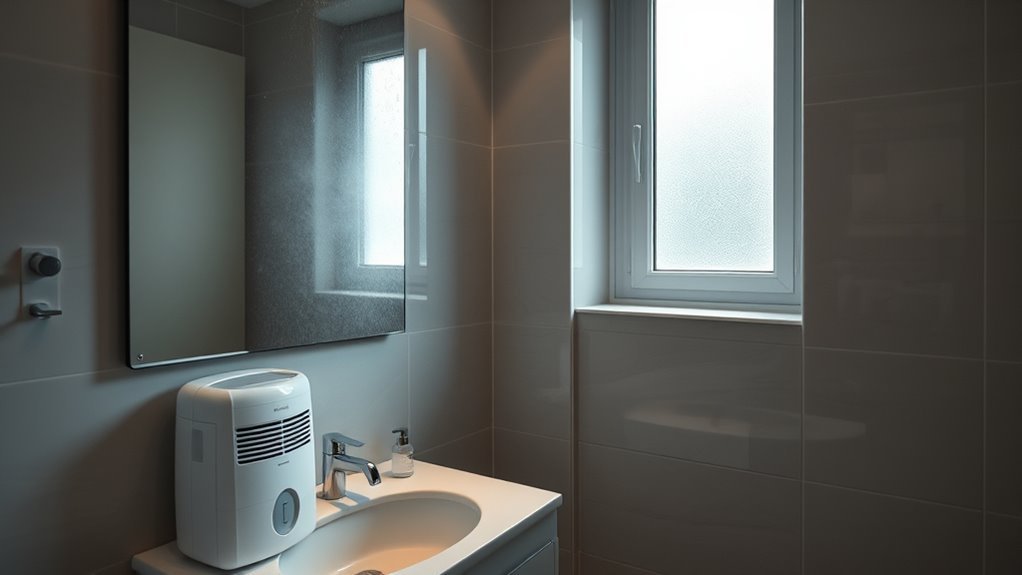
Usually, no: you should not put a standard portable dehumidifier inside the bathroom itself. Most domestic dehumidifiers are not designed to sit in a steamy room close to showers, baths, basins, wet floors, or splashes. A dehumidifier is still an electrical appliance with a plug, cable, fan, motor, controls, and internal components that must stay dry.
The safe answer depends on the appliance, the room, and your local electrical rules. In the UK, bathrooms are treated as higher-risk electrical areas. Electrical Safety First warns against bringing mains-powered portable appliances into bathrooms and explains that sockets are heavily restricted near baths and showers.
Warning: Do not run a plug-in dehumidifier where it can be touched from the bath or shower, splashed, placed on a wet floor, or powered through a trailing extension lead. If you are unsure whether your setup is safe, do not use it in the bathroom. Ask a qualified electrician.
If your bathroom stays damp after showers, the better approach is to remove moisture at the source. Use an extractor fan, open a window when possible, wipe down wet surfaces, and keep towels from staying wet in the room. If you already own a dehumidifier, place it outside the open bathroom door after showering so it can draw damp air out without sitting in the wet zone.
Bathroom Dehumidifier Benefits
A dehumidifier can help with bathroom moisture, but only when it is used safely. The main benefit is that it pulls water vapour from the air. That can reduce condensation on mirrors, walls, ceilings, grout, and paintwork.
Used outside the bathroom door, a dehumidifier may help:
- lower humidity after hot showers;
- reduce musty smells caused by lingering damp;
- help towels dry faster when the bathroom door is open;
- slow the conditions that allow mould and mildew to return;
- protect paint, sealant, grout, and timber from repeated moisture stress.
It is not a replacement for ventilation, though. If you want a wider comparison, see whether you can use a dehumidifier in a bathroom and how a dehumidifier helps with bathroom moisture. A dehumidifier collects moisture from the air that reaches it. An extractor fan removes damp air directly to the outside. For bathroom condensation, that difference matters.
Bathroom Dehumidifier Risks
The biggest risk is electrical safety. Bathrooms combine water, steam, damp skin, metal fixtures, and hard floors. That makes a shock more dangerous than it would be in a dry living room.
Electrical Safety Risks
A standard dehumidifier may be unsafe in a bathroom because it can be exposed to splashes, steam, wet hands, and water on the floor. Manufacturer instructions often warn against bathroom use. For example, one Meaco dehumidifier manual tells users to dry a bathroom by placing the dehumidifier outside the room with the bathroom door open, not inside the bathroom.
| Risk | Safer Control |
|---|---|
| Plug, cable, or appliance near water | Keep portable mains appliances out of the bathroom unless the product is specifically designed and approved for that use. |
| Steam and splashes entering the unit | Use ventilation first; place the dehumidifier outside the bathroom door after bathing. |
| Small room with no safe clearance | Use an extractor fan, open window, passive absorber, or professional ventilation upgrade. |
| Extension leads or overloaded sockets | Do not run bathroom appliances from extension leads. Ask an electrician about safe fixed solutions. |
Moisture and Mould Issues
A dehumidifier can reduce humidity, but it does not fix the reason your bathroom is damp. If steam cannot leave the room, condensation will keep returning. If there is a leak behind tiles, a failed seal, or a blocked fan duct, a dehumidifier may only hide the problem for a while.
Mould grows where moisture persists. The CDC says mould can grow when spores land on places with excessive moisture, and it advises keeping humidity as low as practical, using bathroom exhaust fans, and fixing leaks. The American Lung Association also lists inadequate bathroom exhaust and dampness as common mould-related moisture problems.
Note: If mould keeps coming back in the same place, look for the source: poor ventilation, a cold surface, failed silicone, leaking plumbing, roof issues, or damp towels left in the room.
Safer Bathroom Alternatives
For most bathrooms, use this order:
- Run the extractor fan during bathing and leave it on afterwards until the steam clears.
- Open a window if you have one and outdoor air is not more humid than indoor air.
- Wipe wet surfaces with a squeegee or towel after showers.
- Leave the door open after bathing if privacy and household layout allow it.
- Use a passive moisture absorber in small enclosed spaces, such as a cabinet or rarely used cloakroom.
- Place a dehumidifier outside the bathroom door if humidity still lingers.
Passive moisture absorbers are not powerful enough to replace a fan in a busy family bathroom, but they can support moisture control in small spaces without adding electrical risk.
Why Bathrooms Get So Damp
Bathrooms get damp because hot water creates steam, and steam becomes condensation when it hits colder surfaces. Mirrors, windows, tiles, ceilings, grout, and outside walls often cool faster than the air, so water droplets form there first.
The fastest way to control bathroom damp is to remove steam before it settles, not to wait until mould appears.
Common causes include:
- long hot showers;
- no extractor fan or an undersized fan;
- a fan that vents into a loft instead of outdoors;
- blocked fan grilles or dusty filters;
- closed windows and doors after bathing;
- cold external walls or single glazing;
- wet towels left bunched up in the room;
- leaking plumbing, failed sealant, or cracked grout.
For general indoor air quality, the EPA recommends keeping indoor humidity between 30% and 50% where possible. A cheap hygrometer can tell you whether the bathroom is returning to a normal range after use.
Where to Place a Dehumidifier Safely
The safest place for a standard portable dehumidifier is usually outside the bathroom, close to the open door. That lets the unit pull damp air out of the room while keeping the appliance away from splashes and wet floors.
Use this safe-placement checklist:
- Place the dehumidifier on a flat, stable, dry floor outside the bathroom.
- Keep the bathroom door open after showering.
- Keep air inlets and outlets clear, following the manufacturer’s clearance instructions.
- Do not run the cable across a doorway where people may trip.
- Do not use an extension lead into the bathroom.
- Do not touch the plug, controls, or tank with wet hands.
- Empty the tank before it overflows and clean the filter regularly.
Pro Tip: Put a hygrometer on a shelf outside the splash zone or just outside the bathroom. If humidity drops back toward 50% within a reasonable time after showering, your ventilation routine is working.
When a Bathroom Dehumidifier May Be Okay
A dehumidifier may be suitable for bathroom moisture control in three situations:
- Outside the bathroom: This is the best option for a standard portable unit. Run it outside the open door after bathing.
- Bathroom-rated fixed equipment: Some appliances are designed for wet-room or bathroom environments, but they must be correctly rated, positioned, and installed.
- After the room is dry enough: Even then, follow the manual. Do not run a standard unit while someone is bathing or while surfaces are dripping wet.
If you are buying a product specifically for a bathroom, check the manual before you buy. Look for clear language that says the appliance is suitable for bathroom use, not just “compact,” “portable,” or “good for damp rooms.” Portable does not mean water-safe.
Extractor Fan vs Dehumidifier vs Moisture Absorber
| Option | Best For | Limits |
|---|---|---|
| Extractor fan | Removing steam at the source and venting it outdoors | Must be correctly sized, cleaned, and ducted outside |
| Open window | Quick natural ventilation when outdoor conditions are suitable | Less useful in cold, wet, polluted, or very humid weather |
| Dehumidifier outside the door | Extra drying after showers, especially in windowless or cold bathrooms | Slower than direct extract ventilation and still needs safe placement |
| Passive moisture absorber | Small, enclosed, low-moisture spaces | Not strong enough for heavy shower steam |
Recommended Products

🍃Advanced Small Dehumidifier for Home: Designed for lasting home use, our bathroom dehumidifier works gently and steadily to maintain a balanced humidity level. The large 44 OZ (1.3L) water tank minimizes emptying frequency. Suitable for dorm room, camper, apartment, room, office and living room. No more dampness-just fresh, comfortable air everywhere

UPGRADED HIGH EFFICIENT DEHUMIDIFICATION:Say goodbye to sticky air. This dehumidifier uses semiconductor condensation technology to quietly and efficiently pull moisture from your bedroom, bathroom, or basement. It extracts up to 23 oz (650 ml) of moisture per day under test conditions of 86°F and 60% RH, which helps you enjoy a fresher, more comfortable living space

Fast Drying & Rechargeable — Keep your enclosed spaces perfectly dry with ease! This mini dehumidifier uses silica beads to trap dampness quickly, dropping indoor humidity from 50% down to 30%. You no longer need to deal with the hassle of buying or throwing away standard disposable bags. It is built for a simple, continuous cycle. Just plug the unit in for 16 hours to fully recharge it, and you will get up to 5 days of reliable dryness for your daily life.
UK Bathroom Electrical Safety in Plain English
UK bathrooms are not treated like ordinary dry rooms. Water carries electricity well, and wet skin lowers the body’s resistance. That is why bathroom electrical work has special restrictions.
For England, GOV.UK Approved Document F covers ventilation requirements, and Electrical Safety First explains key bathroom electrical safety points for householders. In practical terms, this means:
- avoid portable mains appliances in bathrooms;
- do not trail leads into wet areas;
- do not add sockets or fixed electrical equipment as DIY guesswork;
- use a qualified electrician for bathroom electrical work;
- choose products with the correct bathroom suitability and installation instructions.
Rules vary by country, building type, installation date, and local requirements, so treat this article as general safety guidance rather than a substitute for an electrician or building-control advice.
Safer Ways to Reduce Bathroom Moisture
The most reliable way to reduce bathroom damp is to combine ventilation, heat, air movement, and simple drying habits.
Recommended Products

Durable silicone blade with precision edge for consistent, streak-free drying when clearing water from shower glass doors, mirrors, tiled surfaces, marble countertops and car windows

BATHROOM SQUEEGEE SCRAPER: Use this handy bathroom tool to remove steam from shower doors and mirrors or clean up water on the floor. Great for master bathroom, kid's bathroom, or guest bathroom. Also great for drying car after a wash!

Flexible blade for fast, streak-free drying
Use the Extractor Fan Correctly
Turn the fan on before or as soon as you start showering. Leave it running after bathing until the room clears. In England, Approved Document F lists bathroom extract rates as part of ventilation guidance for dwellings, commonly 15 litres per second for intermittent bathroom extract. Check the edition that applies to your property.
If your fan is noisy, weak, or ineffective, check whether the grille is dusty, the duct is blocked, or the fan vents into the wrong place. Bathroom fans should vent outdoors, not into a loft or enclosed void.
Wipe Surfaces After Showers
Use a squeegee on shower glass, tiles, and screens. Wipe puddles from the floor and ledges. This removes liquid water before it evaporates back into the air or soaks into sealant and grout.
Manage Towels and Soft Materials
Wet towels hold a surprising amount of moisture. Spread towels out so they dry quickly, use a heated towel rail if safely installed, or move towels to a better-ventilated drying area. Avoid thick fabric bath mats that stay wet all day.
Reduce Steam at the Source
Cooler, shorter showers produce less steam. You do not need to make showers cold; even a small drop in temperature can reduce the amount of visible condensation.
How to Stop Bathroom Condensation
Condensation forms when warm, moist air hits a cold surface. To stop it, you need to reduce moisture, move air, and keep surfaces from staying cold and wet for long periods.
Recommended Products

Quiet & High-Efficiency Dehumidifier: Featuring next-generation semiconductor cooling technology, this quiet dehumidifier delivers efficient moisture removal while running at ultra-low noise (≤40dB). Stable humidity levels are maintained, making your home environment more comfortable and pleasantly dry.

Efficient Dehumidification: Traps excess moisture quickly. Vacplus moisture absorbers use spherical calcium chloride to enlarge the absorbing area. The large collecting capacity of this moisture remover keeps a long time dry.

Effective Moisture Control for Home Use: OWAAE dehumidifier is designed to reduce excess moisture and help maintain comfortable humidity levels in everyday living spaces. It works best in moderate-to-high humidity environments, improve overall air comfort at home
Reduce Shower Moisture
Try this post-shower routine:
- Keep the extractor fan on during the shower.
- Open the window if possible.
- Squeegee shower glass and tiles.
- Wipe obvious puddles and ledges.
- Leave the door open after bathing if practical.
- Run a dehumidifier outside the open door if humidity remains high.
This routine tackles the problem before damp settles into corners, silicone, ceiling paint, and grout.
Improve Bathroom Ventilation
If condensation keeps returning, the room may need better ventilation rather than a dehumidifier. Consider:
- cleaning or replacing a weak fan;
- installing a fan with a timer or humidity sensor;
- checking that the duct runs outside;
- adding a door undercut or transfer gap for make-up air, where appropriate;
- repairing windows that no longer open;
- asking a professional to assess a windowless bathroom.
What to Do in a Windowless Bathroom
A windowless bathroom depends on mechanical ventilation. If it has no working extractor fan, damp will be hard to control with habits alone.
Start by checking the fan. Hold a piece of tissue near the grille while it runs. If the tissue barely moves, the fan may be weak, blocked, or poorly ducted. Clean the grille first. If performance does not improve, ask a qualified installer to check the fan and ducting.
A dehumidifier outside the open bathroom door can help after showers, especially in flats or internal bathrooms, but it should support the fan rather than replace it. If you rent, report persistent damp, mould, or failed ventilation to your landlord in writing.
When to Call a Professional
Call a qualified electrician if you are considering any fixed electrical appliance, fan replacement, new switch, socket change, or bathroom-rated heater. Do not improvise with extension leads or plug-in appliances near water.
Call a plumber or builder if you see:
- mould returning in the same patch after cleaning;
- cracked grout or failed silicone around the bath or shower;
- water stains below the bathroom;
- soft flooring near the shower or toilet;
- a fan that vents into the loft;
- paint bubbling or plaster staying damp.
For large mould patches, recurring mould, or symptoms that worsen around damp areas, use professional advice. People with asthma, allergies, immune suppression, or chronic lung disease should be especially cautious around damp and mould.
Frequently Asked Questions
Why not put a dehumidifier in the bathroom?
A standard dehumidifier is a mains-powered electrical appliance, and bathrooms have splashes, steam, wet hands, and sometimes wet floors. That raises the risk of electric shock and appliance damage. Ventilate first, or place the dehumidifier outside the open bathroom door.
Can I run a dehumidifier outside the bathroom door?
Yes, this is usually the safer way to use a standard portable unit for bathroom moisture. Put it on a dry, stable floor outside the bathroom, keep the door open after showering, and follow the manufacturer's safety instructions.
Is an extractor fan better than a dehumidifier for a bathroom?
Usually, yes. An extractor fan removes damp air directly to the outside, which tackles shower steam at the source. A dehumidifier only treats air that reaches it, so it works better as a backup.
What humidity should a bathroom be?
The EPA suggests keeping indoor humidity roughly between 30% and 50%. Humidity spikes after showers are normal, but it should fall back toward that range within a reasonable time.
How do I stop bathroom condensation without a dehumidifier?
Run the extractor fan during and after showers, open a window if possible, squeegee wet surfaces, and spread out damp towels. If condensation keeps returning, check the fan, ducting, and any leaks.
Is a bathroom a good place for a dehumidifier?
Not for most standard portable dehumidifiers. A dehumidifier near the bathroom, not inside it, is usually the safer choice unless the product is specifically rated for bathroom use.
Conclusion
A dehumidifier can help with bathroom damp, but a standard portable unit usually should not sit inside the bathroom. The safer plan is simple: ventilate during and after showers, wipe wet surfaces, fix leaks, keep towels drying properly, and use a dehumidifier outside the open door only when extra drying is needed.
If your bathroom has persistent condensation or mould, do not rely on a dehumidifier alone. Improve the extractor fan, check for leaks, and ask a qualified professional before adding any electrical appliance to a wet area.
Sources
- Electrical Safety First — Bathroom Safety — supports UK bathroom electrical safety, socket restrictions, and portable appliance warnings.
- GOV.UK — Ventilation: Approved Document F — supports bathroom ventilation requirements and official building guidance context.
- US EPA — Care for Your Air: A Guide to Indoor Air Quality — supports the 30% to 50% indoor humidity target and humidity measurement advice.
- CDC — Mold — supports mould prevention, humidity control, ventilation, and health cautions.
- American Lung Association — Mold — supports dampness, mould, respiratory risks, and bathroom exhaust advice.
- Meaco DD8L Zambezi Z2 Instruction Manual — supports manufacturer safety warnings about keeping the dehumidifier out of bathrooms and away from water.