
If you are trying to control dampness and reduce the conditions that encourage mould, choose a compressor dehumidifier with enough moisture-removal capacity for the size and dampness of the room. The AEOCKY is the strongest large-space option in this guide, the KNKA offers a practical mid-size setup with flexible drainage, and the Waykar is better suited to smaller or moderately damp rooms. A dehumidifier can help control humidity, but it will not repair leaks or remove established mould.
Last updated: August 2026
Affiliate disclosure: This article contains Amazon affiliate links. We may earn a commission from qualifying purchases at no extra cost to you.
Quick Verdict
- Best Overall for Large, Damp Spaces: AEOCKY 4500 Sq.Ft ENERGY STAR Dehumidifier
- Best Mid-Size Option for Basements: KNKA 2500 Sq.Ft Dehumidifier with Drain Hose
- Best for Smaller or Moderately Damp Rooms: Waykar 34 Pint ENERGY STAR Dehumidifier
Capacity note:
The largest number in an Amazon title may be measured in very hot, humid air. Compare the exact model’s standardized pint-per-day rating, room conditions, drainage method, and operating temperature before choosing.
| Model | Best For | Capacity Note | Drainage | Amazon |
|---|---|---|---|---|
| AEOCKY 4500 Sq.Ft | Large basements, open areas, and persistent humidity | Seller states up to 80 pints/day at 95°F and 95% RH; verify the exact standardized rating on the model label | 1.45-gallon tank or drain hose | Check Current Amazon Availability |
| KNKA 2500 Sq.Ft | Basements, laundry areas, and medium-size rooms | Seller states up to 34 pints/day at 95°F and 90% RH; do not compare this directly with a standardized rating | 0.79-gallon tank, included hose, or optional external tank | Check Current Amazon Availability |
| Waykar 34 Pint | Smaller basements and moderately damp rooms | Current listing states 34 pints/day at 95°F and 90% RH; confirm the exact model code and standardized capacity | 0.66-gallon tank or gravity drain hose | Check Product Details on Amazon |
AEOCKY 4500 Sq.Ft ENERGY STAR Dehumidifier
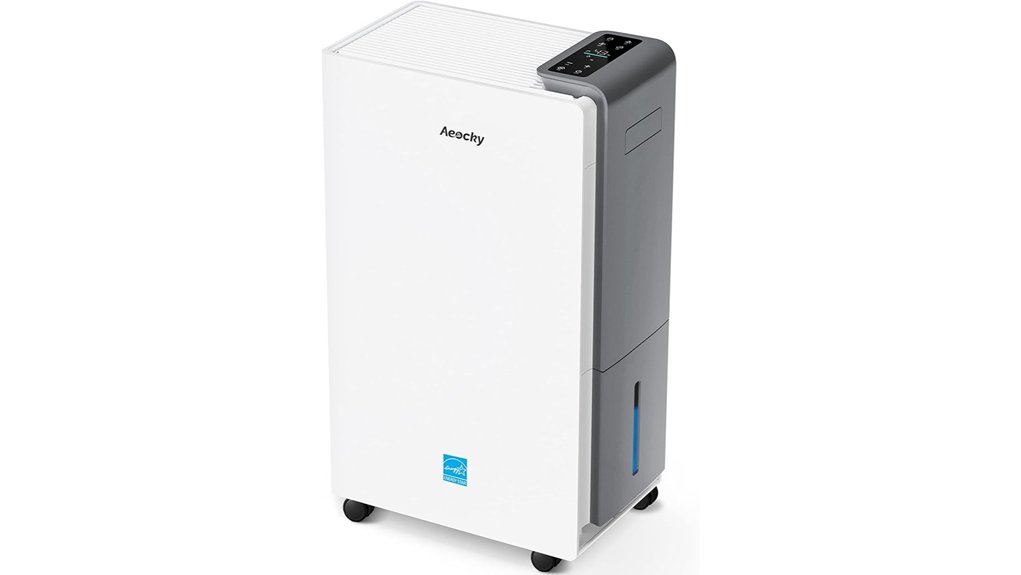
Best Overall for Large, Damp Spaces
The AEOCKY is the strongest choice here for a large basement or connected living area with persistent humidity. The current Amazon listing identifies the unit as RHEA-001 and describes a compressor, adjustable humidistat, drain hose, power-off memory, automatic defrost, and a 1.45-gallon tank. The seller’s maximum 80-pint figure is measured at 95°F and 95% relative humidity, so it should not be treated as the unit’s standardized daily capacity.
Why You’ll Like It: It offers the highest moisture-removal potential in this group, along with automatic humidity control and continuous drainage for spaces where a smaller unit may run constantly without reaching the set point.
Who Should Buy This: Homeowners managing a large, persistently damp basement or open area with enough clearance and a suitable route for gravity drainage.
Who Should Avoid This: Anyone who only needs light moisture control in a small room, or who wants a compact unit that is easy to move between tight spaces.
Pros:
- Compressor design is suited to room-level humidity control.
- Large tank and continuous-drain option reduce routine emptying.
- Adjustable humidistat supports automatic cycling around a selected target.
- The current listing displays ENERGY STAR certification and automatic defrost.
- Seller states a lowest fan setting of 44 dB and three-year coverage.
Cons:
- The 4,500-square-foot coverage claim is a rough marketing guide, not a guarantee for every damp space.
- The 80-pint maximum uses hotter and wetter conditions than standardized ratings.
- The unit is larger and heavier than the other choices in this guide.
- The exact model number on the product label should be matched with the official certification record before purchase.
Before You Buy: Compare the exact model number on the Amazon page and rating label with the ENERGY STAR Product Finder. Do not rely on the brand name, square-foot claim, or maximum pint figure alone.
KNKA 2500 Sq.Ft Dehumidifier with Drain Hose
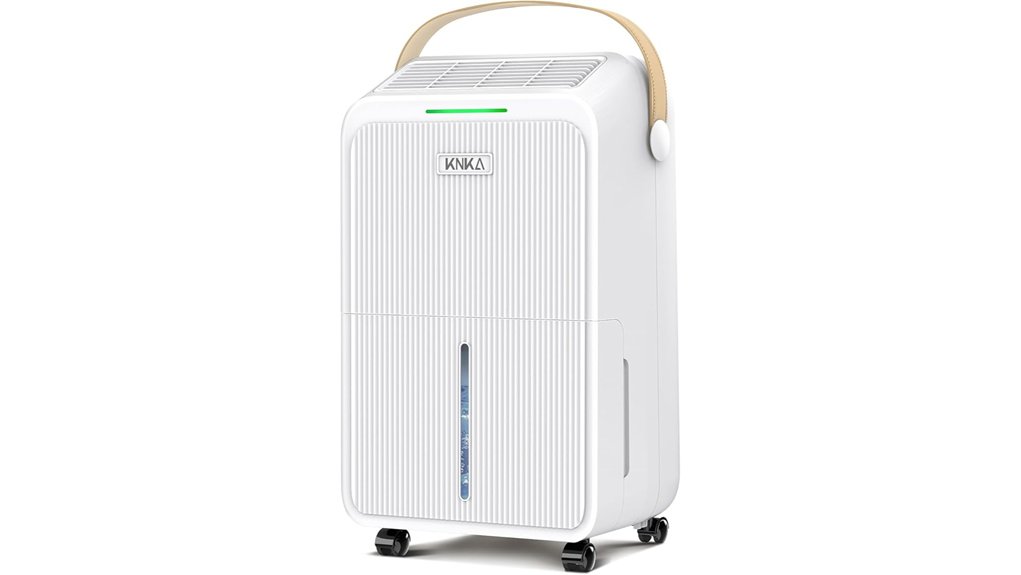
Best Mid-Size Option for Basements
The KNKA is a practical choice for a basement, laundry room, bedroom, or other medium-size area where a compact thermoelectric unit would be too weak. Its current listing describes DEHU, DRY, and continuous modes, an adjustable humidistat, a 24-hour timer, two fan speeds, a child lock, a 0.79-gallon internal tank, and an included 3.28-foot drain hose.
The seller states that the unit removes up to 34 pints per day at 95°F and 90% relative humidity. That is a high-temperature marketing condition, so buyers should check the rating label or manual for the standardized capacity before comparing it with other dehumidifiers.
Why You’ll Like It: The humidistat, timer, wheels, washable filter, and three drainage choices make it easier to use in a basement or laundry area without constant attention.
Who Should Buy This: Buyers who want compressor-based humidity control, a moderate footprint, and flexible drainage without stepping up to the largest unit in the guide.
Who Should Avoid This: Buyers who need independently confirmed ENERGY STAR certification for the exact model, or who need to pump water upward to a sink or elevated drain.
Pros:
- Three operating modes cover normal dehumidifying, laundry drying, and continuous operation.
- Automatic humidity control turns the unit on and off around the selected setting.
- Internal tank, included hose, and optional external tank provide flexible water collection.
- Wheels, handle, washable filter, timer, and child lock improve everyday usability.
- Seller lists a low operating sound of 37 dB, although real noise can vary by mode and room.
Cons:
- The 34-pint figure is measured at 95°F and 90% relative humidity rather than a directly comparable standardized condition.
- The exact ENERGY STAR status could not be independently confirmed for this model.
- Gravity drainage requires the hose to slope downward without kinks.
- The tank and hose still need periodic cleaning even when continuous drainage is used.
Setup Tip: Keep the hose lower than the outlet for its full length. If the nearest drain is above the unit, use a compatible external condensate pump rather than trying to force gravity drainage uphill.
Waykar 34 Pint ENERGY STAR Dehumidifier
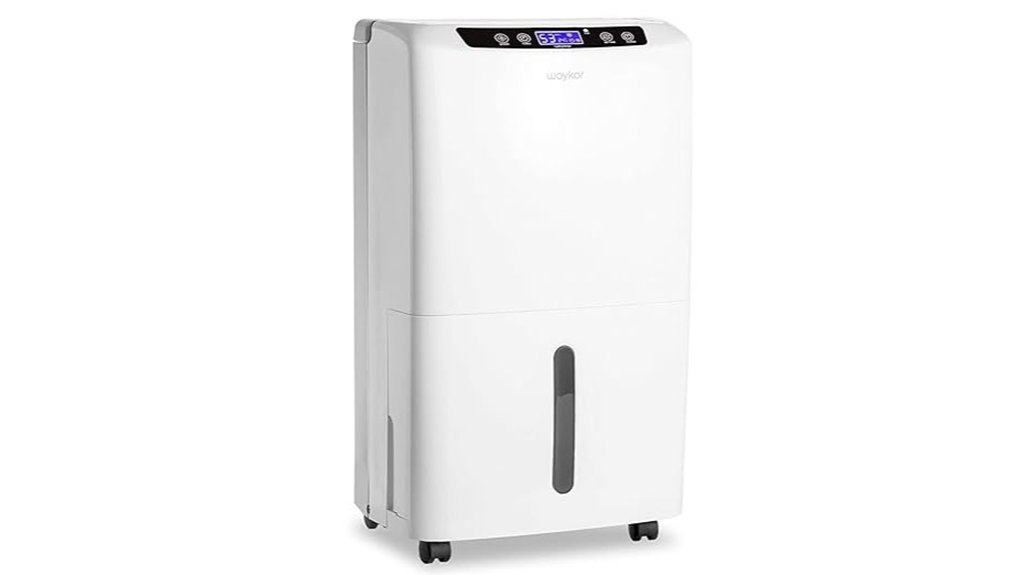
Best for Smaller or Moderately Damp Rooms
The current Amazon page for ASIN B081RG8JYR presents this Waykar as a 34-pint ENERGY STAR dehumidifier for spaces up to 2,000 square feet. It includes automatic humidity control, two fan speeds, a 24-hour timer, automatic defrost, a washable filter, a 0.66-gallon tank, and an included hose for continuous gravity drainage.
The seller’s 34-pint figure is measured at 95°F and 90% relative humidity. Because model codes and certification records can differ across listing revisions and variants, confirm the exact model number on the rating label before relying on a separate standardized-capacity record.
Why You’ll Like It: It combines a compact footprint, two fan speeds, automatic defrost, a timer, and dual drainage for buyers who need more control than a mini dehumidifier can provide.
Who Should Buy This: Buyers managing moderate humidity in a smaller basement, bedroom, office, or living area where a large-capacity unit would be unnecessary.
Who Should Avoid This: Anyone dealing with seepage, standing water, a very wet large basement, or a space that needs a clearly verified high standardized capacity.
Pros:
- The current Amazon listing displays ENERGY STAR certification.
- Automatic humidity control can cycle the compressor as conditions change.
- Tank and hose drainage support portable or lower-maintenance use.
- Two fan speeds, timer, automatic defrost, and washable filter add practical control.
- The 0.66-gallon tank keeps the cabinet relatively compact.
Cons:
- The current listing’s 34-pint figure is based on hot, very humid test conditions.
- The exact model code should be checked because the ASIN may be used for revised or variant listings.
- Square-foot coverage can overstate performance in a cold, very damp, or poorly sealed basement.
- Gravity drainage limits hose placement unless an external pump is added.
Capacity Caution: Choose this model only after checking the exact rating label and comparing its standardized pint-per-day capacity with the dampness of your room. Do not size it from the 2,000-square-foot claim alone.
How We Selected These Dehumidifiers
We kept products that are designed for room-level humidity control and offer an adjustable humidistat plus a continuous-drain option. We excluded passive moisture absorbers and very low-capacity mini units because they are better suited to closets, cabinets, vehicles, or light spot moisture than to controlling mould-friendly humidity across a room.
The product order prioritizes useful moisture-removal capacity, drainage convenience, humidity control, operating features, efficiency information, and suitability for persistent dampness. This article does not claim hands-on testing. Seller specifications, model codes, warranties, certification status, and included accessories should be confirmed on the current product page and rating label.
Factors to Consider When Choosing Dehumidifiers for Mould
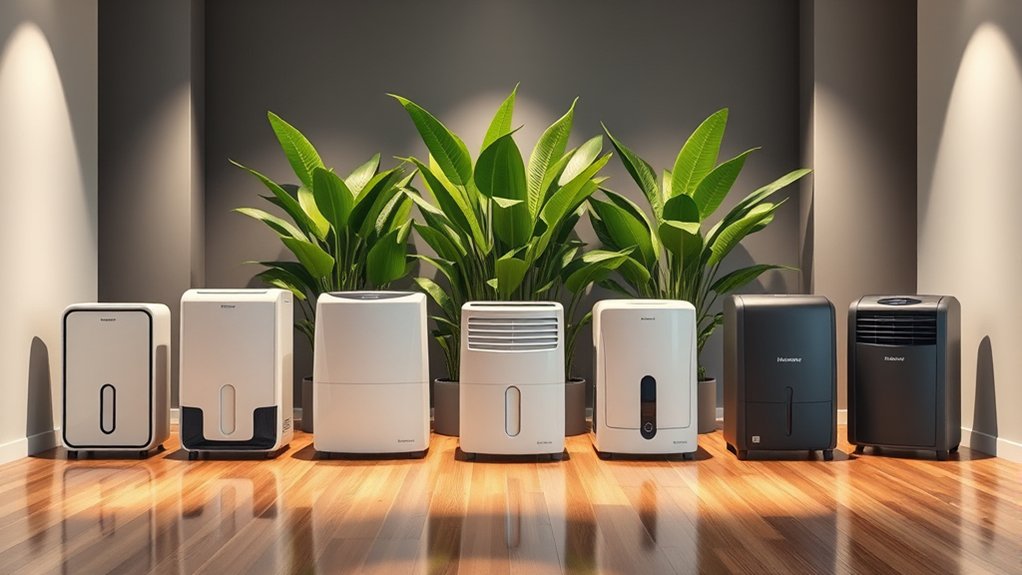
A dehumidifier can reduce excess humidity, but it cannot repair leaks, remove established mould, or replace safe remediation. Start by stopping the moisture source, drying wet materials, and choosing a unit that can maintain the target humidity in your actual room conditions.
Target Indoor Humidity
According to EPA moisture-control guidance, keep indoor relative humidity below 60% and ideally between 30% and 50%. Use a separate hygrometer to check the room because the sensor inside a dehumidifier measures air close to the unit and may not represent distant corners.
Dehumidification Capacity and Test Conditions
Capacity is measured in pints of water removed in 24 hours. Do not compare a seller’s maximum figure measured in very hot, humid air with a standardized rating measured under defined conditions. ENERGY STAR sizing guidance recommends roughly 20 to 30 pints per day for a slightly to moderately damp room under 2,000 square feet, with more capacity as the room becomes larger, wetter, or harder to seal.
Room Size, Layout, and Moisture Load
Square-foot coverage is only a rough marketing guide. Consider ceiling height, open doorways, airflow restrictions, outdoor humidity, laundry drying, foundation seepage, and whether the room is slightly damp, very damp, or wet. When two units are close, modest oversizing is usually safer than choosing one that must run continuously without reaching the set point.
Drainage Options
A removable tank works for occasional use, but continuous drainage is more convenient in a persistently damp basement. Gravity hoses must slope downward all the way to the drain. For an elevated sink or distant drain, choose a model with a built-in pump or use a compatible external condensate pump.
Operating Temperature and Defrost
Compressor dehumidifiers remove less water as temperatures fall, and their coils can frost in cool basements. Check the minimum operating temperature and whether the unit includes automatic defrost. A cold-space desiccant dehumidifier may be more appropriate below the compressor model’s rated range.
Energy Efficiency
ENERGY STAR certification is useful only when it matches the exact model number. Certified dehumidifiers are designed to remove moisture more efficiently than comparable non-certified units, but actual energy use still depends on runtime, set point, room conditions, temperature, airflow, and maintenance.
Noise Level
Seller-listed decibel figures may be measured in a low-fan or sleep mode. For a bedroom or office, check whether the compressor cycles audibly and whether the unit allows a lower fan speed. In a basement, adequate capacity and dependable drainage may matter more than a small difference in listed sound level.
Maintenance and Filter Needs
Clean the filter on the schedule in the manual, wash and dry the tank, inspect the drain hose, and keep the air inlet and outlet clear. A dirty filter reduces airflow and can lower moisture-removal performance. Do not allow stagnant water or visible buildup to remain in the tank or hose.
Fix the Moisture Source
Use the dehumidifier as part of a moisture-control plan. Repair plumbing or roof leaks, address foundation seepage, vent bathrooms and clothes dryers outdoors, dry wet materials promptly, and seek qualified help for extensive or recurring mould growth.
Important Mould Safety Note
A dehumidifier helps control humidity but does not kill or safely remove established mould. Avoid disturbing large contaminated areas, and follow appropriate remediation guidance when mould is extensive, keeps returning, or follows sewage or floodwater exposure.
Before You Buy Checklist
- Measure the room and note whether it is slightly damp, very damp, or wet.
- Check the standardized pint-per-day capacity for the exact model number.
- Confirm that the current Amazon title, model label, and certification record refer to the same unit.
- Check the minimum operating temperature for your basement or crawl space.
- Plan where tank water or a drain hose will go.
- Confirm whether gravity drainage is enough or an external pump is needed.
- Check the current warranty terms, included accessories, and seller support.
- Allow the clearances required in the manual for airflow.
- Use a separate hygrometer to confirm that the room reaches and holds the target humidity.
Frequently Asked Questions
How Do I Know if I Need a Dehumidifier?
Common signs include persistent relative humidity above 60%, condensation, musty odours, damp surfaces, or recurring mould. First rule out active leaks and water intrusion, then use a hygrometer to measure humidity rather than relying only on how the room feels.
What Humidity Level Is Ideal for Preventing Mould?
Aim for 30% to 50% relative humidity and keep the room below 60%. In warm weather, many homes find a setting around 45% to 50% practical without making the air unnecessarily dry.
Will a Dehumidifier Remove Existing Mould?
No. It can make future growth less likely by reducing humidity, but existing mould must be cleaned or remediated safely, and the underlying moisture source must be corrected.
How Many Pints per Day Do I Need?
Choose by room size and dampness. ENERGY STAR guidance starts around 20 to 30 pints per day for a slightly to moderately damp room under 2,000 square feet, 25 to 40 pints for a very damp room, and 30 to 50 pints for a wet room. Larger spaces generally need more. Use standardized capacity ratings rather than a seller’s hot-condition maximum.
Why Do Product Capacity Numbers Differ?
Some sellers publish a maximum figure measured in hotter, more humid air, while DOE-standardized ratings use defined test conditions. Those numbers are not directly interchangeable, so compare the exact model and test method before deciding which unit is stronger.
How Often Should I Empty the Dehumidifier Tank?
Empty it when the full-tank indicator activates. In a damp basement this may be daily or more often. Continuous drainage can reduce that work, but the tank and hose still need periodic cleaning.
Should I Run a Dehumidifier Continuously?
During initial drying, continuous operation may be useful. After the room reaches the target, use the humidistat so the compressor cycles automatically. If the unit never reaches the set point, it may be undersized, the room may be too cold, or an unresolved moisture source may be adding water continuously.
Where Should I Place a Dehumidifier?
Place it on a level surface with the airflow clearance required by the manual. Keep doors and windows closed while it runs, and position it where air can circulate through the damp area without furniture blocking the inlet or outlet.
Conclusion
For a large, persistently humid area, the AEOCKY 4500 Sq.Ft dehumidifier is the strongest overall option in this guide. The KNKA 2500 Sq.Ft dehumidifier offers a useful balance of compressor performance, controls, and flexible drainage, while the Waykar 34 Pint dehumidifier is better suited to smaller or moderately damp rooms.
Whichever model you choose, compare the exact standardized capacity, confirm the model code, set up drainage correctly, maintain the filter and tank, and fix the source of moisture. Those steps matter more for mould prevention than a large square-foot number in a product title.
Final Recommendation
Choose the AEOCKY for the highest-capacity needs, the KNKA for a flexible mid-size basement setup, or the Waykar for a smaller room with moderate humidity. Before ordering, verify the exact model number and standardized pint rating on the current listing.

[…] mold prevention, the U.S. EPA recommends keeping indoor humidity below 60% and ideally between 30% and 50%. The CDC […]