Affiliate disclosure: This article includes Amazon affiliate links. If you buy through these links, we may earn a commission at no extra cost to you. Product details can change, so always confirm size, use instructions, and current listing details before buying.
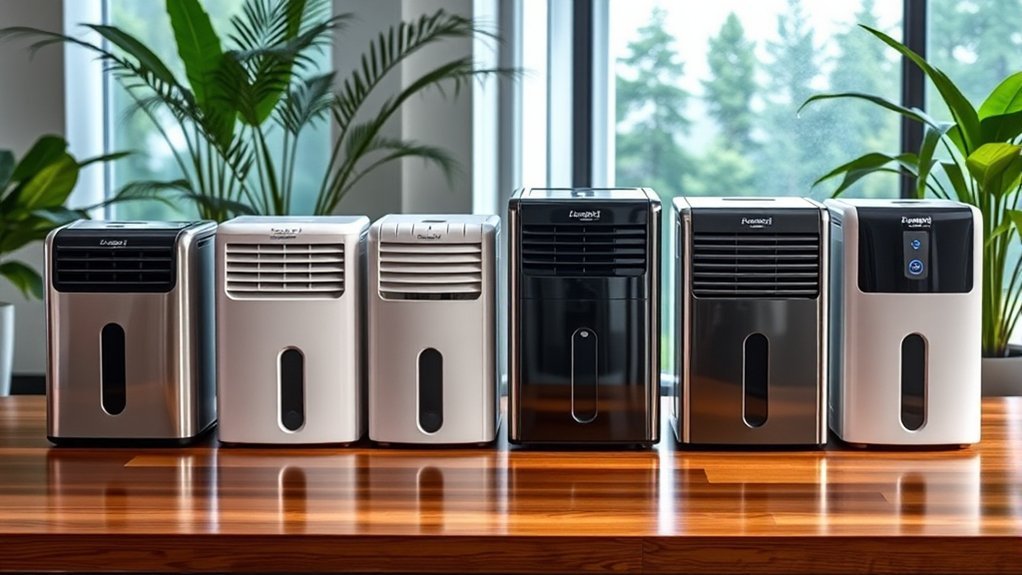
Looking for the best dehumidifiers for your walk-in closet in 2026? The right choice depends on how much moisture you need to control. If your closet only feels a little musty, a passive moisture absorber like the Vacplus Moisture Absorbers may be enough. If you deal with heavier humidity, a plug-in unit with a larger tank can remove more moisture from the air.
This guide compares both electric dehumidifiers and non-electric moisture absorbers because walk-in closets do not all have the same humidity problem. Some readers need odor control for shoes, linens, and seasonal clothing. Others need an active unit for damp air, bathroom steam, or humid climates. Use the quick table below to match the product type to your closet before choosing.
Quick Verdict: Which Closet Moisture Control Option Should You Choose?
For most closets, start simple. Passive moisture absorbers are usually the easiest choice for musty smells, shoes, linens, and enclosed shelves. Choose an electric dehumidifier only when the closet feels damp often, sits near a bathroom, or needs active water collection.
- Best for several closet zones: Vacplus Moisture Absorbers 6 Pack
- Best tub-style odor control: Arm & Hammer Moisture Absorber and Odor Eliminator
- Best stronger electric option: Dehumidifier for Home with 95oz Water Tank
Quick Comparison: Walk-In Closet Moisture Control Picks
| Product | Type | Best Use | CTA |
|---|---|---|---|
| Vacplus Moisture Absorbers 6 Pack Best Multi-Zone Pick |
Passive moisture absorber boxes | Small closets, cabinets, bathrooms, and low-maintenance moisture control | Check Price on Amazon ➜ |
| Arm & Hammer Moisture Absorber and Odor Eliminator Best Tub-Style Pick |
Tub-style moisture absorber and odor control | Closet floors, linen closets, shoe storage, and fragrance-free odor reduction | Check Price on Amazon ➜ |
| Dehumidifier for Home with 95oz Water Tank Best Active Moisture Pick |
Electric dehumidifier | Larger walk-in closets, damp rooms, bathrooms, RVs, and heavier moisture control | Check Price on Amazon ➜ |
How to Choose Between Passive and Electric Closet Dehumidifiers
Before you pick a product, decide whether your closet needs passive moisture control or active water removal. Passive moisture absorbers use ingredients such as calcium chloride, baking soda, or charcoal to trap moisture and reduce musty smells over time. They are simple, quiet, and useful for small closets, but they need replacement once they are full. Electric mini dehumidifiers collect water in a tank and can be better for spaces that feel damp often, but they need power, tank emptying, and a safe place for airflow.
For most walk-in closets, the best setup is practical rather than complicated. If you mostly want to protect clothes, shoes, linens, or stored bags from musty odors, start with a moisture absorber. If the closet shares a wall with a bathroom, sits near a laundry area, or feels damp even with the door open, choose an electric unit with auto shut-off and a tank size you will actually maintain.
Before You Buy: Quick Closet Checklist
- Check the moisture source: If the closet has leaks, wet walls, or recurring mildew, fix the source first.
- Measure the available space: Make sure the product fits without blocking drawers, hanging clothes, or airflow.
- Decide on maintenance: Passive absorbers need replacement, while electric units need emptying and cleaning.
- Look for safe placement: Electric units need a flat surface, ventilation, and a safe cord path.
Vacplus Moisture Absorbers 6 Pack for Humidity Control
Best Multi-Zone Passive Pick
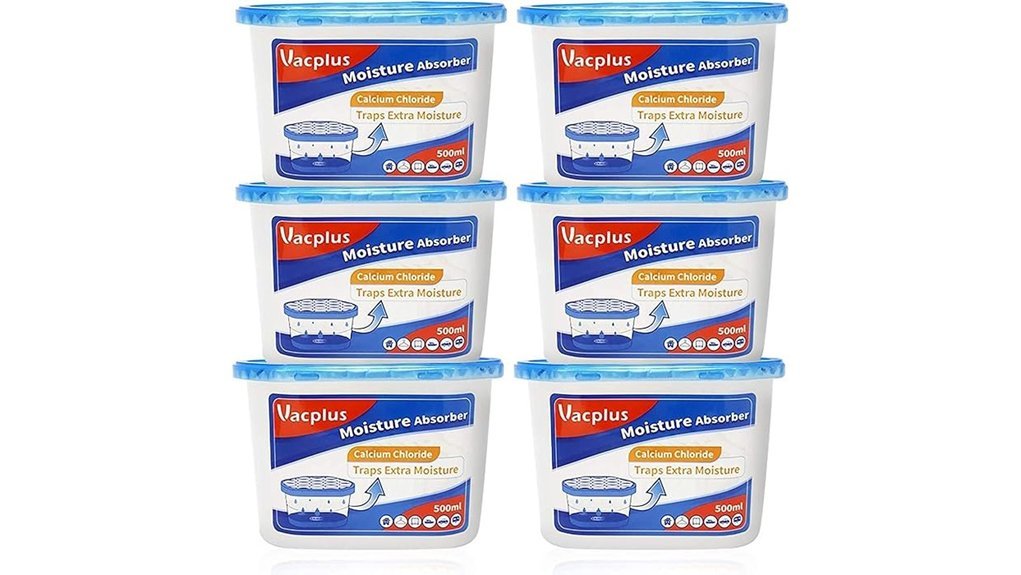
If you’re looking for a simple, non-electric way to manage light humidity in your walk-in closet, the Vacplus Moisture Absorbers 6 Pack is a strong place to start. These portable humidity absorber boxes, measuring just 6.1 x 3.1 x 4.1 inches, fit well on closet shelves, under hanging clothes, or near shoe storage. Each box has 10.5 ounces of moisture-trapping material and uses spherical calcium chloride to absorb excess moisture over time.
The independent water-collecting layer helps you see progress as moisture collects, which is useful if you want a low-maintenance product you can check at a glance. The leak prevention design and fragrance-free design also make these absorbers a better fit for clothing areas where strong scents may cling to fabric. They are not a replacement for a plug-in dehumidifier in a very damp room, but they work well when your goal is steady closet freshness without cords, noise, or daily emptying.
Why You’ll Like It: The biggest advantage is flexibility. Instead of placing one large unit in the center of a closet, you can spread these boxes across shoe shelves, linen stacks, storage bins, and lower corners where musty air often collects.
Best For: Individuals seeking an effective solution to manage humidity in small spaces like closets, bathrooms, and kitchens.
Closet Fit Note: Choose this pack if you want multiple small moisture-control boxes that can be spread across shelves, corners, and enclosed storage areas instead of relying on one larger device.
Pros:
- Efficient moisture absorption with spherical calcium chloride for quick results.
- Leak prevention features ensure no mess during operation.
- Fragrance-free design makes it suitable for sensitive areas without unpleasant odors.
Cons:
- Absorption process may require patience as it takes time to see results.
- Limited capacity may necessitate frequent replacements in larger spaces.
- Plastic and aluminum materials may not appeal to eco-conscious consumers.
Who Should Buy This: Buy this if you want quiet, cord-free humidity control for multiple small closet areas and you prefer a product that is easy to place and check.
Who Should Skip It: Skip this option if your closet has heavy dampness, visible condensation, or recurring mold concerns. In that case, a plug-in electric dehumidifier with a tank may be a better fit.
Arm & Hammer Moisture Absorber and Odor Eliminator (Pack of 3)
Best Tub-Style Odor Control Pick
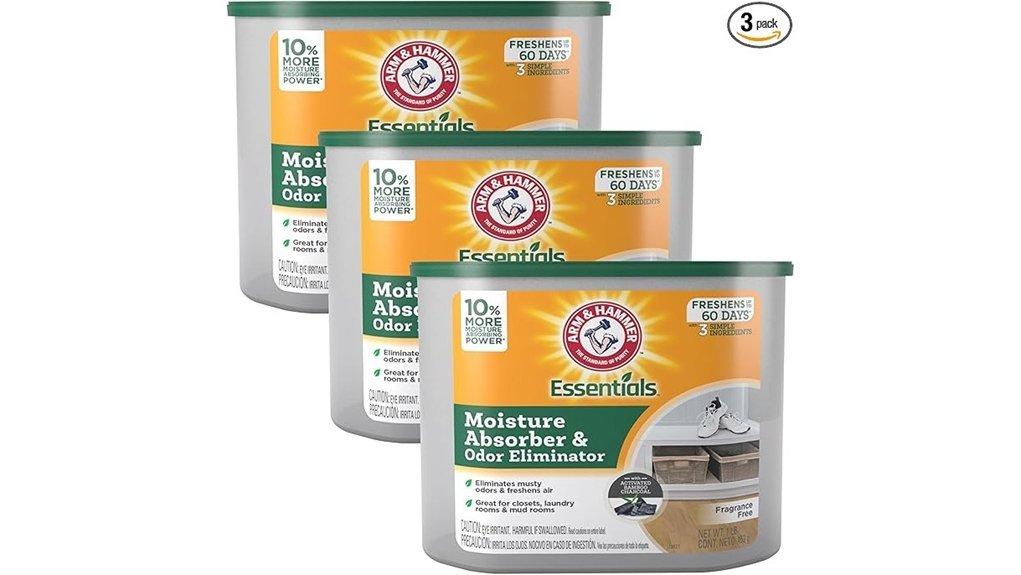
Looking for an easy way to tackle humidity and odors in your walk-in closet? The Arm & Hammer Moisture Absorber and Odor Eliminator (Pack of 3) gives you a tub-style option that can sit on a closet floor, shelf, or storage corner. Each fragrance-free 1 lb. tub attracts and traps excess moisture while helping reduce musty odors for fresher air.
With ingredients like Arm & Hammer baking soda and activated bamboo charcoal, it offers 10% more moisture-absorbing power than standard products from the same product family. You may get long-lasting freshness for up to 60 days, depending on conditions. This makes it useful for closets that store shoes, coats, off-season clothing, bedding, or fabric bins that can hold stale smells.
Why You’ll Like It: This is the most straightforward option if you prefer a tub you can place in a low corner and check occasionally. It is also useful for closets where odors from shoes, coats, or stored linens are the main concern.
Best For: Individuals seeking a natural and effective solution to combat humidity and odors in small spaces like closets.
Closet Fit Note: Pick this one if you prefer a tub-style absorber that can sit out of the way and you want odor control without added fragrance.
Pros:
- 10% more moisture-absorbing power than standard products for enhanced effectiveness.
- Fragrance-free formula ensures no overpowering scents, making it suitable for sensitive individuals.
- Long-lasting freshness for up to 60 days, offering extended use and value.
Cons:
- Limited to small spaces, may not be effective in larger areas or open rooms.
- Requires periodic replacement after 60 days, which may incur ongoing costs.
- Effectiveness can vary based on environmental conditions such as humidity levels.
Who Should Buy This: Buy this if you want a passive, fragrance-free tub for a closet floor, shoe area, linen shelf, or storage corner.
Who Should Skip It: Skip this product if you need something you can hang from a rod or if your closet has no safe shelf or floor spot where the tub will stay upright.
Dehumidifier for Home with 95oz Water Tank
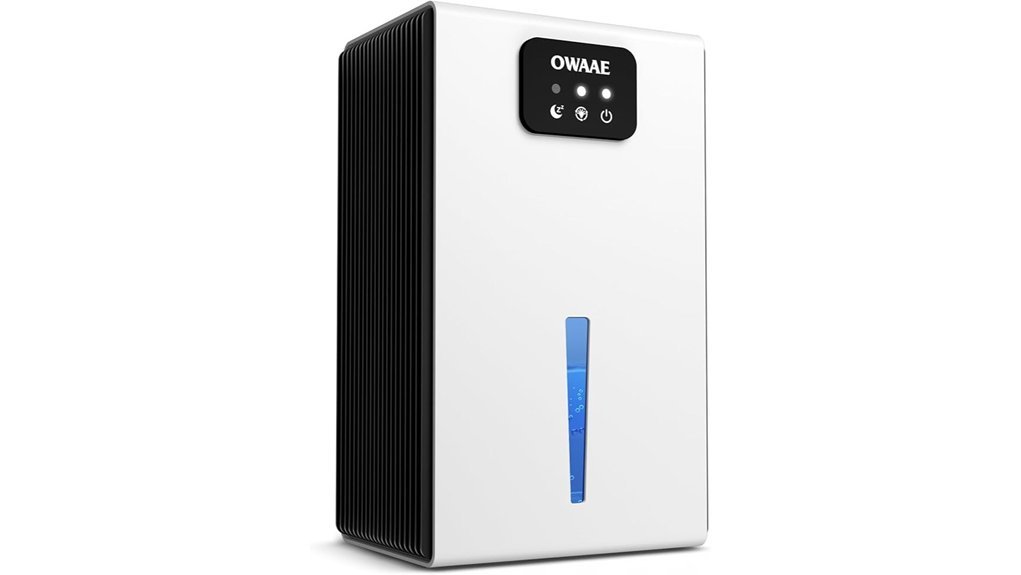
Best Electric Pick for Damp Closets
For those struggling with humidity in smaller spaces, the dehumidifier with a 95oz water tank is an active electric option with more water capacity than the passive absorbers above. It is described as covering areas up to 1,000 sq. ft., making it suitable for bedrooms, bathrooms, RVs, and larger walk-in closets where light passive absorbers may not be enough. Operating quietly under 30 dB in sleep mode, it is designed to run without creating much background noise.
With a daily dehumidification capacity of 1 liter, this unit can help manage moisture from steam, humid air, and daily household activity. The compact design includes a built-in handle, which makes it easier to move from a closet to a bathroom, bedroom, or RV when needed. The automatic shut-off feature adds safety by turning the unit off when the tank is full, while the 7-color LED ambient light gives it a more decorative feel than a basic utility appliance.
Why You’ll Like It: This model makes the most sense when passive tubs and bags are too slow for your space. The larger tank and active water collection can be helpful for a damp walk-in closet near a bathroom, laundry area, or humid room.
Best For: Individuals seeking an efficient solution for managing humidity in small to medium-sized spaces like bedrooms, bathrooms, and RVs.
Closet Fit Note: Choose this if your walk-in closet feels damp often, sits near a bathroom, or needs active water collection instead of slow passive absorption.
Pros:
- Compact and portable design with a built-in handle for easy movement.
- Quiet operation under 30 dB in sleep mode, perfect for light sleepers.
- Automatic shut-off feature ensures safe operation when the tank is full.
Cons:
- Limited coverage area of 1,000 sq. ft. may not be suitable for larger spaces.
- Daily dehumidification capacity of only 1 liter, which may require frequent tank emptying.
- Plastic material may not be as durable as other materials.
Who Should Buy This: Buy this if you want a plug-in unit for a walk-in closet that feels damp often and you are willing to empty the tank as needed.
Who Should Skip It: Skip this model if you want a no-power, no-maintenance option. Because it is an electric unit, you need an outlet, enough airflow, and a routine for emptying the tank.
Factors to Consider When Choosing a Dehumidifier for a Walk-in Closet
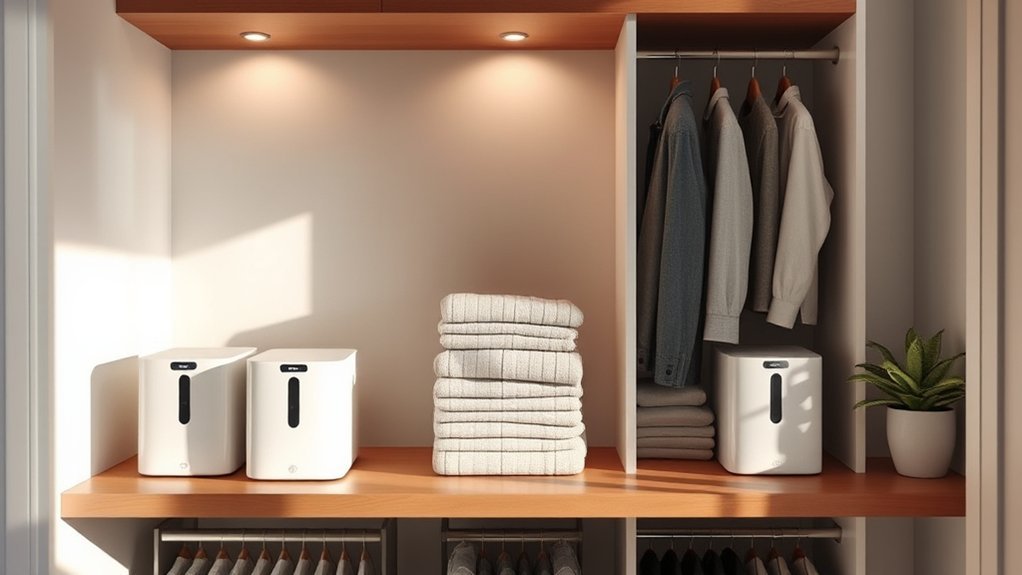
When choosing a dehumidifier for your walk-in closet, start with the real moisture problem. A slightly musty closet may only need a passive absorber. A closet that feels damp, shares air with a bathroom, or stores moisture-sensitive items may need an electric dehumidifier with a tank. You’ll also want to evaluate size, capacity, noise, energy use, and how easy the unit is to place in a tight space.
Key Features to Look For
Choosing the right dehumidifier for your walk-in closet is vital to maintaining a comfortable and moisture-free environment. First, consider the capacity. A larger tank can be practical for many small spaces, while passive absorbers may work better when you only need slow moisture control. Make sure the dehumidifier matches the actual closet size instead of relying only on the largest advertised coverage number. Noise level matters too. A model under 30 dB is easier to live with if the closet is near a bedroom. Energy efficiency is also important if you plan to run an electric unit often. Finally, an auto shut-off feature is a must for electric units because it prevents overflow when the tank is full.
Size and Capacity
Determining the right size and capacity for your walk-in closet dehumidifier is crucial for effective moisture control. First, consider your closet’s size and layout. A tiny walk-in closet may only need a passive absorber or mini electric unit, while a larger closet with poor airflow may need more capacity. Next, look at the water tank capacity. Larger tanks usually require less frequent emptying. Also consider the rate at which the product extracts moisture. If your closet has moderate to high humidity, a unit that collects up to 1 liter per day may be more useful than a small passive product. Finally, choose a compact, lightweight design that fits without blocking clothes, shelves, or drawers.
Noise Level Considerations
After settling on the right size and capacity for your dehumidifier, the noise level becomes a key factor. Quieter units operating at or below 30 dB are better for walk-in closets near bedrooms or home offices. Look for models that mention ultra-quiet operation if sound sensitivity matters to you. A sleep mode feature can also help reduce noise during nighttime use. Noise levels can vary between models, so it is worth checking the specifications before buying. A quieter dehumidifier enhances comfort and makes the closet easier to use without a constant hum in the background.
Energy Efficiency Ratings
When selecting a dehumidifier for your walk-in closet, energy efficiency ratings can help keep electricity costs manageable. Look for efficient models that match your space instead of buying the largest unit by default. Some compact units use less energy because they are built for smaller rooms, while oversized units may use more power than your closet needs. Check power consumption, often measured in kilowatt-hours (kWh) per day, and compare that with your expected runtime. Passive moisture absorbers do not use electricity, but they do need replacement. Electric models may cost more to run, yet they can remove moisture faster in damp spaces.
Portability and Design
Portability and design are essential factors to take into account for dehumidifiers in walk-in closets. Choose a compact model, ideally small enough to fit on a shelf, floor corner, or low storage area without cluttering your space. Lightweight units make it simple to move the dehumidifier as needed. Look for designs with built-in handles to enhance portability. Operating noise is another consideration, so aim for quiet models if the closet is close to sleeping areas. Finally, select a product with a water tank capacity or passive absorption format that matches your habits. A unit only works well if you are willing to empty, replace, or check it on schedule.
Safety and Placement Tips
Place any electric dehumidifier on a flat, stable surface where the air intake and outlet are not blocked by clothing, boxes, or hanging fabric. Keep cords away from walkways and do not place the unit where dripping clothes or wet towels can touch it. For passive absorbers, keep boxes, tubs, and hanging bags upright or suspended as directed so collected moisture does not spill. If you notice mildew, a persistent musty smell, or moisture returning quickly after treatment, check for a larger ventilation, leak, or insulation problem rather than relying only on a closet product.
Pro Tips for Better Closet Moisture Control
- Leave a small gap between stored items so air can move around shoes, bags, and fabric bins.
- Do not push an electric unit directly against clothing or boxes, because blocked airflow reduces performance.
- Check passive absorbers more often during humid months, rainy seasons, or after long closet door closures.
- Use odor control products as support, not as a fix for leaks, wet walls, or serious mildew problems.
Best Choice by Closet Problem
- Light musty odor: Choose a tub-style Arm & Hammer absorber.
- Several small damp spots: Use the Vacplus 6 pack so you can place absorbers in more than one area.
- Damp walk-in closet near a bathroom: Pick the 95oz electric dehumidifier for stronger water collection.
- No outlet available: Stick with passive moisture absorbers instead of an electric unit.
Frequently Asked Questions
How Do I Know the Right Size Dehumidifier for My Closet?
To choose the right size dehumidifier for your closet, start with the closet’s square footage, how damp it feels, and whether you need a passive moisture absorber or a plug-in electric unit. Small walk-in closets can often use compact moisture absorbers or mini dehumidifiers, while very damp spaces may need a higher-capacity electric model.
Can I Use a Dehumidifier in a Small Bathroom?
Yes, you can use a dehumidifier in a small bathroom, especially after showers or baths. Choose a compact model with auto shut-off, place it where airflow is not blocked, and empty the tank often so moisture does not build up.
How Often Should I Empty the Water Tank?
You should empty the water tank whenever it fills, but the timing depends on humidity, tank size, and how often the unit runs. In a damp closet or bathroom, check it daily at first. Once you know how fast it fills, you can set a routine.
Are There Energy-Efficient Dehumidifiers Available?
Yes, energy-efficient dehumidifiers are available. Look for models with low daily power use, auto shut-off, sleep mode, and a capacity that matches your space. Oversized units can waste energy, while undersized units may run too often.
What Maintenance Is Required for Dehumidifiers?
Most dehumidifiers need regular tank emptying, basic cleaning, dust removal, and filter checks if the model has a filter. Passive moisture absorbers usually need replacement once the container or bag is full.
Final Recommendation
If you want the lowest-maintenance solution, start with a passive option such as Vacplus for multiple closet zones or the Arm & Hammer product for odor control. If the closet regularly feels damp, choose an electric unit with auto shut-off, enough tank capacity, and safe airflow clearance. The 95oz model is better when you want stronger active moisture collection.
Conclusion
Selecting the right dehumidifier or moisture absorber for your walk-in closet can make a real difference in keeping clothes, shoes, linens, and stored items fresher. If you want a simple non-electric option, the Vacplus Moisture Absorbers give you multiple boxes for different closet zones, while the Arm & Hammer option is useful for odor control and light moisture. If your closet feels damp often, the 95oz electric dehumidifier gives you more active water collection.
The best pick comes down to size, capacity, noise level, and how much maintenance you want. A little moisture control today can help prevent musty smells, fabric damage, and wardrobe mishaps later.