
Affiliate disclosure: As an Amazon Associate I earn from qualifying purchases. This does not affect the price you pay.
Updated August 2026.
When shoppers look for the best dehumidifiers for asthma and cigarette smoke concerns, it is essential to separate two different indoor-air problems. A dehumidifier removes excess water vapor and may help control damp conditions that support mold and dust mites. It does not remove cigarette-smoke particles or gases, treat asthma, or make indoor smoking safe.
Keep the home smoke-free first. Consider a dehumidifier only when a hygrometer repeatedly shows excessive humidity. For airborne smoke particles and gases, source control, appropriate ventilation, and a properly selected air cleaner are more relevant than a dehumidifier.
Important Health and Smoke Note
Do not rely on a dehumidifier to protect people from indoor smoking. The safest approach is to avoid smoking inside the home, vehicle, or near doors and windows where smoke can enter.
An appropriately sized particle-filtering air cleaner may reduce some airborne smoke particles, while an air cleaner with suitable activated-carbon or other gas-removal media may reduce some gases and odors. Filtration is only a supplement to source control and cannot eliminate all secondhand-smoke exposure. See current guidance from the U.S. Environmental Protection Agency and the Centers for Disease Control and Prevention.
Quick Answer
Choose the TABYIK 35 OZ for a small enclosed room, the BEDRED CT11 95 OZ when a larger collection tank is the priority, or the ToLife 95 OZ when quiet nighttime operation matters most. All three are compact thermoelectric models intended for mild excess humidity—not smoke removal, emergency drying, or reliable whole-basement moisture control.
Quick Verdict
These three compact units are best viewed strictly as humidity-control tools. The TABYIK is the easiest fit for a small bedroom, bathroom, closet, office, or RV. The BEDRED CT11 offers a larger tank for users who want less frequent emptying. The ToLife is the more feature-focused option for bedrooms where a quiet sleep mode and portable design matter.
Key Takeaways
- A dehumidifier controls moisture; it does not filter cigarette smoke.
- Use a hygrometer before deciding whether a dehumidifier is needed.
- Tank capacity affects emptying frequency, not moisture-removal speed.
- Seller-listed square footage is not a guarantee of real-world performance.
- Choose a compressor dehumidifier for severe dampness, leaks, or large basements.
| Product | Best For | Tank | Coverage Claim | Key Limitation | Check Details |
|---|---|---|---|---|---|
| TABYIK 35 OZ Best for Small Spaces |
Small enclosed rooms and portable use | 35 oz | Manufacturer-listed up to 280 sq. ft. | Limited extraction for mild, localized dampness | Check Price on Amazon |
| BEDRED CT11 95 OZ Best Larger-Tank Value |
Mild room humidity and less frequent emptying | 95 oz | Seller-listed up to 1,000 sq. ft. | Daily extraction is more important than tank or coverage size | Check Price on Amazon |
| ToLife 95 OZ Best for Quiet Nighttime Use |
Bedrooms, offices, and quiet nighttime use | 95 oz | Seller-listed up to 1,000 sq. ft. | Exact listing specifications and extraction rate require verification | Check Price on Amazon |
Selection note: Square-foot coverage on compact thermoelectric dehumidifiers is seller or manufacturer marketing guidance, not a guarantee of moisture-removal speed. Temperature, starting humidity, ventilation, room layout, and the amount of moisture entering the room all affect performance. Use a hygrometer and judge the result by whether the appliance can maintain an appropriate humidity level in the actual room.
TABYIK 35 OZ Dehumidifier for Bedroom, Bathroom, RV, or Closet
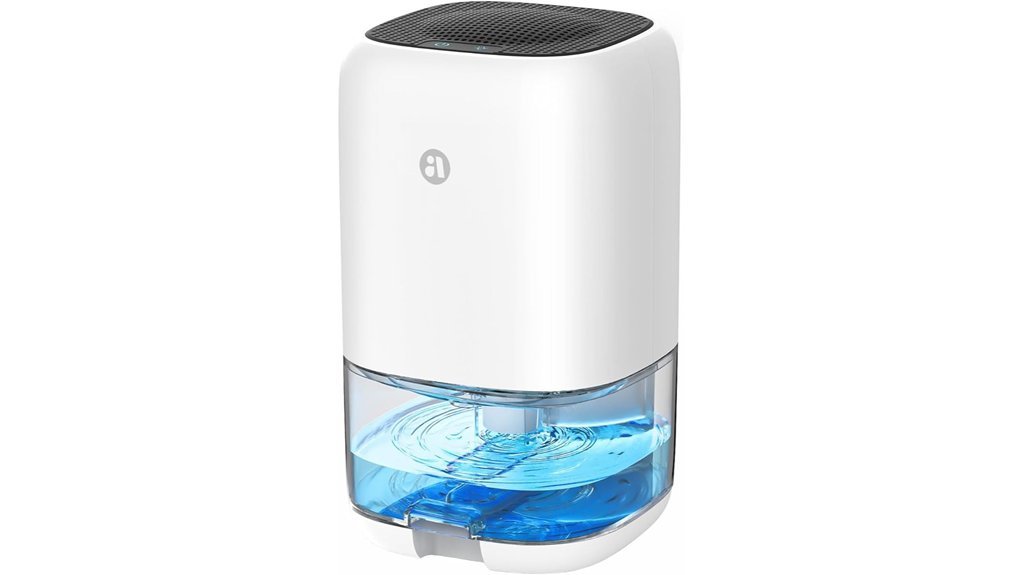
Best for Small Spaces: The TABYIK 35 OZ Dehumidifier is the clearest fit for a small bedroom, bathroom, closet, office, or RV. Its compact tank, built-in handle, and simple controls make it easier to place where mild, localized dampness is the main problem.
The manufacturer lists moisture collection of up to 16 ounces per day under warm, highly humid test conditions, a noise level of about 28 dB, and placement in spaces up to 280 square feet. Real-world collection may be substantially lower in cooler rooms or when relative humidity is only moderately elevated. Automatic shutoff is intended to stop operation when the tank is full.
Why You’ll Like It
It is light, simple to move, and appropriately sized for small enclosed areas where a full compressor dehumidifier may be unnecessary.
Best For: People who need mild humidity control in a small enclosed space and are willing to empty a compact tank regularly.
Who Should Avoid It: Buyers dealing with flooding, water intrusion, persistent window condensation, a very damp basement, or a large open-plan room.
Pros:
- Manufacturer-listed low-noise operation may suit many bedrooms and workspaces.
- Compact body and built-in handle make room-to-room use easier.
- Automatic shutoff helps reduce the chance of tank overflow.
Cons:
- The thermoelectric design is intended for mild, localized humidity rather than severe dampness.
- The 35-ounce tank may require frequent emptying during humid weather.
- It does not filter cigarette smoke, odors, allergens, or gases.
Listing check: Confirm the current extraction claim, noise rating, voltage, warranty, and included accessories on the Amazon page before ordering.
BEDRED CT11 95 OZ Dehumidifier
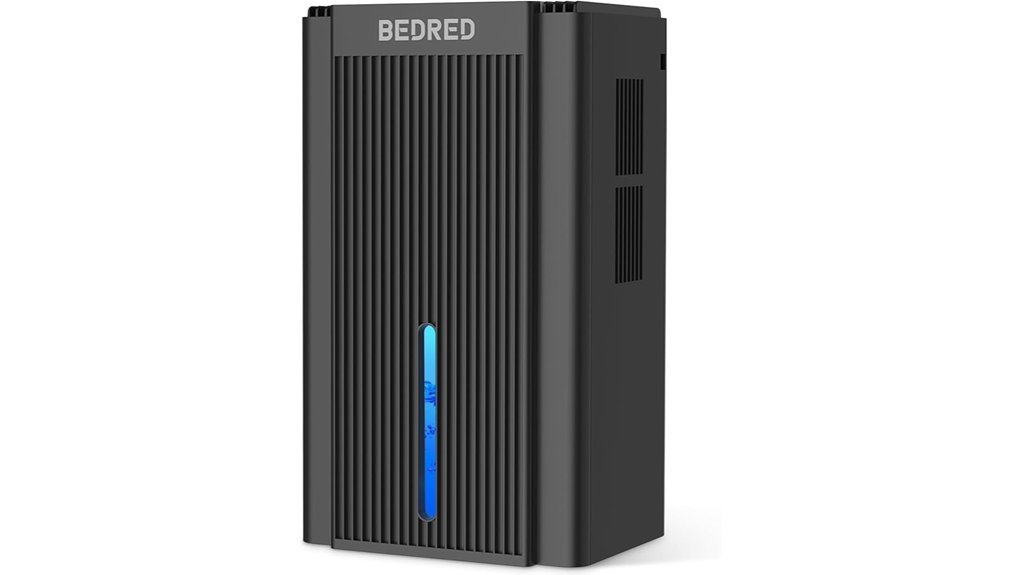
Best Larger-Tank Value: The BEDRED CT11 95 OZ Dehumidifier is aimed at buyers who want a larger collection tank than a small desktop model. Seller information associates the linked ASIN with a semiconductor dehumidifier featuring automatic shutoff and ambient lighting.
The product is marketed for spaces up to 1,000 square feet, but that figure should not be confused with verified compressor-dehumidifier capacity. Tank volume and room-coverage marketing do not reveal how many pints or ounces the unit can remove each day. This compact model makes more sense for mild humidity or localized use than for fast drying, serious water intrusion, or whole-basement moisture control.
Why You’ll Like It
The 95-ounce tank may reduce emptying frequency compared with a 35-ounce model, while the compact design is easier to place than a full-size compressor unit.
Best For: Bedrooms, offices, bathrooms, or other enclosed spaces with mild excess humidity and limited floor space.
Who Should Avoid It: Anyone who needs fast drying after a leak, reliable whole-basement moisture control, continuous high-volume drainage, or a clearly verified pint-per-day rating.
Pros:
- Larger 95-ounce tank than many mini thermoelectric models.
- Automatic shutoff is intended to stop operation when the tank is full.
- Compact design is easier to move and store than a compressor model.
Cons:
- The broad square-foot claim does not show how quickly the appliance removes moisture.
- Tank capacity is not the same as daily dehumidification capacity.
- It does not remove cigarette-smoke particles or gaseous pollutants.
Listing check: Verify that the current Amazon page identifies the product as BEDRED CT11 and confirm its daily extraction rate, operating voltage, sleep-mode behavior, warranty, and seller before purchasing.
ToLife 95 OZ Dehumidifier
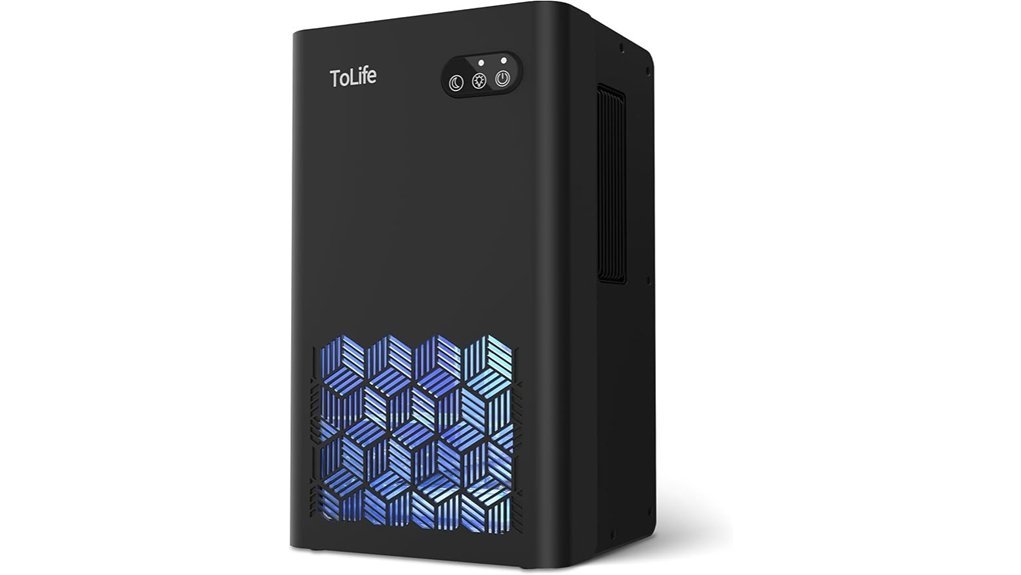
Best for Quiet Nighttime Use: The ToLife 95 OZ Dehumidifier is marketed with a larger water tank, multiple operating modes, automatic shutoff, a carrying handle, and ambient lighting. Similar ToLife models advertise a low-speed sleep setting below 30 dB, which may appeal to bedroom and home-office users.
ToLife markets comparable compact models for spaces near 1,000 square feet. Treat that number as seller-listed placement guidance rather than proof of rapid moisture removal across a large or severely damp room. The exact linked Amazon model and its current extraction specifications should be verified before purchase.
Why You’ll Like It
It combines a larger tank, a quiet-use setting, and a portable design without the weight and bulk of a full-size compressor dehumidifier.
Best For: Users who want a portable bedroom or office unit for mild excess humidity and prefer a low-noise night setting.
Who Should Avoid It: Buyers who need verified whole-home performance, emergency drying, continuous high-volume drainage, or cigarette-smoke filtration.
Pros:
- Sleep mode is designed for quieter nighttime operation.
- Automatic shutoff is intended to reduce overflow risk.
- Portable shape and handle can make room-to-room use easier.
Cons:
- Thermoelectric performance can decline in cool rooms or at moderate humidity levels.
- The broad square-foot claim may overstate practical performance in heavy dampness.
- The exact linked model’s extraction rate and current specifications were not independently confirmed.
Listing check: Confirm the exact ToLife model, tank size, daily extraction rate, sleep-mode noise claim, voltage, warranty, and seller shown on Amazon before ordering.
Factors to Consider for Asthma-Triggering Humidity and Cigarette-Smoke Concerns
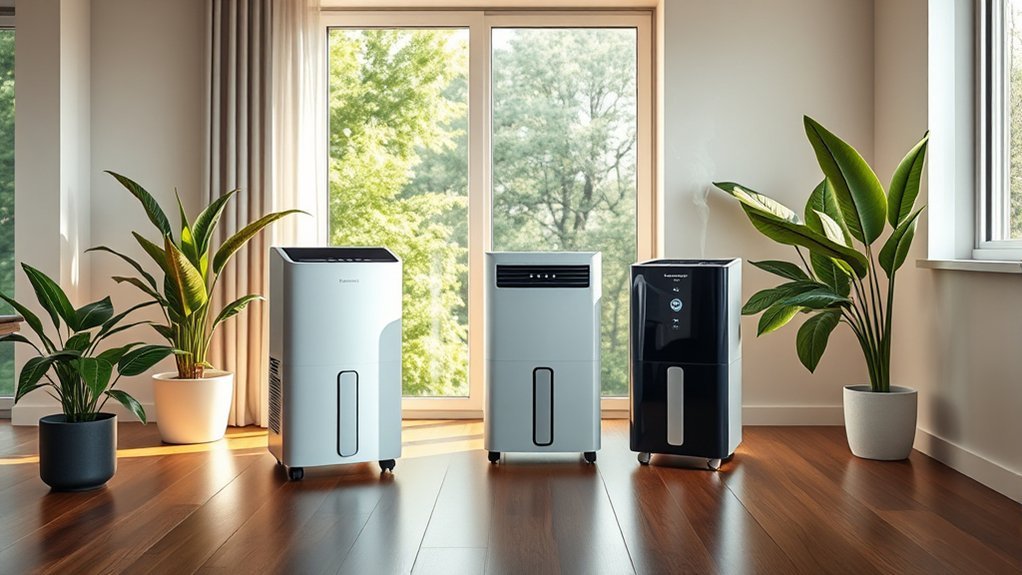
A dehumidifier may help control an unhealthy moisture problem, but it is only one part of an indoor-air plan. Use the following checklist to avoid buying the wrong appliance for the problem.
Understand What a Dehumidifier Can and Cannot Do
A dehumidifier condenses water vapor from the air. It may help limit damp conditions that support mold and dust mites when humidity is high. It does not capture cigarette-smoke particles, volatile gases, or odors.
For smoke concerns, source control comes first: do not allow smoking indoors. A properly sized air cleaner with an effective particle filter may reduce some airborne particles, while substantial activated-carbon or other gas-removal media may reduce some gases and odors. No portable appliance makes continuing indoor smoking safe.
Target a Relative Humidity of About 30% to 50%
Use a separate hygrometer to measure the room instead of guessing. The EPA and CDC commonly recommend keeping indoor relative humidity around 30% to 50%, especially when controlling mold and dust-mite conditions. Running a dehumidifier when the air is already dry can cause discomfort and may irritate the nose, throat, skin, or eyes.
Start or increase dehumidification when readings are repeatedly too high. Reduce or stop operation if humidity approaches 30%, unless a qualified professional has recommended a different target for the building or occupant.
Compare Daily Moisture Removal, Not Just Tank Size
A 95-ounce tank does not mean the appliance removes 95 ounces of water every day. Tank volume only tells you how much water it can hold before it must be emptied. For a damp basement, laundry area, or room with ongoing water intrusion, look for a clearly stated pint-per-day or liter-per-day rating under defined test conditions.
Compact thermoelectric models are generally better for mild humidity in small, warm, enclosed areas. Compressor dehumidifiers usually provide greater moisture-removal capacity for larger or persistently damp spaces.
Match the Unit to Room Size and Conditions
Coverage claims can be optimistic because performance depends on temperature, relative humidity, airflow, ceiling height, open doors, windows, and how much moisture enters the room. A compact unit that collects noticeable water in a warm bathroom may collect much less in a cool basement.
Choose based on measured humidity and stated extraction capacity, not square footage alone.
Check Noise and Sleep Controls
For bedrooms, compare the seller-listed decibel rating and verify whether fan speed changes in sleep mode. Also check whether indicator lights can be switched off. A quieter setting can make overnight operation less distracting, but reducing fan speed may also reduce moisture collection.
Check Power Use, Voltage, and Certification Carefully
Do not assume a product is energy efficient simply because it is small. Review its wattage, expected daily operating time, electrical voltage, and current certification details. If Energy Star certification matters, verify the exact model in the official product directory rather than relying on a marketplace keyword or seller title.
Plan for Maintenance and Cleaning
Check and empty the tank before it overflows, wash it regularly, and allow it to dry before reinstalling it. Wipe dust from the air intake and clean any removable filter according to the manufacturer’s instructions.
Inspect any drainage hose for kinks, buildup, loose connections, or leaks. Stop using the appliance if you notice cord damage, electrical smells, persistent leaking, overheating, or unusual noise.
Avoid Fragrances if Scents Trigger Symptoms
Fragrance, essential oils, and scented additives can bother some people with asthma, allergies, migraines, or chemical sensitivity. A fragrance diffuser should not be treated as an indoor-air-quality feature. For a bedroom used by someone with respiratory sensitivity, a fragrance-free setup is the more cautious default unless their clinician has advised otherwise.
Follow Placement and Electrical-Safety Instructions
Place the appliance on a level, stable surface with the manufacturer-required clearance around its air inlet and outlet. Keep the cord and power adapter away from standing water. Do not place a non-rated appliance inside a shower or bathtub area, and do not use an extension cord unless the manufacturer specifically permits it.
Before You Buy
- Measure current humidity with a reliable hygrometer.
- Confirm whether the problem is moisture, smoke, odor, mold, or a combination.
- Check daily extraction capacity, not only tank volume.
- Treat broad square-foot figures as marketing guidance.
- Confirm whether lights can be switched off for bedroom use.
- Check the exact brand, model, voltage, warranty, seller, and return policy.
- Choose a compressor model for severe dampness or a persistently wet basement.
- Choose an appropriately sized air cleaner—not a dehumidifier—when particle filtration is the main goal.
Frequently Asked Questions
Can a Dehumidifier Remove Cigarette Smoke?
No. A dehumidifier removes water vapor, not cigarette-smoke particles or gases. The most effective step is to prevent smoking inside or near the home. An appropriately sized particle-filtering air cleaner may reduce some airborne particles, and suitable activated-carbon or other gas-removal media may reduce some gases and odors, but no portable device makes indoor smoking safe.
Do I Need an Air Cleaner Instead of a Dehumidifier?
It depends on the problem. Choose a dehumidifier when measured relative humidity is consistently too high. Consider an appropriately sized air cleaner when airborne particles are the main concern. Some homes may need both appliances, but they perform different jobs.
Can a Dehumidifier Help People With Asthma?
It may help indirectly when excessive humidity is supporting mold or dust-mite conditions that trigger symptoms. It does not treat asthma, replace prescribed medication, or replace an asthma action plan. Overly dry air may also be uncomfortable, so operate the appliance according to actual humidity readings.
What Indoor Humidity Level Should I Target?
A practical target is about 30% to 50% relative humidity. Use a hygrometer and adjust the dehumidifier based on actual readings rather than running it continuously by default.
Are Compact Thermoelectric Dehumidifiers Good for Basements?
They may help with mild dampness in a small, warm, enclosed area, but they are usually not the best choice for a large, cool, or persistently wet basement. For significant moisture, compare compressor models with a clearly stated pint-per-day capacity, adjustable humidistat, automatic defrost, and continuous-drain option.
How Often Should I Clean My Dehumidifier?
Check the tank daily during initial use so you learn how quickly it fills. Empty and rinse it regularly, and clean it more thoroughly at least weekly or according to the product manual. Clean filters, air inlets, and vents on the manufacturer’s recommended schedule.
Can Dehumidifiers Help With Mold Prevention?
They can reduce excess moisture that supports mold growth, but they do not remove existing mold or repair leaks. Fix the water source, dry wet materials promptly, and clean or replace contaminated materials as appropriate.
How Do I Choose the Right Size Dehumidifier?
Measure the room, record its temperature and humidity, and determine how severe the dampness is. For compact units, review the daily extraction amount and the conditions under which it was measured. For larger or wetter areas, compare pint-per-day ratings rather than relying only on a broad square-foot claim.
Conclusion
The TABYIK 35 OZ is the most practical option for a small bedroom, closet, bathroom, office, or RV with mild excess humidity. The BEDRED CT11 95 OZ offers a larger collection tank for users who want fewer trips to the sink, while the ToLife 95 OZ is the stronger fit for bedroom use when a quiet setting and portability are priorities.
Whichever model you choose, use a hygrometer and judge the appliance by whether it can maintain roughly 30% to 50% relative humidity in the actual room. Do not judge performance by tank size or advertised square footage alone.
Final Recommendation
Buy one of these compact dehumidifiers only for mild moisture control. For cigarette smoke, prioritize a smoke-free environment and select appropriate air filtration as a secondary measure. For leaks, severe dampness, or a wet basement, skip these compact models and choose a properly sized compressor dehumidifier.


[…] Dehumidifiers for Asthma: 3 Compact Picks for 2026 […]