Affiliate disclosure: As an Amazon Associate, we may earn from qualifying purchases. This does not affect the price you pay.
Updated: August 2026
If you need a dehumidifier with a built-in drain pump, focus on more than the advertised room size. Standard moisture-removal capacity, maximum pump lift, included hose length, low-temperature performance, noise, and control options all affect how well a unit fits your basement or other damp space. The three models below directly match the main buyer intent: automatic pumped drainage when a gravity hose cannot maintain a continuous downward slope.
Quick verdict
- Best overall: Amazon Basics 50-Pint Dehumidifier with Pump for straightforward controls, a verified pump-lift limit, and automatic drainage in large residential spaces.
- Best smart option: DuraComfort 50-Pint WiFi Dehumidifier with Pump for app control, an included 16.4-foot pump hose, and remote humidity adjustments.
- Best for a large tank and flexible drainage: Shinco 7,000 Sq.Ft Dehumidifier with Pump for its 1.85-gallon tank, three drainage methods, and included pump hose. Confirm that the exact linked variant includes WiFi if app control is important.
How these models were compared: Selection is based on published standard capacity, built-in pump functionality, pump hose information, drainage choices, humidity controls, low-temperature features, maintenance needs, and honest limitations. Manufacturer square-foot claims were treated as estimates rather than guaranteed coverage.
Quick Comparison of Dehumidifiers With Drain Pumps
| Model | Best For | Comparable Capacity | Pump Setup | Smart Control | Amazon |
|---|---|---|---|---|---|
| Amazon Basics 50-Pint | Simple large-room moisture control | 50 pints per day; up to 4,000 sq. ft. listed coverage | Built-in pump with 1/4-inch hose; manual lists a maximum hose height of 16 feet | No | Check Details |
| DuraComfort 50-Pint WiFi | Remote monitoring and elevated drainage | 50 pints per day; up to 4,500 sq. ft. listed coverage | Includes a 16.4-foot pump hose; approximate maximum pump height is 16.4 feet | Yes | Check Details |
| Shinco 7,000 Sq.Ft | Large tank and flexible drainage choices | 50 pints per day under current DOE conditions; 70 pints at 80°F and 60% RH | Bucket, gravity hose, and pump drainage; includes a 2-meter pump hose | Linked W variant is marketed with WiFi; verify the exact model suffix | Check Details |
Important: Coverage figures are manufacturer-listed estimates. Actual performance depends on room temperature, starting humidity, air movement, ceiling height, layout, and the severity of the moisture source. Compare standardized pints-per-day ratings before comparing maximum or extreme-condition figures.
Amazon Basics 50-Pint Dehumidifier with Pump
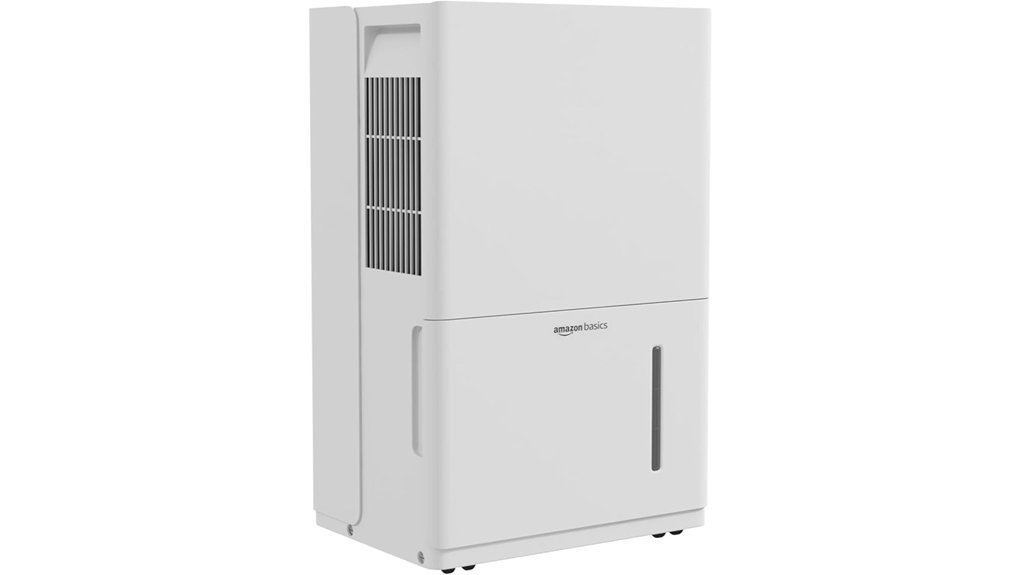
The Amazon Basics 50-Pint Dehumidifier with Pump is a practical choice for homeowners who want automatic upward drainage without paying for app controls they may not use. It is listed for spaces up to 4,000 square feet and includes a built-in pump, auto-defrost, auto-restart, a timer, overflow protection, and a washable filter.
The pump specification is a useful advantage for installation planning. Its manual allows the pump hose to reach a maximum height of 16 feet, making the unit suitable for many sinks, standpipes, utility drains, and window-level drainage routes when installed correctly.
Why you’ll like it: The controls are straightforward, the pump reduces manual bucket emptying, and the automatic restart feature can resume operation after a power interruption. The verified pump-height limit also makes it easier to determine whether the unit will work with your planned drain.
Who should buy this: Buyers who need a conventional basement dehumidifier with a pump and prefer simple controls over WiFi features.
Who should avoid this: People with a small room, buyers who need smartphone monitoring, or anyone whose drain is higher than the pump limit stated in the manual.
Key details:
- Listed moisture-removal capacity: 50 pints per day.
- Manufacturer-listed coverage: up to 4,000 square feet.
- Drainage: removable bucket, gravity-drain connection, and built-in pump.
- Pump setup: 1/4-inch pump hose with a maximum listed hose height of 16 feet.
- Convenience features: timer, auto-defrost, auto-restart, digital controls, and washable filter.
- Listed tank volume: approximately 1.59 gallons.
Pros:
- Verified pump-height guidance makes installation planning easier.
- Built-in pump supports more flexible drain placement than gravity drainage alone.
- Energy Star certified.
- Simple controls and automatic restart improve day-to-day usability.
Cons:
- No WiFi or app control.
- The large cabinet may be excessive for compact rooms.
- The pump cannot be routed above its specified height limit.
DuraComfort WiFi Dehumidifier for Basements (50 Pints)
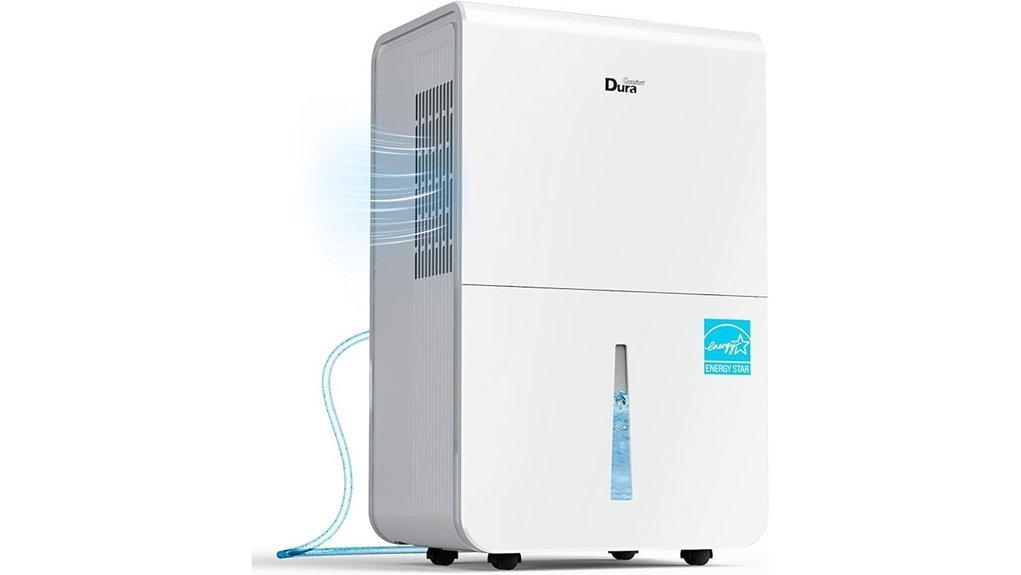
The DuraComfort WiFi Dehumidifier combines a 50-pint daily capacity with a built-in pump and app-based controls. It is listed for spaces up to 4,500 square feet and allows target humidity settings from 35% to 80% RH.
The manual lists an included 16.4-foot pump hose and an approximate maximum pump-drain height of 16.4 feet. That makes it a useful option when the nearest suitable drain is above the unit or farther away than a short gravity hose can reach.
Why you’ll like it: You can check settings remotely, schedule operation, adjust the target humidity, and use the pump for hands-off drainage. The casters and handle also make occasional repositioning easier.
Who should buy this: Homeowners who want a smart basement dehumidifier with a pump, remote controls, and a clearly documented long pump hose.
Who should avoid this: Buyers who do not want to connect an appliance to WiFi, people whose drain exceeds the pump’s height limit, or anyone who needs a lightweight unit for frequent stair-to-stair carrying.
Key details:
- Listed moisture-removal capacity: 50 pints per day.
- Manufacturer-listed coverage: up to 4,500 square feet.
- Drainage: removable tank, gravity drainage, and built-in pump.
- Pump setup: included 16.4-foot hose with an approximate maximum pumping height of 16.4 feet.
- Smart features: WiFi app control, timer, multiple operating modes, and child lock.
- Adjustable humidity range: 35% to 80% RH.
- Listed weight: about 43 pounds.
Pros:
- Built-in pump and long included hose support flexible drainage setups.
- WiFi controls allow remote adjustments and monitoring.
- Clearly published pump-height guidance reduces installation uncertainty.
- Adjustable humidity settings suit different rooms and seasons.
Cons:
- Heavier than many compact dehumidifiers.
- Smart features add setup steps and depend on compatible WiFi and continued app support.
- The bucket and internal drainage area still need periodic cleaning when pump drainage is used.
Shinco 7,000 Sq.Ft Dehumidifier with Pump and WiFi
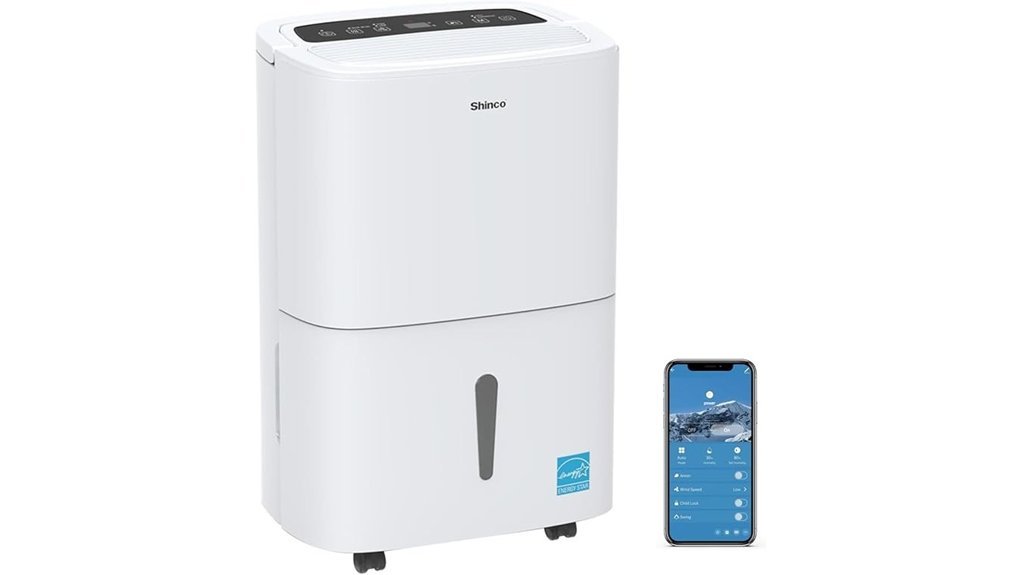
The Shinco 7,000 Sq.Ft Dehumidifier with Pump offers a 1.85-gallon tank, bucket collection, gravity drainage, and pump drainage. Its capacity figures require careful explanation: the current DOE and Energy Star comparison rating is 50 pints per day at 65°F and 60% RH, while Shinco also lists 70 pints per day at 80°F and 60% RH. The larger 150-pint claim applies only under much hotter and more humid conditions and should not be compared directly with standard 50-pint ratings.
Model-variant note: The linked W variant is marketed with WiFi, but closely related SDZ1-150P/P versions may not include connected controls. Confirm the exact model suffix, control panel, and app support on the Amazon listing before ordering if WiFi is essential.
Why you’ll like it: It provides three drainage methods, a larger tank than the other models in this comparison, adjustable humidity settings, auto-defrost, auto-restart, an internal drying function, and an included pump hose.
Who should buy this: Buyers who value a larger water tank and flexible bucket, gravity, and pump-drainage options for a basement, workshop, storage area, or other persistently damp space.
Who should avoid this: People dehumidifying a small bedroom or closet, buyers who expect the 150-pint figure under ordinary conditions, or anyone who cannot confirm that the exact variant includes the desired WiFi functions.
Key details:
- Current DOE and Energy Star capacity: 50 pints per day at 65°F and 60% RH.
- Listed warm-condition capacity: 70 pints per day at 80°F and 60% RH.
- Listed maximum capacity: up to 150 pints per day only under extreme heat and humidity.
- Manufacturer-listed coverage: up to 7,000 square feet, depending on conditions.
- Tank capacity: approximately 1.85 gallons.
- Drainage: removable tank, gravity hose, and built-in pump.
- Included pump hose: approximately 2 meters long with a 5 mm inner diameter.
- Controls: adjustable humidity from 30% to 80%, timer, child lock, auto-defrost, and auto-restart.
- WiFi: marketed on the linked W variant; confirm the exact model before purchase.
Pros:
- Large 1.85-gallon tank reduces the frequency of manual emptying when the pump is not used.
- Pump, gravity-drain, and bucket options provide installation flexibility.
- Included pump and gravity hoses reduce the number of accessories needed for basic setup.
- Energy Star certification is available for the SDZ1-150P/P model family.
Cons:
- The 150-pint figure does not represent its current standardized daily capacity.
- The 7,000-square-foot claim is an estimate and does not guarantee control in every space of that size.
- Available documentation confirms the pump hose length but does not clearly state a maximum vertical pump lift.
- WiFi availability can differ between closely related model variants.
Factors to Consider When Choosing Dehumidifiers With Drain Pumps
A built-in pump is valuable when the drain is above the dehumidifier or when a gravity hose cannot maintain a continuous downward slope. Use this checklist to compare basement dehumidifiers with pumps more accurately.
Pump Lift Height and Hose Length
Do not assume every pump can move water the same distance or height. Pump hose length and maximum vertical lift are separate specifications, even when the measurements happen to be similar. Check the manufacturer’s maximum vertical lift, included hose length, required hose diameter, and routing instructions before choosing an installation location.
A longer hose does not automatically mean that the pump can move water to the full height or distance of that hose. Avoid kinks, sharp bends, freezing conditions, and loose connections that could restrict water flow or cause leaks.
Capacity and Test Conditions
Compare pints per day under the same test conditions. A current 50-pint DOE rating should not be compared directly with a larger figure measured at 80°F and 60% RH or at extreme conditions such as 95°F and 90% RH.
All compressor dehumidifiers collect more water when the air is warmer and more humid. That does not mean a maximum hot-condition rating reflects everyday basement performance.
Coverage Area and Moisture Severity
Square-foot coverage is only a starting point. A smaller but very wet basement can need more capacity than a larger, mildly damp room. Consider visible condensation, seepage, laundry loads, musty odors, ceiling height, closed rooms, airflow, and starting relative humidity when sizing the unit.
A dehumidifier can control airborne moisture, but it cannot repair plumbing leaks, foundation seepage, standing water, or poor exterior drainage.
Model and Variant Identification
Check the complete model number rather than relying only on the brand name or general product title. Pump, WiFi, hose, refrigerant, and capacity specifications can differ between visually similar variants. Compare the listing, rating label, manual, and included-components list before ordering.
Energy Efficiency Ratings
Look for current Energy Star certification and compare the Integrated Energy Factor when available. Higher efficiency can matter when a dehumidifier runs for long periods, but correct sizing, filter maintenance, airflow, and humidistat settings also affect energy use.
Low-Temperature Operation
Compressor dehumidifiers remove less moisture as temperatures fall, and frost may form on the coils. For cool basements, check the minimum operating temperature and choose a model with auto-defrost. Auto-defrost protects the coils, but it does not make a unit suitable for temperatures below its stated operating range.
Controls, Noise, and Placement
Digital humidity controls, a timer, auto-restart, a full-tank alert, and app access can improve convenience. Also compare the listed sound level, cabinet dimensions, cord length, caster design, and required clearance around the air inlet and outlet.
WiFi can be helpful in a basement that is not visited regularly, but it should not replace periodic checks for leaks, clogged hoses, dirty filters, or drainage errors.
Maintenance and Care
Clean the washable filter on the schedule in the manual, inspect the pump hose for clogs or kinks, and wash the bucket periodically even when using pumped drainage. Most portable dehumidifier pumps draw collected water from the internal reservoir, so the bucket and internal drainage path still require cleaning.
Check the pump filter if the model has one, keep the drain outlet secure, and unplug the unit before cleaning or servicing it.
Frequently Asked Questions
How Often Should I Clean My Dehumidifier’s Drain Pump?
Follow the product manual because pump designs differ. During regular use, inspect the hose, pump filter, bucket, and drainage connections every few weeks for slime, debris, kinks, leaks, or slow drainage. Clean them sooner if you notice unusual noises, error codes, water backing up, or reduced flow.
Can I Use a Dehumidifier in Cold Temperatures?
Yes, but only within the model’s rated operating range. Compressor dehumidifiers usually remove less moisture in cooler air, and the coils can frost. Auto-defrost helps protect the system, but it does not make a unit suitable for temperatures below its stated limit.
What Size Dehumidifier Do I Need for My Space?
Use both room size and moisture severity. A mildly damp room needs less capacity than a wet basement with seepage or frequent laundry drying. Compare current standardized pints-per-day ratings, measure the space, and choose enough capacity for the worst normal conditions rather than relying only on a broad advertised square-foot number.
Can a Dehumidifier Pump Water Upward?
A built-in pump can move collected water upward, but only within its specified vertical lift limit. Confirm the maximum rise, hose length, and routing requirements before directing water to a sink, standpipe, window, or other elevated drain.
Does Pump Hose Length Equal Maximum Pump Lift?
Not necessarily. Hose length is the amount of tubing supplied, while pump lift is the maximum vertical height the pump can overcome. A manufacturer may supply a long hose but permit a lower vertical rise. Check both measurements separately.
Does a Gravity Drain Hose Need to Slope Downward?
Yes. Gravity drainage needs a continuous downward path without loops, upward sections, or an outlet submerged in water. A pump model is the better choice when the drain is higher than the dehumidifier.
Does the Bucket Need Cleaning When I Use the Pump?
Yes. The pump normally moves water from the unit’s internal collection area, so the bucket and nearby drainage components can still develop residue. Clean them according to the manual even when you rarely remove the bucket to empty it.
How Energy Efficient Are Dehumidifiers With Drain Pumps?
Efficiency varies by model. The pump uses some electricity, but the larger factors are compressor efficiency, capacity, operating time, room conditions, filter cleanliness, and humidistat settings. Compare current Energy Star certification and Integrated Energy Factor data where available.
Conclusion
For most buyers, the Amazon Basics 50-Pint Dehumidifier with Pump offers the simplest balance of standardized capacity, automatic drainage, straightforward controls, and a documented 16-foot pump-hose height limit.
Choose the DuraComfort 50-Pint WiFi model when remote control, adjustable app settings, and an included 16.4-foot pump hose matter most. Its documented pump-height guidance makes it especially useful when you already know the location of an elevated drain.
The Shinco 7,000 Sq.Ft model is the stronger choice when you value a larger 1.85-gallon tank and three drainage methods. However, compare it using its current 50-pint DOE and Energy Star capacity—not only the 70-pint warm-condition or 150-pint extreme-condition figures—and confirm that the exact linked variant includes WiFi.
Whichever model you choose, verify the exact model number, pump lift limit, hose setup, standardized capacity, and operating-temperature range before ordering. Those details matter more than a broad coverage claim and will help you choose a dehumidifier that drains reliably in your space.