Updated August 2026.
The best dehumidifier for a large apartment is not automatically the model with the largest square-foot claim. Start with your measured indoor humidity, the apartment’s layout, the severity of the moisture problem, and whether you can use continuous drainage. A 32- to 50-pint compressor model may be enough for moderate humidity, while a higher-capacity unit or built-in pump can be useful for persistent dampness, laundry moisture, or a large open floor plan.
Among the five options below, the Frigidaire 50 Pint Wi-Fi Dehumidifier is the most balanced smart choice. The Vellgoo 64 Pint emphasizes energy-conscious operation, while the Avylo 90 Pint adds a pump for locations without a convenient floor-level drain. The BANABIE 32 Pint is better suited to moderate moisture loads, and the Waykar 120 Pint is the heavy-duty option for unusually damp, connected spaces.
Quick Verdict
- Best Overall: Frigidaire 50 Pint Wi-Fi Dehumidifier
- Best Energy-Efficient Option: Vellgoo 64 Pint Dehumidifier
- Best with a Pump: Avylo 90 Pint Dehumidifier
- Best for Moderate Humidity: BANABIE 32 Pint Dehumidifier
- Best Heavy-Duty Option: Waykar 120 Pint Dehumidifier
Quick Comparison of Large-Apartment Dehumidifiers
| Product | Best For | Advertised Capacity | Drainage | Standout Feature | Check Details |
|---|---|---|---|---|---|
| Frigidaire 50 Pint | Smart control in a large open apartment | 50 pints per day | Tank or continuous gravity drain | Wi-Fi app controls | Check Amazon |
| Vellgoo 64 Pint | Energy-conscious everyday use | Marketed as a 64-pint model | Tank or continuous gravity drain | ENERGY STAR-listed configuration | Check Amazon |
| Avylo 90 Pint | Apartments needing pumped drainage | Maximum 90 pints under hot, humid conditions | Tank, gravity hose or built-in pump | Pump and top-mounted tank | Check Amazon |
| BANABIE 32 Pint | Moderately humid apartments | 32 pints per day | 2.5-liter tank or gravity hose | Compact, lower-capacity design | Check Amazon |
| Waykar 120 Pint | Very damp, large connected spaces | Maximum 120 pints at 95°F and 90% RH | Tank or continuous gravity drain | High maximum moisture removal | Check Amazon |
Frigidaire 50 Pint Wi-Fi Dehumidifier — Best Overall
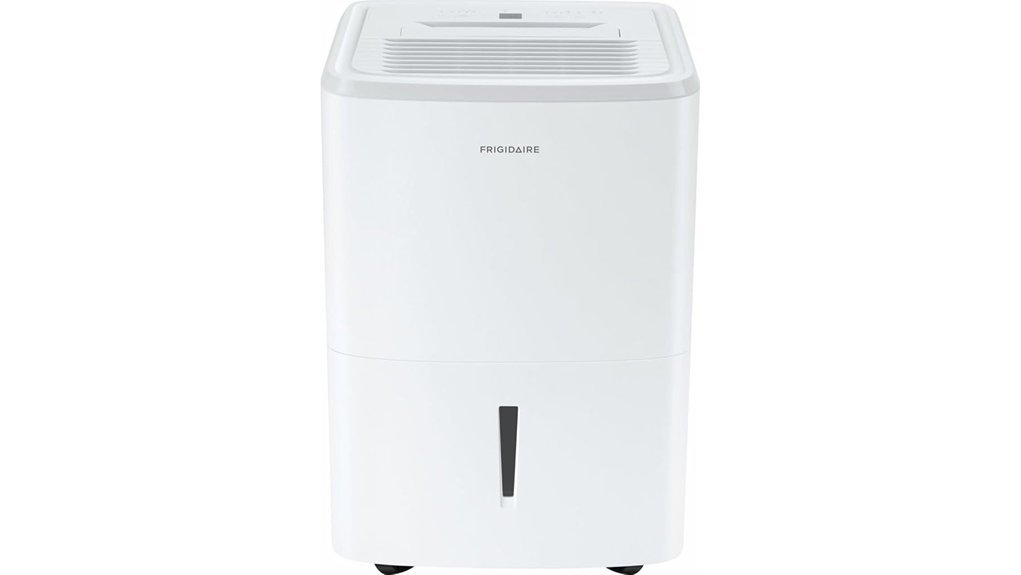
The Frigidaire 50 Pint Wi-Fi Dehumidifier offers a practical balance of capacity, familiar controls, and remote monitoring for a large apartment. Its current product information identifies it as a 50-pint model with an advertised coverage area of up to 4,500 square feet. Treat that coverage number as a broad estimate rather than proof that one machine will control every closed room.
Wi-Fi control is the main advantage. You can check settings without walking to the unit, which is useful when it is placed near a laundry area, living room, or central hallway. It also has a washable filter, multiple fan speeds, a removable bucket, automatic shutoff, and a continuous-drain connection.
Best For: Large open apartments where smart control, dependable everyday operation, and a recognized appliance brand matter more than maximum headline capacity.
Why You’ll Like It: It combines app-based control with a useful 50-pint rating that fits many moderately to very damp large rooms.
Who Should Avoid It: Buyers who need water pumped upward to a sink or window should choose a model with a built-in pump instead of relying on gravity drainage.
Pros:
- Wi-Fi control makes remote adjustments more convenient.
- 50-pint capacity is a sensible starting point for a damp, open apartment.
- Washable filter and continuous-drain connection simplify routine use.
- Multiple fan speeds let you balance airflow and sound.
Cons:
- At approximately 44.5 pounds, it is not a lightweight unit.
- Initial Wi-Fi setup may require a compatible 2.4 GHz network.
- Advertised square-foot coverage may not apply across closed bedrooms.
Vellgoo 64 Pint Energy Star Dehumidifier — Best Energy-Efficient Option
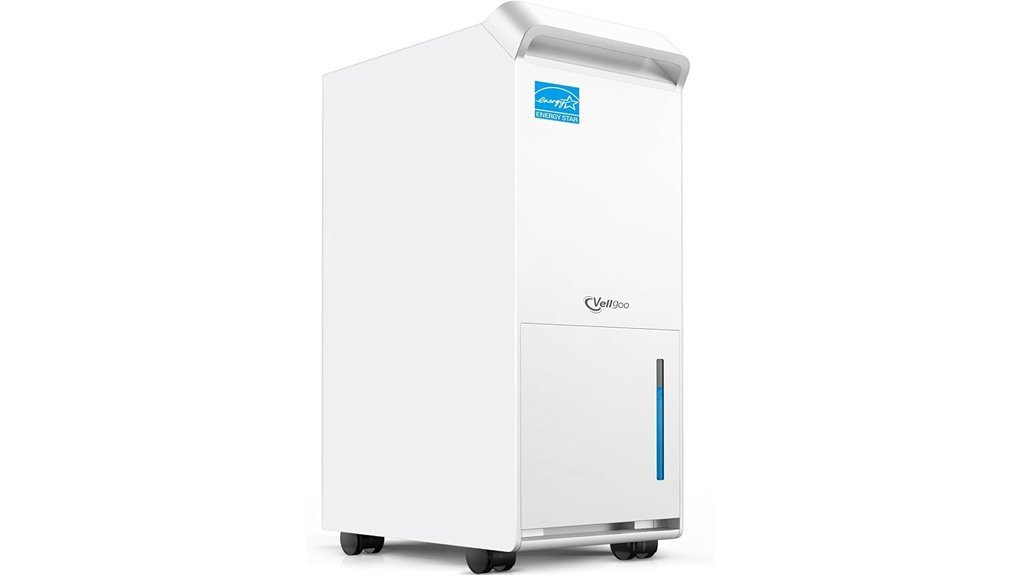
The Vellgoo is marketed as a 64 Pint Energy Star Dehumidifier for large residential spaces. It is a useful choice for buyers who expect to run a dehumidifier regularly and want efficiency, an adjustable humidistat, and continuous drainage.
Specifications for this ASIN vary across public seller descriptions, particularly the maximum pint rating and estimated coverage area. The most cautious approach is to treat it as the listed 64-pint configuration for approximately 4,000 square feet and confirm the current DOE-rated capacity, model number, and certification on the Amazon listing before purchase.
Best For: Buyers seeking a balanced large-room dehumidifier with energy-conscious operation, a washable filter, and flexible drainage.
Why You’ll Like It: It combines humidity controls, a timer, a washable filter, and the option to bypass manual tank emptying with a properly installed gravity hose.
Who Should Avoid It: Buyers who need to send water upward should select a pump model. Gravity drainage requires the hose outlet to remain below the drain connection.
Pros:
- ENERGY STAR-listed configuration supports more efficient moisture removal.
- Adjustable humidity settings suit changing seasonal conditions.
- Continuous gravity drainage reduces bucket-emptying work.
- Washable filter helps protect the appliance from dust buildup.
Cons:
- Published pint and coverage claims are inconsistent between sellers.
- The tank may fill quickly during very humid weather.
- It does not replace repair of a leak, plumbing problem, or water intrusion.
Avylo 90 Pint Dehumidifier with Pump — Best Pump Option
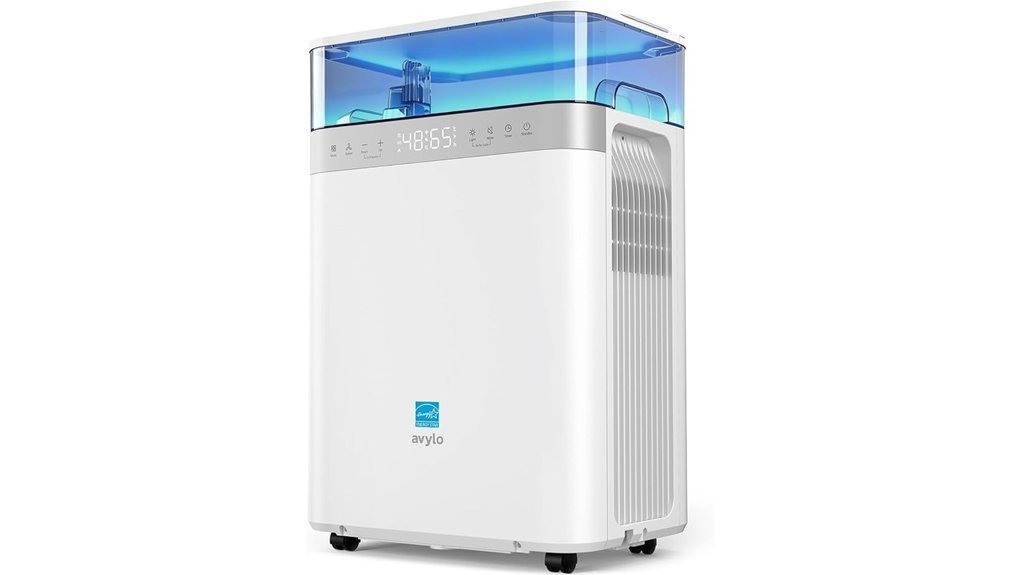
The Avylo Dehumidifier stands out because its built-in condensate pump can move collected water toward an elevated drainage point. That can solve a common apartment problem when the unit cannot be positioned beside a floor-level drain.
Avylo advertises maximum moisture removal of up to 90 pints per day under hot, highly humid test conditions, coverage up to 4,500 square feet, a 2.11-gallon top-mounted tank, automatic defrost, and low-setting operation around 41 dB. Because the 90-pint figure is a maximum-condition claim, compare the current DOE-rated capacity before judging it against other models.
Best For: Very damp apartments, lower-level units, laundry areas, or other spaces where water must be pumped to a sink, standpipe, or elevated outlet.
Why You’ll Like It: The pump offers more placement flexibility than gravity-only drainage, while the top-mounted tank reduces bending during manual emptying.
Who Should Avoid It: Buyers with only moderate humidity and an easy floor-drain connection may not need the added cost or maintenance of a pump system.
Pros:
- Built-in pump supports drainage where gravity flow is impractical.
- Large top-mounted tank is easier to access than many low front buckets.
- Automatic humidity control reduces unnecessary continuous operation.
- Automatic defrost supports operation in cooler rooms within the stated range.
Cons:
- The maximum 90-pint claim is based on hot, highly humid conditions.
- Pump hoses and internal drainage parts need periodic inspection and cleaning.
- The larger cabinet may be difficult to place in a narrow hallway or small utility closet.
BANABIE 32 Pint Dehumidifier — Best for Moderate Humidity
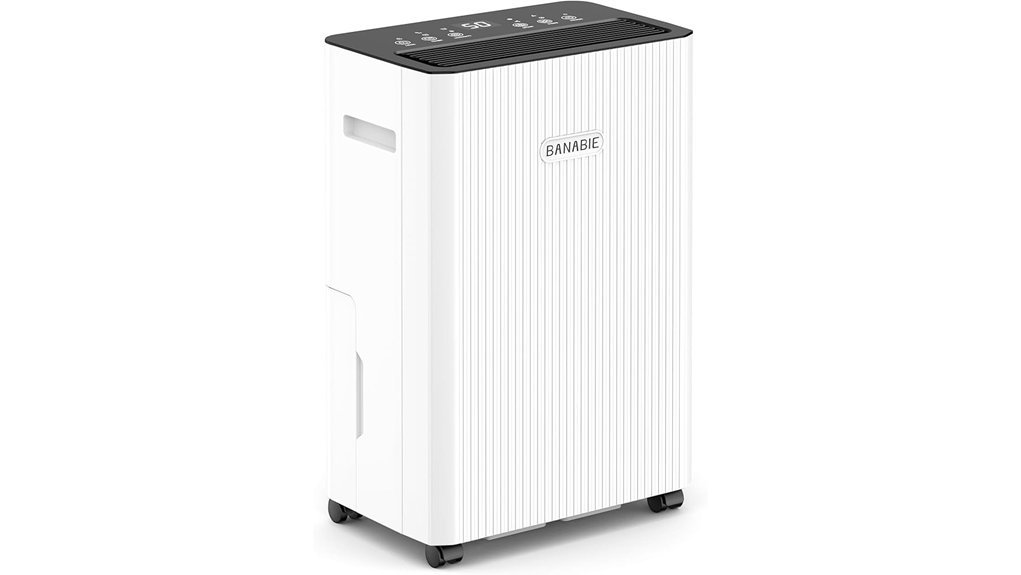
The BANABIE model is advertised as a 32-pint dehumidifier for spaces up to 2,500 square feet. It is the most appropriate option in this group when the apartment feels mildly or moderately damp rather than wet, and when a smaller machine is easier to place.
Its listed features include automatic humidity control, continuous operation, a 24-hour timer, automatic shutoff, power-outage memory, wheels, a washable filter, a 2.5-liter tank, and a drain hose. The listing advertises operation around 32 dB at its quietest setting, but actual sound will vary with fan speed, compressor cycling, placement, and room acoustics.
Best For: Moderately humid large apartments, bedrooms connected to an open living area, or buyers who do not need a heavy-duty 50-pint or larger model.
Why You’ll Like It: It provides compressor-based moisture removal and continuous drainage in a more compact format than the highest-capacity options.
Who Should Avoid It: It may be undersized for recurring condensation, wet walls, laundry drying, serious water intrusion, or several closed rooms.
Pros:
- Lower-capacity design can be easier to place in an apartment.
- Adjustable humidity control supports automatic cycling.
- Drain hose allows continuous gravity drainage.
- Timer, auto shutoff, and restart memory improve everyday usability.
Cons:
- The 2.5-liter tank may require frequent emptying in humid weather.
- It has less moisture-removal headroom than the 50-pint and larger options.
- The 2,500-square-foot claim should not be treated as guaranteed whole-apartment coverage.
Waykar 120 Pint Energy Star Dehumidifier — Best Heavy-Duty Option
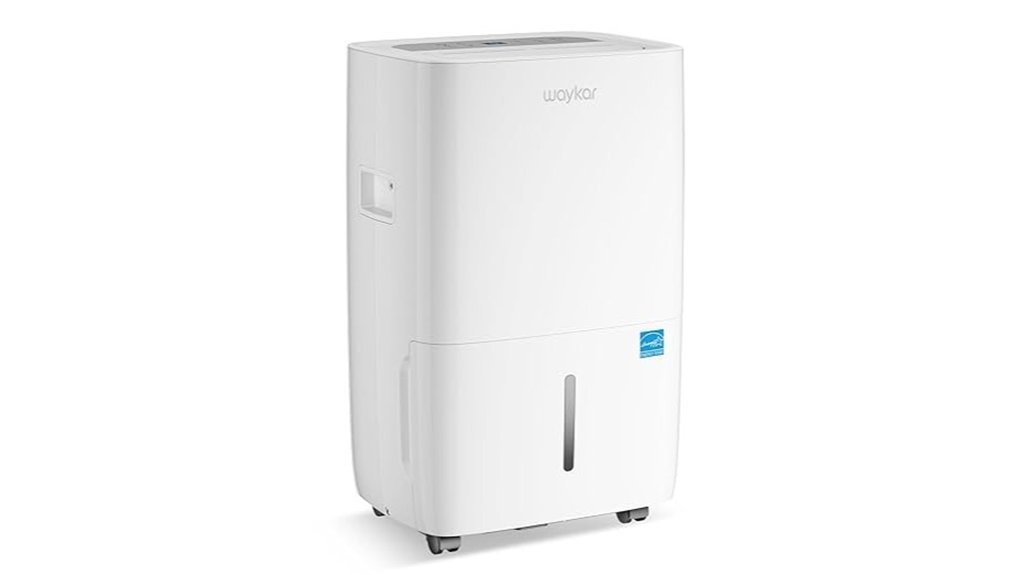
The Waykar is the highest-capacity option in this roundup. It is advertised to remove up to 120 pints per day at 95°F and 90% relative humidity and to serve spaces up to 6,000 square feet. Those are maximum-condition and manufacturer-coverage figures, so they should not be compared directly with standardized capacity ratings without checking the current product documentation.
For the right space, the Waykar offers adjustable humidity settings from 30% to 80%, a removable tank, continuous gravity drainage, automatic shutoff, automatic defrost, a washable filter, and an oscillating outlet intended to improve air distribution. It makes the most sense when a large open apartment has persistent moisture or connects directly to a damp storage, laundry, or lower-level area.
Best For: Very damp open layouts, heavy laundry moisture, lower-level apartments, or combined living and storage spaces requiring greater moisture-removal headroom.
Why You’ll Like It: Its high maximum capacity and broad humidity adjustment range provide more headroom than the smaller models.
Who Should Avoid It: Buyers with mild seasonal humidity may find it unnecessarily large. A properly sized 32- or 50-pint model may cycle more appropriately and take up less space.
Pros:
- Highest maximum advertised moisture removal in the comparison.
- Adjustable humidistat supports automatic operation.
- Tank and continuous gravity-drain options provide flexibility.
- Automatic defrost and filter reminders support routine operation.
Cons:
- The 120-pint figure is measured under hot, highly humid conditions.
- It may be oversized for an apartment with only moderate moisture.
- Gravity drainage still requires a lower, unobstructed drain location.
Factors to Consider When Choosing a Dehumidifier for a Large Apartment
A useful apartment dehumidifier must match the actual moisture load, not only the floor plan. Measure the humidity first, identify where the moisture enters, and decide how collected water will be removed before comparing convenience features.
Measure the Humidity First
Use a separate hygrometer to check several rooms over multiple days. The U.S. Environmental Protection Agency generally recommends keeping indoor relative humidity between 30% and 50%. Avoid driving humidity unnecessarily low, because overly dry air can also be uncomfortable. See the EPA’s indoor-air guidance for additional moisture-control advice.
Choose Capacity by Dampness and Floor Area
Capacity is measured in pints of water removed during 24 hours under specified test conditions. A mildly damp 2,500-square-foot apartment may need less capacity than a 1,500-square-foot lower-level apartment with wet walls, laundry moisture, or recurring condensation.
ENERGY STAR’s dehumidifier sizing guidance recommends considering both room size and moisture conditions. For spaces larger than 2,000 square feet, its general starting ranges are 30 pints or more for slight-to-moderate dampness, 40 pints or more for very damp conditions, and 50 pints or more for wet conditions.
Consider the Apartment Layout
One dehumidifier can work well in an open-plan apartment where air moves freely. It will be less effective across several closed bedrooms, long hallways, or rooms separated by solid doors. Place the unit near the main moisture source or in a central open area, maintain the manufacturer’s required clearance, and use interior fans when appropriate to improve circulation.
Do not place the unit inside a tightly enclosed closet unless the manual specifically permits that installation and adequate airflow is available.
Select the Right Drainage Method
Manual tank collection is simple but can require daily emptying in humid conditions. Continuous gravity drainage reduces maintenance, but the hose must slope downward without kinks and terminate below the dehumidifier’s outlet.
A built-in pump is useful when the water must travel upward to a sink, standpipe, or window-level outlet. Pumps add placement flexibility but introduce parts and hoses that require cleaning and inspection.
Account for Noise and Heat
A compressor dehumidifier contains both a fan and a refrigeration compressor. Low-setting sound claims do not describe every part of the operating cycle. Expect the compressor to start and stop as the humidistat responds, and remember that hard floors and corners can make vibration more noticeable.
These appliances also release some heat into the room while operating. That may be acceptable in a basement or laundry area but more noticeable in a bedroom during summer.
Compare Energy Efficiency
An ENERGY STAR-certified model must meet program efficiency requirements under specified test conditions. Certification does not mean every model costs the same to operate. Actual electricity use depends on capacity, runtime, humidity setting, room temperature, airflow, and local electricity rates.
Choose the smallest capacity that can reliably control the moisture problem without running continuously. An undersized unit may operate for long periods without reaching the target, while an unnecessarily oversized unit can cost more, occupy more space, and add more heat than needed.
Decide Whether Smart Features Are Useful
Wi-Fi control is valuable when the dehumidifier is placed away from the main living area or when you want to check settings remotely. It is less important than a reliable humidistat, automatic restart, full-tank shutoff, and a workable drainage arrangement.
Before buying a connected model, check app compatibility, Wi-Fi requirements, and whether essential controls remain available directly on the appliance.
Plan for Maintenance
Clean the washable filter according to the manual, rinse the bucket periodically, and inspect the drain hose for algae, sludge, kinks, or blockages. A blocked hose can cause water to back up into the bucket and stop continuous drainage.
Leave enough clearance around the air intake and outlet. Dust buildup, restricted airflow, and a dirty filter can reduce performance and increase operating time.
Apartment Safety and Renter Considerations
A dehumidifier can manage airborne moisture, but it cannot repair plumbing leaks, roof leaks, failed ventilation, wet drywall, or water entering through the building. Renters should document and report leaks, visible mold, damp building materials, or repeated water intrusion to the landlord or property manager promptly.
Before You Buy Checklist
- Measure the humidity with a separate hygrometer.
- Estimate the open area the unit can actually reach.
- Identify whether the apartment is mildly damp, very damp, or wet.
- Compare DOE-rated capacity rather than incompatible maximum ratings.
- Confirm tank size and how often you are willing to empty it.
- Check whether gravity drainage is physically possible.
- Choose a pump only when water must move upward.
- Review operating temperature and automatic-defrost information.
- Check dimensions, weight, clearance, and acceptable noise.
- Confirm the current warranty, certification, accessories, and return terms.
Frequently Asked Questions
How Often Should I Empty the Dehumidifier’s Water Tank?
It depends on the tank size, room humidity, temperature, and moisture load. A tank may fill in less than a day during very humid weather, while it may take several days under milder conditions. Most full-size units stop automatically when the tank is full. Use continuous drainage when you need unattended operation and have a suitable drain.
Can Dehumidifiers Help Reduce Allergens in My Apartment?
A dehumidifier is not an air purifier and does not directly remove pollen, pet dander, mold spores, or dust mites from the air. Keeping humidity within a moderate range can make the environment less favorable for mold and dust mites. Cleaning, leak repair, ventilation, and appropriate air filtration remain separate steps.
What Is the Average Lifespan of a Dehumidifier?
Lifespan varies significantly with compressor quality, operating hours, room conditions, maintenance, storage, and drainage care. Rather than relying on a fixed number of years, compare the written warranty and follow the manufacturer’s filter, bucket, coil, and hose-maintenance instructions.
Do I Need a Dehumidifier in a Dry Climate?
Usually not when measured indoor humidity already stays within the recommended range. A dehumidifier may still be useful for a localized moisture problem caused by an unvented bathroom, laundry drying, a plumbing leak, or a damp lower-level room. Measure the humidity before buying and repair the moisture source whenever possible.
How Noisy Are These Dehumidifiers During Operation?
The listings advertise low-setting noise figures ranging from the low 30s to the mid-40s in decibels, but test methods differ. Actual sound depends on fan speed, compressor cycling, flooring, wall reflections, and placement. For a bedroom, compare return policies and place the unit on a level surface away from furniture that may vibrate.
Can One Dehumidifier Control an Entire Large Apartment?
It may work in an open layout with good airflow and a central placement. One portable unit is less likely to maintain equal humidity across closed bedrooms or distant rooms. Keep interior doors open when practical, use fans to improve circulation, or move the unit between problem areas while checking each room with a hygrometer.
Should I Choose a Dehumidifier with a Pump?
Choose a pump when the drainage destination is higher than the dehumidifier or when a downward-sloping gravity hose is impossible. A gravity-drain model is simpler when a nearby floor drain or low outlet is available. Confirm the pump’s permitted lift height and included hose before ordering.
Conclusion
For most large apartments, the Frigidaire 50 Pint Wi-Fi Dehumidifier offers the best combination of useful capacity, smart control, drainage flexibility, and everyday usability. The Vellgoo 64 Pint is the stronger choice when energy-conscious operation is the priority, while the Avylo 90 Pint is easier to place when you need pumped drainage.
Choose the BANABIE 32 Pint for moderate seasonal humidity rather than a severe moisture problem. Reserve the Waykar 120 Pint for unusually damp, open spaces where its higher maximum output is genuinely useful.
Final Recommendation
Measure the apartment’s humidity before ordering, target a moderate indoor range, and select the drainage setup before comparing smart features. If the moisture comes from a leak, wet building material, or failed ventilation, address that source instead of relying on a dehumidifier alone.