
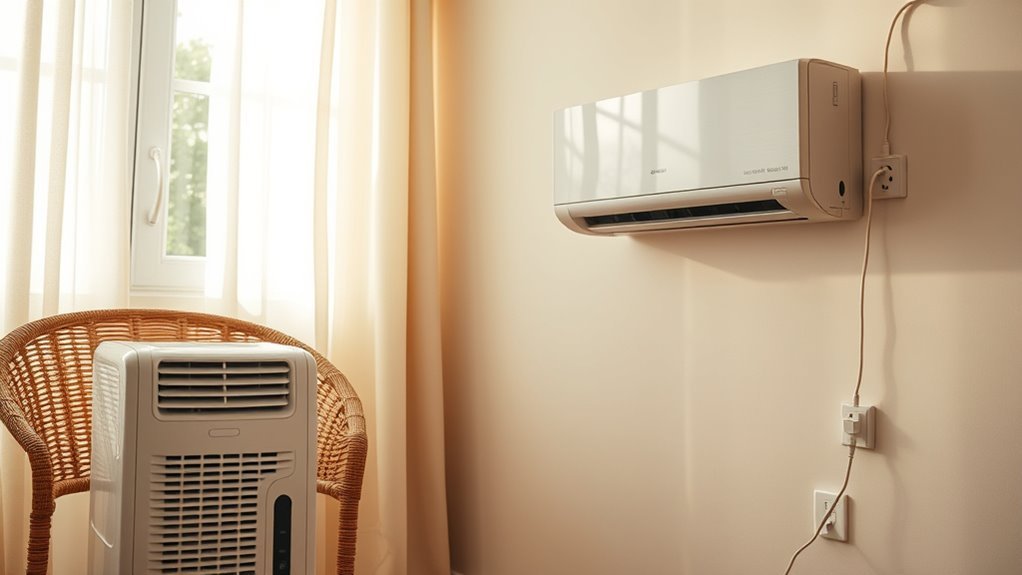
Dehumidifier vs AC electricity use: a dehumidifier usually draws less power than an air conditioner when the room is damp but already comfortable. Use AC when the room is hot and humid, because it cools and removes some moisture at the same time. To compare real costs, multiply each appliance’s wattage by its daily runtime and your electricity rate.
Appliance wattage varies a lot by model and size, so check the label on each unit rather than relying on averages.
Quick Comparison: Dehumidifier vs AC Electricity Use
Use this table to match the appliance to the room condition, then check the real wattage on the label or with a plug-in energy monitor.
| Situation | Lower-cost starting point | Main reason |
|---|---|---|
| Damp room, comfortable temperature | Dehumidifier | Targets moisture without cooling the room |
| Hot and humid room | Air conditioner | Cools and removes some moisture at once |
| Cool basement below about 65°F | Low-temperature dehumidifier | Standard units can frost up and cycle poorly |
| Whole home stays humid after cooling | HVAC check or whole-home dehumidifier | May need sizing, ventilation, drainage or duct fixes |
Recommended Products
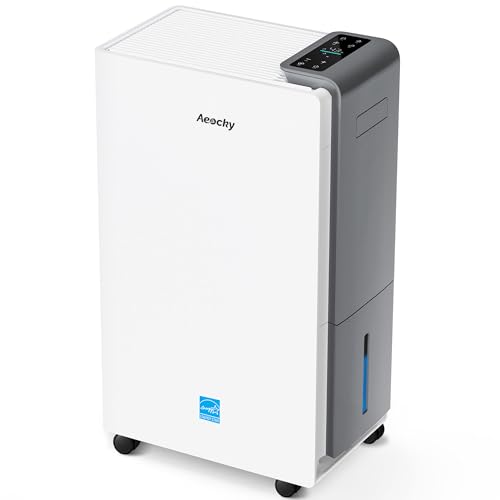
【ENERGY STAR 25 ≠ ENERGY STAR Most Efficient 2025】Don't fall for competitors' word games. With only 2.6% of ENERGY STAR models earning "Most Efficient 2025" title, these options are exceptionally rare on the market. RHEA-001 is one of the few to truly hold this top-tier certification. Many brands use misleading phrases like "Energy Star Efficient 25" or "Energy Star 25" to imply a standard they haven't met. Choosing them is a risk.With AEOCKY, you get verified performance and the peace of mind of authentic, top-tier efficiency.

Semiconductor dehumidifiers use thermoelectric cooling to remove moisture from the air. They create a drier, more comfortable environment by reducing humidity and improving air quality.
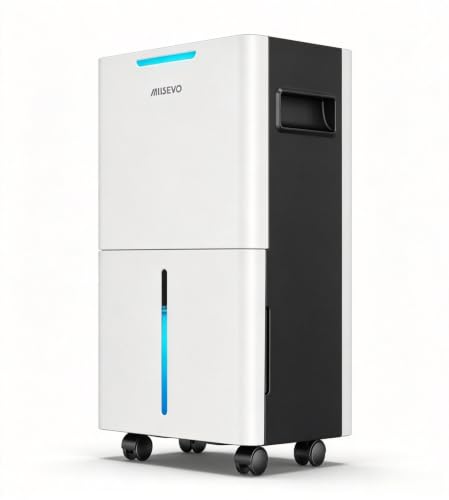
High Efficient Dehumidifier — Equipped with a high-performance compressor, Whether it’s your basement, bedroom, bathroom, living room, bathroom, crawlspace, or even an RV, this dehumidifier effectively keeps your environment dry, comfortable, and healthy.
Does a Dehumidifier Use More Electricity Than AC?
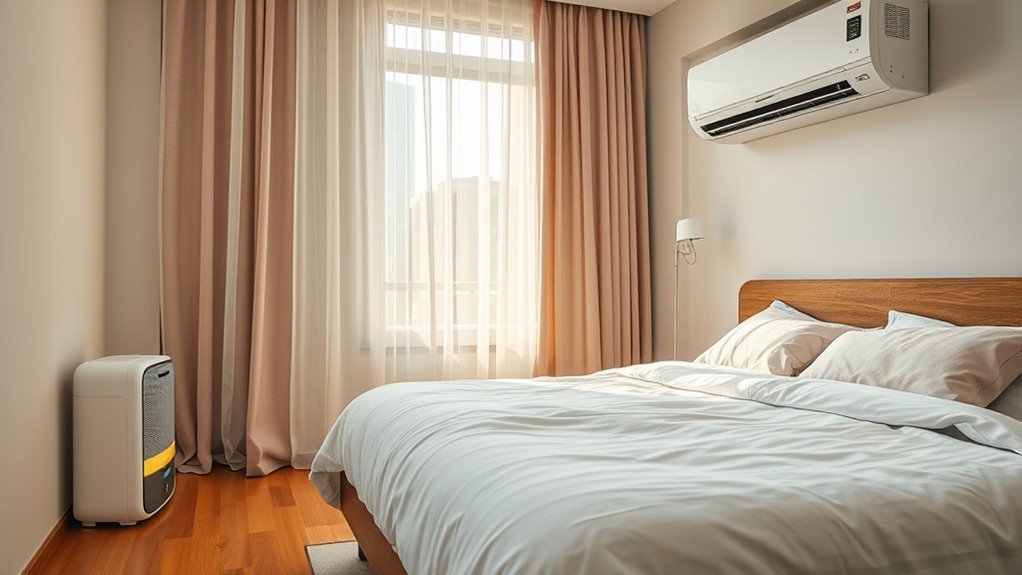
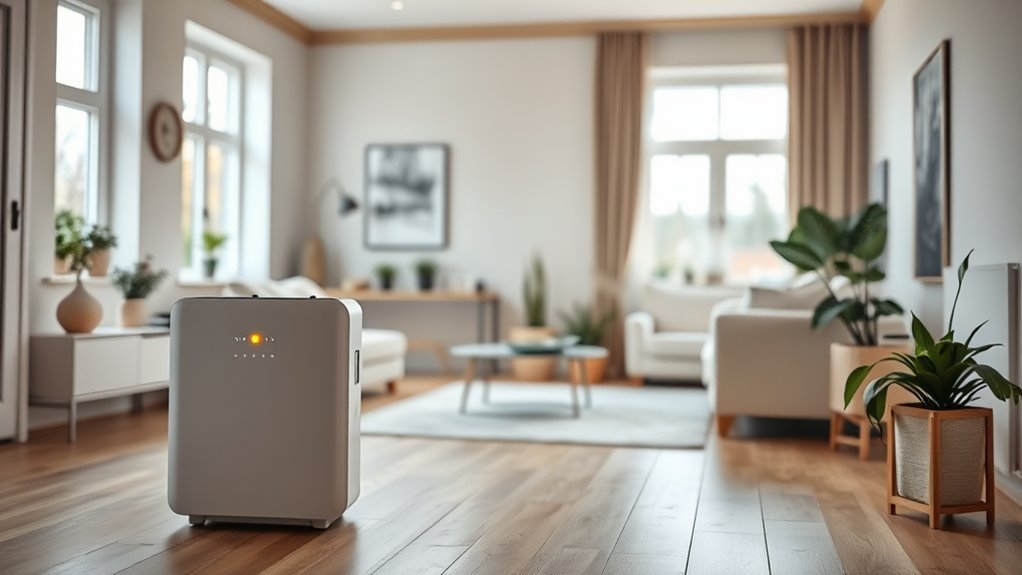
Usually not, when the only job is moisture removal. A portable dehumidifier pulls water from the air, collects it in a bucket or drains it through a hose, and cycles on and off with its humidistat. An air conditioner must also cool the room and move heat outdoors, which typically takes more energy.
That does not make a dehumidifier cheaper in every case. A compressor dehumidifier releases heat into the room, so it can make a hot space feel warmer. The real question is whether you have a humidity-only problem or a heat-and-humidity problem.
Efficiency also matters. ENERGY STAR says certified dehumidifiers use about 20% less energy than similarly sized conventional units that remove the same amount of moisture.
How Each Appliance Removes Moisture
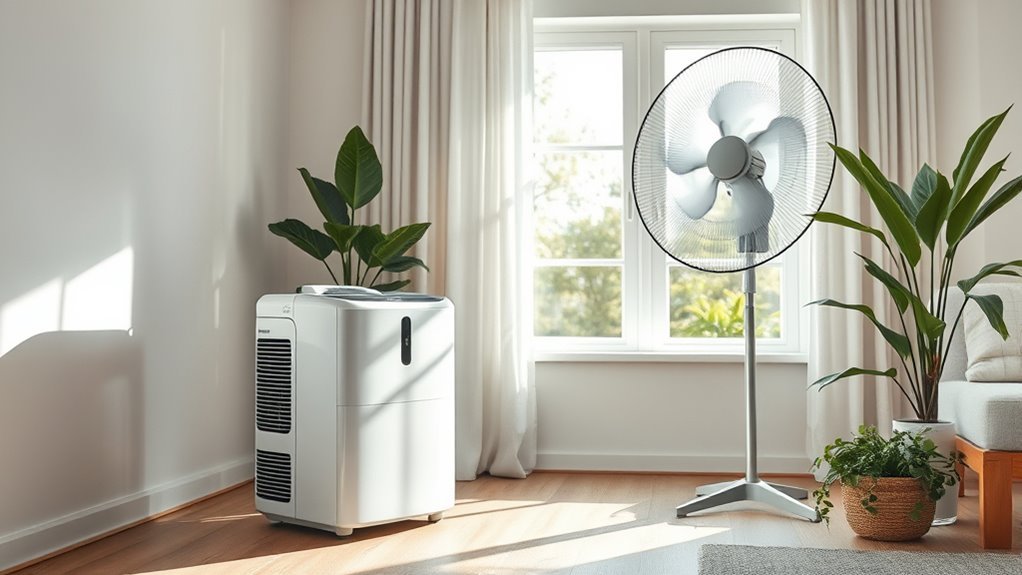
A dehumidifier pulls damp air over cold coils, condenses water vapor into liquid, and returns drier air to the room. Its job is humidity, not cooling.
An air conditioner also removes moisture, because warm indoor air condenses on its cold evaporator coil and the water drains away. But its main job is lowering temperature. If the thermostat is comfortable but the room feels sticky, a dehumidifier is often the leaner choice. If the room is hot, only AC provides cooling.
How to Calculate the Electricity Cost
Find the wattage on the appliance label, in the manual, on the EnergyGuide label, or with a plug-in monitor. Then use the standard formulas:
Daily kWh = watts × hours used per day ÷ 1,000
Daily cost = daily kWh × your rate per kWh
The table below uses 12 hours of full-power running and an illustrative rate of $0.15 per kWh. These are examples, not measured values for any specific model.
| Example draw | 12-hour use | Cost at $0.15/kWh | 30-day estimate |
|---|---|---|---|
| 300 watts | 3.6 kWh | $0.54/day | $16.20 |
| 500 watts | 6.0 kWh | $0.90/day | $27.00 |
| 700 watts | 8.4 kWh | $1.26/day | $37.80 |
A dehumidifier with a humidistat cycles off at its target humidity, so real cost can be lower than a straight 12-hour calculation. An AC also cycles with its thermostat, room size, insulation, outdoor temperature and sun exposure. For a longer-run view, see how much electricity a dehumidifier uses per month.
A Simple Test Before You Run Either One
Take three quick readings: room temperature, relative humidity (with a hygrometer), and appliance wattage.
- Comfortable temperature, humidity above 50% to 60%: start with the dehumidifier.
- Hot room, humidity above 50%: start with AC, then recheck humidity once the room cools.
- Humidity stays high after AC runs: the AC may be oversized, the fan speed too high, or a moisture source still active.
- An appliance runs nonstop: check its size, seal air leaks, and look for water intrusion or poor ventilation.
When a Dehumidifier Is Cheaper to Run
A dehumidifier usually costs less when humidity is the main problem and the temperature is already comfortable. That is common in basements, laundry areas, storage rooms and musty closed-off rooms.
EPA recommends keeping indoor humidity below 60% and ideally between 30% and 50%. If a room is at a comfortable temperature but above that range, running AC only to remove moisture can waste cooling energy.
A portable unit also lets you treat one damp room instead of cooling the whole house. To keep the cost down:
- Keep doors and windows closed while it runs.
- Use the humidistat instead of running it nonstop.
- Use a drain hose if the room stays damp, so a full bucket does not stop the unit.
- Start at about 50% relative humidity and go lower only if the room still smells musty or shows condensation.
For setup help, see whether a dehumidifier is the same as an air conditioner.
When an Air Conditioner Is the Better Energy Choice
AC is the better choice when the room is both hot and humid. It does two jobs at once: it cools the room and removes some moisture. A dehumidifier may reduce stickiness, but it will not lower the temperature.
Sizing matters. ENERGY STAR notes that a bigger room air conditioner is not always better: an oversized unit costs more, wastes energy, and can cool the room before it removes enough humidity, leaving it feeling damp. Running the fan at a lower speed on humid days can help remove more moisture.
Some air conditioners have a dry or dehumidify mode. Behavior varies by model, so check your manual and do not assume it always uses less energy than cooling mode. Our guide to using the dehumidifier mode on a portable air conditioner and the one on whether a window air conditioner dehumidifies cover this in more detail.
Recommended Products

🍀 1657ML Larger Capacity: The water tank of this dehumidifier can hold of water at most 1657ml(58 OZ), you don’t need to pour water frequently and don’t worry about the water overflow or water leaking. Please read the instruction manual before using the product!

HANDY AND PORTABLE: The SereneLife Portable Air Conditioner System features a lightweight, handy, sleek body design intended to be used in the bedroom, living room or garage at home or office. It features rolling wheels for easy portability

Multi-Season Comfort - Midea 8000 BTU window air conditioner with heat is better than standard ac units. It will beat the heat in summer with powerful cooling and dehumidification and keep you warm through the fall with supplemental heat. Best for large rooms up to 350 square feet. NOTE: heat pump function works when outside temp> 41°F.
Why Running Both Can Raise Your Power Bill
Running both at once can improve comfort in some damp homes, but both draw power. It should be a deliberate choice.
- The AC already removes some moisture while cooling.
- The dehumidifier adds a second compressor and fan load.
- The dehumidifier adds some heat to the room, which can make the AC work harder.
- Open windows or doors make both appliances fight incoming humid air.
Use both only when AC alone cannot hold humidity down, such as in a humid climate or a tightly sealed home with persistent moisture. If humidity stays high with both running, look for leaks, poor drainage, a wet crawl space, an unvented dryer or weak bathroom and kitchen ventilation. Also read should you use a dehumidifier with air conditioning before running both full time.
Warning: Do not use either appliance to ignore a leak, flood damage or visible mold. Fix the moisture source first and dry wet materials quickly.
Efficiency Tips That Lower the Bill
- Measure humidity first with a hygrometer. Aim for roughly 30% to 50% relative humidity.
- Close windows and exterior doors so you do not pull in humid outdoor air.
- Clean filters. Dirty filters reduce airflow and make the appliance work harder.
- Use the humidistat or thermostat so the unit cycles instead of running nonstop.
- Size correctly. A too-small dehumidifier may run constantly, while an oversized AC may cool without removing enough moisture.
- Fix moisture sources: repair leaks, vent dryers outdoors and run bathroom fans.
- Compare ENERGY STAR models on capacity, Integrated Energy Factor and estimated energy use before buying.
Related Guides
- Do dehumidifiers use a lot of electricity?
- How much electricity a dehumidifier uses per month
- Is a dehumidifier the same as an air conditioner?
- Should you use a dehumidifier with air conditioning?
Frequently Asked Questions
Is a dehumidifier cheaper to run than AC?
Usually, yes, if humidity is the main problem and the room does not need cooling. A dehumidifier targets moisture directly. If the room is hot, AC may be the better value because it cools and dehumidifies at the same time.
How much will my electric bill go up with a dehumidifier?
It depends on wattage, runtime and your rate. For example, a 500-watt unit running 12 hours uses 6 kWh. At an illustrative $0.15 per kWh, that is about $0.90 per day, or about $27 for 30 days. If the humidistat cycles the unit off, the real cost may be lower.
How much does it cost to run a dehumidifier 12 hours a day?
Use watts × 12 ÷ 1,000 × your rate. A 300-watt unit at $0.15 per kWh costs about $0.54 for 12 hours, and a 700-watt unit costs about $1.26. Check your unit’s label for its actual wattage.
Can a dehumidifier cool a room?
No. A dehumidifier can make a humid room feel less sticky, but it does not cool like AC. Compressor dehumidifiers release some heat back into the room, so the nearby air may feel slightly warmer.
What humidity setting saves the most energy?
For most homes, start around 50% relative humidity. If the room still smells damp or shows condensation, try 45%. Setting the target much lower increases runtime and cost without much added comfort.
Should I run a dehumidifier and AC at the same time?
Only when AC alone cools the room but leaves humidity too high. Start with AC in hot rooms, then add the dehumidifier if humidity stays above your target. Keep windows closed and check for leaks, dryer vent problems or weak exhaust fans if both run often.
Sources
- ENERGY STAR: Dehumidifiers
- ENERGY STAR: Room Air Conditioners
- U.S. EPA: A Brief Guide to Mold, Moisture and Your Home

[…] unit can draw up to 5,000 watts (5 kW) when running. For a deeper comparison, read our guide on dehumidifier vs AC electricity use. Run your air conditioner when the room needs cooling, and use extra dehumidification when humidity […]