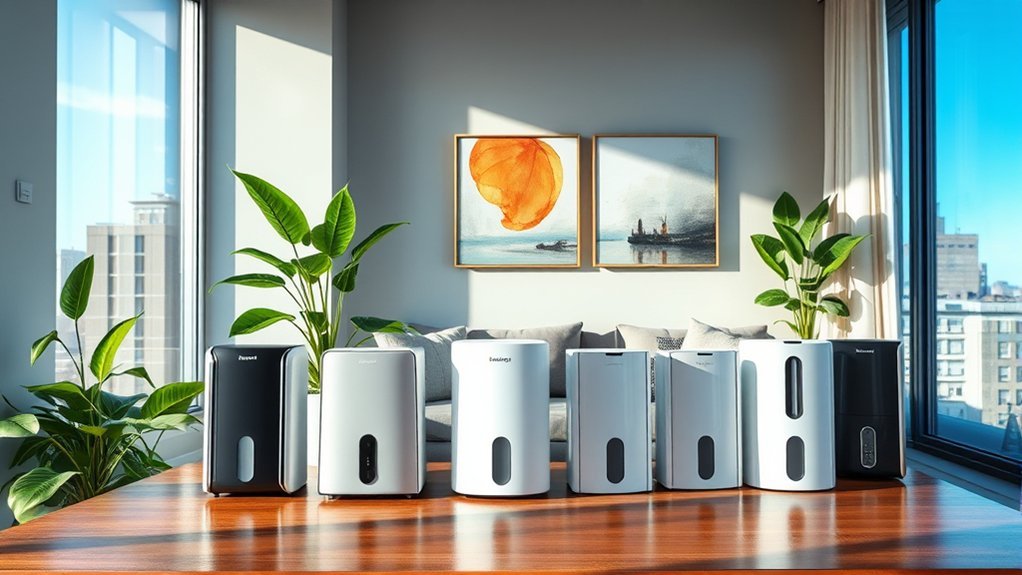
Is a dehumidifier the same as an air conditioner? No. A dehumidifier isn’t the same as an air conditioner. A dehumidifier removes excess moisture from the air, while an air conditioner removes heat and cools the room. Both can reduce humidity, but they do it for different reasons. For most homes, the healthier target is to keep indoor relative humidity below 60% and, when possible, closer to the 30% to 50% range recommended by mold and indoor-air guidance.
Quick Answer
A dehumidifier is best when the room feels damp, musty, or sticky but not hot. An air conditioner is best when the room is too warm and needs active cooling. Use both together when the air is hot and humid and the AC alone cannot keep humidity comfortable.
Key Takeaways
- A dehumidifier removes moisture; an air conditioner removes heat and cools the air.
- Use a hygrometer before deciding. If indoor humidity is above 50% to 60%, moisture control may be needed.
- A dehumidifier can make a damp room feel more comfortable, but it does not work like an AC and may slightly warm the air.
- An AC can remove some moisture as it cools, but it is not always enough for basements, bathrooms, crawl-space-adjacent rooms, or very humid climates.
- Running both can help in hot, humid weather, but set each unit correctly to avoid wasting energy.
Is a Dehumidifier the Same as an Air Conditioner?
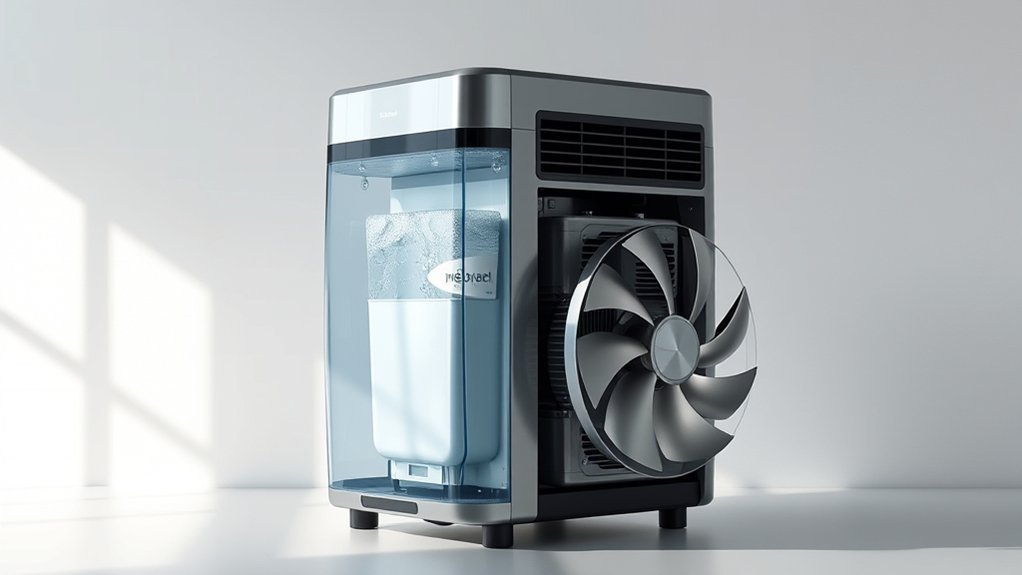
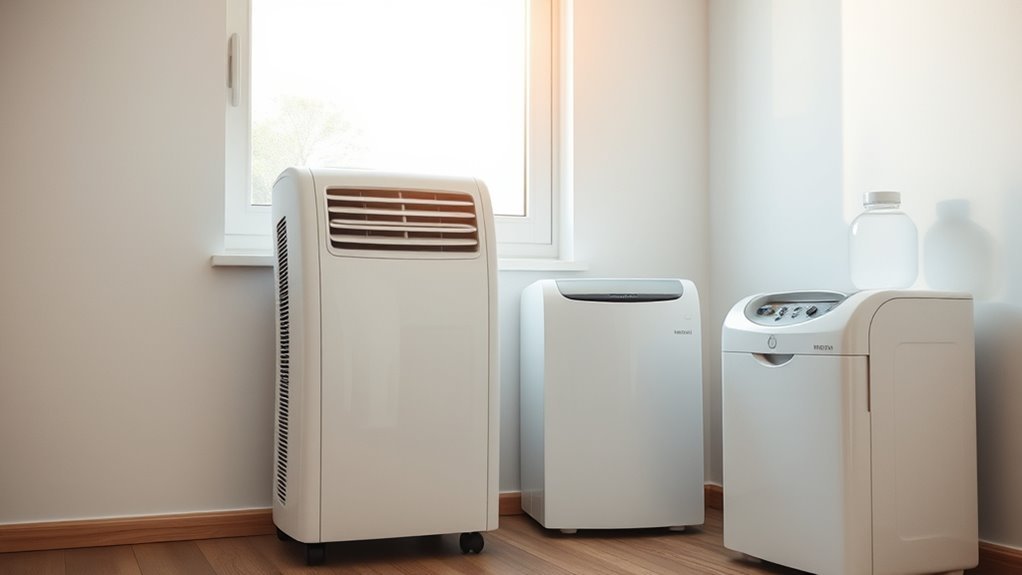
A dehumidifier and an air conditioner both use a cooling coil and condensation, but their purpose is different. A dehumidifier is built for targeted moisture removal. It pulls humid air across cold coils, condenses water vapor, collects or drains that water, and sends drier air back into the room.
An air conditioner is built for cooling. It moves heat from indoors to outdoors through a refrigerant cycle. As warm air passes over the evaporator coil, some moisture also condenses, so the AC lowers humidity as a side effect. Its main job, though, is temperature control.
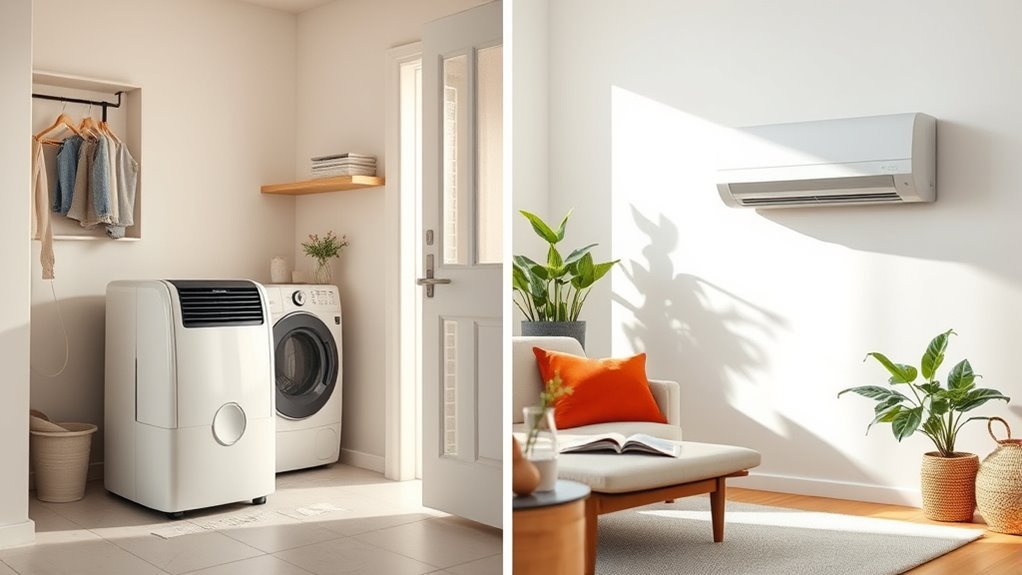
For more on the cooling side, see does a dehumidifier cool a room and do air conditioners dehumidify. The practical difference is simple: if the room is damp but not hot, start with a dehumidifier. If the room is hot, use an air conditioner. If the room is hot and damp, both may be useful.
| Feature | Dehumidifier | Air Conditioner |
| Main job | Remove moisture from indoor air | Remove heat and cool the room |
| Best for | Basements, bathrooms, laundry rooms, damp bedrooms, musty spaces | Hot bedrooms, living rooms, offices, whole-home cooling |
| Humidity effect | Direct humidity control with a humidistat on many models | Removes some humidity while cooling |
| Temperature effect | May slightly warm the room | Lowers room temperature |
| Common rating | Capacity in pints per 24 hours; efficiency in liters per kWh | Cooling capacity in BTU/h or tons |
How Does a Dehumidifier Work?
A dehumidifier pulls humid room air through a fan and across cold coils. When warm, moist air touches those coils, water vapor condenses into droplets. The water collects in a tank or drains through a hose, and the drier air returns to the room.
Because a dehumidifier focuses on moisture instead of cooling, it is useful when the air feels damp, musty, or clammy even though the temperature is already comfortable. It can help reduce conditions that support mold, mildew, and dust mites, especially when you also fix leaks, improve ventilation, and dry wet materials quickly.
For sizing, check the label carefully. ENERGY STAR explains that dehumidifier capacity is usually measured in pints of water removed per 24 hours, while efficiency is measured as liters of water removed per kilowatt-hour of electricity used.
Note: A dehumidifier does not solve the source of a moisture problem. If humidity comes from a leak, wet foundation, poor bathroom ventilation, or water intrusion, fix that source first.
How Does an Air Conditioner Work?
An air conditioner removes heat from indoor air and transfers it outside. According to the U.S. Department of Energy, refrigerant evaporates inside the evaporator coil, absorbs heat from indoor air, and then releases that heat outdoors through the condenser side of the system.
Heat Transfer Process
When the AC is running, warm indoor air moves across the cold evaporator coil. The refrigerant inside the coil absorbs heat, and the blower sends cooler air back into the room. The warmed refrigerant then travels to the outdoor condenser, where heat is released outside.
This cycle repeats until the thermostat reaches the temperature you set. Moisture also condenses on the evaporator coil, so the AC does remove some humidity. But humidity control is secondary. The AC is primarily designed to cool.
Evaporator and Condenser
The evaporator is the indoor heat-absorbing side of the system. The condenser is usually outdoors and releases the captured heat. If the coils are dirty, airflow is blocked, or the system is oversized, cooling and moisture removal can suffer.
Cooling and Airflow
Good airflow helps an air conditioner cool evenly and remove moisture more effectively. A dirty filter, blocked return, closed supply vent, or poorly sized unit can leave a room feeling cold but still clammy. That is one reason an AC can feel inadequate in humid weather even when the temperature looks fine.
When Is a Dehumidifier Enough on Its Own?
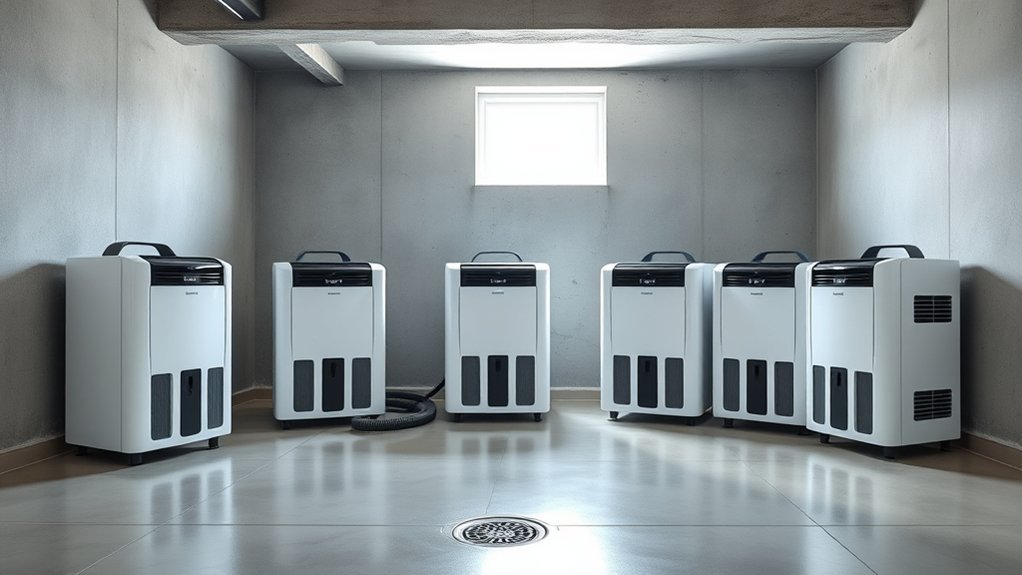
A dehumidifier is often enough on its own when the room feels damp but the temperature is not too warm. Common examples include basements, bathrooms, laundry rooms, storage areas, and bedrooms that smell musty after rain.
Check the Humidity First
Use a small hygrometer to measure indoor relative humidity. EPA mold guidance recommends keeping indoor humidity below 60%, and ideally between 30% and 50% when possible. If your room is above that range and the temperature feels comfortable, a dehumidifier is usually the more direct tool.
If the room is damp but not hot, dry the air first. If the room is hot, cool it first.
Ideal Humidity Conditions
For most homes, aim for a practical indoor humidity range around 30% to 50%. If that feels too dry in winter, stay low enough to avoid condensation on windows and walls. If humidity regularly rises above 60%, mold risk increases, and you should look for moisture sources as well as use a dehumidifier.
- A dehumidifier removes moisture directly.
- It can reduce musty odors and damp surfaces.
- It can help make a moderate room feel more comfortable without active cooling.
Cooler Room Comfort
In cooler rooms, a dehumidifier can make the space feel less clammy without lowering the temperature. This is useful in basements and lower-level rooms where the air is damp but not hot.
However, many compressor-style dehumidifiers work less efficiently in cold spaces, and frost can form on the coils. ENERGY STAR notes that some models include anti-frost sensors that shut the unit off if the air temperature drops too low. For cold rooms, check the manufacturer’s operating-temperature range before buying.
Lower Operating Costs
When humidity is the main problem, a dehumidifier is often cheaper to run than using an air conditioner only to dry the air. But exact cost depends on the unit wattage, how many hours it runs, your electricity rate, room conditions, and whether the unit cycles off after reaching the humidity setting.
Use this simple formula:
Estimated cost = watts ÷ 1,000 × hours used × electricity price per kWh
For example, a unit that draws 400 watts and runs for 6 hours uses about 2.4 kWh. Multiply that by your local electricity price to estimate the cost for that day.
When Should You Use an Air Conditioner?
Use an air conditioner when the indoor temperature is too warm and you need active cooling. An AC is the right choice for hot bedrooms, living rooms, offices, kitchens, and whole-home comfort during summer weather.
An AC also helps with humidity while it cools, but it may not solve every moisture problem. If the room cools quickly but still feels sticky, the AC may be short-cycling, oversized, running with poor airflow, or facing more moisture than it can remove.
Pro Tip: Do not keep lowering the thermostat just to fight humidity. If the room is already cool but damp, a dehumidifier or HVAC humidity-control check is usually a better next step.
Can You Run AC and a Dehumidifier Together?
Yes, you can run an AC and a dehumidifier together (see should you use a dehumidifier with air conditioning). This works best in hot, humid conditions where you need cooling and extra moisture removal at the same time.
- Set the AC to a comfortable temperature instead of overcooling the room.
- Set the dehumidifier to a reasonable target, usually around 45% to 50% relative humidity.
- Place the dehumidifier where moisture is worst, but keep airflow clear on all sides.
- Use continuous drain mode if the unit will run for long periods.
- Close windows and doors while both units run, or you will keep pulling humid outdoor air inside.
The AC cools the space while the dehumidifier removes extra moisture. This can make the room feel more comfortable at a slightly higher thermostat setting, which may reduce unnecessary cooling. The tradeoff is that a portable dehumidifier releases some heat into the room, so it should be used thoughtfully rather than left running nonstop.
Which Costs Less: Dehumidifier or AC?
A dehumidifier usually costs less to run when the only goal is humidity control. It is doing a narrower job: removing moisture from the air. An air conditioner usually uses more energy because it is cooling the room, moving heat outdoors, and running a larger refrigeration system.
That said, there is no single annual cost that applies to every home. Our breakdown of whether a dehumidifier uses more electricity than an air conditioner goes deeper. A small dehumidifier used a few hours a day may cost very little. A large dehumidifier running continuously in a wet basement can cost much more. A window AC, portable AC, mini split, and central AC all have different power use and efficiency levels.
To compare fairly, check:
- Wattage or rated power on the appliance label.
- Estimated hours per day the unit will run.
- Your electricity price per kilowatt-hour.
- Whether the unit cycles off after reaching the thermostat or humidistat setting.
- The actual problem: dampness, heat, or both.
If the room is cool but humid, a dehumidifier is usually the better value. If the room is hot, an AC is worth the higher energy use because a dehumidifier will not cool the space.
Recommended Products

【Compact Size, Big Efficiency】 The upgraded 2025 Waykar dehumidifier features cutting-edge rotary compressor technology. It’s more compact but still powerful, capable of removing up to 34 pints of moisture per day (at 95℉, 90% RH), ideal for spaces up to 2,000 sq. ft. such as living rooms, basements, bedrooms, and offices. The adjustable humidity range from 30% to 80% helps you easily maintain the ideal indoor humidity

Semiconductor dehumidifiers use thermoelectric cooling to remove moisture from the air. They create a drier, more comfortable environment by reducing humidity and improving air quality.

1600 Sq.Ft High Capacity Dehumidifier- The GoGuess basement dehumidifier is equipped with a quiet yet powerful compressor that efficiently extracts up to 21 pints of moisture per day (tested at 95°F and 90% RH). Perfect for use in basements, offices, bathrooms, bedrooms, kitchens, storage areas, living rooms, laundry spaces, garages, crawl spaces, and RVs. It helps maintain a healthy humidity level between 30% and 70%, promoting a more comfortable and healthier indoor environment
Which Is Better for Humidity Control?
For direct humidity control, a dehumidifier is usually better. It is designed to remove moisture and often lets you set a target humidity level. That makes it a better match for damp rooms, basements, musty areas, and spaces where the temperature is already comfortable.
An air conditioner can lower humidity, but only while it is cooling. If the AC reaches the thermostat setting quickly, it may shut off before removing enough moisture. This is common with oversized systems or mild-but-humid weather.
Choose a dehumidifier when:
- The room smells musty.
- Windows, walls, or pipes show condensation.
- Humidity is above 50% to 60% on a hygrometer.
- The space is damp but not hot.
- You want to protect stored items from moisture.
Choose an air conditioner when:
- The room temperature is too high.
- You need active cooling for comfort or sleep.
- Humidity is uncomfortable and the room is also hot.
- You need whole-room or whole-home cooling.
Recommended Products

【𝐄𝐍𝐄𝐑𝐆𝐘 𝐒𝐓𝐀𝐑 𝐂𝐞𝐫𝐭𝐢𝐟𝐢𝐞𝐝 𝐟𝐨𝐫 𝐄𝐟𝐟𝐢𝐜𝐢𝐞𝐧𝐭 𝐏𝐞𝐫𝐟𝐨𝐫𝐦𝐚𝐧𝐜𝐞】Delivers consistent dehumidification across a variety of real-life conditions. Designed for energy-efficient operation, helping reduce excess power consumption and lower long-term energy costs without sacrificing performance

REAL COMPRESSOR DEHUMIDIFIER FOR UP TO 1,600 SQ. FT -Removes up to 21 pints of moisture daily (tested at 95°F/90% RH) and maintains 30%–50% humidity to help reduce dampness and protect furniture from moisture damage. Auto-Defrost prevents coil icing for reliable performance in cooler spaces—ideal as a dehumidifier for basement, bedroom, bathroom, laundry, kitchen, living room, storage spaces, garage, apartment, office, or RV. For best results, close doors and windows

【45-80 Pints for 4500 Sq.Ft Moisture Control】:This dehumidifier for basement and home features flexible 45–80 pints dehumidification output with an ultra-wide 4500 square feet coverage range, offering premium whole-space moisture control. No matter damp basement, humid bathroom, quiet bedroom for restful sleep, large living room, or compact RV traveling space, this multi-functional dehumidifier for home effortlessly sucks up excess moisture,, maintaining ideal humidity levels for all indoor environments.
How to Choose the Right Option
Use the symptoms in the room to decide what you need. Do not guess by feel alone; humidity can be high even when the room is cool.
| Room Problem | Best Choice | Why |
| Cool but damp basement | Dehumidifier | You need moisture removal, not cooling. |
| Hot bedroom in summer | Air conditioner | You need active cooling first. |
| Hot and sticky living room | AC, possibly with dehumidifier | Cooling and moisture removal may both be needed. |
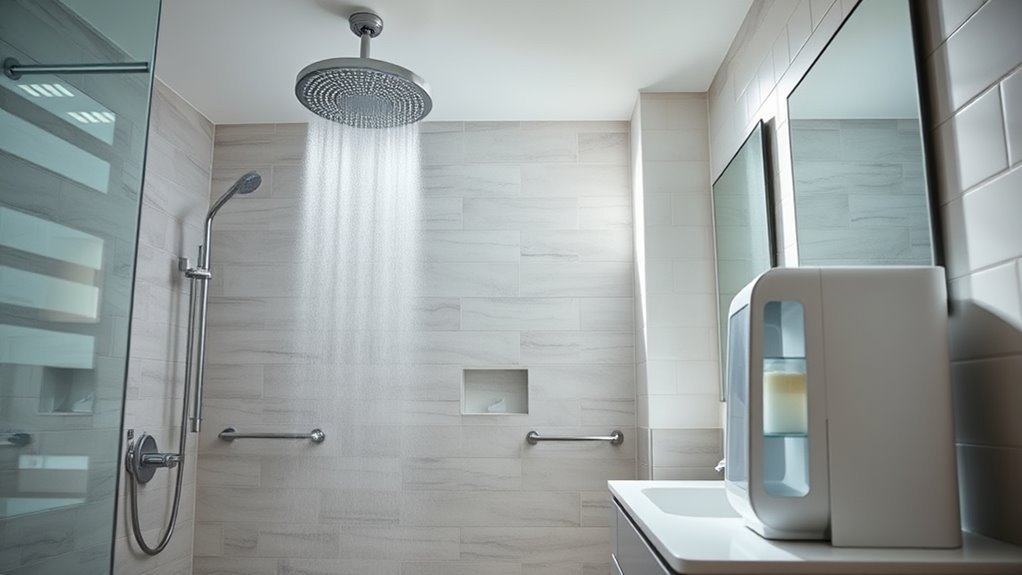
| Bathroom condensation after showers | Exhaust fan first, dehumidifier if needed | Vent moisture outdoors instead of only collecting it indoors. |
| Moldy smell after rain | Find moisture source and use dehumidifier | A dehumidifier helps, but leaks and water intrusion must be fixed. |
Recommended Products

【The Undisputed Champion — Industry-Leading Dehumidifier Brand】When you choose AEOCKY, you get double market validation. According to data independently verified by Stackline, a leading third-party data analytics company, AEOCKY was an industry‑leading dehumidifier brand on Amazon U.S. in 2025. This means you’re not just choosing a flagship product from a market leader, but a top-performing brand backed by independent market data and trusted by millions of real users, delivering the ultimate combination of performance, quality and trust.
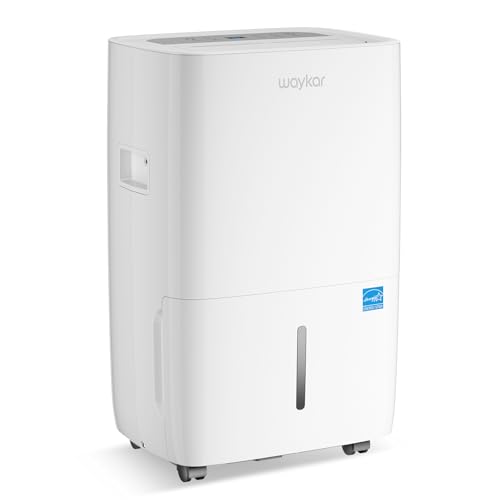
【120 Pint High Capacity for Up to 6,000 Sq.Ft Spaces】Removes up to 120 pints of moisture per day (95°F, 90% RH), ideal for basements, whole homes, garages, and commercial spaces. Designed for high-demand use, it reduces damp air, condensation, and pet-related odors caused by excess humidity. During humid seasons, it runs continuously to maintain a dry and comfortable indoor environment
Maintenance and Safety Tips
Both devices work better when they are clean and correctly set up. Poor maintenance can reduce airflow, waste energy, and leave humidity problems unresolved.
- Use a hygrometer: Check humidity before and after running the unit.
- Clean or replace filters: Dirty filters reduce airflow in both ACs and dehumidifiers.
- Empty and clean the tank: Standing water can smell bad and may grow biofilm if ignored.
- Check the drain hose: Make sure it slopes correctly and does not leak.
- Keep air openings clear: Do not push the unit tight against walls, curtains, or furniture.
- Fix water sources: Repair leaks, improve drainage, and vent bathrooms and dryers outdoors.
- Read the manual: Follow the manufacturer’s temperature limits, electrical guidance, and cleaning instructions.
Warning: Do not use a plug-in dehumidifier or portable AC where standing water, damaged cords, or overloaded outlets are present. In damp areas, follow the manual and use properly grounded, code-compliant outlets.
Frequently Asked Questions
Can I use my dehumidifier as an air conditioner?
No. A dehumidifier can make air feel less sticky by lowering humidity, but it does not cool a room like an air conditioner. In fact, many dehumidifiers release a small amount of heat back into the room during operation.
Will an air conditioner remove humidity?
Yes, an air conditioner removes some humidity as warm air passes over the cold evaporator coil. But if the AC cycles off quickly, has poor airflow, or is oversized, it may cool the room before removing enough moisture.
What humidity level should I set my dehumidifier to?
A practical target is often around 45% to 50% relative humidity. EPA mold guidance recommends keeping indoor humidity below 60% and ideally between 30% and 50% when possible. If the air feels too dry, raise the setting slightly while watching for condensation or musty odors.
Which costs less to run, a dehumidifier or an air conditioner?
For humidity control alone, a dehumidifier usually costs less because it does a narrower job. The real cost depends on wattage, hours of use and your electricity rate. If the room is hot, a dehumidifier will not replace cooling.
Can I run an air conditioner and a dehumidifier together?
Yes. In hot, humid weather, an AC cools the room while the dehumidifier removes extra moisture. Keep doors and windows closed and set each unit to a sensible target so neither wastes energy.
Conclusion
A dehumidifier and an air conditioner are not the same. A dehumidifier is the better tool for damp air, musty rooms, and direct moisture control. An air conditioner is the better tool for heat and cooling. If the room is both hot and humid, using both can make sense.
The best first step is to measure the room with a hygrometer. If humidity is high but the temperature is comfortable, use a dehumidifier. If the temperature is too high, use AC. If humidity keeps returning, look for leaks, poor ventilation, wet building materials, or drainage problems instead of relying on appliances alone.
Sources
- U.S. Environmental Protection Agency — Mold Course, Chapter 2 — backs indoor humidity guidance below 60% and ideally 30% to 50%.
- Centers for Disease Control and Prevention — Mold — backs keeping humidity low and using an air conditioner or dehumidifier to help control moisture.
- ENERGY STAR — Dehumidifier Testing and Capacity — backs dehumidifier capacity and efficiency rating language.
- ENERGY STAR — Dehumidifiers — backs dehumidifier sizing, efficiency, and anti-frost considerations.
- U.S. Department of Energy — Air Conditioning — backs how air conditioners transfer heat using evaporator and condenser coils.