
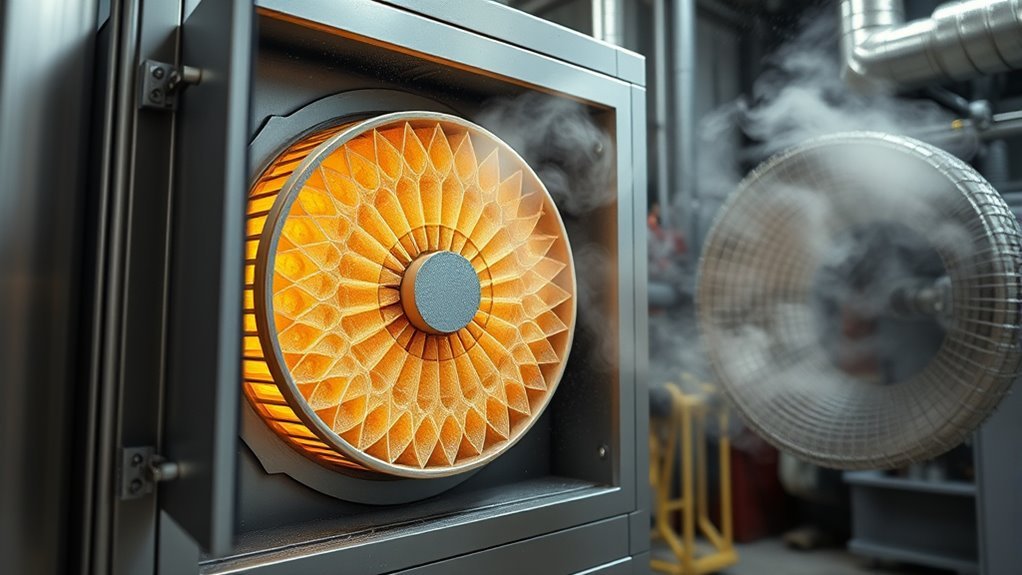
A desiccant dehumidifier dries air by passing humid air across a moisture-hungry desiccant material, often silica gel or a similar porous media. Instead of chilling air until water condenses, it captures water vapor directly, then uses a separate regeneration cycle to drive that moisture back out of the desiccant so the process can continue.
Quick Answer
A desiccant dehumidifier works by pulling humid air through a rotating desiccant wheel or bed. The desiccant captures water vapor from the air. A separate heated regeneration airstream then removes that moisture from the desiccant and exhausts or drains it, allowing continuous drying.
Key Takeaways
- Desiccant dehumidifiers remove moisture by adsorption or absorption, not by cooling air to make condensation.
- They are especially useful in cooler spaces where many refrigerant dehumidifiers lose efficiency or frost up.
- They often use more heat energy than compressor models in warm rooms, so the best choice depends on temperature, humidity load, and target RH.
- For most homes, aim for roughly 30% to 50% relative humidity and use a hygrometer to verify the result.
What Is a Desiccant Dehumidifier?
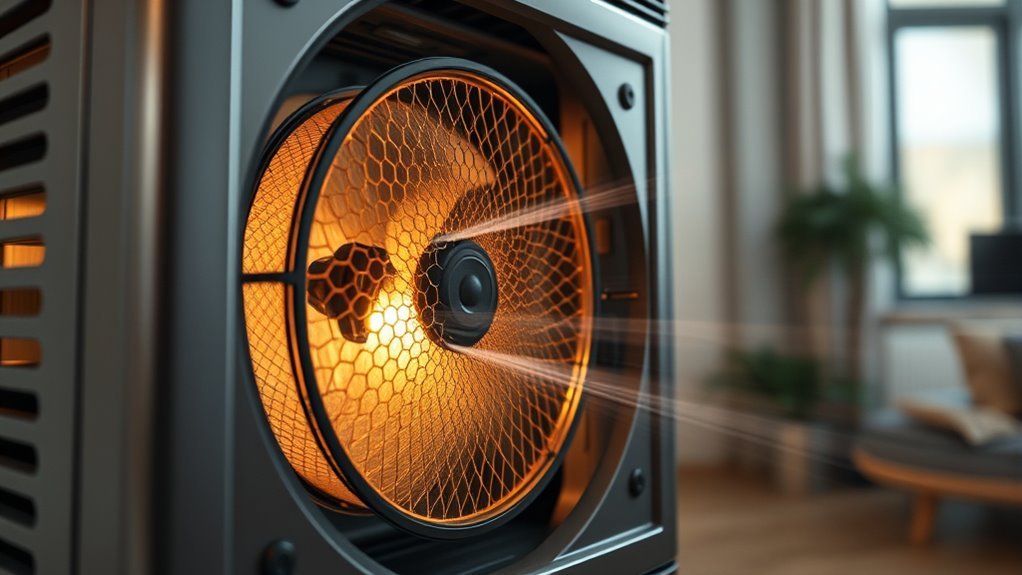
A desiccant dehumidifier is a moisture-control device that uses a hygroscopic desiccant to pull water vapor from air. Common desiccants include silica gel, molecular sieves, and other porous materials that attract moisture. The National Renewable Energy Laboratory describes a solid desiccant as a hygroscopic porous material that absorbs moisture from an airstream.
Most whole-room and industrial desiccant units use a rotating desiccant wheel. One side of the wheel dries the incoming air. Another side is regenerated with warm air so the desiccant can release the moisture it just captured. That is why desiccant dehumidifiers can run continuously instead of acting like a one-time moisture packet.
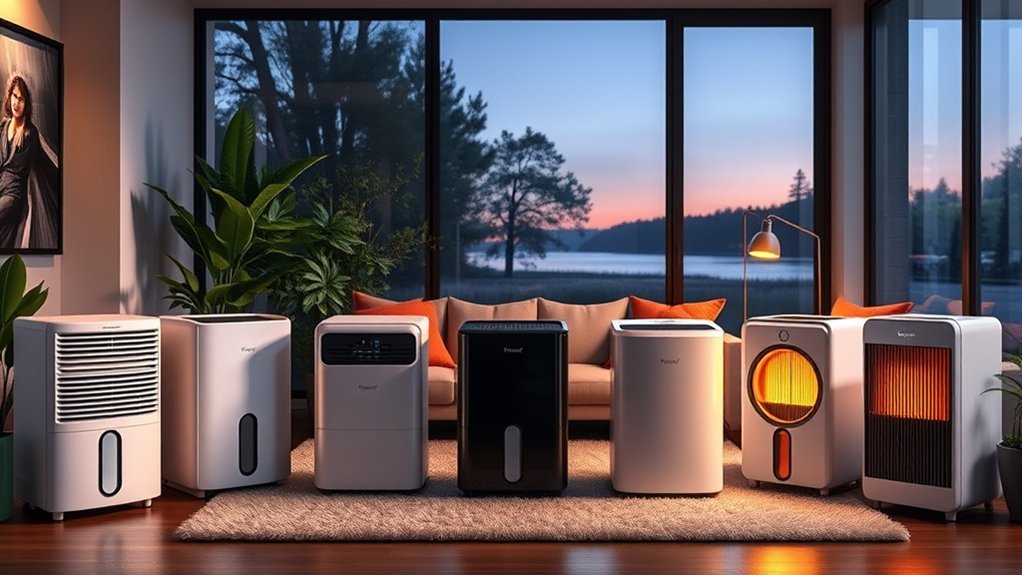
You use this type of dehumidifier when moisture control matters in a cool, unheated, or low-humidity space. Garages, workshops, basements, cold storage areas, construction-drying sites, archives, and process rooms are common examples. In a normal warm living room, a refrigerant model may be cheaper to run. In a colder space, a desiccant model may keep drying when a compressor model struggles.
How Does a Desiccant Dehumidifier Work?
A desiccant dehumidifier works in two linked cycles: drying and regeneration. The drying side handles the air you want to dehumidify. The regeneration side restores the desiccant so it can keep working.
| 1. Humid air enters | A fan pulls damp air from the room or process area into the unit. |
| 2. Air crosses the desiccant | Water vapor clings to or is taken up by the desiccant surface, depending on the material. |
| 3. Dry air returns | The process air leaves the unit drier and usually slightly warmer. |
| 4. The wheel rotates | The moisture-loaded section of the wheel moves into a regeneration zone. |
| 5. Moisture is removed | Warm regeneration air drives water vapor off the desiccant and sends it outdoors, into a drain system, or through the unit’s exhaust path. |
This is the key difference from a refrigerant dehumidifier. A refrigerant unit cools air below its dew point so water condenses on a cold coil. A desiccant unit captures vapor directly with a drying material, then regenerates that material with a separate air path.
Note: People often say silica gel “absorbs” moisture, but the more precise word for silica gel is usually “adsorbs,” meaning water molecules cling to the surface of its pores. Some other desiccant materials may work by absorption.
Why Desiccant Wheels Dry Air So Well
Desiccant wheels dry air well because they combine a large contact surface with continuous regeneration. The wheel is typically built as a honeycomb or fluted matrix so air touches a large amount of coated surface as it passes through. That surface is what gives the desiccant time and area to capture vapor.
Porous Silica Gel Structure
Silica gel and similar desiccants work because their tiny pores create a large surface area for water vapor. As humid air flows across the media, moisture is attracted to that surface. The material keeps collecting vapor until it becomes loaded, at which point it must be regenerated.
This is why airflow and contact time matter. If air moves too quickly, or if the unit is too small for the moisture load, the air may not dry enough in one pass. If the unit is properly sized, the wheel can keep removing moisture while another section is being dried out.
Continuous Adsorption and Regeneration
The rotating wheel is what makes the process continuous. One section of the wheel dries the process air. Another section sits in the regeneration zone, where warm air removes moisture from the desiccant. NREL describes solid desiccant systems that use a desiccant wheel and a separate regeneration air path before exhausting regeneration air.
| Drying side | Captures water vapor from the air you want to dry. |
| Regeneration side | Uses heated air to remove moisture from the loaded desiccant. |
| Rotation | Moves each part of the wheel between drying and regeneration. |
| Result | Steady moisture removal without needing a cold evaporator coil. |
Why Desiccant Dehumidifiers Work in Cold Spaces
Desiccant dehumidifiers work well in cold spaces because they do not need to cool air on a coil to condense water. That matters in garages, basements, boats, storage rooms, and construction sites where air may be too cool for a standard compressor dehumidifier to perform well.
ENERGY STAR notes that if a space typically falls below 65°F, frost can form on condensing coils and reduce performance in refrigerant dehumidifiers. A desiccant unit avoids that specific cold-coil problem because the drying step happens at the desiccant surface.
Moisture Adsorption in Cold
Cold air holds less moisture than warm air, but it can still cause serious condensation and mold risk when it touches colder surfaces. A desiccant dehumidifier can pull vapor from that air without waiting for water to condense into liquid. That makes it useful in spaces where you need stable drying during winter or in unheated areas.
Regeneration Still Uses Heat
A desiccant system is not “heat-free.” The drying side does not depend on a chilled coil, but the regeneration side often uses heat to release moisture from the desiccant. Some commercial systems use electric heat, gas heat, steam, waste heat, or condenser heat, depending on the design.
The practical takeaway is simple: desiccant units can be excellent in the cold, but they are not automatically the lowest-energy option in every room. Compare the unit’s rated power, capacity, controls, and intended operating temperature before buying.
Ideal for Unheated Spaces
Desiccant dehumidifiers are often a strong fit for:
- Unheated garages and workshops
- Basements that stay cool most of the year
- Boats, RVs, and storage rooms
- Construction drying in cool weather
- Archives, museums, and document storage
- Cold storage, food processing, and specialty manufacturing
They are less ideal when the space is already warm and humid and you only need a normal home humidity target. In those conditions, a high-efficiency refrigerant model may remove more water per kilowatt-hour.
Desiccant vs. Refrigerant Dehumidifiers
The main difference is the moisture-removal method. A desiccant dehumidifier captures water vapor with a drying material. A refrigerant dehumidifier cools air on a coil until moisture condenses and drips into a bucket or drain.
| Factor | Desiccant | Refrigerant |
| How it dries | Adsorbs or absorbs vapor with desiccant media | Condenses vapor on a cold coil |
| Best temperature range | Cool or unheated spaces | Warm indoor spaces |
| Energy profile | Can use more heat energy, but performs steadily in cold air | Often more efficient in warm, damp rooms |
| Noise and vibration | No compressor in many designs; fan and rotor noise remain | Compressor and fan noise |
| Best use | Cold spaces, low-RH targets, specialty drying | Everyday home dehumidification in heated rooms |
Recommended Products

【The Undisputed Champion — Industry-Leading Dehumidifier Brand】Choose AEOCKY, getting double market validation. According to data independently verified by Stackline, a leading third-party data analytics company, AEOCKY was an industry‑leading dehumidifier brand on Amazon U.S. in 2025. Meanwhile, it stands as a technology-leading rotary desiccant dehumidifier brand on Amazon. This isn’t just an appliance—it’s a complete humidity-control solution for small spaces. Skip low-performance alternatives and trust a brand recognized by the market.

✔ EASY TO USE: This mini dehumidifier is spill and mess free. Just hang and go! Non-toxic, child and pet safe! Your small rooms will be dry and odor free. Works for areas up to 333 cubic feet.

Semiconductor dehumidifiers use thermoelectric cooling to remove moisture from the air. They create a drier, more comfortable environment by reducing humidity and improving air quality.
Best Uses for Desiccant Dehumidifiers
Desiccant dehumidifiers are best when the space is cool, the humidity target is low, or moisture must be controlled with more precision than a standard household unit can provide.
Desiccant dehumidifiers make the most sense when cold air, low dew-point targets, or continuous drying matter more than lowest possible running cost in a warm room.
- Cold basements and garages: useful where compressor coils may frost or cycle inefficiently.
- Construction drying: helps remove vapor from materials and air during cool-weather drying.
- Water-damage restoration: can support fast drying when used with air movement and moisture-source control.
- Storage and archives: helps protect paper, wood, textiles, tools, and electronics from moisture damage.
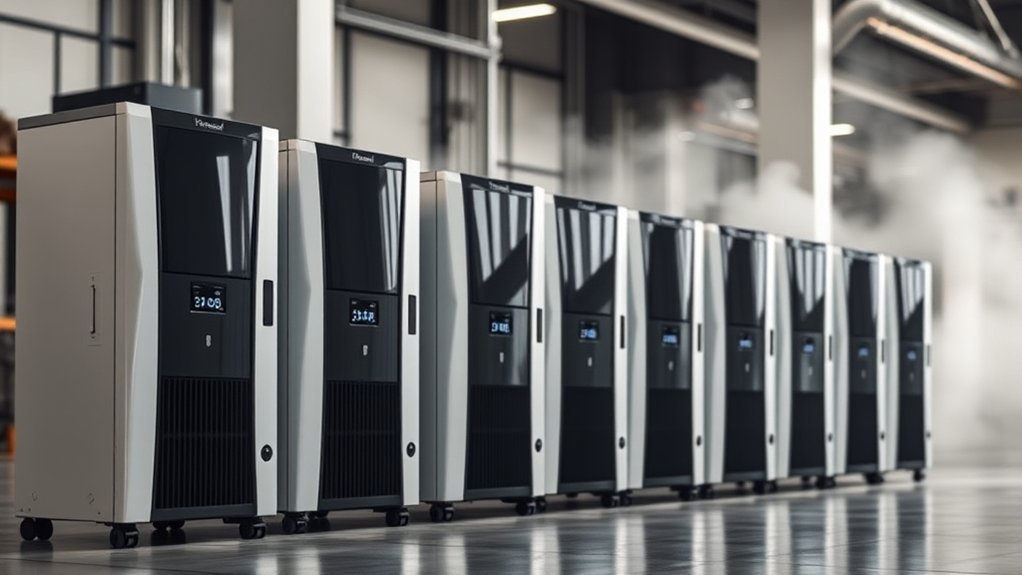
- Industrial spaces: supports processes where low dew point or tight humidity control is required.
Warning: A dehumidifier does not fix leaks, flooding, poor drainage, or active mold by itself. Fix the moisture source first, and keep drain hoses, cords, and outlets arranged so water cannot contact electrical connections.
Recommended Products

Convenient To Carry: One desiccant pack measures 5.5x3.1 inches in size and weighs 100 grams, making it very lightweight and compact, making it easy to carry.

Powerful Moisture Control for Home: These moisture absorbers and dehumidifier bags use calcium chloride desiccant to pull excess humidity from the air, helping keep your closet, bathroom, basement, and bedroom dry, fresh, and comfortable for everyday home use

Widely used: You can protect your documents and files, memories and photos, arts and craft supplies, clothing and luggage, safes and drawers, sensitive electronics, and Many Other Valuables.
How Much Electricity Do Desiccant Dehumidifiers Use?
Electricity use depends on the unit size, heater type, fan speed, target humidity, room temperature, and duty cycle. Small portable desiccant units may draw a few hundred watts. Larger commercial or industrial units can draw far more because they move more air and may use significant regeneration heat.
For consumer dehumidifiers, compare models using the label and manual rather than a generic wattage rule. ENERGY STAR explains that dehumidifier efficiency is measured by integrated energy factor, shown as liters of water removed per kilowatt-hour. A higher L/kWh number means the unit removes more water for each unit of electricity.
Also remember that water removal changes with conditions. A dehumidifier rated for a certain number of pints per day will not remove that amount in every room. Cooler air, lower starting humidity, restricted airflow, dirty filters, and an oversized space can all reduce real-world water removal.
Pro Tip: Buy a separate hygrometer if your unit does not show actual RH. Set the dehumidifier, wait several hours, then check whether the room is moving toward your target instead of judging performance by bucket water alone.
How to Choose the Right Desiccant Dehumidifier
Choose a desiccant dehumidifier by matching the unit to the room conditions, not just the square footage. Moisture load matters more than floor area alone. A cold, leaky basement with wet walls can need more drying power than a larger but well-sealed storage room.
Recommended Products
![wisedry 4 x 500 Grams [4.4 lbs] Rechargeable Silica Gel Car Dehumidifier, Microwave Fast Reactivated Desiccant Packets Large for Gun Safe Closet Basement Garage Storage Moisture Absorber Bag Reusable](https://m.media-amazon.com/images/I/51pHUtcOd3L._SL500_.jpg)
✅ [ NO MORE FOGGY WINDOWS ] - Wisedry car dehumidifier bag reduces the misting on car windows which can be a problem in cold winter mornings. Thanks to its high moisture absorption, each 500g silica gel adsorbs 150g(max 180g) of moisture! Also suitable for preventing moisture in other larger spaces like cupboard, gun safes, storage room, tool shop, garage, RV, boat, basement etc.
![wisedry 10 x 500 Grams [11 lbs] Rechargeable Silica Gel Car Dehumidifier, Microwave Fast Reactivated Desiccant Packets Large for Gun Safe Closet Basement Garage Storage Moisture Absorber Bag Reusable](https://m.media-amazon.com/images/I/51h0MKuh9XL._SL500_.jpg)
✅ [ NO MORE FOGGY WINDOWS ] - Wisedry car dehumidifier bag reduces the misting on car windows which can be a problem in cold winter mornings. Thanks to its high moisture absorption, each 500g silica gel adsorbs 150g(max 180g) of moisture! Also suitable for preventing moisture in other larger spaces like cupboard, gun safes, storage room, tool shop, garage, RV, boat, basement etc.

LARGE 2200 ML CAPACITY: This Vacplus moisture absorber bucket holds up to 2200 ml of water, absorbing over four times more moisture than standard 500 ml options. The clear water tank allows you to easily track the fill level over time. A safe moisture absorber that’s also a cost-effective choice for closets, basements, and storage areas with ongoing humidity problems.
Check the Operating Temperature
Start with the room’s normal temperature. If the space often falls below the recommended range for refrigerant units, a desiccant model may be the better fit. If the room is warm and humid, compare both types because a compressor model may be more efficient.
Match Capacity to the Moisture Load
Capacity is usually listed in pints per day for portable units. ENERGY STAR says capacity depends on both the space size and the dampness level, and its buying guidance lists higher capacity ranges as rooms move from slightly damp to wet. Use those ranges as a starting point, then check the manufacturer’s sizing chart.
Decide How Moisture Will Leave the Space
Some desiccant systems exhaust moist regeneration air outdoors. Others condense or drain water. Before buying, confirm whether the model needs:
- A drain hose or bucket
- An outdoor exhaust duct
- A dedicated electrical circuit
- Clearance around intake and discharge vents
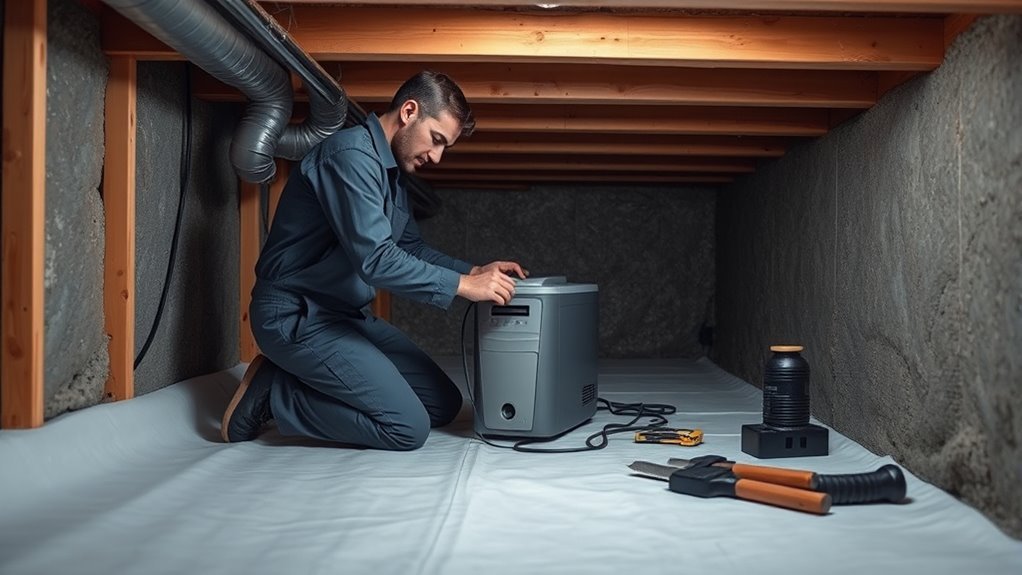
- Professional installation for commercial or whole-building systems
Look at Controls, Noise, and Maintenance
Good controls matter. Look for a humidistat, continuous-drain option, auto-restart after power loss, washable filter, and clear operating-temperature range. For occupied rooms, check the decibel rating and remember that warm discharge air may make a small room feel warmer.
Maintenance usually includes cleaning filters, keeping air paths clear, checking drain lines, and following the manufacturer’s service schedule for rotor or seal inspection. Dust and blocked airflow reduce performance, no matter which dehumidifier type you use.
Recommended Indoor Humidity Target
For most homes, the practical target is about 30% to 50% relative humidity. The EPA says indoor RH should be kept below 60% and ideally between 30% and 50% when possible. ENERGY STAR gives the same general optimum range and notes that colder climates may need 30% to 40% during heating season to reduce window condensation.
Do not set the room drier than necessary. Very dry air can be uncomfortable, while very humid air encourages condensation, musty odors, mold growth, and dust mites. A stable middle range is usually better than chasing the lowest possible RH.
Frequently Asked Questions
What are the disadvantages of a desiccant dehumidifier?
The main disadvantages are higher heat output, potentially higher electricity use in warm rooms, and a higher upfront cost for some models. Desiccant units can also overdry a small space if the humidistat is set too low. They are excellent for cool or low-humidity drying, but they are not always the most efficient choice for a warm, damp living area.
Would a dehumidifier help with COPD?
A dehumidifier may help if excess humidity is supporting mold, musty air, or dust mites in the home, but it is not a COPD treatment. The CDC notes that damp and moldy environments can affect respiratory health and that people with chronic lung disease may be at higher risk from mold-related lung infections. If you have COPD, ask your clinician what humidity range is safest for you.
Do dehumidifiers help with snoring?
They can help indirectly if high humidity is contributing to musty air, mold, dust mites, or nasal congestion. They do not directly treat snoring. Persistent loud snoring, gasping, daytime sleepiness, or suspected sleep apnea should be discussed with a healthcare professional.
How long does a desiccant dehumidifier last?
Many residential units last several years, and well-maintained commercial systems can last longer. Lifespan depends on runtime, dust exposure, airflow, filter care, heat stress, and whether the unit is sized correctly. Clean filters, clear vents, and prompt service are the best ways to protect performance.
Can a desiccant dehumidifier run continuously?
Many are designed for continuous operation, but you should let the humidistat control runtime whenever possible. Continuous running makes sense during active drying, after a leak has been fixed, or in a high-load space. For normal home use, set a target RH and let the unit cycle.
Does a desiccant dehumidifier need a drain?
It depends on the design. Some portable units collect water or allow hose drainage. Some commercial systems exhaust moisture-laden regeneration air outdoors. Check the manual before buying so you know whether you need a bucket, floor drain, condensate pump, or ducted exhaust path.
Sources
- National Renewable Energy Laboratory — Energy-Efficient Supermarket HVAC in Humid Climates — supports solid desiccant and desiccant-wheel terminology.
- ENERGY STAR — Dehumidifiers — supports capacity, cold-coil limitations, RH targets, and integrated energy factor guidance.
- U.S. EPA Mold Course, Chapter 2 — supports indoor RH guidance and mold/moisture prevention.
- U.S. EPA — A Brief Guide to Mold, Moisture and Your Home — supports moisture control and drying water-damaged materials within 24–48 hours.
- CDC — Mold — supports health cautions around damp and moldy environments, especially for people with asthma, allergies, or chronic lung disease.
Conclusion
So, how does a desiccant dehumidifier work? It passes humid air over a desiccant material that captures water vapor, then uses a separate regeneration cycle to remove that moisture from the desiccant. This makes it especially useful in cool, unheated, or low-humidity applications where many refrigerant dehumidifiers lose performance.
The right choice depends on your conditions. Choose a desiccant unit when cold-weather drying, low dew point, or continuous moisture control matters most. Choose a refrigerant unit when you are drying a warm room and want strong everyday efficiency. In either case, use a hygrometer, fix the moisture source, and keep indoor humidity in a healthy, controlled range.

[…] Desiccant Dehumidifier: How It Works Below 65°F […]