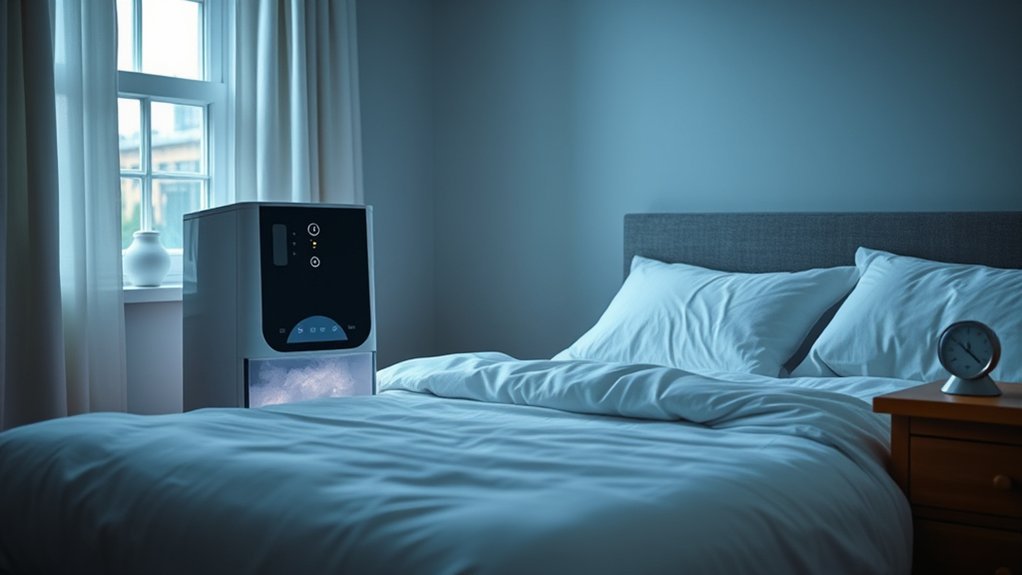
Bedroom humidity has a direct effect on how your room feels at night. When the air stays damp, bedding can feel clammy, windows may sweat, musty odors can linger, and mold or dust-mite problems become easier to trigger. The goal is not to make the room bone-dry. The goal is to keep humidity in a steady, comfortable range and remove the moisture sources that keep pushing it up.
Quick Answer
For most bedrooms, aim for about 30% to 50% relative humidity, with 40% to 50% often feeling best for sleep. Use a digital hygrometer to measure first, then reduce moisture with ventilation, bathroom exhaust fans, fewer damp items, and a properly sized dehumidifier if readings stay high.
Key Takeaways
- Check bedroom humidity with a digital hygrometer before buying or running a dehumidifier.
- Keep indoor humidity below 60% and ideally around 30% to 50% to reduce mold risk and improve comfort.
- A bedroom dehumidifier should match the room size, moisture level, noise tolerance, and drainage setup.
- Ventilation helps only when outdoor air is cleaner and drier than the air inside.
- A dehumidifier controls moisture; it does not replace cleaning, leak repair, air filtration, or medical care for breathing conditions.
At a Glance
| Time Required | 10 minutes to check humidity; several hours to one night for a dehumidifier to stabilize a damp bedroom |
| Difficulty | Easy for daily humidity control; moderate if leaks, condensation, or HVAC issues are involved |
| Tools Needed | Digital hygrometer, dehumidifier if needed, bathroom exhaust fan, clean filters, optional air purifier |
| Cost | About $10–$50 for a hygrometer; more for a dehumidifier depending on capacity, features, and efficiency |
Check Bedroom Humidity
Start with a digital hygrometer so you know the real humidity level instead of guessing from how the room feels. Place it near bed height, away from windows, direct sunlight, bathroom doors, humidifiers, dehumidifier exhaust, and HVAC vents. Those spots can give readings that are too high or too low.
Check the reading at least twice: once before bed and once in the morning. Humidity changes throughout the day, especially after showers, laundry, cooking, rain, or a humid night with windows open. The U.S. Environmental Protection Agency recommends keeping indoor relative humidity below 60% and ideally between 30% and 50% when possible. The CDC advises keeping home humidity no higher than 50% all day to help prevent mold growth.
| Humidity Reading | What It Usually Means | What To Do |
| Below 30% | Air may feel dry; throat, skin, and nasal passages may feel irritated. | Do not run a dehumidifier. Reduce drying sources and consider whether winter heating is over-drying the room. |
| 30%–50% | Good target range for comfort and moisture control. | Maintain this range with normal ventilation and moisture control. |
| 50%–60% | Borderline damp, especially if it stays there for long periods. | Remove moisture sources, run exhaust fans, and consider short dehumidifier cycles. |
| Above 60% | Higher risk of condensation, musty odors, mold pressure, and dust-mite problems. | Use a dehumidifier, improve ventilation, and look for leaks or damp materials. |
Find the Causes of a Humid Bedroom
Once you confirm high humidity, find the source before relying only on a machine. A dehumidifier can remove moisture from the air, but it cannot fix a leak, wet wall cavity, poorly vented bathroom, or damp carpet.
Start with the most common bedroom moisture sources:
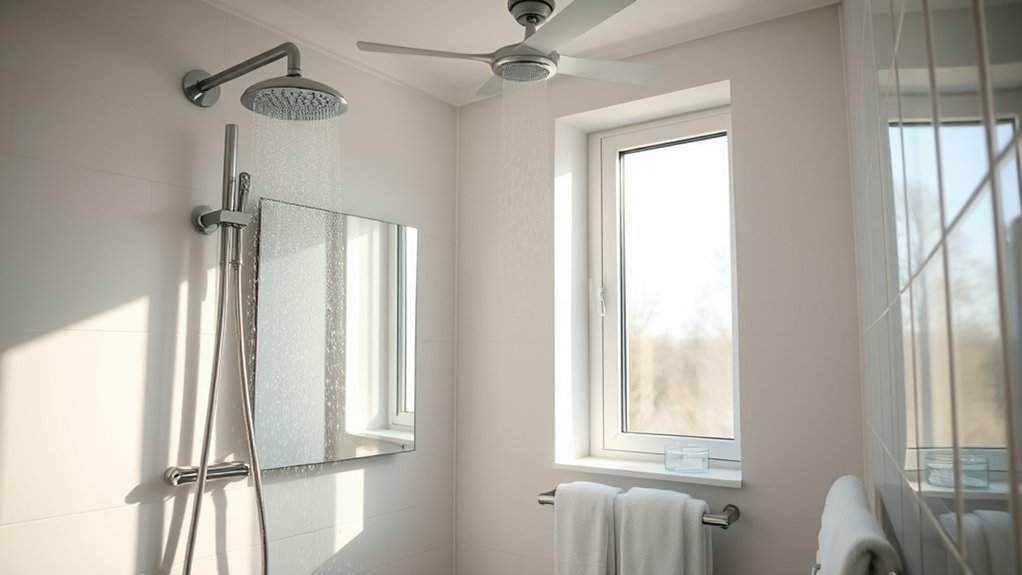
- Bathroom steam: Hot showers can send humid air into a connected bedroom, especially if the bathroom fan is weak or not used long enough.
- Damp towels or laundry: Wet fabric keeps releasing moisture into the room.
- Open windows during humid weather: Outdoor air can raise indoor humidity quickly when the dew point is high.
- Indoor plants: Plants release water vapor. One small plant is usually not the main problem, but plant clusters can add moisture.
- Leaks or water intrusion: Roof leaks, plumbing leaks, damp exterior walls, and wet window frames can keep humidity high.
- Poor airflow: Furniture against exterior walls, closed doors, and blocked vents can trap damp air in corners.
Note: A musty smell is not just a comfort issue. It can signal damp materials or hidden mold growth. If the smell returns after cleaning and dehumidifying, look for a moisture source rather than masking the odor.
Why Bedroom Humidity Hurts Sleep
A damp bedroom can make sleep feel restless because moisture changes how your body releases heat. When air is humid, sweat evaporates less efficiently, so the room can feel warmer and stickier than the thermostat suggests. Research on humid heat exposure shows that hot, humid conditions can affect sleep stages and body temperature regulation, especially when heat stress is present.
Humidity and Sleep Cycles
Your body naturally cools down as you fall asleep. When the room is damp and warm, that cooling process can become less efficient. You may toss more, wake more often, or feel less refreshed even if you spent enough hours in bed.
Keep the claim practical: high humidity does not automatically ruin sleep for everyone, and humidity is only one part of the bedroom environment. Temperature, bedding, airflow, noise, light, alcohol, caffeine, and health conditions also matter. But if your room regularly reads above 50% to 60% and feels clammy, humidity control is a smart place to start.
Moisture Triggers Nighttime Discomfort
Extra moisture can also make allergy and breathing triggers worse. Damp conditions support mold growth, and dust mites do better in humid homes. The American Lung Association recommends keeping home humidity below 50% as one way to reduce dust mites.
The best bedroom humidity target is not “as dry as possible.” It is a steady range that feels comfortable, limits condensation, and discourages mold and dust mites.
Set the Right Bedroom Humidity Level
For most bedrooms, start with a target of 40% to 50% relative humidity. This sits inside the broader 30% to 50% comfort and moisture-control range and is usually easier to maintain without making the room feel dry.
Season matters. In winter, a bedroom near 50% may cause condensation on cold windows in some homes, especially if the windows are older or poorly insulated. In that case, a lower target around 35% to 45% may work better. In humid summer weather, 45% to 50% is often comfortable, as long as the room does not feel sticky and there is no condensation or musty odor.
Warning: Do not keep lowering humidity just because you own a dehumidifier. Air below about 30% can feel irritating to your throat, skin, eyes, and nasal passages. If you have asthma, COPD, allergies, or another respiratory condition, ask your clinician what indoor humidity range is safest for you.
Choose the Best Bedroom Dehumidifier
Choose a bedroom dehumidifier by capacity, not just by price or appearance. Dehumidifier capacity is usually listed in pints of moisture removed per 24 hours. According to ENERGY STAR, the capacity you need depends on both the size of the space and how damp the space is before dehumidification.
For a small bedroom with slightly elevated humidity, a compact unit may be enough. For a large bedroom, a bedroom connected to a humid bathroom, or a room with persistent condensation, choose a higher-capacity model. If the room is very damp, smells musty, or has visible mold, fix the moisture source first instead of simply buying a bigger unit.
Look for these features:
- Built-in humidistat: Lets the unit cycle on and off to hold a target humidity.
- Auto shutoff: Stops the unit when the tank is full.
- Continuous drain option: Useful if you do not want to empty a tank daily, but only if you have a safe drain location.
- Low noise rating: Important for light sleepers. Compare decibel ratings and sleep modes.
- Washable or easy-access filter: Makes maintenance easier.
- ENERGY STAR certification: Helps reduce electricity use compared with less efficient models.
Pro Tip: If you are unsure between two sizes, choose the model that fits your dampness level and has a reliable humidistat. Oversizing without humidity control can make the room too dry, while undersizing can run constantly without reaching the target.
Recommended Products

High Capacity Coverage - This 30-pints dehumidifier effectively collects water from damp spaces up to 2,000 Sq.Ft with doors and windows closed. It extracts up to 30 pints of water vapor per day under high-humidity test conditions (95°F, 90% RH), making it perfect for damp spaces. Engineered to establish a clear operating boundary in localized areas, this dehumidifier for basement handles sticky summers and musty rooms, keeping your fabrics and floors dry while maintaining comfortable air

【Powerful 30-Pint Dehumidifier for Basement, Bedroom & Whole Home】This high-capacity dehumidifier removes up to 30 pints per day (95°F, 90% RH) and 25 pints under normal conditions (86°F, 80% RH).conditions, making it the go-to dehumidifier for basement spaces with sweating walls, a musty dehumidifier for bedroom comfort, and a versatile choice among dehumidifiers for home use. Covers up to 2,000 sq. ft., eliminating condensation, odors, and damp air for a fresher living environment.(Dehumidification capacity≠Water Tank Volume)

【Compact Size, Big Efficiency】 The upgraded 2025 Waykar dehumidifier features cutting-edge rotary compressor technology. It’s more compact but still powerful, capable of removing up to 34 pints of moisture per day (at 95℉, 90% RH), ideal for spaces up to 2,000 sq. ft. such as living rooms, basements, bedrooms, and offices. The adjustable humidity range from 30% to 80% helps you easily maintain the ideal indoor humidity
Place Your Bedroom Dehumidifier Correctly
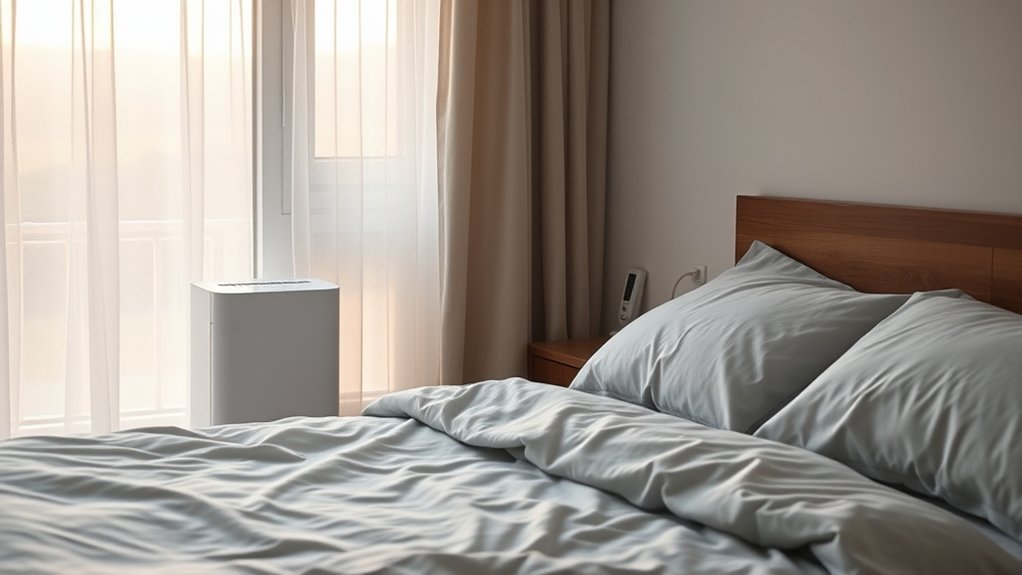
Placement determines how well the unit works. Put the dehumidifier on a flat, stable floor with open space around the intake and exhaust vents. Keep it away from curtains, bedding, walls, piles of clothing, and furniture that can block airflow.
A distance of about 6 to 10 feet from the bed is often practical because it reduces fan noise while still letting the unit treat the room. If your room is small, place it as far from your pillow as the cord and layout safely allow. Never stretch a cord under a rug, across a walkway, or near standing water.
- Set the unit upright on a level surface.
- Leave clearance around all vents, following the manufacturer’s manual.
- Keep the tank side easy to access for emptying.
- Keep the unit away from direct splashes, showers, and wet towels.
- Use a grounded outlet if the manual requires it, and do not use a damaged cord.
Recommended Products

Upgrade High Efficient Dehumidification: Dehumidifier utilize semi conductor condensation technology, ensuring quiet operation while effectively extracting moisture from the air. This advanced feature helps keep humidity levels below 45%

🍃Advanced Small Dehumidifier for Home: Designed for lasting home use, our bathroom dehumidifier works gently and steadily to maintain a balanced humidity level. The large 44 OZ (1.3L) water tank minimizes emptying frequency. Suitable for dorm room, camper, apartment, room, office and living room. No more dampness-just fresh, comfortable air everywhere

UPGRADED HIGH EFFICIENT DEHUMIDIFICATION:Say goodbye to sticky air. This dehumidifier uses semiconductor condensation technology to quietly and efficiently pull moisture from your bedroom, bathroom, or basement. It extracts up to 23 oz (650 ml) of moisture per day under test conditions of 86°F and 60% RH, which helps you enjoy a fresher, more comfortable living space
Use Dehumidifier Settings for Better Sleep
Set the humidistat to about 45% to 50% as a starting point. If windows sweat in winter, lower the target gradually until condensation stops. If your throat or skin feels dry, raise the target or run the unit for fewer hours.
A timer can help. Run the dehumidifier for an hour or two before bed so the room is already comfortable when you lie down. If the unit is quiet enough, you can let the humidistat manage overnight cycling. If it wakes you up, run it earlier in the evening and close the bedroom door afterward.
Maintenance matters as much as settings. Empty the tank before it overfills, wash or replace filters as directed, and clean the tank regularly so stale water does not create odor. If you use continuous drainage, check the hose for kinks, clogs, and secure placement.
Note: A dehumidifier may make a room feel less clammy, but it is not an air conditioner. Many units release some heat while removing moisture. If the room is hot and humid, use cooling, shading, ventilation, or HVAC support along with dehumidification.
Recommended Products

2500 Sq. Ft Dehumidifier - SEMKAP dehumidifier for basement features a quiet, high-performance compressor that removes up to 32 pints of moisture per day (at 95°F, 90% RH). Ideal for basements, offices, bathrooms, bedrooms, kitchens, stockrooms, living rooms, laundry rooms, garages, crawlspaces, or RVs. It helps maintain optimal humidity between 40%–60%RH for healthier, more comfortable living

【The Undisputed Champion — Industry-Leading Dehumidifier Brand】When you choose AEOCKY, you get double market validation. According to data independently verified by Stackline, a leading third-party data analytics company, AEOCKY was an industry‑leading dehumidifier brand on Amazon U.S. in 2025. This means you’re not just choosing a flagship product from a market leader, but a top-performing brand backed by independent market data and trusted by millions of real users, delivering the ultimate combination of performance, quality and trust.

【The Undisputed Champion — Industry-Leading Dehumidifier Brand】Choose AEOCKY, getting double market validation. According to data independently verified by Stackline, a leading third-party data analytics company, AEOCKY was an industry‑leading dehumidifier brand on Amazon U.S. in 2025. Meanwhile, it stands as a technology-leading rotary desiccant dehumidifier brand on Amazon. This isn’t just an appliance—it’s a complete humidity-control solution for small spaces. Skip low-performance alternatives and trust a brand recognized by the market.
Keep Bedroom Air Fresh and Dry
To keep bedroom air fresh and dry, combine humidity control with source control. Remove wet towels, avoid drying laundry in the bedroom, run the bathroom fan during and after showers, and keep the bathroom door closed when steam is present.
Ventilation helps when outdoor air is cleaner and drier than indoor air. Open windows or doors for 10 to 30 minutes before bed if the outdoor humidity, pollen, smoke, and pollution levels are favorable. If outdoor air is humid, smoky, or high-pollen, keep windows closed and rely on mechanical ventilation, air conditioning, dehumidification, or filtration instead.
Also check bedding. Heavy, non-breathable bedding can trap warmth and moisture around your body. Breathable sheets, washable mattress protectors, and regular laundering help reduce the damp feeling that makes a humid bedroom uncomfortable.
Pair Dehumidification With Cleaner Air
Dehumidification and air cleaning solve different problems. A dehumidifier removes water vapor. It does not remove dust, pollen, pet dander, smoke particles, or most gases from the air. A portable air cleaner can reduce indoor particles when it is properly sized and maintained, but the EPA notes that air cleaners cannot remove all pollutants.
Air Purifier Pairing
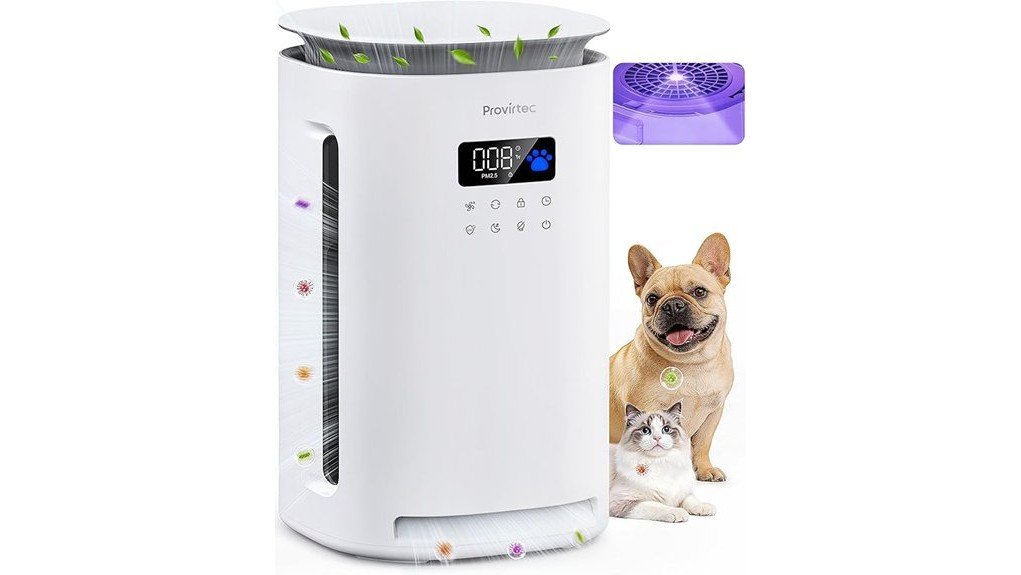
If allergies, pet dander, dust, smoke, or fine particles are part of the problem, pair your dehumidifier with a room air purifier. Choose a purifier with a Clean Air Delivery Rate that matches the bedroom size. For particles, use a true HEPA or high-efficiency filter design. For odors or some gases, look for a model with enough activated carbon, and understand that carbon filters need replacement.
Place the air purifier closer to the sleeping zone than the dehumidifier if the noise level allows. Keep both machines unobstructed so they are not fighting blocked airflow.
Reduce Stale Air
Stale air can hold moisture, carbon dioxide, odors, and indoor pollutants from cleaning products, furniture, candles, and personal-care products. Ventilation, source control, and filtration work together. Open a window only when the outdoor air is suitable, use exhaust fans that vent outdoors, avoid strong fragrances before bed, and keep the room uncluttered enough for air to move.
Nighttime Air Quality
For nighttime air quality, keep the setup simple: measure humidity, remove moisture sources, run the dehumidifier only when needed, and use filtration for particles. If you wake up congested, check bedding dust, pet access, pollen, mold, and HVAC filters rather than assuming humidity is the only cause.
Avoid Common Bedroom Humidity Mistakes
Small mistakes can keep a bedroom damp even when you use a dehumidifier. Avoid these common problems:
- Running the unit without measuring humidity: You may over-dry the room or waste electricity.
- Ignoring leaks: A dehumidifier cannot solve a roof, plumbing, window, or wall moisture problem.
- Blocking airflow: Curtains, furniture, and laundry piles can stop the unit from working efficiently.
- Leaving wet towels in the room: Damp fabric adds moisture for hours.
- Ventilating at the wrong time: Opening windows during muggy weather can make humidity worse.
- Skipping maintenance: Dirty filters and tanks reduce performance and can create odors.
- Choosing fragrance over source control: Air fresheners may cover musty smells but do not fix dampness.
Warning: If you see visible mold larger than a small isolated patch, smell mustiness that keeps returning, or find wet building materials, address the moisture source first. People with asthma, COPD, immune suppression, or severe allergies should be especially cautious around mold cleanup.
Troubleshoot Bedroom Humidity Problems
If humidity stays high after you run the dehumidifier, use the symptom to narrow the cause.
| Problem | Likely Cause | Fix |
| Humidity will not drop | Unit too small, blocked airflow, open windows, or active moisture source | Close windows, clear vents, check sizing, and inspect for leaks or damp materials. |
| Windows still have condensation | Cold glass, high indoor humidity, or poor insulation | Lower target humidity gradually, improve airflow, and check window sealing. |
| Unit smells musty | Dirty tank, dirty filter, or stagnant water | Clean the tank and filter according to the manual; empty water promptly. |
| Tank fills very fast | Very damp room, shower steam, wet laundry, or leak | Remove moisture sources and investigate leaks before upgrading the unit. |
| Room feels too dry | Target humidity is too low or unit runs too long | Raise the humidistat, shorten runtime, and keep humidity above about 30%. |
Frequently Asked Questions
How do I improve air quality in my bedroom at night?
Start with source control: remove damp towels, avoid drying laundry indoors, use bathroom exhaust fans, and keep humidity around 30% to 50%. Ventilate before bed when outdoor air is clean and drier than indoor air. If particles are a concern, use a properly sized air purifier with a suitable filter.
Should you use a dehumidifier if you have COPD?
You may benefit from controlling high humidity because damp homes can support mold and dust mites. However, a dehumidifier is not a COPD treatment, and overly dry air can also irritate breathing. Ask your clinician what humidity range is best for you, especially if symptoms change or you use oxygen or respiratory equipment.
How can I naturally dehumidify a bedroom?
Ventilate when outdoor air is drier, run bathroom exhaust fans, remove wet towels and laundry, reduce clusters of moisture-loving plants, and improve airflow around walls and windows. Moisture absorbers can help small closets or drawers, but they usually cannot control a full humid bedroom by themselves.
Is it good to sleep with a dehumidifier on in the bedroom?
Yes, it can be fine if the room is humid and the unit is safe, clean, and quiet enough for sleep. Set the humidistat around 45% to 50%, keep the unit away from bedding and blocked airflow, and stop using it if the room drops below about 30% humidity or starts to feel too dry.
Why is my bedroom more humid than the rest of the house?
Common reasons include a connected bathroom, closed doors, poor airflow, damp exterior walls, condensation-prone windows, wet laundry, too many plants, or an oversized/undersized HVAC system that does not remove enough moisture. Measure the room separately and look for moisture sources near the bedroom first.
Can a dehumidifier remove mold from bedroom air?
No. A dehumidifier reduces moisture, which helps prevent mold growth, but it does not remove existing mold from materials or filter mold particles like an air purifier can. If mold is visible or the musty smell keeps returning, fix the moisture source and clean or remove contaminated materials safely.
Conclusion
Keeping bedroom humidity under control is one of the simplest ways to make the room feel fresher and more comfortable at night. Measure first, aim for a steady 30% to 50% range, and use a dehumidifier only when the room actually needs moisture removal. For lasting results, pair the machine with better habits: remove damp items, ventilate wisely, run bathroom exhaust fans, maintain filters and tanks, and fix leaks quickly. When moisture stays controlled, the bedroom feels cleaner, bedding feels drier, and mold and dust-mite pressure becomes easier to manage.
Sources
- U.S. EPA: A Brief Guide to Mold, Moisture and Your Home — supports the below-60% and ideal 30% to 50% indoor humidity guidance.
- CDC: You Can Control Mold — supports keeping home humidity no higher than 50% for mold prevention.
- American Lung Association: Dust Mites — supports reducing home humidity below 50% to help limit dust mites.
- ENERGY STAR: Dehumidifiers — supports dehumidifier capacity, sizing, and efficiency guidance.
- U.S. EPA: Air Cleaners and Air Filters in the Home — supports the limits and uses of portable air cleaners.
- Sleep: Effects of Humid Heat Exposure on Human Sleep Stages and Body Temperature — supports the connection between humid heat, thermoregulation, and sleep-stage effects.