
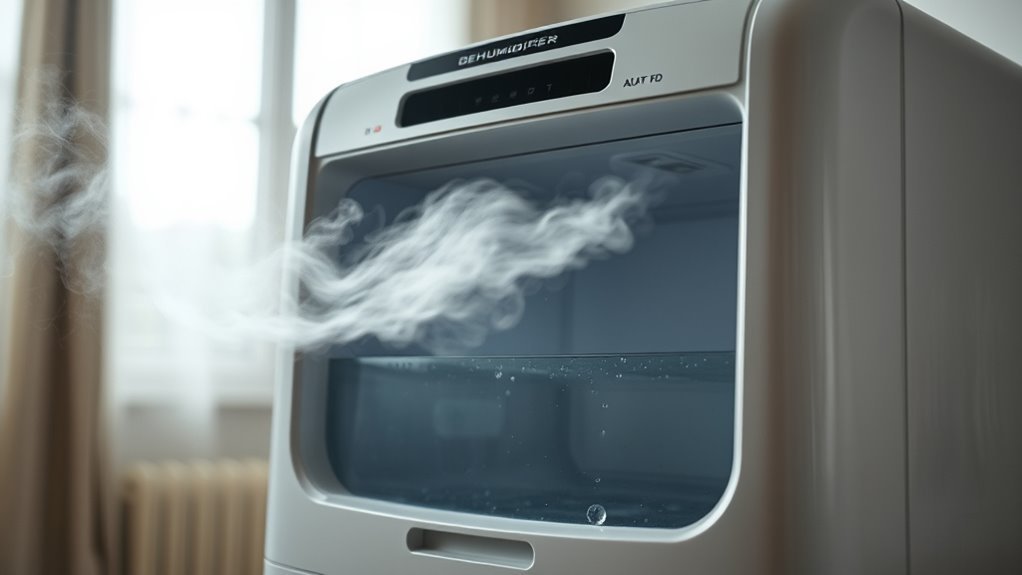
Here is how a dehumidifier removes moisture from the air. A fan pulls humid room air across a cold coil, the water vapor condenses into liquid, and the water drains into a bucket or hose. The air then passes over a warm coil and returns to the room slightly warmer and drier.
Most home units use a refrigeration cycle for this, much like a small air conditioner that discharges both the cooled and reheated air into the same room.
How a Dehumidifier Removes Moisture, Step by Step
ENERGY STAR describes a dehumidifier as a self-contained appliance with a refrigerated surface (the evaporator) that condenses moisture from the air, a cooling circuit, a circulation fan, and a way to collect or drain the water. In six steps:
- The fan pulls in humid air. Room air enters through a grille, usually through a washable dust filter.
- The air reaches the cold evaporator coil. Refrigerant in the coil absorbs heat from the air.
- The air cools below its dew point. Cooler air cannot hold as much water vapor.
- Water vapor condenses. Droplets form on the coil, like water on a cold glass.
- The water drains away. It falls into a pan, then into a bucket, hose or pump.
- The air is reheated. It passes over the warm condenser coil and returns to the room.
A dehumidifier does not destroy water vapor. It changes it into liquid water, collects it and sends back drier air.
A built-in humidistat compares room humidity with your setting. When humidity is above the target, the compressor runs. When the target is reached, it stops and the unit cycles as needed.
Where the Water Goes
- Removable bucket: you empty it by hand. Most units shut off when the bucket is full or not seated.
- Gravity drain: a hose carries water downhill to a floor drain, sink or sump. It must slope continuously without kinks or raised sections.
- Built-in pump: pushes water upward or across a longer distance. Lift and hose length vary by model.
Capacity is stated in pints of water removed per 24 hours under set test conditions. It is useful for comparing units, but it does not promise that amount every day. Real removal depends on temperature, humidity, airflow and how much moisture keeps entering the room.
Old vs. new ratings: the test procedure changed in 2020. ENERGY STAR’s rough conversion table maps an old 70-pint rating to about 40 to 45 pints per day under the new test, and says actual changes vary by model. Do not compare an old and a new rating directly.
What Parts Make a Dehumidifier Work?
- Fan: moves damp air into the cabinet and across the coils.
- Air filter: catches dust before it reaches the coils. It is not a substitute for an air purifier.
- Evaporator coil: the cold surface where water condenses.
- Compressor: circulates the refrigerant through the sealed system.
- Condenser coil: releases heat and warms the dried air.
- Drain pan, bucket, hose or pump: collect and move the water.
- Humidistat: measures humidity and controls the compressor.
- Bucket switch: stops the unit when the bucket is full, missing or misaligned.
- Defrost sensor: pauses the compressor when frost forms on the coil.
You may hear the fan, compressor and dripping water. That is normal. A coil that looks like it is sweating is showing condensed moisture from the air, not a refrigerant leak.
Types of Dehumidifiers
| Type | How it works | Best use |
|---|---|---|
| Refrigerant (compressor) | Condenses water on a cold evaporator coil | Bedrooms, basements, living areas and most warm indoor spaces |
| Desiccant | Uses a moisture-absorbing material that is dried with heat | Cool rooms, garages and storage areas where coil frost is a concern |
| Thermoelectric | Uses a Peltier plate to make a cold surface, with no compressor | Small closets and cabinets with light dampness |
| Whole-home | Usually refrigeration, connected to ductwork or a dedicated setup | Humidity control across several rooms |
Thermoelectric units are quiet and compact but remove far less water than compressor models. Whole-home systems need proper sizing, duct design and drainage, and usually professional installation.
What Humidity Should You Set?
EPA advises keeping humidity between 30 and 50 percent, by ventilating or using a dehumidifier if necessary. Its mold guidance adds that indoor humidity should stay below 60 percent. A setting of 45% to 50% is a practical starting point for many homes, adjusted for comfort, condensation and climate.
- Above 60%: mold, musty odors and condensation become more likely.
- About 40% to 50%: a useful range for many occupied rooms and basements.
- Below 30%: air can feel uncomfortably dry.
Put a separate hygrometer several feet from the unit. A built-in sensor can read the warmer, drier air next to the machine rather than the room average.
Why a Dehumidifier Blows Warm Air
The evaporator first cools the incoming air. The condenser then returns the absorbed heat to that air, and the compressor adds a little operating heat. Because all of this happens in the room, a dehumidifier does not cool like an air conditioner and can warm a closed room slightly. Warm air alone is not a fault. For details, read does a dehumidifier blow hot air.
Investigate the unit if it smells like burning, trips a breaker, shows an error code, gets unusually hot or stops collecting water while the room is humid.
When Do You Need a Dehumidifier?
Consider one when a hygrometer keeps showing high humidity or the room shows signs of excess moisture.
| Sign | What it may mean | What to check |
|---|---|---|
| Window condensation | High humidity or a cold surface | Humidity reading, ventilation, insulation |
| Musty odor | Hidden dampness or mold | Leaks, wet materials, closets, carpets |
| Damp spots | Condensation, seepage or a plumbing failure | Roof, plumbing, foundation, drainage |
| Visible mold | An active or past moisture problem | The moisture source and the extent of the material affected |
A dehumidifier cannot fix a roof leak, plumbing leak or groundwater seepage. Fix liquid water first. It also will not remove established mold or dry severely water-damaged materials, so follow cleanup or professional remediation guidance for those.
How to Choose the Right Dehumidifier
- Capacity: match the pint rating to the room size and dampness. A wet basement needs more than a mildly damp bedroom of the same size.
- Test standard: compare units rated under the same DOE procedure.
- Efficiency: compare Integrated Energy Factor (IEF). ENERGY STAR defines it as the ratio of capacity to total energy used, including standby and off-mode energy.
- ENERGY STAR: Version 6.0 requirements took effect October 1, 2025. Check the current list instead of an old buying chart.
- Drainage: pick a bucket, gravity drain or pump to match your drain location.
- Operating temperature: confirm the unit suits the lowest room temperature you expect.
- Controls and noise: look for a readable humidistat, bucket-full alert and automatic restart, and check sound specifications for bedrooms.
Where to Place a Dehumidifier
Put a portable unit on a level, stable surface in the damp room and follow the manual’s clearances. Top-discharge models may sit closer to a wall; others need more open space.
- Close exterior doors and windows while it runs.
- Keep curtains, furniture and boxes away from the grilles.
- Keep it away from heavy dust that can clog the filter and coils.
- Use a properly grounded outlet and keep hoses, water and cords apart.
- Do not place a standard unit where it can be splashed or sit in standing water.
For more on this, see does a dehumidifier dry the air.
How Long Should a Dehumidifier Run?
It may run for long stretches in a newly damp room because it is also pulling moisture out of furnishings, concrete, wood and carpet. After the room reaches your setting, the humidistat should cycle the compressor on and off.
Constant running can result from continuous mode, a very low setting, an undersized unit, open windows or an unresolved moisture source. Check the room with a separate hygrometer before assuming the unit has failed.
Why Is My Dehumidifier Not Collecting Water?
It may simply be near its target, or the room may be cool, since cool air holds less water vapor. Otherwise check:
- Humidity setting above the current room reading.
- Bucket full or not seated.
- Dirty filter. Clean it per the manual.
- Blocked airflow at the intake or exhaust.
- Frost on the evaporator. Let the defrost cycle finish and confirm the room is within the unit’s operating temperature range.
- Blocked or sagging drain hose.
- A room that is too large or too wet for the unit.
- Compressor not starting. If the fan runs but the sealed system never does, contact qualified service.
Recommended Products
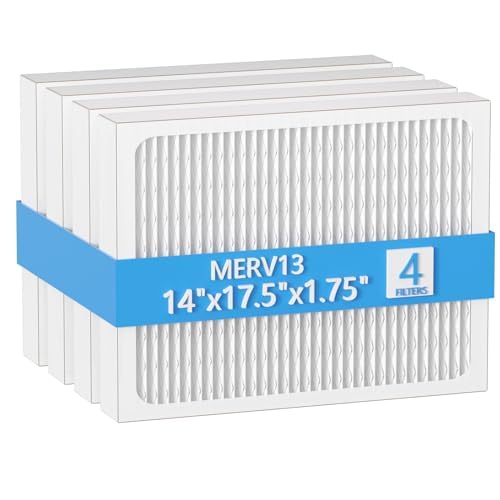
【Compatibility】 Our 14 x 17.5 x1.75 MERV 13 Replacement Dehumidifier Filter Media is Compatible with Honeywell DR90 & DR120 dehumidifier models.

COMPATIBILITY: Our DH02 HEPA filter compatible with Afloia (AQ8/Q8)/ Honati/ Hysure Q7/ Tenergy Sorbi 2-in-1 Air Purifier/Dehumidifier(1000ML) or please double check before order
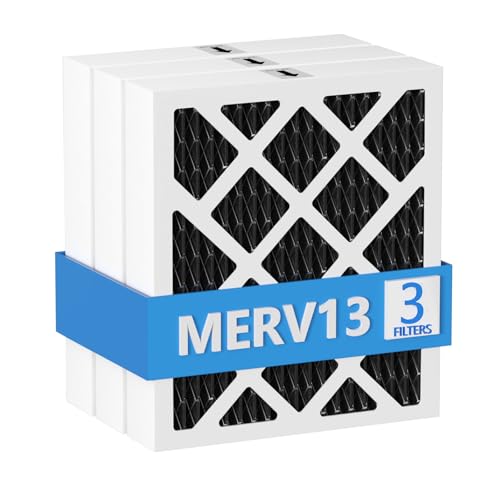
【Compatibility】 Our MERV 13 PN07126 Replacement Carbon Dehumidifier Filter Media is Compatible with Sanidry Sedona Dehumidifier PN07126 Replacement Filter.
Keeping a Dehumidifier Running Well
- Clean the air filter on the manual’s schedule.
- Wash the bucket regularly to prevent residue and microbial growth.
- Check hoses for kinks, blockage, loose connections and poor slope.
- Unplug the unit before vacuuming dust from the grilles.
- Compare the display with a separate hygrometer if readings seem off.
- Leave internal coil cleaning and sealed-system work to a qualified technician.
- Before storing, clean and dry the bucket, filter and drain connection, and store the unit upright.
Related Guides
- Does a dehumidifier blow hot air?
- Does a dehumidifier dry the air?
- Does a dehumidifier clean the air?
- Is a dehumidifier the same as an air conditioner?
Frequently Asked Questions
Do air purifiers dry indoor air?
Standard air purifiers do not meaningfully lower humidity. They capture particles or, in some models, reduce certain gases and odors. Air cleaning and moisture control are separate jobs, so use a dehumidifier when the main problem is excess water vapor.
Can a dehumidifier help with dust mites?
It can, by lowering high humidity. The American Lung Association says humidity is the most important factor in whether a house has high dust mite levels, and advises keeping the home below 50 percent humidity. Dust removal and bedding care may also be needed.
Does a dehumidifier cool a room?
No. A compressor dehumidifier cools the air at the evaporator, then reheats it at the condenser and adds heat from the compressor. The discharged air is normally slightly warmer than the air that entered.
Can a dehumidifier remove mold?
It can reduce the humidity that supports future mold growth, but it does not remove established mold or fix the leak that caused it. Correct the moisture source and clean or remove contaminated material using EPA or professional guidance.
Should a dehumidifier run all the time?
It may run continuously at first or in very humid weather. Once it reaches the set humidity, a correctly sized unit should cycle as needed. Nonstop running can also come from continuous mode, an unrealistically low setting, an undersized unit, open windows or an unresolved moisture source.
Sources
- ENERGY STAR: Dehumidifier Testing and Capacity
- ENERGY STAR: Dehumidifier Key Efficiency Criteria
- U.S. EPA: Improving Your Indoor Environment
- American Lung Association: Dust Mites

[…] guide for your model before publishing.] A dehumidifier in a cold basement can frost up and fail to remove moisture properly. If the room is below the listed range, turn the unit off, let it thaw, and do not restart […]
[…] ionizer dehumidifier removes moisture from the air and adds an ionizing feature that releases electrically charged particles, usually negative ions or […]
[…] with enough clearance around the unit and a level floor for safe drainage. The goal is simple: remove moisture before it spreads into walls, floors, closets, and the crawl […]
[…] warm side does not remove moisture directly. Its job is to get rid of the heat pulled from the cold side, plus heat created by the […]
[…] A standard dehumidifier does not clean the air the way an air purifier does. Its main job is to remove water vapor and lower indoor humidity. That can reduce dampness, condensation, musty conditions, and the […]
[…] gutters, foundation problems, plumbing leaks, or ventilation issues first. A dehumidifier can remove moisture from the air, but it cannot stop active water […]
[…] dehumidifier will not directly pull standing water from under the floor. It works by removing water vapor from the air, and its capacity is rated by how much water it can remove over 24 hours under specified test […]
[…] dehumidifier removes moisture from air through condensation. That sounds similar to distillation, but the appliance does not finish the […]