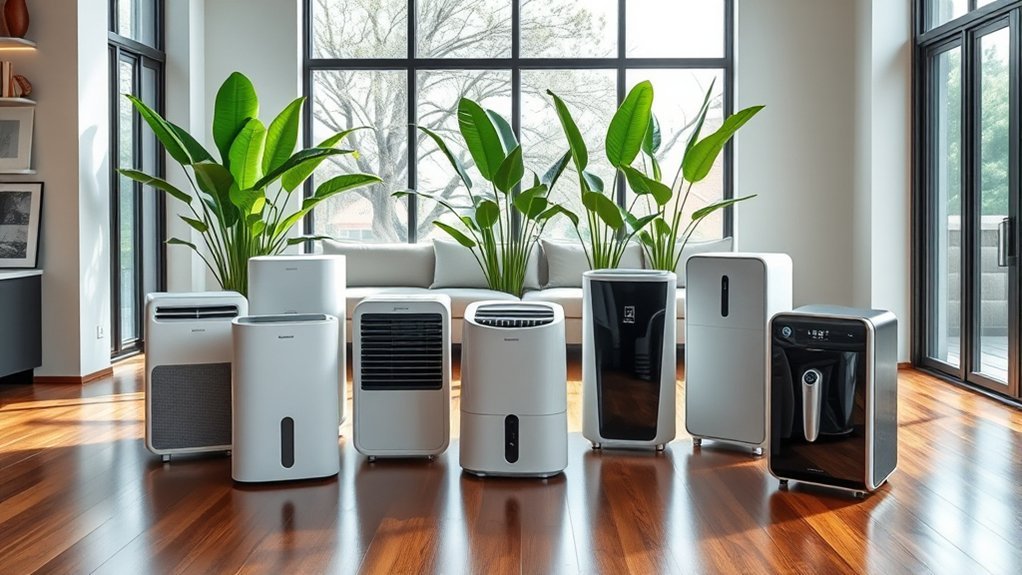
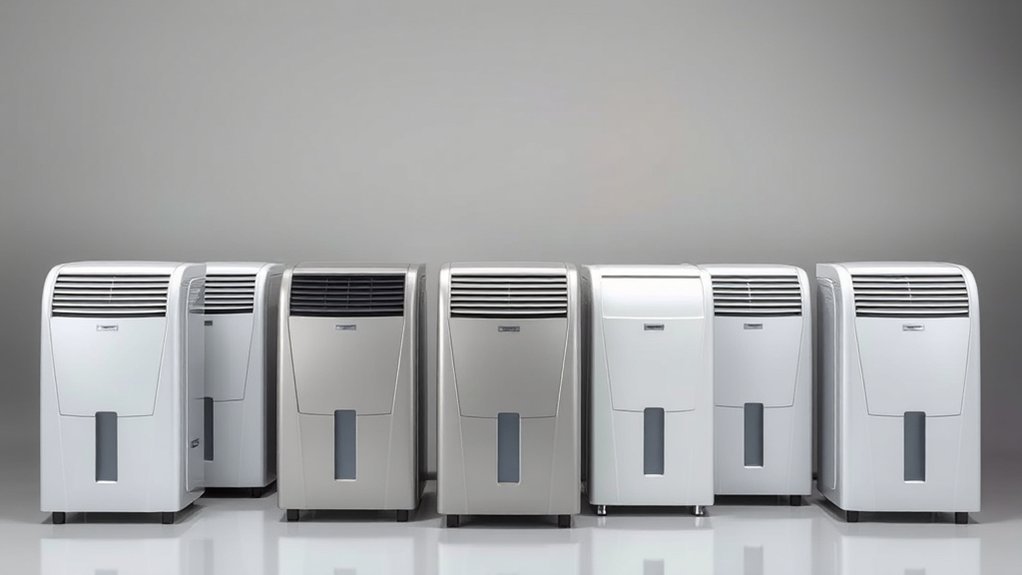
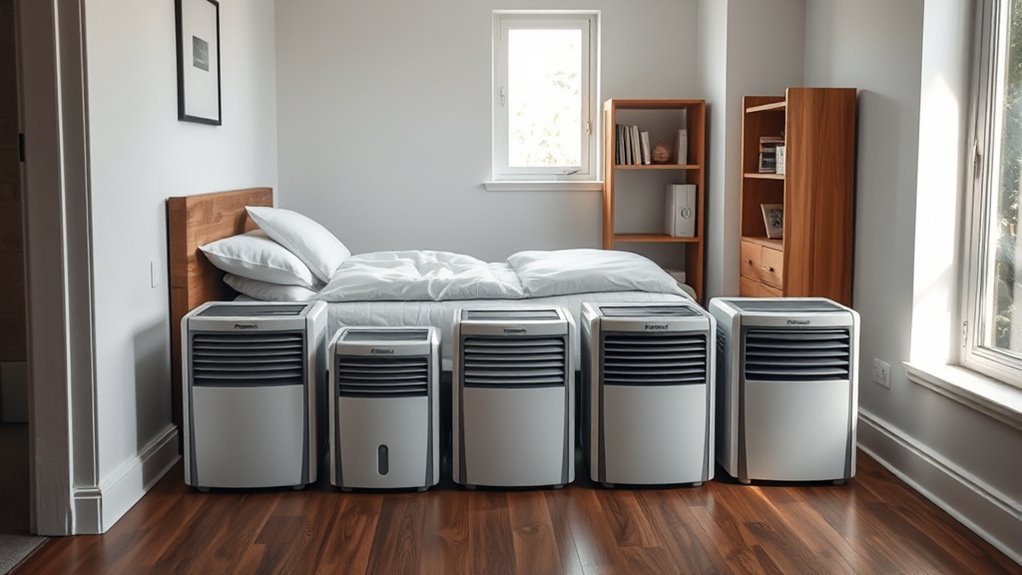
Built-in pumps are most useful when a floor drain is unavailable or the drain point sits above the dehumidifier. The models below are not tiny desktop units; they are comparatively compact or portable compressor dehumidifiers designed for basements, crawl spaces, garages, utility rooms, and other damp areas. The strongest choices depend on whether you need a low-profile crawl-space design, smart controls, or a familiar portable-room format.
Affiliate disclosure: We may earn a commission from qualifying purchases made through links in this article, at no extra cost to you.
Quick verdict: The ALORAIR is the most compact crawl-space-focused option, the Sijipt offers a narrow upright footprint, the DuraComfort and GoveeLife add app-based control, and the GE is a straightforward portable choice from an established appliance brand.
Before buying: Confirm the unit’s dimensions, rated capacity under standard test conditions, pump lift or hose-routing limits, operating-temperature range, and whether the pump hose is included.
Quick Comparison
| Product | Best For | Advertised Capacity | Pump / Drainage | Smart Control | Amazon |
|---|---|---|---|---|---|
| ALORAIR 70 Pints | Low-profile crawl spaces | 70 PPD at saturation; 35 PPD at AHAM conditions | Built-in pump and continuous drainage | Automatic controls | Check Price |
| Sijipt 80 Pints | Compact upright placement | Up to 80 pints per day, manufacturer-rated | Built-in pump plus gravity hose | Digital controls; no app stated | Check Price |
| DuraComfort 50 Pints | Wi-Fi control and flexible drainage | 50 pints per day | Built-in pump with pump hose | Wi-Fi app control | Check Price |
| GoveeLife H7152 | Smart monitoring in larger rooms | 50 pints per day under its stated standard condition | Built-in pump with long drain hose | App-based smart modes | Check Price |
| GE ADHE50PWF | Simple portable basement use | 50 pints per day | Built-in pump with included hose | Smart Dry fan adjustment | Check Price |
Capacity and coverage figures are manufacturer or listing claims. Real performance changes with temperature, starting humidity, room layout, air leakage, and how often doors are opened.
ALORAIR 70 Pints Crawl Space Dehumidifier with Pump
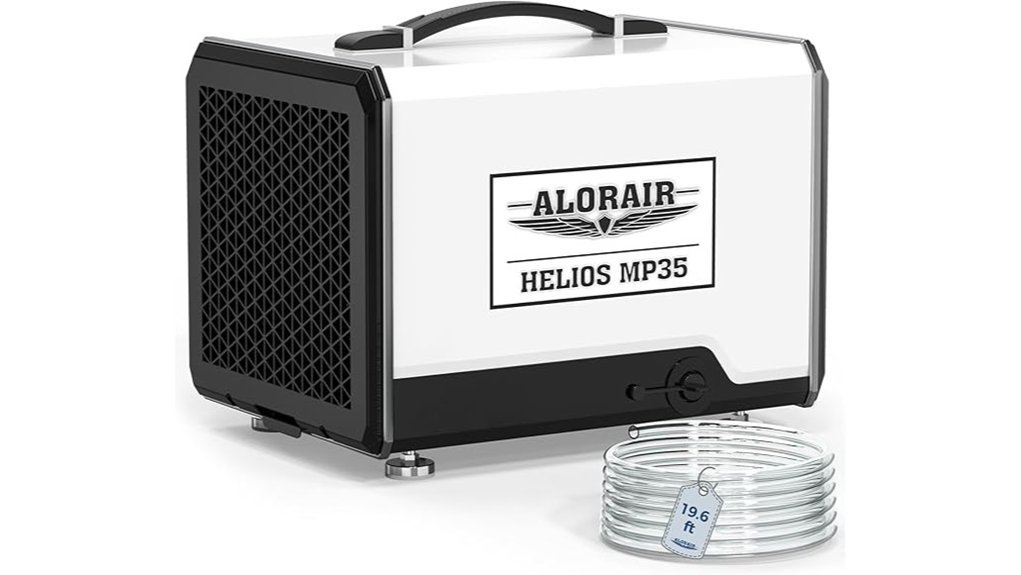
Best compact crawl-space pick. The ALORAIR is designed for low-clearance areas where a tall portable dehumidifier may be awkward. Its capacity needs careful interpretation: the model is marketed at 70 pints per day under saturated conditions and about 35 pints per day under AHAM conditions. That makes it better suited to crawl spaces, utility areas, and smaller basements than the headline number alone may suggest.
The built-in pump supports continuous drainage when water must travel to a higher or more distant outlet. Automatic defrost and restart functions are useful in spaces where the unit will operate with limited supervision. Its corrosion-resistant casing and crawl-space format also make it a more specialized choice than a standard wheeled room unit.
Who Should Buy This: Homeowners who need a compact, low-profile dehumidifier for a crawl space, utility room, or smaller basement and cannot rely on gravity drainage.
Who Should Avoid This: Buyers who want a quiet bedroom unit, app control, or broad open-area coverage based only on a large square-foot claim.
Pros:
- Low-profile design fits spaces where upright models may not.
- Built-in pump reduces dependence on a nearby floor drain.
- Automatic defrost and restart support less hands-on operation.
Cons:
- The 70-pint figure is based on saturated conditions, so standard-condition output is lower.
- Crawl-space units can sound more industrial than bedroom-focused models.
- Confirm the exact dimensions, pump lift, and warranty terms on the current listing before ordering.
Sijipt 80 Pints Energy Star Dehumidifier with Pump
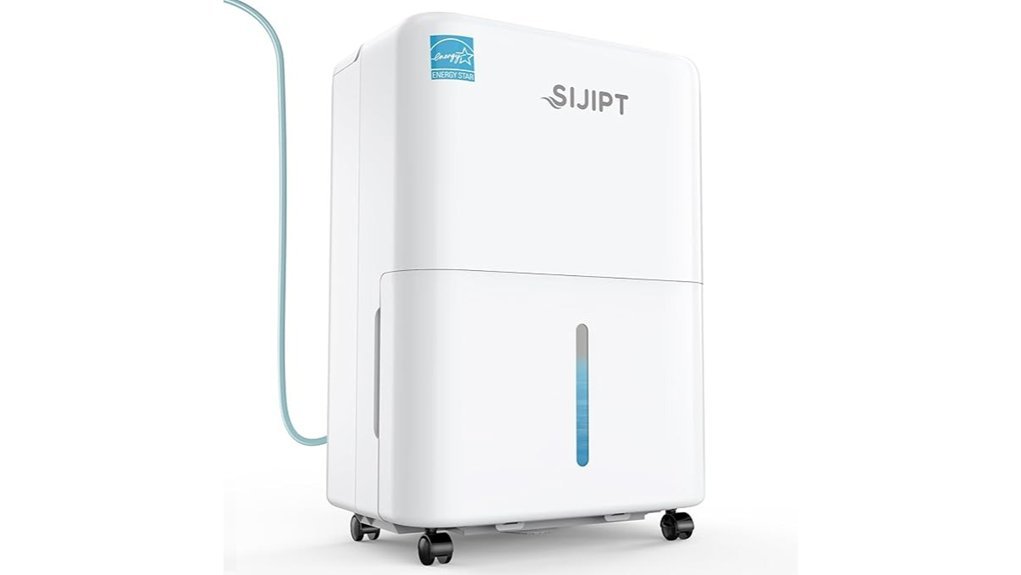
Best compact upright pick. The Sijipt Guardian SJ80P combines a narrow upright body with an advertised moisture-removal capacity of up to 80 pints per day. The built-in pump can move condensate vertically or horizontally, while the separate gravity-drain hose gives you another option when a lower drain is available.
Its controls include adjustable humidity, multiple operating modes, a timer, auto-restart, auto-defrost, and a child lock. This is a practical layout for a basement or utility room where floor space is limited but a mini thermoelectric dehumidifier would not provide enough capacity.
Who Should Buy This: Buyers who want a relatively narrow portable unit with both pump and gravity-drain options.
Who Should Avoid This: Anyone who needs independently verified long-term performance data or expects a genuinely lightweight desktop appliance.
Pros:
- Compact upright footprint compared with many high-capacity portable units.
- Includes both pump and gravity-drain setups.
- Auto-defrost, auto-restart, timer, and adjustable humidity improve day-to-day convenience.
Cons:
- The article could not independently confirm how the advertised 80-pint rating compares across all test conditions.
- The brand has less established support history than major appliance manufacturers.
- Check the current ENERGY STAR listing rather than relying only on marketplace wording.
DuraComfort Dehumidifier with Pump and WiFi
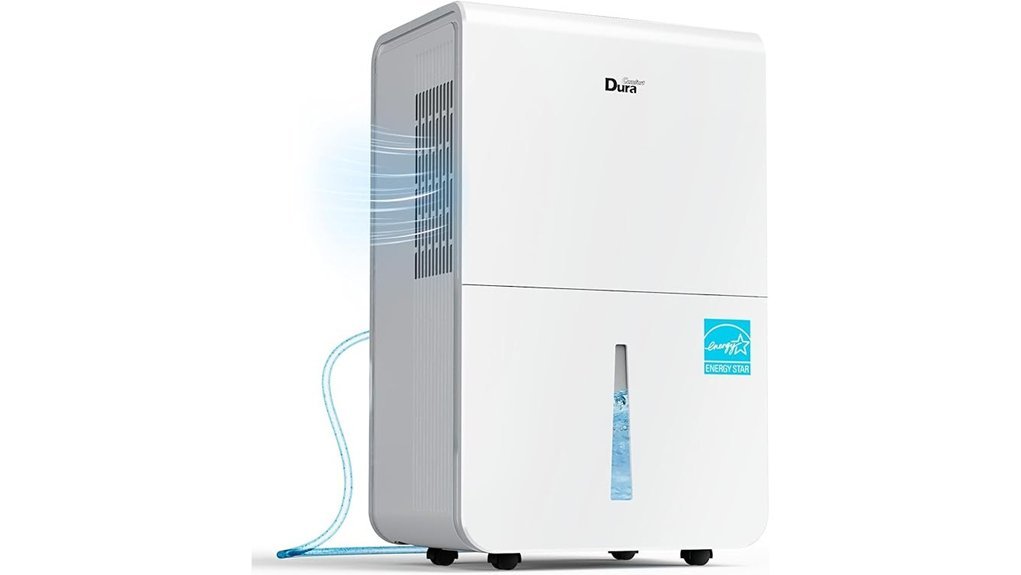
Best for Wi-Fi control. The DuraComfort DH50PWM is a full-size portable dehumidifier rather than a mini unit, but its approximately 11-inch depth helps it fit along a basement or utility-room wall. It is rated to remove 50 pints of moisture per day and offers an adjustable humidity range from 35% to 80%.
The built-in pump and included pump hose allow elevated drainage, while Wi-Fi control lets you change humidity, fan, mode, and timer settings from the DuraComfort app. A washable filter, child lock, auto-restart, and rolling casters make it easier to manage in everyday use.
Who Should Buy This: Homeowners who want app control and a pump-equipped portable unit for a basement, garage, or larger room.
Who Should Avoid This: Buyers who need a lightweight bedroom appliance; the unit weighs about 44 pounds and still needs airflow clearance.
Pros:
- Wi-Fi app control supports remote monitoring and adjustments.
- Built-in pump and included hose simplify elevated drainage.
- Adjustable humidity, timer, child lock, and washable filter add convenience.
Cons:
- It is compact only by full-size compressor-dehumidifier standards.
- App setup adds another step and depends on network compatibility.
- Quiet-operation claims should not be treated as a guarantee for bedrooms.
GoveeLife Smart Dehumidifier for Home (4,500 Sq. Ft.)
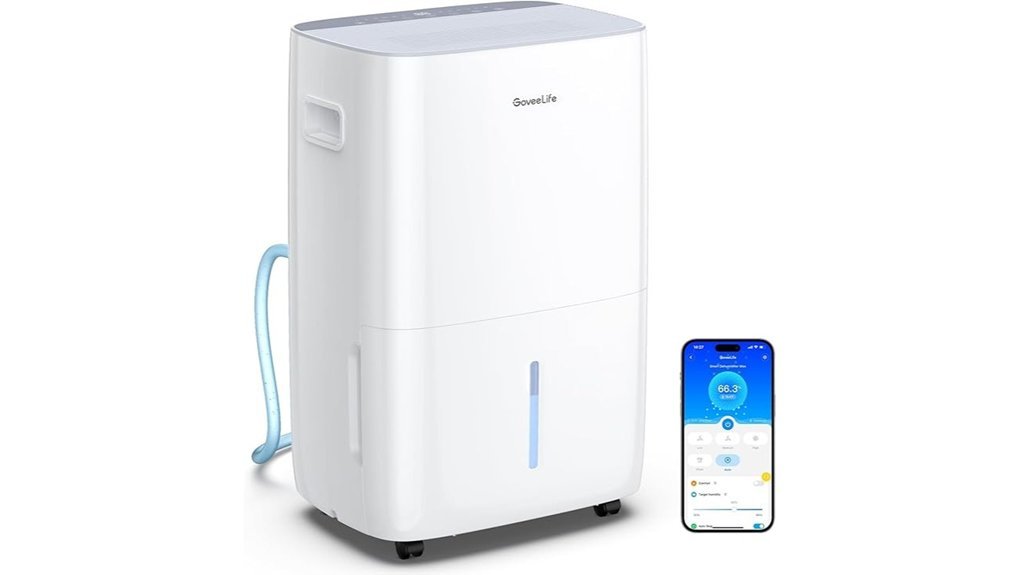
Best smart option for larger rooms. The GoveeLife H7152 is rated at 50 pints per day under its stated standard condition, although marketplace titles may show a much higher number measured under hotter and more humid conditions. Comparing the standard-condition rating is the safer way to evaluate it against other portable dehumidifiers.
The unit includes a built-in pump, a long drain hose, app control, and several operating modes. It is useful when you want to monitor humidity remotely or automate operation, but it remains a full-size machine at roughly 40 pounds rather than a truly small appliance.
Who Should Buy This: Smart-home users who want app-based humidity control and pump drainage in a basement, garage, or larger living area.
Who Should Avoid This: Buyers seeking a very quiet nightstand-sized unit or the lowest possible power draw.
Pros:
- App control and multiple smart modes simplify monitoring.
- Built-in pump supports drainage when the outlet is above the unit.
- Large tank reduces bucket-emptying frequency when the pump is not used.
Cons:
- It is one of the larger and heavier products in this roundup.
- High-temperature capacity figures can make comparisons confusing.
- Compressor and pump noise may be noticeable in quiet rooms.
GE Portable Dehumidifier with Built-in Pump
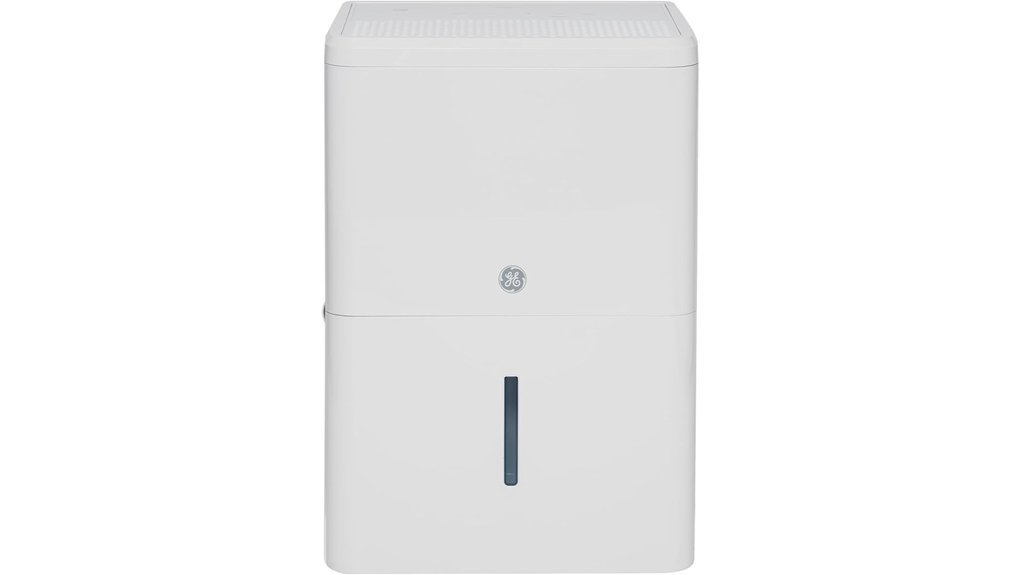
Best straightforward portable pick. The GE ADHE50PWF removes up to 50 pints of moisture per day and uses a built-in pump with an included hose to send water to a sink, drain, or other suitable outlet. Smart Dry adjusts fan operation according to room humidity, while auto-restart, auto-defrost, a washable filter, and a bucket-full alarm cover the everyday essentials.
The wheeled design makes it easier to reposition than a crawl-space unit, but at about 44 pounds it is still a substantial appliance. It is a sensible choice for shoppers who value a familiar brand and conventional controls more than app-based features.
Who Should Buy This: Buyers who want a familiar portable format, included pump hose, and simple controls for a basement or garage.
Who Should Avoid This: People with very limited floor space or those who need a lightweight unit for frequent stair carrying.
Pros:
- Built-in pump and included hose support elevated drainage.
- Smart Dry, auto-restart, auto-defrost, and a filter reminder simplify operation.
- Wheels and handles help with room-to-room movement.
Cons:
- Its full-size dimensions may not suit small apartments or narrow closets.
- Fan and pump noise can be noticeable in bedrooms.
- Coverage claims should be matched to actual dampness, temperature, and room layout.
Factors to Consider When Choosing a Compact Dehumidifier With a Pump
A built-in pump solves a specific drainage problem, but it should not be the only buying factor. Compare standardized moisture-removal capacity, physical dimensions, temperature range, noise, hose routing, energy efficiency, and service support before choosing a model.
Understand Capacity Test Conditions
Pints-per-day figures are only comparable when they use the same test conditions. Crawl-space and restoration models may advertise output at saturation, while portable-room models are often rated under a standardized condition. A higher headline number does not always mean the unit will remove that amount in a typical basement.
Check Pump Lift and Hose Routing
Confirm how high and how far the pump can move water, whether the correct hose is included, and where the hose can safely discharge. Avoid kinks, upward loops beyond the pump’s limit, freezing locations, and drains that could backflow. A pump is useful for a sink or window-level outlet; gravity drainage is usually simpler when a lower floor drain is available.
Measure the Real Footprint
“Small” can mean low-profile, narrow, shallow, or simply easier to move than a commercial unit. Measure the available width, depth, and height, then allow the clearance required around the air inlet and outlet. Also consider the filled-tank weight and whether the unit must be carried on stairs.
Match Capacity to the Space
Square-foot coverage is a broad marketing guide. A cold, wet basement with air leaks may need more capacity than a warm, moderately humid room of the same size. Use a hygrometer, consider the source of the moisture, and choose enough capacity for the actual conditions rather than relying on floor area alone.
Consider Noise and Placement
Compressor, fan, vibration, and pump-cycle noise all matter. Place the unit on a level surface, keep it away from a bed or work desk when possible, and avoid letting the cabinet or hose touch a wall. Published dBA figures can help, but they do not always capture the short sound made when a pump activates.
Verify Energy Efficiency
Look for a current ENERGY STAR listing and compare the Integrated Energy Factor when available. Do not assume every marketplace use of the ENERGY STAR name is current. Smart humidity control, auto shut-off, clean filters, closed doors and windows, and correct sizing can also reduce unnecessary runtime.
Maintenance and Safety
- Clean the washable filter on the schedule in the manual.
- Inspect and rinse the bucket, pump reservoir, and hoses to prevent buildup.
- Keep the intake and exhaust clear and use a properly grounded outlet.
- Allow the unit to stand upright before startup if it was transported on its side.
- Fix plumbing leaks, groundwater entry, or drainage problems instead of expecting a dehumidifier to solve the moisture source by itself.
Frequently Asked Questions
What Is the Smallest Type of Dehumidifier With a Built-in Pump?
Low-profile crawl-space models are usually the most compact pump-equipped compressor units. Mini thermoelectric dehumidifiers are smaller, but many do not include a true condensate pump and remove far less moisture.
Do I Need a Pump or a Gravity Drain?
Use gravity drainage when the hose can run continuously downhill to a floor drain. Choose a pump when the water must travel upward to a sink, window, or higher drain point.
How Do I Maintain a Dehumidifier With a Pump?
Clean the air filter, bucket, pump reservoir, and drain hose regularly. Check for kinks or buildup, test the pump before leaving the unit unattended, and follow the manufacturer’s winter-storage and cleaning instructions.
Can I Use a Dehumidifier With a Pump in a Bedroom?
Yes, provided the unit is correctly sized and its sound level is acceptable. A pump-equipped compressor model may be louder and warmer than a mini unit, so place it away from the bed and use a lower fan setting or timer when appropriate.
What Humidity Level Should I Set?
A target around 40% to 50% relative humidity is practical for many homes. Avoid running the unit lower than necessary, because that increases energy use and can make the room uncomfortably dry.
How Long Does a Dehumidifier With a Pump Last?
Service life varies with runtime, temperature, maintenance, pump cleanliness, and build quality. Warranty length can help compare manufacturer support, but it does not guarantee the product’s total lifespan.
Conclusion
Final recommendation: Choose the ALORAIR for a low-profile crawl space, the Sijipt when a narrow upright footprint matters, the DuraComfort or GoveeLife for app-based control, and the GE for a conventional portable design with an included pump hose.
Whichever model you choose, verify the current listing, compare capacity under equivalent test conditions, measure the installation space, and confirm that the pump can reach your intended drain.