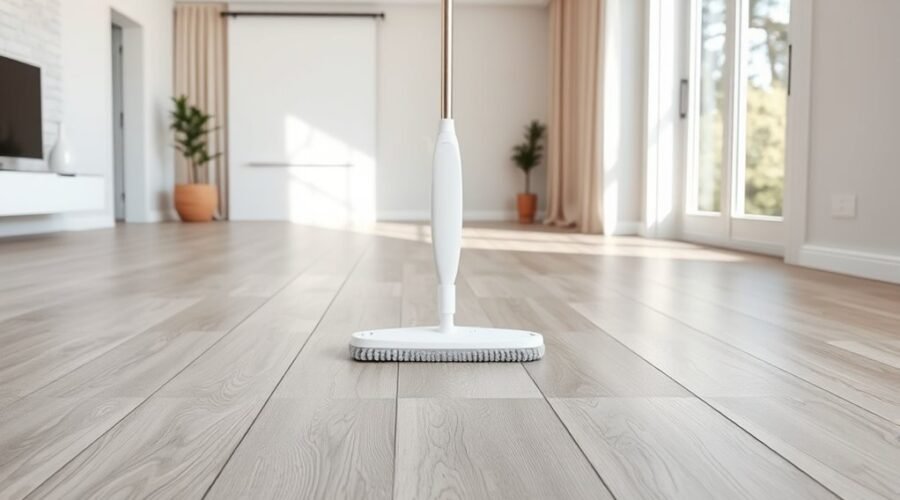
Steam mops are often marketed as a fast solution for hard floors, but laminate behaves differently than tile or sealed wood. Heat and moisture can seep into seams, weaken adhesives, and damage the wear layer over time. Some floors may seem unaffected at first, then show warping or lifting later. The real question is not whether steam cleans, but whether it preserves the floor’s structure. The answer is more limited than many expect.
Can You Use a Steam Mop on Laminate Flooring?
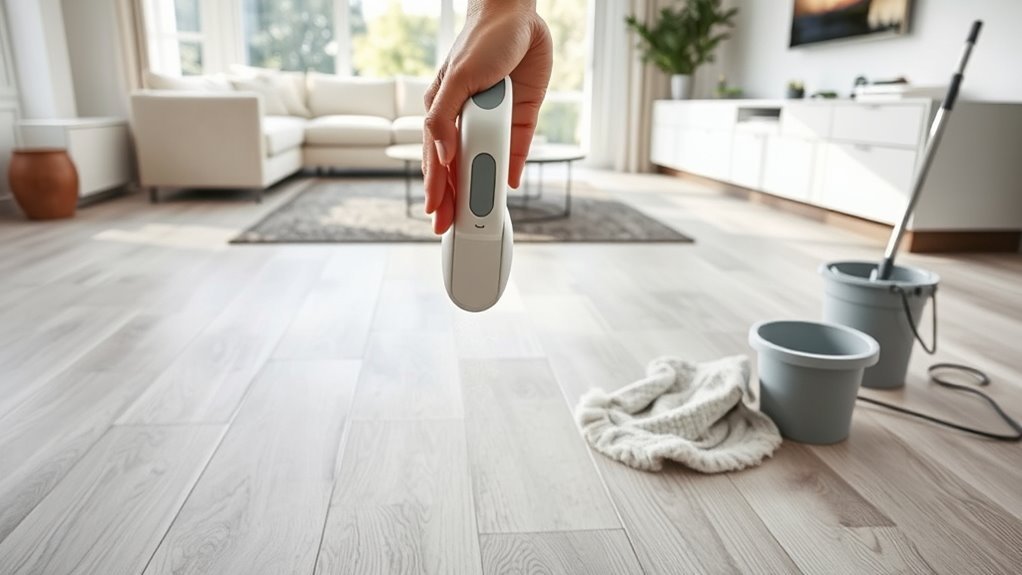
Steam mops are generally not recommended for laminate flooring because the combination of heat and moisture can be absorbed by the surface and joints, leading to warping, bubbling, or lifting over time.
For a steam mop on laminate, the practical answer is usually no, unless the floor manufacturer explicitly approves it. Many care guides warn against steam cleaning and prioritize preservation of the wear layer, core, and seams.
If a floor is sealed and a test is required, it should be done in a discreet area first, with close observation for swelling or dulling.
The safer cleaning tips are simple: use minimal water, a well-wrung microfiber mop, and pH-neutral products. Eco mops and dry maintenance tools can support routine care without excess moisture.
This approach reduces damage to laminate while preserving surface integrity and long-term freedom from avoidable repairs, replacement costs, and preventable floor failure.
Why Steam Mops Can Damage Laminate Floors
Steam mops combine high heat and moisture, and both can penetrate laminate seams, causing swelling, warping, or bubbling over time.
The temperature can also weaken adhesives and stress the protective wear layer, increasing the risk of joint separation and surface deterioration.
For this reason, many manufacturers recommend safer low-moisture cleaning methods instead of steam.
Heat And Moisture Risks
Because laminate flooring is built with layered materials and a bonded surface, exposure to both heat and moisture can cause serious failure points.
In practical terms, heat and moisture risks from steam mops may trigger bubbling, warping, and softening where sealing is incomplete. The vapor can also reach seams, weakening plank stability over time.
Reports note that repeated use may abrade the protective coating, reducing surface durability and increasing scratch susceptibility. Many manufacturers consequently discourage steam mops on laminate and advise dry or lightly damp methods instead.
For anyone seeking flooring care with less dependence on caution, a small hidden test area remains prudent before broader use, since laminate quality and edge sealing vary.
Layer And Joint Damage
Laminate flooring can be especially vulnerable at the joints and layered edges, where repeated steam exposure may allow moisture to penetrate and gradually cause swelling, warping, or separation.
- Steam mops can force vapor into seams, increasing joint damage over time.
- Heat may soften adhesives and lift the wear layer, weakening structure.
- Manufacturers commonly warn that laminate flooring is not designed for sustained steam contact.
- Even if results appear acceptable briefly, long-term use can degrade the finish and edges.
For users seeking practical freedom from avoidable repairs, the key issue is controlled exposure: once the protective layer is compromised, moisture gains access faster.
A small test area may reveal early bubbling, lifting, or discoloration before widespread damage occurs.
Safer Cleaning Alternatives
Safer cleaning methods become the practical response once moisture exposure at the joints and wear layer is recognized as a risk.
For clean laminate floors, safer cleaning alternatives usually mean a lightly damp microfiber mop, immediate drying, and laminate-safe cleaners. These methods reduce absorption, protect the protective film, and limit the warping that steam can trigger over time.
Many manufacturers advise avoiding steam because heat and moisture may cause bubbling, lifting, or edge swelling. Harsh cleaners should also be excluded, since they can dull finishes and weaken the surface.
A small hidden test area remains a sound check before broader use. User reports vary, but caution preserves control, durability, and the freedom to maintain flooring without avoidable damage.
Safer Ways to Clean Laminate Floors
Safer laminate maintenance begins with dry cleaning, using a soft-bristle broom or hard-floor vacuum to remove grit before any liquid is applied.
For deeper cleaning, a lightly damp microfiber mop or eco mop is preferred, since minimal moisture reduces the risk of swelling, warping, or buckling.
Commercial laminate cleaners, or a small amount of unscented dish soap diluted in water, can provide additional cleaning without compromising the floor’s protective layer.
Dry Cleaning First
Before any liquid cleaning is applied, the floor should be dry cleaned by sweeping or vacuuming to remove loose dirt and debris, reducing the risk of scratches during mopping.
On laminate floors, this dry cleaning step is the first defense to prevent scratches and preserve surface integrity. A vacuum with a soft-brush attachment is preferred because it lifts dust and pet hair without abrasion.
A soft-bristle broom can reach corners and edges where particles accumulate. Routine dry cleaning also limits buildup that can complicate later maintenance and shorten service life.
- Sweep or vacuum first.
- Use soft attachments only.
- Target edges and corners.
- Maintain a regular schedule.
This disciplined approach gives laminate floors the freedom to stay clean, protected, and structurally sound.
Damp Mop Safely
Laminate flooring should be damp mopped, not steam mopped, because controlled moisture reduces the risk of swelling, buckling, and surface damage.
For cleaning laminate, a wet mop with a well-wrung microfiber pad gives effective pickup without saturation. Eco mops that allow manual wetting and wringing provide precise control, unlike steam mops that force heat and vapor into seams.
Regular sweeping or vacuuming should precede damp mopping to remove abrasive grit. Commercial laminate cleaners, applied sparingly with microfiber cloths or pads, offer a safe, low-moisture option.
Spills should be addressed immediately with a damp cloth to prevent penetration and long-term distortion.
This disciplined method preserves the floor’s integrity while keeping upkeep efficient, independent, and free from unnecessary damage.
Best Tools for Cleaning Laminate Floors
Several tools stand out for maintaining laminate floors effectively without introducing excess moisture or surface wear. For best practices, the preferred approach avoids steam cleaning, since a laminate floor needs controlled dampness and low friction. A microfiber mop remains the baseline tool because it lifts grit efficiently while limiting water exposure.
- Bona Mop: recommended for its balanced cleaning action and laminate-safe design.
- Swiffer Wet: useful for fast, convenient maintenance when time is limited.
- Tineco Mop: valued for versatile performance, especially in European use.
- CrossWave® devices: suitable for deeper cleaning, combining vacuuming and mopping with compatible formulas.
Each tool supports practical autonomy by reducing dependence on aggressive methods. The best choice depends on routine, floor traffic, and the need for either light maintenance or deeper cleaning.
How to Spot Clean Spills and Stains
Even with the right tools for routine maintenance, spills and stains on laminate flooring require immediate, controlled treatment to prevent surface damage.
To spot clean spills, the first step is to act at once, because delay increases the risk of discoloration and swelling. For small, fresh spills, a damp microfiber clean cloth should be used to blot, not scrub, the affected area, keeping moisture exposure minimal on the laminate floor.
Sticky residues require a laminate-safe cleaner; bleach and ammonia are unsuitable because they can degrade the finish. Wax or gum should be hardened with an ice pack, then lifted carefully with a plastic scraper to avoid gouging.
After the stain is removed, the area should be wiped again with a damp cloth to clear remaining residue. The surface must then be left dry to the touch, preserving the floor’s integrity and freeing it from avoidable wear.
Simple Weekly Laminate Cleaning Habits
Routine laminate care begins with dry cleaning at least once a week to remove dust and grit before they can abrade the surface. A laminate floor stays resilient when weekly cleaning is systematic, not improvised.
Routine laminate care starts with weekly dry cleaning to lift grit before it can abrade the surface.
Dry methods preserve the finish and reduce dependence on any steam mop, which is not suitable for routine care.
- Sweep with a soft-bristle broom to lift loose debris.
- Vacuum on the hard floor setting; disable the beater brush.
- Use an angle broom for corners and baseboards.
- Wipe spills immediately with a damp microfiber cloth.
This sequence keeps the surface free from scratch-causing particles and limits moisture exposure. It also supports cleaner, freer living by reducing the need for corrective maintenance.
Consistency matters: brief, controlled weekly cleaning is more effective than occasional heavy effort. The result is a laminate floor that remains clean, stable, and visually consistent without unnecessary risk or labor.
How to Deep Clean Laminate Floors
Deep cleaning laminate floors is best done monthly with a hard floor or multi-surface cleaner formulated for laminate, applied with a damp mop that contains minimal water. This method supports deep cleaning laminate floors without saturating seams, which can lead to warping or buckling.
A microfiber mop distributes cleaner evenly, while a dry microfiber cloth should follow immediately to remove residual moisture. Spot cleaning should occur at once when spills land, and sticky residue should be lifted with a safe hard floor cleaner rather than harsh chemicals.
Weekly vacuuming remains useful for grit removal between sessions. Steam cleaners are not equivalent to a controlled damp mop and are generally unsuitable here. The procedure resembles the discipline used to clean hardwood, yet laminate demands stricter moisture control.
Consistent maintenance preserves surface integrity, limits staining, and keeps the floor visually stable, allowing a space to remain functional, resilient, and free from unnecessary damage.
How to Protect Laminate Floors Longer
Protecting laminate floors for the long term depends on controlling dirt, impact, and moisture at the source. This approach gives owners more durable, low-stress living spaces while preserving finish integrity.
Regular maintenance should focus on prevention, not correction.
- Place floor mats at entrances to trap grit and moisture before it reaches the planks.
- Use area rugs in hallways and other high-traffic zones to protect against scratches and scuffs.
- Install felt pads or furniture slides under legs so rearrangements do not drag across the surface.
- Maintain stable indoor humidity and avoid excessive water during cleaning, since standing water can cause swelling, warping, or buckling.
Consistent routine care reduces wear and extends service life.
Dry dusting, prompt spill removal, and periodic inspection support a resilient floor system without restrictive effort.
Frequently Asked Questions
What Is the Best Way to Clean Laminate Floors?
Regular vacuuming and microfiber mopping are the best cleaning methods for laminate floors. Spot spills immediately, use minimal moisture, and apply laminate-specific cleaner monthly. These laminate care maintenance tips prevent scratches, warping, and preserve durability.
What Type of Mop Is Best for Laminate Floors?
Microfiber mops best serve laminate floors, like a gentle guardian preserving a polished kingdom. Their mop materials, paired with careful cleaning techniques, support floor maintenance without excess moisture, scratches, or stripping the protective layer.
What Type of Mop Is Best for Laminate Flooring?
Microfiber mops are best for laminate flooring, because their mop materials and cleaning techniques limit moisture while supporting careful floor care. Bona and Swiffer Wet options offer practical, precise maintenance without compromising surface integrity.
What Flooring Should You Not Use a Steam Mop On?
Steam mops are a storm for unsealed hardwood, laminate, vinyl, and porous flooring materials. Their heat and moisture can warp surfaces. Recommended cleaning methods favor dry or lightly damp care, with maintenance tips from manufacturers.
Conclusion
To sum up, steam mops are generally unsuitable for laminate flooring because heat and moisture can compromise the adhesive core and protective wear layer over time. A practical alternative is dry dusting followed by a lightly damp microfiber mop and a laminate-safe cleaner. Significantly, industry guidance often emphasizes that most laminate manufacturers explicitly advise against steam cleaning****, underscoring the importance of following product-specific care instructions to preserve appearance, stability, and service life.