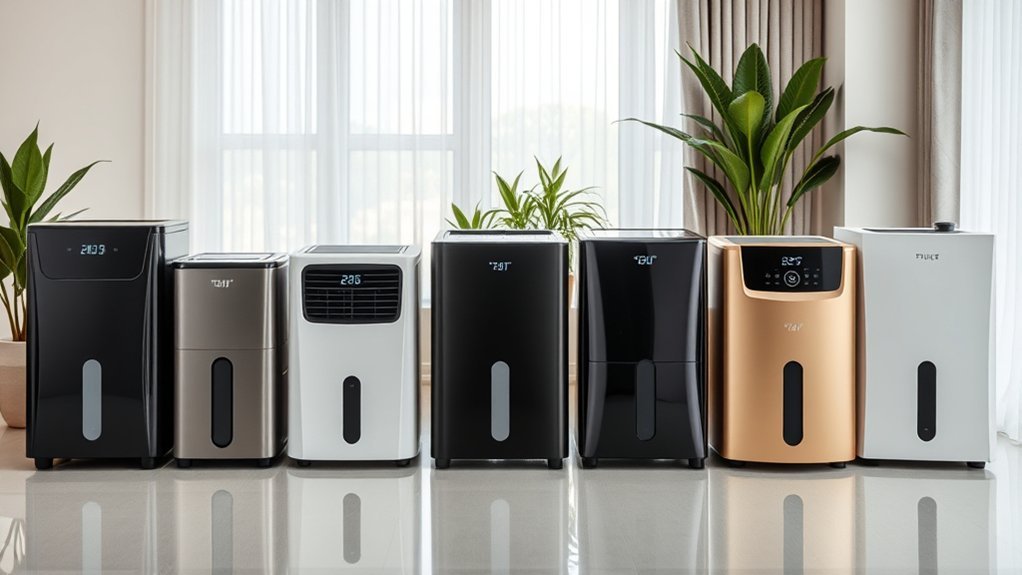
A dehumidifier may support a hay-fever management plan when excess indoor humidity is encouraging mold or dust mites. It does not treat allergic rhinitis or remove outdoor pollen by itself, but the right model can help keep a damp bedroom, bathroom, basement, or living area more comfortable. For most homes, the goal is to maintain relative humidity between about 30% and 50% without making the air excessively dry.
Affiliate disclosure: This article contains Amazon affiliate links. We may earn a commission from qualifying purchases at no additional cost to you.
Quick Answer
Best overall: The Midea 22-Pint model is the most practical choice for controlling measurable humidity in a medium-sized room. The Waykar PD160B is worth considering for a larger damp area, while the TABYIK is designed for localized moisture in small spaces. The Tenergy Sorbi is the most allergy-focused option because it combines limited dehumidification with a True HEPA filter.
Important: A standard dehumidifier does not capture pollen. Consider a separate HEPA air purifier when airborne pollen is your main trigger.
Quick Comparison
| Product | Best For | Type | Key Advantage | Main Limitation | Amazon |
|---|---|---|---|---|---|
| TABYIK 35 OZ | Small bedrooms, closets, bathrooms, and RVs | Thermoelectric | Compact and quiet | Slow moisture removal | Check on Amazon |
| Midea 22-Pint | Medium rooms and routine humidity control | Compressor | Adjustable humidistat, app control, and drainage | Heavier than compact units | Check on Amazon |
| Waykar PD160B | Larger or consistently damp rooms | Compressor | Humidity control and continuous drainage | Capacity figures vary by test method | Check on Amazon |
| Tenergy Sorbi | Small rooms needing moisture control and filtration | Thermoelectric with HEPA filter | True HEPA filtration | Small coverage and no drain hose | Check on Amazon |
How We Selected These Dehumidifiers
The products below were compared using factors that matter for indoor humidity control: identifiable model information, moisture-removal capacity, room suitability, drainage, noise, humidity controls, maintenance, filtration, and honest limitations. Models with unclear branding, unverifiable specifications, repetitive features, or questionable room-size claims were excluded.
Remember that water-removal ratings are measured under specific temperature and humidity conditions. A compact thermoelectric unit may collect noticeably less water in a cool bedroom than it does in a warm, highly humid test environment.
TABYIK Dehumidifier for Bedroom and Home (35 OZ)
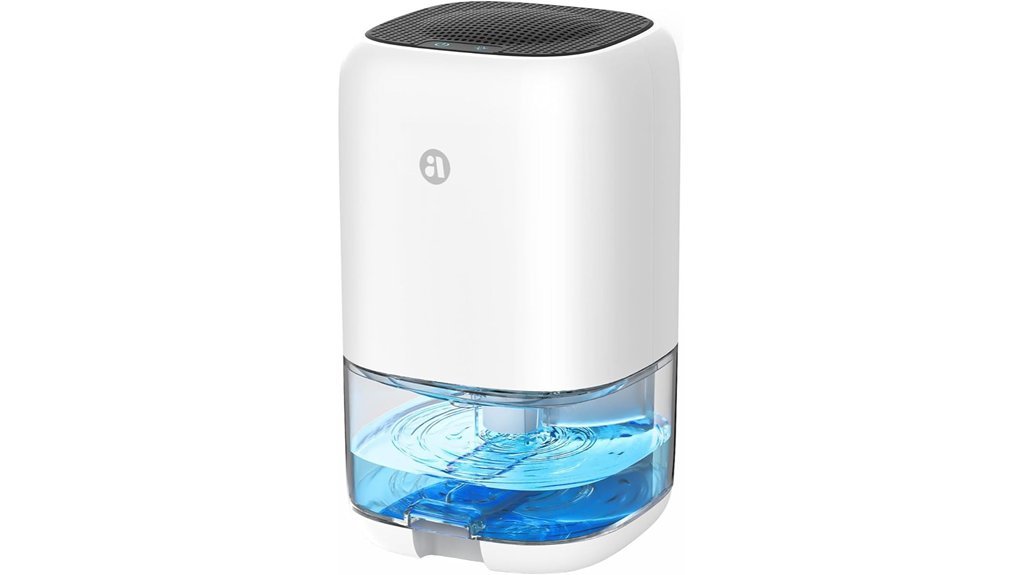
Best for Small Spaces
The TABYIK 35 OZ dehumidifier is a compact option for localized moisture in a bedroom, bathroom, closet, office, or RV. It uses thermoelectric technology rather than a compressor, which helps keep its size, weight, and operating noise low.
The manufacturer states that it can collect up to 16 ounces of water per day at approximately 86°F and 80% relative humidity. That is an optimal-condition figure, so expect slower collection in cooler rooms or when humidity is only moderately elevated.
Why You’ll Like It
- The 35-ounce transparent tank makes the water level easy to check.
- Its compact, lightweight body is convenient to move between small rooms.
- Operation is rated at approximately 28 dB under stated conditions.
- The automatic shutoff helps prevent overflow when the tank becomes full.
- The optional colored light can be turned off when you want a darker bedroom.
Who Should Buy This: Someone managing mild condensation or localized dampness in a small enclosed space.
Who Should Avoid This: Anyone dealing with a damp basement, a large room, water intrusion, or humidity that remains high throughout the home. A compressor model will usually be more appropriate for those conditions.
Pros:
- Quiet operation for bedrooms and offices.
- Small footprint and built-in carrying handle.
- Transparent tank with automatic shutoff.
- Simple controls without a complicated setup.
Cons:
- Moisture removal is much slower than a compressor dehumidifier.
- No adjustable humidistat or continuous drain connection.
- Not designed to filter pollen or other fine airborne particles.
- The tank may require frequent emptying in very humid conditions.
Midea 22-Pint ENERGY STAR Dehumidifier (White)
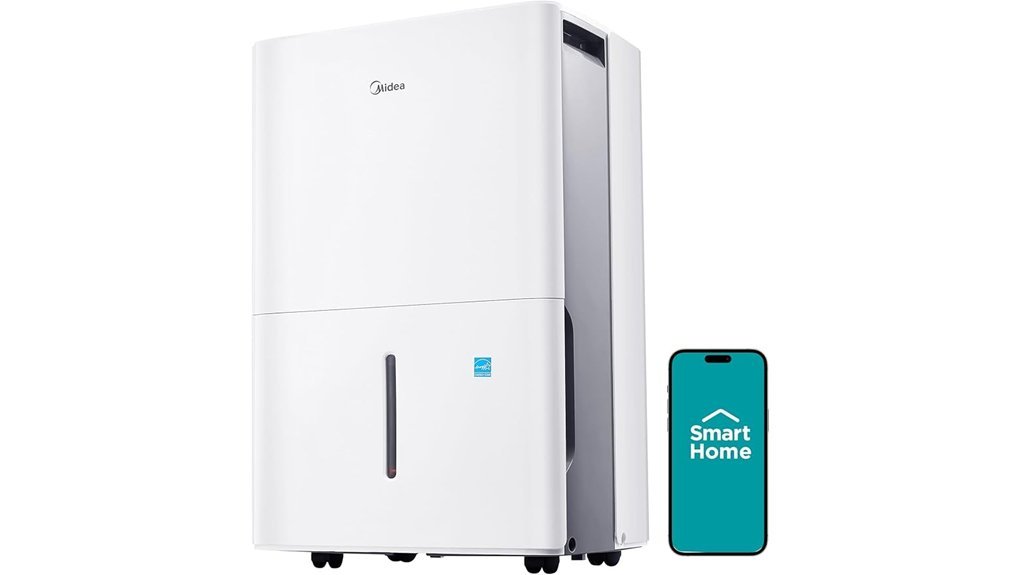
Best Overall
The Midea MAD22C1AWS is the strongest all-around option in this comparison for controlling measurable humidity in a bedroom, living area, bathroom, or basement section. Its compressor system is considerably more capable than a small thermoelectric unit, and the model is rated to remove approximately 22 pints of moisture per day under standardized conditions.
It offers an adjustable humidity setting, a digital control panel, automatic restart, automatic defrost, reusable filtration, caster wheels, app connectivity, and a continuous gravity-drain option. The advertised coverage is up to 1,500 square feet, but actual performance will depend on room layout, temperature, moisture sources, and how damp the space is.
Why You’ll Like It
- The adjustable humidistat can cycle the unit according to your selected humidity level.
- ENERGY STAR certification provides a verified efficiency benchmark.
- App control is convenient when the unit is placed in a basement or another room.
- You can use the removable tank or connect a compatible hose for gravity drainage.
- Automatic restart restores operation after a power interruption.
Who Should Buy This: Homeowners who need dependable room-level humidity control rather than light, localized moisture collection.
Who Should Avoid This: Someone who only needs a tiny countertop unit or who requires a built-in condensate pump to move water upward to a drain.
Pros:
- Stronger moisture removal than compact thermoelectric models.
- Adjustable humidity range and continuous operating option.
- Current ENERGY STAR certification.
- Wi-Fi and app functionality.
- Reusable filter and continuous gravity-drain connection.
Cons:
- Heavier and larger than a small bedroom unit.
- The 0.8-gallon bucket may fill quickly in a very damp room.
- A drain hose may need to be purchased separately.
- It controls humidity but does not provide HEPA-level pollen filtration.
Waykar PD160B ENERGY STAR Dehumidifier
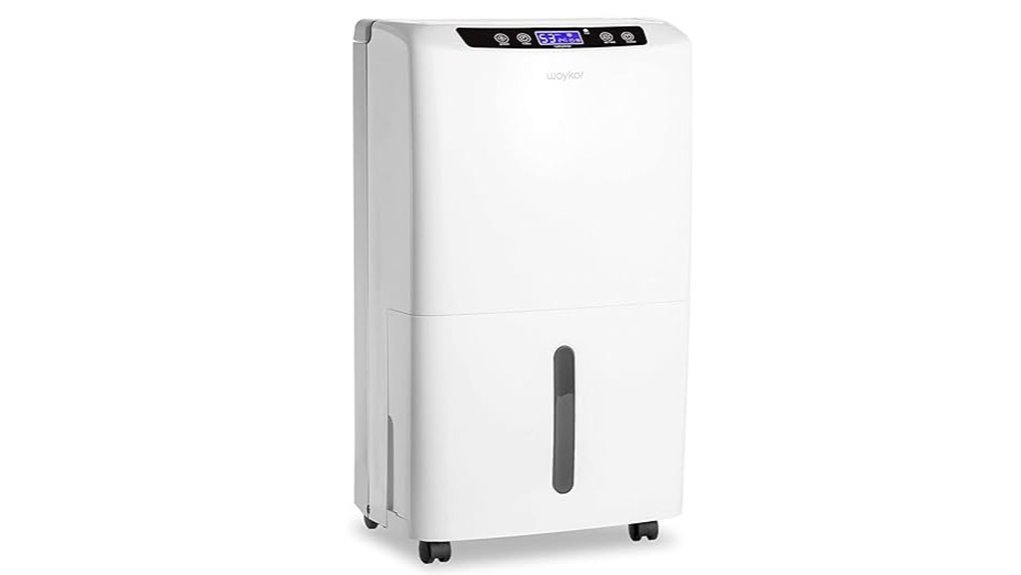
Best for Larger Damp Rooms
The Waykar PD160B is designed for more demanding moisture control than a countertop thermoelectric model. It includes an adjustable humidistat, two fan speeds, automatic defrost, a 24-hour timer, caster wheels, automatic restart, a removable tank, and a continuous gravity-drain connection.
Capacity note: This model is commonly marketed as a 34-pint dehumidifier based on warm, highly humid testing. Its current ENERGY STAR listing reports approximately 9.81 pints per day under a different standardized test. These figures should not be compared without considering the testing conditions.
Waykar markets the unit for spaces up to approximately 2,000 square feet, but the recommended room size should be reduced when the area is very wet, divided into multiple rooms, poorly ventilated, or exposed to a continuing moisture source.
Why You’ll Like It
- The humidistat allows more precise control than a basic on-or-off compact unit.
- The continuous drain option reduces the need to empty the tank manually.
- Automatic defrost supports operation when room temperatures fall.
- Wheels and handles make repositioning easier despite its larger size.
- The PD160B is currently listed as an ENERGY STAR certified model.
Who Should Buy This: Someone managing a larger bedroom, basement area, garage, laundry room, or other consistently damp space.
Who Should Avoid This: Anyone who wants an ultra-light tabletop unit or expects the appliance to remove airborne pollen without a separate HEPA filter.
Pros:
- Adjustable humidity controls and two fan speeds.
- Continuous gravity drainage is supported.
- Automatic defrost and automatic restart.
- ENERGY STAR certified model.
- More appropriate for persistent humidity than a miniature Peltier unit.
Cons:
- The different capacity-rating methods can confuse buyers.
- The approximately 0.66-gallon tank may fill frequently without a drain hose.
- No verified HEPA filtration for pollen.
- Larger and heavier than a small-space dehumidifier.
Tenergy Sorbi 1000ml Air Dehumidifier with HEPA Filter
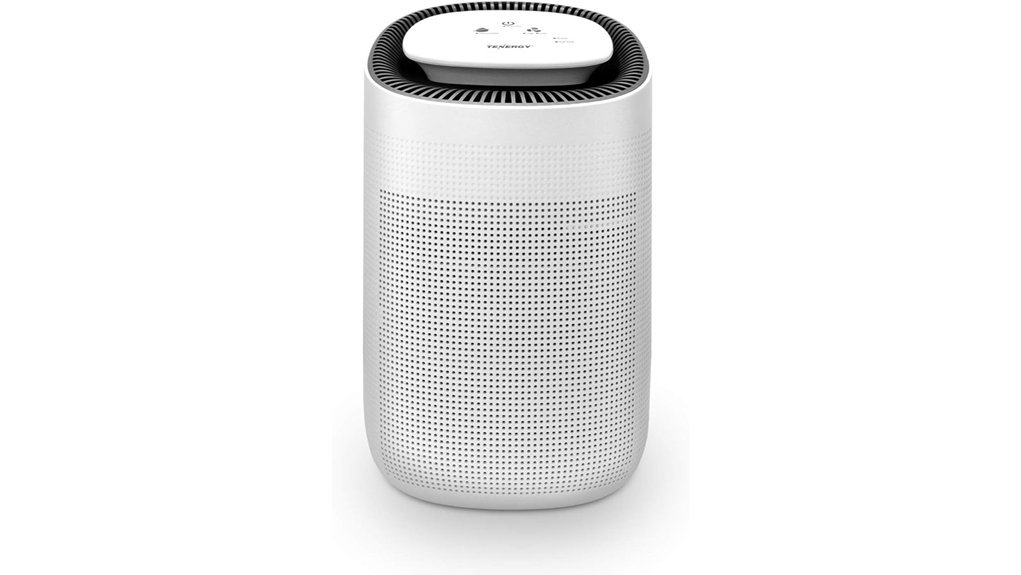
Best With HEPA Filtration
The Tenergy Sorbi is the most directly relevant option for an allergy-conscious reader because it combines a compact thermoelectric dehumidifier with a True HEPA air filter. The moisture-control function is intended for small rooms, while the filter can capture fine airborne particles that pass through the unit.
Under optimal conditions of approximately 86°F and 80% relative humidity, the manufacturer states that it can collect up to 750 ml of water per day. It has a removable 1,000 ml tank and is intended for spaces of up to about 200 square feet.
The HEPA feature is useful, but the manufacturer does not provide enough information to compare its room-cleaning speed with a full-size dedicated air purifier. People whose primary problem is pollen should consider room size, airflow, and clean-air delivery performance before relying on this unit as their only filter.
Why You’ll Like It
- It is the only retained model that combines dehumidification with verified True HEPA filtration.
- The air-purifying and dehumidifying functions can be used in a compact room.
- Its operating noise is stated at approximately 35–42 dB.
- Touch controls provide low and high fan options.
- The removable tank and accessible filter simplify routine maintenance.
Who Should Buy This: Someone who wants limited moisture removal and HEPA filtration in a small bedroom, bathroom, closet, or office.
Who Should Avoid This: Anyone with a large damp room, serious condensation, standing water, or a need for continuous drainage.
Pros:
- True HEPA filtration for airborne particles.
- Compact two-in-one design.
- Automatic shutoff when the tank is full.
- Relatively quiet operation.
- Simple removable tank and filter access.
Cons:
- Limited to small-space moisture control.
- No continuous drain-hose connection.
- The HEPA filter requires periodic cleaning and replacement.
- Real moisture collection will be lower outside optimal test conditions.
Factors to Consider When Choosing a Dehumidifier for Hay Fever
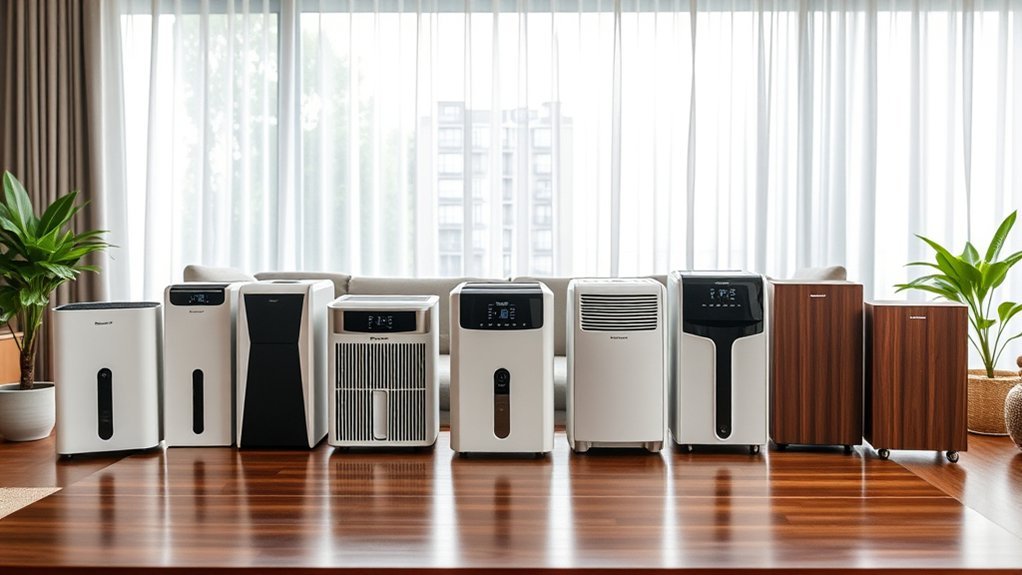
Understand What a Dehumidifier Can Do
A dehumidifier removes water vapor from the air. Lowering excessive humidity may discourage mold growth and make the environment less favorable for dust mites. It does not kill existing mold, remove a hidden water source, or capture pollen unless the appliance also includes suitable air filtration.
For seasonal pollen allergies, humidity control works best as one part of a broader plan that may include keeping windows closed during high-pollen periods, cleaning with a damp cloth, washing bedding, maintaining HVAC filters, and using a properly sized HEPA air purifier.
Aim for a Measured Humidity Level
A practical target for most homes is approximately 30%–50% relative humidity. Humidity that remains above 50% can support mold and dust-mite activity, while excessively dry air can feel uncomfortable. Use a separate hygrometer to measure the room instead of judging humidity only by how the air feels.
Choose a unit with an adjustable humidistat when you need automatic control. Basic thermoelectric models normally run continuously until switched off or until their tanks fill.
Match Capacity to the Moisture Problem
Do not select a dehumidifier based only on a large advertised square-foot number. Consider the room’s actual dimensions, temperature, starting humidity, ventilation, number of doors, water leaks, laundry activity, and whether the space is occasionally humid or continuously wet.
- Small thermoelectric units: Best for closets, small bathrooms, RVs, and localized condensation.
- Compressor units: Better for bedrooms, living areas, basements, and rooms where humidity needs to be reduced to a specific target.
- Major water problems: Fix leaks, drainage issues, or water intrusion before expecting a portable appliance to solve the problem.
Compare Capacity Ratings Carefully
Two products may display very different pint-per-day figures even when their real-world performance is closer than the labels suggest. Manufacturers and certification programs may test units at different temperatures and relative-humidity levels. Look for the model number and test method before comparing capacity.
Consider Filtration for Pollen and Dust
A washable mesh filter on a compressor dehumidifier mainly protects the appliance from larger dust particles. It is not the same as a True HEPA filter. When airborne pollen, pet dander, or fine dust is the main concern, use a dedicated HEPA air purifier or choose a combination unit with clearly documented filtration.
Check the Noise Level
Thermoelectric dehumidifiers are usually quieter but remove moisture slowly. Compressor models normally produce more fan and compressor noise but control humidity more effectively. For a bedroom, look for a sleep mode, low fan setting, dimmable display, or a schedule that lets the unit run before bedtime.
Look for Verified Efficiency
ENERGY STAR certification is more useful than a vague claim that a product is “energy efficient.” Certified compressor models must meet defined moisture-removal and energy-consumption criteria. A very small thermoelectric unit may draw little power but can still be inefficient for a large humidity problem because it must run continuously.
Choose the Right Drainage Method
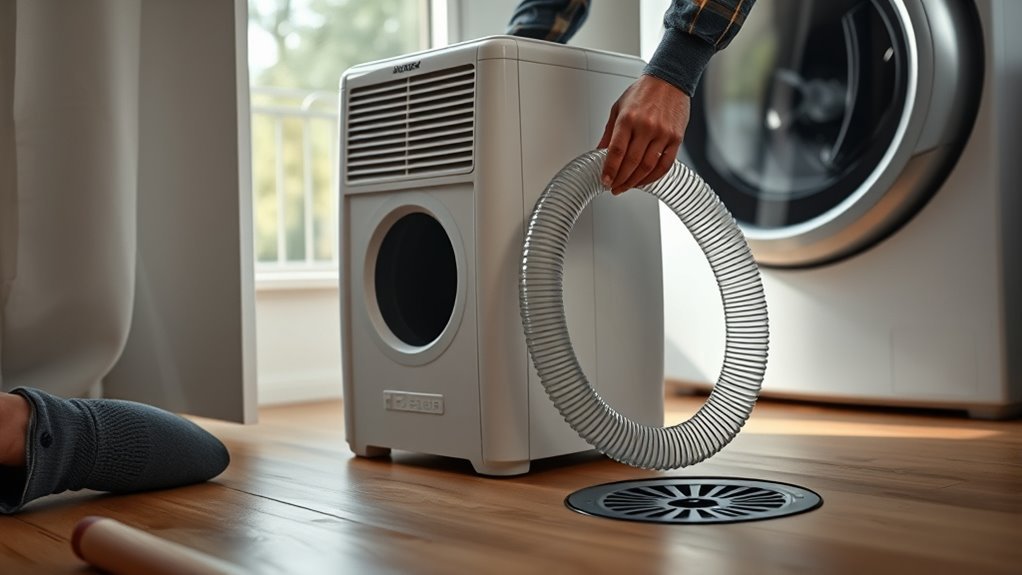
A removable tank works well when the unit collects only a small amount of water. For a basement, laundry room, or consistently humid area, continuous gravity drainage can reduce maintenance. Gravity drainage requires the hose to slope downward to a suitable drain. A built-in pump is needed when water must travel upward.
Plan for Cleaning and Maintenance
- Empty and rinse the collection tank regularly.
- Clean washable intake filters according to the manufacturer’s instructions.
- Replace non-washable HEPA filters when required.
- Keep air inlets and outlets clear.
- Inspect drain hoses for kinks, buildup, and leaks.
- Do not allow collected water to remain in the tank for long periods.
Be Careful With Added Fragrance
Strong fragrances, essential oils, perfumes, and scented products can irritate some people with sensitive noses or allergic rhinitis. Do not add oils or fragrance to a dehumidifier unless the manufacturer explicitly designed the appliance for that purpose. Even then, an unscented indoor environment may be more comfortable for an allergy-sensitive household.
Before You Buy Checklist
- Measure the room and check humidity with a hygrometer.
- Decide whether you need localized moisture collection or full-room control.
- Check the exact model number and standardized capacity rating.
- Confirm whether the unit has a humidistat.
- Choose tank drainage, gravity drainage, or a pump.
- Check operating noise for bedroom use.
- Look for HEPA filtration when pollen removal is important.
- Confirm replacement-filter availability and maintenance requirements.
- Fix leaks and standing-water problems before relying on a dehumidifier.
Frequently Asked Questions
Can a Dehumidifier Cure Hay Fever?
No. Hay fever is an allergic reaction, and a dehumidifier is not a medical treatment. It may support symptom-management efforts when excessive indoor humidity is contributing to mold or dust-mite conditions. Speak with a healthcare professional when symptoms are persistent, severe, or not controlled by your existing treatment plan.
Does a Dehumidifier Remove Pollen?
A standard dehumidifier does not remove pollen effectively. Its basic intake filter is usually intended to protect the appliance from larger dust. Use a properly sized HEPA air purifier when airborne pollen filtration is the primary goal. The Tenergy Sorbi includes a True HEPA filter, but it is designed for a small space.
What Humidity Level Is Best for Allergy Control?
A commonly recommended indoor range is approximately 30%–50% relative humidity. Try to keep the room below 50% when mold or dust mites are a concern, but avoid running the unit blindly. A hygrometer helps prevent unnecessary over-drying.
Is a Small Dehumidifier Enough for a Bedroom?
It may be enough for mild condensation in a small, closed bedroom. If humidity stays above your target, the room smells musty, windows remain wet, or the tank collects very little water, move to a compressor model with an adjustable humidistat.
Can I Run a Dehumidifier All Day?
Many models can operate for extended periods when placed and maintained according to the manual. A humidistat-controlled model is preferable because it can cycle off after reaching the selected humidity. Check the tank, drainage connection, filter, airflow clearance, and electrical instructions regularly.
How Often Should a Dehumidifier Be Cleaned?
Check the tank and filter frequently during regular use. Rinse the tank before residue develops, clean washable filters according to the manual, and inspect the coils or air openings for dust. Combination units may also require periodic HEPA-filter replacement.
Should I Use a Dehumidifier or an Air Purifier?
Use a dehumidifier when excessive moisture is the problem. Use a HEPA air purifier when airborne pollen, fine dust, or pet dander is the main concern. Some households benefit from using both because the appliances perform different jobs.
Trusted Indoor-Air Guidance
- U.S. EPA indoor-air and humidity guidance
- Mayo Clinic hay-fever management guidance
- ENERGY STAR dehumidifier buying guidance
This article provides general product-comparison and indoor-air information. It is not a diagnosis or substitute for advice from a qualified healthcare professional.
Conclusion
The best dehumidifier for a hay-fever-conscious household depends on the moisture problem rather than the allergy label alone. Choose the Midea 22-Pint when you need dependable humidity control in a medium-sized room. Consider the Waykar PD160B for a larger or more consistently damp area, but compare its capacity using the correct test conditions.
The TABYIK 35 OZ is a quieter, lighter option for localized moisture in a small room. The Tenergy Sorbi is the better fit when you want small-space dehumidification combined with True HEPA filtration.
Whichever model you choose, measure humidity with a hygrometer, aim for approximately 30%–50% relative humidity, clean the appliance regularly, and remember that moisture control and pollen filtration are separate parts of creating a more allergy-conscious indoor environment.