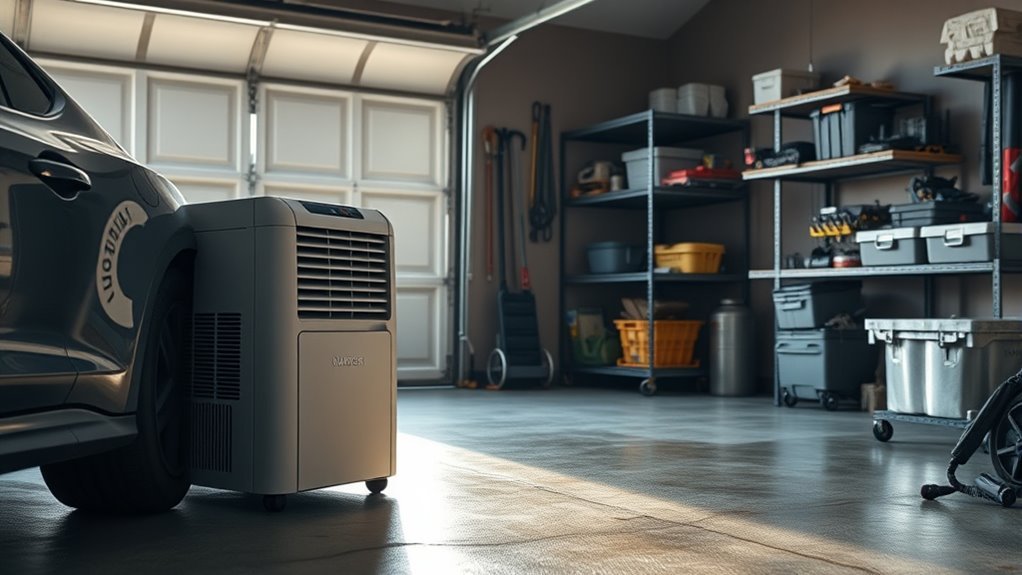
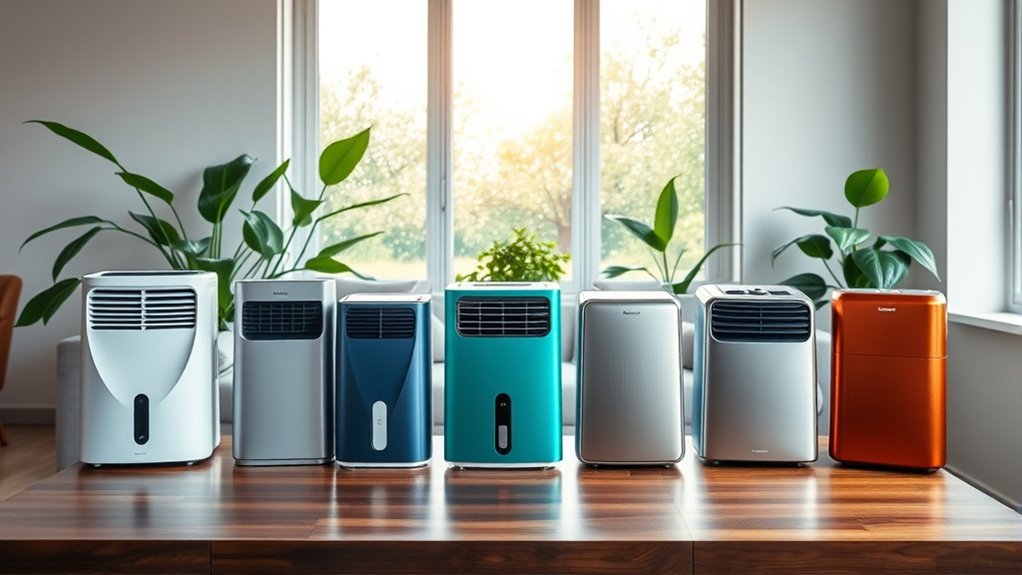
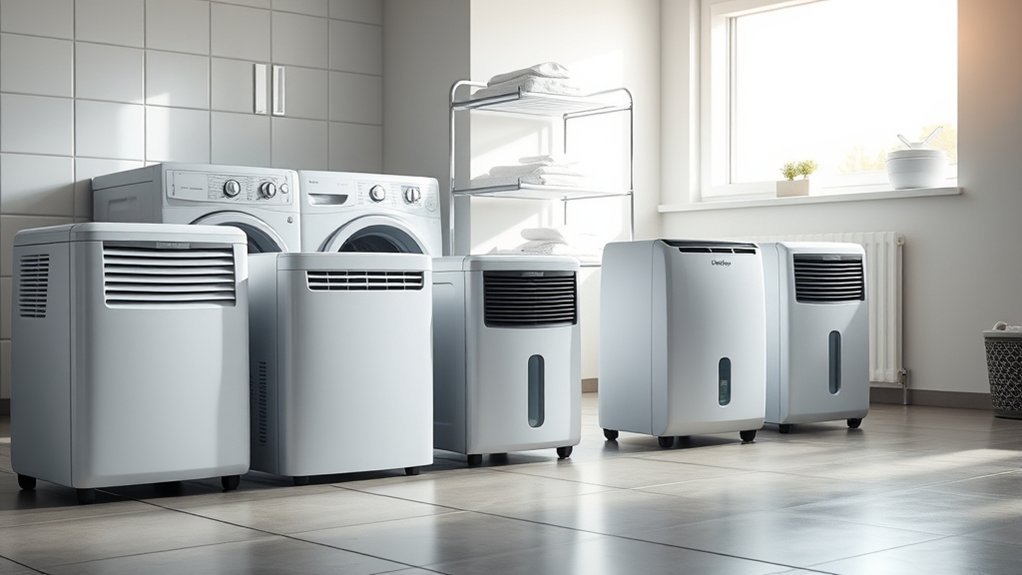
If you’re choosing a crawl space 50 pint dehumidifier for 2026, focus on moisture removal, drainage setup, low-temperature operation, and how easily the unit can run without daily attention. The best choice for you may be a true 50-pint portable model, a crawl-space-friendly commercial unit, or a whole-house style option with continuous drainage. This guide compares the Hisense 50 Pint Portable, Whirlpool 50 Pint Energy Star, MOISWELL 70-Pint Commercial, Frigidaire 50 Pint with Wi-Fi, 5000 Sq.Ft Dehumidifier, and AprilAire E050PZ so you can match the unit to your crawl space size, humidity level, and installation needs.
Quick Verdict
Best overall crawl space pick: Hisense 50 Pint Portable Dehumidifier with Built-In Pump, because it combines 50-pint removal, large coverage, low-temperature operation, and pump drainage.
Best quiet portable option: Whirlpool 50 Pint Energy Star Dehumidifier, thanks to its quiet operation, electronic controls, and easy mobility.
Best commercial-style crawl space option: MOISWELL 70-Pint Commercial Dehumidifier with Pump, because it offers rugged construction, strong drainage support, and crawl-space-friendly features.
Best smart control option: Frigidaire 50 Pint Dehumidifier w/Wi-Fi or AprilAire E050PZ if you want remote humidity monitoring and less hands-on adjustment.
Quick Comparison Table
| Product | Best For | Drainage Style | Main Advantage | Check Price |
|---|---|---|---|---|
| Hisense 50 Pint Portable Dehumidifier with Built-In Pump | Large damp crawl spaces | Built-in pump and bucket | Low-maintenance continuous drainage | Check Price on Amazon |
| Whirlpool 50 Pint Energy Star Dehumidifier | Quiet home and crawl space use | Bucket or optional drain | Quiet operation and efficient controls | Check Price on Amazon |
| MOISWELL 70-Pint Commercial Dehumidifier with Pump | Tougher crawl spaces and basements | Built-in pump | Commercial-style build and pump lift | Check Price on Amazon |
| Frigidaire 50 Pint Dehumidifier w/Wifi | Remote control and large areas | Bucket or continuous drain | Wi-Fi control and strong airflow | Check Price on Amazon |
| Hisense 50 Pint Portable Dehumidifier with Pump | Portable pump drainage | Built-in pump and tank | Easy rolling design and washable filter | Check Price on Amazon |
| 5000 Sq.Ft Dehumidifier with Drain Hose & Smart Control | Large basements and crawl spaces | Drain hose and tank | Large coverage with smart display | Check Price on Amazon |
| AprilAire E050PZ Whole-House Dehumidifier with Wi-Fi Thermostat | Installed whole-house style control | Bucketless continuous drain | App control and included pump support | Check Price on Amazon |
Hisense 50 Pint Portable Dehumidifier with Built-In Pump
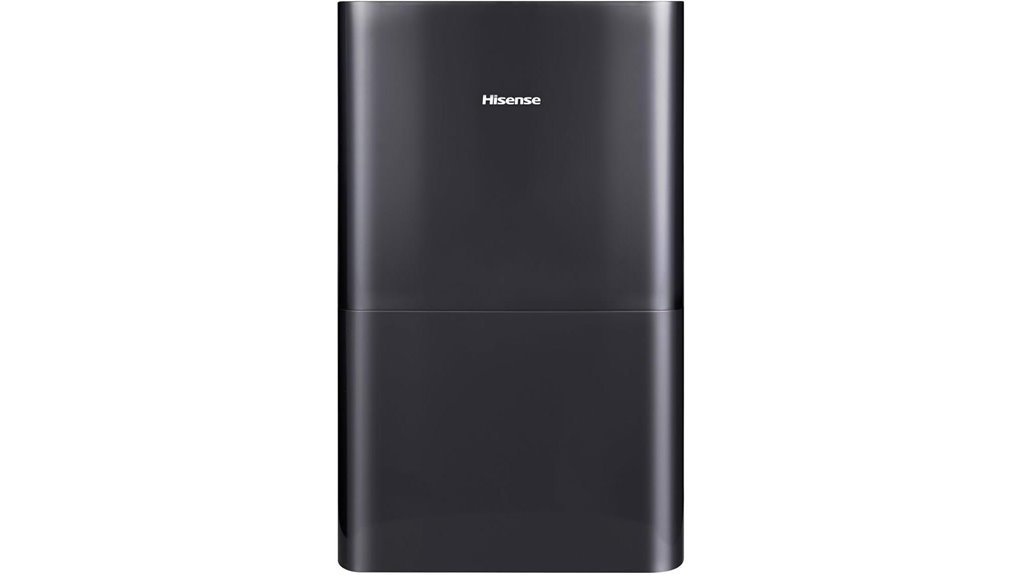
The Hisense 50 Pint Portable Dehumidifier with Built-In Pump is a strong pick if you want a crawl space dehumidifier that can handle larger, damp areas without constant upkeep. You get 50 pints of moisture removal per day, ENERGY STAR efficiency, and coverage up to 4,500 square feet. Its built-in pump lets you drain continuously to a sink or window, while Auto, Continuous, and Manual modes give you control. It also runs down to 38°F, so you can use it in cooler spaces. The bucket full indicator helps prevent overflow, and the black metal-plastic body looks clean and sturdy.
Why You’ll Like It: This model is useful when your crawl space does not have a convenient floor drain. The pump helps move collected water away, which means you can reduce the hassle of emptying a bucket in a tight or awkward space.
Best For: Homeowners needing a high-capacity crawl space dehumidifier for large, damp areas who want continuous drainage and low-maintenance operation.
Who Should Avoid This: Skip it if your crawl space is small, lightly damp, or already has a simple gravity drain setup that does not require a pump.
Pros:
- 50-pint daily moisture removal with coverage up to 4,500 square feet
- Built-in pump supports continuous drainage to a sink or window
- ENERGY STAR certified and effective in cooler spaces down to 38°F
Cons:
- Bulky and relatively heavy at 40.3 pounds
- May be more capacity than needed for small rooms
- Requires a drainage setup to fully take advantage of the pump feature
Whirlpool 50 Pint Energy Star Dehumidifier in White
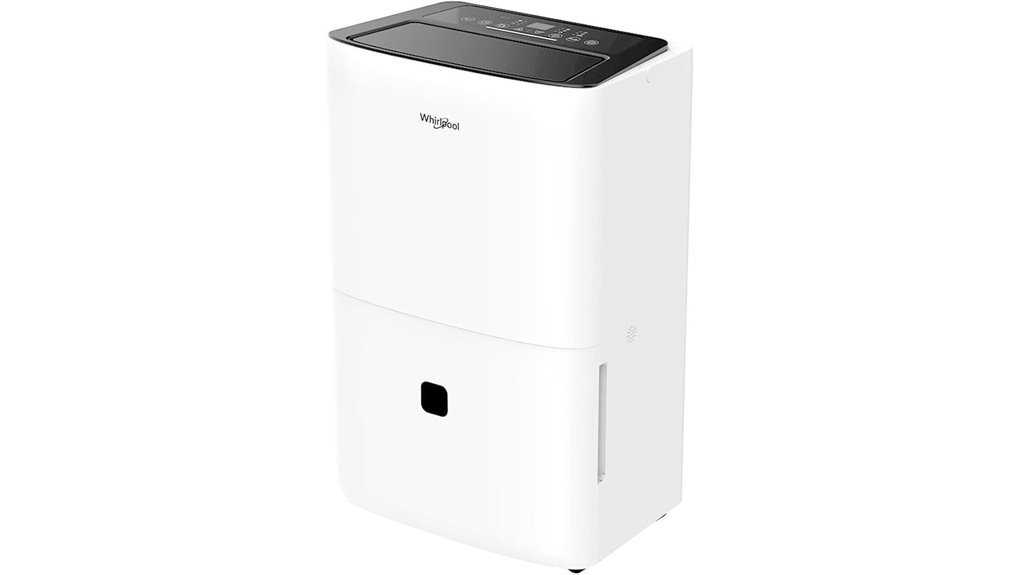
Whirlpool’s 50-pint dehumidifier is a smart fit if you need quiet, whole-space moisture control. You can use it in a crawl space, basement, bedroom, garage, or whole home, and it covers up to 3,000 square feet. It removes up to 50 pints a day while staying Energy Star 6.0 certified with a 2.01 IEF. You’ll get electronic controls, a 35–80% humidistat, three fan speeds, and a color humidity indicator. It runs as quietly as 45 dBA, works down to 41°F, and rolls easily on caster wheels with a front bucket or optional drain.
Why You’ll Like It: This Whirlpool model is a good choice when your crawl space is near living areas and noise matters. The quiet operation, wheels, handles, and washable filter also make it easier to live with than a basic high-capacity unit.
Best For: Homeowners, renters, or property managers who need a quiet, energy-efficient dehumidifier for large spaces like basements, crawl spaces, bedrooms, garages, or whole-home moisture control.
Who Should Avoid This: Avoid it for extremely wet crawl spaces that need pump drainage, unless your setup works well with optional continuous drainage.
Pros:
- Covers up to 3,000 sq. ft. and removes up to 50 pints of moisture per day
- Quiet operation at just 45 dBA with three fan speeds and electronic humidity controls
- Easy to move and maintain with caster wheels, carry handles, washable filter, and optional continuous drainage
Cons:
- Best suited for moderate humidity control rather than extremely damp or commercial-scale environments
- At 41.1 pounds, it may still feel bulky for some users despite the wheels
- Front-access bucket maintenance may require regular emptying if continuous drain isn’t used
MOISWELL 70-Pint Commercial Dehumidifier with Pump
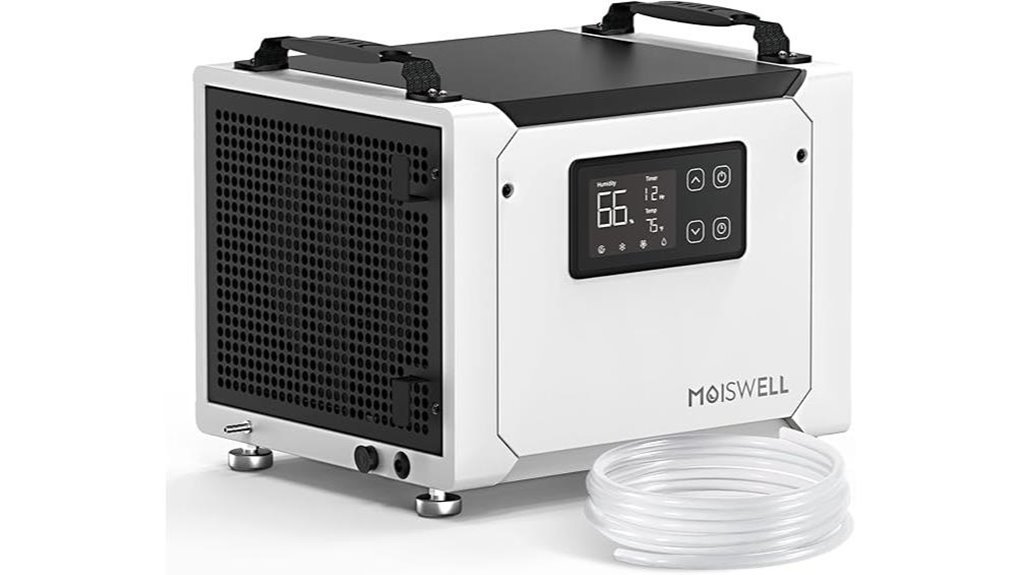
Moiswell’s Defender ME-7S suits you if you need powerful, hands-off crawl space drying. You’ll get up to 70 pints of moisture removal at saturation, or 35 pints per day under AHAM conditions, for spaces up to 1,000 sq. ft. Its Energy Star certification and 450-watt draw help you save on running costs. The built-in pump pushes condensate up to 16.4 feet, so you can set continuous drainage easily. You’ll also appreciate the clear control panel, 24-hour timer, auto defrost, and shutoff. At 40 pounds, it’s easy to move, and its metal build supports long-term use.
Why You’ll Like It: This is the option to consider when your crawl space needs a tougher, more utility-focused unit instead of a standard room dehumidifier. The pump lift and auto defrost features make it useful for crawl spaces where drainage and cooler air are common concerns.
Best For: Homeowners or commercial users needing a powerful, energy-efficient dehumidifier for crawl spaces, basements, and other areas up to 1,000 sq. ft. with easy continuous drainage.
Who Should Avoid This: It may be more machine than you need if your space is dry most of the year or if you only need occasional humidity control in a small room.
Pros:
- Removes up to 70 pints of moisture at saturation and 35 pints per day under AHAM conditions.
- Built-in pump can push water up to 16.4 feet for convenient hands-off drainage.
- Energy Star certified with a 450-watt draw and durable metal construction.
Cons:
- 40-pound weight may still be a bit cumbersome for some users to move frequently.
- Best suited for spaces up to 1,000 sq. ft., so it may not be ideal for larger areas.
- Commercial-style features may be more than some basic residential users need.
Frigidaire 50 Pint Dehumidifier w/Wifi
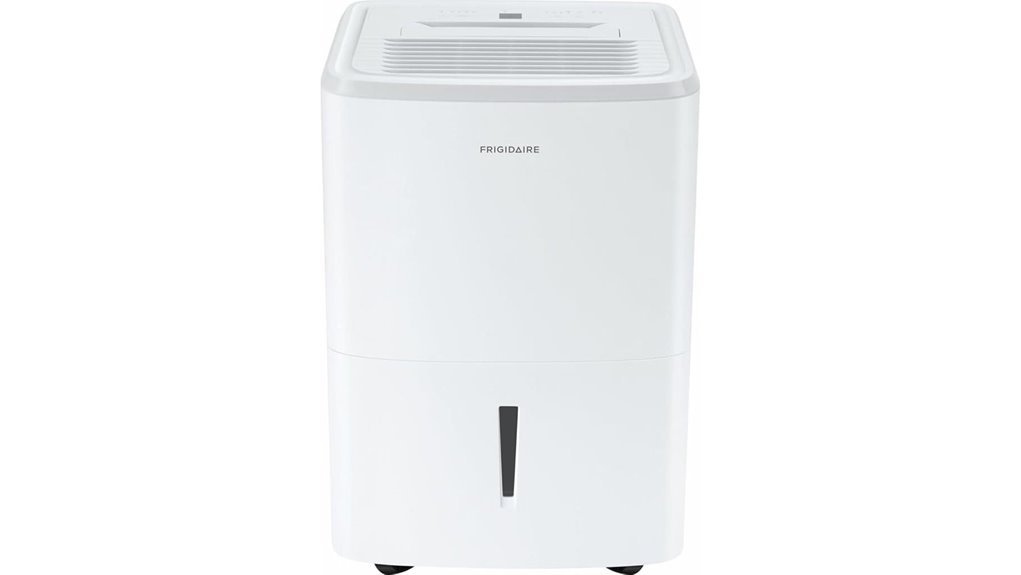
Frigidaire’s 50-pint capacity makes it a smart pick for large crawl spaces up to 4,500 square feet. You can manage damp air with its 235 CFM airflow, three speeds, and programmable controls, while Wi-Fi support lets you adjust settings remotely. The 2.7-gallon bucket, front-loading design, and carrying handle make emptying easier, and continuous draining helps you skip manual upkeep. Its washable filter captures dust and keeps performance steady. At 470 watts, it’s efficient for residential use, and the 1-year warranty adds peace of mind.
Why You’ll Like It: This Frigidaire model is appealing if your crawl space is difficult to access and you want remote settings instead of checking the control panel often. The washable filter and continuous drain option also help reduce ongoing maintenance.
Best For: Homeowners needing a Wi-Fi-enabled dehumidifier for large residential spaces like crawl spaces, basements, garages, or living areas up to 4,500 sq ft.
Who Should Avoid This: Choose a simpler unit if you do not need Wi-Fi control, or choose a built-in pump model if your drain location sits higher than the unit.
Pros:
- 50-pint capacity with 235 CFM airflow handles moisture in large spaces effectively.
- Wi-Fi and programmable controls make it easy to adjust settings remotely.
- Washable filter, continuous draining, and front-loading bucket design simplify maintenance.
Cons:
- At 44.53 pounds, it may be cumbersome to move around frequently.
- 470-watt power draw is decent but not the lowest for energy-conscious users.
- The 2.7-gallon bucket may still require emptying if continuous drain isn’t used.
Hisense 50 Pint Portable Dehumidifier with Pump
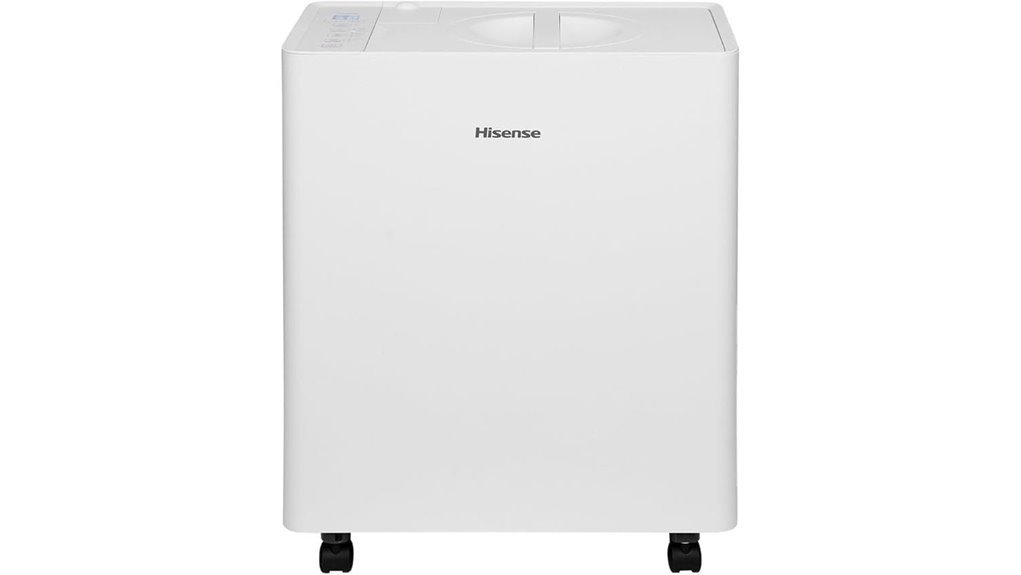
Hisense’s built-in pump makes crawl space moisture control almost effortless. You can drain this 50-pint unit continuously through a quick-connect hose to a sink or window, so you won’t need to empty the 18-pint tank as often. Its top-lift bucket improves access, and the four casters let you roll it where humidity climbs. You get quiet operation, three speed settings, and a washable filter for cleaner airflow. Covering up to 4,500 square feet, it’s a smart pick for crawl spaces, basements, and other damp areas, and it includes a 2-year limited warranty.
Why You’ll Like It: This model focuses on convenience. The top-lift bucket, casters, three speeds, and quick-connect hose make it easier to place, drain, and maintain than many basic bucket-only dehumidifiers.
Best For: Homeowners or renters who need a quiet, portable, high-capacity dehumidifier for crawl spaces, basements, and other large damp areas with the convenience of continuous drainage.
Who Should Avoid This: It may not be the best choice if your crawl space is very tight and you need a compact horizontal crawl-space unit instead of an upright portable unit.
Pros:
- Built-in pump supports hands-free continuous drainage to a sink or window.
- Covers up to 4,500 square feet, making it suitable for large spaces.
- Quiet operation with a washable filter and easy-roll casters adds convenience.
Cons:
- At 20.2 pounds, it may still be a bit cumbersome to move for some users.
- The 18-pint tank can still require emptying if continuous drainage isn’t set up.
- May be more than needed for smaller rooms or light moisture problems.
5000 Sq.Ft Dehumidifier with Drain Hose & Smart Control
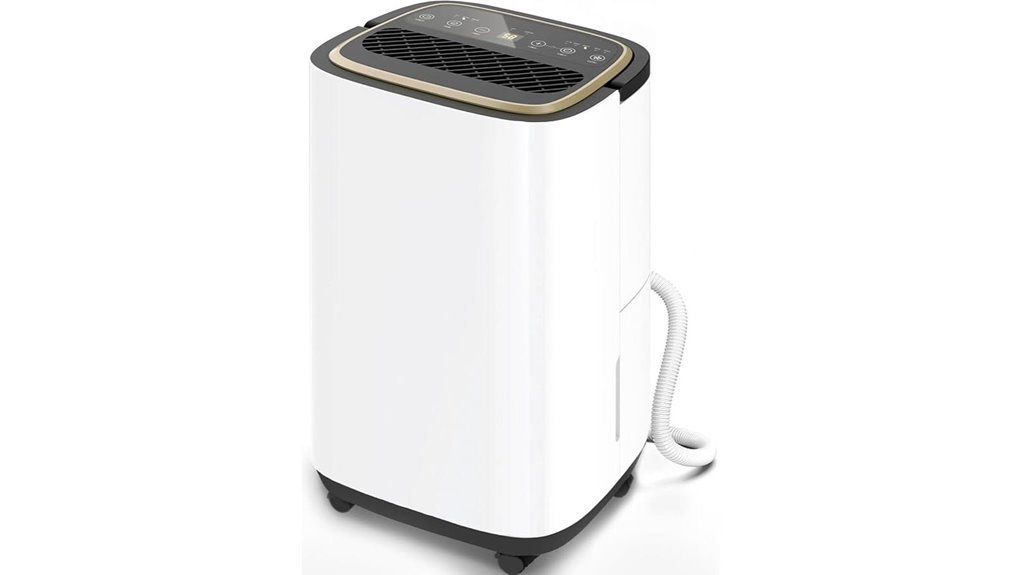
This 50-pint dehumidifier suits large crawl spaces and basements up to 5,000 square feet. You can set humidity from 30% to 80%, and the smart display shows real-time readings, so you always know conditions. Use it for damp basements, garages, laundry rooms, or large spaces, and switch between dehumidifying, laundry drying, and air circulation with three modes. The 60-inch drain hose lets you run continuous drainage, while the 1.6-gallon tank shuts off automatically when full. You’ll also get dual fan speeds, a 24-hour timer, child lock, washable filter, and easy mobility.
Why You’ll Like It: This is a flexible option if you want one dehumidifier for a crawl space, basement, laundry room, or garage. The real-time display makes it easier to understand your humidity level instead of guessing when the air feels damp.
Best For: Homeowners or renters with large basements, crawl spaces, garages, or laundry areas who need powerful moisture control for spaces up to 5,000 square feet.
Who Should Avoid This: Avoid it if you need pump-assisted drainage to move water upward, because a drain hose works best when the drainage route supports steady flow.
Pros:
- Covers large areas up to 5,000 sq. ft. with 50-pint dehumidification capacity
- Offers flexible operation with 3 modes, dual fan speeds, and adjustable humidity control
- Includes convenient features like continuous drainage, auto shutoff, child lock, timer, and washable filter
Cons:
- The 1.6-gallon tank may need frequent emptying if continuous drainage isn’t used
- Best suited for larger spaces, so it may be more than needed for smaller rooms
- Can be less effective in very cold conditions, despite operating down to 42°F
AprilAire E050PZ Whole-House Dehumidifier with Wi-Fi Thermostat
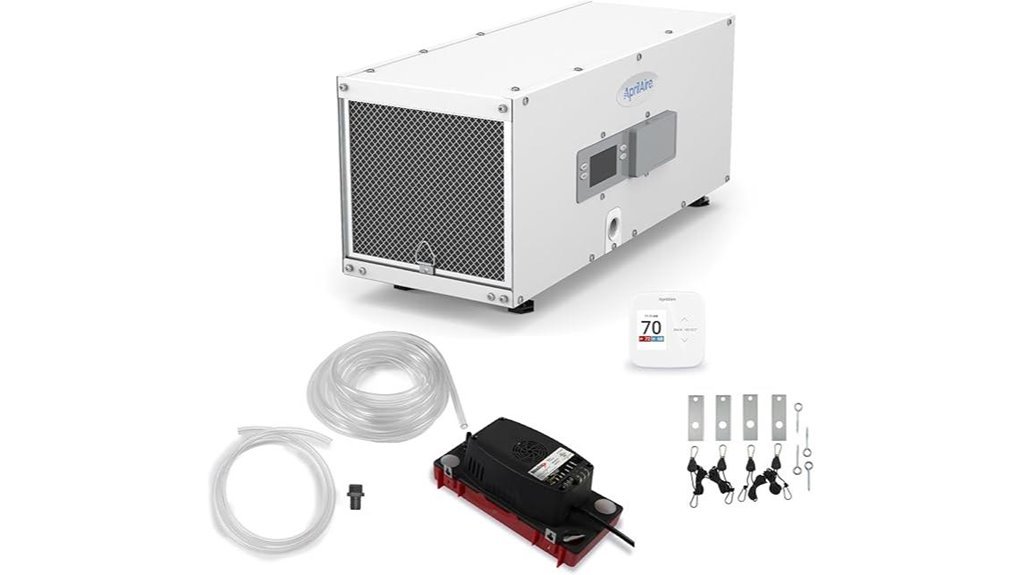
If you want app-controlled humidity control for a larger crawl space, the AprilAire E050PZ fits well. You get a 50-pint whole-house unit that covers up to 1,600 square feet, so it handles bigger spaces with ease. The Wi-Fi thermostat lets you schedule settings and check conditions remotely, while the digital interface keeps your target humidity steady. Its bucketless design drains continuously, and the included condensate pump helps move water away. You also get a washable MERV 8 filter, corrosion-resistant coils, R32 refrigerant, and a 6-year warranty.
Why You’ll Like It: This AprilAire model is built for buyers who prefer an installed, bucketless approach instead of a portable unit. It is especially appealing if you want scheduled humidity control, remote monitoring, and a more permanent drainage setup.
Best For: Homeowners or property managers who need app-controlled whole-house dehumidification for larger crawl spaces or living areas up to 1,600 sq. ft.
Who Should Avoid This: This may not be the right fit if you want a simple plug-in portable unit that you can roll between rooms without installation planning.
Pros:
- Wi-Fi thermostat allows remote scheduling and humidity monitoring.
- Bucketless continuous drainage with included condensate pump makes maintenance easier.
- Washable MERV 8 filter, corrosion-resistant coils, and R32 refrigerant add durability and efficiency.
Cons:
- At 46 pounds, it may still be cumbersome for some people despite the one-person install design.
- Best suited for homes up to 1,600 sq. ft., so it may be undersized for larger spaces.
- Requires drainage setup and installation, which may be more involved than a portable dehumidifier.
Factors to Consider When Choosing a Crawl Space 50 Pint Dehumidifier
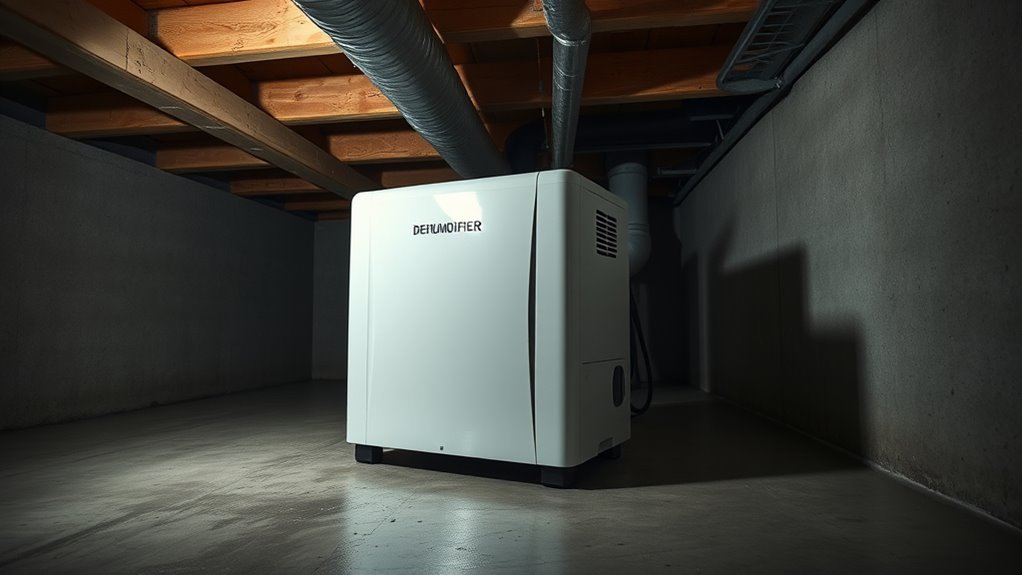
When you choose a crawl space 50 pint dehumidifier, start by matching its coverage area to your space so it can handle the humidity load. You’ll also want to compare drainage options, energy efficiency ratings, low-temperature performance, and how much noise it makes if you need to move it or work nearby.
Before You Buy: Measure your crawl space, check where the water will drain, confirm the outlet location, and make sure the unit can operate in your expected temperature range. A strong dehumidifier will only perform well if the drainage path, airflow, and humidity setting are right for your space.
Coverage Area Needs
A 50 pint dehumidifier can cover a wide range of crawl spaces, but you’ll need to match its capacity to your area for the best results. Many models handle about 1,600 to 4,500 square feet, so check your crawl space size before you buy. If you choose a unit that’s too small, it won’t keep humidity under control; if it’s too large, you may waste energy. Also confirm the operating temperature range, especially if your crawl space gets cold, because some units work down to 38°F. For bigger spaces, look at airflow, measured in CFM, since stronger airflow helps move damp air more efficiently. ENERGY STAR certification can also help you save power while maintaining steady moisture control.
Drainage Method Options
Drainage setup is one of the most important details to check, since it affects how often you’ll need to empty the unit and how smoothly it runs. If you want hands-off operation, choose continuous drainage with a built-in pump; it can move water up to 16.4 feet, which helps when you don’t have a nearby floor drain. Gravity drainage works well too, but you’ll need the unit positioned so water can flow naturally to the drain. If you prefer flexibility, look for a removable tank, usually 1.6 to 2.7 gallons, though you’ll have to empty it yourself. An auto shutoff feature adds protection, and an optional drain hose can make long-term use easier.
Energy Efficiency Ratings
Beyond drainage, you should also pay close attention to energy efficiency ratings when choosing a crawl space 50 pint dehumidifier. Look for ENERGY STAR certification, since it shows the unit meets EPA efficiency standards and can help cut electricity bills. You should also compare the Integrated Energy Factor, or IEF; higher numbers mean the dehumidifier removes more moisture for each kilowatt-hour it uses. Choose a model with a practical operating temperature range for your crawl space, because efficient performance in cooler conditions can reduce waste. Continuous drainage can further improve efficiency by letting the unit run without interruptions. Finally, keep the filters clean or replace them as needed. Clogged filters restrict airflow, force the system to work harder, and raise energy use over time.
Low Temperature Performance
When your crawl space dips to 38°F to 41°F, low-temperature performance becomes a key factor in choosing a 50 pint dehumidifier. You need a unit that keeps pulling moisture even when the air turns cold, so it won’t freeze up or lose efficiency. Look for models built to run well in low temperatures, because they’ll control humidity more consistently in damp crawl spaces. Frost sensors and automatic defrost features help prevent ice buildup and keep the unit operating without interruption. That matters because steady cold-weather performance can also lower energy use while maintaining target humidity. If you choose a dehumidifier rated for these conditions, you’ll usually get better reliability, longer service life, and fewer problems in tough environments.
Noise And Portability
Noise and portability matter just as much as moisture removal when you choose a crawl space 50 pint dehumidifier. You’ll want a unit that runs quietly, ideally around 45 dBA, so it won’t interrupt bedrooms, living rooms, or other nearby spaces. Adjustable fan speeds help you dial back sound when humidity’s lower or the area’s occupied. Portability also counts, especially in tight crawl spaces. Look for built-in caster wheels and a top carry handle so you can move the dehumidifier without strain. Most models weigh between 20 and 44 pounds, which makes repositioning easier. If your crawl space stays cool, choose a unit with low-temperature operation so it keeps working efficiently without adding unnecessary noise or hassle.
Crawl Space Installation Fit
Before choosing a model, think about how it will physically fit in your crawl space. Upright portable dehumidifiers can work well in accessible spaces, but tight crawl spaces may need careful placement so airflow is not blocked. Leave room around the intake and exhaust areas, keep the unit level, and avoid placing it where standing water, loose insulation, or debris can interfere with operation. If you choose a whole-house or bucketless design, plan the drain route before buying so installation does not become more complicated than expected.
Pro Tips for Better Crawl Space Humidity Control
- Set the target humidity near 50% for balanced moisture control.
- Use continuous drainage whenever possible to avoid bucket overflow and stop-start operation.
- Clean washable filters regularly so airflow stays strong.
- Seal obvious outside air leaks and use a vapor barrier if your crawl space stays damp.
- Check the drain hose weekly at first to make sure water is flowing correctly.
Frequently Asked Questions
How Often Should I Empty a Crawl Space Dehumidifier?
You should empty it whenever the tank fills, which can be daily in damp crawl spaces. If you’ve got a drain hose, you won’t need to empty it manually, but you should still check the hose and drainage area weekly to make sure water is moving away properly.
Can One Dehumidifier Protect Multiple Crawl Spaces?
No, you usually can’t reliably protect multiple crawl spaces with one dehumidifier; it’s like asking one fan to dry three puddles. You’d need ducting, access, and enough capacity to control each space properly. If the crawl spaces are separated, each area may need its own humidity plan.
What Humidity Level Is Ideal for a Crawl Space?
You should keep your crawl space humidity between 45% and 55%, ideally around 50%. That range helps you prevent mold, wood rot, and pests while avoiding over-drying that can damage materials. A built-in humidistat or separate hygrometer can help you monitor this more accurately.
How Much Does Professional Crawl Space Installation Cost?
You’ll usually pay $5,000 to $15,000 for professional crawl space installation, depending on size, damage, insulation, vapor barrier, and drainage needs. You can expect higher costs for repairs, mold removal, or encapsulation. A plug-in dehumidifier costs less upfront, but serious moisture problems may still need professional repair.
Do Crawl Space Dehumidifiers Work in Freezing Temperatures?
Not really. Cold air can freeze the coils and stall performance. You’ll get better results if you keep your crawl space above freezing, choose a low-temperature-rated unit, and add insulation or heat where appropriate. If your space often drops below freezing, confirm the operating temperature range before buying.
Is a Pump Necessary for a Crawl Space Dehumidifier?
A pump is not always necessary, but it can make drainage much easier. You’ll want a built-in pump if the water must move upward to a sink, window, or higher drain point. If your unit can drain downward into a floor drain or sump area, gravity drainage may be enough.
Should I Use a Vapor Barrier With a Crawl Space Dehumidifier?
Yes, a vapor barrier can help a dehumidifier work more effectively by reducing ground moisture entering the crawl space. Without a vapor barrier, the unit may run more often because new moisture keeps rising from the soil. For persistent crawl space dampness, combine drainage, sealing, ventilation strategy, and dehumidification.
Final Recommendation
For most damp crawl spaces, start with a 50-pint unit with continuous drainage. If your drain point is higher than the dehumidifier, prioritize a built-in pump. If your crawl space is near living areas, noise level and washable filter access matter more. If you want a more permanent setup, a bucketless whole-house style model may be worth considering.
The safest buying decision is to match the unit to your space size, temperature range, and drainage route instead of choosing by capacity alone.
Conclusion
Choosing the right 50 pint dehumidifier for your crawl space is like sealing a cracked window before the storm rolls in. You protect what’s beneath your home before damage takes root. When you pick a model with the right pump, drainage, coverage, airflow, and temperature range, you’re not just removing moisture; you’re guarding your air, wood, insulation, and peace of mind. Take the next step now, compare the models above, and let your crawl space breathe easier while your home stays stronger.