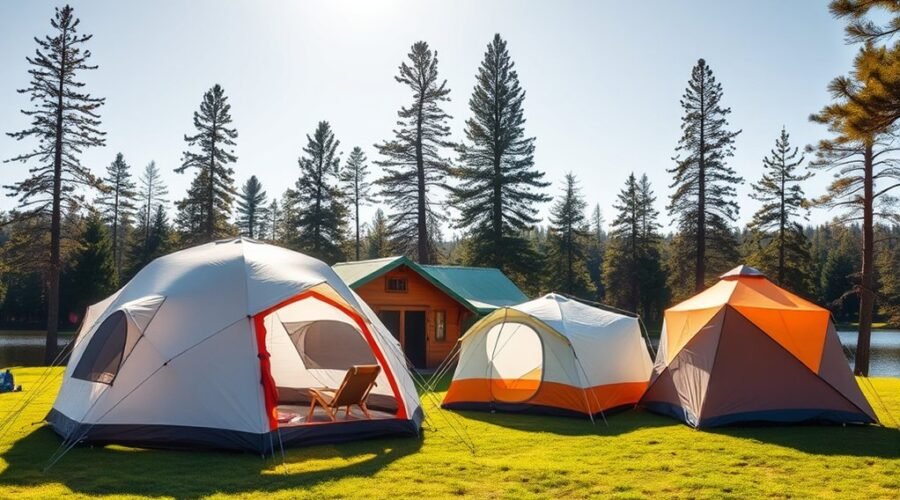
Choosing a family camping tent is easier when you focus on the things that matter at the campsite: usable sleeping space, setup time, ventilation, weather protection, packed weight, and room for gear. For 2026, these four quick-setup tents cover different family and car-camping needs. The CORE Instant Cabin Tent combines generous floor space with stand-up height, the Coleman 6-Person Instant Cabin Tent offers a familiar cabin-style layout, the MOON LENCE Instant Pop Up Tent prioritizes fast deployment and lower weight, and the Night Cat Instant Popup Tent works well for couples and smaller groups.
- Best Overall Family Pick: CORE Instant Cabin Tent — roomy 11 × 9 ft floor and 72-inch center height.
- Best Traditional 6-Person Instant Cabin: Coleman — quick setup and a practical 10 × 9 ft family footprint.
- Best for Fast, Lightweight Car Camping: MOON LENCE — roughly 10.3 lb with a rapid pop-up mechanism.
- Best for Couples or Small Families: Night Cat — compact 2–3-person design with dual entrances and a detachable rainfly.
Quick Comparison of Family Camping Tents
| Tent | Capacity | Setup | Portability | Best For |
|---|---|---|---|---|
| CORE Instant Cabin | Up to 6 people; more comfortable with fewer people plus gear | Instant frame; about 60 seconds for basic setup | About 23 lb | Families wanting space and standing height |
| Coleman Instant Cabin | 6-person nominal capacity | Pre-attached poles; about 60 seconds for basic setup | Better suited to car camping than backpacking | Family car camping |
| MOON LENCE Pop Up | Family-size nominal capacity; best with room reserved for gear | Very fast pop-up deployment; staking takes additional time | About 10.3 lb | Quick weekend and fair-weather trips |
| Night Cat Instant Popup | 2–3 people | Hydraulic instant mechanism; about 1 minute | Compact car-camping option | Couples and small families |
Capacity note: Tent occupancy numbers usually describe maximum sleeping capacity. A family that wants room for bags, air mattresses, clothing, and other camping gear will often be more comfortable below the advertised maximum.
CORE Instant Cabin Tents for Family Camping
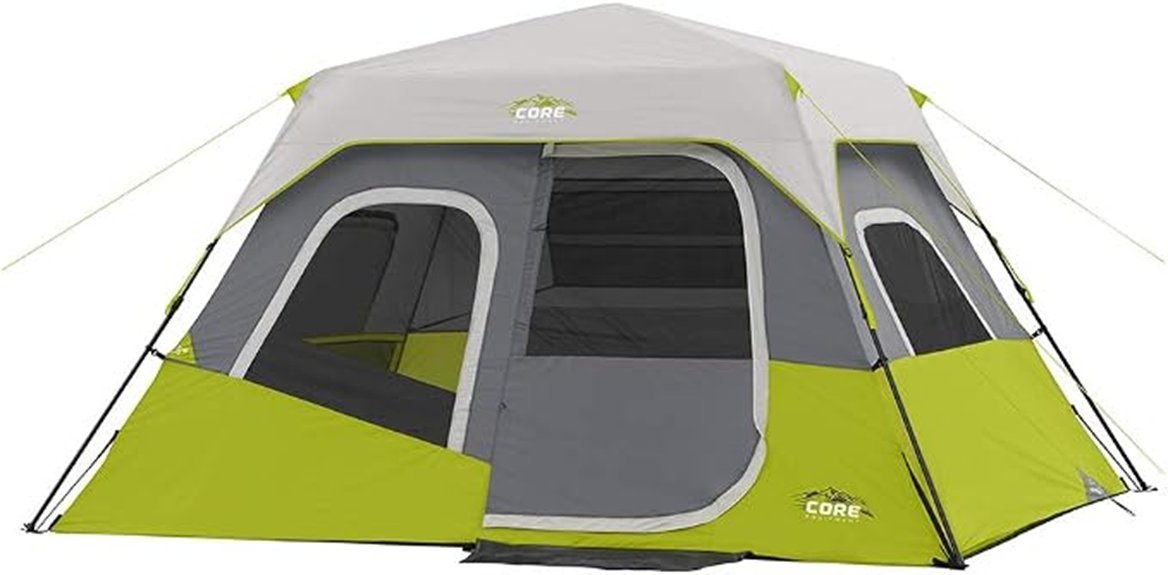
The CORE Instant Cabin Tent is a strong fit for families who want plenty of usable floor area without spending much of the first evening assembling poles. Its pre-attached instant frame is designed for basic setup in about 60 seconds. The 11 × 9-foot floor and 72-inch center height provide substantially more living room than compact dome tents, and the floor can accommodate two queen-size air beds.
The tent carries a nominal capacity of up to six people, although families who bring luggage and camping gear will generally appreciate using some of that floor area for storage. Weather-focused features include H2O Block technology, a rainfly, sealed or taped weather-protection details, guylines, and stakes. Lower vents and a mesh ceiling help move air through the cabin, while interior organizers keep smaller equipment off the floor.
Why You’ll Like It: The combination of stand-up height, a large rectangular floor, and an instant frame addresses two common family-camping frustrations: cramped living space and time-consuming tent setup.
Best For: Families car camping with air mattresses, bags, and other gear.
Pros:
- Instant-frame design can make basic campsite setup much faster than a conventional pole tent.
- 11 × 9-foot floor provides useful space for family sleeping arrangements and gear.
- 72-inch center height allows many adults to stand upright near the center.
- Ventilation and interior storage features improve comfort and organization.
Cons:
- At roughly 23 lb, it is much better suited to car camping than backpacking.
- Six people represents maximum sleeping capacity; a smaller group will have more comfortable gear space.
- As with any large cabin-style tent, careful staking and guyline use become more important when conditions turn windy.
Coleman 6-Person Instant Cabin Camping Tent
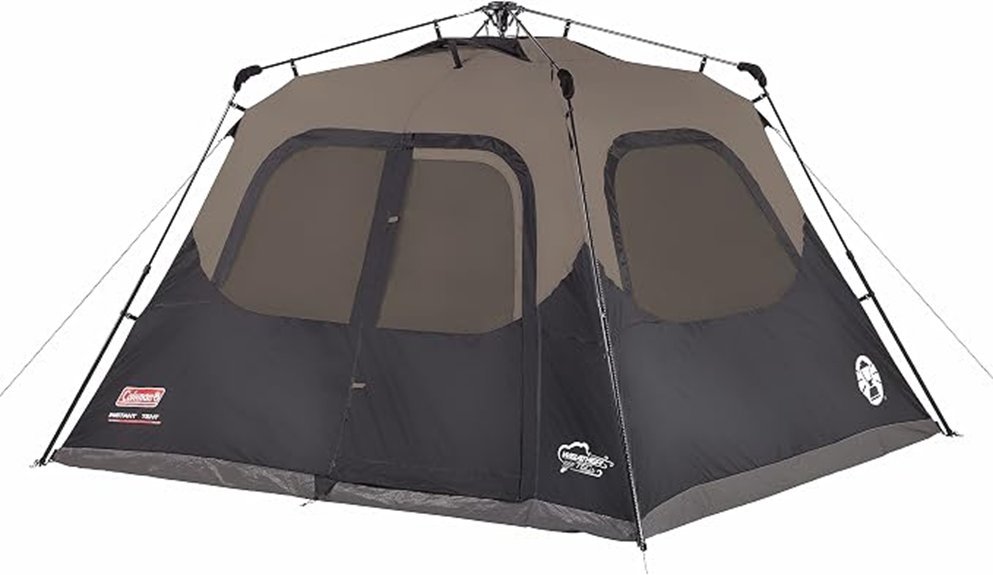
The Coleman 6-Person Instant Cabin Tent linked in this article is a 6-person model rather than a general 4–10-person tent. Its approximately 10 × 9-foot footprint and 6-foot center height make it a practical family car-camping shelter, with enough floor area for two queen-size air beds when arranged appropriately.
Pre-attached poles are the main convenience feature, allowing the basic tent structure to go up in roughly a minute once you are familiar with the process. Coleman also uses its WeatherTec approach on this tent family, including construction details intended to reduce water entry. Because accessories and package contents can vary between older and newer listings, check the current Amazon product page to confirm exactly which rainfly or other accessories are included with this ASIN before ordering.
Why You’ll Like It: It gives families a roomy cabin-style layout without the lengthy pole assembly associated with many traditional large tents.
Best For: Families who want a recognizable 6-person instant-cabin format for drive-up campsites.
Pros:
- Pre-attached poles make the initial setup process quick and straightforward.
- 10 × 9-foot family-size footprint can accommodate two queen-size air beds.
- Approximately 6 feet of center height provides useful headroom.
- Cabin shape provides more usable wall-side space than many low-profile dome tents.
Cons:
- The tent is too bulky and heavy for most backpacking trips.
- Maximum six-person occupancy can feel crowded once bags and other family equipment are inside.
- Buyers should confirm the current listing’s included rain-protection accessories instead of assuming every Coleman Instant Cabin package is identical.
MOON LENCE Instant Pop Up Camping Tent
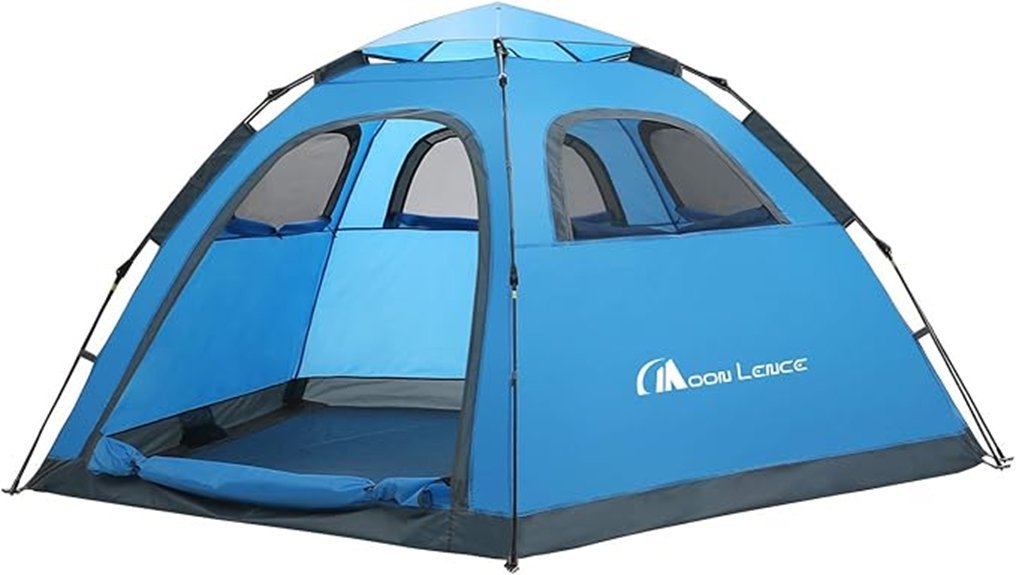
The MOON LENCE Instant Pop Up Tent is aimed at campers who value quick deployment and easier transport. The matching instant-tent design weighs roughly 10.3 pounds and uses a pop-up mechanism that can raise the basic tent body in seconds. Complete campsite setup still takes longer because you should position the tent correctly, stake it, tension the guylines, and arrange the rainfly when needed.
Its pentagonal layout, four mesh windows, and D-shaped door create useful airflow for warm-weather camping while helping keep insects outside. The tent also uses a removable rainfly and weather-resistant materials. Its lower overall height and lighter build make it easier to transport than a large cabin tent, but it does not provide the same stand-up interior experience as the CORE or Coleman.
Why You’ll Like It: It reduces the effort involved in pitching a tent after a long drive while remaining considerably lighter than the larger cabin models in this guide.
Best For: Weekend car campers, smaller families, and anyone prioritizing quick setup and portability over standing room.
Pros:
- Pop-up mechanism makes initial deployment exceptionally quick.
- Approximately 10.3-pound weight is easier to handle than many full-size family cabin tents.
- Four mesh windows and a mesh-equipped door promote airflow.
- Detachable rainfly gives campers flexibility in changing conditions.
Cons:
- The roughly 52-inch peak height is too low for most adults to stand upright.
- Advertised occupancy can feel tight when every camper also brings luggage.
- Although lighter than the cabin tents here, it is still not an ultralight backpacking shelter.
- Full setup requires more than simply popping the frame open; proper staking is still important.
Night Cat Instant Popup Camping Tent for 2-3 Persons
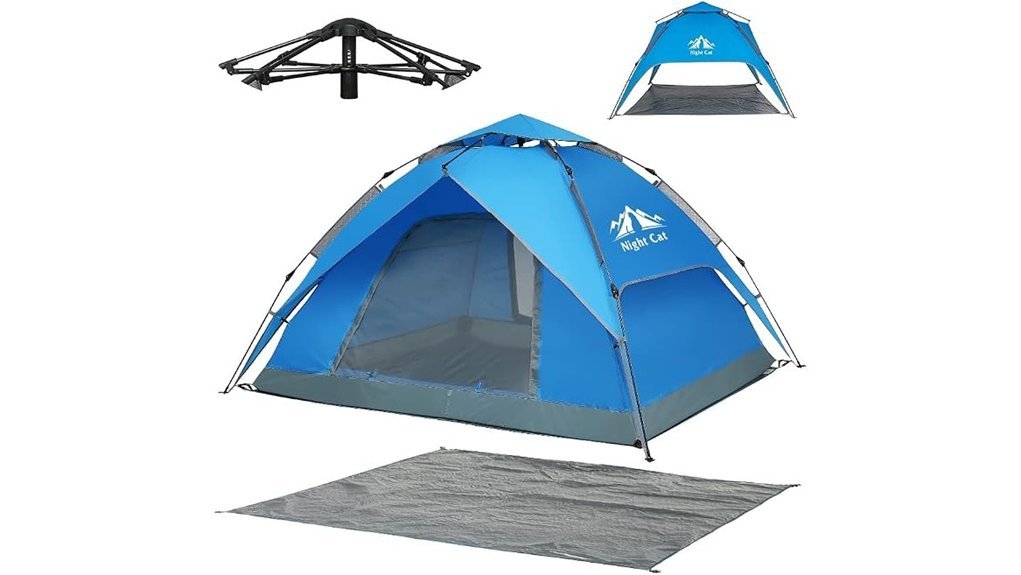
For couples, a parent and child, or other small camping groups, the Night Cat Instant Popup Camping Tent offers a more compact alternative to a full-size family cabin tent. Its hydraulic mechanism is designed to raise the tent in roughly one minute, avoiding the usual process of threading separate poles through sleeves.
The tent uses 210D Oxford fabric, fiberglass poles, taped weather-protection details, and a detachable rainfly. Two side entrances improve access and cross-ventilation, while mesh panels let air move through the shelter without leaving the interior fully open to insects. The detachable outer layer can also be used separately as a simple shelter configuration.
Why You’ll Like It: It combines a small-group footprint with easy entry from either side and a fast automatic frame.
Best For: Couples and small families who want a quick-pitch car-camping tent without the bulk of a six-person cabin model.
Pros:
- Hydraulic instant mechanism makes setup and takedown more convenient.
- 210D Oxford fabric and taped construction provide practical rain protection when the tent is pitched correctly.
- Dual entrances improve access and ventilation.
- Detachable rainfly increases versatility.
Cons:
- Three-person occupancy will be much tighter than a two-person arrangement once gear is inside.
- The low-profile interior does not provide the standing height of a cabin tent.
- Its packed size and weight still make it more appropriate for car camping than lightweight backpacking.
- No tent should be treated as guaranteed storm-proof; correct staking, site choice, and rainfly setup remain important.
Factors to Consider When Choosing a Family Camping Tent in 2026
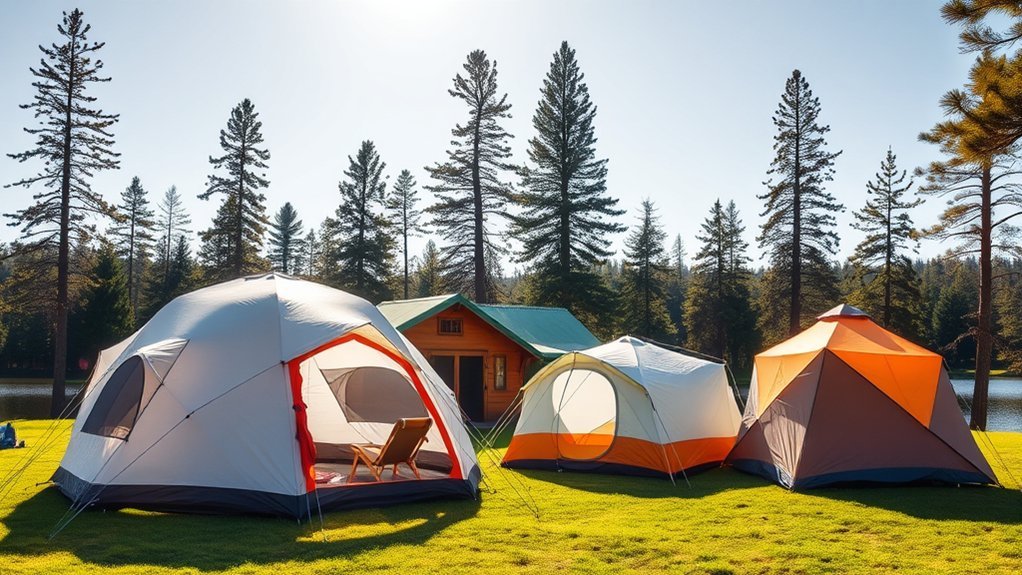
The best family camping tent is not automatically the model with the highest occupancy number. Usable space, setup effort, weather protection, ventilation, packed size, interior organization, and the type of camping you plan to do all affect whether a tent will actually be comfortable.
Tent Size Considerations
Start with the number of sleepers, then allow room for their equipment. A tent marketed for six people may technically provide six sleeping positions but become crowded once you add air mattresses, duffel bags, shoes, clothing, and other camping equipment. Families who value comfort should therefore consider both the floor dimensions and the nominal occupancy rating.
Height matters as well. A 6-foot or taller cabin tent lets many adults stand while dressing or organizing equipment, whereas a lower pop-up tent trades standing room for reduced weight and a smaller overall package. If you plan to use queen-size air mattresses, confirm both the mattress dimensions and the tent’s usable floor shape before buying.
Ease of Setup
Instant and pop-up tents reduce the amount of pole assembly required at the campsite. Pre-attached-pole cabin tents commonly need you to unfold the shelter, extend the frame, and lock the poles into place. Hydraulic or hub-style designs use a central mechanism to speed up the same process.
Remember that an advertised setup time usually refers to raising the basic tent. For a secure campsite, you may still need to install stakes, tension guylines, position a rainfly, organize the interior, and make adjustments for the terrain. Practicing once at home can make the first real camping setup much smoother.
Weather Resistance Features
Useful weather-protection features include water-resistant or waterproof-coated fabric, taped or sealed seams, a properly fitted rainfly, bathtub-style floors, strong poles, stakes, and guylines. Waterproof ratings measured in millimeters can help compare fabric coatings, but the number alone does not guarantee that an entire tent will remain dry in every storm.
Pitching technique matters. Choose ground that drains well, avoid obvious low spots, use the recommended stakes, tension the rainfly correctly, and secure guylines before windy weather arrives. Large cabin tents have more surface area for the wind to push against, so anchoring becomes especially important.
Ventilation and Airflow
Mesh windows, mesh doors, roof mesh, and lower vents help fresh air circulate through a family tent. Good airflow can reduce heat buildup and condensation, particularly when several people sleep in the same shelter.
Look for ventilation that can remain useful while the rainfly is installed. A tent may feel airy with the fly removed but much warmer once closed for rain. Adjustable vents give you more control as temperature and humidity change overnight.
Portability and Weight
A tent that weighs 20 pounds or more can still be perfectly practical when you park beside the campsite, but it becomes inconvenient if you need to carry it far. The CORE and Coleman models in this guide make the most sense for car camping, while the lighter MOON LENCE offers easier handling for short walks from a vehicle.
Do not judge portability by weight alone. Check the packed length and shape because instant frames often fold into longer packages than conventional tents. Make sure the packed tent will fit comfortably in your vehicle along with coolers, chairs, sleeping equipment, and the rest of the family’s gear.
Interior Organization Options
A well-organized interior is particularly valuable when several people share one shelter. Gear lofts, hanging organizers, wall pockets, and hooks keep phones, flashlights, keys, glasses, and other small items accessible while freeing floor space.
Multiple entrances can also improve organization by preventing everyone from climbing over the same sleeping area. Before buying, think about where mattresses will sit and whether doors, vents, and storage pockets remain accessible once the sleeping setup is installed.
Material Durability
Tent durability depends on more than fabric thickness. Pole construction, stitching, zippers, floor material, stress-point reinforcement, rainfly coverage, and proper storage all influence service life. Polyester and Oxford-style fabrics are common in car-camping tents because they balance weight, cost, and weather resistance.
Never store a tent while it is damp. Allow the fabric, rainfly, and floor to dry completely before long-term storage because trapped moisture can encourage mildew, odors, and coating deterioration.
Price and Warranty
Instead of relying on a fixed price mentioned in an article, compare the current selling price, included accessories, seller, return terms, and warranty information at the time you buy. Tent pricing and package configurations can change.
A more expensive tent can be worthwhile when the added cost buys useful space, stronger construction, better weather protection, or a setup system your family will use regularly. However, paying more for capacity you do not need can simply add weight and bulk. Match the tent to your camping style rather than choosing by price alone.
Before You Buy: Quick Checklist
- How many people will actually sleep inside?
- How much floor space will your mattresses consume?
- Do you need enough height to stand?
- Will you carry the tent far from the vehicle?
- Does the packed tent fit your trunk or cargo area?
- Are rainfly, stakes, guylines, and carry bag included?
- Does the ventilation remain useful with the rainfly installed?
- Is the advertised capacity realistic after adding your gear?
- Have you checked the current warranty and return conditions?
Frequently Asked Questions
How Do I Clean and Maintain My Camping Tent?
Brush away loose dirt first, then spot-clean the fabric with mild soap and water when needed. Avoid harsh household cleaners unless the tent manufacturer specifically approves them. Let the tent, floor, and rainfly dry completely before packing them for storage, and keep the stored tent in a cool, dry place.
What Are the Best Seasonal Camping Tents for Families?
For typical spring-through-fall family camping, a three-season tent is usually the most practical choice because it balances ventilation, rain protection, and weight. Winter camping requires a shelter designed for stronger wind, snow loads, and colder conditions rather than simply adding blankets to a summer-oriented family tent.
Can I Use a Family Tent for Backpacking Trips?
You can physically carry some family tents, but most instant cabin models are too heavy and bulky for comfortable backpacking. They are designed primarily for campsites reached by vehicle. For trips where you must carry all equipment for several miles, choose a purpose-built backpacking tent with a much lower packed weight.
What Accessories Enhance Family Camping Tent Experiences?
Useful accessories include sleeping pads or air mattresses, sleeping bags suited to the expected temperature, lanterns or headlamps, a groundsheet when appropriate, extra approved stakes, a small repair kit, and storage organizers. A compact doormat or ground mat can also help reduce the amount of dirt carried into a family tent.
How Do I Choose a Camping Tent Based on Weather Conditions?
For rain, examine the rainfly coverage, floor design, fabric coating, and seam construction. For hot weather, prioritize mesh area and adjustable ventilation. For wind, look at pole structure, tent profile, stake points, and guylines. Always match the shelter to the conditions the manufacturer designed it to handle rather than assuming a general family tent is suitable for severe weather.
Should I Buy a Tent With More Capacity Than My Family Size?
Often, yes. A family of four may prefer a nominal five- or six-person tent when car camping because the extra area provides room for bags, clothing, shoes, and wider sleeping pads. The trade-off is a larger packed size, more weight, and potentially more wind exposure.
Are Instant Tents Really Faster to Set Up?
They can be. Pre-attached poles and hub mechanisms eliminate much of the pole assembly required by traditional tents. However, advertised times normally describe raising the structure itself. Staking, attaching or adjusting the rainfly, tensioning guylines, and arranging your campsite add additional time.
Conclusion
The best choice among these family camping tents depends on how many people you camp with and what you value most. The CORE Instant Cabin Tent is the strongest all-around option here for families who want generous floor area and standing height. The Coleman 6-Person Instant Cabin Tent is another practical choice for families who prefer a traditional cabin footprint with fast pre-attached-pole setup.
If portability and rapid deployment matter more than standing height, the MOON LENCE Instant Pop Up Tent is easier to handle. For couples or smaller groups, the Night Cat Instant Popup Tent avoids the unnecessary bulk of a six-person cabin shelter.
Choose by real usable space rather than the maximum occupancy number. For most family car campers who prioritize comfort, the CORE offers the best balance of floor area, headroom, organization, and quick setup. Smaller groups can save weight and cargo space by choosing MOON LENCE or Night Cat instead.