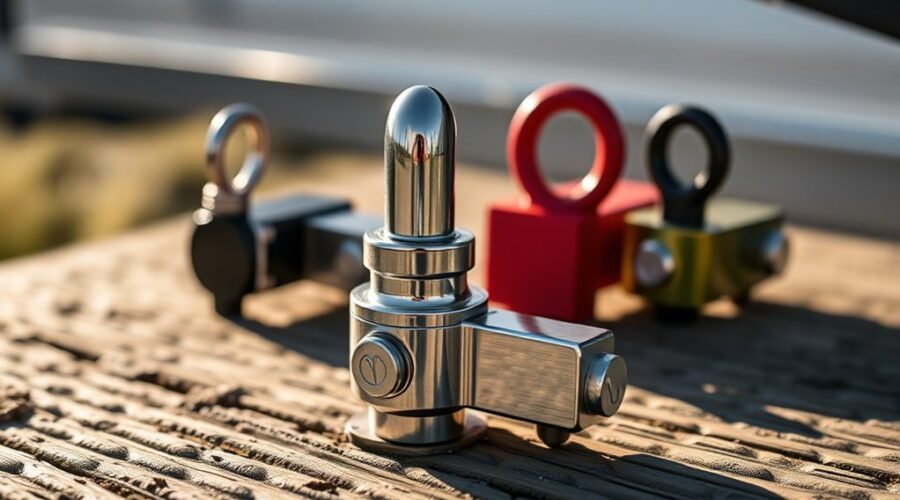
Updated for 2026, these four RV hitch locks are all coupler-style locks — they clamp over your trailer’s ball coupler so nobody can hitch up and drive off with it. Our picks: the Trimax UMAX 100 with its dual ratchet locking system; the Master Lock Trailer Coupler Lock for universal fit and rust resistance; the REESE Towpower 72783 with multiple adjustable locking positions; and the AMPLock Heavy Duty built specifically for 2-5/16″ straight-lip couplers. Below you’ll find what each one fits, who it suits, and where each falls short — plus a buying guide so you order the right size the first time.
| Lock | Best For | Coupler Fit | Check It |
|---|---|---|---|
| Trimax UMAX 100 | Best Overall | 1-7/8″ – 2-5/16″ | Check Price |
| Master Lock Coupler Lock | Best Universal Fit | Common standard sizes | Check Price |
| REESE Towpower 72783 | Best Adjustable for Storage | Multiple locking positions | Check Price |
| AMPLock Heavy Duty | Best for 2-5/16″ Straight Lip | 2-5/16″ straight lip only | Check Price |
Trimax UMAX 100 Trailer Lock for Hitch — Best Overall
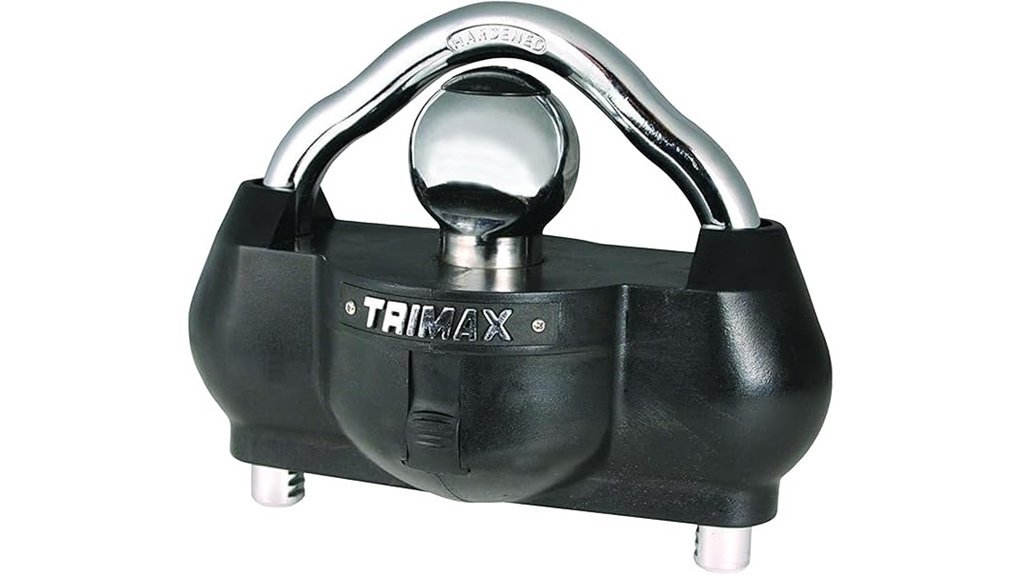
The Trimax UMAX 100 Trailer Lock is the pick for most RV owners who want one lock that covers nearly every trailer in the driveway. It’s listed as fitting couplers from 1-7/8″ up to 2-5/16″, so a single unit typically handles the camper, the utility trailer, and the boat trailer. Its dual ratchet locking system tightens down onto the coupler rather than just hanging loosely over it, which removes the slack a thief needs to work a pry bar in. The heavy-duty body wraps the coupler for all-round coverage, and the sealed keyhole cover keeps grit and rain out of the cylinder — the single most common reason a cheap lock seizes up after a winter outdoors. Trimax lists a warranty on this lock; confirm the current terms on the product page before you buy.
Who should buy this: Owners with multiple trailers or mixed coupler sizes, and anyone parking a rig outdoors year-round where a weather-sealed cylinder actually matters.
Who should skip it: If you own exactly one trailer with one coupler size and want the cheapest workable deterrent, the universal range here is capacity you’re paying for and won’t use.
Pros:
- Dual ratchet system: tightens onto the coupler to reduce prying slack.
- Heavy-duty construction: wraps the coupler for all-round coverage against cutting and forced entry attempts.
- Weather-sealed keyhole: sealed cover helps keep dirt and moisture out of the lock cylinder.
Cons:
- Size limits: covers 1-7/8″ to 2-5/16″ couplers only — check yours before ordering.
- Weight: the heavy-duty build is noticeably heavier than a basic lock to carry and fit.
- Price point: typically costs more than entry-level coupler locks.
Master Lock Trailer Coupler Lock (Universal Size) — Best Universal Fit
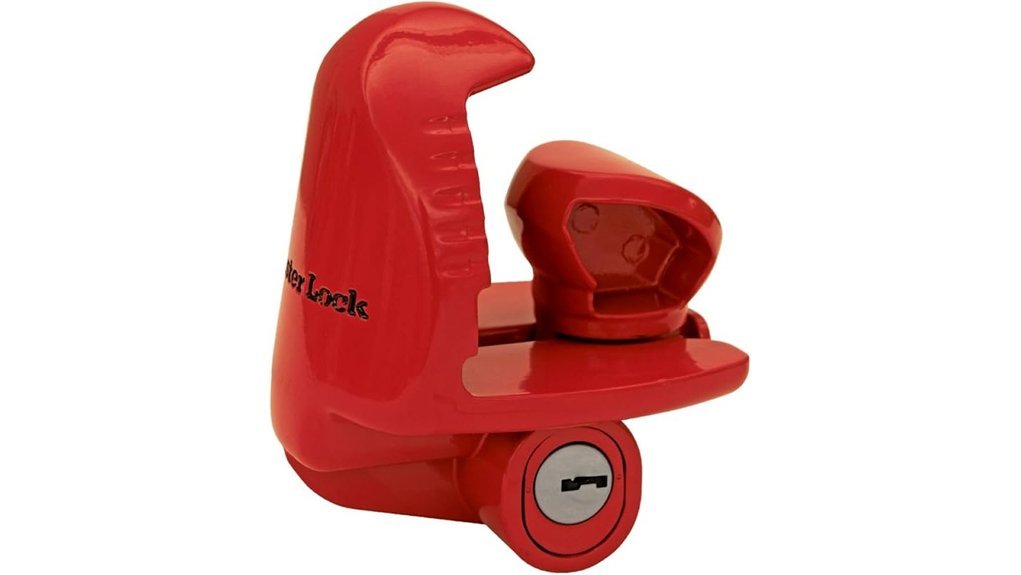
The Master Lock Trailer Coupler Lock is the straightforward, no-fuss option from a lock brand most people already recognise. It’s designed as a universal-fit coupler lock for common standard sizes — verify the exact sizes listed on the product page against your coupler, since fitment varies between Master Lock model numbers. The locking mechanism is built to resist picking and prying, and the bright red housing does real work here: a lock a thief can see from across a parking lot is a lock they can decide to walk past. The body is built to resist rust and corrosion, and fitting or removing it takes seconds with no tools.
Who should buy this: First-time trailer owners, and anyone who wants a visible deterrent they’ll actually bother to use every single time.
Who should skip it: Owners of non-standard or specialty couplers, and anyone storing a high-value rig long-term who wants a heavier-gauge lock.
Pros:
- Locking mechanism built to resist picking and prying.
- Bright red finish works as a visible theft deterrent from a distance.
- Rust and corrosion-resistant construction for outdoor use.
Cons:
- May not fit specialized or non-standard coupler sizes — confirm before ordering.
- Lighter-duty than dedicated heavy-gauge locks.
- May need a little adjustment to seat correctly on some couplers.
REESE Towpower Adjustable Coupler Lock for Storage — Best Adjustable
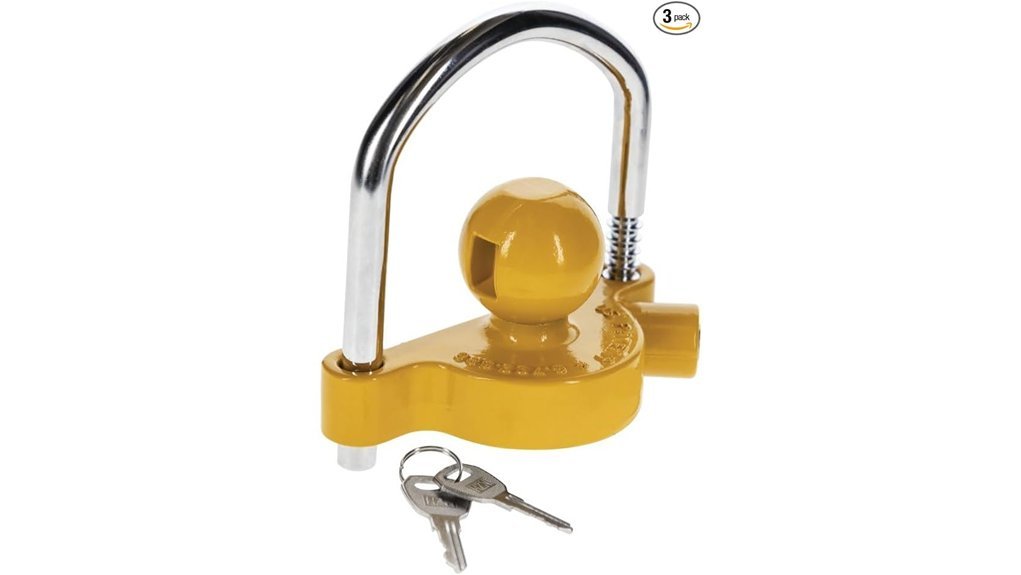
The REESE Towpower 72783 Coupler Lock earns its place on adjustability. Built from heavy-duty steel and aluminum alloy, it uses multiple locking positions so you can dial in a snug fit across a range of coupler shapes rather than hoping one fixed size clamps down properly. That’s the difference between a lock that sits tight and one that rattles with enough play to attack. The bright yellow and chrome finish makes it obvious at a glance in a storage lot, and the anti-rust, weather-resistant design is aimed at rigs that sit outside between trips. Fitting it is quick and needs no tools.
Who should buy this: Anyone leaving a trailer in seasonal or long-term storage, and owners whose coupler doesn’t seat well in a fixed-size lock.
Who should skip it: Buyers who want a grab-and-go lock with zero setup, or anyone counting every pound in their towing kit.
Pros:
- Heavy-duty steel and alloy construction built to resist tampering.
- Bright yellow finish makes it highly visible as a deterrent.
- Adjustable positions help you get a tight fit on varied couplers.
Cons:
- Heavier than lightweight alternatives.
- The adjustable mechanism takes a little trial and error to set correctly.
- Limited finish options.
AMPLock Heavy Duty Trailer Lock for 2-5/16″ Coupler — Best for 2-5/16″ Straight Lip
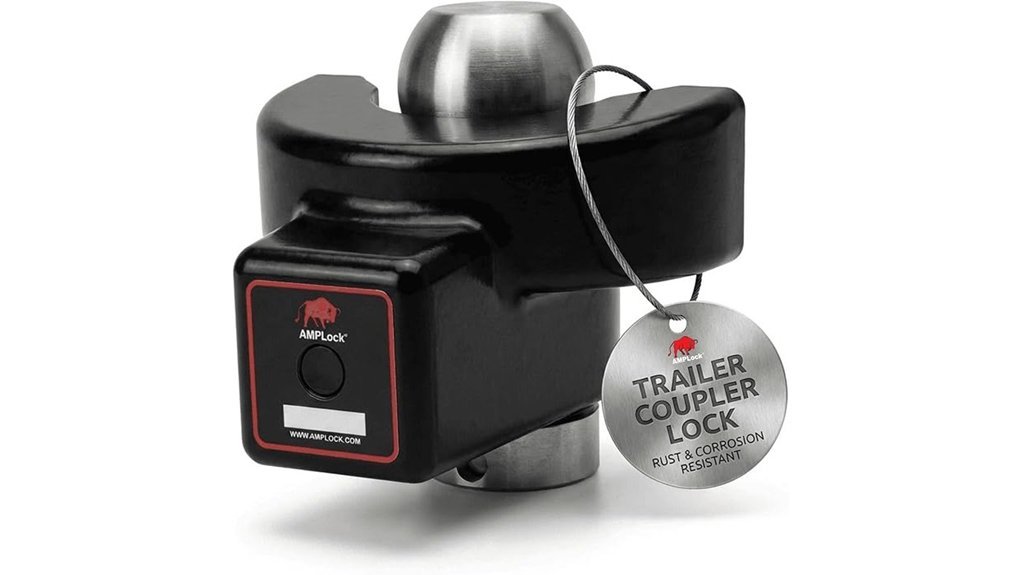
The AMPLock Heavy Duty Trailer Lock takes the opposite approach to the universal picks: instead of fitting everything loosely, it’s purpose-built for 2-5/16″ straight lip couplers and fits them tightly. That specificity is the whole point — a lock moulded to one coupler profile leaves far less room to work a tool into. It suits larger RVs, campers, utility and cargo trailers running that coupler size. The fast push-and-lock system means securing it is a one-handed job, and the rust-resistant materials are built for permanent outdoor exposure.
Who should buy this: Owners of larger rigs with 2-5/16″ straight lip couplers who want a tight, purpose-fit lock rather than a universal one.
Who should skip it: Anyone with a different coupler size or lip style, or anyone who wants one lock to cover several trailers.
Pros:
- Heavy-duty construction and a tight purpose-built fit.
- Fast push-and-lock system — quick, one-handed, no tools.
- Rust-resistant materials suited to long-term outdoor storage.
Cons:
- Fits 2-5/16″ straight lip couplers only.
- High-value trailers still warrant additional layers of security.
- The locking mechanism can feel stiff until it beds in.
Factors to Consider When Choosing RV Hitch Locks: 2026 Buying Guide
Choosing an RV coupler lock comes down to four things: does it fit your coupler, does it survive the weather, will you actually use it every time, and does it look like more trouble than it’s worth to a passing thief. Here’s what to weigh before you order.
- Read the ball size stamped on your coupler (1-7/8″, 2″, or 2-5/16″).
- Check the coupler’s lip style — straight lip and wrap-around couplers need different locks.
- Decide whether you need one lock for several trailers, or a tight fit on one.
- Confirm current fitment and warranty details on the Amazon listing before ordering.
- Plan where you’ll keep the spare key — not in the trailer.
Security Features Overview
A good coupler lock does two jobs: it removes the slack a pry bar needs, and it announces itself. A dual ratchet locking system tightens onto the coupler rather than hanging over it, which is where cheap locks fail. Locking mechanisms built to resist picking and prying add another layer. Weather-sealed keyholes keep dirt and moisture out of the cylinder so the lock still opens after a wet winter. Heavy-gauge materials make cutting and forced entry slower and louder. And bright red or yellow finishes work as genuine visual deterrents — most trailer theft is opportunistic, and an obvious lock moves a thief along to an easier target.
Compatibility With Couplers
Fitment is where most buyers go wrong. Your coupler size — typically 1-7/8″, 2″, or 2-5/16″ — is stamped on the coupler itself, and it’s what the lock has to match. Some locks are built for specific coupler styles, such as straight lip couplers, which gives a tighter fit but no flexibility. Adjustable locks with multiple locking positions accommodate a wider range of shapes and sizes. A universal option simplifies life if you own several trailers, but you still need to check that your particular coupler falls inside the listed range. When in doubt, measure and confirm against the product listing rather than assuming.
Weather Resistance Capabilities
A lock that seizes in January is worse than no lock, because it strands your own trailer. Weather-resistant locks shield the internals from dirt, dust, and moisture, which is what keeps them opening smoothly years in. Sealed keyhole covers are the feature to look for — they’re what stops water sitting in the cylinder and corroding it. Rust-resistant coatings on the body matter just as much for rigs parked outdoors year-round. Weather protection isn’t only about longevity; a corroded lock is also an easier lock to defeat.
Installation and User Convenience
The best lock is the one you’ll bother to fit every time you park. Most quality coupler locks, including all four here, need no tools — push-and-lock systems secure the trailer in seconds. Adjustable locks take slightly longer to set the first time but then stay dialled in. Bright colours help you spot your rig in a crowded storage lot and make the lock easy to find in low light. If fitting a lock is a five-minute wrestling match, you’ll start skipping it on short stops — which is exactly when trailers disappear.
Durability and Maintenance Options
Prioritise materials that resist rust and corrosion if the trailer lives outside. Heavy-duty construction in high-strength materials slows down tampering and forced entry attempts. Sealed keyhole covers protect the cylinder from grit and water. Locks that come on and off easily also get checked more often, which is how you catch a sticking cylinder before it strands you. A manufacturer warranty is a reasonable signal of confidence — just read the current terms on the listing rather than relying on any figure quoted in a review.
Frequently Asked Questions
How Do I Know the Right Size Lock for My Coupler?
Look at the trailer’s ball coupler — the size is stamped or cast into it, usually 1-7/8″, 2″, or 2-5/16″. That number is what the lock must match, not the size of your tow vehicle’s receiver tube. Also note whether the coupler has a straight lip or a wrap-around design, since some locks fit only one style. Then confirm the fitment listed on the product page before ordering.
Can I Use the Same Lock for Multiple Trailers?
Yes, provided the lock’s fitment range covers each trailer’s coupler size and style — this is where universal or adjustable models earn their keep. The trade-off is that one key then opens everything you own, so if a key goes missing, every trailer is exposed at once.
Does a Coupler Lock Actually Stop Trailer Theft?
It stops the easy version of it — someone reversing up and hitching your trailer in under a minute. It won’t stop a determined thief with tools and time. Think of it as raising the effort and the noise required, which is usually enough to send an opportunist to an easier target. Pair it with a second layer such as a wheel lock for anything valuable.
Are Coupler Locks Weather-Resistant?
Many are built with weather-resistant materials and coatings that hold up to rain, snow, and road salt, but quality varies. Look specifically for a sealed or covered keyhole, since that’s the part most likely to corrode. A shot of dry lubricant in the cylinder once or twice a year goes a long way.
What Tools Are Needed to Fit a Coupler Lock?
For the locks in this guide, none. They use push-and-lock or ratchet-adjust mechanisms that fit by hand in seconds. Some other lock types, such as receiver pin locks or chain locks, may need basic hand tools — check the instructions for the specific model you buy.
How Often Should I Check My Coupler Lock?
Check it every few months, and always before a long storage period. Confirm the key still turns freely, look for rust or grit around the cylinder, and make sure the lock still seats tightly on the coupler without play. Catching a sticking lock early saves you a locked-out trailer later.
Conclusion
For most RV owners, the Trimax UMAX 100 is the safest single buy — its 1-7/8″ to 2-5/16″ range covers nearly every trailer, so it stays useful even if your rig changes. Want a recognised brand and a highly visible deterrent for less bulk? Go with the Master Lock Coupler Lock. Storing a trailer long-term or fighting an awkward coupler shape? The REESE Towpower 72783 and its adjustable positions will seat tighter. And if you’re running a 2-5/16″ straight lip coupler, the AMPLock Heavy Duty gives you a purpose-fit lock with the least play of the four.
Whichever you choose, the deciding factor is fitment: check the size stamped on your coupler, confirm it against the listing, and pick the lock you’ll actually fit every time you park. A good coupler lock won’t make your trailer theft-proof, but it makes yours the harder target — and through the 2026 travel season, that’s most of the battle.