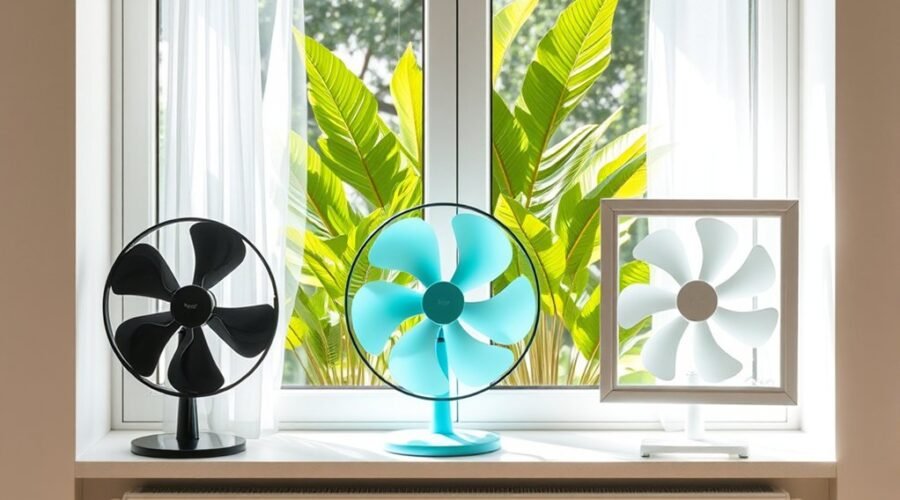
If you’re shopping for a window fan for 2026, three models are especially worth comparing: the Lasko Bluetooth Twin Window Fan for Bluetooth app control and flexible airflow, the Vornado TRANSOM AE Window Fan for Alexa-enabled smart control and a low-profile fit, and the Bionaire Window Fan with Remote Control for straightforward remote operation and reversible airflow. The best choice depends on your window dimensions, preferred controls, and whether you want intake, exhaust, or simultaneous air exchange.
Disclosure: This article contains Amazon affiliate links. If you purchase through these links, we may earn a commission at no extra cost to you.
Quick Verdict
- Lasko Bluetooth Twin Window Fan: Best for buyers who want Bluetooth smartphone control plus intake, exhaust, and exchange modes.
- Vornado TRANSOM AE: Best for Alexa users who want a low-profile smart window fan for a compatible single- or double-hung window.
- Bionaire Window Fan: Best for buyers who prefer a traditional remote control without relying on an app or smart-home platform.
Quick Window Fan Comparison
| Window Fan | Best For | Window Fit | Controls | Airflow | Speeds |
|---|---|---|---|---|---|
| Lasko Bluetooth Twin Window Fan | Bluetooth control | 24–32″ wide; 12″ high or larger | Manual + Lasko Connect app | Intake, exhaust, exchange | 3 |
| Vornado TRANSOM AE | Alexa smart control | 26–40″ wide; 8″ high or larger; horizontal installation | Touch controls + Alexa | Intake or exhaust | 4 |
| Bionaire Window Fan | Simple remote control | 24–36″ wide | Control panel + remote | Intake, exhaust, exchange | 3 |
Lasko Bluetooth Twin Window Fan with Thermostat
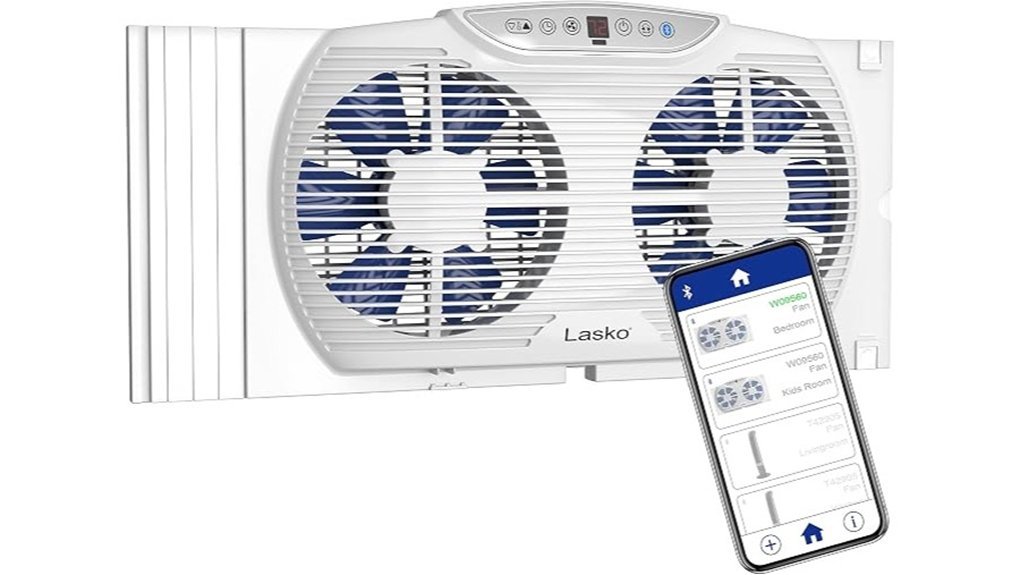
Best for Bluetooth Control: The Lasko Bluetooth Twin Window Fan is a practical option for people who want flexible ventilation with smartphone convenience. Its twin 9-inch design supports intake, exhaust, and exchange airflow, so you can pull outdoor air inside, push warm indoor air outside, or run opposing airflow directions at the same time.
Bluetooth connectivity lets you operate supported functions through the Lasko Connect app, while onboard controls remain available when you do not want to use your phone. The fan also includes three speed settings, an electronic timer, and an adjustable thermostat that can cycle the fan based on room temperature.
The expandable design fits windows approximately 24 to 32 inches wide and requires an opening about 12 inches high or larger. It is fully assembled for window use and includes Lasko’s Blue Plug safety-fuse technology.
Why You’ll Like It: It combines app control with one of the most versatile airflow arrangements in this comparison. Exchange mode is particularly useful when you want one side bringing air in while the other pushes indoor air out.
Who Should Avoid It: Buyers with windows outside its supported dimensions should choose another model. Also consider whether Bluetooth control adds meaningful value for you if you mainly plan to use physical controls.
Pros:
- Bluetooth control through the Lasko Connect app.
- Intake, exhaust, and simultaneous exchange airflow modes.
- Three speeds, thermostat control, and an electronic timer.
- Fully assembled for window installation.
Cons:
- Its 24–32″ width range is narrower than the Vornado’s supported range.
- Requires an opening about 12″ high or larger for standard window installation.
- App use adds a Bluetooth pairing step that buyers wanting simple remote control may not need.
Vornado TRANSOM AE Window Fan with Alexa
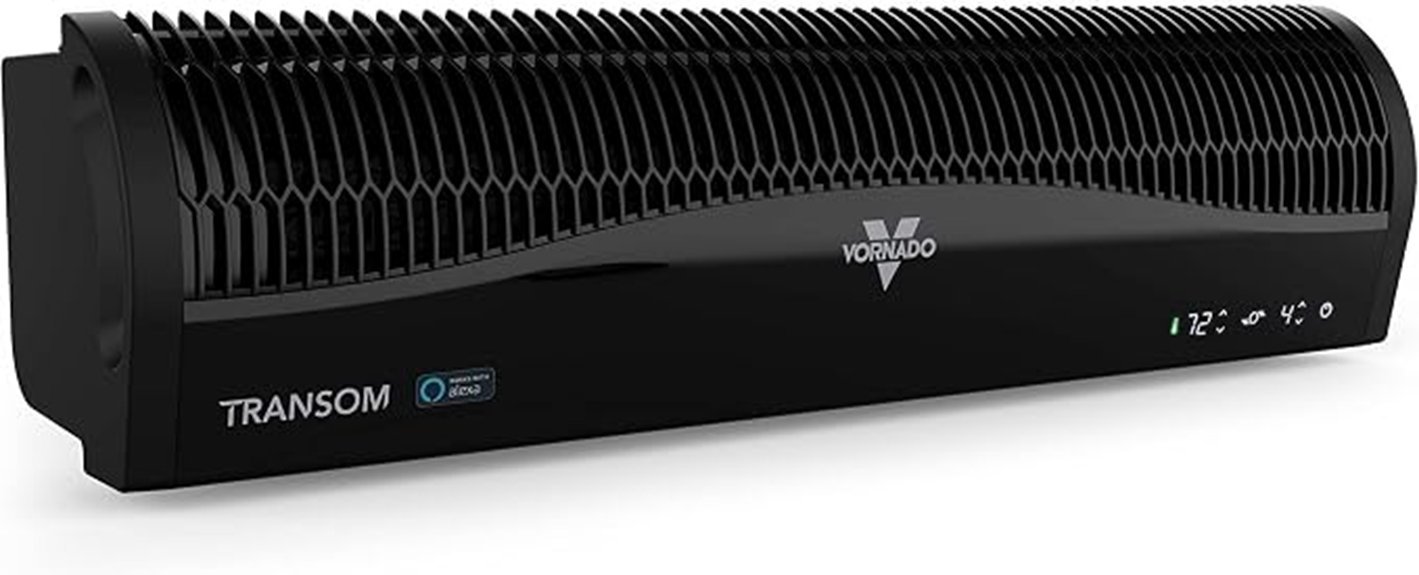
Best for Alexa: The Vornado TRANSOM AE Window Fan is the strongest smart-home option in this comparison. It can draw outdoor air inside or electronically reverse direction to exhaust indoor air, while its low-profile housing takes up less window space than many traditional twin-fan designs.
The TRANSOM AE offers four speeds and automatic temperature control. After setup, you can operate it through the Alexa app, while compatible Amazon Echo devices add voice control. Physical touch controls remain available directly on the fan.
Its Soft-fit foam block system is designed for windows 26 to 40 inches wide with an opening at least 8 inches high. It is intended for compatible single-hung and double-hung windows and must be installed horizontally. Vornado also states that the system can be installed while keeping the window screen in place.
Why You’ll Like It: The combination of Alexa integration, four speeds, reversible airflow, automatic temperature control, and a low-profile form makes it appealing for buyers already using Alexa at home.
Who Should Avoid It: Skip this model if your window requires vertical installation or falls outside the supported size range. Buyers who do not use Alexa may also find its smart features less important.
Pros:
- Alexa-enabled control through compatible devices and the Alexa app.
- Four speeds with automatic temperature control.
- Electronically reversible intake and exhaust airflow.
- Fits a relatively broad 26–40″ window-width range.
- Low-profile, weather-resistant housing and Soft-fit sealing system.
Cons:
- Horizontal installation only.
- Designed specifically around compatible single-hung and double-hung windows.
- Alexa voice control requires a compatible Alexa ecosystem.
Bionaire Window Fan with Remote Control
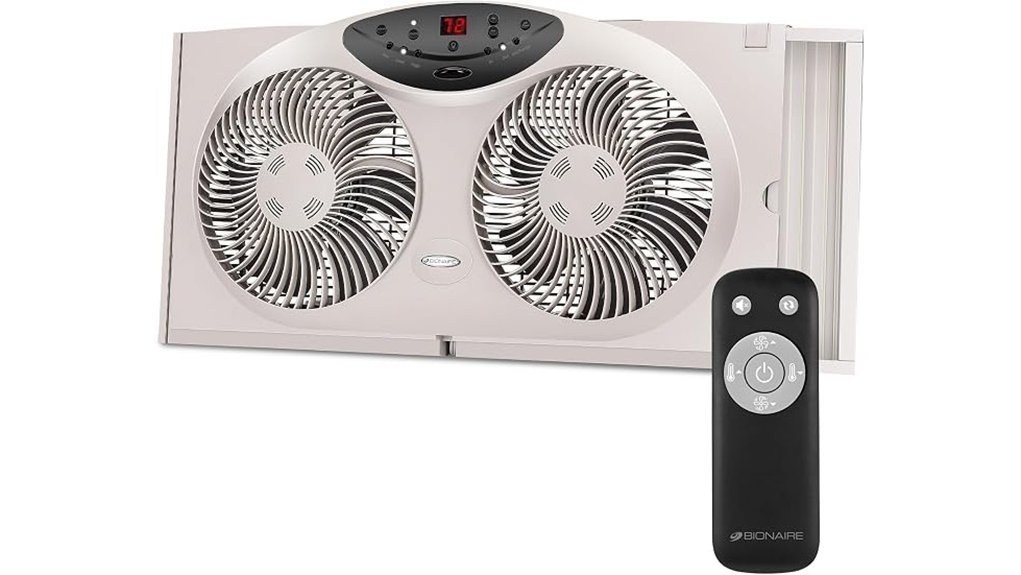
Best for Remote Control: The Bionaire Window Fan is a good fit for buyers who want convenient controls without depending on a smartphone app or smart-home platform. Its reversible airflow can draw outdoor air in, exhaust warm indoor air, or run an air-exchange mode.
It offers three speed settings and a programmable thermostat, with temperature information shown on the display. The included remote provides convenient access to key controls from elsewhere in the room.
The fan is designed to fit windows approximately 24 to 36 inches wide using extender panels, and the unit does not require assembly before normal setup.
Why You’ll Like It: It provides many of the ventilation functions buyers want—reversible airflow, exchange mode, multiple speeds, thermostat control, and a remote—without requiring app pairing.
Who Should Avoid It: Buyers specifically looking for Wi-Fi, Bluetooth, or voice control should consider one of the smart models instead. You should also confirm that your window dimensions fall within the supported range.
Pros:
- Intake, exhaust, and exchange airflow options.
- Three fan speeds and a programmable thermostat.
- Included remote control for convenient operation.
- Fits windows approximately 24–36″ wide.
- No assembly required before normal setup.
Cons:
- No app-based or voice-control features.
- Its 24–36″ fit range will not work with every window.
- Buyers wanting the lowest-profile design may prefer the Vornado.
How to Choose the Best Window Fan
The best window fan is not simply the model with the most features. Start with window compatibility, then compare airflow direction, controls, noise preferences, installation requirements, and energy-saving functions. A fan that does not fit securely in your window is a poor choice regardless of its other features.
1. Check Window Width and Height
Measure the usable opening before buying. Do not rely only on the overall width of the window frame. The Lasko in this guide is designed around a 24–32″ width range and an opening about 12″ high or larger, while the Vornado TRANSOM AE supports approximately 26–40″ widths with an opening at least 8″ high. The Bionaire is designed for roughly 24–36″ window widths.
Expandable side panels or foam blocks help close gaps, but they cannot compensate for a window that falls outside the manufacturer’s supported dimensions. A secure fit also helps reduce unwanted air leakage around the fan.
2. Compare Airflow Modes
A reversible window fan is more useful than a one-direction model because outdoor conditions change throughout the day. Intake mode brings outdoor air inside, while exhaust mode pushes warm or stale indoor air out.
Twin-fan models may also offer an exchange mode, allowing one side to pull air in while the other pushes air out. This can be useful when you want continuous two-way ventilation without manually reversing the whole fan.
3. Decide How You Want to Control the Fan
Smart features are worthwhile only if they match how you actually use the fan. Bluetooth models such as the Lasko allow nearby smartphone control through an app. Alexa-enabled models such as the Vornado can integrate with a compatible smart-home setup. A traditional remote-control fan such as the Bionaire may be simpler if you do not want another connected device.
Regardless of smart features, check whether the fan retains useful onboard controls. Physical controls are helpful when your phone, network, remote, or smart-home service is unavailable.
4. Consider Noise at the Speed You Will Actually Use
Window-fan noise varies by model, fan speed, installation, and the way the window holds the unit. Higher speeds generally create more airflow and more audible sound. For bedrooms and offices, prioritize models with several speed settings so you can reduce airflow when quieter operation matters.
Do not rely on a generic decibel range unless the manufacturer publishes a measurement for the exact model under defined test conditions. User perceptions of “quiet” can also vary significantly.
5. Confirm the Window Type and Installation Direction
Width alone does not determine compatibility. Check whether the manufacturer supports double-hung, single-hung, sliding, or casement windows and whether horizontal or vertical installation is allowed.
This is especially important with the Vornado TRANSOM AE, which is intended for horizontal installation in compatible single-hung or double-hung windows. By contrast, Lasko provides installation guidance for additional window configurations. Always follow the instructions for the exact model rather than improvising an unsupported orientation.
6. Compare Power Use and Energy-Saving Controls
A window fan moves air rather than using a refrigeration cycle like an air conditioner. Features such as multiple speeds, thermostatic operation, and timers can help avoid running the fan harder or longer than needed.
If the manufacturer publishes wattage, use it when comparing electricity consumption between models. Also remember that a window fan works best when outdoor conditions are favorable. It cannot actively cool incoming air below the outdoor temperature.
Ventilation Note: A window fan is not an air purifier. Avoid using intake mode when outdoor air quality is poor because of wildfire smoke, heavy pollution, or other contaminants. In those conditions, keeping windows closed and using appropriate indoor filtration may be the better choice.
Before You Buy: Window Fan Checklist
- Measure the usable window opening width and height.
- Confirm that your window type is supported.
- Check whether horizontal or vertical installation is required.
- Decide whether you need intake only, reversible airflow, or exchange mode.
- Choose between manual, remote, Bluetooth, or Alexa controls.
- Check thermostat and timer features if automatic operation matters to you.
- Confirm access to a suitable electrical outlet and follow the manufacturer’s safety instructions.
- Check current warranty and support terms before purchasing.
Frequently Asked Questions
Are Window Fans Energy-Efficient Compared to Air Conditioners?
Window fans generally use a much simpler air-moving system than compressor-based air conditioners, so they can be useful when outdoor air is cool enough to provide comfort. However, a fan does not refrigerate or dehumidify incoming air like an air conditioner. When outdoor temperatures are very high, a window fan may not provide the same cooling result.
Can Window Fans Be Used in Vertical Sliding Windows?
Some can, but compatibility depends on the exact model. Lasko provides instructions for its W09560 in slider-type and casement windows, while the Vornado TRANSOM AE is specifically designed for horizontal installation and should not be installed vertically. Always check the manufacturer’s installation instructions before buying.
How Do I Clean and Maintain a Window Fan?
Unplug the fan before cleaning. Remove loose dust with a vacuum and soft brush where permitted by the manufacturer’s instructions, and wipe accessible exterior surfaces with a soft cloth. Do not allow water to enter the motor or electrical housing, and do not disassemble the fan unless the manufacturer specifically instructs you to do so.
What Is the Noise Level of These Window Fans?
Noise depends on the specific fan, speed setting, installation, and room. Lower speeds are generally better when sound matters most. Because a consistent manufacturer-published decibel figure was not verified for all three models in this comparison, it is better to compare speed options and current product documentation than rely on one generic noise number.
Can a Window Fan Improve Indoor Air Quality?
A window fan can improve ventilation by exchanging indoor and outdoor air, but it does not filter particles or gases. Intake mode should be avoided when outdoor air quality is poor because bringing polluted or smoky air indoors can make conditions worse.
Do Window Fans Come With a Warranty?
Many window fans include manufacturer warranty coverage, but the duration and terms vary by model and can change. Check the current Amazon listing and the manufacturer’s support information for the exact product before purchasing rather than assuming all window fans have the same warranty.
Conclusion
Each of these window fans serves a different type of buyer. Choose the Lasko Bluetooth Twin Window Fan if Bluetooth control and three-way intake, exhaust, and exchange airflow matter most. Choose the Vornado TRANSOM AE if you want Alexa integration, four speeds, and a low-profile design for a compatible horizontal window. Choose the Bionaire Window Fan if you prefer the simplicity of a traditional remote with reversible airflow and thermostat control.
Before ordering, measure your window carefully and confirm the installation type. Getting the fit right is more important than choosing the model with the longest feature list.