The top refractor telescopes for 2026 include the Gskyer 70mm, ideal for kids and beginners, and the Celestron Travel Scope 70mm, known for its lightweight design and easy setup. The Koolpte 80mm offers excellent clarity, while the Gskyer 600x90mm enhances viewing with interchangeable eyepieces. Key considerations include aperture size, focal length, and portability features. These telescopes promise impressive performance for users of all levels. Further insights into features and options await exploration.
| Telescope | Aperture | Focal Length | Max Magnification | Best For | Price |
|---|---|---|---|---|---|
| Gskyer 70mm | 70mm | 400mm (f/5.7) | Up to ~120X with 3x Barlow | Kids & absolute beginners | Check Price |
| Celestron Travel Scope 70mm | 70mm | Standard refractor | Dual eyepieces (20mm/10mm) | Travel & portability | Check Price |
| Koolpte 80mm | 80mm | 600mm (f/6.7) | Up to 180X with 3x Barlow | Best overall value | Check Price |
| Gskyer 600x90mm | 90mm | 600mm (f/6.7) | Up to ~360X with 3x Barlow | Bigger, brighter views | Check Price |
Gskyer 70mm Refracting Telescope for Kids and Beginners
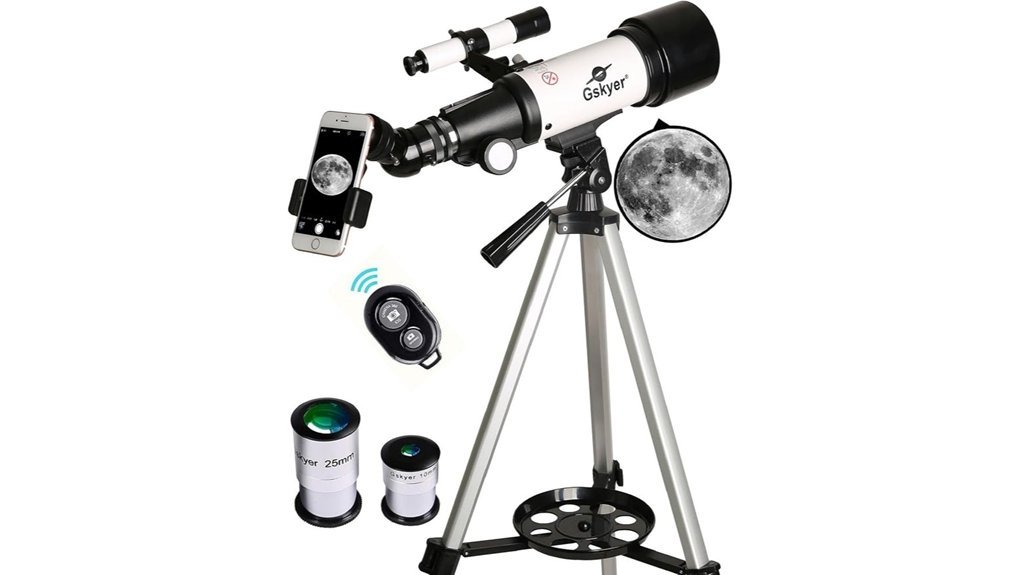
The Gskyer 70mm Refracting Telescope stands out as an ideal choice for kids and beginners, thanks to its user-friendly design and impressive specifications. With a 70mm aperture and a 400mm focal length, it offers excellent image quality through fully coated optics. The included eyepieces, along with a 3x Barlow lens, enhance magnification capabilities. A 5×24 finder scope simplifies locating celestial objects. For added convenience, the telescope comes with a smartphone adapter for capturing images and a wireless remote for easy operation. Its adjustable aluminum tripod and carry bag guarantee portability, making it perfect for young astronomers on the go.
Best For: The Gskyer 70mm Refracting Telescope is best for kids and beginners who are eager to explore the night sky with an easy-to-use and portable telescope.
Pros:
- User-friendly design makes it accessible for children and novice astronomers.
- High-quality optics provide clear and detailed images of celestial objects.
- Portable and lightweight, with a carry bag for convenient travel and storage.
Cons:
- Limited advanced features may not satisfy more experienced astronomers.
- Lower magnification capabilities compared to higher-end telescopes.
- Setup may require some assistance for younger users.
Celestron Travel Scope 70mm Portable Telescope Kit
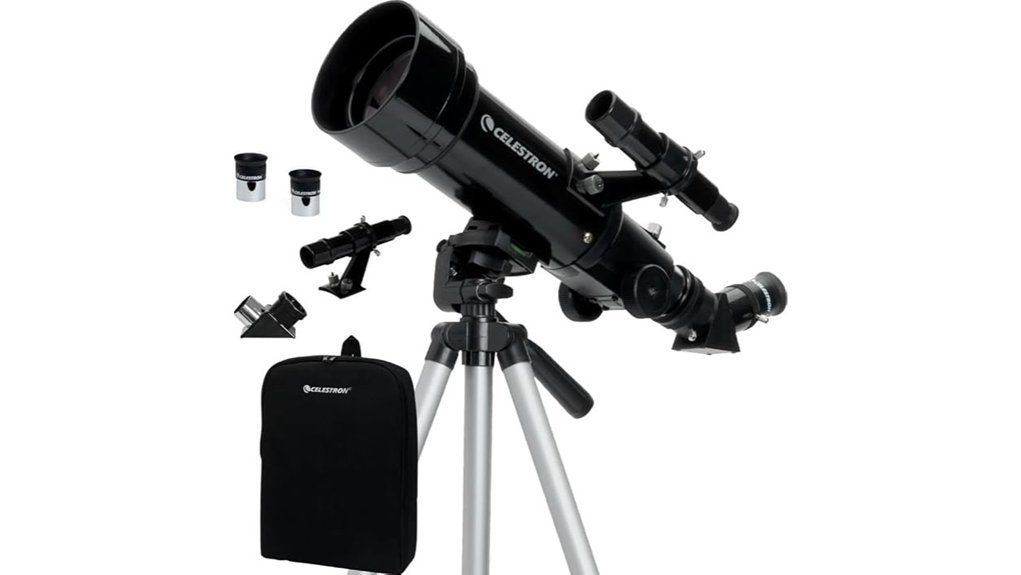
Ideal for beginners, the Celestron Travel Scope 70mm Portable Telescope Kit offers a lightweight design and user-friendly setup. This 70mm refractor features fully coated glass lenses, helping ensure bright, sharp views of the Moon, planets, and daytime scenery. Its quick, no-tool assembly makes it accessible for both adults and kids. The kit includes dual eyepieces for versatile viewing and a full-height tripod that packs neatly into a padded backpack. Additionally, users gain access to the Starry Night software for stargazing planning. With a 2-Year US Warranty and expert support, Celestron guarantees a rewarding experience for novice astronomers.
Best For: Beginner astronomers, both adults and kids, looking for a lightweight and user-friendly telescope for day and night observations.
Pros:
- Easy, no-tool setup allows for quick assembly, making it ideal for on-the-go stargazing.
- Includes dual eyepieces and a full-height tripod for versatile viewing options.
- Comes with a padded backpack and access to Starry Night software for enhanced stargazing experiences.
Cons:
- Limited aperture size may restrict visibility of fainter celestial objects.
- Not as durable as more advanced models, potentially affecting long-term use.
- The included eyepieces may not provide the highest quality views compared to professional-grade options.
Note: Some retailer listings for this model recommend adult supervision for children under 12 during setup and use, so plan on doing the first few sessions together with younger kids.
Koolpte 80mm Telescope for Beginners and Adults
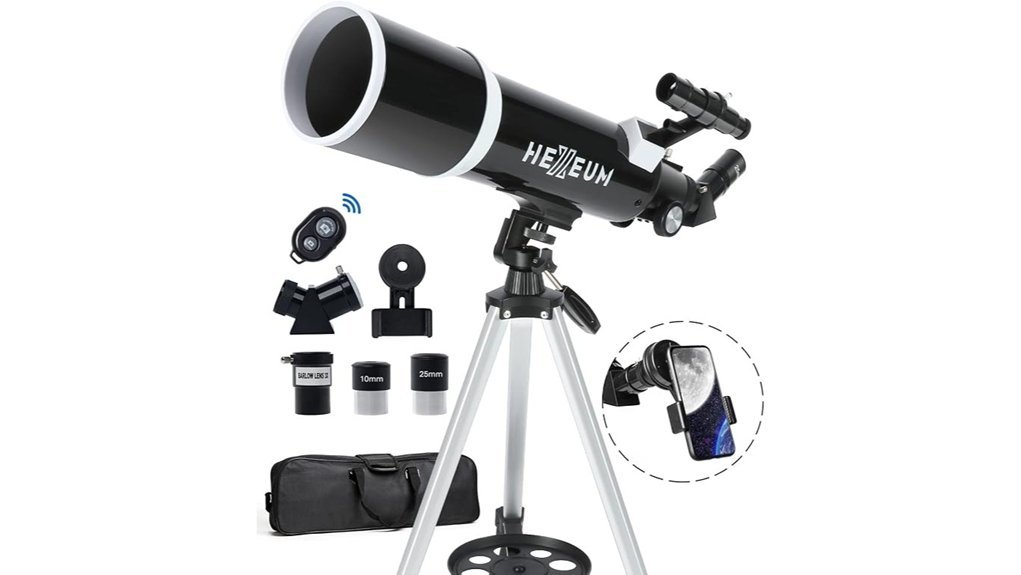
Designed for both beginners and adults, the Koolpte 80mm Telescope offers an impressive 80mm aperture for exceptional clarity. With a 600mm focal length and multi-fully coated optics, it enhances image brightness considerably. The telescope includes two replaceable eyepieces, providing 24X and 60X magnification, and a 3x Barlow lens for even greater detail, allowing magnification up to 180X. Additionally, it features a 5×24 finder scope for easy object locating. The adjustable aluminum tripod and carrying bag enhance portability, while the wireless remote control simplifies operation. Koolpte backs the telescope with ongoing maintenance support and responsive customer service, which is helpful for less experienced users who may need guidance.
Best For: Those seeking a user-friendly and portable telescope experience, ideal for both beginners and adults.
Pros:
- High-quality optics: Multi-fully coated lenses enhance image brightness and clarity.
- Versatile magnification: Offers multiple eyepiece options and a Barlow lens for up to 180X magnification.
- Easy setup and transport: Tool-free setup and a carrying bag make it convenient for on-the-go stargazing.
Cons:
- Limited advanced features: May lack some advanced capabilities desired by experienced astronomers.
- Stability concerns: The adjustable aluminum tripod may not provide the same stability as heavier models.
- Learning curve for beginners: Some users might require time to adjust to using multiple eyepieces and the Barlow lens.
Gskyer 600x90mm AZ Astronomical Refractor Telescope
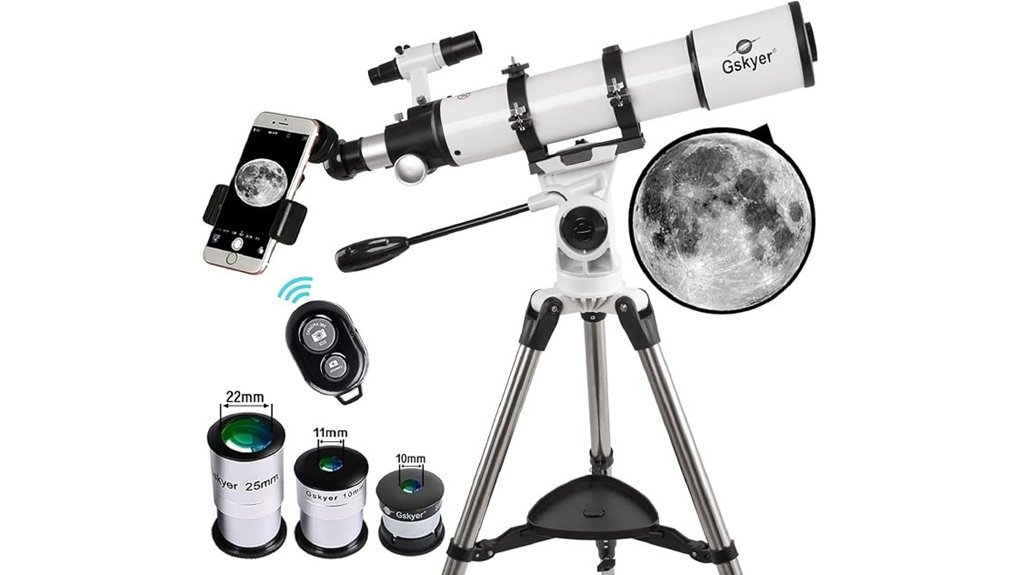
Offering robust features for budding astronomers, the Gskyer 600x90mm AZ Astronomical Refractor Telescope excels in performance. With a 90mm aperture and a focal length of 600mm (f/6.7), it delivers enhanced image quality through fully coated glass lenses. Users can choose from three interchangeable eyepieces—24X, 60X, and 120X—along with a 3x Barlow lens for increased magnification; paired together, the eyepieces can reach roughly 72X, 180X, and 360X, though real-world clarity at the top end depends heavily on sky conditions. Its adjustable aluminum tripod accommodates heights from 31.5 to 49 inches, ensuring comfortable viewing. Designed for ease of use, it features a tool-free setup, making it ideal for novices, while also providing a 12-month warranty and reliable customer support.
Best For: Adults interested in astronomy looking for an easy-to-use and powerful telescope.
Pros:
- Enhanced image quality due to fully coated glass lenses and high transmission coatings.
- Interchangeable eyepieces allow for versatile magnification options (24X, 60X, 120X).
- Adjustable tripod accommodates various heights for comfortable viewing.
Cons:
- Limited advanced features compared to higher-end telescopes.
- Requires clear skies for optimal viewing, which may limit usability.
- May be challenging for very young users, despite being designed for novices.
Factors to Consider When Choosing Refractor Telescopes 2026: Top Picks and Buying Guide
When selecting a refractor telescope, several key factors warrant careful consideration. Aperture size greatly influences light-gathering ability, while focal length affects the telescope’s versatility. Additionally, potential users should evaluate magnification options, portability features, and user-friendly design elements to guarantee a satisfying astronomical experience.
Aperture Size Importance
Aperture size plays an essential role in the performance of refractor telescopes, as it directly affects the amount of light gathered and the clarity of celestial observations. Typically measured in millimeters, a larger aperture enhances resolution and contrast, allowing observers to discern finer details in planets, stars, and nebulae. For ideal viewing of faint objects, an aperture of at least 70mm is recommended, as smaller apertures may struggle with dim celestial bodies. In addition, increased aperture size allows for higher potential magnification, providing a more immersive stargazing experience, especially when combined with Barlow lenses. Moreover, larger apertures enhance versatility, making the telescope effective for both terrestrial and astronomical observations.
2. Focal Length Considerations
Focal length serves as a critical factor in determining the performance of refractor telescopes, influencing both magnification and field of view. Longer focal lengths provide higher magnification but result in a narrower field of view, making them ideal for detailed planetary and lunar observations. Conversely, shorter focal lengths excel in wide-field observations, suitable for viewing star clusters and large nebulae. The focal ratio, derived from the focal length divided by the aperture, also affects image brightness; lower f/numbers yield brighter images, beneficial for observing faint celestial objects. Additionally, shorter focal lengths often contribute to more compact, portable designs. When selecting a refractor telescope, it is essential to align focal length with intended use, whether for casual stargazing or astrophotography.
3. Magnification Options Available
Numerous factors influence the magnification options available in refractor telescopes, making it essential for buyers to understand their choices. Magnification is primarily determined by the combination of eyepiece focal lengths and the use of Barlow lenses, which can greatly enhance magnification power. Common eyepiece focal lengths, such as 10mm, 20mm, and 25mm, yield magnifications like 24X and 60X, with even higher options available when paired with a Barlow lens. A 3x Barlow lens can triple the magnification, ideal for detailed lunar and planetary observations. Additionally, the telescope’s aperture size affects light-gathering capability and image clarity at higher magnifications. For beginners, a magnification range of 20x to 60x generally provides a balanced viewing experience.
4. Portability Features Needed
When selecting a refractor telescope, portability is an essential factor that can greatly enhance the stargazing experience. Opting for a lightweight and travel-friendly design allows for easy transport, especially for those wishing to explore various locations. Models that include a carrying bag or padded backpack offer additional protection during travel and storage. An adjustable tripod is vital, enabling versatile viewing positions while retaining compactness. Moreover, telescopes that feature a quick, no-tool setup simplify the assembly and disassembly process, making them more user-friendly for on-the-go enthusiasts. Finally, additional accessories, such as smartphone adapters, can greatly enhance usability and convenience, ensuring a seamless stargazing experience wherever one may venture.
5. User-Friendly Design Elements
Portability features greatly enhance the convenience of using refractor telescopes, but user-friendly design elements take the experience a step further. Quick, no-tool setup options allow beginners to assemble and start observing almost instantly. Many models include dual eyepieces, providing versatile magnification tailored to different viewing needs. Adjustable tripods contribute considerably to usability, accommodating various heights to guarantee comfortable viewing angles for all users. Integrated finderscopes simplify the process of locating celestial objects, which is essential for novice astronomers. Additionally, lightweight designs often come with carrying bags, making transport effortless and encouraging users to explore outdoor settings. These features collectively enhance the overall experience, making refractor telescopes more accessible and enjoyable for all levels of astronomy enthusiasts.
6. Accessory Compatibility Factors
Selecting a refractor telescope involves considering accessory compatibility, which plays an essential role in enhancing the overall stargazing experience. Users should guarantee the telescope includes compatible eyepieces and Barlow lenses, providing options for magnification and versatility in viewing. In addition, telescopes equipped with smartphone adapters or camera mounts facilitate easy astrophotography, allowing for effortless image capturing. A finderscope is another valuable accessory, aiding in the efficient location of celestial objects during observations. Adjustable tripods are also important, accommodating various viewing heights for improved comfort. Moreover, user-friendly accessories like wireless remotes enhance the observational experience, allowing users to operate the telescope without direct contact, contributing to a more enjoyable stargazing session.
7. Brand Reliability Assurance
Reliability stands as a cornerstone when choosing a refractor telescope, as it directly influences user satisfaction and performance. Established brands typically possess a long-standing history in the industry, ensuring expertise in manufacturing quality products. Many reputable manufacturers also offer warranties ranging from one to two years, providing customers with peace of mind regarding product reliability. Effective customer support is another essential aspect; leading companies are known for their responsive service, addressing inquiries promptly. Brands that prioritize quality control and utilize high-grade materials are more likely to deliver consistent performance and durability. In addition, positive customer reviews and testimonials often reflect a brand’s reliability, indicating user satisfaction and trust in the product’s capabilities.
Before You Buy: Quick Checklist
- Match the aperture to what you want to see — 70mm is fine for the Moon and bright planets; 80–90mm shows fainter deep-sky objects more clearly.
- Check that the tripod height range suits how you’ll actually use it (standing vs. seated, kids vs. adults).
- Confirm which eyepieces and Barlow lens are included, since these determine the real-world magnification range.
- Review the current listing for warranty and support terms, since these can change over time.
- If buying for a child, plan on adult help for the first few setup and alignment sessions.
Frequently Asked Questions
What Is the Best Age for Kids to Start Using Telescopes?
Experts suggest that children aged eight to ten are ideal for starting with telescopes, as they typically possess the cognitive skills and curiosity necessary to understand basic astronomy concepts and engage meaningfully with the equipment.
Can I Use a Refractor Telescope for Astrophotography?
Yes, a refractor telescope can be used for astrophotography. Its design minimizes chromatic aberration, providing sharp images of celestial objects. However, suitable mounts and cameras are essential for ideal results in capturing detailed photographs.
How Do I Maintain and Clean My Refractor Telescope?
To maintain and clean a refractor telescope, gently use a microfiber cloth for the optics, avoid harsh chemicals, and check regularly that all components are securely attached and dust-free.
Are There Any Accessories I Should Buy With My Telescope?
Essential accessories for a refractor telescope include quality eyepieces, a sturdy mount, a star finder, filters for enhanced viewing, and a carrying case. These items enhance the overall experience and improve observation capabilities markedly.
What Is the Difference Between Refractor and Reflector Telescopes?
Refractor telescopes use lenses to gather light, while reflector telescopes use mirrors. Reflectors can often offer a larger aperture for a given price, which helps with faint deep-sky objects, while refractors tend to need less maintenance and hold their optical alignment better over time.
Conclusion
In summary, the right refractor telescope can open up a universe of exploration, letting you gaze at celestial wonders with real clarity — from crisp views of lunar craters to Saturn’s rings and distant star clusters. As you start your astronomical journey, keeping aperture, focal length, magnification, and portability in mind will help you choose the model that fits how and where you’ll actually use it in 2026 and beyond.
Final Recommendation
- Best for Kids & Absolute Beginners: Gskyer 70mm
- Best for Travel & Portability: Celestron Travel Scope 70mm
- Best Overall Value: Koolpte 80mm
- Best for Bigger, Brighter Views: Gskyer 600x90mm