If you are comparing the best smart thermostats for 2026, start with compatibility, wiring, smart-home ecosystem, and the level of automation you actually need. The Honeywell Home X8S is the premium pick for a large customizable display and deeper comfort controls, while the Honeywell Home X2S focuses on straightforward Matter-enabled smart-home integration. The ecobee Smart Thermostat Enhanced adds strong occupancy-based automation, the Sensi models emphasize approachable DIY setup and energy-management tools, and the Amazon Smart Thermostat is a simple choice for Alexa-centered homes.
Affiliate disclosure: This article contains affiliate links. If you buy through them, we may earn a commission at no extra cost to you.
Quick Verdict
- Best Premium: Honeywell Home X8S for its five-inch display, Matter support, First Alert app control, optional room-sensor support, and indoor-air-quality features.
- Best for Matter Integration: Honeywell Home X2S for a simpler connected-home upgrade with Alexa, Google Home, and Apple Home support.
- Best for Energy Automation: ecobee Smart Thermostat Enhanced for occupancy-aware comfort, humidity-based adjustments, and broad smart-home integration.
- Best for Easy DIY: Sensi Smart Thermostat ST55 because a C-wire is not required for most compatible systems.
- Best Touchscreen Sensi: Sensi Touch 2 ST76 for its touchscreen, optional Sensi Room Sensors, scheduling, and HVAC monitoring.
- Best for Alexa Homes: Amazon Smart Thermostat for app control, routines, and a simple Alexa-centered experience.
Quick Comparison of the Best Smart Thermostats for 2026
| Model | Best For | C-Wire / Power Note | Key Smart Features | Amazon |
|---|---|---|---|---|
| Honeywell Home X8S | Premium control | Verify wiring and HVAC compatibility before purchase | 5-inch touchscreen, Matter, First Alert app, optional room sensors | Check Price |
| Honeywell Home X2S | Matter smart homes | C-wire required | Matter, scheduling, auto-away, First Alert app | Check Price |
| Amazon Smart Thermostat | Alexa-centered homes | C-wire or compatible power adapter required | Alexa app, routines, remote control | Check Price |
| Sensi Smart Thermostat ST55 | Simple DIY installation | C-wire not required for most compatible systems | Scheduling, remote access, HVAC alerts | Check Price |
| Sensi Touch 2 ST76 | Touchscreen + room sensors | C-wire required | Touchscreen, optional room sensors, usage reports | Check Price |
| ecobee Smart Thermostat Enhanced | Smart energy automation | Power Extender Kit included for many no-C-wire installs | Occupancy sensing, humidity adjustment, app + voice-assistant integration | Check Price |
Honeywell Home X8S Smart Wi-Fi Thermostat
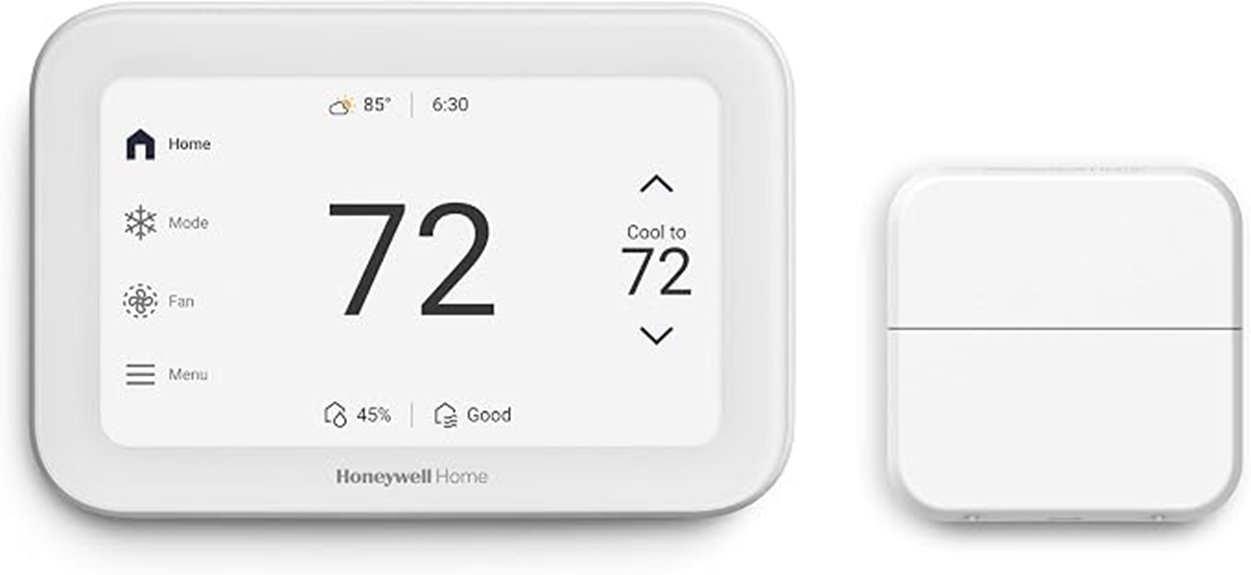
The Honeywell Home X8S Smart Wi-Fi Thermostat is the strongest premium option in this lineup for homeowners who want a large on-wall interface and deeper comfort controls. Its five-inch customizable touchscreen can show temperature controls, weather information, clocks, and indoor-air-quality information. It works with the First Alert app and is Matter certified, with support for Amazon Alexa, Google Assistant, and Apple Home.
Optional Smart Room Sensors can help prioritize comfort in selected rooms, while auto-away features can reduce unnecessary heating or cooling when the home is empty. The X8S also monitors humidity, volatile organic compounds, and estimated carbon-dioxide levels. Some humidity or ventilation control functions may require compatible HVAC equipment or accessories, so buyers should confirm their system before ordering.
Best For: Homeowners who want a premium touchscreen, smart-home integration, room-based comfort options, and more detailed indoor-environment monitoring.
Why You’ll Like It: It combines an unusually large display with modern Matter support and a broader set of comfort and air-quality tools than basic smart thermostats.
Pros:
- Large customizable display: The five-inch touchscreen is easier to read and personalize than smaller thermostat displays.
- Strong smart-home support: Matter compatibility helps it work across major connected-home ecosystems.
- Advanced comfort options: Optional room sensors, auto-away features, and indoor-air-quality monitoring can provide more targeted control.
Cons:
- Compatibility still matters: Buyers should verify HVAC type, wiring, and accessory support before installation.
- Some features need extras: Room sensors and certain humidity or ventilation functions may require separate compatible equipment.
- Premium feature set: Homeowners who only need basic scheduling and app control may not use its advanced capabilities.
Honeywell Home X2S Smart Wi-Fi Thermostat
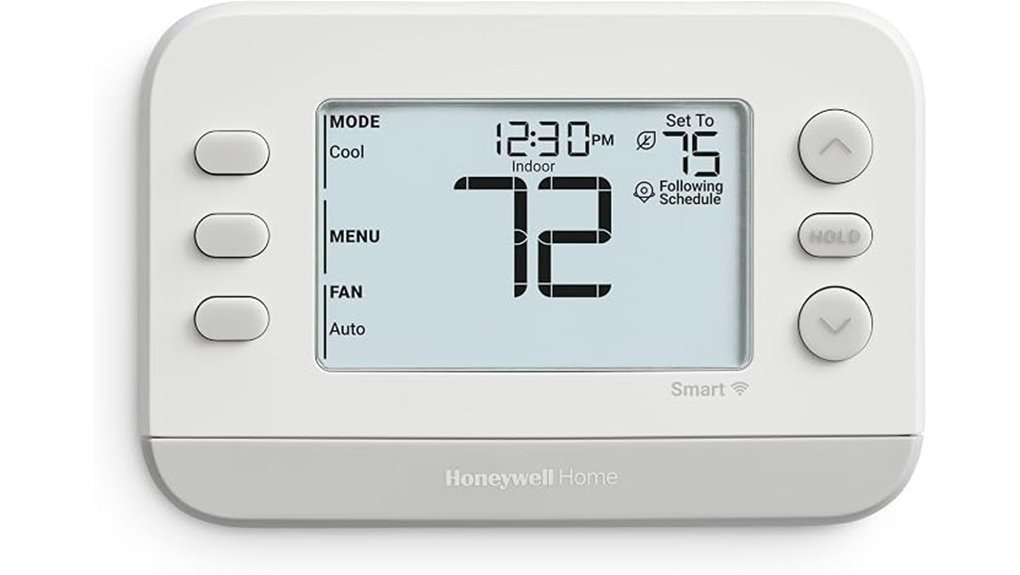
The Honeywell Home X2S Smart Wi-Fi Thermostat is a practical choice for homeowners who want modern smart-home compatibility without the premium feature set of the X8S. It is Matter certified and works with Amazon Alexa, Google Home, and Apple Home, while the First Alert app provides remote control, scheduling, and auto-away functionality.
The X2S is ENERGY STAR certified and supports conventional and compatible heat-pump systems within its specified staging limits. It also offers a bright display, flexible scheduling, filter reminders, and indoor humidity information. A C-wire is required, so check your existing thermostat wiring and HVAC compatibility before purchase.
Best For: Homeowners who want a straightforward Matter-enabled thermostat with scheduling, app control, and broad smart-home integration.
Why You’ll Like It: It focuses on the smart features most buyers use day to day without requiring a premium touchscreen interface.
Pros:
- Matter certified: Works with major smart-home ecosystems including Alexa, Google Home, and Apple Home.
- Useful energy controls: Flexible schedules and auto-away tools can reduce unnecessary HVAC runtime.
- Simple everyday management: First Alert app control, filter reminders, and humidity information improve convenience.
Cons:
- C-wire required: Homes without a suitable common wire may need wiring work or another thermostat solution.
- Less advanced than X8S: It does not target buyers who want the X8S model’s larger premium display and deeper environmental controls.
- System limits apply: Confirm HVAC staging and heat-pump compatibility before ordering.
Amazon Smart Thermostat with Alexa and Ring
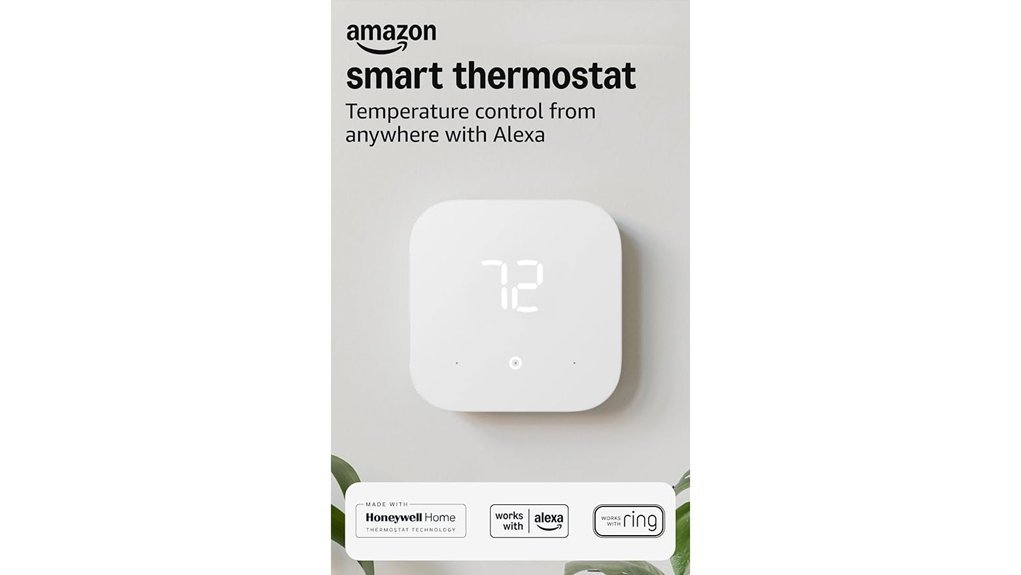
The Amazon Smart Thermostat is a simple fit for households already centered on Alexa. It is ENERGY STAR certified, supports remote temperature changes in the Alexa app, and can use Alexa routines to automate preferred home, away, and sleep settings. Current product listings also position it for Alexa and Ring households.
The thermostat itself does not contain a speaker or microphone, so voice commands require a compatible Alexa-enabled device. Presence- or room-based comfort features may also depend on compatible Echo devices or other supported sensors rather than a built-in occupancy sensor. Installation requires a C-wire or a compatible power adapter, and Amazon recommends using its HVAC compatibility checker before installation.
Best For: Alexa users who want straightforward app control and automation without paying for a more feature-heavy thermostat.
Why You’ll Like It: It keeps smart climate control simple and fits naturally into an existing Alexa routine setup.
Pros:
- Alexa-focused automation: Use routines and app controls to manage temperature schedules and common daily changes.
- Remote control: Adjust settings from the Alexa app when away from home.
- ENERGY STAR certified: Designed to support energy-saving thermostat behavior, with actual savings varying by home and usage.
Cons:
- No built-in microphone or speaker: Voice control requires a separate compatible Alexa device.
- Power requirements: A C-wire or compatible adapter is required.
- Some smart features need other devices: Room- or presence-based automation can depend on compatible Alexa hardware.
Sensi Smart Thermostat, Wi-Fi, DIY, Alexa, Energy Star Certified, ST55
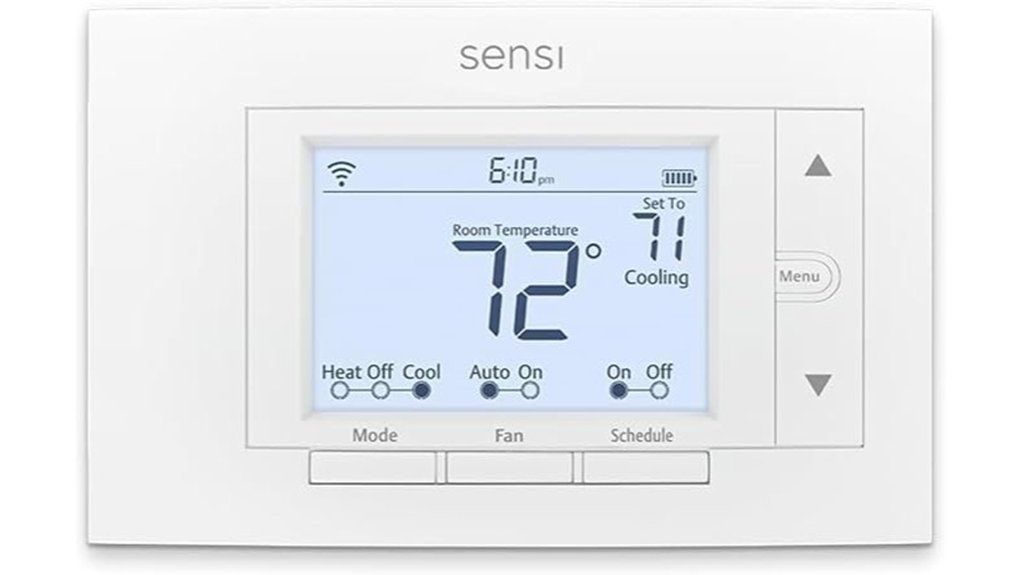
The Sensi Smart Thermostat ST55 is a strong choice for homeowners who want an approachable DIY smart thermostat with a familiar, traditional-looking interface. A C-wire is not required for most compatible systems, which can make it easier to install in homes where adding new thermostat wiring would be inconvenient.
The ST55 is ENERGY STAR certified and supports flexible scheduling, remote access, geofencing, smart alerts, and HVAC maintenance reminders. Sensi states that its smart thermostats can deliver about 23% HVAC energy savings under its stated comparison methodology, but actual results vary with equipment, climate, insulation, and temperature settings.
Best For: Homeowners who want easy DIY installation, familiar controls, and useful smart features without a touchscreen-focused design.
Why You’ll Like It: It balances simple installation with scheduling, remote control, and maintenance alerts while avoiding a C-wire requirement in many compatible installations.
Pros:
- C-wire flexibility: A common wire is not required for most compatible systems.
- DIY-friendly: App-guided installation and a built-in level simplify setup.
- Helpful HVAC monitoring: Usage reports, alerts, and maintenance reminders can make system management easier.
Cons:
- Compatibility varies: Always confirm your HVAC wiring and equipment type before buying.
- More traditional interface: Buyers wanting a large color touchscreen may prefer the Sensi Touch 2.
- Remote features need internet: App control depends on a working Wi-Fi connection.
Sensi Touch 2 Smart Thermostat Wi-Fi, Alexa, Energy Star Certified, ST76
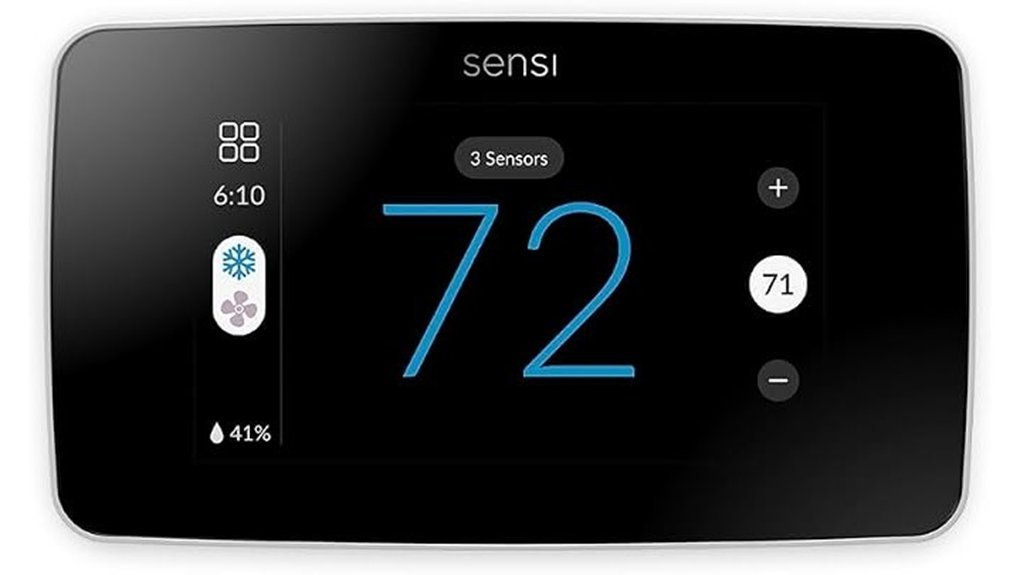
The Sensi Touch 2 Smart Thermostat ST76 is the better Sensi choice for buyers who want a touchscreen interface and the option to add Sensi Room Sensors for better temperature balance in important rooms. It is ENERGY STAR certified and supports scheduling, remote access, usage reports, geofencing, smart alerts, and HVAC maintenance reminders.
A C-wire is required for the Sensi Touch 2. Optional Sensi Room Sensors are sold separately, so factor that into your setup if room-by-room temperature awareness is a major reason you are choosing this model. Sensi advertises about 23% HVAC energy savings under its methodology; actual savings vary by home and usage.
Best For: Homeowners who prefer a touchscreen and want the option to improve comfort in selected rooms with compatible sensors.
Why You’ll Like It: It combines Sensi’s app and HVAC-monitoring tools with a more modern display and room-sensor support.
Pros:
- Touchscreen design: A more modern interface than the traditional-looking ST55.
- Room-sensor support: Optional Sensi Room Sensors can help address hot or cold areas.
- Comprehensive smart features: Scheduling, remote access, geofencing, usage reports, and maintenance alerts are included.
Cons:
- C-wire required: Check your wiring before buying.
- Room sensors cost extra: They are not included with the thermostat.
- System compatibility still needs checking: Not every HVAC configuration is supported.
ecobee Smart Thermostat Enhanced with Voice Assistants
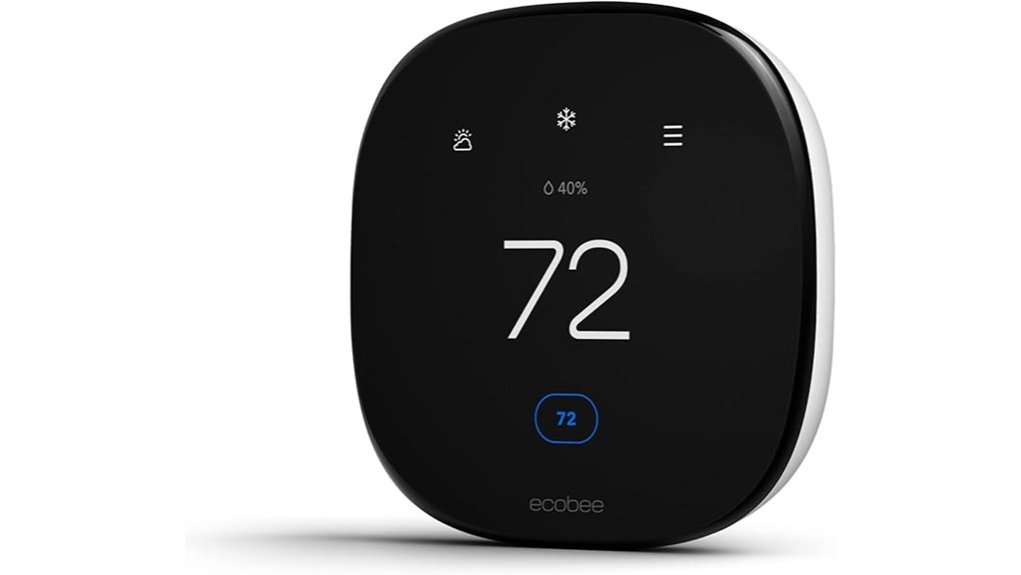
The ecobee Smart Thermostat Enhanced is a strong choice for buyers who want automatic comfort adjustments rather than just remote app control. Its built-in occupancy sensor can help adjust temperatures when the home is empty, while humidity-aware control helps the set temperature feel more consistent.
ecobee states that the Enhanced can save up to 26% on annual heating and cooling costs compared with holding a constant 72°F/22°C, with actual savings depending on the home and climate. It works with most 24VAC HVAC systems, includes a Power Extender Kit for many installations without a C-wire, and supports major smart-home platforms. It works with voice assistants, but unlike ecobee Smart Thermostat Premium, the Enhanced does not rely on built-in Alexa or Siri hardware for voice interaction.
Best For: Homeowners who want occupancy-based automation, humidity-aware comfort, and broad smart-home compatibility.
Why You’ll Like It: It automates more of the daily temperature management while still allowing full app and smart-home control.
Pros:
- Energy automation: Occupancy-based adjustments can reduce heating or cooling when the home is empty.
- Broad compatibility: Works with most 24VAC HVAC equipment and major smart-home ecosystems.
- No-C-wire option for many homes: A Power Extender Kit is included for compatible installations.
Cons:
- No built-in voice assistant: Voice commands depend on a compatible smart-home device or platform.
- SmartSensors are separate: Room-by-room comfort features require optional sensors.
- Compatibility check still required: HVAC accessories and unusual system configurations may need closer review.
Factors to Consider When Choosing Smart Thermostats in 2026
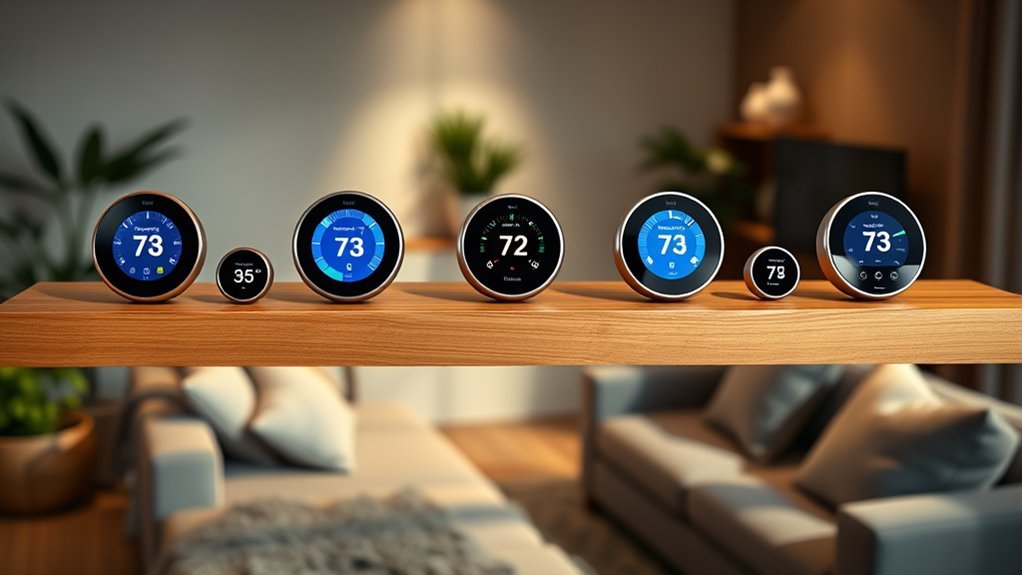
Choosing the right smart thermostat is less about finding the model with the longest feature list and more about matching it to your HVAC system, wiring, smart-home platform, and comfort goals. Use the following checks before you buy.
Compatibility With HVAC Systems
Start with your HVAC system type and voltage. Most consumer smart thermostats are designed for compatible low-voltage 24V heating and cooling systems, but support varies for heat pumps, dual-fuel systems, boilers, multi-stage equipment, humidifiers, dehumidifiers, and ventilators. Use the manufacturer’s compatibility checker and compare your existing terminal labels before removing any wires.
C-Wire and Power Requirements
The C-wire provides continuous power for many Wi-Fi thermostats. The Honeywell Home X2S and Sensi Touch 2 require a C-wire, while the Sensi ST55 does not require one for most compatible systems. The Amazon Smart Thermostat needs a C-wire or compatible power adapter. ecobee includes a Power Extender Kit that can solve the power issue for many compatible installations. Never assume a thermostat will work only because the wall plate looks similar.
Energy Efficiency Ratings
ENERGY STAR certification is a useful starting point, but savings claims are not guarantees. Real results depend on climate, insulation, HVAC condition, your previous thermostat settings, occupancy patterns, and how aggressively you use schedules or automation. Treat manufacturer percentages as estimates under stated test or comparison methods rather than a fixed amount every household will save.
Smart Features Overview
Decide which smart functions matter to you. Common features include remote app control, scheduling, geofencing, occupancy detection, humidity adjustment, energy reports, maintenance alerts, Matter support, and voice-assistant integration. If you mainly want phone control, a simpler model may be enough. If rooms in your home run hot or cold, prioritize a thermostat that supports compatible room sensors.
Ease of Installation
Many smart thermostats are designed for DIY installation, but the difficulty depends on your wiring and HVAC equipment. Turn off HVAC power before touching thermostat wiring and follow the manufacturer’s instructions. If the existing wiring is unclear, the system uses high voltage, or you are uncomfortable working around HVAC controls, use a qualified professional.
Remote Access Capabilities
Remote access lets you adjust temperatures, schedules, and some system settings from a phone. Remember that app control usually depends on your home internet connection and the manufacturer’s cloud service. The thermostat should still provide basic local temperature control if Wi-Fi is temporarily unavailable, but online automations and remote features may pause.
Smart-Home and Voice-Assistant Compatibility
Check whether the thermostat works with the ecosystem you already use, such as Amazon Alexa, Google Home, Apple Home, Samsung SmartThings, or Matter. “Works with a voice assistant” does not always mean the thermostat has a built-in microphone or speaker. Some models require a separate smart speaker or hub for voice commands.
Before You Buy Checklist
- Identify your HVAC type, voltage, stages, and thermostat wire labels.
- Check whether a C-wire, power adapter, or extender kit is required.
- Confirm compatibility with your preferred smart-home platform.
- Decide whether you need room sensors, occupancy detection, or air-quality features.
- Check whether optional sensors or accessories are included or sold separately.
- Look for utility rebates, but verify eligibility directly with your local provider.
Frequently Asked Questions
Can I Install a Smart Thermostat Myself?
Many smart thermostats are designed for DIY installation, especially when the existing system uses standard low-voltage wiring and the manufacturer confirms compatibility. Turn off HVAC power first and follow the installation guide. If you see high-voltage wiring, are unsure about the terminals, or have a complex HVAC system, hire a qualified professional.
How Do Smart Thermostats Save Energy?
Smart thermostats can reduce unnecessary heating and cooling through schedules, away modes, occupancy detection, geofencing, and usage insights. Savings vary by home, climate, equipment, and how the thermostat is configured, so no single percentage or dollar amount applies to every household.
Are Smart Thermostats Compatible With All HVAC Systems?
No. Compatibility depends on system voltage, HVAC type, stages, accessories, and wiring. Heat pumps, dual-fuel systems, boilers, multi-stage equipment, and HVAC accessories can have special requirements. Always use the manufacturer’s compatibility checker before buying.
What Happens if My Wi-Fi Goes Down?
Most smart thermostats continue basic local temperature control when Wi-Fi is unavailable, but remote app access, cloud-based automations, voice commands, and online reports may stop until the connection returns. Exact offline behavior varies by model.
Do Smart Thermostats Work With Voice Assistants?
Many do, but support varies by model and ecosystem. Some thermostats simply accept commands through a separate Alexa, Google, or Apple device, while a smaller number have voice hardware built into the thermostat itself. Check the exact integration before assuming voice control is built in.
Do I Need a C-Wire for a Smart Thermostat?
Not always. Some models require a C-wire, some can use a compatible adapter or extender kit, and others can work without a C-wire on many HVAC systems. Check both the thermostat requirements and your exact HVAC wiring before purchase.
Conclusion
The best smart thermostat for 2026 depends on your home rather than one universal winner. Choose the Honeywell Home X8S if you want a premium display and deeper comfort controls, the Honeywell Home X2S for simpler Matter-enabled integration, or the ecobee Smart Thermostat Enhanced for occupancy-based automation. The Sensi ST55 is especially appealing for straightforward DIY installations where a C-wire is not available on many compatible systems, while the Sensi Touch 2 adds a touchscreen and optional room sensors. For Alexa-centered homes, the Amazon Smart Thermostat keeps the experience simple. Whichever model you choose, verify HVAC compatibility and power requirements before ordering.