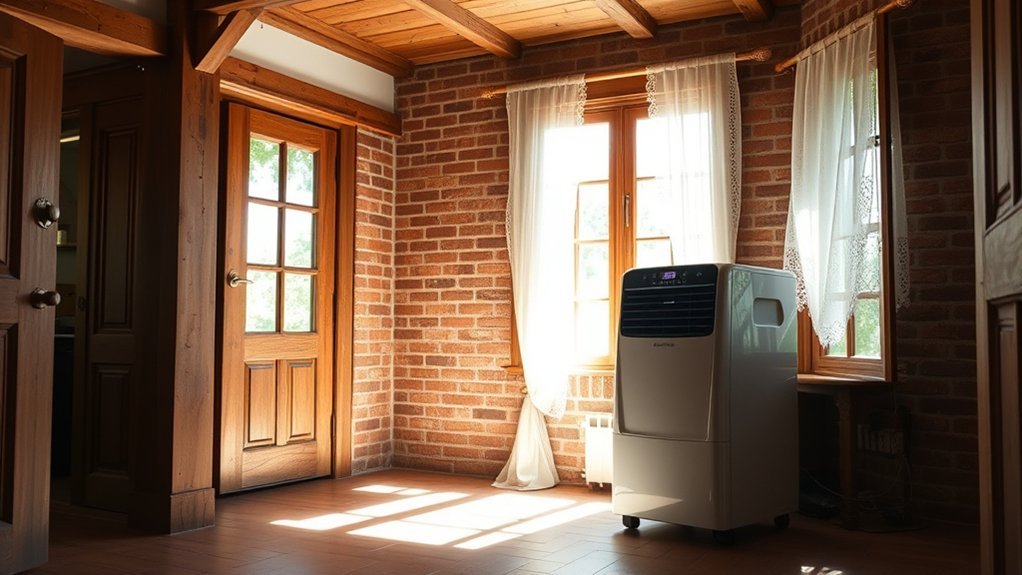
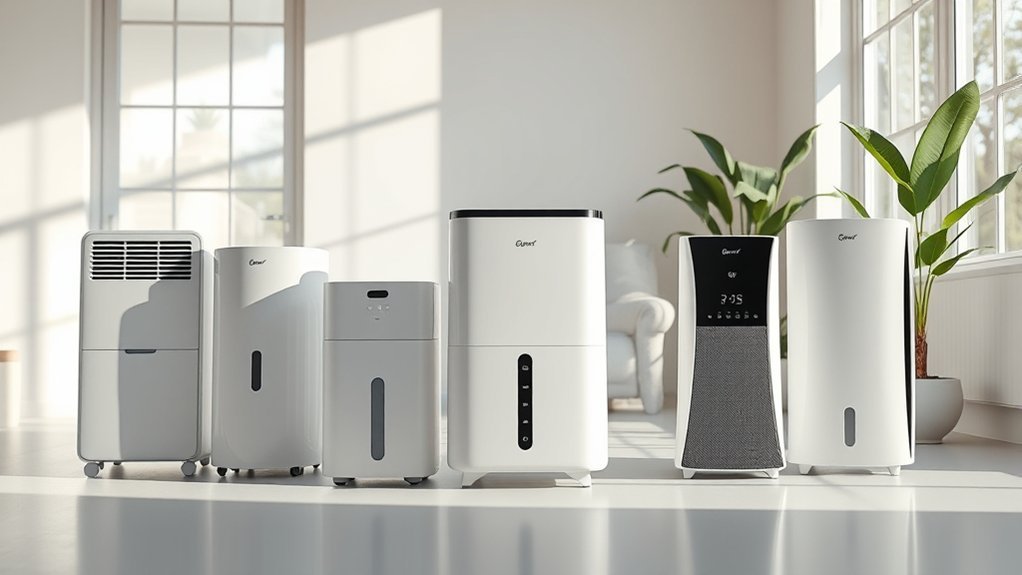
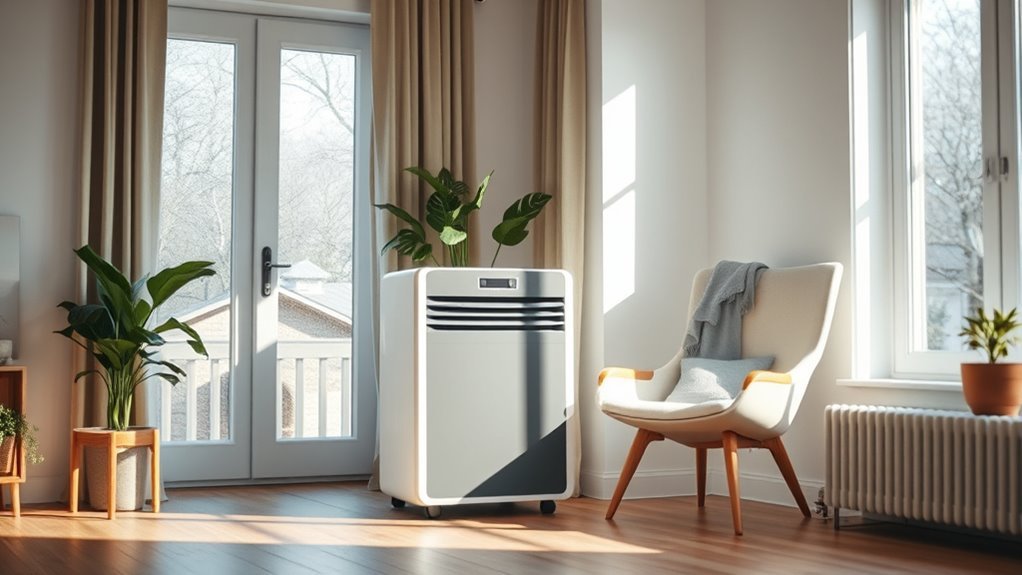
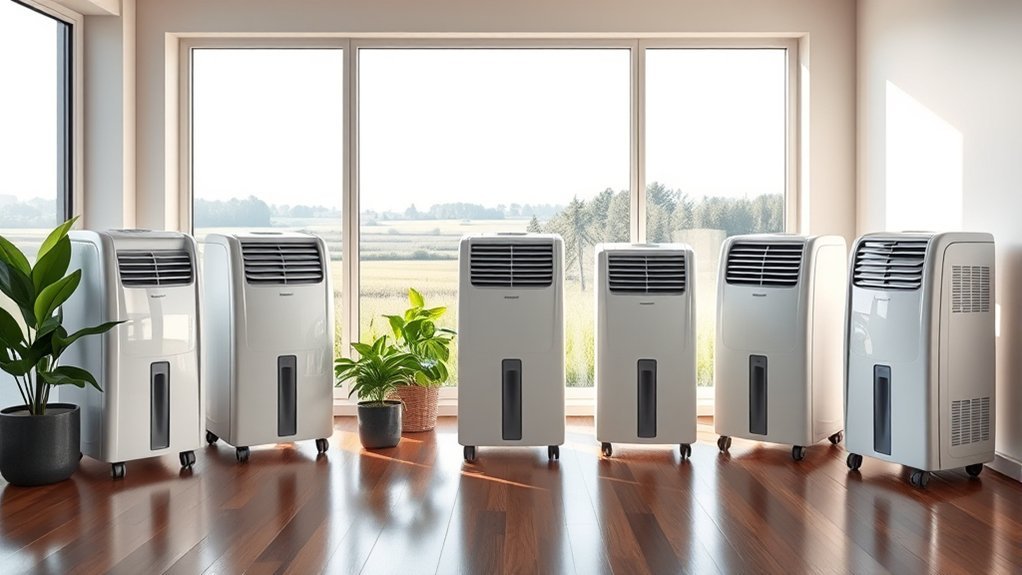
Updated for 2026: Choosing a dehumidifier for an apartment in Ireland starts with more than tank size or advertised room coverage. The appliance must be designed for Ireland’s electrical supply, provide enough moisture extraction for your conditions, and operate comfortably in the room where you plan to use it.
This guide explains how to choose a suitable 230V dehumidifier for an Irish apartment, including capacity, noise, drainage, laundry drying, operating temperature and mould-control limitations. It is a buyer’s guide rather than a ranked product list, so use the checks below to screen any model before purchasing. Specifications can change; confirm the rating label, plug, manual, warranty and current manufacturer or seller details.
Quick Verdict
For most Irish apartments, look for a dehumidifier explicitly rated for 220–240V AC, 50Hz for Ireland’s nominal 230V supply and supplied with the standard Irish three-pin fused plug, commonly called Type G. Compare extraction in litres per day rather than relying only on room-coverage claims. A humidistat, an accessible filter, automatic defrost and a continuous-drain option are especially useful; laundry mode is valuable when you regularly dry clothes indoors.
Quick Dehumidifier Selection Guide
| Apartment situation | Practical comparison range | Features to prioritise | Watch out for |
|---|---|---|---|
| Light window condensation in one heated room | A compact compressor model for a normally heated room, or a desiccant model for a consistently cool room | Quiet mode, compact dimensions and automatic shutoff | Tiny thermoelectric units with no verified litres-per-day rating |
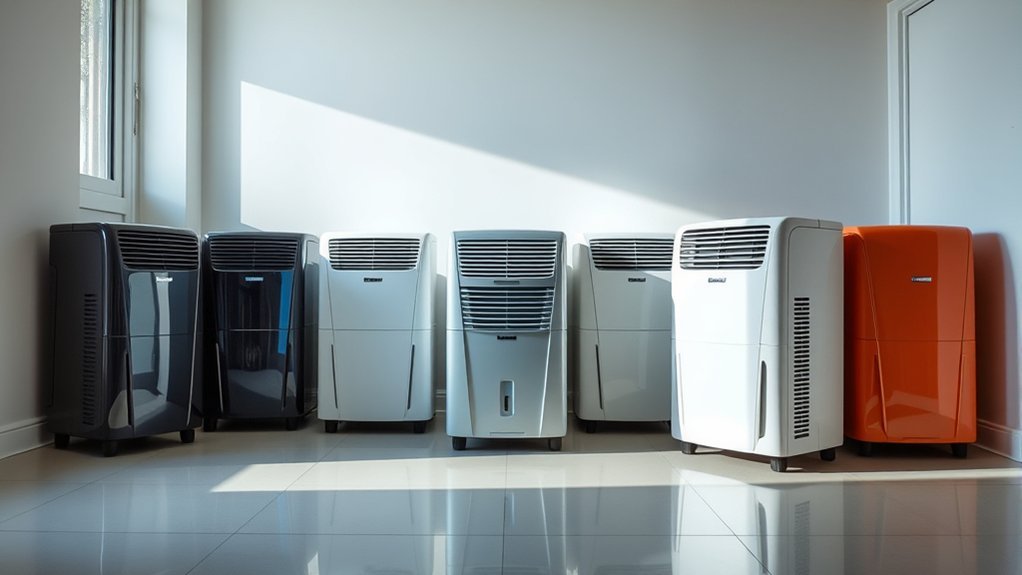
| Recurring condensation in a one-bedroom apartment | Compare models around 10–16 litres per day, then adjust for temperature and moisture severity | Adjustable humidistat, automatic defrost and an easy-access filter | Coverage claims that do not state extraction capacity |
| Indoor laundry drying or persistent damp | Compare models around 16–20 litres per day or more when moisture loads are high | Laundry mode, strong airflow, timer and continuous drainage | Small tanks that require frequent emptying |
| Several rooms or severe moisture | A higher-capacity model plus investigation of the moisture source | Casters, auto restart, drainage hose and good low-temperature performance | Treating a dehumidifier as a repair for leaks or structural damp |
These figures are shopping ranges, not a formal sizing standard or performance guarantee. Room temperature, outdoor weather, ventilation, laundry habits, building insulation, layout and the source of the damp can all change the capacity you need. Compare like-for-like test conditions whenever the manufacturer provides them.
How to Choose a Dehumidifier for an Apartment in Ireland
Check Electrical Compatibility First
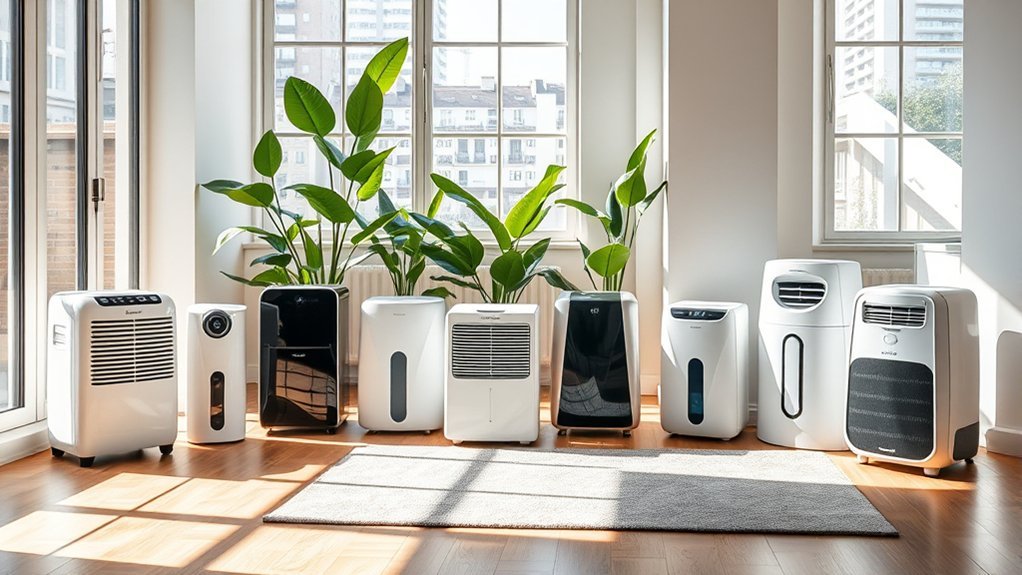
Before comparing capacity or features, inspect the appliance specifications. A suitable model should clearly state that it supports 220–240V AC and 50Hz for Ireland’s nominal 230V supply. It should also arrive with the standard Irish three-pin fused plug, commonly described as a Type G plug conforming to the Irish standard (IS 411/BS 1363 type).
Do not assume that a North American 110V or 120V appliance will work safely because a travel adapter fits the socket. A plug adapter changes the plug shape, not the appliance’s operating voltage. Avoid imported compressor dehumidifiers unless the manufacturer explicitly confirms full Irish electrical compatibility.
Electrical Safety Note
Check the rating label on the appliance itself, not only the online title. Look for voltage, frequency, plug type, model number, instructions and CE marking where required. CE marking is a manufacturer conformity declaration, not an independent quality award. Do not use an appliance with a damaged cable, loose plug, cracked casing or signs of overheating.
Compare Litres per Day, Not Only Room Coverage
Manufacturers often advertise coverage using square feet or square metres, but that figure can be difficult to compare because test methods, ceiling height and room conditions vary. The more useful specification is the amount of water the appliance can extract in litres per 24 hours, together with the temperature and relative humidity used for that test.
Extraction figures are normally measured under controlled temperature and humidity conditions. A unit will usually collect less water in a cool apartment than it does in a warm, very humid laboratory test. Look for clearly stated test conditions whenever possible.
A larger advertised capacity is not automatically better. An oversized appliance may cost more, occupy extra floor space and create unnecessary noise. An undersized model may run continuously without bringing humidity under control.
Choose Compressor or Desiccant Technology
Compressor dehumidifiers are a common choice for heated bedrooms, living rooms and apartments. They are generally efficient in normal indoor temperatures and are available in a broad range of extraction capacities.
Desiccant dehumidifiers can remain effective in cooler rooms, making them worth considering for poorly heated spaces. They may use more electricity, however, and the air they release can feel warmer.
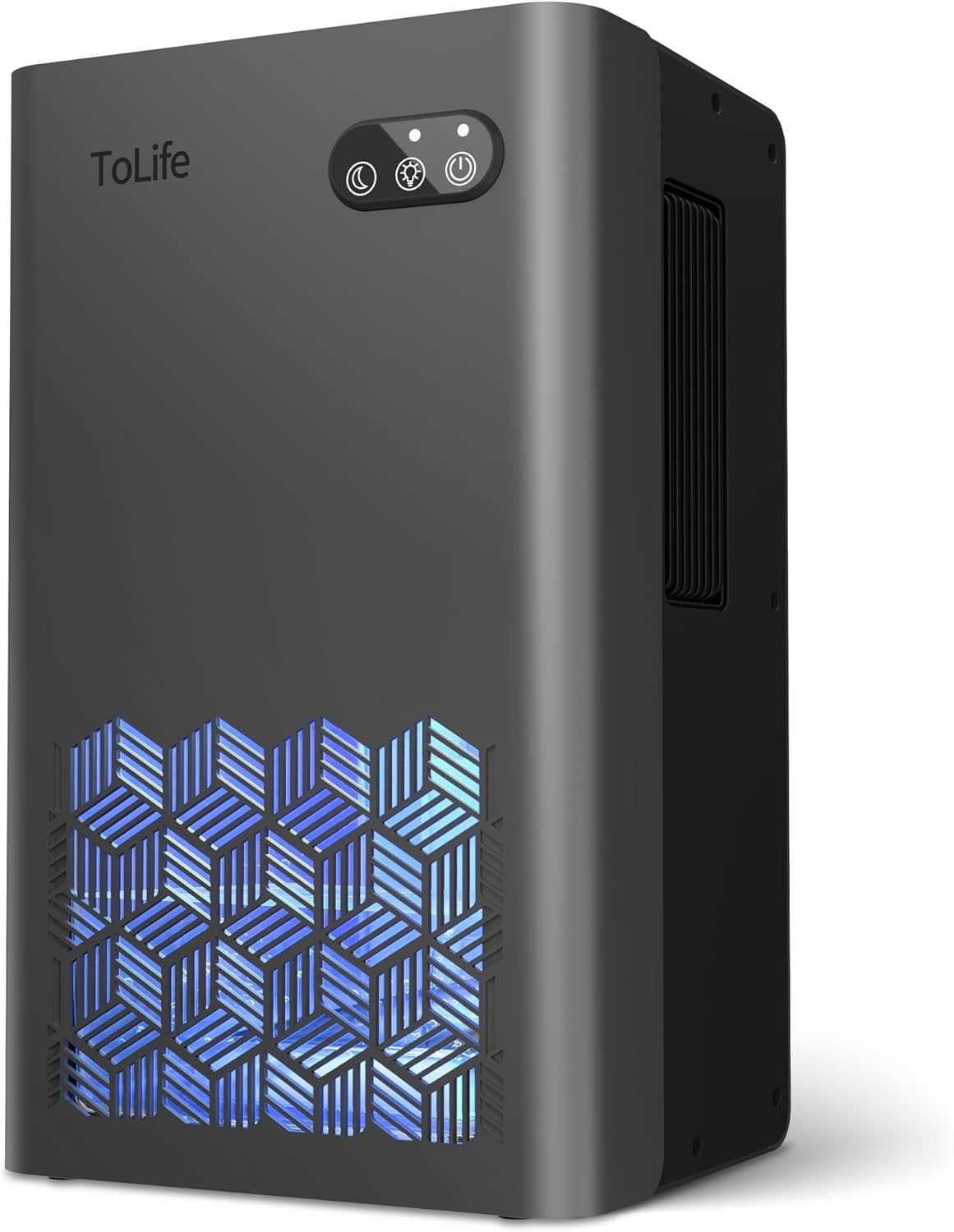
Small thermoelectric models can collect a limited amount of moisture from wardrobes, cupboards or other enclosed areas. They should not be treated as direct replacements for a full-size compressor or desiccant unit when an apartment has recurring condensation or damp.
Consider the Room Temperature
Irish apartments can have cool bedrooms, hallways or utility areas during winter. Check the manufacturer’s minimum operating temperature and whether the appliance includes automatic defrost.
A compressor model may pause or enter a defrost cycle when its internal coils become cold. This is normal, but a model designed only for warm conditions may perform poorly in an unheated room.
Check Noise at Each Fan Speed
Noise is especially important in an apartment because the appliance may be close to a bed, desk, television or neighbouring wall. Compare the stated decibel level at the fan speed you are likely to use, not only the quietest advertised setting.
Useful bedroom features include a low fan speed, sleep mode, dimmable display and a timer. Remember that compressor cycling, airflow and vibration can all affect how loud the appliance feels in real use.
Place the unit on a firm, level surface. Leaving suitable clearance around the air intake and outlet can reduce vibration and improve airflow.
Look for a Real Humidistat
A humidistat allows you to select a target relative-humidity level. The appliance should switch its compressor or moisture-removal system on and off as conditions change instead of running at full power continuously.
For moisture and mould control, a practical goal is to keep indoor relative humidity below 60%. Many households start around 45%–50%, then adjust for comfort, condensation and the building. Setting the target much lower than necessary can increase running time without fixing the source of damp.
A separate digital hygrometer can help you check whether the dehumidifier’s built-in sensor is reasonably accurate. Place the hygrometer away from the machine’s direct airflow for a more representative room reading.
Choose the Right Drainage Method
Most portable dehumidifiers collect water in a removable tank and shut down automatically when it is full. Check how easy the tank is to remove, carry and clean without spilling.
A continuous-drain connection can be valuable when drying laundry or managing persistent humidity. Gravity drainage requires the hose to run continuously downhill into a suitable drain. A hose that rises, bends sharply or ends above the drain outlet may cause water to back up.
Do not assume that a drain hose is included. Check its length, diameter and connection type before ordering.
Evaluate Energy Use Carefully
Compare rated wattage together with extraction capacity. A low-wattage appliance is not necessarily efficient if it removes very little moisture and has to run continuously.
Features that can reduce unnecessary operation include:
- An adjustable humidistat
- Automatic compressor cycling
- A programmable timer
- Multiple fan speeds
- Automatic defrost
- An accessible filter that can be cleaned exactly as the manual directs
To estimate running cost, multiply the appliance’s power in kilowatts by the number of operating hours and your electricity price per kilowatt-hour. Actual consumption will vary because humidistat-controlled models do not necessarily draw their full rated power continuously.
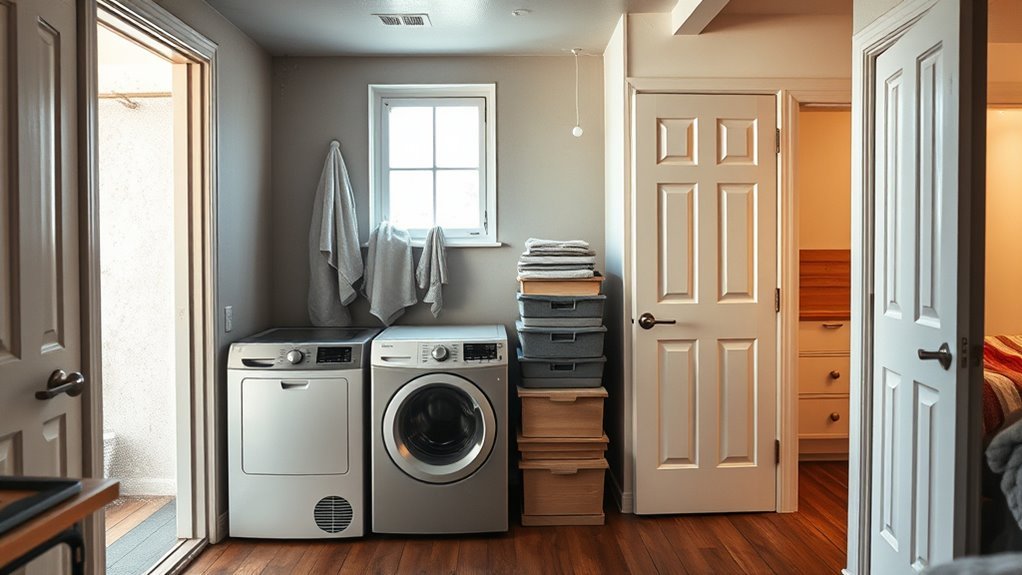
Consider Laundry-Drying Performance
Drying clothes indoors releases moisture into the apartment. When indoor drying is unavoidable, a dedicated laundry mode normally runs the appliance more aggressively and may use a higher fan speed to move drier air across the room.
Place wet clothes on a rack with space between items, close the room door and keep the dehumidifier’s inlet and outlet clear. Do not place dripping clothes directly over the appliance or allow water to enter its electrical components.
A dehumidifier can support indoor drying, but it does not replace ventilation. Use extractor fans during moisture-producing activities, keep fixed ventilation openings clear and avoid covering radiators. Never place wet or dripping laundry over the appliance.
Measure Before Ordering
Check the full appliance dimensions and the clearance required around its vents. Product photographs can make a full-size compressor model look smaller than it is.
For easy movement between rooms, look for:
- Built-in handles
- Castor wheels
- A manageable empty weight
- A tank that can be removed without tilting the appliance
- Cord storage
If you intend to use continuous drainage, measure the distance and downward route from the appliance to the drain before buying.
Check Warranty and Support in Ireland
Confirm who provides the warranty, where the appliance must be returned and whether spare filters or replacement tanks are available. Check the identity and location of the seller as well as the manufacturer or EU importer. A marketplace listing shipped from another country may not provide the same returns process or support as a product distributed for Ireland.
Look for a clear model number, downloadable manual, manufacturer contact details and warranty terms that apply to your location.
Best Fit by Use Case
- Heated bedroom or living room: Start with a compressor model that has a proper humidistat and a low fan setting.
- Cool, poorly heated room: Compare desiccant models as well as compressor models, paying close attention to power use and minimum operating temperature.
- Regular indoor laundry: Prioritise stronger airflow, laundry mode, a practical tank or continuous drainage and acceptable noise.
- Wardrobe or cupboard only: A small thermoelectric unit may be sufficient, but it should not be expected to control humidity across an apartment.
Before You Buy Checklist
- Voltage: Does the label state 220–240V?
- Frequency: Is it designed for 50Hz operation?
- Plug: Does it include the standard Irish three-pin fused plug (Type G; IS 411/BS 1363 type)?
- Compliance: Is CE marking present where required, with clear model, manufacturer or importer details and instructions?
- Capacity: Is extraction stated in litres per day?
- Test conditions: Does the manufacturer explain how capacity was measured?
- Temperature: Will it work in your room during winter?
- Noise: Is the stated level suitable for a bedroom or living room?
- Drainage: Is the tank practical, and can a hose be connected if needed?
- Controls: Does it include a humidistat, timer and automatic shutoff?
- Maintenance: Is the filter easy to access, and does the manual clearly explain whether to vacuum, rinse or replace it?
- Warranty: Is support available in Ireland?
How to Use a Dehumidifier Effectively
- Place the appliance upright on a stable, level surface.
- Follow the manufacturer’s required settling time after transport.
- Leave the recommended clearance around the air inlet and outlet.
- Use extractor fans while cooking or showering and keep fixed vents clear. When dehumidifying afterwards, close external windows if appropriate so the unit is not continually treating outdoor air.
- Keep internal doors open when treating connected rooms or closed when targeting one room.
- Never bring a portable dehumidifier into a bathroom; operate it from a dry location outside the room if the manufacturer permits.
- Set a sensible humidity target instead of using continuous mode indefinitely.
- Empty and rinse the tank regularly.
- Clean the filter according to the manual.
- Check a continuous-drain hose for bends, blockages and leaks.
- Investigate leaks, damaged ventilation or recurring structural damp rather than relying only on the appliance.
What a Dehumidifier Cannot Fix
A dehumidifier can reduce moisture in the air, but it cannot permanently repair:
- Leaking roofs, windows or plumbing
- Penetrating damp
- Rising damp
- Failed bathroom or kitchen extraction
- Blocked permanent ventilation
- Cold bridging or major insulation defects
- Existing mould growing inside walls or porous materials
If damp returns quickly after the appliance is switched off, identify the moisture source. Tenants should document persistent leaks, mould, condensation and ventilation problems and report relevant property defects to the landlord or property manager.
Frequently Asked Questions
Can I Use a US Dehumidifier in Ireland?
Do not use a model labelled only for 110V or 120V directly from an Irish 230V socket. A simple travel-plug adapter changes the plug shape but does not convert voltage. The safest choice is a model explicitly designed for 220–240V, 50Hz operation and supplied with the correct Irish plug and local support.
What Humidity Level Should I Set?
A practical starting target is around 45%–50% relative humidity. Try to keep the room below 60% while avoiding air that feels excessively dry. Use a separate hygrometer if you want to confirm the room reading.
Will a Dehumidifier Stop Mould?
It can reduce the moisture conditions that support mould growth, but it does not remove existing mould or repair the source of damp. Clean affected areas appropriately and address leaks, condensation, ventilation or structural defects.
What Capacity Is Best for an Apartment?
Capacity depends on the number of rooms, temperature, humidity, laundry drying and the severity of the moisture problem. Approximately 10–16 litres per day can be a useful comparison range for many smaller apartments, while persistent damp or regular laundry drying may justify a larger model. Treat this as a starting point and check the manufacturer’s conditions.
Is a Mini Dehumidifier Enough?
A small thermoelectric model may help in a wardrobe, cupboard or very small enclosed space. It is unlikely to match the extraction rate of a proper compressor or desiccant dehumidifier when an apartment has recurring window condensation or damp across several rooms.
Are Dehumidifiers Safe Around Pets?
They can generally be used around pets when installed according to the manufacturer’s instructions. Keep the appliance stable, protect the cable from chewing, leave vents unobstructed and prevent access to collected water. Do not place the unit where it can be knocked over.
Can I Use a Dehumidifier in the Bathroom?
No. Safe Electric advises that a portable electrical appliance should never be brought into a bathroom. Use the bathroom extractor fan while showering. Afterwards, a dehumidifier may be operated from a dry location outside the bathroom with the door open, but only when this placement follows the manufacturer’s instructions and keeps the cable and appliance away from water.
How Often Should I Clean the Filter?
Follow the manufacturer’s schedule and cleaning method. Some frequently used models may need the filter checked every two to four weeks, but the correct interval varies. Dust buildup reduces airflow and can lower moisture-removal performance; do not rinse a filter unless the manual says it is washable.
Is Continuous Drainage Worth It?
It is useful for laundry drying, persistent damp or long operating periods. Gravity drainage only works when the hose runs downhill to a suitable drain. Manual tank collection may be simpler when the unit is moved between rooms.
Does a Dehumidifier Replace Ventilation?
No. Use extractor fans when cooking or showering, keep fixed vents clear and address the source of damp. A dehumidifier is a moisture-management tool, not a replacement for appropriate ventilation or building repairs.
Trusted Safety and Moisture Resources
- ESB Networks guidance on Ireland’s standard voltage
- Safe Electric home electrical-safety guidance
- Irish government consumer-product safety information
- HSE guidance on keeping homes dry and well ventilated
- EPA guidance on indoor humidity, moisture and mould
Final Recommendation
Choose the smallest properly compatible model that can realistically handle your moisture load without running constantly. Prioritise Irish electrical compatibility, stated extraction capacity and test conditions, a usable humidistat, suitable low-temperature performance, manageable noise and reliable drainage. If condensation or mould returns quickly, investigate ventilation, leaks and building defects instead of simply buying a larger machine.
Conclusion
The best dehumidifier for an apartment in Ireland is one that matches both the moisture problem and the Irish electrical system. Start by confirming 220–240V AC, 50Hz operation and the standard Irish three-pin fused plug. Then compare litres-per-day extraction under stated test conditions, operating temperature, noise, tank size, drainage, dimensions and local warranty support.
For mild condensation, a modest compressor model may be enough. Regular indoor laundry, several damp rooms or persistent high humidity may require greater extraction capacity. Whatever model you choose, use it alongside ventilation, prompt leak repairs and proper treatment of existing mould.