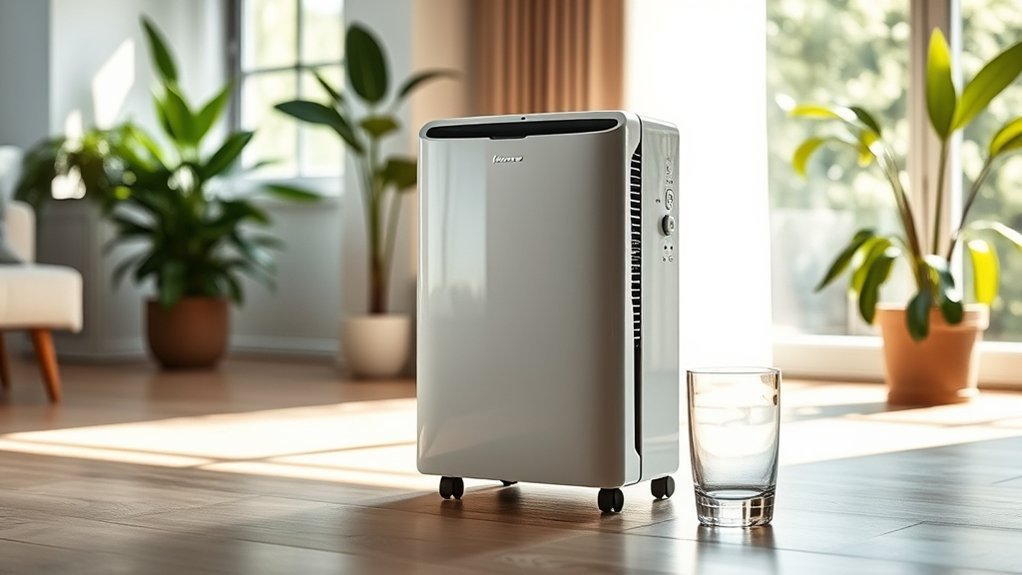
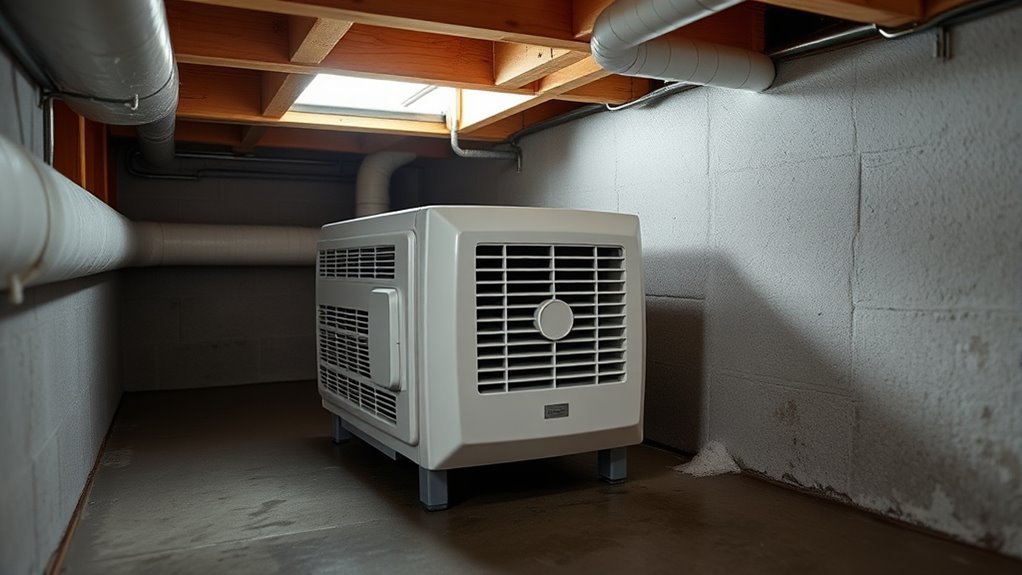
If you are comparing the best Frigidaire dehumidifiers for basements in 2026, the most useful choice in this guide is between a higher-capacity 50-pint model and a smaller 35-pint model. The Frigidaire FHDD5034Y1 50 Pint with Wi-Fi is the best overall option for large, open, or consistently damp basements, while the FHDD3534Y1 35 Pint with Wi-Fi is better suited to moderate seasonal humidity and less demanding spaces. Choose by actual moisture load, drainage setup, basement temperature, and maintenance needs rather than relying only on an advertised coverage number.
Affiliate disclosure: This article contains Amazon affiliate links. We may earn a commission from qualifying purchases at no extra cost to you. Product specifications, seller details, and availability can change, so confirm the exact model number before ordering.
Important basement moisture note:
A portable dehumidifier can reduce airborne humidity, but it cannot repair foundation seepage, plumbing leaks, standing water, or established mold. Fix the moisture source first and use a separate hygrometer to confirm the actual humidity level.
Quick Verdict
- Best Overall: Frigidaire FHDD5034Y1 50 Pint with Wi-Fi for large, open, or consistently damp basements.
- Best for Moderate Dampness: Frigidaire FHDD3534Y1 35 Pint with Wi-Fi for smaller or less demanding basement conditions.
Drainage decision: The two recommended models in this guide are best suited to bucket collection or continuous drainage to a lower drain point. If your installation requires water to be pumped upward to an elevated sink, window, or drain, look specifically for a current pump-equipped model instead.
Quick Comparison of Frigidaire Basement Dehumidifiers
| Model | Capacity | Drainage | Smart Control | Best Use | Check Details |
|---|---|---|---|---|---|
| FHDD5034Y1 | 50 pints per day | Bucket or continuous drain | Wi-Fi | Large or consistently damp basements | Check on Amazon |
| FHDD3534Y1 | 35 pints per day | Bucket or continuous drain | Wi-Fi | Moderately damp basements | Check on Amazon |
Coverage note: Advertised square-foot ratings are estimates rather than guarantees. Actual performance depends on humidity, temperature, air circulation, water intrusion, basement layout, ceiling height, and how often doors or windows are opened.
How We Selected These Frigidaire Dehumidifiers
We focused on Frigidaire dehumidifiers that match basement moisture-control needs and compared them by pint capacity, drainage method, Wi-Fi control, low-temperature suitability, physical size, maintenance requirements, and the severity of moisture each model is best equipped to manage. We also prioritized models that offer a clear reason to choose one over the other instead of relying only on large advertised coverage figures.
Product status can change over time, so confirm the exact model number on both the manufacturer information and the Amazon listing before purchasing.
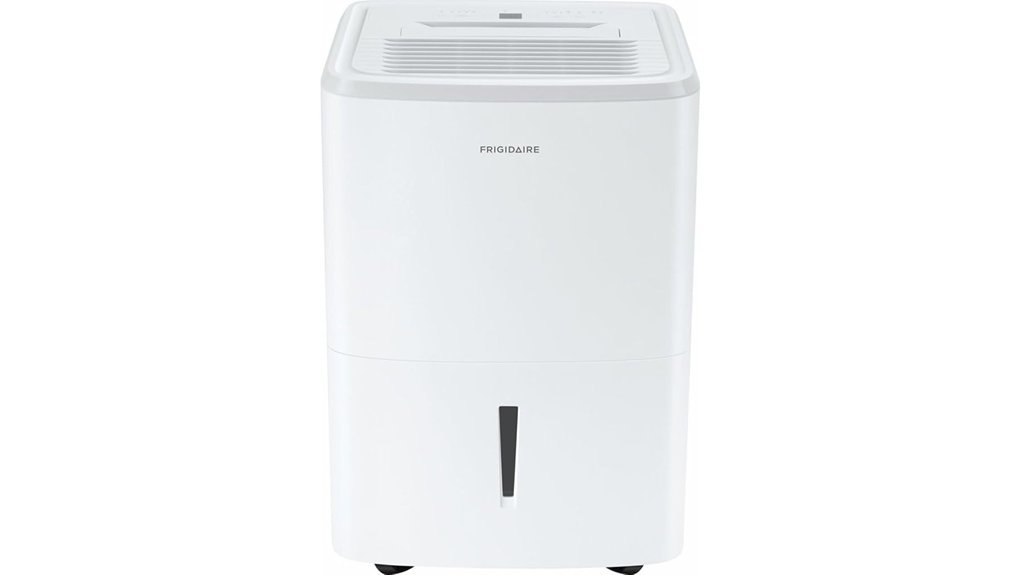
Frigidaire FHDD5034Y1 50 Pint Dehumidifier with Wi-Fi
At a Glance
- Capacity: 50 pints per day
- Controls: Wi-Fi connected with the Frigidaire app
- Drainage: Bucket or continuous drain
- Low-temperature operation: Designed for operation down to 41°F
- Size: About 24.7 in H × 15.9 in W × 12.2 in D
- Product weight: About 41 lb
- Efficiency: ENERGY STAR certified
- Manufacturer warranty: 1-year parts and labor
The Frigidaire FHDD5034Y1 50 Pint Dehumidifier with Wi-Fi is the strongest all-around option here for a large, open, or consistently damp basement. Its higher moisture-removal capacity gives it more headroom than the 35-pint model when humidity rises after heavy rain, during humid summers, or while drying laundry indoors.
Wi-Fi control is especially useful when the unit sits in a basement that you do not visit frequently. Supported app controls include turning the unit on or off, managing humidity settings, creating schedules, and adjusting fan speed. The unit also provides custom humidity control, automatic shutoff when the bucket fills, a washable filter, continuous drainage, and low-temperature operation designed for conditions down to 41°F.
Best For: Large or frequently damp basements where stronger moisture removal and remote control are more important than having the smallest possible unit.
Why You’ll Like It: It combines 50-pint capacity, Wi-Fi control, continuous drainage, automatic humidity management, and ENERGY STAR certification in one basement-friendly package.
Who Should Avoid It: Buyers with a small, mildly damp basement may not need this much capacity. It is also not the right choice when your only practical drainage route requires pumping water upward.
Pros:
- 50-pint capacity is better suited to demanding basement moisture loads.
- Wi-Fi control reduces the need for frequent trips downstairs.
- Custom humidity settings support automatic moisture management.
- Continuous drainage can eliminate routine bucket emptying when a suitable drain route is available.
- Designed for low-temperature operation down to 41°F.
- ENERGY STAR certified.
- Washable filter helps simplify routine maintenance.
Cons:
- Larger and heavier than the 35-pint alternative.
- Continuous drainage still requires a suitable drain setup.
- App features depend on a working home network and internet connection.
- Advertised floor-area coverage should not replace proper moisture-based sizing.
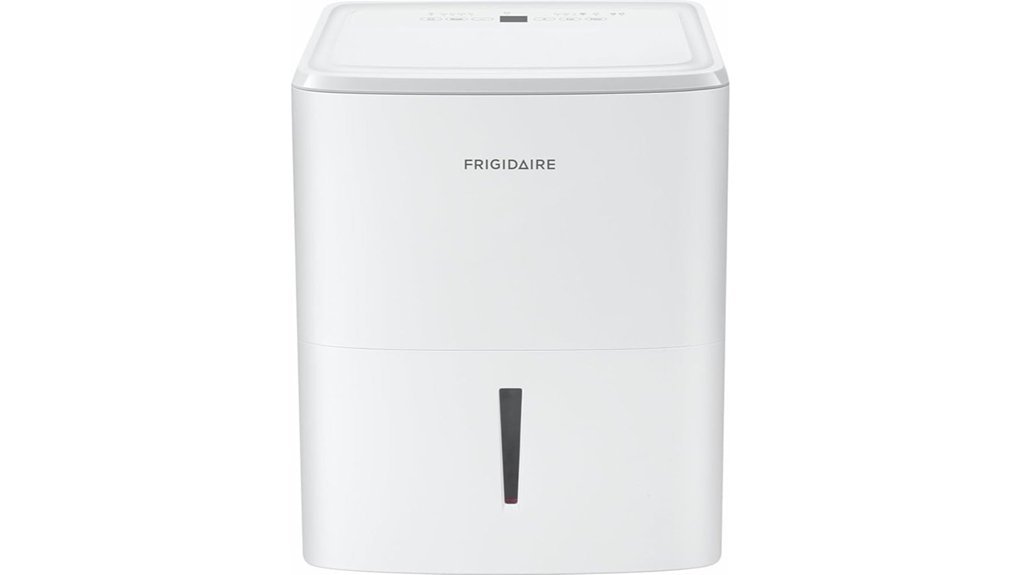
Frigidaire FHDD3534Y1 35 Pint Dehumidifier with Wi-Fi
At a Glance
- Capacity: 35 pints per day
- Controls: Wi-Fi connected with the Frigidaire app
- Drainage: Bucket or continuous drain
- Low-temperature operation: Designed for operation down to 41°F
- Size: About 19.8 in H × 14.7 in W × 11.1 in D
- Product weight: About 37 lb
- Efficiency: ENERGY STAR certified
- Manufacturer warranty: 1-year parts and labor
The Frigidaire FHDD3534Y1 35 Pint Dehumidifier with Wi-Fi is a better match for a moderately damp basement that does not require the extra capacity of a 50-pint machine. It still provides custom humidity control, Wi-Fi operation, automatic shutoff, a washable filter, continuous drainage, and low-temperature operation designed for conditions down to 41°F.
A 35-pint unit can make sense when a basement smells slightly musty or experiences seasonal humidity but does not have an unusually heavy moisture load. Because it has less daily moisture-removal capacity than the 50-pint model, it may need to run longer when conditions become severe. Capacity should therefore be chosen by dampness as well as floor area.
Best For: Moderately damp basements, finished lower-level rooms, storage areas, and buyers who want connected control in a smaller 35-pint format.
Why You’ll Like It: It delivers Wi-Fi controls, continuous drainage, low-temperature capability, and ENERGY STAR certification in a smaller and lighter package than the 50-pint option.
Who Should Avoid It: Choose the 50-pint model when the basement is consistently very damp, humidity remains high while the unit runs for long periods, or indoor laundry and other moisture sources add a heavier load. Neither model in this guide is ideal when upward pumped drainage is mandatory.
Pros:
- 35-pint capacity suits moderate basement humidity problems.
- Smaller and lighter than the 50-pint option.
- Wi-Fi control adds convenience for a remotely located unit.
- Continuous drainage reduces manual bucket maintenance when properly installed.
- Custom humidity control supports automatic cycling.
- Designed for low-temperature operation down to 41°F.
- ENERGY STAR certified.
- Washable filter and automatic shutoff make upkeep easier.
Cons:
- Lower moisture-removal capacity than the 50-pint model.
- May need to run longer in a very damp or unusually large basement.
- Not intended to provide upward pumped drainage.
- Compressor and fan operation will remain audible while running.
Factors to Consider When Choosing a Frigidaire Dehumidifier for a Basement
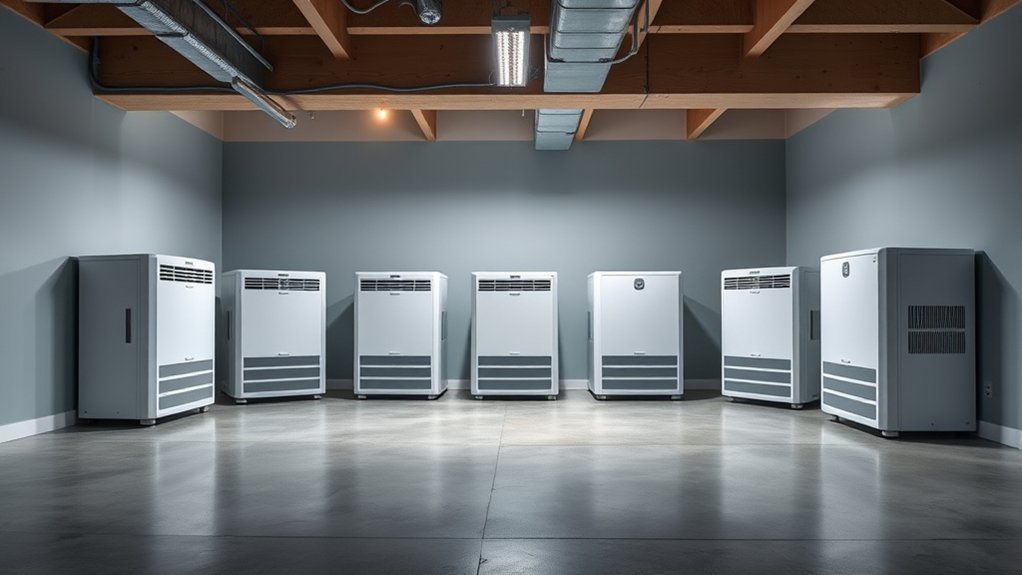
Choose your Frigidaire basement dehumidifier by evaluating the actual moisture load, pint capacity, drainage route, basement temperature, noise, physical size, and maintenance requirements. An advertised square-foot figure can be useful for comparison, but it should not be the only factor in your decision.
Start With the Moisture Level, Not Just Floor Area
A basement that occasionally smells musty has a different moisture load from one with condensation, wet walls, indoor laundry, or water seepage. A 35-pint dehumidifier can be sufficient for moderate seasonal dampness, while a 50-pint dehumidifier provides more capacity for large, very damp, or frequently humid spaces.
Measure the relative humidity with a separate hygrometer before buying. A target around 45% to 50% is practical for many basements, although the best setting varies with temperature, comfort, and conditions. Avoid forcing the space excessively dry because that can waste energy without solving a structural water problem.
Understand Advertised Coverage
Large advertised coverage figures are comparison estimates rather than guarantees. Performance changes with room temperature, starting humidity, ceiling height, airflow, open or closed doors, and the amount of water entering the basement.
A high-capacity unit placed in one open basement can work more effectively than the same unit trying to control several closed rooms. Leave the clearance required by the product manual around the intake and exhaust, and improve air movement between connected areas when one dehumidifier is expected to serve more than one section of the basement.
Choose the Right Drainage Method
Manual bucket collection works without a permanent drain, but it requires regular emptying. When the bucket reaches its full level, automatic shutoff is designed to stop operation until the water is removed.
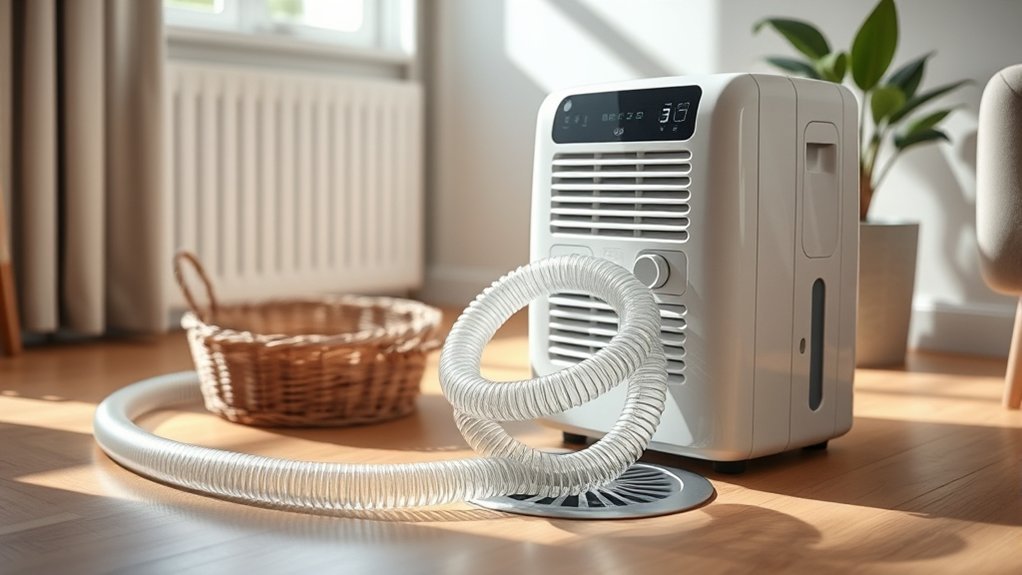
Continuous drainage is the lower-maintenance choice when you have a suitable drain point and can route the hose according to the manufacturer’s instructions. Keep the hose secure and free of kinks, pinches, or other restrictions that could interfere with drainage.
A built-in pump is a different feature intended for installations where collected water must be discharged upward to an elevated sink, window, or drain. The two recommended models in this article are not pump-focused choices, so buyers who require upward drainage should specifically choose a current pump-equipped model instead.
Consider Basement Temperature
Both recommended models are designed for low-temperature operation down to 41°F. Even so, compressor dehumidification becomes less effective as air gets colder. Keep the unit within the operating conditions specified in the manual and investigate frost, error codes, or repeated abnormal cycling rather than assuming the machine will perform normally at any basement temperature.
Do not place the dehumidifier where airflow is blocked. Improving circulation and keeping the basement within the supported operating range can help the machine work more consistently.
Compare Smart Control Features
Wi-Fi control is especially useful when the dehumidifier is located in a basement, storage area, or other space you do not check often. The Frigidaire app for these models supports remote power control, humidity adjustments, schedules, and fan-speed management.
Remote features depend on compatible connected services and a reliable network connection. Test the wireless signal in the intended basement location before depending on app access.
Review Size, Portability, Noise, and Placement
The 35-pint FHDD3534Y1 is physically smaller and lighter than the 50-pint FHDD5034Y1, which can matter when moving the unit between rooms or fitting it into a tighter finished-basement area. The larger 50-pint model provides more moisture-removal capacity but requires more space.
Portable compressor dehumidifiers also produce fan and compressor noise during operation. Lower fan settings may be more comfortable in a finished basement, office, or TV room, while higher airflow may be useful when faster circulation is needed.
Place the unit on a firm, level surface and follow the manufacturer’s clearance requirements. Avoid positioning it immediately beside seating, a desk, or a sleeping area when sound sensitivity is a concern.
Look for Energy Efficiency
Both recommended models are ENERGY STAR certified, but correct sizing still matters. An undersized unit may spend long periods running without bringing a heavy moisture load under control, while a properly selected unit can respond more effectively as humidity changes.
For routine moisture management, use an appropriate humidity set point instead of assuming maximum or continuous operation is always necessary.
Plan for Maintenance
Inspect the washable filter regularly and clean it according to the owner’s guide when it becomes dirty or when the unit indicates that filter attention is needed. Restricted airflow can reduce effective operation.
Also check the bucket, drain connector, hose, and air openings. Clean residue promptly and make sure drainage components remain secure and unobstructed.
Before You Buy Checklist
- Measure the basement and record the current humidity with a hygrometer.
- Decide whether the space is moderately damp or consistently very damp.
- Choose between 35-pint and 50-pint capacity based on moisture load.
- Find the intended drain point before relying on continuous drainage.
- Determine whether your installation requires upward pumped drainage.
- Check the basement’s lowest expected temperature against the model’s operating requirements.
- Confirm that you have enough floor space and clearance for the selected unit.
- Test Wi-Fi strength where the unit will sit if remote control matters to you.
- Confirm the exact model number, warranty information, seller details, and included accessories on the current listing.
Frequently Asked Questions
Which Frigidaire Dehumidifier Is Best for a Large Basement?
Between the two models in this guide, the FHDD5034Y1 50 Pint is the better starting point for a large, open, or consistently damp basement because it offers more daily moisture-removal capacity than the 35-pint model. Floor area alone should not decide the purchase, so also consider actual humidity, temperature, airflow, and moisture sources.
Is a 35-Pint Dehumidifier Enough for a Basement?
It can be enough for a moderately damp basement, especially when the space does not have a severe or continuous moisture source. Move up to the 50-pint model when humidity remains difficult to control, the basement is consistently very damp, or the unit would otherwise need to work for long periods under a heavy moisture load.
What Is the Main Difference Between the 35-Pint and 50-Pint Models?
The main difference is moisture-removal capacity and physical size. The FHDD5034Y1 removes up to 50 pints per day and is the larger option, while the FHDD3534Y1 is rated at 35 pints per day and has a smaller, lighter cabinet. Both provide Wi-Fi controls, continuous drainage, automatic shutoff, low-temperature operation, and ENERGY STAR certification.
How Often Should I Clean a Frigidaire Dehumidifier Filter?
Inspect the filter regularly and clean it when it becomes visibly dirty or the unit indicates that filter attention is needed. Dust levels vary between homes, so follow the maintenance instructions in the manual for your exact model rather than relying on one universal cleaning interval.
Can a Frigidaire Dehumidifier Run Continuously in Winter?
Use it only while the basement remains within the operating conditions specified for the model. The two recommended units are designed for low-temperature operation down to 41°F, but colder air reduces dehumidification performance. A normal humidity set point is generally more useful for routine control than leaving the machine in continuous operation regardless of conditions.
Does Wi-Fi Control Work Without Internet Access?
The physical controls on the appliance remain important for local operation, while remote app functions depend on the required Wi-Fi, internet, and connected services being available. Do not rely solely on remote monitoring in a basement with weak network coverage.
Do I Need a Built-In Pump?
You need to consider a pump-equipped dehumidifier when collected water must be discharged upward to an elevated sink, window, or drain. If your installation provides an appropriate continuous-drain route, a pump may be unnecessary. Neither recommended model in this guide should be purchased specifically for upward pumped drainage.
How Loud Are Frigidaire Dehumidifiers at Night?
Expect audible fan and compressor operation rather than silent performance. Placement away from sleeping, working, or television areas can make normal operating sound less distracting. Buyers who are particularly sensitive to noise should review the latest manufacturer documentation and seller information for the exact model before ordering.
Can a Dehumidifier Remove Mold?
No. A dehumidifier can reduce excess airborne humidity that contributes to damp conditions, but it does not remove established mold or repair the source of unwanted water. Repair leaks, dry wet materials, and address existing mold separately.
What Warranty Coverage Comes With These Frigidaire Dehumidifiers?
Frigidaire lists a one-year parts and labor manufacturer warranty for the FHDD5034Y1 and FHDD3534Y1. Warranty terms and eligibility can still depend on where and how the product is purchased, so review the current manufacturer documentation and seller terms, keep your receipt, and register the product when appropriate.
Which Frigidaire Model Is Easier to Move?
The FHDD3534Y1 is the smaller and lighter of the two recommended models, at about 37 lb compared with about 41 lb for the FHDD5034Y1. That difference can make the 35-pint model more convenient when you expect to reposition the dehumidifier regularly or have limited space.
Conclusion
Final Recommendation
Choose the Frigidaire FHDD5034Y1 50 Pint with Wi-Fi for the best overall balance of moisture-removal capacity, connected control, continuous drainage, and basement-friendly low-temperature operation. For a moderately damp basement where a smaller and lighter unit is more appropriate, choose the FHDD3534Y1 35 Pint with Wi-Fi. If your drainage setup requires water to be pumped upward, neither recommended model is the right installation fit and you should look for a current pump-equipped option.
The best Frigidaire basement dehumidifier is not automatically the model with the largest advertised coverage. Match the unit to your basement’s measured humidity, moisture load, temperature, available space, and drainage route. For heavier dampness, the 50-pint FHDD5034Y1 provides greater capacity. For moderate conditions, the smaller FHDD3534Y1 may be the more practical choice.