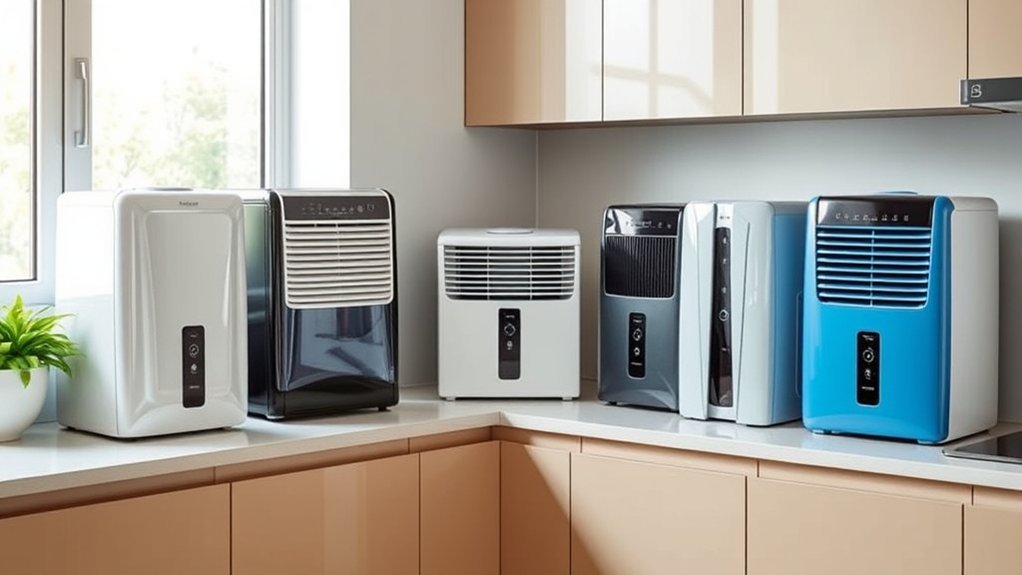
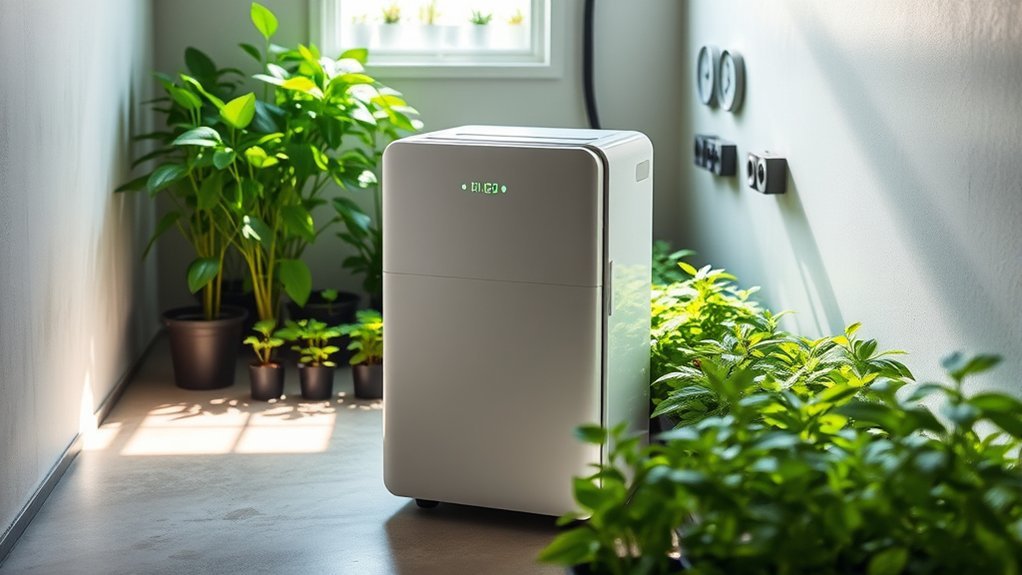
Choosing among the best dehumidifiers for 2026 starts with matching the moisture-removal capacity, drainage method, and controls to the actual size and dampness of your space. The Frigidaire 22 Pint is a practical option for smaller rooms, while the Frigidaire 50 Pint adds Wi-Fi control for larger areas. For demanding basements and other persistently damp spaces, the DECIUU, AEOCKY, Vellgoo Max, and MEPTY models offer higher seller-listed capacities and more flexible drainage options.
Updated August 2026.
Quick Verdict
Choose the Frigidaire 22 Pint for a smaller room with straightforward controls, or the Frigidaire 50 Pint Wi-Fi when remote monitoring matters. The AEOCKY is the most convenient choice here when you need a built-in pump for upward drainage. The DECIUU and MEPTY suit large spaces with access to a floor drain, while the Vellgoo Max has the highest seller-listed maximum capacity in this comparison.
Quick Comparison
| Model | Best Use | Listed Capacity | Drainage | Standout Feature | Amazon |
|---|---|---|---|---|---|
| Frigidaire 22 Pint | Bedrooms, offices, and smaller damp rooms | 22 pints/day | Bucket or gravity hose | Simple humidity control | Check on Amazon |
| Frigidaire 50 Pint Wi-Fi | Large rooms and basements | 50 pints/day | Bucket or gravity hose | Wi-Fi control | Check on Amazon |
| DECIUU 100 Pint Max | Large, persistently damp spaces | Up to 100 pints/day in high-temperature test conditions | Bucket or included gravity hose | Large tank and broad humidity settings | Check on Amazon |
| AEOCKY 80 Pint Max with Pump | Basements without a low floor drain | Up to 80 pints/day in high-temperature test conditions | Bucket or built-in pump | Upward drainage | Check on Amazon |
| Vellgoo Max 140 Pint | Very large, heavily damp areas | Up to 140 pints/day in high-temperature test conditions | Bucket or included gravity hose | Highest listed maximum capacity here | Check on Amazon |
| MEPTY 100 Pint Max | Large rooms, basements, and laundry areas | Up to 100 pints/day in high-temperature test conditions | Bucket or included gravity hose | Auto, Sleep, and Dry modes | Check on Amazon |
Frigidaire 22 Pint Dehumidifier, 1,500 Sq Ft Coverage
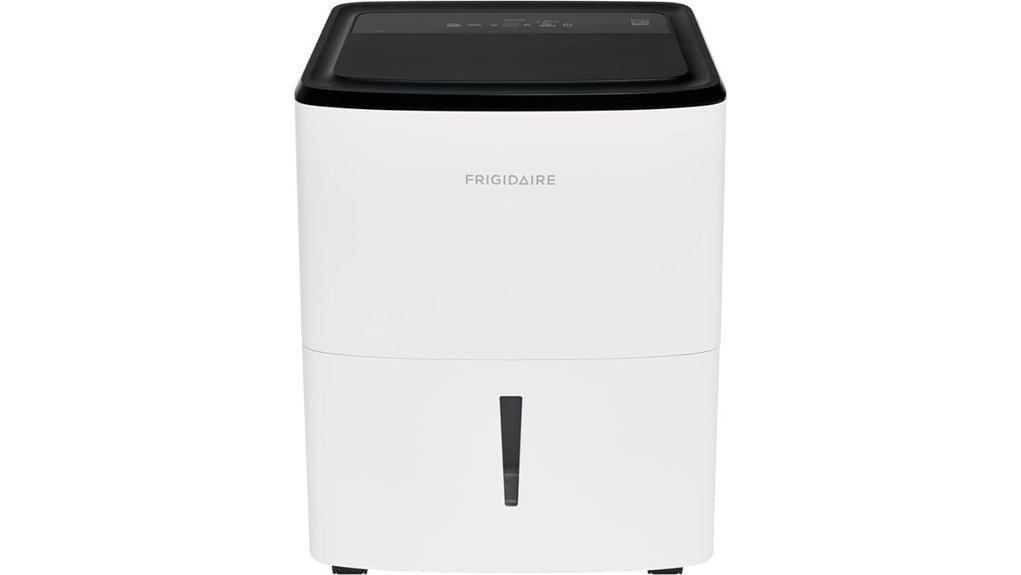
Best for smaller rooms: The Frigidaire 22 Pint Dehumidifier is a sensible choice when you want straightforward humidity control without paying for a high-capacity machine. The listing positions it for spaces up to 1,500 square feet, but the actual result will depend on room temperature, air leakage, and how severe the moisture problem is.
Why You’ll Like It: You can set a preferred humidity level, wash and reuse the filter, and choose between the front-loading bucket and continuous gravity drainage. Automatic shutoff pauses operation when the bucket is full, while the carrying handle and splash guard make manual emptying easier.
Who Should Avoid It: Skip this model for a wet basement, active leak, or large open-plan area where a higher-capacity unit would recover humidity faster.
Pros:
- Simple custom humidity control for everyday use.
- Washable filter reduces routine replacement costs.
- Continuous-drain connection can reduce bucket emptying when a suitable low drain is available.
Cons:
- The 1.7-gallon listed bucket still needs manual attention when a drain hose is not used.
- No built-in pump or Wi-Fi control.
- Coverage claims should not replace an assessment of the room’s actual dampness.
Frigidaire 50 Pint Dehumidifier w/WiFi
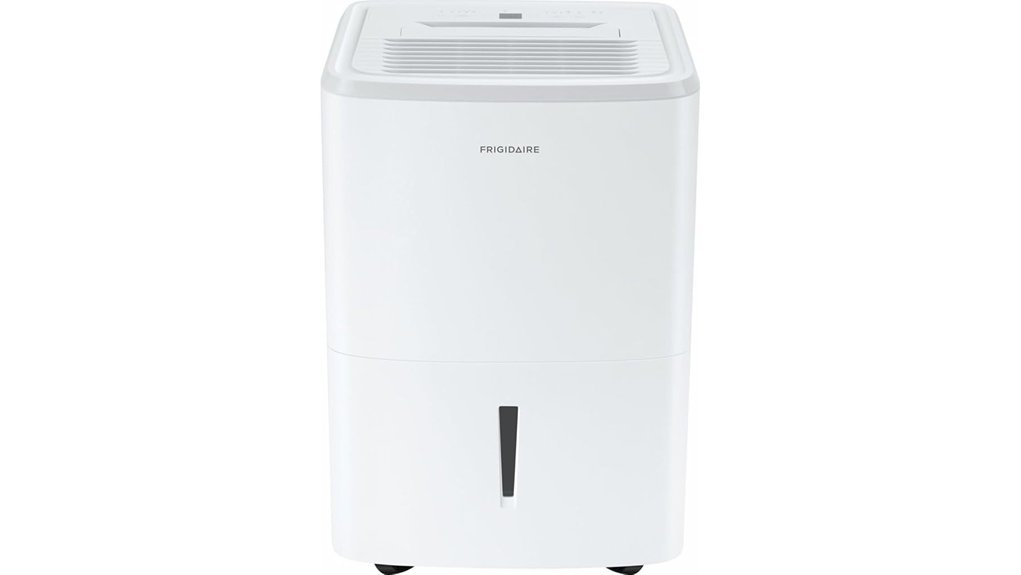
Best smart Frigidaire option: This 50 Pint Wi-Fi model is better suited to a large room, basement, garage, or other area where you want more moisture-removal capacity and remote access. The listing states coverage up to 4,500 square feet, although room layout and dampness remain more important than the headline coverage figure.
Why You’ll Like It: Wi-Fi control lets you monitor or adjust settings without standing beside the unit. It also provides three fan speeds, programmable controls, a washable filter, a 2.7-gallon bucket, and a continuous gravity-drain connection.
Who Should Avoid It: It may be unnecessarily large for a bedroom or lightly humid room, and it is not the right choice when drainage must travel upward because the model does not advertise a built-in pump.
Pros:
- 50-pint daily rating is appropriate for larger moisture loads.
- Wi-Fi and programmable settings add convenient remote control.
- Large bucket and continuous-drain option reduce routine handling.
Cons:
- At about 44.5 pounds, stairs and frequent room-to-room moves may be awkward.
- Gravity drainage requires the hose outlet to remain below the unit.
- Wi-Fi adds little value when you only need basic set-and-forget operation.
DECIUU 100 Pint Energy Star Dehumidifier with Drain Hose
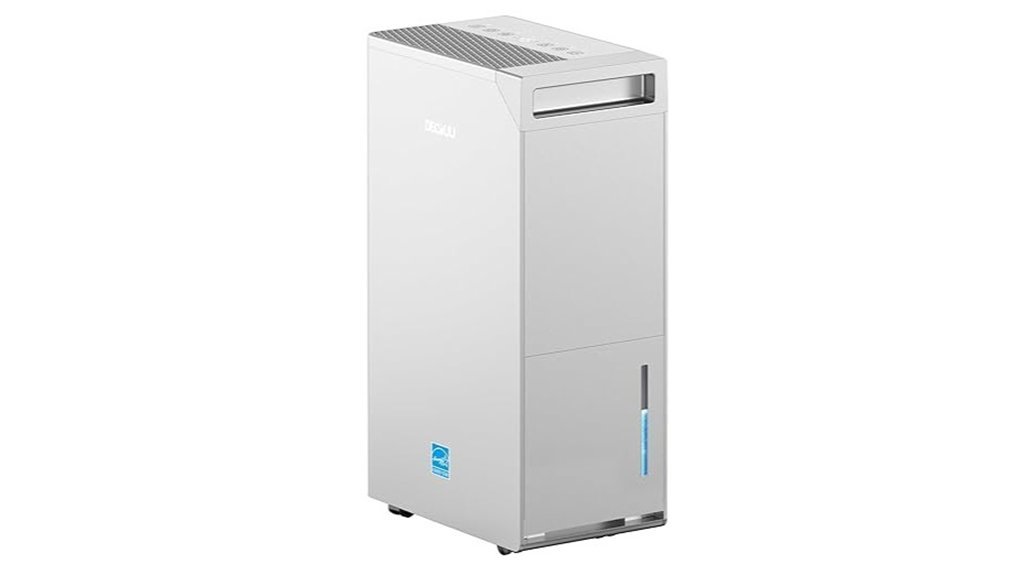
Best large-space gravity-drain option: The DECIUU is designed for large, persistently damp spaces and is advertised for areas up to 5,000 square feet. Its seller-listed maximum is 100 pints per day at hot, highly humid test conditions, with a lower rating under less extreme conditions, so compare it carefully with standard-condition models.
Why You’ll Like It: The adjustable humidistat, LED controls, timer, child lock, washable filter, wheels, and handles cover the main convenience features buyers expect. You can use the 5.5-liter tank, the included drain hose, or a compatible garden hose for gravity drainage.
Who Should Avoid It: This is not a pump model. Avoid it when the only drain is above the dehumidifier or when the space is small enough for a lighter, quieter unit.
Pros:
- High seller-listed maximum capacity for demanding moisture conditions.
- Flexible gravity-drain choices and automatic bucket shutoff.
- Broad humidity setting range and useful control-lock feature.
Cons:
- The 100-pint figure is a maximum-condition rating, not a universal daily result.
- No built-in pump for upward drainage.
- Its larger cabinet needs more floor space than a compact room unit.
AEOCKY 4500 Sq.Ft Energy Star Dehumidifier with Pump
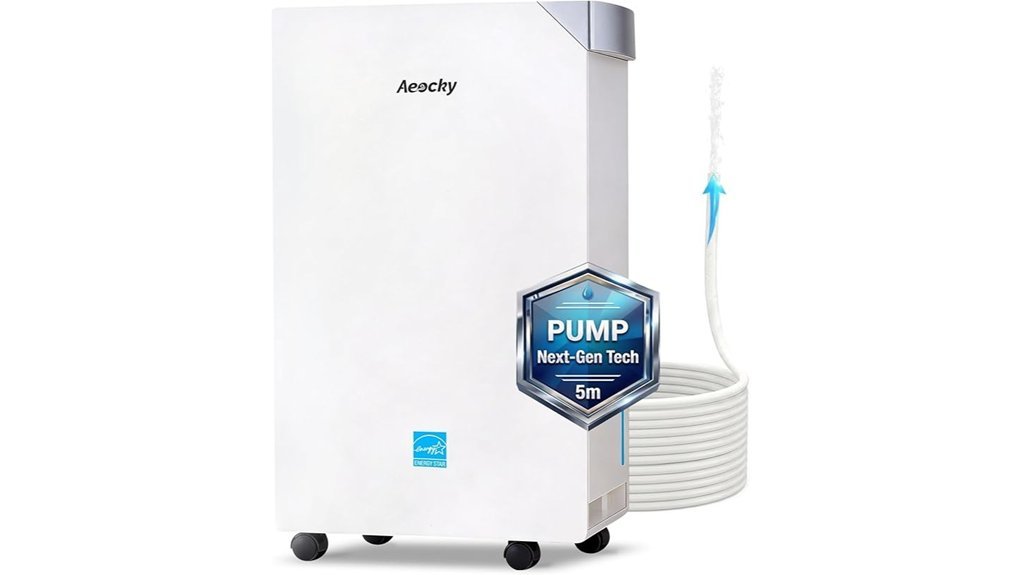
Best built-in pump: The AEOCKY stands out when your sink, window, or other drain point is higher than the floor. Its listing gives a maximum of 80 pints per day in hot, saturated conditions and 56 pints per day under a warm, damp test condition, making the test basis clearer than a single headline number.
Why You’ll Like It: The built-in pump and included 5-meter hose can move condensate upward, which is useful in basements without a convenient floor drain. Smart humidity control, dual sensors, washable filtration, and a low-vibration design support easier long-term operation.
Who Should Avoid It: A pump adds cost and complexity. Choose a simpler gravity-drain model when a nearby floor drain is already available, and confirm the route stays within the manufacturer’s lift and hose limits.
Pros:
- Built-in pump supports upward drainage instead of relying only on gravity.
- Two stated test-condition capacities make comparison more transparent.
- Suitable feature set for a basement or large living area with persistent humidity.
Cons:
- Likely costs more than a comparable unit without a pump.
- Pump performance depends on correct hose routing and maintenance.
- Maximum ratings will not represent every room or season.
Vellgoo Max 140 Pint Smart Dehumidifier for Basement
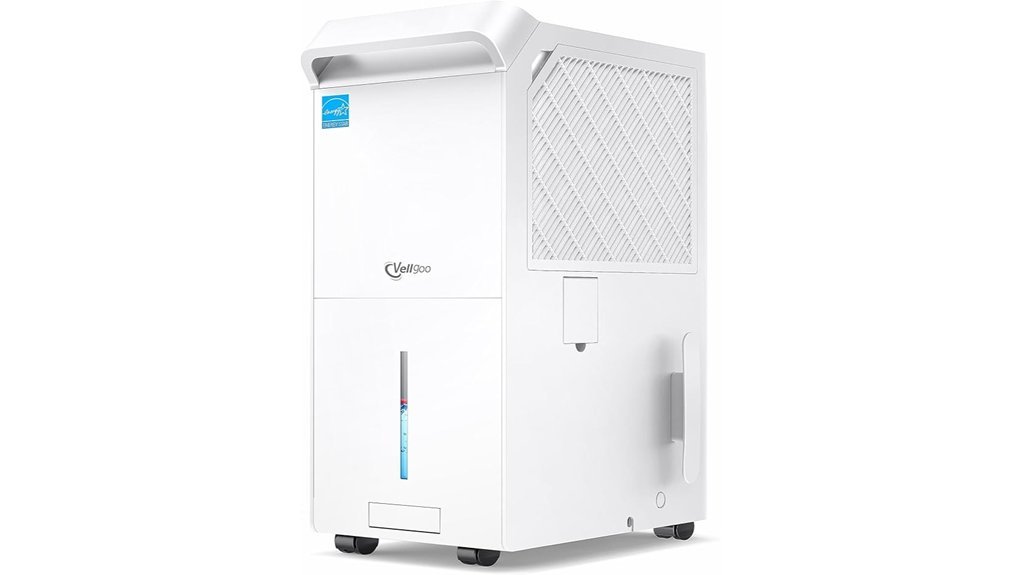
Best highest listed capacity: The Vellgoo Max is aimed at very large or heavily damp spaces and carries a seller-listed maximum of 140 pints per day at hot, highly humid conditions. It is advertised for spaces up to 6,000 square feet, but buyers should size it by moisture load and test conditions rather than square footage alone.
Why You’ll Like It: Continuous, custom, and sleep modes make operation easier to tailor. The unit also includes a 24-hour timer, child lock, washable filter, wheels, handle, a 1.65-gallon tank, and an included gravity-drain hose.
Who Should Avoid It: This linked model does not advertise a built-in pump. It may also be unnecessarily large for a bedroom, office, or mildly humid space.
Pros:
- Highest maximum-condition pint rating among the retained products.
- Multiple operating modes and a complete set of mobility features.
- Included hose supports unattended gravity drainage.
Cons:
- The 140-pint claim is tied to extreme test conditions.
- No built-in pump on the linked version.
- A large compressor unit can be harder to place discreetly.
MEPTY 6000 Sq.Ft Dehumidifier with Smart Humidity Control
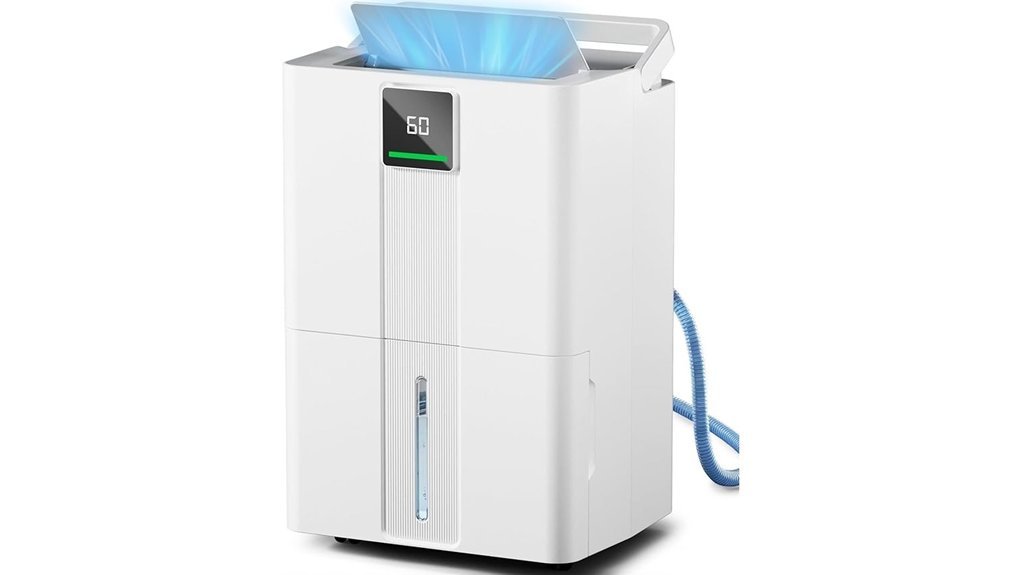
Best for simple operating modes: The MEPTY is a portable large-space dehumidifier rather than a ducted whole-home system. Its listing advertises a maximum of 100 pints per day in hot, highly humid conditions and coverage up to 6,000 square feet.
Why You’ll Like It: Auto mode handles routine humidity control, Sleep mode reduces disturbance, and Dry mode can help speed indoor laundry drying. A 24-hour timer, child lock, color humidity display, casters, washable filter, 1.5-gallon tank, and included gravity-drain hose make the unit easy to manage.
Who Should Avoid It: Choose another model when you need Wi-Fi control or pumped drainage. It may also be more capacity than a small room needs.
Pros:
- Auto, Sleep, and Dry modes cover common household use cases.
- Color display provides an at-a-glance humidity status.
- Tank and included hose provide flexible drainage.
Cons:
- The 100-pint figure is based on high-temperature test conditions.
- No built-in pump or Wi-Fi feature is advertised for the linked model.
- Large-space coverage claims can overstate performance in cold or very wet rooms.
Factors to Consider When Choosing a Dehumidifier
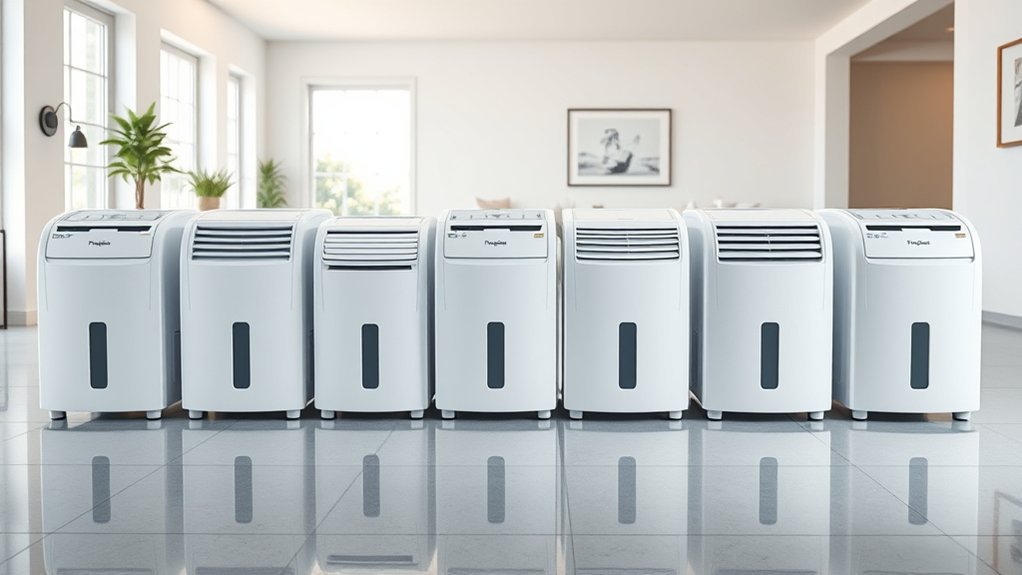
Start with the room size and moisture severity, then compare capacity test conditions, drainage, humidity controls, operating temperature, noise, and maintenance. These details are more useful than choosing only by the largest square-foot number on a product listing.
Room Size and Dampness
Measure the enclosed area, but also look for signs of moisture load. Mild condensation or a slightly musty smell needs less capacity than wet walls, frequent puddles, or humidity that quickly returns after the unit shuts off. Open doors, stairwells, exterior-air leakage, and low basement temperatures can all reduce real-world performance.
Capacity Test Conditions
A pint-per-day rating is meaningful only when you know the conditions used to produce it. Some models use a standard rating, while others promote a larger maximum measured in hotter and more humid air. Compare ratings measured under similar conditions, and do not assume a 100-pint maximum-condition model is automatically twice as capable as a 50-pint standard-condition model.
Drainage Options
A bucket works anywhere but needs regular emptying. Gravity drainage is low-maintenance when a floor drain is nearby and the hose can slope downward without kinks. A built-in pump is useful when water must travel upward to a sink or window, although pump height and hose length limits still apply.
Humidity Controls
Choose a model with an adjustable humidistat so it can cycle on and off around your target instead of running without need. For most homes, a moderate setting near 40% to 50% relative humidity is a practical starting range. Avoid driving the air excessively dry, and use a separate hygrometer when accurate room readings matter.
Operating Temperature and Defrost
Compressor dehumidifiers remove less moisture as the room gets colder. In a cool basement or garage, check the manufacturer’s minimum operating temperature and confirm that automatic defrost is included. A unit repeatedly icing over, stopping, or running without collecting much water may be poorly matched to the conditions.
Noise Levels
Check the listed decibel range for the exact model and fan setting instead of relying on broad “quiet” claims. A basement can tolerate more compressor and fan noise than a bedroom, nursery, office, or media room. Lower fan speeds and sleep modes may reduce sound, but they can also slow moisture removal.
Maintenance Ease
A washable filter, accessible bucket, full-tank indicator, and easy-to-reach drain port simplify routine care. Inspect the filter regularly and clean it according to the manual. Also check the hose for kinks, buildup, or poor slope, and clean the tank before odor or residue develops.
Portability and Placement
Large-capacity units commonly weigh more than 40 pounds, so casters and handles help on a single level but do not make stairs easy. Leave the clearance specified in the manual around the air intake and exhaust, keep doors and windows closed while operating, and make sure the hose route cannot be crushed or pulled loose.
Warranty and Support
Warranty terms vary by brand, seller, and exact model. Before buying, confirm the written parts-and-labor period, whether the compressor has separate coverage, who pays return shipping, and whether support requires registration or purchase from an authorized seller.
Before You Buy
- Measure the room and identify whether it is mildly damp, very damp, or actively wet.
- Compare pint ratings under similar temperature and humidity conditions.
- Decide whether you need a bucket, gravity hose, or built-in pump.
- Confirm the minimum operating temperature for a basement or garage.
- Check the exact model’s dimensions, weight, noise rating, warranty, and included hose.
- Fix leaks, drainage problems, or water intrusion instead of expecting a dehumidifier to solve the source.
Frequently Asked Questions
What Humidity Level Should I Set?
A setting around 40% to 50% relative humidity is a useful starting point for many homes. Adjust it for comfort, season, condensation, and the room’s conditions. Use a separate hygrometer when you need to confirm the reading away from the unit.
Why Do Dehumidifier Capacity Numbers Look So Different?
Capacity rises as the test air becomes warmer and wetter. Some listings show a standard rating, while others lead with a maximum produced under extreme conditions. Compare the stated temperature and relative humidity before comparing pint numbers.
Can a Dehumidifier Run Continuously in a Basement?
Many models include a continuous mode or can cycle automatically around a set humidity level. For unattended drainage, install the correct hose or pump setup, keep the filter clean, and follow the manufacturer’s instructions. Continuous operation should not replace repairs for an active leak or water intrusion.
Do I Need a Built-In Pump?
You need a pump only when condensate must move upward or across a route that cannot maintain a continuous downward slope. A gravity hose is simpler when a floor drain is close to the unit. Check the pump’s maximum lift and hose requirements before purchase.
How Often Should I Clean the Filter?
Follow the exact model’s manual and clean-filter indicator. Inspect it more often in dusty rooms or homes with pets, and allow a washable filter to dry fully before reinstalling it.
Is a Portable Unit the Same as a Whole-Home Dehumidifier?
No. The products in this guide are portable room or large-space units. A true whole-home dehumidifier is normally integrated with ductwork or installed as a dedicated system and is sized differently.
What Warranty Do Dehumidifiers Include?
There is no single standard warranty across these brands. Check the exact product page and written warranty for parts, labor, compressor coverage, return shipping, registration requirements, and exclusions.
Conclusion
Final Recommendation
For a smaller room, the Frigidaire 22 Pint keeps the decision simple. Choose the Frigidaire 50 Pint Wi-Fi when you want remote control and more capacity. The AEOCKY is the clearest fit when upward drainage is essential, while the DECIUU, Vellgoo Max, and MEPTY are better suited to large moisture loads with a practical gravity-drain route. Whichever model you choose, compare ratings under similar test conditions and correct the source of any leak or water intrusion first.