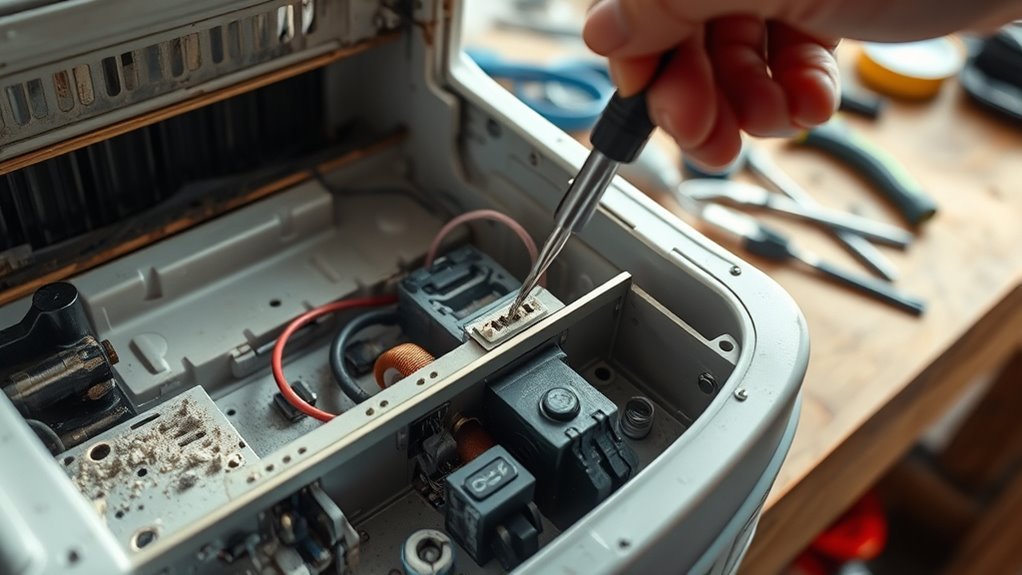
Yes, a dehumidifier can help your AC-controlled home feel more comfortable when indoor humidity stays high, especially when the air conditioner reaches the thermostat setting but the house still feels damp or clammy. A dehumidifier removes moisture that the AC is not controlling well and may let you use a slightly higher thermostat setting. However, a portable dehumidifier also uses electricity and releases some heat into the room, so running both appliances does not automatically lower total energy use.
Last updated: August 19, 2026
Quick Answer
A dehumidifier can help when your AC cools the home but indoor relative humidity remains above about 50%. It improves moisture control and comfort, but a portable unit consumes electricity and slightly warms the surrounding space. The combination saves energy only when the reduction in AC energy use is greater than the additional energy used by the dehumidifier and any extra cooling needed to remove its heat.
Key Takeaways
- Use an indoor hygrometer rather than outdoor humidity to decide when dehumidification is needed.
- A practical cooling-season starting point is usually around 45% to 50% relative humidity, within the EPA’s broader 30% to 50% recommended range.
- Portable dehumidifiers slightly warm the room and add their own electricity use.
- Persistent whole-home humidity above about 55% is a stronger reason to consider a properly designed whole-home dehumidifier.
- Repair leaks, airflow problems, drainage issues, or AC short cycling instead of using a dehumidifier to hide them.
Dehumidifier and AC: What Should You Use?
| Situation | Best first step |
|---|---|
| Indoor RH is about 40% to 50% and the home feels comfortable | Usually no additional dehumidification is needed. |
| One basement, bedroom, or laundry area stays damp | Consider a properly sized portable dehumidifier after checking for leaks and ventilation problems. |
| Most of the house repeatedly stays above about 55% RH | Have the HVAC system checked and consider a professionally sized whole-home dehumidifier. |
| The room feels mildly damp but does not need much cooling | If your AC has a Dry or Dehumidify mode, try that feature according to the manufacturer’s instructions before adding another appliance. |
| Humidity suddenly worsens, the AC short cycles, freezes, or has weak airflow | Arrange HVAC diagnosis instead of masking the problem with a dehumidifier. |
Recommended Products

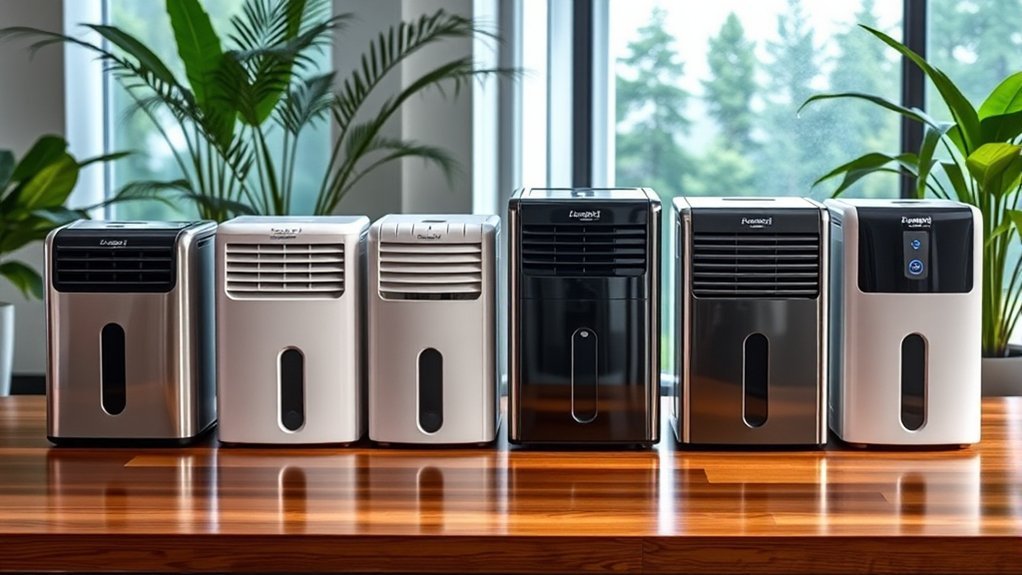
Semiconductor dehumidifiers use thermoelectric cooling to remove moisture from the air. They create a drier, more comfortable environment by reducing humidity and improving air quality.

【Ideal for Large Homes & Basements (Up to 5,000 Sq. Ft)】The Waykar 80 pint dehumidifier efficiently removes up to 80 pints of moisture per day in high-humidity conditions (95°F, 90% RH). In warmer, damp spaces like basements (86°F, 80% RH), it removes 62 pints/day. This dehumidifier for basement is perfect for large areas such as basements, bathrooms, bedrooms, and living rooms. Customize your space by adjusting the humidity level from 30% to 80%, creating a drier and healthier environment
Does a Dehumidifier Help Your AC Work Better?
A dehumidifier can help your AC provide better comfort when the air conditioner lowers the temperature but leaves the house feeling damp or clammy. Air conditioners remove both heat and moisture, but their main control signal is normally temperature. If the thermostat reaches its setpoint before enough moisture has condensed on the indoor coil, humidity can remain high.
A separate dehumidifier removes moisture according to a humidistat setting. That can make the same indoor temperature feel more comfortable and may allow you to use a slightly higher thermostat setting. It is especially useful in basements, rainy weather, homes with an oversized air conditioner that reaches the temperature setting too quickly, and some tightly built homes with low cooling loads. The U.S. Department of Energy notes that efficient, tightly built homes can have lower sensible cooling loads while moisture loads remain important.
The energy result needs more explanation. According to ENERGY STAR dehumidifier guidance, a dehumidifier slightly warms the area around it while removing moisture. A portable unit also has its own compressor and fan. Better moisture control may allow a higher thermostat setting, but the AC may also need to remove some of the heat released by the dehumidifier.
Note: Better humidity control and lower total electricity use are not the same thing. A dehumidifier may improve comfort even when the combined AC and dehumidifier use the same amount of electricity or more.
How Humidity Makes Your AC Work Harder
Your AC handles two types of cooling load. The sensible load is the heat that raises air temperature. The latent load is the moisture that must be condensed and drained from the air.
When indoor humidity is high, the AC must spend part of its capacity removing moisture. High humidity also slows sweat evaporation from your skin, so the room can feel warmer than the thermostat reading suggests. The National Weather Service explains that high relative humidity slows evaporation from the body. This often leads people to lower the thermostat and overcool the house while trying to solve a moisture problem.
Humidity removal depends on the indoor coil becoming cold and remaining cold long enough for moisture to condense. An oversized AC may cool the room quickly and shut off before it removes enough water. ENERGY STAR warns that oversized HVAC equipment may cycle too frequently, reduce comfort, and shorten equipment life. Poor airflow, incorrect refrigerant charge, dirty filters, duct problems, or incorrect installation can also reduce humidity control. See the agency’s HVAC quality-installation guidance.
A dehumidifier can remove moisture that the AC leaves behind, but it cannot repair an oversized, dirty, leaking, poorly charged, or malfunctioning cooling system.
When a Dehumidifier Can Lower Cooling Costs
A dehumidifier may lower cooling costs when better humidity control lets you raise the thermostat enough to offset the dehumidifier’s electricity use. A properly designed whole-home system may also be useful when repeatedly overcooling the house is the only way the existing AC can keep humidity under control.
Energy balance: The combination saves electricity only when the reduction in AC energy use is greater than the dehumidifier’s own electricity use plus any extra AC energy needed to remove the heat released by the dehumidifier.
ENERGY STAR says a properly sized and installed whole-home dehumidifier may save energy and improve comfort in relatively well-sealed homes with central air conditioning and humidity that remains above approximately 55% throughout the house.
Savings are less likely when:
- The indoor humidity is already below 50%.
- The portable dehumidifier runs continuously instead of cycling from a humidistat.
- You keep the same low thermostat setting after adding the unit.
- Windows or exterior doors remain open.
- Leaks, wet foundations, unvented dryers, or bathroom moisture continue adding water to the home.
- The dehumidifier is inefficient, incorrectly sized, dirty, or placed where airflow is blocked.
Do not rely on a general percentage-savings claim. Actual results vary widely. Compare your home’s total kilowatt-hour use under similar weather and occupancy conditions, including both the AC and dehumidifier.
Pro Tip: For a portable unit, use an inexpensive plug-in electricity meter to track its kilowatt-hour consumption. Compare that number with any reduction shown in your whole-home electricity use or smart-thermostat AC runtime. Water collected by the dehumidifier does not by itself prove that the combined setup is saving energy.
Recommended Products

160 Pints/Day Upgraded Energy-Efficient Dehumidification: Built with an upgraded high-efficiency system, the Moiswell WD160 removes up to 160 pints of moisture per day (65 PPD @DOE) with lower energy consumption(2.25 L/wKh). It maintains optimal humidity levels across large living spaces, helping prevent structural damage such as wood rot and musty odors, while promoting a healthier indoor environment.

Energy Efficient Whole House Dehumidifier: 90 pints per day at AHAM condition, 70 Pint at DOE, up to 2300 sq. ft, widely used in short buildings, crawlspace, Basement, multi-bedroom, commercial ,storage area, home, garage, large room, large-area housing, etc. quickly and effectively removes moisture with less energy than conventional dehumidifiers without racking up the energy bill, saving money, It will be the best crawl space dehumidifiers you will ever use
Best Times to Run a Dehumidifier With AC
Run the dehumidifier according to indoor relative humidity, not simply the time of day or the outdoor relative-humidity percentage. Place a hygrometer in a representative living area away from direct supply-air flow, showers, cooking steam, and the dehumidifier’s outlet.
| Indoor condition | Recommended response |
|---|---|
| Below 30% RH | Do not run a dehumidifier. The air is already dry. |
| 40% to 50% RH | Usually a comfortable cooling-season range. If the home feels comfortable and has no moisture symptoms, additional dehumidification may not be necessary. |
| Consistently above 50% RH | Check moisture sources and consider dehumidification if the AC cannot maintain control. |
| Above 60% RH | Act promptly. Inspect for leaks, condensation, ventilation problems, and AC performance issues. |
| Musty odor or visible mold | Control humidity, but also repair the moisture source and clean or remediate the mold. |
The EPA recommends keeping indoor humidity between 30% and 50% when possible. During warm weather, a practical starting point around 45% to 50% stays within that range without immediately forcing the unit toward an unnecessarily low setting. Lower the setting only if condensation, dampness, or a verified moisture problem remains.
Running at night does not automatically reduce energy consumption. It may reduce the price you pay if your utility has lower off-peak electricity rates, but the appliance still consumes energy. Humidity control should remain the main operating trigger.
How to Tell If Your Home Needs Both Units
You may benefit from using both an AC and a dehumidifier when the AC maintains temperature but indoor humidity regularly stays above 50%, especially during mild rainy weather or in a damp basement.
Common warning signs include:
- The house feels sticky or clammy even at a cool temperature.
- A hygrometer repeatedly reads above 50% to 55%.
- Windows, pipes, duct surfaces, or walls collect condensation.
- Rooms have a persistent musty smell.
- Closets, basements, or bathrooms develop mildew.
- The AC reaches its set temperature quickly but humidity remains high.
- Humidity rises during mild weather when the AC does not run for long.
Before purchasing another appliance, look for preventable moisture sources. Repair plumbing, roof, foundation, or duct leaks. Vent bathroom fans and clothes dryers outdoors. Use kitchen exhaust while cooking. Keep gutters clear, direct downspouts away from the foundation, and avoid drying wet clothing indoors. ENERGY STAR and the CDC recommend controlling moisture sources as part of household humidity and mold prevention.
Portable vs. Whole-Home Dehumidifier
Recommended Products

【Compact Size, Big Efficiency】 The upgraded 2025 Waykar dehumidifier features cutting-edge rotary compressor technology. It’s more compact but still powerful, capable of removing up to 34 pints of moisture per day (at 95℉, 90% RH), ideal for spaces up to 2,000 sq. ft. such as living rooms, basements, bedrooms, and offices. The adjustable humidity range from 30% to 80% helps you easily maintain the ideal indoor humidity

High Efficient Dehumidifiers for Home: This compact 44oz dehumidifier efficiently removes excess moisture in rooms with 86°F and 80% RH, collecting up to 11.8oz (349ml) of water in 24 hours. It maintains an ideal humidity level of 45%-55% while operating at ultra-low energy consumption (24W/hour, 576W/day). Perfect for bedrooms, bathrooms, and small spaces.

𝐏𝐨𝐰𝐞𝐫𝐟𝐮𝐥 𝟕𝟓-𝐏𝐢𝐧𝐭 𝐃𝐞𝐡𝐮𝐦𝐢𝐝𝐢𝐟𝐢𝐞𝐫 – 𝐅𝐚𝐬𝐭 𝐌𝐨𝐢𝐬𝐭𝐮𝐫𝐞 𝐑𝐞𝐦𝐨𝐯𝐚𝐥: Removes up to 75-pint(95℉, RH 95%) of moisture per day with high-efficiency performance. Ideal for basements, bedrooms, bathrooms, garages, large rooms, and whole-home use, helping keep your space dry, fresh, and comfortable.
Choose a Portable Dehumidifier When
- The problem is limited to one basement, bedroom, laundry room, or other enclosed area.
- You rent or cannot modify the HVAC system.
- You need a lower-cost option.
- You can empty the bucket or safely install continuous drainage.
Close doors and windows while the portable unit runs. Select an ENERGY STAR-certified model with a built-in humidistat and capacity appropriate for the room’s size and dampness. ENERGY STAR explains that current dehumidifier capacity is rated in pints of water removed per 24 hours under standardized test conditions.
For energy efficiency, compare the Integrated Energy Factor (IEF), measured in liters of water removed per kilowatt-hour of electricity. A higher IEF means the unit removes more moisture for the energy it consumes. According to ENERGY STAR, certified dehumidifiers under the current specification are 20% more efficient than non-certified models.
Try AC Dry Mode First When
If your air conditioner includes a Dry, Dehumidify, or similar humidity-control mode, it may be enough when the room feels mildly damp but does not need aggressive cooling. A dedicated dehumidifier is generally more appropriate when humidity is persistent, affects a space the AC does not reach well, or repeatedly returns after the AC stops. Dry-mode operation varies by model, so follow your equipment manual rather than assuming every AC controls humidity the same way. See this manufacturer explanation of AC Dry Mode versus a dedicated dehumidifier for an example of the distinction.
Choose a Whole-Home Dehumidifier When
- Humidity affects several rooms or the entire house.
- Indoor RH stays above about 55% despite normal central AC operation.
- You want automatic ducted distribution and permanent drainage.
- The home is relatively well sealed.
- An HVAC contractor can calculate the moisture load and design the duct connections.
A whole-home unit normally costs more to purchase and install, but it can provide more even control than moving one portable machine between rooms. Correct sizing and installation are essential. A contractor should also check whether the existing AC is oversized or whether airflow, refrigerant charge, duct leakage, or controls are causing the humidity problem.
How to Use a Dehumidifier With AC Efficiently
- Measure first. Record indoor RH at different times for several days.
- Start near 45% to 50%. This stays within the EPA’s recommended 30% to 50% range while avoiding an unnecessarily aggressive starting point.
- Keep the conditioned area closed. Shut exterior windows and doors while either appliance operates.
- Improve airflow. Leave adequate clearance around the dehumidifier according to its manual.
- Clean the filter and intake. Dust buildup reduces airflow and moisture-removal performance.
- Use safe drainage. Route the hose downhill without kinks when using gravity drainage, unless the unit has a condensate pump.
- Raise the thermostat carefully. After humidity is controlled, try increasing the AC setting by one degree and check comfort before making another change.
- Track total electricity. Judge savings by combined energy use, not by dehumidifier water collection or AC runtime alone.
Warning: Connect a portable dehumidifier to a properly grounded outlet and follow the manufacturer’s electrical instructions. Keep drain hoses away from cords, outlets, and walkways. Do not use an extension cord unless the manufacturer specifically permits it.
When to Call an HVAC Professional
Do not assume that every humidity problem needs a second appliance. Arrange an HVAC inspection when:
- The AC turns on and off every few minutes.
- The indoor coil freezes.
- Airflow from the vents is unusually weak.
- The system runs constantly but does not cool properly.
- The condensate pan overflows or the drain line repeatedly clogs.
- Humidity suddenly becomes worse after years of normal operation.
- Ducts or supply registers show persistent condensation.
- The AC appears much larger than the home’s calculated cooling load.
Short cycling can result from equipment sizing, thermostat problems, restricted airflow, dirty coils, refrigerant problems, electrical faults, or other defects. A dehumidifier may reduce the resulting dampness, but it should not replace diagnosis and repair.
Frequently Asked Questions
Will a Dehumidifier Help My AC Run Better?
It can improve comfort when the AC controls temperature but indoor humidity remains high. By handling moisture separately, a dehumidifier may let you use a higher thermostat setting. However, a portable unit also consumes electricity and releases heat, so it does not guarantee lower total energy use.
Can Running a Dehumidifier With AC Lower Electricity Use?
Sometimes. The combination saves electricity only when the reduction in AC energy use is greater than the electricity consumed by the dehumidifier plus any additional cooling needed to remove the heat it releases. Compare total household kilowatt-hour use under similar conditions rather than assuming shorter AC runtime means lower total energy use.
What Humidity Should I Set My Dehumidifier to With AC?
A practical cooling-season starting point is around 45% to 50% relative humidity. EPA guidance recommends keeping indoor humidity between 30% and 50% when possible. Avoid setting the unit unnecessarily low, because that can increase runtime without providing a useful comfort benefit.
Do the AC and Dehumidifier Have to Run at the Same Time?
No. Let each appliance respond to its own control. The thermostat should control temperature, while the humidistat controls relative humidity. They may run together during hot, damp weather, while a dehumidifier may run by itself during mild rainy periods when the home is humid but needs little cooling.
Does a Dehumidifier Make the Room Hotter?
A portable dehumidifier can slightly warm the surrounding space while it removes moisture. It is not an air conditioner and does not provide net room cooling. The drier air may feel more comfortable, but your AC may need to remove some of the heat the dehumidifier releases.
Should I Use AC Dry Mode or a Separate Dehumidifier?
Try your AC’s Dry or Dehumidify mode for mild humidity when the room does not need much additional cooling. A dedicated dehumidifier is usually more appropriate when moisture is persistent, affects a room the AC does not reach effectively, or continues returning after the AC stops. Follow your AC manual because Dry Mode behavior varies by model.
Conclusion
A dehumidifier can help an AC-controlled home feel cooler and less clammy when indoor humidity stays high. It is most useful when a hygrometer confirms a moisture problem that the air conditioner cannot handle by itself.
Do not assume that adding a portable unit will automatically reduce your electricity bill. It consumes power and slightly warms the room. Start around 45% to 50% RH, correct leaks and ventilation problems, maintain both appliances, and judge performance by total household energy use. If your AC has a Dry or Dehumidify mode, it may be worth trying for mild humidity before adding another appliance.
If the AC short cycles, has weak airflow, develops ice, or previously controlled humidity without trouble, have the system inspected instead of masking the problem with a dehumidifier.
Sources
Editorial note: This guide was updated on August 19, 2026 and cross-checked against current ENERGY STAR, U.S. EPA, U.S. Department of Energy, CDC, National Weather Service, and manufacturer guidance. It does not report product-specific hands-on testing.
- ENERGY STAR: Dehumidifiers — humidity targets, portable-unit heat output, capacity, Integrated Energy Factor, drainage safety, efficiency, and whole-home guidance.
- U.S. Environmental Protection Agency: Improving Your Indoor Environment — recommended indoor humidity range and moisture control.
- ENERGY STAR: HVAC Quality Installation — equipment sizing, airflow, refrigerant charge, comfort, and efficiency.
- U.S. Department of Energy: Advanced HVAC Humidity Control — humidity challenges in efficient homes and supplemental dehumidification.
- Centers for Disease Control and Prevention: Mold — mold prevention, moisture control, ventilation, and keeping household humidity low.
- National Weather Service: Heat Index — the relationship between relative humidity, sweat evaporation, and perceived warmth.
- LG: When to Use a Dehumidifier vs. AC Dry Mode — manufacturer guidance on mild AC dehumidification versus persistent moisture control.