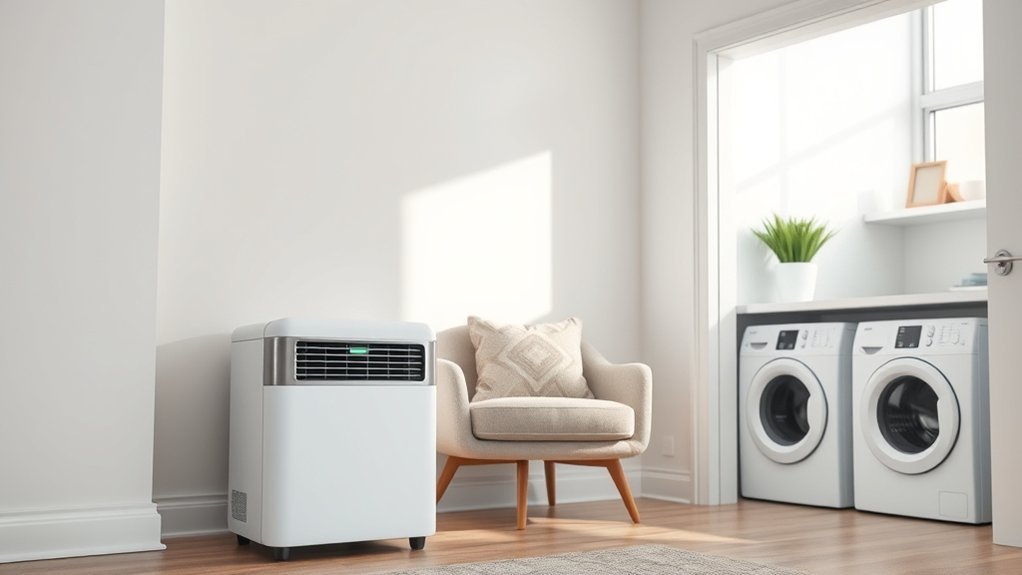
Can a dehumidifier prevent sickness? Not by itself. A dehumidifier cannot stop infections, but it can reduce mold and dust mite triggers when indoor humidity is too high. Aim for about 30% to 50% relative humidity, because air that is too damp or too dry can irritate your breathing.
Quick Answer
A dehumidifier cannot stop you from getting sick by itself. It can, however, reduce moisture-related triggers such as mold and dust mites when indoor humidity is too high. For most homes, aim for about 30% to 50% relative humidity and fix leaks or water problems first.
Key Takeaways
- A dehumidifier helps most when a room feels damp, smells musty, has condensation, or tests above 50% to 60% relative humidity.
- Lower humidity can make conditions less favorable for mold and dust mites, which may reduce allergy and asthma triggers.
- Do not over-dry your home. Humidity below about 30% can irritate your throat, nose, eyes, and skin.
- A dehumidifier does not replace medical care, mold cleanup, leak repair, ventilation, or an air purifier when airborne particles are the main problem.
Can a Dehumidifier Prevent Sickness?
A dehumidifier can help reduce conditions that contribute to some indoor health triggers, but it should not be described as a cure or a guaranteed way to prevent illness. Its main job is to remove excess water vapor from the air. That matters because the U.S. Environmental Protection Agency says moisture control is the key to mold control, and the CDC recommends keeping home humidity as low as you can, no higher than 50%, to help prevent mold growth.
When damp air is feeding mold, mildew, dust mites, or musty odors, lowering humidity may help you breathe more comfortably. This can be especially useful for people with allergies, asthma, or sensitive airways. Still, a dehumidifier will not kill viruses, treat infections, remove all allergens, or fix a leak behind a wall. Think of it as one part of a healthier indoor-air plan, not the whole solution. For a wider look at the benefits and limits, see our guide to what a dehumidifier does for your health.
Note: If you have wheezing, shortness of breath, chest tightness, fever, symptoms that keep getting worse, or asthma that is not controlled, contact a healthcare professional. Humidity control can reduce triggers, but it is not medical treatment.
How a Dehumidifier Reduces Mold and Dust Mites
Mold needs moisture to grow. When indoor air stays damp, moisture can collect on walls, carpets, furniture, windows, pipes, and hidden building materials. A dehumidifier lowers the moisture in the air, which helps make those surfaces less inviting for mold and mildew.
Dust mites also do better in humid indoor conditions. The Mayo Clinic recommends keeping relative humidity below 50% to reduce dust mites and notes that a dehumidifier or air conditioner can help. This does not remove every mite or allergen, but it can reduce one of the conditions that allows them to thrive.
Best target for most homes: keep indoor relative humidity around 30% to 50%. Above that range, mold and dust mite problems become more likely; below it, dry-air irritation becomes more likely.
- Lower humidity helps limit mold growth by reducing moisture on indoor surfaces.
- Drier indoor air can make the home less favorable for dust mites.
- Balanced humidity can reduce some allergy and asthma triggers without over-drying your airways.
Why Humidity Can Worsen Congestion and Cough
High humidity does not affect everyone the same way, but it can make indoor air feel heavy and can support allergens that irritate the nose, throat, and lungs. The CDC notes that damp and moldy environments may cause stuffy nose, sore throat, coughing, wheezing, burning eyes, or skin rash in some people. People with asthma or mold allergy may have stronger reactions.
If your congestion, cough, or sinus pressure seems worse in a damp room, treat humidity as a measurable clue. Use a hygrometer, check for leaks, look for condensation, and note whether symptoms improve after the room stays in the 30% to 50% range for several days. If symptoms persist, the cause may be pollen, pets, dust, smoke, infection, medication effects, or another medical issue—not humidity alone.
Signs You Need a Dehumidifier
You may need a dehumidifier if your home repeatedly shows signs of excess moisture. Do not rely only on how the room feels; confirm the problem with a humidity reading whenever possible.
- Humidity readings stay above 50% to 60%. Use a hygrometer in bedrooms, basements, bathrooms, and other problem areas.
- Rooms smell musty. A musty odor often means moisture is supporting mold or mildew somewhere nearby.
- Condensation forms on windows, walls, pipes, or floors. Condensation is a warning sign that surfaces are getting wet.
- Allergies or asthma flare indoors. Mold and dust mites can worsen symptoms for sensitive people.
- Basements, closets, carpets, or stored items feel damp. These areas often trap moisture and have poor airflow.
- Silverfish, cockroaches, or other moisture-loving pests appear. Pests can signal a damp environment, though pest control and sealing may also be needed.
Recommended Products

Semiconductor dehumidifiers use thermoelectric cooling to remove moisture from the air. They create a drier, more comfortable environment by reducing humidity and improving air quality.

Maintain the Right Room Temperature and Humidity Levels: This wireless indoor thermometer/hygrometer combination is perfect to pair with humidifiers or dehumidifiers

32-Pint Daily Capacity for Spaces up to 2,500 Sq. Ft. — Designed to manage ambient moisture in large living spaces, finished basements, and storage areas. This unit removes up to 32 pints of water vapor every 24 hours under test conditions of 95°F and 90% RH, helping promote a more balanced indoor air environment across areas up to 2,500 sq. ft
How to Check Humidity Before You Buy
Before buying or running a dehumidifier all day, measure your indoor relative humidity. A basic hygrometer is inexpensive and gives you a number to work with. Place it near the problem area, away from direct airflow, windows, showers, or cooking steam. Check it at different times of day because humidity can rise after rain, showers, cooking, laundry, or basement seepage.
At a Glance
| Time Required | 5 minutes to check humidity; several days to see patterns |
| Difficulty | Easy |
| Tools Needed | Hygrometer, dehumidifier with humidistat, clean drain hose or bucket |
| Cost | Low for a hygrometer; higher for portable or whole-home dehumidifiers |
Recommended Products

Wellness Indicator: This humidity meter with humidity level icon indicates air conditions - DRY/COMFORT/WET, allowing this humidity sensor to ensure you’re always aware of changes to your home/household with just a quick glance

Face Icon Comfort Indicator: Humidity temperature gauge features face icons to indicate DRY/COMFORT/WET air conditions, quickly informs you how to adjust your humidifier or dehumidifier to achieve optimal comfort.

2-in-1 Thermometer & Hygrometer Meter: Equipped with a high-precision sensor, this temperature and humidity meter provides accurate readings, making it ideal for monitoring indoor environments like homes, offices, or greenhouses
When a Dehumidifier Helps Your Breathing
A dehumidifier is most likely to help your breathing when the room is truly damp. In that situation, lowering humidity can reduce musty odors, discourage mold growth, and make the air feel lighter. Some people with asthma or allergies may notice fewer flare-ups when dampness-related triggers are reduced.
It can be especially helpful in basements, lower-level bedrooms, bathrooms without strong ventilation, laundry rooms, crawl-space-adjacent rooms, and homes in humid climates. It may also help after a small leak or spill, but only after the water source is fixed and wet materials are dried quickly.
How to Use a Dehumidifier Safely
Safe use is about more than turning the unit on. You need the right humidity target, good placement, regular cleaning, and a plan for the water the machine collects.
Set Safe Humidity Levels
Set your dehumidifier to keep indoor humidity around 30% to 50%. The ENERGY STAR guidance for dehumidifiers says the optimum relative humidity level for a building is generally considered to be between 30% and 50%, and that humidity above this range may promote mold growth. In colder climates during heating season, you may need to stay closer to 30% to 40% to reduce window condensation.
Choose the Right Size and Location
Choose a unit that matches the size and dampness level of the room. A small unit may run constantly without lowering humidity enough, while a larger unit with a humidistat can cycle on and off once it reaches the target. Place the unit where air can move freely around it. Keep it away from dust, curtains, furniture, and anything that blocks airflow.
Keep Doors and Windows Closed While Running
When the dehumidifier is running, close outside windows and doors in that space. Otherwise, humid outdoor air keeps entering and the unit has to work harder. For a single damp room, close the room off if that helps the unit control the space. For a larger open area, keep interior doors open so air can circulate.
Maintain Clean Water Tanks and Filters
Empty the bucket before it overfills, rinse it regularly, and follow the manufacturer’s cleaning schedule. If your unit uses a hose, make sure the hose drains safely into a floor drain, utility sink, or condensate pump. Keep drain hoses away from electrical cords and walking paths. Clean or replace filters as directed so airflow stays strong.
Pro Tip: Use the dehumidifier’s built-in humidistat if it has one. If it does not show the actual humidity level, place a separate hygrometer nearby and adjust the setting based on the reading.
When a Dehumidifier Can Make Symptoms Worse
A dehumidifier can backfire if it makes the air too dry. Dry indoor air can irritate your throat, nose, eyes, and skin. It may also make a dry cough feel worse. If you notice nosebleeds, scratchy throat, static electricity, dry eyes, or itchy skin, check the hygrometer. If humidity is below about 30%, raise the setting or turn the unit off.
Dry Air Irritation
Dry air can be a problem in winter, in arid climates, or in homes that already have low humidity from heating systems. In those cases, a dehumidifier may not be the right tool. You may need better filtration, cleaning, ventilation, leak repair, or medical allergy care instead.
When to Call a Pro or Doctor
Call a qualified mold or water-damage professional if mold covers a large area, keeps returning, appears inside walls or HVAC components, follows flooding, or involves sewage or contaminated water. Call a healthcare professional if breathing symptoms are severe, persistent, or linked with asthma attacks, fever, chest tightness, or shortness of breath.
Warning: Do not use a dehumidifier as a substitute for fixing leaks. If you dry the air but leave a roof, plumbing, foundation, or condensation problem in place, mold and dampness can return.
Dehumidifier vs. Air Purifier vs. Humidifier
These devices solve different problems. Choosing the wrong one can waste energy and leave symptoms unchanged.
| Device | Best For | What It Does Not Fix |
| Dehumidifier | High humidity, damp rooms, musty smells, condensation | Viruses, smoke particles, pollen, pet dander, active leaks |
| Air purifier | Airborne particles such as dust, pollen, smoke, and some mold particles | Humidity, leaks, and the moisture source behind mold growth |
| Humidifier | Air that is too dry, especially in winter | Dampness, mold risk, dust mite control, condensation |
The EPA guide to air cleaners explains that air cleaners and HVAC filters can reduce some indoor particles, but they do not solve mold problems because mold is caused by a moisture problem. If your main issue is dampness, start with moisture control. If your main issue is airborne pollen, smoke, or pet dander, an air purifier may be more useful.
Recommended Products

OUR FASTEST ACTING MOISTURE ABSORBER: DampRid Reusable Moisture Absorber with 4 Drop-In Tablets is designed to go to work immediately, attracting and trapping excess moisture, eliminating musty odors, and creating cleaner, fresher air.

DON'T JUST COVER UP ODORS, ELIMINATE THEM: DampRid Lavender Vanilla Hanging Moisture Absorbers attract and trap excess moisture from the air, eliminating musty odors and creating fresher, cleaner air. Includes three - 16-ounce bags.

ELIMINATES MUSTY ODORS & FRESHENS AIR: Keep rooms smelling fresh with Arm & Hammer Essentials Hanging Moisture Absorbers. Musty odors? Give it the Hammer. Includes three 17.5 oz. Linen Fresh bags.
Frequently Asked Questions
Can a dehumidifier stop you from getting ill?
No. A dehumidifier cannot stop infections or guarantee you will not get sick. It can reduce excess moisture, which may lower mold and dust mite triggers that worsen allergies, asthma, congestion, or cough in some people.
What humidity level is best for health?
For most homes, aim for about 30% to 50% relative humidity. If your home is above that range, mold and dust mites become more likely. If it is below about 30%, dry-air irritation becomes more likely.
Do air purifiers dry indoor air?
No. Standard air purifiers filter particles or gases; they do not remove water vapor from the air. Use a dehumidifier for excess humidity and an air purifier for airborne particles such as pollen, smoke, dust, or pet dander.
What are the downsides of using a dehumidifier?
The main downsides are over-drying the air, higher electricity use, noise, bucket emptying, cleaning needs, and possible drainage problems. A dehumidifier also will not fix leaks, remove all allergens, or clean up existing mold by itself.
What is the best dehumidifier for asthma?
The best choice is a properly sized dehumidifier with a built-in humidistat, easy cleaning, safe drainage, and enough capacity for the damp space. For asthma, the goal is not a special medical dehumidifier; it is stable humidity, fewer dampness-related triggers, and good cleaning and ventilation.
Conclusion
A dehumidifier can support a healthier home when damp air is part of the problem. It helps by lowering excess moisture, which can make conditions less favorable for mold and dust mites. But it cannot prevent illness on its own, and it can make you uncomfortable if it dries the air too much. Measure your humidity, aim for about 30% to 50%, fix water problems quickly, keep the unit clean, and get medical help when breathing symptoms are serious or persistent.
Sources
- U.S. Environmental Protection Agency — A Brief Guide to Mold, Moisture and Your Home — supports moisture control, mold prevention, and the 30% to 50% ideal humidity range.
- Centers for Disease Control and Prevention — Mold — supports mold symptoms, moisture control, and keeping home humidity no higher than 50%.
- ENERGY STAR — Dehumidifiers — supports dehumidifier sizing, humidistats, placement, humidity targets, and energy-efficiency guidance.
- Mayo Clinic — Dust Mite Allergy Diagnosis and Treatment — supports keeping relative humidity below 50% to reduce dust mites.
- U.S. Environmental Protection Agency — Guide to Air Cleaners in the Home — supports the difference between air cleaning and moisture control.