What Size Dehumidifier Do You Need for 1,000 Square Feet?
Quick Answer: For a 1,000-square-foot space, you should usually choose a 30- to 50-pint dehumidifier. Use a 30-pint unit if humidity is only slightly elevated, but choose a 50-pint unit for damp basements, poor ventilation, musty smells, or humid climates. Measure relative humidity with a hygrometer first, because the real moisture load matters more than square footage alone. Look for Energy Star certification, continuous drainage, a built-in humidistat, and enough airflow for the full room. The right unit depends on how wet the space feels, how often it gets humid, and whether the unit can keep humidity in the target range without running nonstop.
What Size Dehumidifier Fits 1,000 Square Feet?
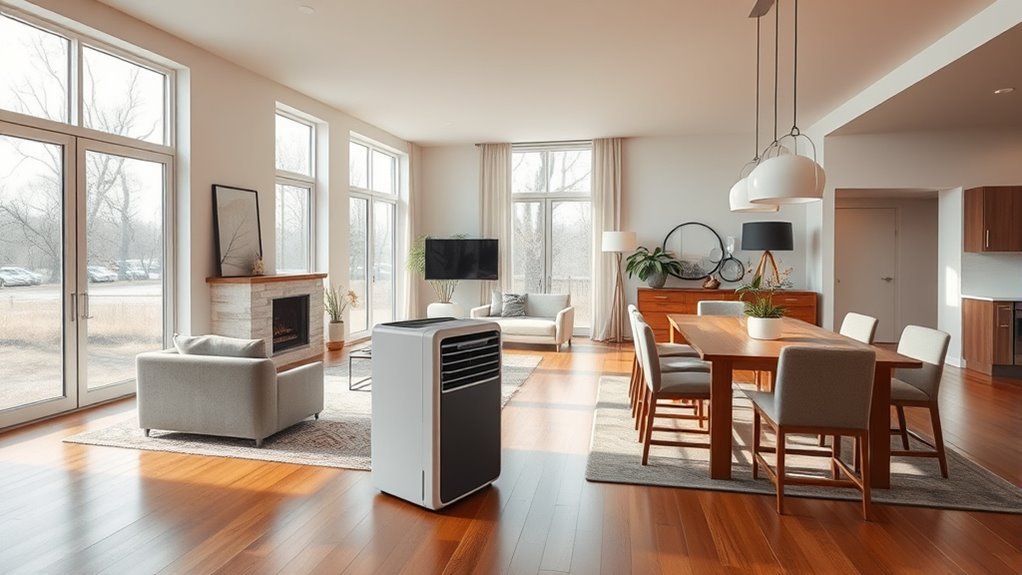
For a 1,000-square-foot space, you’ll typically want a dehumidifier rated at 30 to 50 pints per day, with the exact size depending on how damp the area is. That capacity gives you enough moisture removal to stabilize the room without wasting energy on a much larger unit than you need. If your humidity level is only slightly elevated, a 30-pint unit can be adequate. If the space feels moderately damp, smells musty, has poor airflow, or sits in a humid climate, a 50-pint dehumidifier size is the safer choice.
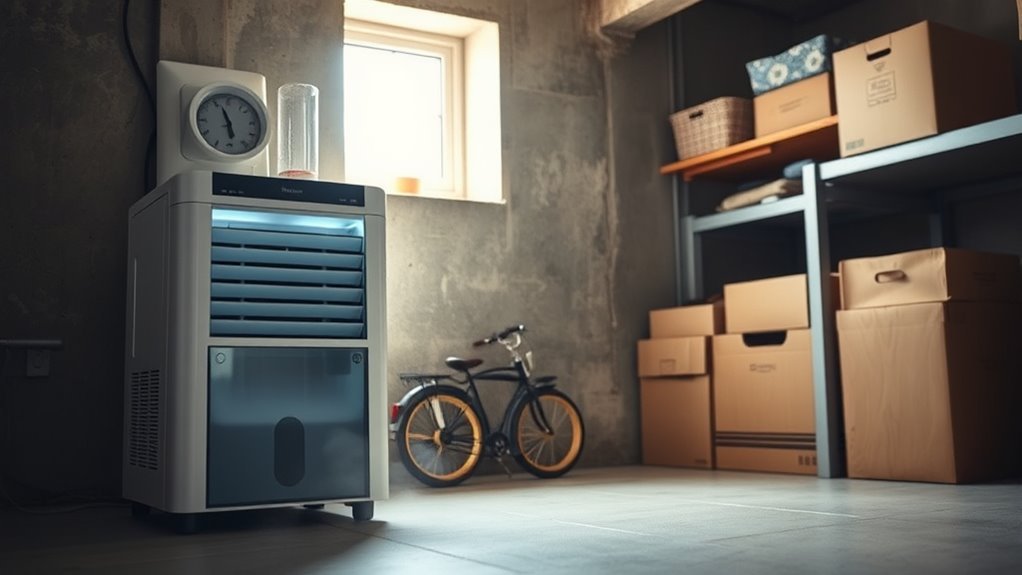
You should not size the dehumidifier by floor area alone. A dry, finished 1,000-square-foot living area may need less capacity than a 1,000-square-foot basement with seepage, concrete walls, laundry equipment, or limited ventilation. In practical terms, match capacity to the actual moisture burden. That means checking humidity, looking for damp surfaces, and thinking about how often the room feels sticky or stale.
| Room Condition | Suggested Size for 1,000 Sq Ft | Best Fit |
|---|---|---|
| Slightly humid, no musty odor | 30 pints per day | Finished rooms, mild seasonal humidity |
| Moderately damp or warm and humid | 40 to 50 pints per day | Large rooms, open basements, humid climates |
| Very damp, musty, poor ventilation, or frequent moisture | 50 pints or more | Basements, laundry areas, below-grade spaces |
A larger unit often removes moisture faster and may reach your target humidity with less strain. It can also make continuous drainage more useful, because you can run the dehumidifier for longer periods without stopping to empty a bucket. For many homes, a 50-pint dehumidifier gives the best mix of control, speed, and flexibility for 1,000 square feet.
Best practical choice: If you are unsure between two sizes, lean toward the larger unit when the space is below grade, smells musty, has poor ventilation, or regularly rises above your preferred humidity range.
Check Humidity Before You Buy
Before you buy a dehumidifier for 1,000 square feet, measure the actual humidity in the space with a hygrometer. This small step prevents guesswork. You should check humidity when the room is being used normally, because readings can change with temperature, air conditioning, open windows, showers, laundry, and outdoor weather.
A common indoor comfort target is around 40% to 60% relative humidity in warmer weather. In cooler weather, a slightly lower range may feel better and may help reduce condensation on windows. If readings are often above the comfort range, your space may need more aggressive moisture removal, and dehumidifier capacity becomes a key factor.
Also check the room itself. Look for moisture on windows, damp concrete, musty odor, soft cardboard boxes, sticky floors, or mildew-prone corners. These signs usually point to a higher moisture load. You should also evaluate sealing quality, airflow, ceiling height, and occupancy, since leaks and extra people can raise humidity. A tightly sealed room with moderate readings may need less capacity than a damp, crowded space with poor ventilation.
When you measure humidity carefully, you can match dehumidifier capacity to actual demand instead of guessing. That gives you cleaner air, steadier comfort, and better control over your home environment.
Before You Choose a Size
- Use a hygrometer for at least a normal day of room use.
- Check humidity after rain, laundry, showers, or heavy outdoor humidity.
- Look for musty odors, condensation, damp walls, or soft cardboard.
- Choose more capacity if the space is below grade or poorly ventilated.
30-Pint Vs. 50-Pint Dehumidifier
When you compare a 30-pint and a 50-pint dehumidifier, the main difference is moisture-removal capacity. A 30-pint unit removes less water per day, while a 50-pint unit has more capacity for damp air and larger moisture swings. For a 1,000-square-foot room, the 30-pint model is usually better for milder conditions, while the 50-pint model fits the target area more reliably when humidity runs high.
If your space is dry most of the year and only gets mildly humid in summer, a 30-pint model may be enough. If your space is a basement, has limited airflow, or feels damp after rain, a 50-pint unit gives you more margin. That extra margin can help the room reach the target humidity faster and stay there longer.
Recommended Products

Smart Functions: Dehumidifier for home with smart APP/voice/touch control brings a more convenient living experience, such as setting up the dehumidifier in basement at your fingertips with the APP, even when away. Compatible with Alexa, Google Assistant, and IFTTT. (Support 2.4Ghz WiFi and Bluetooth, need to enable mobile phone positioning.)

4,500 SQ. FT. DEHUMIDIFIER – Removes up to 50 pints of moisture per day with an adjustable humidity setting from 35% to 85%. Perfect for use in basement, bathroom, bedroom, office, kitchen, cellar, or crawlspace. Maintain a healthy 45%-55% humidity range

EASY TO CLEAN WASHABLE FILTER: Capture dust from the air and keep your dehumidifier working efficiently with our easy-to-clean washable filter.
Capacity Differences
A 50-pint dehumidifier removes about 6.25 gallons of moisture per day under its rated test conditions. That gives you enough capacity for a 1,000-square-foot space with moderate to heavy humidity. Your dehumidifier’s capacity matters because the 50-pint class removes moisture faster than many smaller 20- to 30-pint units.
That extra removal rate lets you match the square footage to the load you actually face, instead of settling for marginal control. In damp conditions, lower-capacity models may run for long periods and still fall behind. A higher-capacity unit gives you more exact humidity regulation, especially when you’re dealing with multiple moisture sources or a persistently wet climate.
Best Room Fit
For a 1,000-square-foot space, you’re usually looking at a 30- to 50-pint dehumidifier, but the better fit depends on how much moisture the room actually holds. If your square footage has moderate dampness, a 50-pint unit is usually the stronger solution because it can remove more moisture per day and keep humidity in check with less strain.
You should know what size dehumidifier you need by testing conditions, not guessing. Use a hygrometer to verify relative humidity before you choose. If the room has poor ventilation, extra windows, exterior doors, high ceilings, or moisture sources like laundry equipment, lean toward the larger unit. In lighter conditions, a smaller model can work. In heavier summer moisture, you may need even more capacity, but 50 pints usually gives you strong, practical control.
Key Performance Factors
Although both 30- and 50-pint units can serve a 1,000-square-foot space, the 50-pint dehumidifier usually delivers stronger performance under real moisture loads. To choose the right size, compare your capacity against pints of moisture removed per day, not just room area.
- Humidity level: Higher humidity needs more daily moisture removal.
- Room type: Basements and crawlspace-adjacent rooms usually need more capacity than finished living rooms.
- Airflow: Poor circulation makes dampness harder to control.
- Drainage setup: Continuous drainage helps larger units run without constant bucket emptying.
- Operating time: A stronger unit may reach the target humidity faster than an undersized model.
These variables help you choose a model that maintains target humidity with less strain. In practice, a 30-pint unit can work, but a 50-pint model gives you more control, better resilience, and smoother operation when conditions shift.
When To Choose a Larger Dehumidifier
Choose a larger dehumidifier when your 1,000-square-foot space has conditions that add moisture faster than a standard unit can remove it. In dehumidifier sizing, the usual 30 to 50 pints per day suits many rooms, but high humidity areas often need more capacity.
If you’re dealing with multiple occupants, a washer or dryer, stored damp items, exterior doors, or other moisture sources, add capacity so the unit can manage humidity more effectively. In humid climates, choose the upper end of the range so the unit can keep pace with outdoor moisture that enters the home. Poor ventilation and high ceilings also justify a larger capacity unit, because air circulation drops and moisture lingers longer.
You should also choose a larger unit if you notice persistent dampness, musty odors, visible condensation, or humidity that rises again soon after the unit shuts off. Those signs suggest the room needs stronger or longer moisture removal. The goal is simple: select enough capacity to reclaim dry, usable indoor air without overtaxing the system.
Pro Tip
Do not buy only by square footage printed on a box. A 1,000-square-foot dry living room and a 1,000-square-foot damp basement can need very different capacity. Humidity level, air leaks, water sources, and ventilation matter just as much as room size.
Best Dehumidifier Features for 1,000 Square Feet
For 1,000 square feet, you should prioritize a dehumidifier with 30 to 50 pints per day of moisture removal capacity so it can maintain target humidity under typical load conditions. You’ll also want a built-in humidistat and a drainage option like a continuous hose connection or built-in pump, since these features automate control and reduce manual maintenance.
Energy Star certification is also useful because dehumidifiers can run for many hours in damp seasons. A more efficient unit can lower operating cost compared with less efficient models. Quieter units are generally better if you’ll use the machine in occupied spaces, bedrooms, offices, or family rooms.
Recommended Products

Discover the incredible benefits of Arecovas powerful dehumidifier, which efficiently removes up to 52 pints of moisture each day at 95°F and 90% humidity! With its robust, commercial-grade compressor, it’s perfect for managing humidity in areas up to 3,500 square feet, including basements, warehouses, and even large homes. Embrace a comfortable, dry environment and enjoy your space to the fullest!

80 Pints Dehumidifier for Home: Energy Star dehumidifier for basements removes up to 80 pints (under 95F, 90%RH condition) of moisture per day, and you can adjust the humidity level according to your preference, with a range of 30% to 80%. Suitable for basements, garages, bathrooms, bedrooms, kitchens, RVs, homes, offices, or any large sized room. Protects your furniture, extends the life of home appliances such as air conditioners and televisions, and makes your work and living environment more comfortable

【𝐄𝐍𝐄𝐑𝐆𝐘 𝐒𝐓𝐀𝐑 𝐂𝐞𝐫𝐭𝐢𝐟𝐢𝐞𝐝 𝐟𝐨𝐫 𝐄𝐟𝐟𝐢𝐜𝐢𝐞𝐧𝐭 𝐏𝐞𝐫𝐟𝐨𝐫𝐦𝐚𝐧𝐜𝐞】Delivers consistent dehumidification across a variety of real-life conditions. Designed for energy-efficient operation, helping reduce excess power consumption and lower long-term energy costs without sacrificing performance
Moisture Removal Capacity
A dehumidifier’s moisture removal capacity is the key spec to match to a 1,000-square-foot space. You’ll typically need a unit rated at 30 to 50 pints per day to control humidity effectively. This rating tells you how much moisture the dehumidifier can remove in a day under test conditions.
- For average conditions, target 30 to 50 pints of moisture per day.
- If humidity runs high, choose 50 pints daily for stronger control.
- In persistently damp areas, 50 pints or more gives you extra margin.
- When choosing the best dehumidifier, compare moisture removal capacity against your actual room conditions.
This rating determines whether the unit can stabilize your space without overworking. Match the capacity to your need to dehumidify, and you’ll gain tighter control, lower dampness, and more freedom from humid conditions.
Humidistat And Drainage
When you’re sizing a dehumidifier for 1,000 square feet, the humidistat matters because it lets you set a target humidity level. The unit can then cycle on and off automatically instead of running constantly. That improves convenience and helps reduce wasted energy.
You should treat the humidistat as a control feature that preserves ideal humidity levels without constant oversight. Pair it with adequate capacity, typically 30 to 50 pints per day for this area, so the unit can respond to sustained moisture loads.
For drainage, continuous drainage frees you from manual tank emptying and supports uninterrupted operation in damp rooms. If gravity drainage is not available, a built-in pump lets you move water upward to a sink, drain, or laundry tub. That expands placement options and gives you more control over how the system works.
Energy Efficiency Features
Energy efficiency features matter because they reduce operating cost without sacrificing moisture removal in a 1,000-square-foot space. You should target a 30- to 50-pint unit with efficient controls so you get strong removal and steady energy performance.
- Energy Star certification: Helps identify models designed for lower energy use.
- Auto restart: Restarts the unit after a power interruption without resetting everything manually.
- Digital humidity display: Helps you see whether the room is actually improving.
- Continuous drain or pump: Keeps the unit running without frequent bucket emptying.
- Washable filter: Helps maintain airflow and performance over time.
These features give you more control, lower energy demand, and more reliable moisture management. They also make the dehumidifier easier to live with, especially if it will run often during humid seasons.
Buyer-Focused Feature Checklist
- For basements: Choose stronger capacity, continuous drainage, and auto restart.
- For bedrooms or offices: Look for quiet operation, a digital humidistat, and easy controls.
- For laundry areas: Prioritize drainage options and fast moisture removal.
- For finished living spaces: Balance capacity, noise level, size, and energy efficiency.
Which Dehumidifier Type Works Best?
For a 1,000-square-foot space, compressor-based dehumidifiers usually work best because they remove the most moisture per day and handle general-use conditions well, especially in basements and large rooms. This dehumidifier type gives you the right capacity to remove moisture across 1,000 square feet, typically 30 to 50 pints per day, depending on humidity, room height, and ventilation.
Compressor-based dehumidifiers deliver stronger, more consistent extraction than smaller technologies, so you get better control over damp air without oversizing too much. Thermo-electric units are not practical for most 1,000-square-foot rooms because they remove only small amounts of moisture and are better suited to closets, cabinets, or very small spaces.
Desiccant models can help in colder spaces because they do not rely on the same refrigeration cycle as compressor units. However, many desiccant units have lower capacity or higher operating costs for large-room use, so they fit niche conditions rather than broad, everyday use. If you want reliable moisture control, choose a compressor-based dehumidifier first, then adjust the exact capacity to your room’s real-world load and operating conditions.
Recommended Products

This 50 pint dehumidifier covers spaces up to 5,000 Sq.Ft, ideal for basements, bedrooms and laundry rooms. Its high-efficiency compressor swiftly cuts humidity from 90% down to a cozy 30% RH. It offers dehumidification, clothes drying & ventilation modes, alongside dual drainage, quiet operation, auto-defrost, child lock and 24-hour timer for steady year-round damp control

1600 Sq.Ft High Capacity Dehumidifier- The GoGuess basement dehumidifier is equipped with a quiet yet powerful compressor that efficiently extracts up to 21 pints of moisture per day (tested at 95°F and 90% RH). Perfect for use in basements, offices, bathrooms, bedrooms, kitchens, storage areas, living rooms, laundry spaces, garages, crawl spaces, and RVs. It helps maintain a healthy humidity level between 30% and 70%, promoting a more comfortable and healthier indoor environment

【Reduce humidity - Enhance comfort】:Massive Capacity + Wide Coverage. This dehumidifier has dehumidification capacity ranging 45- 80 pints—outperforming standard units while covering 4,500 sq. ft. of living space. Great dehumidifier for basements, large house, garages, bedroom, bathroom and gyms where excess humidity triggers cause unpleasant odors and discomfort. The result? A noticeably drier, fresher, and more comfortable environment for your entire family.
Placement and Maintenance Tips
Place your dehumidifier in a central spot so it can circulate air evenly and remove moisture across the full 1,000 square feet. Choose a unit with enough capacity: a dehumidifier size rated at 30 to 50 pints per day gives you reliable control without overworking the system.
- Keep placement central and unobstructed.
- Set the unit on a flat, stable surface.
- Keep furniture, curtains, and storage boxes away from the intake and exhaust vents.
- Clean the filter and tank regularly.
- Check humidity with a hygrometer instead of relying only on how the room feels.
- Use continuous drainage if the bucket fills too often.
This maintenance routine preserves performance, limits mold and bacteria growth inside the unit, and protects air quality. You should target about 40% to 60% relative humidity in many indoor spaces and adjust settings when readings drift. If airflow feels weak, verify that furniture is not blocking intake or exhaust. Precise placement and regular maintenance let you manage moisture with less waste and more consistent comfort.
Simple Maintenance Schedule
- Daily during heavy use: Check the bucket or drainage hose.
- Weekly: Rinse or inspect the water tank if it is being used.
- Every few weeks: Clean the filter according to the manufacturer’s instructions.
- Seasonally: Inspect hose connections, vents, coils, and placement.
Frequently Asked Questions
How Big of a Dehumidifier Do I Need for 1000 Square Feet?
You’ll usually need a 30- to 50-pint dehumidifier for 1,000 square feet. A 30-pint unit can work for light humidity, while a 50-pint unit is better for basements, musty rooms, humid climates, and spaces with poor ventilation. For moderate moisture levels, a 40- to 50-pint model is often the safest middle ground.
Should You Use a Dehumidifier if You Have COPD?
A dehumidifier may help if damp air, mold, or high humidity makes breathing feel worse, but it should not replace medical advice. If you have COPD or another respiratory condition, ask your healthcare provider what humidity range is safest for you. In general, keeping indoor humidity from getting too high can support better indoor air quality, but overly dry air can also irritate some people.
Is It Better to Undersize or Oversize a Dehumidifier?
It is usually better to slightly oversize a dehumidifier than to undersize it. An undersized unit may run constantly and still fail to lower humidity. A slightly larger unit can remove moisture faster and reach the target humidity more easily. Avoid massive oversizing, though, because it may cost more, take up more space, and cycle in a way that feels less efficient for mild conditions.
How Much Does It Cost to Run a Dehumidifier 12 Hours a Day?
The cost depends on the unit’s wattage, your electricity rate, humidity level, and how often the compressor runs. Many household dehumidifiers may cost anywhere from a few cents to more than a dollar per day when used for long periods, but the exact amount varies. To reduce running cost, use a humidistat, clean the filter, keep doors and windows closed during humid weather, and choose an efficient unit sized for the room.
Can One Dehumidifier Handle an Open 1,000-Square-Foot Area?
One properly sized dehumidifier can handle many open 1,000-square-foot areas if the unit has enough airflow and capacity. Open layouts are usually easier than divided rooms because air can move more freely. If the space has multiple closed rooms, long hallways, or blocked airflow, you may need fans, better placement, or more than one unit for even humidity control.
What Humidity Setting Should I Use?
Many homes feel comfortable around 40% to 60% relative humidity, but the best setting depends on season, temperature, condensation risk, and personal comfort. If the air feels damp or musty, lower the setting gradually. If the air feels too dry, raise the setting or reduce run time.
Conclusion
For a 1,000-square-foot space, you need more than a guess. You need the right capacity for the actual moisture problem. A 30-pint unit may manage light humidity, but a 50-pint model delivers stronger control when moisture runs high. Check current humidity, room layout, ventilation, drainage options, and signs of dampness before you buy.
For most damp 1,000-square-foot spaces, a 50-pint compressor-based dehumidifier with a built-in humidistat and continuous drainage is the most practical choice. For milder finished rooms, a 30- or 40-pint unit may be enough. With the right size, you get a dry, comfortable home instead of a damp, musty one. Choose carefully, and your dehumidifier will not just run; it will perform efficiently.
Final Recommendation
Choose a 30-pint dehumidifier for mild humidity in a finished 1,000-square-foot space. Choose a 40- to 50-pint dehumidifier for moderate dampness, warm climates, or larger open rooms. Choose a 50-pint or larger compressor-based model for basements, musty odors, poor ventilation, laundry areas, or humidity that keeps coming back after the unit shuts off.