
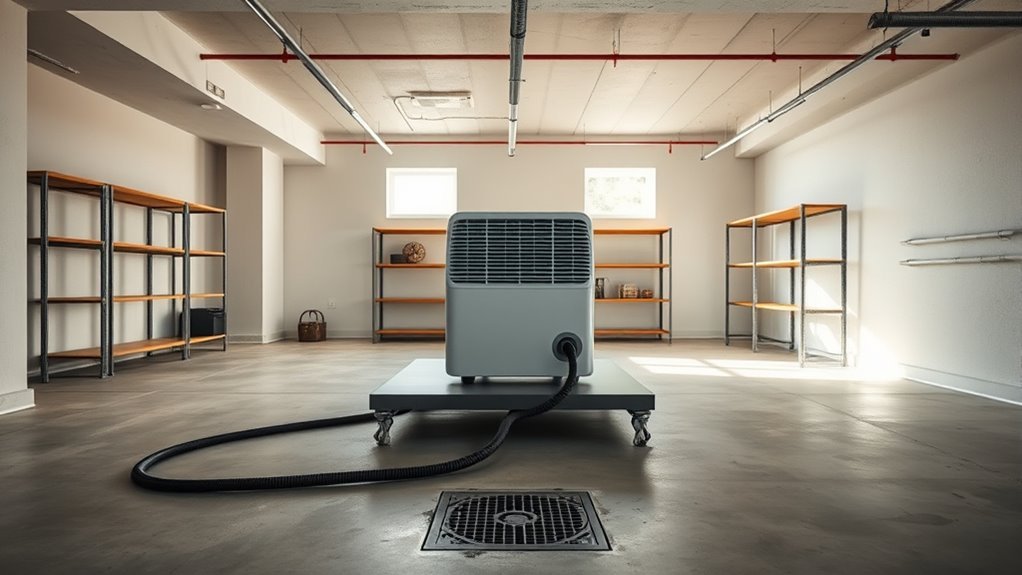
Finding the right spot for a basement dehumidifier is not just about putting it wherever there is an outlet. The best location gives the unit open airflow, safe drainage, stable power, and access to the damp air you actually need to dry. Start with a central, open area, then adjust based on your basement’s moisture readings.
Quick Answer
Put a basement dehumidifier in a central, open spot or near the dampest area, with plenty of clearance around the intake and exhaust. Keep it on a level, dry surface, close to a grounded wall outlet, and route the drain hose downhill to a floor drain if using continuous drainage.
Key Takeaways
- A central, open location works best for whole-basement humidity control.
- Move the unit closer to damp zones if one area has higher humidity, condensation, or musty odor.
- Use a hygrometer to confirm placement instead of guessing.
- Keep indoor relative humidity below 60%, and aim for about 30% to 50% when comfortable and practical, based on EPA moisture guidance.
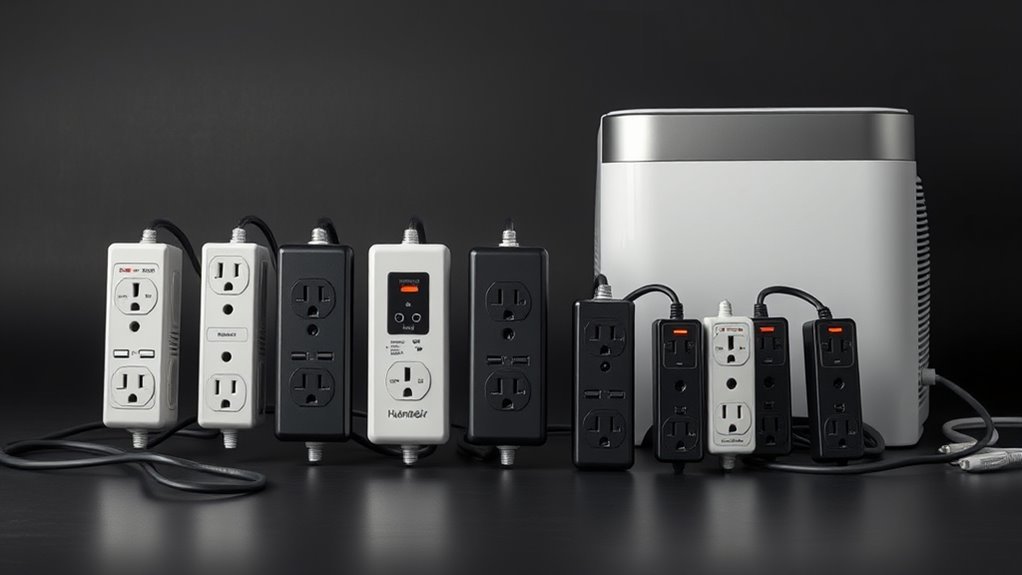
- Never run a dehumidifier through an extension cord, surge protector, or multi-outlet adapter.
At a Glance
| Time Required | 10 to 20 minutes to place and test; 24 hours to confirm humidity results |
| Difficulty | Easy |
| Tools Needed | Hygrometer, grounded wall outlet, drain hose if using continuous drainage, optional fan |
| Cost | Usually $10 to $50 for a hygrometer if you do not already have one; no cost if your unit and hose are already installed |
Where Should a Basement Dehumidifier Go?
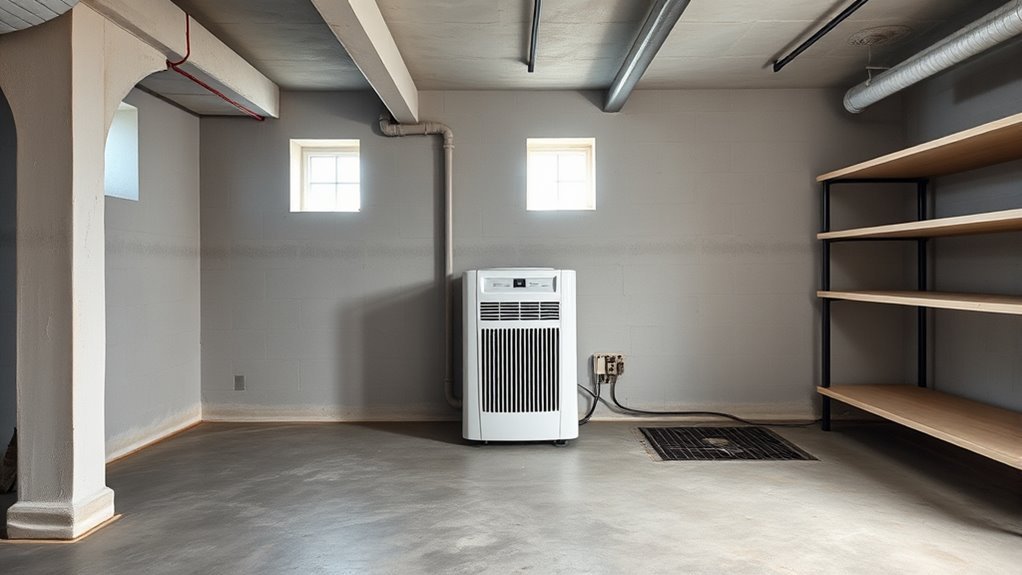
For most basements, the best place for a dehumidifier is near the center of the area you want to dry. A central location gives the fan a better chance to pull in damp air from different parts of the room instead of drying only one small corner. GE Appliances also recommends placing a dehumidifier near the center of the area being dehumidified and allowing open air circulation around it.
Keep the unit on a smooth, level, stable surface that can support the unit when the bucket is full. Do not set it on a damp floor, in standing water, or where water can splash onto the electrical parts. If the basement has a history of seepage, use a safe raised platform that does not block airflow and still keeps the unit stable.
Clearance matters. Follow your model’s manual first, but many portable dehumidifiers need wide open space around the intake and exhaust. GE recommends at least 18 inches of air space on all sides for good circulation. If your manual calls for a different clearance, use the larger safety margin.
Pro Tip: Put a hygrometer in the farthest damp corner, not directly beside the dehumidifier. If that corner stays below your target humidity, the placement is working.
Place Your Basement Dehumidifier Near Moisture Sources
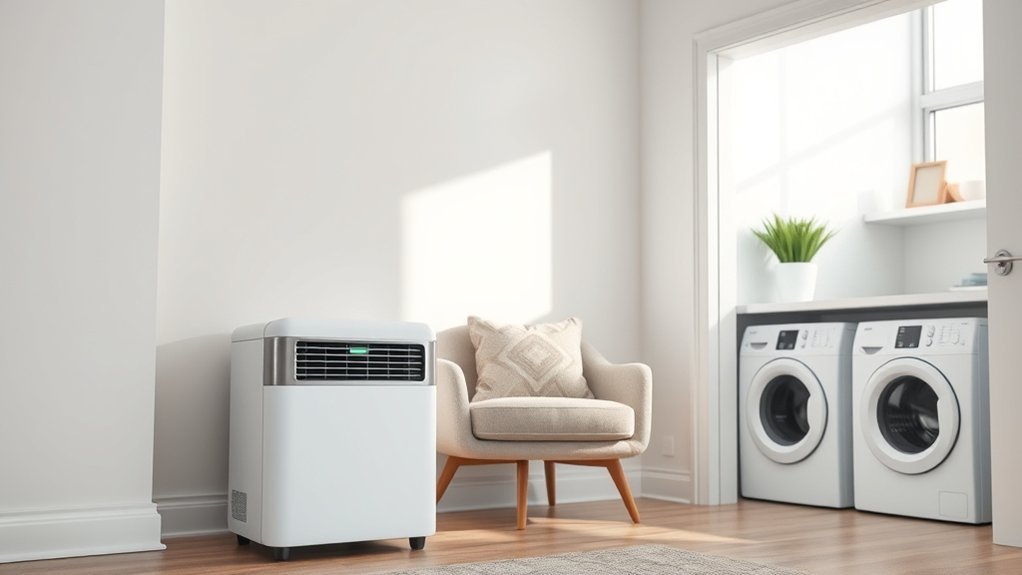
A central location is best for overall control, but the dampest zone may deserve priority. Move the dehumidifier closer to moisture sources if one area has musty odor, condensation, damp concrete, a sump pit, exposed plumbing, laundry equipment, or signs of seepage.
The key is balance. The unit should be close enough to capture damp air, but not wedged into a tight utility corner where airflow is blocked. If the damp area is enclosed, such as a closet or storage room, the dehumidifier may have little effect unless air can move in and out of that space.
Recommended Products

【45-80 Pints for 4500 Sq.Ft Moisture Control】:This dehumidifier for basement and home features flexible 45–80 pints dehumidification output with an ultra-wide 4500 square feet coverage range, offering premium whole-space moisture control. No matter damp basement, humid bathroom, quiet bedroom for restful sleep, large living room, or compact RV traveling space, this multi-functional dehumidifier for home effortlessly sucks up excess moisture,, maintaining ideal humidity levels for all indoor environments.
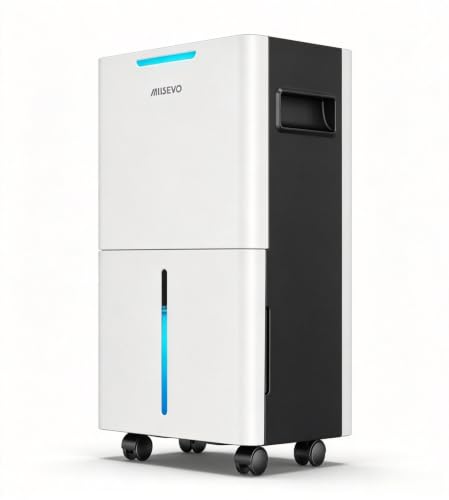
High Efficient Dehumidifier — Equipped with a high-performance compressor, Whether it’s your basement, bedroom, bathroom, living room, bathroom, crawlspace, or even an RV, this dehumidifier effectively keeps your environment dry, comfortable, and healthy.

【Reduce humidity - Enhance comfort】:Massive Capacity + Wide Coverage. This dehumidifier has dehumidification capacity ranging 45- 80 pints—outperforming standard units while covering 4,500 sq. ft. of living space. Great dehumidifier for basements, large house, garages, bedroom, bathroom and gyms where excess humidity triggers cause unpleasant odors and discomfort. The result? A noticeably drier, fresher, and more comfortable environment for your entire family.
Target Damp Zones
Start by checking the basement’s dampest zones. Look near exterior walls, floor cracks, sump pumps, laundry areas, water heaters, basement windows, exterior doors, and pipe runs. These spots often reveal moisture through musty smells, condensation, damp boxes, rust, peeling paint, or a higher hygrometer reading.
If one zone reads much higher than the rest of the basement, move the dehumidifier closer while keeping open clearance around it. If the dampness is caused by a leak, seepage, poor grading, or a plumbing issue, fix the water source too. A dehumidifier can control air moisture, but it cannot solve active water intrusion by itself.
Stay Near Appliances
Laundry equipment, water heaters, utility sinks, and sump areas can create localized dampness, especially when ventilation is poor. Place the dehumidifier close enough to draw moist air from these areas, but leave enough room for service access, airflow, and safe electrical use.
Do not assume every appliance is a moisture source. A properly working water heater in a dry utility area may not need special attention. Use a hygrometer to compare the utility area with the rest of the basement, then move the unit only if the readings prove that area is wetter.
Use Air Circulation
Air movement helps the dehumidifier treat more than the air immediately around it. Keep interior doors open when you want to dry connected basement rooms, and keep exterior doors and windows closed while the unit is running so new humid air is not constantly entering.
If one corner stays damp, use a small fan to move air from that zone toward the dehumidifier. Do not point a strong fan directly into the unit from a few inches away; the goal is gentle room circulation, not forced airflow that interferes with the intake.
Keep Airflow Clear Around the Unit
Blocked airflow is one of the easiest ways to make a basement dehumidifier perform poorly. Avoid placing it tight against a wall, behind furniture, inside a closet, under a shelf, or directly beside stored boxes. The unit needs room to pull humid air in and push drier air out.
Keep dust, lint, and laundry debris away from the intake. Check the filter regularly, especially if the unit sits near a dryer, workshop, litter area, or storage space. Restricted airflow can reduce moisture removal and may contribute to frost or overheating problems.
Note: If your dehumidifier removes water quickly but the basement still feels damp, placement may not be the only issue. The unit may be undersized, the basement may have outside air leaks, or there may be an active moisture source that needs repair.
Recommended Products

Upgraded High-Efficiency Dehumidification:In order to improve the efficiency,Dehumidifier equipped dual semiconductor dehumidifiers use thermoelectric cooling to remove moisture from the air improves air quality by reducing humidity, and runs quietly. Create a more comfortable environment for you

TWO DEHUMIDIFIER MODES: The dehumidifier offers a powerful mode that efficiently reduces humidity, quick and effective moisture elimination. Additionally, it has a sleep mode with a low-speed operation that operates quietly (< 30 dB) while you sleep

1600 Sq.Ft High Capacity Dehumidifier- The GoGuess basement dehumidifier is equipped with a quiet yet powerful compressor that efficiently extracts up to 21 pints of moisture per day (tested at 95°F and 90% RH). Perfect for use in basements, offices, bathrooms, bedrooms, kitchens, storage areas, living rooms, laundry spaces, garages, crawl spaces, and RVs. It helps maintain a healthy humidity level between 30% and 70%, promoting a more comfortable and healthier indoor environment
Set the Right Basement Humidity Target
Placement only matters if you are measuring the result. Use a hygrometer to track relative humidity in the basement. The U.S. Environmental Protection Agency recommends keeping indoor relative humidity below 60%, ideally between 30% and 50% if possible.
For many basements, a practical target is around 45% to 50%. If you see condensation on windows, pipes, or cold surfaces, lower the setting a little and improve air movement. If the air feels uncomfortably dry, raises static electricity, or irritates your nose or throat, do not force the unit lower than needed.
A dehumidifier should be judged by the humidity reading in the dampest usable part of the basement, not by the number on the unit’s display alone.
Avoid Common Basement Placement Mistakes
One of the biggest mistakes is putting the dehumidifier in a corner because it is out of sight. Corners often have weak air movement, so the unit may dry the air around itself while the rest of the basement stays humid. Another mistake is hiding the unit behind storage bins, furniture, or laundry baskets.
Also avoid placing the unit directly in the path of HVAC supply air or return air. Fast-moving conditioned air can affect the humidistat reading and may keep the dehumidifier from sensing the basement’s true moisture level.
Do not place the unit where people can trip over the cord or drain hose. Keep the hose secured, sloped correctly, and away from walkways. If the basement layout forces the hose across a traffic path, choose a safer drain route or use the bucket instead.
Warning: Plug the dehumidifier directly into a properly grounded wall outlet. Do not use an extension cord, surge protector, or multi-outlet adapter. If the only outlet is too far away, have a qualified electrician install a safer outlet location.
Choose Placement Based on Your Basement Layout
Different basement layouts need different placement strategies. Use the layout first, then fine-tune with humidity readings.
- Open unfinished basement: Start near the center, away from walls and storage piles. This usually gives the best whole-room airflow.
- Finished basement: Place the unit in the room with the highest humidity, and keep interior doors open if you want nearby rooms treated too.
- Laundry or utility basement: Place the unit near the damp area, but not so close that heat, lint, or service access becomes a problem.
- Partitioned basement: One dehumidifier may not dry closed-off rooms. Open doors, add a fan, or use a second unit for the isolated space.
- Basement with a sump pump: Keep the unit near the sump area only if readings are higher there. Do not place it where splash, overflow, or standing water could reach the unit.
Move Your Basement Dehumidifier With the Seasons
Basement moisture changes through the year, so the best location may change too. In humid summer weather, moisture often enters through exterior doors, windows, foundation walls, and air leaks. During colder months, condensation may show up on cold pipes, windows, or rim joists.
Do not move the unit just because the calendar changes. Move it because the hygrometer, condensation, or musty odor tells you the moisture pattern has changed.
Summer Moisture Hotspots
In summer, start with a central location and watch readings near windows, exterior doors, laundry equipment, and foundation walls. Keep outside doors and windows closed while the dehumidifier runs. If a particular area stays above your target, shift the unit closer while maintaining open airflow.
Winter Pipe Condensation
In winter, check cold pipes, basement windows, and poorly insulated rim joists for condensation. If the basement temperature drops near the lower operating limit for your model, a standard compressor dehumidifier may remove less water or develop frost. GE Appliances notes that dehumidifiers generally do not operate satisfactorily below 41°F because coils can freeze.
If your basement is often cold, look for a model rated for low-temperature operation, keep the filter clean, and avoid blocking airflow. If the unit repeatedly frosts, unplug it and follow the manufacturer’s troubleshooting instructions.
Seasonal Repositioning Tips
Use this simple seasonal placement guide as a starting point, then verify with a hygrometer.
| Season | Placement Check |
| Summer | Start central; test near windows, exterior doors, laundry areas, and foundation walls. |
| Winter | Check cold pipes and windows for condensation; watch for frost on the unit. |
| Spring | Watch for seepage, wet storage areas, and humidity spikes after rain. |
| Fall | Return to a central location if humidity is balanced across the basement. |
| Anytime | Move the unit if the dampest area stays above target after 24 hours. |
Set Up Drainage and Power the Right Way
Continuous drainage is useful in a basement because it lets the dehumidifier run without frequent bucket emptying. If your unit uses gravity drainage, the hose should slope downward from the dehumidifier to the floor drain with no kinks, loops, or upward sections that trap water. If the drain is higher than the outlet, use a dehumidifier with a built-in pump or a properly installed condensate pump.
Keep the hose end secured so it cannot pop out of the drain. After the first cycle, check that water is actually flowing through the hose and not leaking behind the unit. Clean the hose occasionally if you see slime, slow drainage, or musty odor.
Place the dehumidifier close enough to a grounded outlet that the factory cord reaches safely. GE Appliances advises against using extension cords, surge protectors, or multi-outlet adapters with dehumidifiers.
Recommended Products

【The Undisputed Champion — Industry‑Leading Dehumidifier Brand】When you choose AEOCKY, you get double market validation. In 2025, AEOCKY was an industry‑leading dehumidifier brand on Amazon US. This means you’re not just choosing a flagship from a market leader, but the top choice proven by millions of real users—representing the ultimate combination of performance, quality, and trust.
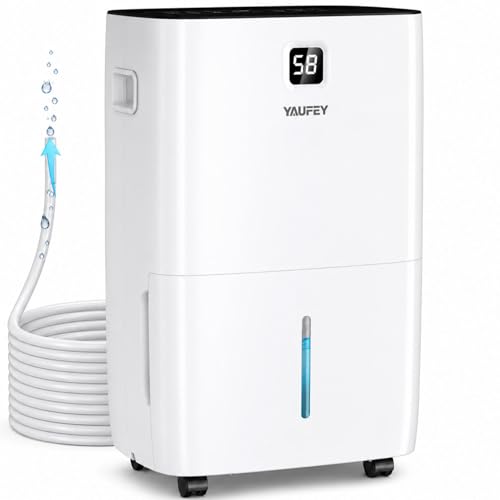
Dehumidifier for Basement: This dehumidifier for home removes up to 150 pints (95℉, 90% RH) of moisture per day and with a maximum dehumidification area of 8500 square feet. This dehumidifier with drain hose has a dehumidification range of 30% to 80%, increasing or decreasing by 5% at a time, which you can adjust to your preferred humidity level. In addition, this basement dehumidifier has 3 modes for you to choose from - Living Area (50% RH), Basement (45% RH) and Continuous (CO).

HIGH CAPACITY PERFORMANCE: Removes up to 90 pints of moisture per day with a high-efficiency compressor, covering large spaces up to 5000 sq. ft., including basements, garages, and living rooms.
How to Test If Your Placement Is Working
Give the unit at least 24 hours in one location before judging the result. Then compare humidity readings in three places: near the dehumidifier, in the dampest area, and in the farthest usable corner of the basement.
- If all readings are below target: the location is working.
- If only the area near the unit is dry: improve airflow or move the unit more central.
- If one closed room stays damp: open the door, add a fan, or use a separate unit.
- If readings stay high everywhere: check unit size, filter condition, outside air leaks, drainage, and possible water intrusion.
- If the unit runs constantly but collects little water: check the temperature, filter, humidity setting, and manufacturer troubleshooting guide.
Frequently Asked Questions
Does it matter where I put my dehumidifier in the basement?
Yes. Placement affects airflow, drainage, safety, and how evenly the unit controls humidity. A central, open spot is usually best for the whole basement, while a spot closer to the dampest area may work better for localized moisture.
Should you use a dehumidifier if you have COPD?
A dehumidifier may help if your basement or home is too humid, because high humidity can support mold and dust mites. However, COPD symptoms vary, and air that is too dry can also feel irritating for some people. Measure humidity first and ask your healthcare provider if changes in indoor air affect your breathing.
Is it okay to run a basement dehumidifier for just 12 hours a day?
It can be okay if the basement stays below your target humidity during the off hours. In a very damp basement, 12 hours may not be enough. Use a hygrometer to decide. If humidity rises above 60% when the unit is off, use continuous drainage and let the humidistat cycle the unit as needed.
Can a dehumidifier help with dust mites?
Yes. The National Institute of Environmental Health Sciences recommends using a dehumidifier or air conditioner to maintain humidity at or below 50% as part of a dust mite reduction plan.
Should basement doors and windows be open or closed when using a dehumidifier?
Keep exterior doors and windows closed so humid outdoor air does not keep entering. Keep interior doors open if you want the dehumidifier to treat connected basement rooms.
How far should a basement dehumidifier be from the wall?
Follow your owner’s manual first. As a safe general rule, leave wide open space around every intake and exhaust side. Some manufacturers recommend at least 18 inches of clearance on all sides for good air circulation.
Conclusion
The best place for a basement dehumidifier is usually a central, open spot with strong airflow, safe power, and a clear drainage path. If one area is clearly wetter, move the unit closer to that damp zone without blocking the intake or exhaust. Then let a hygrometer make the final decision. When the farthest damp area stays below your target humidity, your placement is doing its job.
Sources
- U.S. Environmental Protection Agency — A Brief Guide to Mold, Moisture and Your Home — supports indoor humidity targets and mold-prevention guidance.
- ENERGY STAR — Dehumidifiers — supports energy-efficiency and dehumidifier category guidance.
- GE Appliances — Dehumidifier Ideal Operating Conditions — supports central placement, clearance, closed doors/windows, and low-temperature cautions.
- GE Appliances — Dehumidifier Use of Extension Cord or Surge Protector — supports electrical safety guidance.
- National Institute of Environmental Health Sciences — Dust Mites and Cockroaches — supports humidity control for dust mite reduction.

[…] carpet. If you’re setting up in a basement specifically, pair this guide with our basement dehumidifier placement guide for room-level […]