
A typical home dehumidifier can often bring a warm, enclosed room into the 30% to 40% relative humidity range, but the lowest number on its control panel is not a guarantee. Temperature, moisture entering the room, unit capacity, airflow, and the selected technology all determine the lowest RH the equipment can actually reach and maintain.
Quick Answer
Most portable refrigerant dehumidifiers have a minimum setting of about 30% or 35% RH, but many rooms stabilize above that level. A properly designed industrial desiccant system can maintain less than 30% RH and may reach much lower dew points. For normal occupied homes, the preferred range is generally 30% to 50% RH.
Key Takeaways
- A dehumidifier’s minimum setting is not the same as the lowest RH it can achieve.
- Many current home units stop at a 30% or 35% setting, depending on the model.
- Cold air, open doors, air leakage, wet materials, and undersizing can prevent a unit from reaching its setpoint.
- Industrial desiccant equipment is the usual choice for stable sub-30% RH or low-dew-point applications.
- Very low RH is normally unnecessary in a home and can cause discomfort or damage moisture-sensitive materials.
Warning: Do not use extreme dehumidification as a substitute for repairing a plumbing leak, roof leak, groundwater entry, or drainage problem. Stop the water source first, then use controlled drying to remove the remaining moisture.
How Low Can a Dehumidifier Go?
For most households, the realistic answer is about 30% to 40% RH. Some portable compressor models let you select 30%, while others stop at 35%. For example, current Honeywell specifications include models with a 30% minimum humidistat setting, while Frigidaire says the lowest setting on many of its units is normally 35%.
Those numbers describe the control range, not guaranteed room performance. A unit set to 30% may stabilize at 36%, 42%, or even higher if moisture enters the space faster than the machine removes it.
| Dehumidifier type | Typical role | Realistic low-RH expectation |
|---|---|---|
| Portable refrigerant | Homes, finished basements, laundry areas | Commonly maintains roughly 35%–50% RH; some controls allow a 30% setting |
| Low-temperature refrigerant | Cool basements, restoration, crawl spaces | May work at lower temperatures, but output still drops as the air becomes colder and drier |
| Industrial desiccant | Dry rooms, cold storage, laboratories, manufacturing | Sub-30% RH and low dew points are possible when the system is engineered for the moisture load |
Industrial desiccant systems such as the Munters ML Series are designed for low-humidity production and process environments. They can operate in cold conditions and produce low dew points, but the manufacturer does not promise one universal RH for every room. The result depends on the equipment configuration, temperature, airflow, leakage, and moisture load.
The lowest number on a humidistat tells you what you can request from the unit, not what the room is guaranteed to reach.
Why Most Dehumidifiers Stop at 30% RH
Home dehumidifiers are designed primarily for comfort, condensation control, and mold prevention. According to ENERGY STAR, the generally preferred range for a building is 30% to 50% RH. Manufacturers therefore have little reason to engineer an ordinary portable unit for dry-room conditions.
Compressor Freeze Risk
A refrigerant dehumidifier draws room air across a cold evaporator coil. Water vapor condenses on that coil and drains into a bucket or hose. As room temperature falls, the coil can approach or drop below freezing, allowing frost to form.
- Frost blocks part of the coil surface.
- Restricted airflow reduces water removal.
- The compressor may stop while an automatic defrost cycle warms the coil.
- Repeated defrost cycles reduce the unit’s effective daily capacity.
ENERGY STAR notes that frost can become a performance concern below 65°F and recommends choosing equipment specifically rated for lower-temperature operation when needed. This does not mean every compressor unit stops working at 64°F. Some modern models are rated to approximately 41°F and use automatic defrost, so the correct limit is the one printed in the model’s manual.
Humidistat Sensor Limits
There is no universal rule that a humidity sensor becomes unable to read below 30% RH. Instead, several control issues affect low-end performance:
- Setpoint range: The manufacturer may allow settings down to 30% or 35% because that covers the product’s intended use.
- Accuracy: The built-in sensor may differ from a separate hygrometer by several percentage points.
- Placement: A sensor beside the unit may read the locally dried discharge air rather than the average room condition.
- Control hysteresis: The machine may stop at the setpoint and wait until RH rises several points before restarting.
- Air mixing: Corners, closets, and areas behind furniture can remain damper than the air near the appliance.
For that reason, a display reading of 30% does not prove that every part of the room is at 30% RH.
Practical Low-End Range
The drier the room becomes, the less water is available for a refrigerant unit to condense during each pass. Moisture removal therefore slows as RH falls. At the same time, small moisture sources become more important, including:
- air leaking around doors and windows;
- outdoor ventilation air;
- people and pets;
- wet concrete, plaster, lumber, or stored materials;
- showers, cooking, laundry, or aquariums;
- soil and plant transpiration;
- groundwater or foundation moisture.
A standard unit may run continuously without reaching its selected minimum if those loads exceed its low-RH removal capacity.
Note: RH is temperature-dependent. Heating the same air can lower its RH even when no water has been removed. For demanding applications, dew point is often a more useful specification because it tracks the air’s actual moisture content more directly.
How Low Can a Dehumidifier Go in Winter?
Winter results depend on whether the space is heated. In a heated home, cold outdoor air often contains little total moisture. Once that air enters and warms up, its RH can become quite low without a dehumidifier. In an unheated basement, garage, or storage area, a compressor dehumidifier may remove less water because the coil spends more time near frost conditions.
Cold-Weather Limits
Do not use one temperature, such as 60°F or 65°F, as a universal operating cutoff. Check the manufacturer’s published range.
- Confirm the minimum operating temperature in the manual.
- Choose an automatic-defrost or low-temperature model for cool rooms.
- Keep the filter and air inlet clean.
- Allow the clearance specified by the manufacturer.
- Expect lower water collection as the air becomes colder or drier.
If frost persists, stop the unit and investigate airflow, room temperature, filter condition, and equipment sizing rather than forcing continuous operation.
Desiccant vs. Refrigeration
A desiccant system passes air through or across a moisture-adsorbing material. The collected moisture is then driven from the desiccant during a heated regeneration process. Because water removal does not depend on maintaining a cold condensing coil, desiccant equipment can perform well in cold spaces and at low dew points.
That capability comes with tradeoffs. A process desiccant system may need regeneration heat, a separate exhaust-air path, ducting, greater electrical service, and a plan for the warm dry air it produces. It should be selected from engineering data rather than a general square-foot claim.
Hi-E Dry and many Ultra-Aire products should not automatically be placed in the desiccant category. They are commonly refrigerant systems designed for restoration, commercial, or whole-home moisture control. A commercial label alone does not prove that a model can maintain 20% RH.
Winter Humidity Targets
For an occupied home, a reasonable winter target is usually within the 30% to 50% range. ENERGY STAR notes that 30% to 40% may help limit window condensation during heating season in colder climates.
- Lower the target if condensation is forming on cold windows or walls.
- Raise it if occupants develop dry skin, throat irritation, frequent static shocks, or other signs of excessive dryness.
- Do not run a dehumidifier merely because it is winter. Measure the RH first.
- Address cold surfaces, poor insulation, and water leaks when condensation persists.
Refrigeration vs. Desiccant Dehumidifiers
| Factor | Refrigerant | Desiccant |
|---|---|---|
| How it removes water | Condenses water on a cold coil | Adsorbs vapor onto a desiccant material |
| Best conditions | Warm to moderate temperatures and ordinary building RH | Cold rooms, low RH, and low-dew-point processes |
| Typical application | Home, basement, crawl space, water-damage drying | Dry room, cold storage, manufacturing, laboratory |
| Main limitation | Frost risk and declining output in cold or dry air | Regeneration heat, ducting, installation complexity, and operating cost |
A refrigerant unit is usually the practical choice when the goal is to maintain a normal building near 40% to 50% RH. A desiccant system becomes more appropriate when the required condition is below 30% RH, the room is cold, or the specification is expressed as a low dew point.
Recommended Products

【The Undisputed Champion — Industry-Leading Dehumidifier Brand】Choose AEOCKY, getting double market validation. According to data independently verified by Stackline, a leading third-party data analytics company, AEOCKY was an industry‑leading dehumidifier brand on Amazon U.S. in 2025. Meanwhile, it stands as a technology-leading rotary desiccant dehumidifier brand on Amazon. This isn’t just an appliance—it’s a complete humidity-control solution for small spaces. Skip low-performance alternatives and trust a brand recognized by the market.
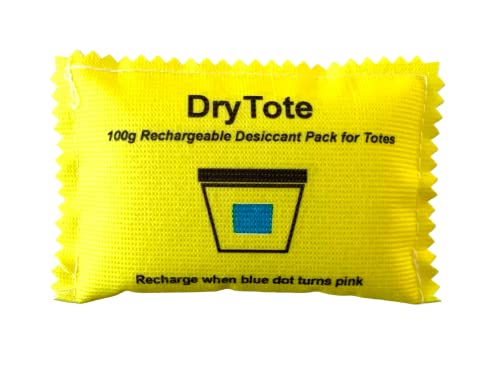
RECHARGES IN THE MICROWAVE OR OVEN: Dry the pack out in minutes and reuse it for years - no throwaway packets. Great for 3D printer filament, suitcases, closets, and seasonal storage.

Convenient To Carry: One desiccant pack measures 5.5x3.1 inches in size and weighs 100 grams, making it very lightweight and compact, making it easy to carry.
Which Dehumidifiers Go Below 30% RH?
Equipment that reliably operates below 30% RH usually falls into one of three groups:
- Industrial desiccant dehumidifiers: Designed for low-dew-point manufacturing, storage, laboratory, and cold-room applications.
- Engineered hybrid systems: Combine cooling, reheating, desiccant drying, or staged dehumidification to meet a defined process condition.
- Specialized environmental chambers: Control temperature, RH, airflow, and sometimes pressure inside a tightly sealed enclosure.
Do not select a system only because the product page uses words such as “commercial,” “high capacity,” or “whole home.” Ask the supplier for performance data at your actual entering-air temperature and RH.
Pro Tip: For a sub-30% project, give the supplier the room volume, indoor temperature, outdoor design conditions, air-change rate, number of occupants, moisture-producing processes, door-opening schedule, and required RH or dew point. That information is more useful than floor area alone.
Recommended Products
![wisedry 4 x 500 Grams [4.4 lbs] Rechargeable Silica Gel Car Dehumidifier, Microwave Fast Reactivated Desiccant Packets Large for Gun Safe Closet Basement Garage Storage Moisture Absorber Bag Reusable](https://m.media-amazon.com/images/I/51pHUtcOd3L._SL500_.jpg)
✅ [ NO MORE FOGGY WINDOWS ] - Wisedry car dehumidifier bag reduces the misting on car windows which can be a problem in cold winter mornings. Thanks to its high moisture absorption, each 500g silica gel adsorbs 150g(max 180g) of moisture! Also suitable for preventing moisture in other larger spaces like cupboard, gun safes, storage room, tool shop, garage, RV, boat, basement etc.

✅ 1️⃣ High-Efficiency Moisture Absorption Our Activated Alumina Desiccant offers superior absorption power—up to 10× stronger than regular silica gel—providing faster drying and longer-lasting humidity control for your 3D printer desiccant and polydryer systems.

High Absorption Capacity: Viktairy desiccant beads have exceptional moisture absorption, which can absorb up to 35% of its own weight. It is generally estimated that every 40 grams of silica gel can protect up to 30 cubic feet of enclosed storage space
Can a Dehumidifier Dry a Grow Room?
Yes. A properly sized dehumidifier can remove water released through plant transpiration and irrigation. However, a grow room should not automatically be driven to 20% or 30% RH.
Virginia Tech controlled-environment guidance reports that 50% to 80% RH is often considered an appropriate range for controlled-environment crops, while stressing that the best condition varies by crop, cultivar, stage, temperature, and production method.
Temperature and RH should be evaluated together through vapor pressure deficit. As temperature rises and RH falls, VPD increases, meaning the air pulls water from the crop more strongly. Excessive VPD can cause:
- rapid water loss;
- wilting or leaf-edge damage;
- nutrient disorders;
- reduced growth;
- stomatal closure under severe stress;
- greater irrigation demand.
The correct approach is to select a crop-specific VPD range, measure conditions at canopy level, and size the dehumidifier for the plants’ peak water release. Do not assume that the driest possible air produces the fastest growth.
When Very Low Humidity Actually Helps
Very low humidity is useful when a material or process has a documented moisture limit. It should be treated as an engineering condition rather than a general comfort target.
Faster Transpiration Rates
Lower RH can increase plant transpiration when the roots can supply enough water and the stomata remain open. That does not mean lower is always better. Once atmospheric demand exceeds the plant’s ability to replace water, stress rises and gas exchange can decline.
Growers should therefore manage RH with temperature, leaf temperature, airflow, root-zone moisture, crop stage, and VPD. A percentage taken by itself is not enough to predict plant response.
Desert-Like Growing Conditions
Arid-adapted species may tolerate drier air than tropical plants, but even desert plants are not proof that a continuously controlled room should stay at 20% RH. Species, rooting depth, light level, temperature, irrigation frequency, and acclimation all affect tolerance.
Lower humidity may reduce the duration of leaf wetness and discourage some fungal diseases, but it can also increase irrigation demand and pest pressure from organisms that favor dry conditions. Use crop-specific guidance rather than a universal “desert-like” target.
Best Use Cases
Sub-30% RH is most defensible in applications such as:
- battery, electronics, pharmaceutical, or moisture-sensitive manufacturing;
- environmental test chambers;
- cold rooms where condensation or frost must be prevented;
- specialized film, seed, material, or product storage with a documented specification;
- drying processes designed around a controlled dew point.
Basements, crawl spaces, ordinary museums, galleries, and occupied rooms do not automatically benefit from 20% RH. Their target should reflect the people, finishes, collections, and materials present.
Signs Your Space Is Too Dry
Humidity near or below 30% may be acceptable for a limited period, but sustained dryness can cause noticeable problems. Common warning signs include:
- dry or cracked skin;
- chapped lips;
- dry eyes, throat, or nasal passages;
- frequent static-electricity shocks;
- curling or brittle leaves on humidity-sensitive plants;
- gaps, shrinkage, or movement in some wood products;
- changes in paper, textiles, adhesives, or other hygroscopic materials.
Check the reading with a separate hygrometer before changing the equipment. A single built-in sensor may not represent the entire room.
Why Room Size Limits Low-RH Performance
A larger room contains more air, but air volume is only one part of the load. The dehumidifier must also remove moisture continually entering from people, materials, soil, ventilation, leaks, and adjoining rooms.
Performance depends on:
- Room volume: Ceiling height matters as well as floor area.
- Starting condition: A wet room requires more initial drying than a mildly humid room.
- Air leakage: Outdoor moisture can replace the water the unit removes.
- Surface moisture: Concrete, plaster, lumber, and furnishings can release stored water for days or weeks.
- Temperature: Cold conditions reduce many refrigerant units’ capacity.
- Door openings: Frequent traffic can overwhelm a tightly controlled dry room.
- Internal moisture generation: Plants, laundry, cooking, and occupants create continuing loads.
ENERGY STAR sizes portable dehumidifiers using both the area and the room’s moisture condition. For demanding low-RH work, a full moisture-load calculation is more reliable than a retail coverage number.
How to Find Your Dehumidifier’s Realistic Minimum
- Check the manual. Confirm the minimum selectable RH and operating-temperature range.
- Use a separate hygrometer. Place it away from the unit’s inlet, outlet, exterior walls, windows, showers, and direct sunlight.
- Close the space. Shut exterior doors and windows while the unit operates, unless the manufacturer or drying plan requires controlled ventilation.
- Remove avoidable moisture sources. Stop indoor laundry drying, cover open water, and repair active leaks.
- Clean the filter. Restricted airflow reduces performance and can contribute to frosting.
- Set up continuous drainage. Confirm that the hose slopes correctly and does not create an electrical or tripping hazard.
- Run the unit through a stable period. Allow at least a full day for ordinary room testing and longer when walls, floors, or contents are wet.
- Compare readings. Record RH and temperature at several locations instead of relying on one display.
- Watch the trend. A falling reading that eventually levels off usually reveals the practical balance between removal and incoming moisture.
If the unit runs continuously and the RH stops falling, the likely causes are insufficient capacity, low temperature, excessive infiltration, an active moisture source, poor air circulation, or a target outside the machine’s practical range.
How To Choose a Dehumidifier Below 30% RH
Begin with the required condition, not a brand name. Determine whether the project truly needs less than 30% RH or whether a normal 35% to 50% setting will solve the problem.
| Feature | Why it matters | What to verify |
|---|---|---|
| Published operating map | Shows performance under actual entering conditions | Capacity at your temperature and RH, not only a high-humidity rating |
| Desiccant technology | Supports cold and low-dew-point operation | Required regeneration heat and exhaust arrangement |
| Control range and accuracy | Determines whether the system can regulate near the target | Sensor accuracy, calibration procedure, and control dead band |
| Moisture-load calculation | Prevents undersizing | Infiltration, occupants, processes, materials, and door openings |
| Drainage or moisture exhaust | Allows unattended operation | Drain route, condensate pump, or desiccant regeneration-air discharge |
| Heat and electrical load | Low-RH equipment can add substantial heat | Power requirements, cooling impact, and installation clearances |
For an industrial project, ask the manufacturer or a qualified humidity-control engineer to guarantee performance at the specified design condition. Do not rely on an unsupported statement that a unit “can reach 20% RH.”
Recommended Products

FAMILY-FRIENDLY MOISTURE CONTROL: Keep your snacks crispy and medications potent by keeping ambient moisture at bay; Crafted with premium, odorless silica gel and non-toxic fabric, Vbeijll Desiccants offer gentle yet effective protection for your home [Note: Packs ≤ 5g feature food safe wrapping for direct contact with food & medicine; Packs > 5g are recommended for placement alongside items rather than direct mixing, without affecting absorption]
✅ [ CLEAR WINDOWS ] - Wisedry silica gel car dehumidifier bag reduces condensation on car windows which can be a problem on cold winter mornings. Thanks to its high moisture absorption, each 500g silica gel adsorbs 150g(max 180g) of moisture! Also suitable for preventing moisture in other larger spaces like cupboards, storage room, tool shop, garage, RV, boat, basement etc.

High-Efficiency & Reusable Moisture Control: Vbeijll desiccant packs can absorb up to 35% of their weight in water vapor, effectively reducing excess humidity to help prevent musty odors, rust, and corrosion; Designed for repeated use, providing a practical and eco-conscious solution for long-term moisture control
Related Guides
Frequently Asked Questions
Should You Use a Dehumidifier if You Have COPD?
A dehumidifier may help when your home is excessively humid, damp, or mold-prone, and the American Lung Association identifies high humidity as a possible COPD trigger. However, very dry air may irritate some people’s airways. Measure the room, avoid extreme settings, keep the appliance clean, and discuss symptom-specific humidity targets with your healthcare professional.
What Is the Lowest Temperature to Run a Dehumidifier?
Use the minimum temperature listed in the model’s manual. ENERGY STAR warns that frost may reduce performance below 65°F and recommends low-temperature-rated equipment for colder spaces. Some current compressor models are designed to operate down to about 41°F, while industrial desiccant systems can work in much colder conditions.
Will a Dehumidifier Help Dry Out Plaster?
Yes, a dehumidifier can assist after the plaster has set and when the building needs controlled moisture removal. First repair any leak or water-entry problem. Combine moderate heat, air movement, and dehumidification, and follow the plaster manufacturer’s instructions. Avoid aggressive surface drying that could contribute to uneven drying or cracking.
Is 30% Indoor Humidity Too Low?
Thirty percent RH is the lower edge of the generally recommended residential range. It may be appropriate during cold weather to limit window condensation, but some occupants, plants, wood products, and sensitive materials may show signs of dryness. Raise the target if discomfort or material movement appears.
Does Continuous Mode Make a Dehumidifier Reach a Lower RH?
Continuous mode makes the unit keep trying instead of cycling at a selected setpoint. It does not remove the physical limits created by temperature, coil frosting, moisture infiltration, or equipment capacity. The room will stop getting drier when incoming moisture equals the unit’s removal rate.
Why Does the Dehumidifier Display Differ From My Hygrometer?
The sensors may have different accuracy tolerances, response times, and locations. The appliance also samples air close to its inlet, while a hygrometer across the room measures another microclimate. Place the separate meter away from walls, windows, water sources, and the dehumidifier’s discharge, then compare readings after conditions stabilize.
Conclusion
Most home dehumidifiers are built to control ordinary indoor moisture, not create an industrial dry room. Their minimum setting is commonly 30% or 35% RH, and the room may stabilize above that number when temperature, leakage, or moisture generation limits performance.
For an occupied home, aim first for a stable condition within the 30% to 50% range. Choose low-temperature refrigerant equipment for cool spaces and a properly engineered desiccant system when a documented process truly requires sub-30% RH or a low dew point. Measure with an independent hygrometer, correct active water problems, and judge the result by the whole room rather than the appliance display alone.
Sources
- ENERGY STAR: Dehumidifiers — residential RH guidance, equipment sizing, operating temperature, frost, drainage, and installation considerations.
- Frigidaire: Room Is Not Dry Enough — typical 35% minimum setting and low-temperature operating guidance.
- Honeywell TP-FIT Dehumidifier Specifications — example of a current compressor model with a 30% to 90% humidistat range and low-temperature rating.
- Munters ML Desiccant Dehumidifiers — industrial desiccant technology for cold and low-dew-point environments.
- Virginia Tech: Controlled Environment Agriculture Facilities’ Atmospheres — crop RH and vapor pressure deficit guidance.
- American Lung Association: Prevent a COPD Flare-Up — weather and high-humidity considerations for people with COPD.

[…] the room itself, aim for a healthy humidity range. EPA recommends keeping indoor relative humidity below 60 percent and ideally between 30 percent and 50 percent where possible. Too much humidity […]
[…] mold growth in homes, which is why the U.S. Environmental Protection Agency recommends keeping indoor relative humidity below 60%, ideally between 30% and 50% when […]
[…] a sealed or conditioned attic, 30% to 50% relative humidity is a useful starting range. Do not treat that as a universal pass/fail number for a vented […]
[…] check the moisture level. A dehumidifier that is too small may run constantly without reaching the target humidity. Capacity also should not be selected from a square-foot marketing claim alone because moisture […]
[…] clean dehumidifier does not normally spread mold. It helps prevent mold by lowering indoor humidity. However, if mold grows inside the bucket, filter area, drain hose, pump reservoir, or other damp […]
[…] if the room becomes too dry. If humidity drops below 30%, reduce the setting or stop the […]
[…] part is usually the more important feature. The U.S. EPA recommends keeping indoor relative humidity below 60%, and ideally between 30% and 50%, to help reduce conditions that support mold growth and dust […]