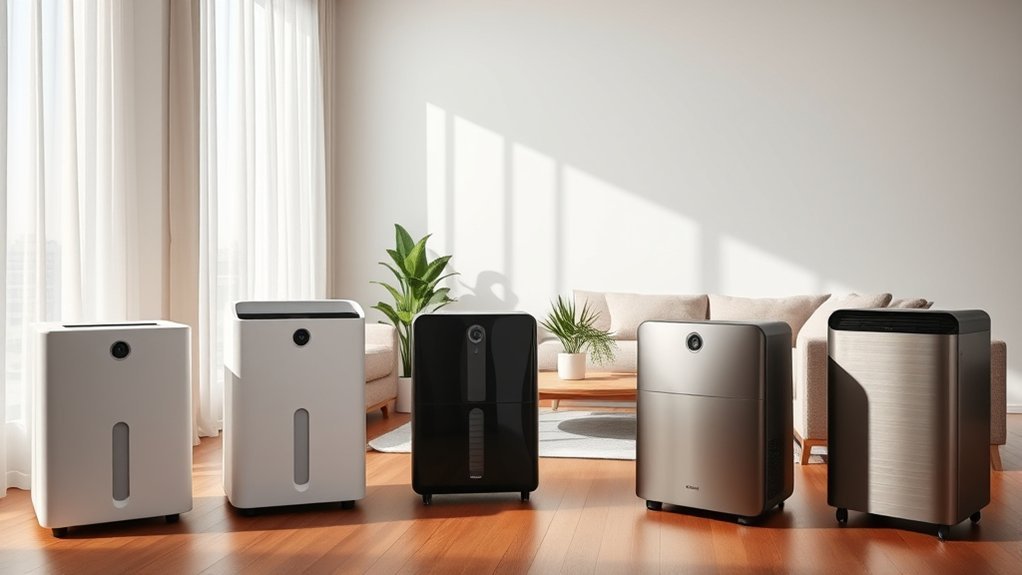
Are New Dehumidifiers More Efficient?
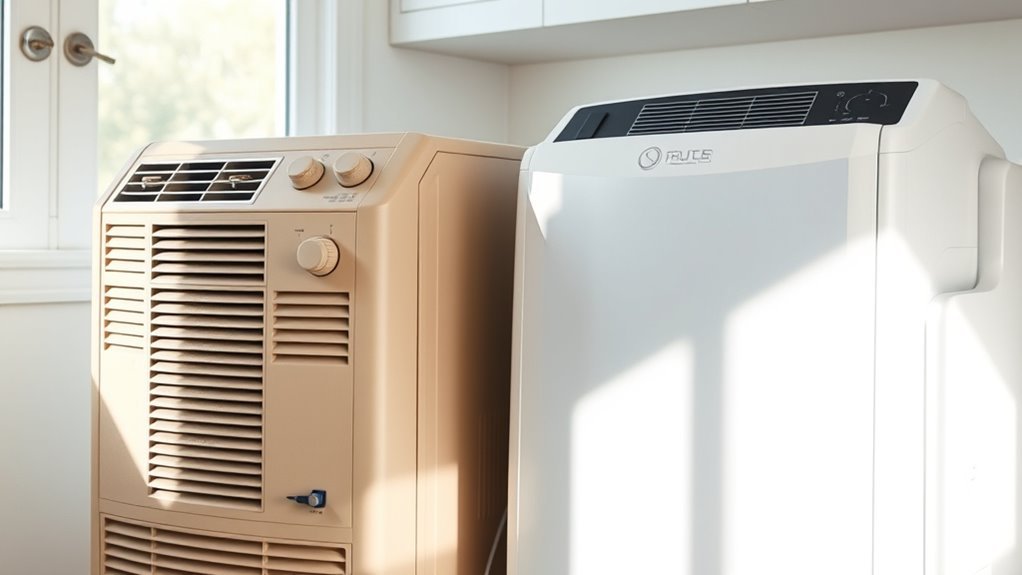
Often, but not automatically. A new ENERGY STAR certified dehumidifier is designed to use about 20% less energy than a similarly sized non-certified model, but age alone does not prove that a new unit will beat your specific old one. Compare Integrated Energy Factor (IEF), capacity, actual runtime, and how well each unit holds the target humidity.
Quick Answer
A newer dehumidifier can use less electricity, but the best evidence is its efficiency rating and real runtime, not its age. ENERGY STAR certified models use about 20% less energy than similarly sized non-certified models, while IEF shows how much water a unit removes per kilowatt-hour. A higher IEF, correct sizing, and normal cycling usually matter more than the model year alone.
Key Takeaways
- An ENERGY STAR certified dehumidifier uses about 20% less energy than a similar non-certified model; that does not mean every new unit automatically uses less electricity than every old one.
- Efficiency is measured by Integrated Energy Factor (IEF), which tells you how many liters of water the unit removes per kilowatt-hour.
- Current ENERGY STAR Version 6.0 criteria took effect on October 1, 2025, so recent certified models follow updated efficiency thresholds.
- A newer unit will not save much if it is undersized, placed poorly, dirty, or used to mask leaks and moisture problems.
- To lower costs, use the humidistat instead of forcing continuous operation, keep the filter clean, close windows, and fix moisture sources first.
- Before keeping an old dehumidifier, check for recalls, rising noise, poor water removal, overheating, and repair costs.
| Question | Best Answer |
|---|---|
| Will a new unit always use less electricity? | No. Compare IEF, capacity, actual runtime, and whether the unit can cycle off after reaching the target humidity. |
| What number should you compare? | Use IEF first, then capacity, wattage, expected runtime, and drainage setup. |
| When is replacement most likely worth it? | When the old unit runs constantly, removes little water, lacks a humidistat, needs costly repair, or appears on a recall list. |
| What should you fix before upgrading? | Leaks, poor drainage, unvented dryers, open windows, clogged filters, and blocked airflow. |
ENERGY STAR says certified dehumidifiers remove the same amount of moisture as similarly sized conventional models while using about 20% less energy. That comparison is certification-based, not age-based. To judge an upgrade, compare the old unit’s daily energy use and humidity control with the new unit’s IEF, capacity, and expected runtime.
The improvement comes from better compressors, refrigeration coils, fans, sensors, and controls. Modern units are also rated under newer test methods, so you can compare models by capacity and energy efficiency instead of guessing from the watt label alone.
A dehumidifier saves the most energy when it removes moisture efficiently, shuts off at the right humidity, and is sized for the room instead of running nonstop.
How Is Dehumidifier Efficiency Measured?
The most useful number to compare is Integrated Energy Factor, or IEF. ENERGY STAR defines IEF as the amount of water a dehumidifier removes, in liters, for each kilowatt-hour of electricity it uses. A higher IEF means the unit removes more moisture for the same amount of energy.
This matters because a dehumidifier can use electricity both while removing moisture and while cycled off. ENERGY STAR’s testing guidance says DOE standards that took effect in June 2019 replaced the older Energy Factor (EF) metric with IEF and changed portable test conditions to better represent cooler basement use.
| ENERGY STAR Portable Capacity | Minimum IEF Under Version 6.0 | What It Means |
|---|---|---|
| 25 pints/day or less | At least 1.70 L/kWh | Small-room certified models must clear this efficiency floor. |
| 25.01 to 50 pints/day | At least 2.01 L/kWh | Common basement-size portable units must remove more water per kWh. |
| 50 pints/day or more | At least 3.30 L/kWh | High-capacity certified units must meet the strongest portable threshold. |
Note: If you are replacing an older dehumidifier, do not compare old “70-pint” labels directly with newer capacity labels. Current capacity ratings use newer test conditions, so the number on the box may look smaller even when the real-world performance is similar.
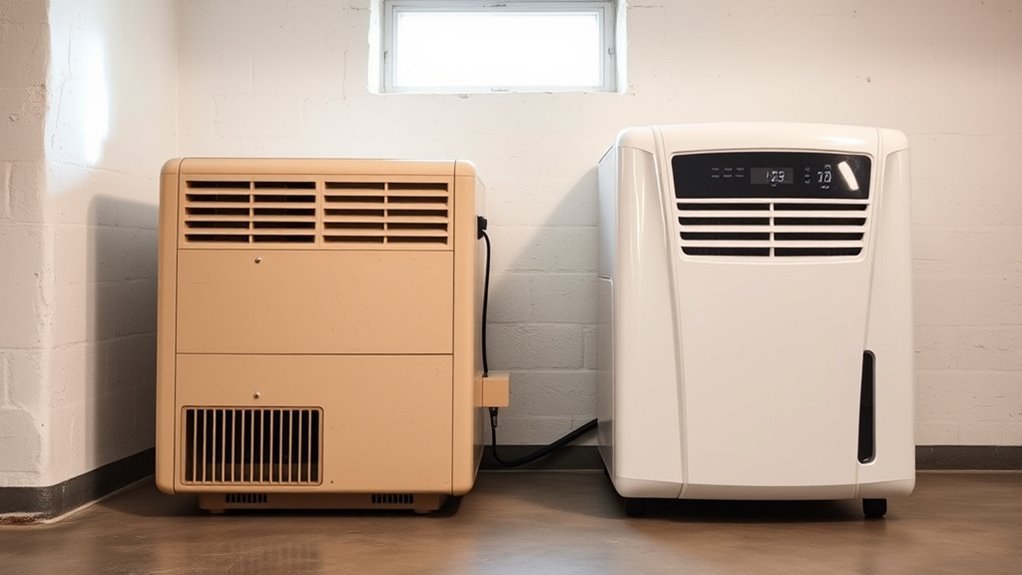
Do Older Dehumidifiers Use More Electricity?
Sometimes, but not because of age alone. An older unit can use more electricity if it removes less water per kilowatt-hour, cycles poorly, or runs longer than necessary. A weak compressor, dirty coils, clogged filter, or inaccurate humidistat can increase runtime while the room still feels damp.
- Constant or excessive runtime: If the unit rarely shuts off, it may be undersized, dirty, failing, or fighting a moisture source such as a leak.
- Poor humidity control: Older controls may overshoot the target humidity or fail to shut the unit off when the air is dry enough.
- Reduced water removal: A worn unit can use electricity without pulling much water into the bucket or drain line.
- More heat and noise: A struggling compressor or fan can make the room warmer and louder while still doing less work.
Wattage alone does not tell the full story. A 500-watt unit running 12 hours uses 6 kWh. A 300-watt unit running 20 hours also uses 6 kWh. The better question is how many pints of water the unit removes for each kWh you pay for.
Why Are ENERGY STAR Dehumidifiers More Efficient?
ENERGY STAR dehumidifiers must meet minimum efficiency criteria based on capacity and IEF. For portable units, ENERGY STAR’s current criteria set different IEF requirements for smaller and larger models, measured in liters per kWh. That makes it easier to compare models that remove different amounts of water per day.
When shopping, look for these features because they can reduce wasted runtime:
- ENERGY STAR certification: Confirms the model meets the current efficiency standard.
- Built-in humidistat: All ENERGY STAR certified dehumidifiers include one, so the unit can cycle on and off around the target humidity.
- Continuous drain option: Helps the unit keep working without frequent bucket emptying.
- Auto restart: Restarts after a power outage, useful for basements and crawl spaces.
- Washable or easy-access filter: Keeps airflow strong and reduces strain on the fan and compressor.
- Low-temperature or defrost operation: Helps in cooler basements where frost can reduce performance.
Recommended Products

True ENERGY STAR Most Efficient 2025 Compressor Dehumidifier (2600 Sq.Ft) - High-Efficiency Dehumidifier - Dr.Prepare dehumidifier features a high-performance and quiet compressor that removes up to 38 pints of moisture per day (at 95°F, 90% RH). Ideal for basements, living rooms, bathrooms, bedrooms, garages, or travel trailers. Being able to adjust humidity from 30%RH to 80%RH, and cut costs bills year-round. (You can verify Dr. Prepare models DDH12LA on the official ENERGY STAR Product Finder.)

【Compact Size, Big Efficiency】 The upgraded 2025 Waykar dehumidifier features cutting-edge rotary compressor technology. It’s more compact but still powerful, capable of removing up to 34 pints of moisture per day (at 95℉, 90% RH), ideal for spaces up to 2,000 sq. ft. such as living rooms, basements, bedrooms, and offices. The adjustable humidity range from 30% to 80% helps you easily maintain the ideal indoor humidity

【Ideal for Large Homes & Basements (Up to 5,000 Sq. Ft)】The Waykar 80 pint dehumidifier efficiently removes up to 80 pints of moisture per day in high-humidity conditions (95°F, 90% RH). In warmer, damp spaces like basements (86°F, 80% RH), it removes 62 pints/day. This dehumidifier for basement is perfect for large areas such as basements, bathrooms, bedrooms, and living rooms. Customize your space by adjusting the humidity level from 30% to 80%, creating a drier and healthier environment
What Size Dehumidifier Is Most Efficient?
A new dehumidifier works most efficiently when its capacity fits the space and moisture load. ENERGY STAR measures capacity in pints removed per 24 hours and sizes portable units by both floor area and how damp the space is before dehumidification.
| Space Condition | Under 2,000 sq. ft. | Over 2,000 sq. ft. |
|---|---|---|
| Slightly to moderately damp | 20–30 pints/day | 30+ pints/day |
| Very damp | 25–40 pints/day | 40+ pints/day |
| Wet or high moisture load | 30–50 pints/day | 50+ pints/day |
Use these rules before buying:
- Measure the area: Estimate the square footage of the room, basement, crawl space, or zone you want to dry.
- Check the moisture level: Musty odor, condensation, damp spots, and visible seepage all point to a higher moisture load.
- Do not undersize: An undersized unit may run nonstop and use more energy than a properly sized model.
- Use a hygrometer: A separate humidity meter helps confirm whether the built-in humidistat is accurate.
- Consider whole-home equipment carefully: Whole-home dehumidifiers should be sized and installed properly, usually by a qualified HVAC professional.
Pro Tip: If you are replacing a unit that worked well, note how often you emptied the bucket. Frequent filling points to a high moisture load, but bucket volume is not the same as rated capacity. See how much water a dehumidifier should collect per day for a better performance check.
Recommended Products

High Capacity Coverage - This 30-pints dehumidifier effectively collects water from damp spaces up to 2,000 Sq.Ft with doors and windows closed. It extracts up to 30 pints of water vapor per day under high-humidity test conditions (95°F, 90% RH), making it perfect for damp spaces. Engineered to establish a clear operating boundary in localized areas, this dehumidifier for basement handles sticky summers and musty rooms, keeping your fabrics and floors dry while maintaining comfortable air

POWERFUL 2,500 SQ. FT. COVERAGE - Stop letting sticky, heavy air dictate your comfort. The BANABIE dehumidifier utilizes a high-efficiency rotary compressor to deliver heavy-duty moisture removal, extracting 32 pints daily (at 95°F, 90%RH). Engineered with a smart integrated airflow system, this unit effectively covers up to 2,500 Sq. Ft., ensuring that your basement, crawl space, or large open floor plans stay bone-dry

Semiconductor dehumidifiers use thermoelectric cooling to remove moisture from the air. They create a drier, more comfortable environment by reducing humidity and improving air quality.
Is a New 50-Pint Dehumidifier Like an Old 70-Pint Model?
Many replacement decisions get confusing because dehumidifier capacity labels changed after DOE updated the test procedure. ENERGY STAR explains that portable units are now tested at 65°F instead of 80°F, which better reflects basement conditions but often produces a lower printed pint rating.
| Old Portable Label | New Approximate Label | Replacement Note |
|---|---|---|
| 30 pints/day | About 20 pints/day | Often enough for smaller damp rooms. |
| 50 pints/day | About 30 pints/day | Compare IEF and actual moisture load before assuming it is weaker. |
| 70 pints/day | About 40–45 pints/day | A newer 40–50 pint model may replace an older 70-pint label. |
Recommended Products

Smart Functions: Dehumidifier for home with smart APP/voice/touch control brings a more convenient living experience, such as setting up the dehumidifier in basement at your fingertips with the APP, even when away. Compatible with Alexa, Google Assistant, and IFTTT. (Support 2.4Ghz WiFi and Bluetooth, need to enable mobile phone positioning.)

4,500 SQ. FT. DEHUMIDIFIER – Removes up to 50 pints of moisture per day with an adjustable humidity setting from 35% to 85%. Perfect for use in basement, bathroom, bedroom, office, kitchen, cellar, or crawlspace. Maintain a healthy 45%-55% humidity range

EASY TO CLEAN WASHABLE FILTER: Capture dust from the air and keep your dehumidifier working efficiently with our easy-to-clean washable filter.
When Should You Replace Your Dehumidifier?
Replace your dehumidifier when it costs more to keep than it is worth, cannot control humidity, or may be unsafe. Age matters less than measured performance. An older unit that still holds the target humidity and passes recall checks may remain usable, while a newer unit that runs constantly and never lowers humidity still needs troubleshooting.
Replacement makes sense when:
- It runs for hours but indoor humidity stays above 60%.
- The bucket collects much less water than it used to under similar conditions.
- You smell musty odors, see condensation, or notice mold returning.
- The unit is loud, hot, leaking, tripping breakers, or showing electrical problems.
- Repair costs are close to the price of a new ENERGY STAR model.
- The model or serial number appears in a safety recall.
Warning: Before using an older dehumidifier, check the CPSC dehumidifier recall list. CPSC currently reports more than 2,000 overheating incidents, about 450 fires, more than $19 million in property damage, and four deaths potentially associated with recalled Gree dehumidifiers. Stop using any recalled unit and follow the recall instructions.
How Can You Lower Dehumidifier Running Costs?
To lower dehumidifier costs, reduce both electricity use and moisture load. EPA recommends keeping indoor relative humidity below 60%, ideally between 30% and 50% if possible. A 50% setpoint sits at the upper end of that ideal range and is a useful starting point; lower the setting only if the space still has a moisture problem.
At a Glance
| Time Required | 15–30 minutes to check settings, airflow, filter, drain, and humidity readings |
| Difficulty | Easy for portable units; professional help recommended for whole-home or crawl-space systems |
| Tools Needed | Hygrometer, vacuum or soft brush, clean cloth, drain hose if supported, and your electric rate from the utility bill |
| Cost | Varies by model, runtime, electricity rate, repair need, and whether drainage parts are required |
Use this formula to estimate your operating cost:
Watts ÷ 1,000 × hours used × electricity rate = cost
Example: a 500-watt dehumidifier running 12 hours uses 6 kWh. At the May 2026 U.S. residential average of $0.1844 per kWh reported by EIA, that costs about $1.11 per day, or about $33 per 30-day month if used every day. A more efficient unit that runs fewer hours can cost much less, while leaks or heavy moisture loads can push costs higher.
| Example Wattage | 12 Hours/Day | 30-Day Cost at 18.44¢/kWh |
|---|---|---|
| 300 W | 3.6 kWh/day | About $20/month |
| 500 W | 6.0 kWh/day | About $33/month |
| 700 W | 8.4 kWh/day | About $46/month |
| Action | Why It Lowers Cost |
|---|---|
| Choose an ENERGY STAR model | Uses about 20% less energy than a similar non-certified model |
| Set the humidistat correctly | Prevents the unit from drying below the level you actually need |
| Clean the filter | Improves airflow and reduces strain on the fan and compressor |
| Seal leaks and vent moisture outdoors | Reduces the amount of water the unit must remove |
| Use continuous drainage | Avoids full-bucket shutoffs during humid periods; if water still stays in the bucket, see why a dehumidifier may not drain through the hose |
| Check rebates and recycling programs | May reduce the upfront cost of upgrading |
What Makes a Dehumidifier Use More Electricity?
Even a good dehumidifier can waste power if the setup is wrong. Avoid these common mistakes:
- Leaving windows open: The unit keeps pulling moisture from outdoor air.
- Setting humidity lower than needed: A lower setpoint can keep the unit running longer. EPA’s ideal indoor range is 30%–50% if possible.
- Blocking airflow: Keep space around the intake and exhaust so the fan can move air freely.
- Ignoring leaks: A dehumidifier cannot fix groundwater seepage, plumbing leaks, or poor exterior drainage.
- Skipping filter cleaning: Dust reduces airflow and can lengthen runtime.
- Using the wrong unit in a cold space: ENERGY STAR notes that frost can reduce performance below about 65°F, so check the model’s low-temperature rating for a cool basement.
How Do You Calculate Dehumidifier Replacement Payback?
Use a break-even check before replacing a working unit. First, calculate the old unit’s daily energy use from wattage and actual runtime, or use measured daily kWh if you already have reliable energy-monitoring data. Then estimate the new unit’s daily use from its wattage and realistic runtime. Do not assume a lower watt label automatically means a lower bill.
Annual energy savings = (old daily kWh − new daily kWh) × electricity rate × humid-use days
Simple payback years = upgrade price ÷ annual energy savings
For example, if an old unit uses 6 kWh per day and a better-sized unit uses 4 kWh per day, the difference is 2 kWh per day. Multiply 2 kWh by your electric rate and the number of days you normally need dehumidification. If the payback is long, cleaning, drainage fixes, or moisture-source repairs may give you a better return than replacement.
Frequently Asked Questions
Are new dehumidifiers actually more efficient?
Often, but not automatically. ENERGY STAR certified dehumidifiers use about 20% less energy than similarly sized non-certified models, but that does not directly compare every new unit with every old unit. Compare IEF, capacity, actual runtime, and humidity control before deciding that a replacement will save electricity.
Do older dehumidifiers use more electricity?
Not always. Age alone does not determine energy use. An older unit may cost more if it runs longer, has restricted airflow, or removes less water for the electricity it uses. Compare daily kWh, water removal, and humidity control with the newer model’s IEF and capacity.
Is a new 50-pint dehumidifier the same as an old 70-pint model?
Sometimes it is close. ENERGY STAR says the DOE test change can make newer portable units show lower capacity ratings than older labels. As a rough comparison, an older 70-pint portable unit may correspond to about 40–45 pints under the newer test conditions, but model-specific performance can vary.
How much does it cost to run a dehumidifier 12 hours a day?
Use the formula watts ÷ 1,000 × hours × electricity rate. A 500-watt unit running 12 hours uses 6 kWh. At the May 2026 U.S. residential average of $0.1844 per kWh, that is about $1.11 per day. Your actual cost depends on the model, humidity load, runtime, and local electric rate.
How much will an electric bill go up with a dehumidifier?
It depends on wattage, runtime, and your electric rate. At 18.44¢/kWh, 12 hours a day costs about $20 per 30-day month for a 300-watt unit, $33 for a 500-watt unit, and $46 for a 700-watt unit. Units that cycle off sooner will cost less.
Is it better to repair or replace an old dehumidifier?
Replace it if it is recalled, shows electrical or overheating problems, cannot control humidity after basic maintenance, or the repair cost is close to replacement cost. Clean the filter and check the drain setup first because those external problems can mimic a failing appliance.
What humidity setting saves the most energy?
A 50% setpoint is a practical starting point because it sits within EPA’s ideal 30%–50% indoor range. If moisture remains a problem, adjust within that range as needed. Setting the target lower than necessary can increase runtime and cost.
Should you run a dehumidifier all day to save energy?
Do not force continuous dehumidification when the room is already at the target humidity. Use the humidistat or target-humidity mode so the compressor can cycle off when the setpoint is reached. If the unit runs almost nonstop and humidity stays high, check sizing, airflow, filters, open windows, and moisture sources.
Conclusion
A new dehumidifier can be more efficient, but model age is not the deciding factor. Compare IEF, capacity, daily kWh, runtime, and humidity control. Check the old unit’s recall status before keeping it, and fix leaks or airflow problems before assuming replacement is the answer. If the old unit runs constantly, cannot hold the target humidity, or costs too much to repair, a properly sized ENERGY STAR model is a stronger upgrade candidate.
Sources
- ENERGY STAR — Dehumidifiers — supports ENERGY STAR savings, buying guidance, humidity settings, and certified model benefits.
- ENERGY STAR — Dehumidifiers Key Efficiency Criteria — supports Version 6.0 effective date, IEF criteria, and efficiency-rating definitions.
- ENERGY STAR — Dehumidifier Testing and Capacity — supports DOE test procedure, IEF, and capacity-rating changes.
- U.S. EPA — Mold Course Chapter 2 — supports indoor humidity guidance below 60%, ideally 30%–50%.
- U.S. Energy Information Administration — Electric Power Monthly Table 5.3 — supports the May 2026 U.S. residential average electricity rate used in the cost examples.
- U.S. Consumer Product Safety Commission — Dehumidifier Recalls — supports recall and fire-safety guidance for older units.