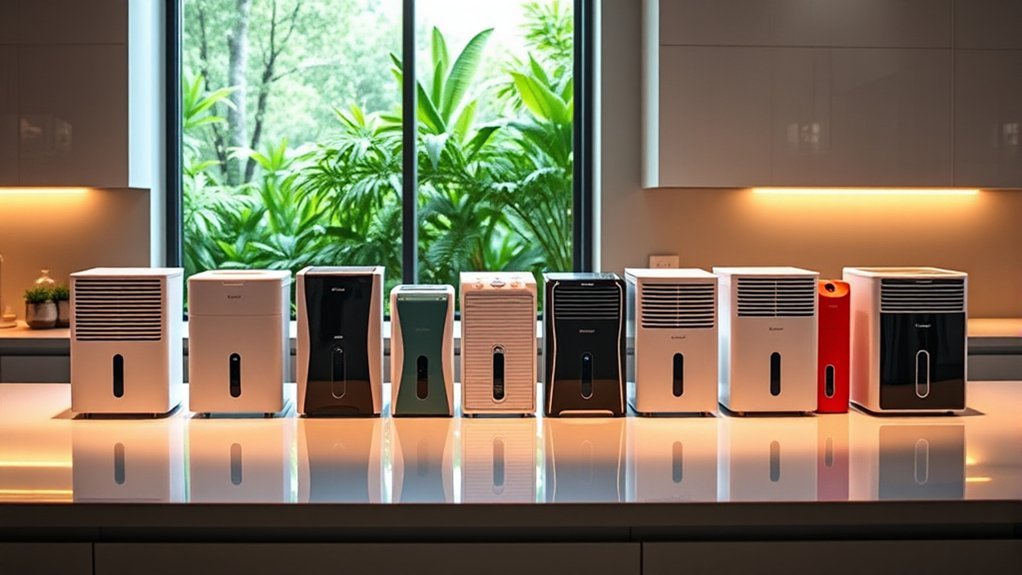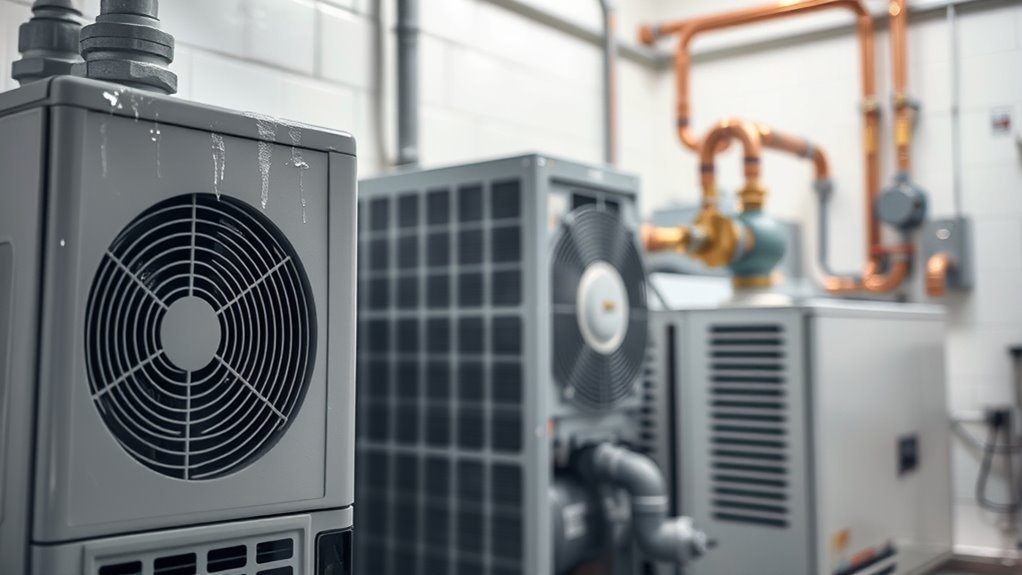
Do dehumidifiers have Freon? Most compressor dehumidifiers contain a sealed refrigerant circuit, but that does not mean every unit uses “Freon.” Freon™ is Chemours’ trademarked brand name for specific refrigerants, while many people use the word loosely for any refrigerant. The exact code depends on the model, and desiccant and thermoelectric dehumidifiers use no refrigerant at all. Check the data plate on your unit to see what it holds.
Key Takeaways
- Compressor models use refrigerant: Desiccant and thermoelectric units do not use a chemical refrigerant loop.
- Freon™ is a brand name: It is not a generic synonym for every refrigerant.
- The data plate is definitive: The rating label lists the exact refrigerant code and factory charge.
- Current EPA rule: EPA’s technology-transitions table lists residential dehumidifiers at a 700 GWP limit for manufacture and import from January 1, 2025.
- Safe disposal matters: Never vent refrigerant; use appliance recycling or a certified recovery channel.
At a Glance
| Time Required | About 5–10 minutes to check the label; longer if you need leak troubleshooting or disposal planning. |
| Difficulty | Easy to identify the model; difficult and potentially unsafe to service the sealed system yourself. |
| Tools Needed | Flashlight, phone camera, owner’s manual, and the manufacturer’s support page if the label is missing. |
| Cost | Free to inspect; service, repair, or replacement depends on the model, warranty, and availability of certified support. |
Do Dehumidifiers Have Freon? What Is Actually Inside
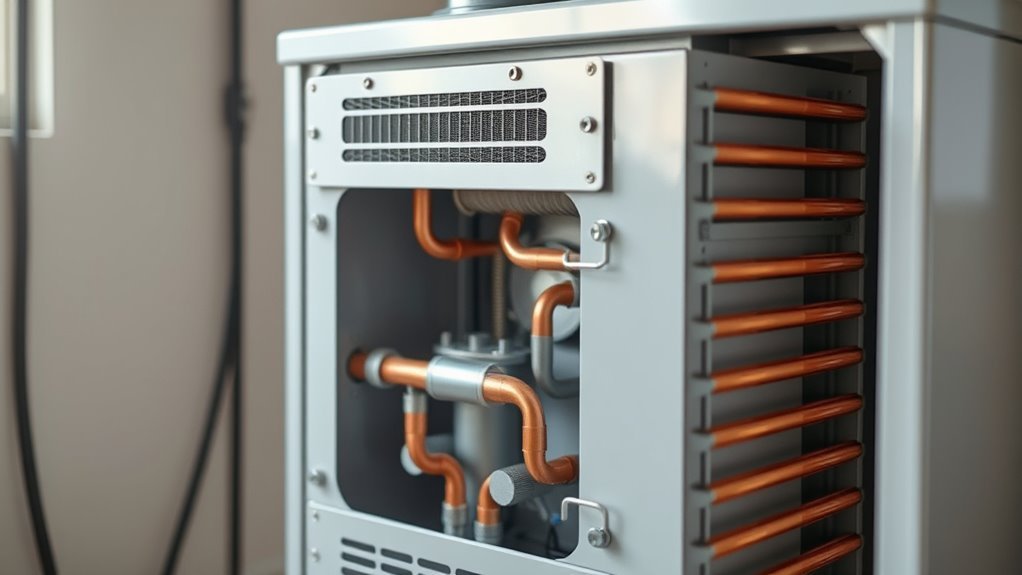
Most full-size portable dehumidifiers rely on a compressor (see what a refrigerant dehumidifier is), evaporator coil, condenser coil, and a factory-sealed refrigerant loop. In everyday conversation, people often call that refrigerant “Freon,” but Freon™ is a trademarked brand name, not the technical name for every refrigerant. It also is not limited to just one older chemical.
The exact refrigerant inside your unit depends on the model and the date it was made. Older dehumidifiers may use legacy refrigerants, while current residential dehumidifier guidance from EPA points to lower-GWP options. The important rule is simple: never guess the refrigerant from the brand alone.
EPA’s current technology-transitions table lists residential dehumidifiers at a 700 GWP limit with a January 1, 2025 compliance date.
What Refrigerant Is in Your Dehumidifier?
The only reliable way to identify the refrigerant is to read the silver or white data plate on the appliance. EPA’s SNAP list for residential dehumidifiers includes many acceptable substitutes, such as R-513A and, for new equipment under use conditions, HFC-32 (R-32) and R-454B. Refrigerants are not interchangeable just because they are refrigerants, so match the code on the plate to your exact appliance.
| Refrigerant | Safety Class | Where You Might See It | What It Means For A Dehumidifier |
|---|---|---|---|
| R-22 | A1 (Non-flammable) | Legacy equipment built before the HCFC phaseout matured | An older ozone-depleting HCFC. EPA says U.S. production and import ended on January 1, 2020, though recovered/reclaimed supply can still service existing systems. |
| R-134a | A1 (Non-flammable) | Older portable appliances and some sealed cooling equipment | Non-ozone-depleting, but older and higher-GWP than newer low-GWP options. |
| R-410A | A1 (Non-flammable) | Older HVAC and refrigeration equipment | A higher-GWP blend, above the 700 GWP limit EPA sets for newly made residential dehumidifiers. Do not assume it is right for a dehumidifier just because it appears in other cooling equipment. |
| R-513A | A1 (Non-flammable) | One of many substitutes on EPA’s SNAP list for residential dehumidifiers | EPA’s current SNAP page lists R-513A as acceptable in residential dehumidifiers (new and retrofit equipment). |
Note: Some newer units list R-32 or a hydrocarbon refrigerant on the label. These are mildly flammable or flammable, so never puncture lines and follow the manual. Always match the exact code on the data plate to the exact appliance listing.
Pro Tip: Take a clear photo of the data label with your phone. If the label is faded, the photo can still help a recycler, the manufacturer, or a technician confirm the exact model and refrigerant class.
Which Dehumidifiers Do Not Use Refrigerant?
If you want a unit that runs without a compressor refrigerant loop, look at the technology first. The main non-refrigerant options are desiccant and thermoelectric models.
| Dehumidifier Technology | Uses Refrigerant? | Moisture Removal Rate | Best Operating Conditions |
|---|---|---|---|
| Compressor-Based | Yes (Sealed loop) | High | Basements, larger rooms, and warmer spaces where a compressor can run efficiently |
| Desiccant | No (Absorbent wheel) | Moderate | Cooler rooms, garages, RVs, and other spaces where compressor models may struggle |
| Thermoelectric (Peltier) | No (Solid-state) | Very low | Small closets, bathrooms, and compact desktop spaces |
- Compressor dehumidifiers: A fan pulls moist air across refrigerant-cooled coils, the water condenses, and the dried air returns to the room.
- Desiccant dehumidifiers: Air passes through a moisture-absorbing wheel, and heat helps drive the water into a collection system without a refrigerant loop. See how desiccant dehumidifiers work.
- Thermoelectric dehumidifiers: A Peltier module creates a cold side and a warm side, letting water condense without moving refrigerant. See how Peltier dehumidifiers work.
Recommended Products

【The Undisputed Champion — Industry-Leading Dehumidifier Brand】Choose AEOCKY, getting double market validation. According to data independently verified by Stackline, a leading third-party data analytics company, AEOCKY was an industry‑leading dehumidifier brand on Amazon U.S. in 2025. Meanwhile, it stands as a technology-leading rotary desiccant dehumidifier brand on Amazon. This isn’t just an appliance—it’s a complete humidity-control solution for small spaces. Skip low-performance alternatives and trust a brand recognized by the market.

✔ EASY TO USE: This mini dehumidifier is spill and mess free. Just hang and go! Non-toxic, child and pet safe! Your small rooms will be dry and odor free. Works for areas up to 333 cubic feet.

Semiconductor dehumidifiers use thermoelectric cooling to remove moisture from the air. They create a drier, more comfortable environment by reducing humidity and improving air quality.
How Can You Tell What’s Inside It?
The silver or white rating plate on the appliance is the only definitive source for the refrigerant code and factory charge. On many models, the label is on the rear panel, inside the cabinet behind the water bucket, or near the filter access area. If the label is missing or worn off, check the owner’s manual or the manufacturer’s support page.
- Unplug the dehumidifier: Always disconnect power before opening panels or moving the appliance.
- Find the specification plate: Look for the label with electrical ratings and refrigerant information.
- Read the refrigerant line: The label may say “Refrigerant,” “Refrig,” or “Design Charge.”
- Record the code: Write down the exact refrigerant identifier, such as R-22 or R-513A.
- Record the charge weight: The factory charge is often listed in ounces or grams.
Note: The refrigerant code is the label that matters, not the brand color, cabinet style, or marketing name on the box.
Recommended Products

Packaged 20 per pack. Self-Adhesive
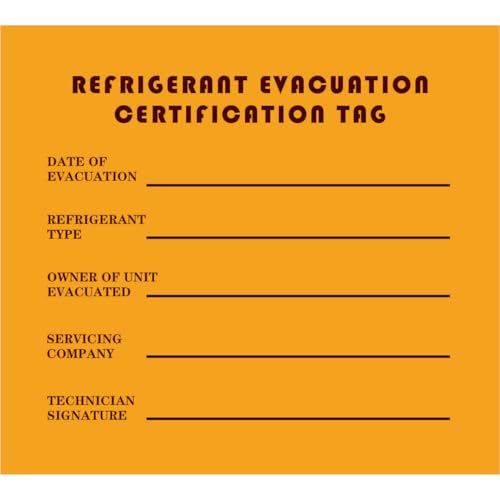
Package Includes:50 refrigerant recovery tags Stickers Per Package

Packaged 20 per pack. Self-Adhesive
How Does Refrigerant Help Remove Moisture?
A compressor dehumidifier moves refrigerant through a closed loop:
- Evaporator chilling: The refrigerant expands and cools the evaporator coil below the air’s dew point.
- Condensation: A fan pulls humid air over the cold coil, and the water condenses into droplets.
- Collection: The water drains into the bucket or out through a hose.
- Reheating: The air passes over the warm condenser coil before it returns to the room.
Because the system is hermetically sealed, the refrigerant is not “used up” during normal operation. If the unit stops removing water while the compressor keeps running, a sealed-system leak or another mechanical fault may be involved.
How Do You Know If Your Dehumidifier Is Leaking Refrigerant?
Poor water removal does not always mean the refrigerant is gone. Dirty filters, low room temperature, and blocked airflow can cause similar symptoms. Use the table below to separate common problems from a possible sealed-system leak.
| Visual / Operational Symptom | Primary Suspect | Recommended Action |
|---|---|---|
| Solid ice block covering the coil | Dirty air filter or a cold room | Clean the filter, raise the room temperature, and use any auto-defrost setting if available. |
| Partial ice or a single frosted spot on the coil | Possible low refrigerant or a sealed-system issue | A qualified technician should inspect the unit; replacement is often the practical choice. |
| Compressor runs constantly; little or no water is collected | Refrigerant loss, airflow restriction, or compressor fault | Check the filter and the room conditions first; if the problem continues, stop using the unit and get it inspected. |
| Oily residue around copper tubes or joints | Possible active refrigerant / oil leak | Unplug immediately and do not puncture, solder, or recharge the unit yourself. |
What Should You Do If You Suspect a Leak?
- Turn the unit off and unplug it.
- Ventilate the room. Open a window or door if the area is small or poorly ventilated.
- Check the easy fixes first. A dirty filter, cold room, or blocked intake can look a lot like a refrigerant problem.
- Inspect for oil residue or damaged tubing. If you see oil near sealed joints, stop using the unit.
- Decide whether repair makes sense. Small portable dehumidifiers are often replaced instead of sealed-system repaired unless the unit is under warranty or the manufacturer offers service.
Warning: Never puncture copper tubing, attach automotive recharge cans, or add stop-leak additives to a dehumidifier. If the refrigerant system is damaged, let a qualified technician or appliance recycler handle it.
Why Do Dehumidifiers Need Special Disposal?
Compressor dehumidifiers should not go into regular household trash or ordinary metal recycling because refrigerant and compressor oil must be handled correctly. EPA says that persons recovering refrigerant from small appliances in the waste stream are not required to be Section 608 certified, but the refrigerant still needs to be properly recovered before disposal. EPA appliance disposal guidance is the safest place to start, and our guide on how to recycle a dehumidifier lists practical options.
| Disposal Hazard | Environmental / Safety Risk | Compliant Action |
|---|---|---|
| Venting refrigerant | Climate harm and, for older refrigerants, ozone damage | Keep the circuit sealed and use an approved recovery channel. |
| Crushed tubing or cabinet compaction | Pressurized release, frostbite risk, and possible ignition risk in systems using certain low-GWP refrigerants | Do not crush, cut, or dismantle lines before recovery. |
| Oil contamination | Soil and groundwater contamination if landfilled | Use a certified appliance recycler or a municipal HHW program. |
Where Can You Recycle a Dehumidifier Safely?
Use disposal options that specifically accept refrigerated appliances:
- Municipal household hazardous waste programs: Ask your city or county waste department about appliance drop-off days.
- Utility recycling or rebate programs: Many electric utilities offer pickup or incentives for working refrigerated appliances.
- Retailer haul-away: If you buy a replacement, ask whether the retailer will remove the old unit.
- Scrap metal recyclers: Confirm that the facility can recover refrigerant before you drop the unit off.
- Transport upright: Keep the dehumidifier upright so compressor oil does not drain into the wrong part of the system.
Note: Do not assume a general electronics recycling bin will accept a dehumidifier. Call ahead and confirm that the location accepts refrigerated white goods.
Frequently Asked Questions
Do all dehumidifiers have a refrigerant?
No. Compressor dehumidifiers use a refrigerant loop, but desiccant and thermoelectric units do not. The data plate tells you which technology your appliance uses.
How do I know if my dehumidifier is low on refrigerant?
Common signs include constant compressor operation with little water collection, a frosted spot on the coil, or oily residue near sealed joints. Airflow problems can look similar, so clean the filter and check room conditions first.
Can you recharge a home dehumidifier with Freon?
Not as a DIY job. Most consumer dehumidifiers are sealed systems, and any leak must be repaired first by a qualified technician. In many cases, replacement is cheaper and simpler than repair.
Is leaked dehumidifier refrigerant dangerous?
Small leaks usually pose limited acute risk in open air, but any leak should be taken seriously. Unplug the unit, ventilate the room, and avoid breathing concentrated gas in a small enclosed space.
Can I put a dehumidifier in household trash?
No. The final disposer is responsible for having the refrigerant recovered. Use a municipal program, retailer haul-away, or a certified appliance recycler that can recover the refrigerant first.
Which refrigerants are allowed in new residential dehumidifiers?
EPA sets a 700 GWP limit for new residential dehumidifiers from January 1, 2025, and its SNAP list includes many acceptable substitutes, such as R-513A and, with use conditions, R-32 and R-454B. The data plate on your exact model is the final word.
Conclusion
Most compressor dehumidifiers do contain refrigerant, but “Freon” is only a brand name and not a catch-all label for every refrigerant. The smartest next step is always the same: read the data plate, match the exact refrigerant code to the exact appliance, and avoid any DIY attempt to puncture or recharge a sealed system. If the unit is leaking or no longer cooling properly, unplug it and use a qualified repair or recycling path.
Sources
- U.S. EPA: Technology Transitions HFC Restrictions by Sector — current residential dehumidifier GWP limit and compliance date.
- U.S. EPA: Substitutes in Residential Dehumidifiers — the current EPA dehumidifier substitute list.
- U.S. EPA: Appliance Disposal — safe disposal and small-appliance recovery guidance.
- U.S. EPA: Care for Your Air — indoor humidity guidance for mold prevention.
- CDC: Mold — humidity and mold-health guidance.
- Chemours: Brand Protection Guidelines — Freon™ as a trademarked brand name.