Updated August 2026.
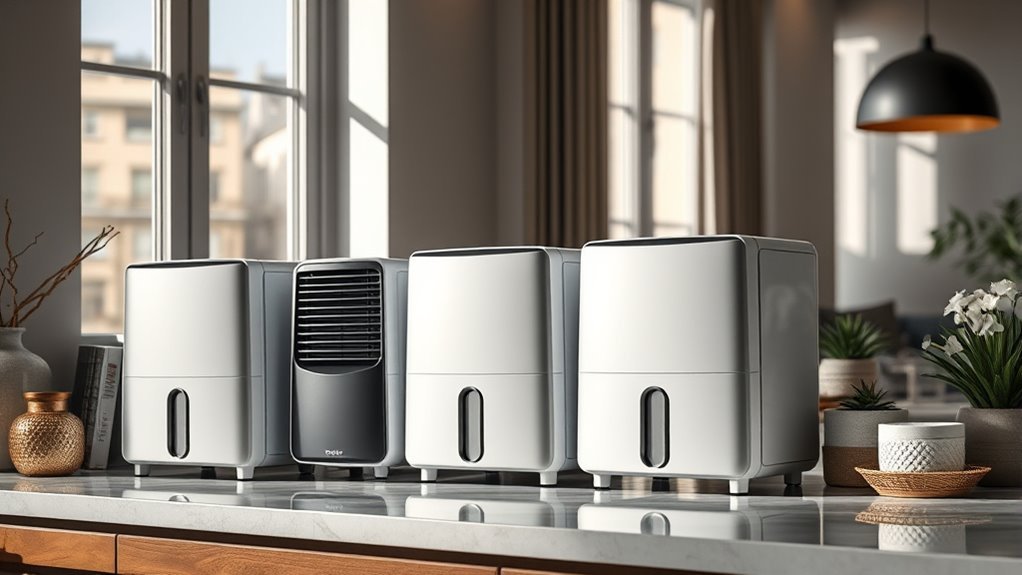
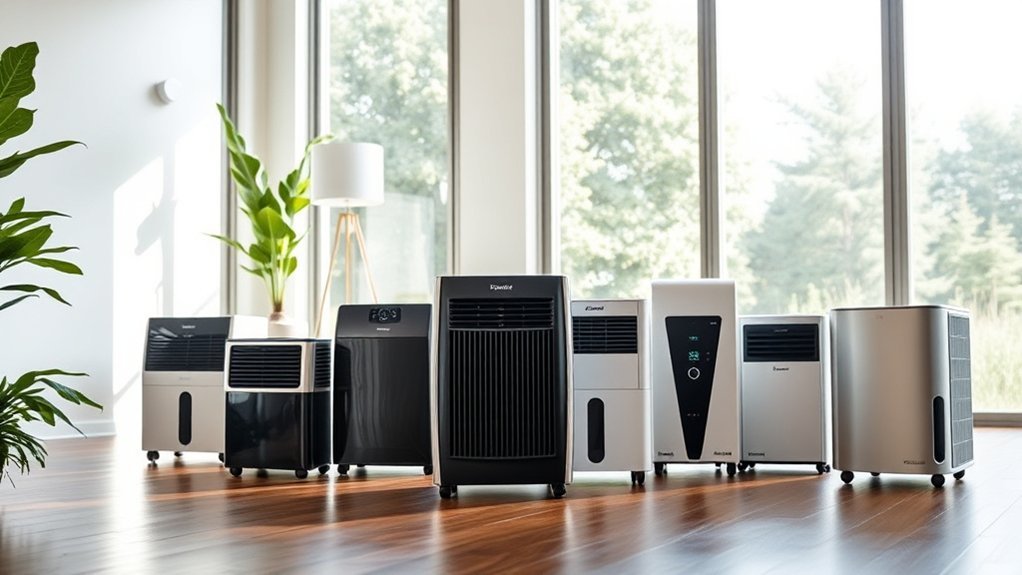
Choosing a dehumidifier for a large basement, garage, office, or open living area is easier when you compare standardized moisture-removal capacity, drainage, controls, operating temperature, and room conditions instead of relying on advertised square footage alone. The hOmeLabs Wi-Fi model is the strongest all-around fit for broad coverage and remote control. DECIUU emphasizes large-space drainage flexibility, Vellgoo combines automatic modes with gravity-drain options, AEOCKY fits buyers who want a smaller cabinet, and KNKA covers the lower-capacity end of the large-room category.
Quick verdict: Choose the hOmeLabs Wi-Fi Dehumidifier for the broadest advertised coverage and app control. Pick the DECIUU Max 100 Pint when a large, very damp area needs flexible gravity drainage, the Vellgoo Max 70 Pint for automatic modes and flexible drainage, the AEOCKY 3500 Sq.Ft for a compact mid-large-room option, or the KNKA 2500 Sq.Ft when you need a simpler, lower-capacity unit.
Capacity note: Marketing figures measured around 95°F and 90%–95% relative humidity are not directly comparable with current basement-like standardized testing. Confirm the exact model number and the capacity shown on the current product label before buying.
How these picks were compared: We prioritized relevant compressor dehumidifiers with large-room positioning, adjustable humidity control, automatic shutoff, practical drainage, and enough product information to explain important limits.
- Use standardized pint capacity for fair comparisons.
- Treat square-foot coverage as a manufacturer estimate, not a guarantee.
- Verify whether the exact variant includes a hose, adapter, or built-in pump.
- Check operating temperature, noise, warranty, and seller support before ordering.
Quick Comparison of the Best Big Dehumidifiers
| Product | Best For | Advertised Coverage | Advertised Moisture Removal | Standout Feature | Amazon |
|---|---|---|---|---|---|
| hOmeLabs Wi-Fi | Maximum coverage and smart control | Up to 7,000 sq. ft. | 50 pints/day at 80°F/60% RH; up to 120 at 95°F/90% RH | Wi-Fi control | Check Price on Amazon |
| DECIUU Max 100 Pint | Very damp basements and garages | Up to 5,000 sq. ft. | Up to 100 pints at 95°F/90% RH; lower in cooler tests | Three drainage choices | Check Price on Amazon |
| Vellgoo Max 70 Pint | Automatic modes and flexible drainage | Up to 4,500 sq. ft. | Up to 70 pints in hot, humid conditions | Flexible drainage modes | Check Price on Amazon |
| AEOCKY 3500 Sq.Ft | Mid-to-large rooms with limited floor space | Up to 3,500 sq. ft. | Up to 50 pints at 95°F/95% RH | Compact footprint | Check Price on Amazon |
| KNKA 2500 Sq.Ft | Smaller basements, bedrooms, or laundry areas | Up to 2,500 sq. ft. | Up to 34 pints at 95°F/90% RH | Included drain hose | Check Price on Amazon |
Best for Very Damp Spaces: DECIUU Max 100 Pint Dehumidifier
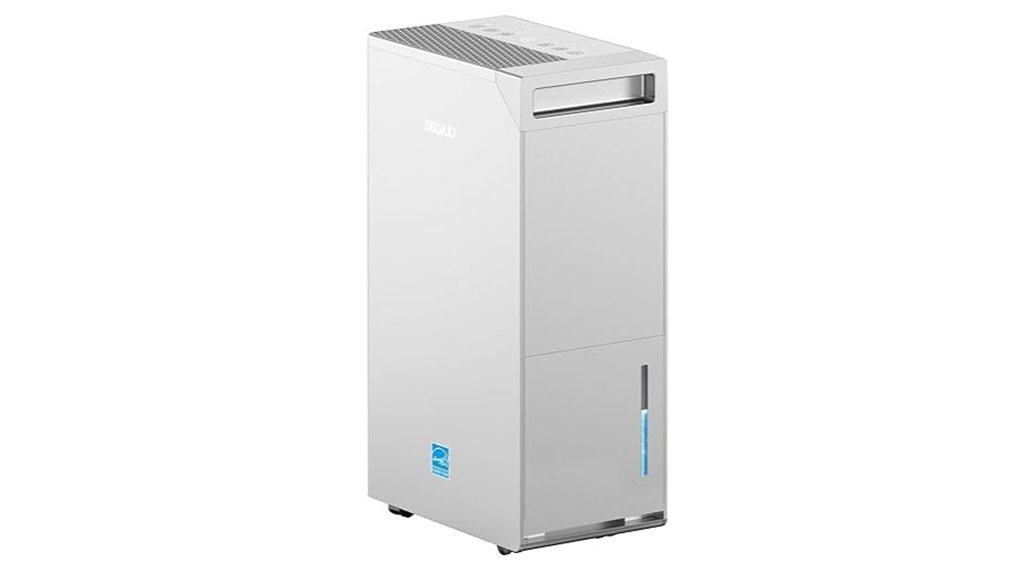
The DECIUU Max 100 Pint Dehumidifier is designed for large, moisture-heavy spaces such as basements, garages, laundry rooms, and storage areas. The linked listing advertises coverage up to 5,000 square feet and up to 100 pints of moisture removal per day at 95°F and 90% relative humidity. Output is lower under cooler test conditions, so compare the current product label or ENERGY STAR record rather than treating the 100-pint maximum as a standardized basement rating.
Useful features include adjustable humidity control, automatic defrost, automatic restart, a timer, child lock, multiple fan speeds, caster wheels, and several drainage choices. The included drain hose supports gravity drainage, while a garden-hose adapter can make longer continuous-drain setups easier when the outlet is below the unit.
Best For: Very damp large rooms where continuous drainage and strong high-humidity performance are priorities.
Why You’ll Like It: It offers a broad control range, multiple drainage methods, and convenient mobility for a large-capacity unit.
Who Should Avoid It: Buyers who need a compact bedroom unit or who cannot place the drain hose on a continuous downward slope.
Pros:
- High advertised moisture removal in hot, humid conditions.
- Multiple drainage options for manual or continuous operation.
- Adjustable humidity control, timer, auto defrost, and easy mobility.
Cons:
- The 100-pint maximum is measured in hot, very humid air and is not a basement-like standardized rating.
- Its larger cabinet requires more floor and storage space.
- Gravity drainage needs correct hose placement and a lower drain point.
Best Compact Mid-Large Option: AEOCKY 3500 Sq.Ft Dehumidifier with Drain Hose
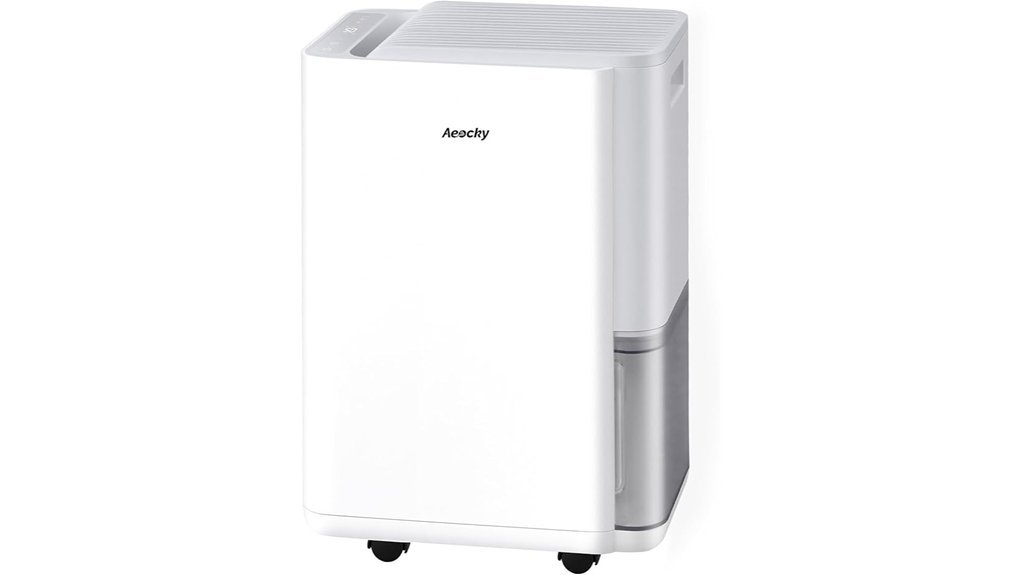
The AEOCKY 3500 Sq.Ft Dehumidifier targets buyers who want meaningful moisture removal without the footprint of the largest models. The linked listing advertises up to 50 pints per day at 95°F and 95% relative humidity and a lower output at less extreme conditions. This makes the testing conditions important when comparing it with a standardized 50-pint model.
Its controls include automatic and continuous modes, adjustable humidity settings, multiple fan speeds, a timer, automatic shutoff, a transparent tank, and caster wheels. The drain-hose option is helpful for regular basement or laundry-room use, provided the hose can run downhill without kinks.
Best For: Mid-to-large rooms where a narrower, movable cabinet is more useful than maximum advertised capacity.
Why You’ll Like It: It combines a compact footprint with automatic control and continuous-drain capability.
Who Should Avoid It: Buyers with a severely wet 5,000- to 7,000-square-foot area or those who require a built-in pump.
Pros:
- Compact design for a mid-large-room dehumidifier.
- Automatic and continuous modes support different moisture conditions.
- Transparent tank and caster wheels make monitoring and movement easier.
Cons:
- The 50-pint figure is a maximum measured at 95°F and 95% relative humidity.
- High fan speed may be more noticeable in bedrooms or offices.
- Drainage remains gravity-fed unless the current listing states otherwise.
Best Overall: hOmeLabs Wi-Fi Dehumidifier for Home and Office
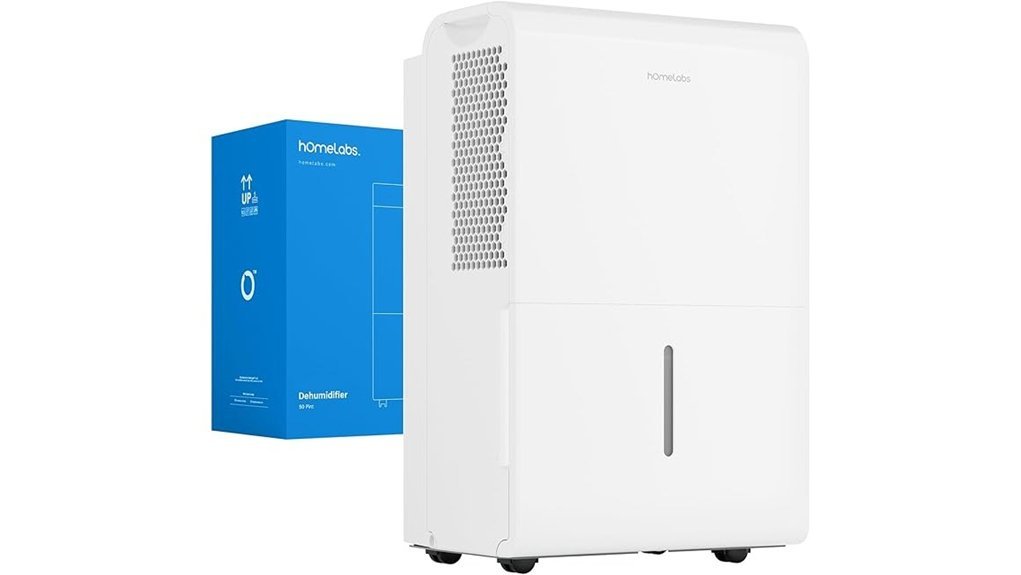
The hOmeLabs Wi-Fi Dehumidifier is the most complete choice here for a large basement, office, or open living area. Current hOmeLabs specifications describe the linked unit as removing up to 50 pints per day at 80°F and 60% relative humidity, with a 120-pint maximum at 95°F and 90% relative humidity and advertised coverage up to 7,000 square feet. Those figures use different test conditions, so compare like-for-like ratings when evaluating another model.
Wi-Fi control lets you adjust settings remotely, while Turbo mode increases fan speed when you need faster air movement. The unit also offers automatic shutoff, a removable tank, caster wheels, a washable filter, and gravity-drain compatibility. The exact linked ASIN should not be assumed to include a built-in pump or drain hose unless the current listing explicitly says so.
Best For: Large basements, offices, and open areas where Wi-Fi control and continuous drainage are useful.
Why You’ll Like It: It combines the broadest advertised coverage in this roundup with remote control and practical drainage features.
Who Should Avoid It: Buyers with limited floor space, no reliable Wi-Fi, or a small room that does not need this level of capacity.
Pros:
- Wi-Fi control for remote setting changes.
- 50 pints per day at 80°F/60% RH, with a higher maximum in hotter and more humid air.
- Automatic shutoff, washable filter, caster wheels, and continuous drainage.
Cons:
- Larger and heavier than lower-capacity options.
- Higher fan settings may be more noticeable in quiet rooms.
- Advertised square-foot coverage depends heavily on layout, temperature, and moisture load.
Best for Automatic Modes: Vellgoo Max 70 Pint Dehumidifier for Home
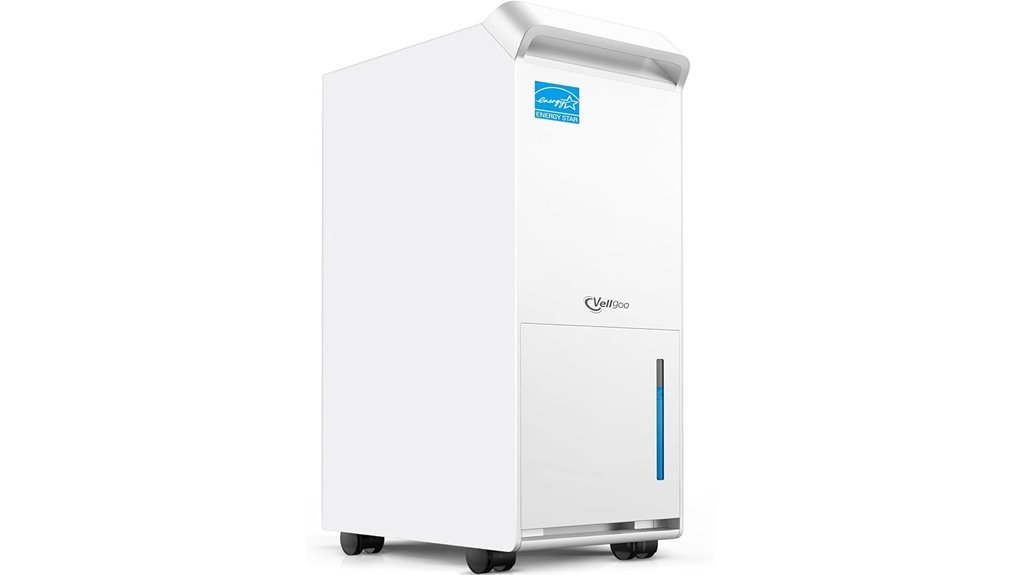
The Vellgoo Max 70 Pint Dehumidifier is a practical choice for homeowners who want automatic humidity control and gravity-drain flexibility in a basement, garage, bathroom, or large living area. The current linked listing has used claims of up to 4,500 square feet and up to 70 pints per day in hot, humid conditions. Because Amazon titles and model families can be revised, match the exact model number on the unit with its current standardized capacity before comparing efficiency.
The Vellgoo includes Continuous, Comfort, and humidity-control modes, along with a washable filter, auto defrost, auto restart, a timer, child lock, caster wheels, and three drainage approaches. Comfort mode is useful for buyers who prefer automatic adjustment rather than repeatedly changing the target humidity.
Best For: Everyday basement or garage use where automatic control and drainage flexibility matter.
Why You’ll Like It: It balances useful automatic modes with a washable filter and several ways to manage collected water.
Who Should Avoid It: Buyers who need verified Wi-Fi control or who want a built-in condensate pump.
Pros:
- Comfort and continuous modes simplify daily operation.
- Multiple drainage choices reduce the need for frequent tank emptying.
- Washable filter, auto defrost, timer, and caster wheels improve convenience.
Cons:
- The marketed maximum pint figure and coverage claim can change with the exact listing version.
- No built-in pump is identified for lifting water to a higher drain.
- Certification and model-family details should be matched to the exact model number.
Best for Smaller Large Rooms: KNKA 2500 Sq.Ft Dehumidifier with Drain Hose
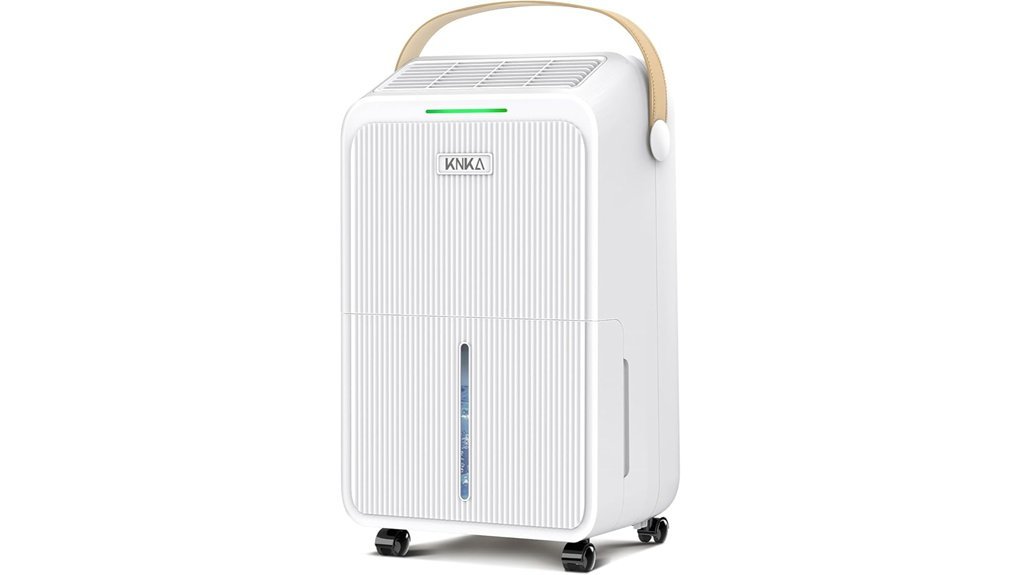
The KNKA 2500 Sq.Ft Dehumidifier is the smallest-capacity option in this group, making it better suited to a modest basement, bedroom, bathroom, kitchen, laundry area, or RV than a very large open floor plan. Its maximum 34-pint claim is measured at 95°F and 90% relative humidity. The listing also identifies a 3-liter tank and an included drain hose, but buyers should confirm the current hose length and accessories before ordering.
DEHU, DRY, and CONT modes let you switch between normal humidity control, laundry support, and continuous operation. Other listed features include adjustable humidity, two fan speeds, a 24-hour timer, sleep mode, child lock, automatic defrost, automatic shutoff, caster wheels, a washable filter, and a digital display.
Best For: Buyers who need a simpler dehumidifier for the smaller end of the large-room category.
Why You’ll Like It: It offers useful controls and an included drain hose without the bulk of the highest-capacity models.
Who Should Avoid It: Buyers dealing with severe moisture across a very large basement or several connected rooms.
Pros:
- Three operation modes for humidity control, laundry, and continuous use.
- Included drain hose, washable filter, timer, and automatic shutoff.
- Smaller and lighter than the largest models in this roundup.
Cons:
- Lower capacity than the other four picks.
- The 3-liter tank can fill quickly in very damp conditions.
- The included hose still requires a continuous downhill route, and its current length should be verified.
Factors to Consider When Choosing a Big Dehumidifier
A large-room dehumidifier should match the room’s moisture load, temperature, layout, drainage access, and noise requirements. Use the advertised square-foot figure as a starting point, then compare the standardized pint rating and the conditions used for any higher maximum claim.
1. Compare Standardized Capacity, Not Just the Largest Number
Dehumidification capacity is measured in pints removed over 24 hours, but not every number is measured under the same conditions. A brand may advertise a much higher maximum at around 95°F and 90% relative humidity than the unit achieves under basement-like testing. The current U.S. test procedure for portable dehumidifiers uses 65°F conditions. For a fair comparison, use the same test standard and check the ENERGY STAR testing and capacity guidance, product label, manual, or exact model record.
2. Match the Moisture Load and Room Layout
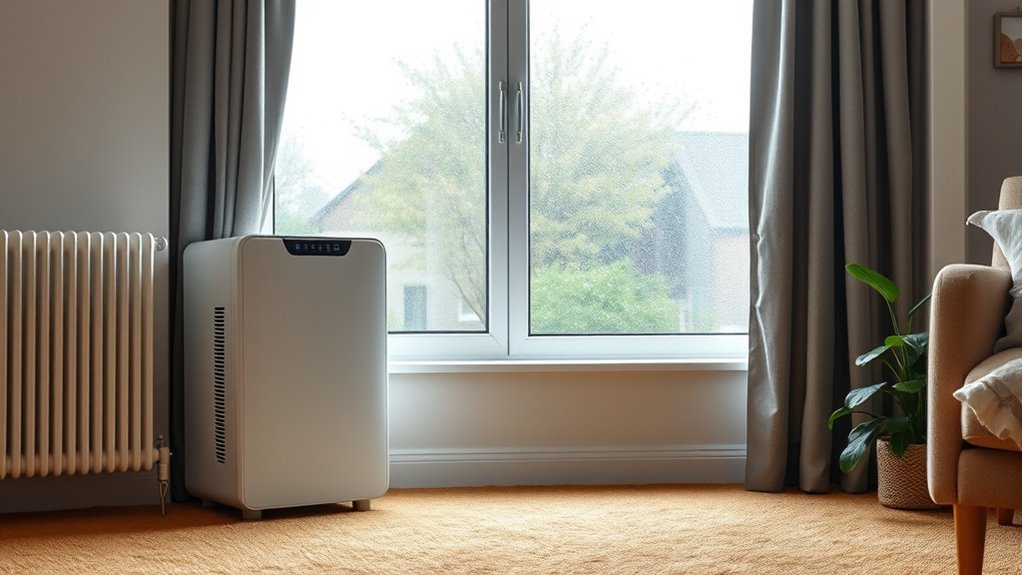
Square footage alone does not tell you how hard a dehumidifier must work. A cool basement with seepage, wet walls, open stairways, or frequent laundry can need more capacity than a warmer room of the same size. Choose extra capacity for persistently wet areas, but avoid buying solely from a very large coverage claim. Closed doors, divided rooms, and poor airflow can prevent one portable unit from treating an entire floor evenly.
3. Check Energy Efficiency and the Exact Model Number
ENERGY STAR certification indicates that an exact model meets current efficiency criteria, but certification can vary by model number and production version. Match the model on the product label with the current ENERGY STAR product database. Avoid relying only on an old “Most Efficient” year badge, a brand-level claim, or an unsupported percentage-savings statement.
4. Choose the Right Drainage Method
A removable tank works when you can empty it regularly. Gravity drainage is better for long-term operation, but the hose must slope continuously downward to a floor drain, sink, or other approved outlet. A built-in pump is useful when water must travel upward. None of the five exact Amazon links in this roundup is treated as a verified pump model, even though similar brand variants may include pumps. Check the exact model name, included hose length, garden-hose compatibility, and drain location before buying.
5. Consider Noise, Placement, and Airflow
Compressors and fans create sound, especially on Turbo or high-speed settings. For a bedroom or office, look for a verified decibel rating and a sleep or low-fan mode. Leave the manufacturer-recommended clearance around the air intake and exhaust, place the unit on a firm level surface, and avoid blocking airflow with furniture or walls.
6. Prioritize Controls You Will Actually Use
A clear display, adjustable humidistat, automatic restart, automatic defrost, full-tank shutoff, timer, washable filter, and caster wheels are useful for regular operation. Wi-Fi is valuable when the unit sits in a basement or remote room, while a child lock can prevent accidental setting changes. More modes are helpful only when their purpose is clearly explained in the manual.
7. Plan for Maintenance
Clean the filter, tank, air intake, and drain hose according to the manufacturer’s instructions. During heavy use, inspect the filter every few weeks and clean the tank before residue or odor develops. Keep the hose free of kinks and buildup, and unplug the unit before cleaning. A dehumidifier cannot correct a plumbing leak, foundation seepage, or another active water source.
8. Verify Warranty and Support
Warranty terms can vary by seller, registration status, and model. Check the length of coverage, whether registration is required, what parts and labor are included, and who pays shipping for service. Save the receipt and model number, and confirm that replacement filters, drain accessories, manuals, and customer support remain available.
Moisture-control note: A dehumidifier can help control excess indoor humidity, but it does not remove existing mold or repair leaks. The EPA recommends keeping indoor relative humidity below 60% and ideally around 30% to 50%. Address water intrusion first and seek professional help for extensive contamination. See the EPA mold and moisture guide.
Frequently Asked Questions
What Is the Ideal Humidity Level for Home Comfort?
A practical target is generally 30% to 50% relative humidity, while keeping indoor humidity below 60% helps limit condensation and moisture conditions that support mold growth. Adjust the setting for climate, room temperature, and comfort, and avoid setting the unit lower than necessary.
Why Do Pint Ratings Differ Between Dehumidifiers?
Some figures come from standardized basement-like tests, while others are maximum values measured in much hotter and more humid air. The same machine can collect substantially more water during an extreme-condition test. Compare models using the same test temperature and humidity, and match the rating to the exact model number.
How Often Should I Clean My Dehumidifier?
Follow the manual for the exact schedule. During heavy use, inspect the filter every two to four weeks, empty and rinse the tank as needed, and check the drain hose regularly. Dust, residue, or a blocked hose can reduce airflow and interfere with drainage.
Can Dehumidifiers Help With Mold Prevention?
They can help by lowering excess humidity, but moisture-source control is more important. Repair leaks, dry wet materials promptly, improve ventilation, and clean existing mold safely. A dehumidifier is one part of moisture management, not a complete mold-remediation solution.
Are Dehumidifiers Noisy During Operation?
Noise varies by compressor, fan speed, cabinet design, and placement. Low or sleep modes are usually quieter than Turbo mode. For a bedroom or office, check a verified decibel rating and place the unit on a stable, level surface to reduce vibration.
How Do I Determine the Right Size Dehumidifier for My Space?
Measure the room, assess how damp it feels, note the temperature, and identify any active water source. Then compare standardized pint capacity, not just advertised coverage. Choose more capacity for persistent dampness, standing water, laundry use, or an open layout, and consider separate units for closed-off rooms.
Can I Use Continuous Drainage?
Yes, when the model supports it and the hose can run downhill to an appropriate drain. Keep the hose straight, secure, and free of kinks. If the drain is above the dehumidifier, you need a model with a built-in pump or a separate approved condensate pump.
Final Recommendation
For the broadest advertised coverage and the easiest remote control, the hOmeLabs Wi-Fi Dehumidifier is the best overall choice. The DECIUU Max 100 Pint is a strong fit for a very damp large space that can use gravity drainage, while the Vellgoo Max 70 Pint is a balanced pick for automatic modes and flexible drainage. Choose the AEOCKY 3500 Sq.Ft when you want a more compact cabinet, or the KNKA 2500 Sq.Ft for a smaller basement, bedroom, or laundry area.
Before ordering, confirm the exact model number, standardized pint rating, drain-hose or pump setup, operating temperature range, included accessories, and current warranty. Those details are more useful than choosing only by the largest square-foot or maximum-pint claim.