Affiliate disclosure: As an Amazon Associate, we may earn from qualifying purchases at no extra cost to you.
Last updated: August 2026. Product specifications, package quantities, warranty terms, and listing details can change, so confirm the selected size and current product page before ordering.
The best dehumidifier for rust and corrosion prevention depends on the enclosure you need to protect. A heated dehumidifier rod can reduce condensation risk in a powered gun safe, vault, or cabinet by gently warming and circulating the air. Rechargeable silica gel is often more practical for sealed totes, cases, lockers, and locations without an outlet. This guide compares four relevant options by moisture-control method, rated enclosure coverage, power needs, maintenance, and best use case.
How these products were compared
Selection focused on whether each product is genuinely suited to enclosed rust-prevention storage, how it manages moisture, its stated coverage, installation or recharge requirements, and the buyer situations in which it makes the most sense. These compact products are not substitutes for a room-size dehumidifier or for repairing leaks and water intrusion.
Quick Verdict
- Best Overall Heated Rod: LOCKDOWN GoldenRod Dehumidifier Rod
- Best Non-Electric Canister: SafeNDry XL Gun Safe Dehumidifier
- Best for Storage Totes: DryTote Rechargeable Desiccant Pack
- Best Alternative Heated Rod: LOCKDOWN GunSaver Dehumidifier
Quick Comparison
| Product | Type | Rated Coverage | Power | Best For | Amazon |
|---|---|---|---|---|---|
| LOCKDOWN GoldenRod | Heated rod | Approximately 100 cubic feet for the 12-inch model | 110-120V outlet | Powered safes and cabinets | Check on Amazon |
| SafeNDry XL | Reusable silica-gel canister | Approximately 60 cubic feet | None | Gun safes and enclosed cabinets | Check on Amazon |
| DryTote | Rechargeable desiccant pack | Enclosed containers up to approximately 200 gallons | None | Totes, cases, bins, and small cabinets | Check on Amazon |
| LOCKDOWN GunSaver | Heated rod | Approximately 100 cubic feet for the 12-inch model | 110-120V outlet | Compact powered safes | Check on Amazon |
Coverage note: Manufacturer coverage ratings assume an enclosed space. Door seals, outside humidity, how often the enclosure is opened, blocked airflow, and damp contents can all affect performance.
Fast decision: Choose a heated rod for continuous, low-maintenance control in a powered safe with a suitable cord opening. Choose rechargeable silica gel when the enclosure has no power, must remain portable, or needs moisture to be physically absorbed.
LOCKDOWN GoldenRod Dehumidifier Rod for Vault Humidity Control
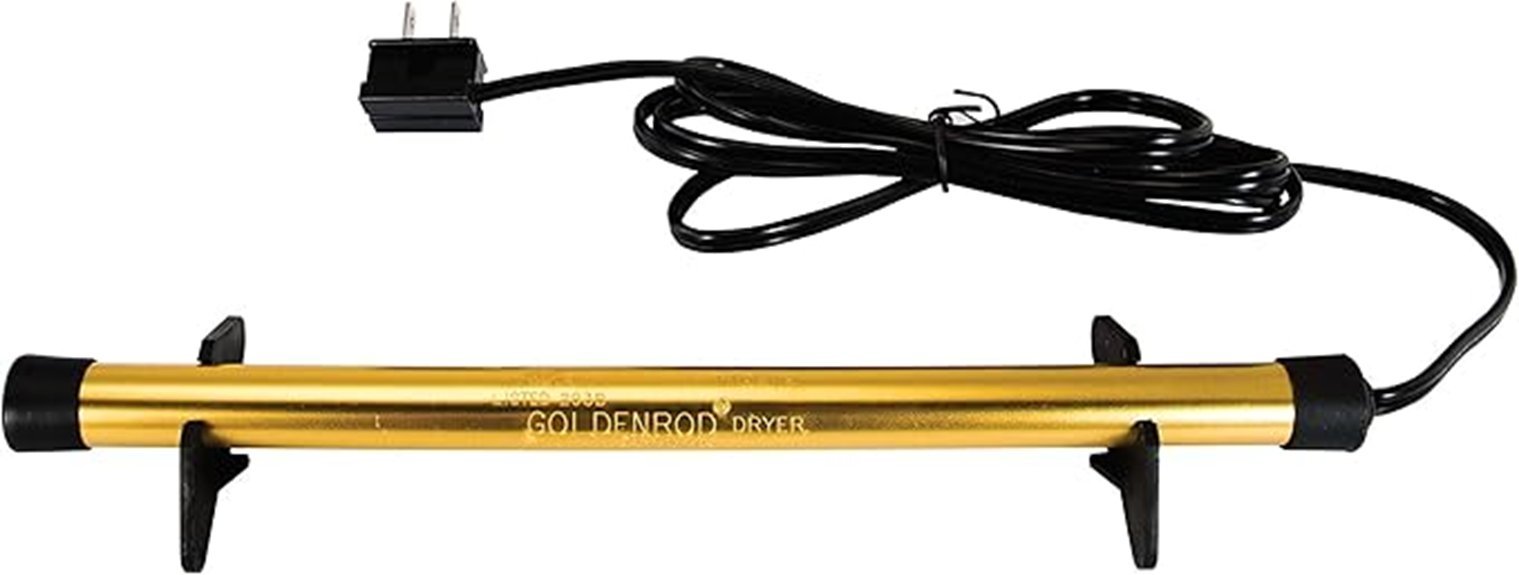
Best Overall Heated Rod: The 12-inch LOCKDOWN GoldenRod is a practical choice for a powered gun safe, vault, or enclosed cabinet. Instead of collecting water, the rod gently warms the air and promotes convection inside the enclosure. This helps lower relative humidity and reduce the chance of condensation forming on stored metal.
The manufacturer rates the 12-inch model for an enclosure of up to approximately 100 cubic feet and lists a 110-120V AC power source. Mounting brackets and an easy-install plug attachment are included. For effective circulation, install the rod horizontally near the lowest point of the enclosure and keep stored items from blocking airflow around it.
Why You’ll Like It: Once installed, it provides continuous, low-maintenance humidity control without a water tank or rechargeable beads. The manufacturer also lists the GoldenRod as made in the USA with a lifetime warranty, although buyers should confirm the warranty terms for the exact seller and model selected.
Who Should Buy This: Buyers with a reasonably enclosed safe or cabinet, access to a nearby outlet, and enough space for horizontal installation.
Who Should Avoid This: Anyone without safe access to electrical power or anyone needing a product that physically absorbs and stores water vapor.
Pros:
- Low-maintenance operation: Can remain installed for continuous air warming and circulation.
- Compact shape: Uses relatively little floor space inside a safe.
- Simple installation: Includes mounting components and a long power cord.
Cons:
- Requires electricity: It cannot operate in an unpowered cabinet or portable case.
- Does not collect water: It reduces relative humidity through gentle heating rather than moisture absorption.
- Coverage depends on size: The 12-inch model is intended for smaller enclosures, so larger safes may require a longer version.
XL Gun Safe Dehumidifier with Reusable Silica Gel
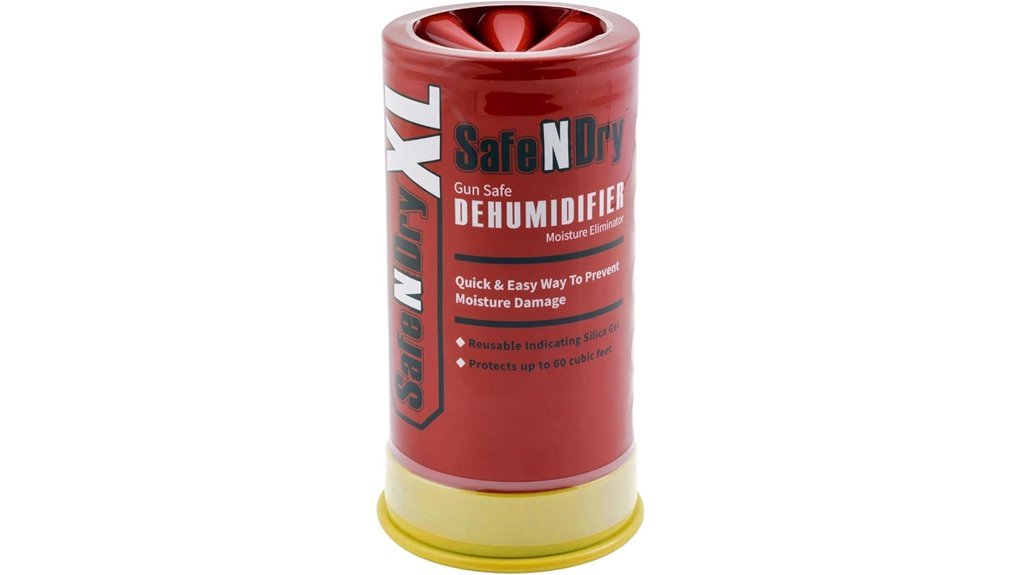
Best Non-Electric Canister: The SafeNDry XL Gun Safe Dehumidifier is designed for buyers who need moisture absorption without running a power cord into the enclosure. It uses color-indicating silica gel and is rated by the manufacturer for reasonably enclosed spaces of up to approximately 60 cubic feet.
The silica gel absorbs water vapor until it becomes saturated. When the indicator changes from blue to pink, remove the inner fabric pouch and reactivate it according to the included directions. The manufacturer currently states an oven setting of approximately 200°F for about three hours, or until the beads return to blue.
Why You’ll Like It: The reusable design avoids disposable moisture tubs and does not produce liquid that can spill inside the safe.
Who Should Buy This: Gun owners, tool collectors, document keepers, and other buyers with a closed cabinet or safe that has no convenient power outlet.
Who Should Avoid This: Buyers with a frequently opened enclosure, heavy ongoing moisture intrusion, or a space larger than the product’s rated capacity.
Pros:
- No electricity needed: It can be placed almost anywhere inside a suitable enclosure.
- Reusable desiccant: The silica gel can be reactivated instead of discarded after one use.
- Visible saturation indicator: The color change helps show when maintenance is required.
- No liquid reservoir: It avoids the spill risk associated with water-collecting moisture tubs.
Cons:
- Requires periodic reactivation: Protection decreases after the silica gel becomes saturated.
- Best in closed spaces: Frequent air exchange can shorten the time between recharges.
- Not intended for rooms: Its rated coverage applies to safes, cabinets, and similar enclosures.
DryTote Rechargeable Desiccant Pack for Moisture Absorption
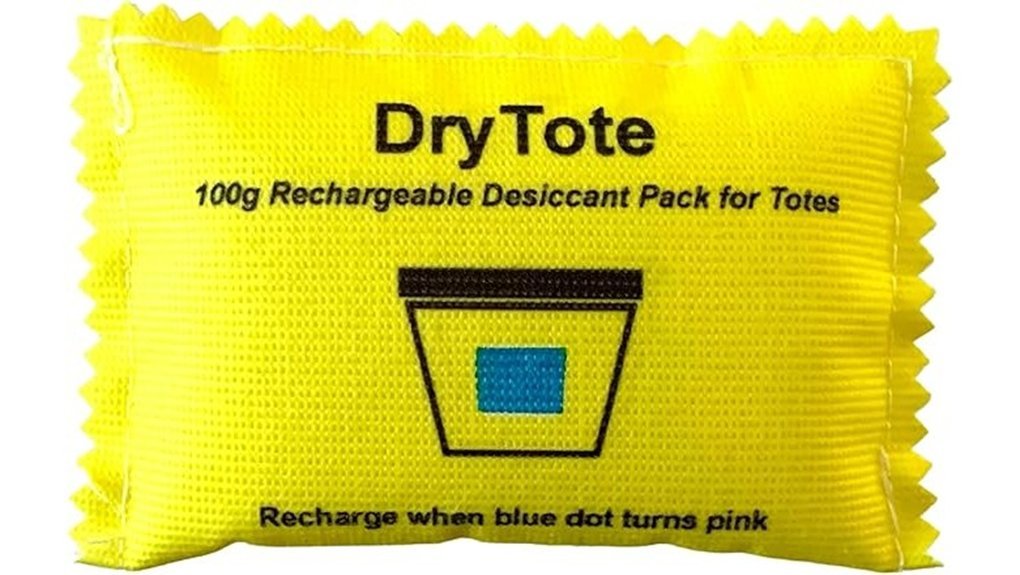
Best for Storage Totes: The DryTote Rechargeable Desiccant Pack is a compact option for sealed storage bins, totes, cases, lockers, and small cabinets. The 100-gram pack is rated for enclosed containers holding up to approximately 200 gallons.
A built-in indicator changes from blue to pink as the desiccant becomes saturated. The manufacturer currently lists a microwave method of about three minutes at power level 8, with a low-oven method as an alternative. Follow the directions supplied with the selected pack, and let it cool completely before returning it to storage.
Why You’ll Like It: It is easy to move between containers and does not need an outlet, mounting brackets, or a water collection tray.
Who Should Buy This: Buyers protecting documents, camera equipment, tools, electronics, seasonal clothing, or metal items inside closed containers.
Who Should Avoid This: Anyone trying to control humidity across a room, open shelving area, damp garage, or poorly sealed cabinet. It is a container desiccant, not a room dehumidifier.
Pros:
- Compact and portable: Fits into containers where a powered rod would be impractical.
- Rechargeable: Can be reused after proper drying.
- Easy-to-read indicator: Shows when the pack needs attention.
Cons:
- Limited to enclosed containers: Open-air use greatly reduces effectiveness.
- Needs regular checking: Recharge intervals vary with humidity, container seals, and opening frequency.
- Package quantity may vary: Confirm how many packs are included in the selected listing.
LOCKDOWN GunSaver Dehumidifier for Vault Humidity Control
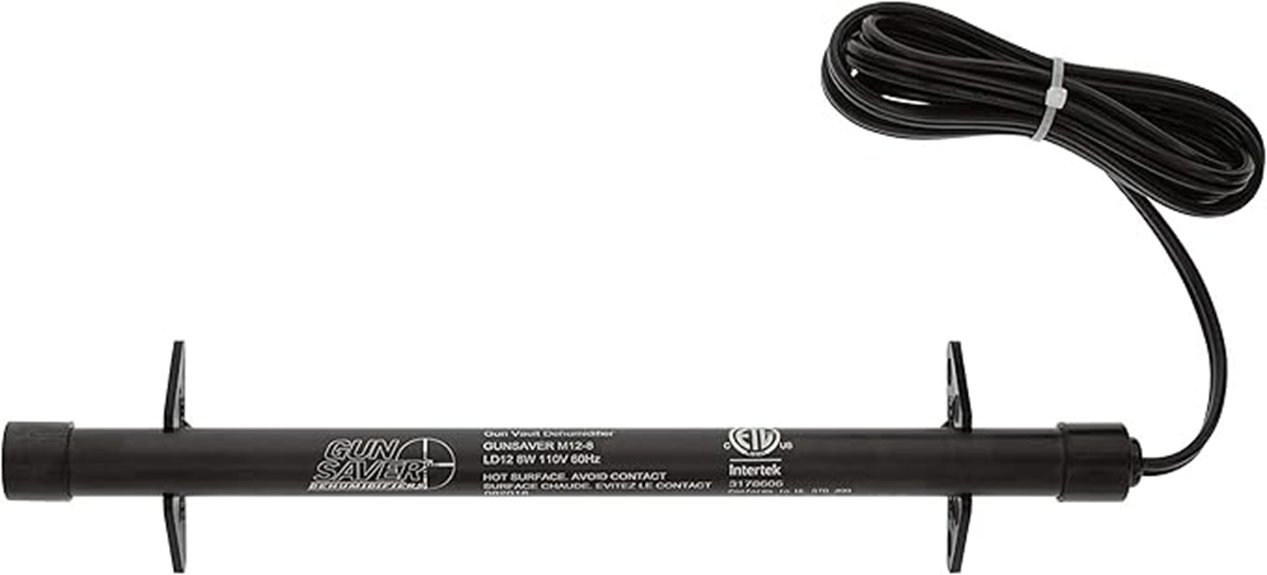
Best Alternative Heated Rod: The LOCKDOWN GunSaver is another heated-rod option for safes and enclosed cabinets with access to electrical power. The current manufacturer page lists 110/120V AC power, mounting brackets, and an easy-install quick plug attachment. The 12-inch version is commonly listed for approximately 100 cubic feet, but confirm the selected length and coverage before ordering.
Like the GoldenRod, the GunSaver does not collect water. It gently warms the air to encourage circulation and reduce relative humidity near stored metal. Mount it horizontally near the bottom of the enclosure, where the warmed air can rise through the safe.
Why You’ll Like It: Its slim profile leaves most of the safe floor available for stored items while providing continuous humidity control.
Who Should Buy This: Buyers comparing compact heated rods for a small or medium powered safe.
Who Should Avoid This: Anyone expecting the 12-inch version to cover 200 cubic feet. That higher rating generally applies to the longer 18-inch model, so verify the selected size before ordering.
Pros:
- Slim design: Fits along the lower edge of many safe interiors.
- Continuous operation: Does not require routine recharging.
- Quick-plug setup: The detachable-style plug arrangement can make cord routing through a safe’s factory access opening easier.
Cons:
- Very similar to the GoldenRod: Buyers should compare model, size, construction, and current warranty terms.
- Outlet required: It is not suitable for fully portable or unpowered storage.
- Correct installation matters: Poor placement or blocked airflow can reduce effectiveness.
Factors to Consider When Choosing Dehumidifiers for Rust and Corrosion Prevention
The best rust-prevention product depends on the size and construction of your enclosure, whether electrical power is available, and how often you are willing to inspect or recharge the device. A small digital hygrometer is an important companion purchase because it shows whether the selected solution is maintaining a stable humidity level under real storage conditions.
Before You Buy
- Measure the enclosure’s internal length, width, and height.
- Check whether doors, cable holes, and vents allow humid air to enter.
- Decide whether you have safe access to a suitable electrical outlet.
- Confirm the exact rod length, rated coverage, and package quantity.
- Plan where you will place a hygrometer so it remains easy to read.
- Consider whether the enclosure contains wood, leather, paper, optics, or other materials that should not become excessively dry.
Coverage Area Requirements
Match the product’s rated coverage to the enclosure rather than the size of the room containing it. To estimate cubic feet, multiply the enclosure’s internal length, width, and height in feet. A 100-cubic-foot rod may be suitable for a small or medium safe, while a 60-cubic-foot silica-gel canister is intended for a smaller enclosed volume. The DryTote rating is stated in gallons because it is designed mainly for storage totes and similar containers.
A coverage rating should be treated as an upper guideline, not a promise. Weak door seals, repeated opening, wet contents, outside humidity, and poor air circulation can increase the amount of moisture the product must handle.
Heated Rods vs. Rechargeable Desiccants
A heated rod lowers relative humidity by gently warming the air and encouraging circulation. It does not absorb water or produce condensate. This type works well when a safe has power access and enough room for correct horizontal installation.
A silica-gel product physically absorbs water vapor. It works without electricity but eventually becomes saturated and must be recharged. Desiccants are most effective in well-sealed containers because humid outside air quickly uses their capacity.
Power Source Options
Choose a powered rod when continuous operation and low routine maintenance are priorities. Before installation, make sure the cord can pass through a manufacturer-provided opening without being pinched, cut, or sharply bent.
Choose a non-electric desiccant when the enclosure has no outlet, must remain portable, or cannot safely accommodate a warm electrical device. Passive products also continue working during a power outage, provided they have not become saturated.
Enclosure Sealing and Airflow
Sealing is especially important for silica gel. Every time humid air enters the enclosure, the desiccant must absorb additional water vapor. A damaged door gasket or frequently opened cabinet may require more desiccant or shorter recharge intervals.
Heated rods need open space around them so warmed air can rise and circulate. Avoid placing stored items directly against the rod or blocking the airflow path.
Maintenance and Rechargeability
Inspect color-indicating silica gel regularly. Recharge it as soon as the indicator reaches the saturated color, following the product’s own temperature, timing, and appliance instructions. Allow the pack or pouch to cool completely before returning it to the enclosure.
A heated rod has less routine maintenance, but the cord, plug, mounting brackets, and surrounding area should still be inspected periodically for damage, looseness, dust, or blocked airflow.
Humidity Monitoring
Do not rely only on a product’s coverage claim. Place a digital hygrometer inside the enclosure and check it under normal use conditions. For many stable metals stored with wood, leather, paper, or other mixed materials, a moderate range of roughly 35% to 55% RH is a practical starting point. Corrosion risk generally rises as humidity increases, and conditions above about 65% RH are especially concerning for iron and steel.
Actively corroding, archaeological, marine, or salt-contaminated metal may require much lower humidity and specialist conservation advice. Extremely dry conditions may also damage wood, leather, paper, and other organic materials stored with the metal, so the best target depends on everything kept in the enclosure.
Size and Portability
Measure the available installation area as well as the enclosure volume. A heated rod must fit horizontally without contacting stored items, while a silica-gel canister needs enough open space for air to circulate around it.
Rechargeable packs are generally easier to move between totes and cases. A mounted rod is less portable but does not need to be removed regularly for recharging.
Installation and Safety
Follow the manufacturer’s installation and reactivation instructions. Keep powered rods away from loose fabric, paper, packaging, and other materials that could block airflow or rest against the warm surface. Use a factory-provided electrical access opening when available, never pinch the cord in the door, and do not modify a safe in a way that compromises its fire or security rating.
When recharging silica gel, use only the appliance method and settings approved for that specific product. Do not microwave a product unless its instructions explicitly permit microwave use. Keep desiccant pouches intact and out of reach of children and pets.
Warranty and Support
Warranty periods and included accessories can change between models and sellers. Before ordering, confirm the exact model number, rod length, coverage rating, package quantity, voltage, included mounting hardware, recharge instructions, return policy, and current warranty terms on the product page.
Frequently Asked Questions
Do Heated Dehumidifier Rods Remove Water?
No. A heated rod does not collect or drain water. It gently raises the air temperature inside an enclosure, which lowers relative humidity and reduces the chance of condensation forming on metal surfaces.
Is a Heated Rod or Silica Gel Better?
A heated rod is usually more convenient for a powered safe that can accommodate horizontal installation. Silica gel is better for portable cases, sealed totes, unpowered cabinets, and situations where you want moisture to be physically absorbed. The best choice depends on enclosure size, sealing, power access, and maintenance preferences.
What Relative Humidity Helps Prevent Rust?
For many stable metal and mixed-material items, maintaining roughly 35% to 55% RH is a reasonable starting range. Avoid prolonged damp conditions; corrosion of iron and steel generally accelerates substantially above about 65% RH. Actively corroding or salt-contaminated metal may need significantly drier specialist storage.
How Often Should Rechargeable Silica Gel Be Dried?
There is no fixed schedule. Recharge it when its indicator shows saturation or when a hygrometer shows that humidity is rising. A poorly sealed or frequently opened enclosure will require more frequent recharging than a tightly sealed container.
Can I Use a Heated Rod and Silica Gel Together?
Yes, they can be combined in a suitable enclosure, especially in a humid environment. Use a hygrometer to monitor the result, keep the desiccant away from the heated rod, and avoid making a mixed-material safe excessively dry.
Do I Need a Hygrometer Inside the Safe?
A hygrometer is strongly recommended. Coverage claims are only estimates, and the actual humidity depends on the enclosure seal, room conditions, opening frequency, airflow, and moisture already present in stored materials. Place the sensor away from direct contact with the heated rod or desiccant so it reflects the enclosure more accurately.
Will These Products Dehumidify a Room or Garage?
No. The products in this guide are intended for enclosed safes, cabinets, totes, cases, and storage bins. A damp room, basement, or garage normally requires a properly sized room dehumidifier and correction of leaks, ventilation problems, or water intrusion.
Conclusion
Final Recommendation
Choose the LOCKDOWN GoldenRod for a powered safe where you want continuous, low-maintenance control. Choose the SafeNDry XL for a non-electric safe or cabinet, and choose the DryTote for portable, sealed totes and cases. The LOCKDOWN GunSaver is a valid alternative when you prefer its current size, construction, or listing package.
The best choice depends on how and where your valuables are stored. The LOCKDOWN GoldenRod is the strongest all-around option for a powered safe that can accommodate a horizontally mounted heated rod. The SafeNDry XL offers reusable, non-electric moisture absorption for enclosed safes and cabinets, while the DryTote is the more portable choice for sealed storage totes and cases.
The LOCKDOWN GunSaver is another relevant heated-rod option, but confirm the selected length carefully because different sizes have different coverage ratings. Whichever product you choose, use a hygrometer, inspect stored metal regularly, and address leaks, wet contents, or poor seals rather than relying on a moisture-control product alone.