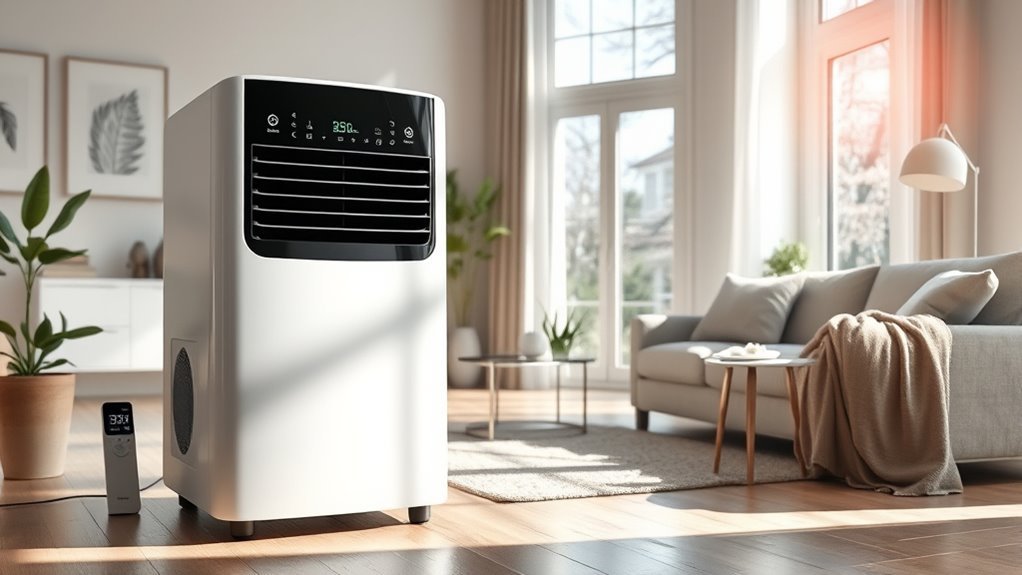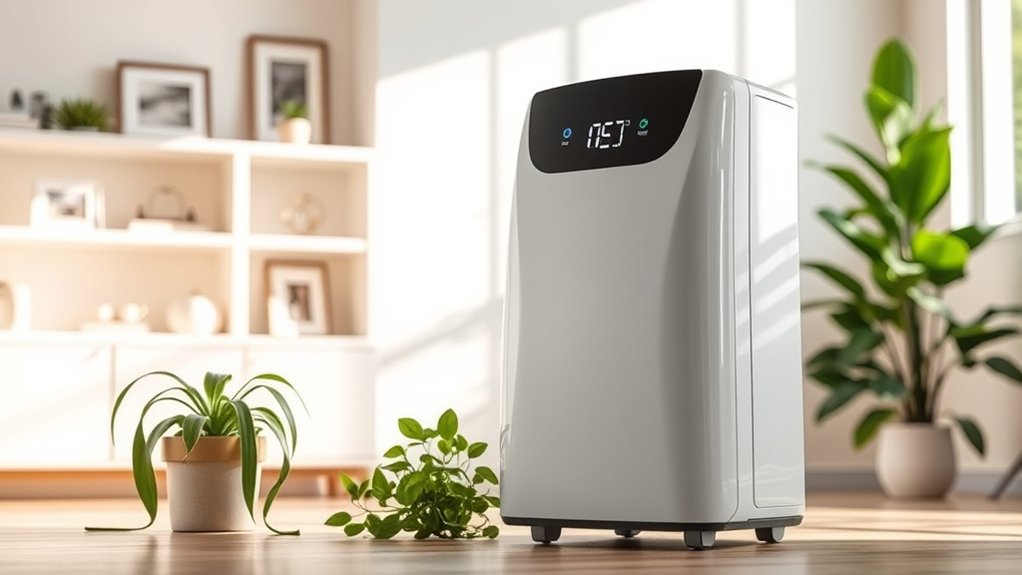
A clean dehumidifier does not normally spread mold. It usually helps prevent mold by lowering indoor moisture. The risk changes when mold or dirty standing water develops inside the bucket, filter area, drain path, pump reservoir, or other damp parts. Air moving across contaminated surfaces may carry musty odors and particles back into the room, so a visibly moldy or strongly musty unit should be stopped and cleaned before further use.
Last updated: August 19, 2026
Quick Answer
A clean dehumidifier does not normally spread mold. It helps prevent mold by lowering indoor humidity. However, if mold grows inside the bucket, filter area, drain hose, pump reservoir, or other damp parts, airflow through the contaminated unit may move musty air and particles back into the room. Keep indoor humidity around 30% to 50%, clean the unit according to its manual, and fix the underlying moisture source.
Key Takeaways
- A clean dehumidifier helps prevent mold by reducing moisture; it does not kill mold already growing on walls, furniture, carpet, or drywall.
- A practical mold-control target is 30% to 50% relative humidity. The EPA recommends staying below 60%, ideally 30% to 50%, while the CDC advises keeping home humidity no higher than 50% throughout the day.
- Musty odor, visible spots, slime in the bucket, a dirty filter, or a clogged drain hose are signs the unit needs inspection and cleaning.
- Stop using the unit until it is cleaned if you see mold inside it or smell a strong musty odor when it runs.
- Consider professional help for large or hidden mold areas, HVAC contamination, contaminated flood or sewage water, recurring mold, or cleanup involving people at higher risk from mold exposure.
At a Glance
| Time Required | Varies by model and buildup; allow additional time for removable parts to dry completely before reassembly |
| Difficulty | Easy for manufacturer-approved removable parts; service help may be needed if contamination is deep inside the unit |
| Tools Needed | Gloves, mild dish soap, clean cloths, soft brush, warm water, and the owner’s manual; for visible mold cleanup, use appropriate eye protection and at least a NIOSH Approved N95 respirator |
Can a Dehumidifier Spread Mold?
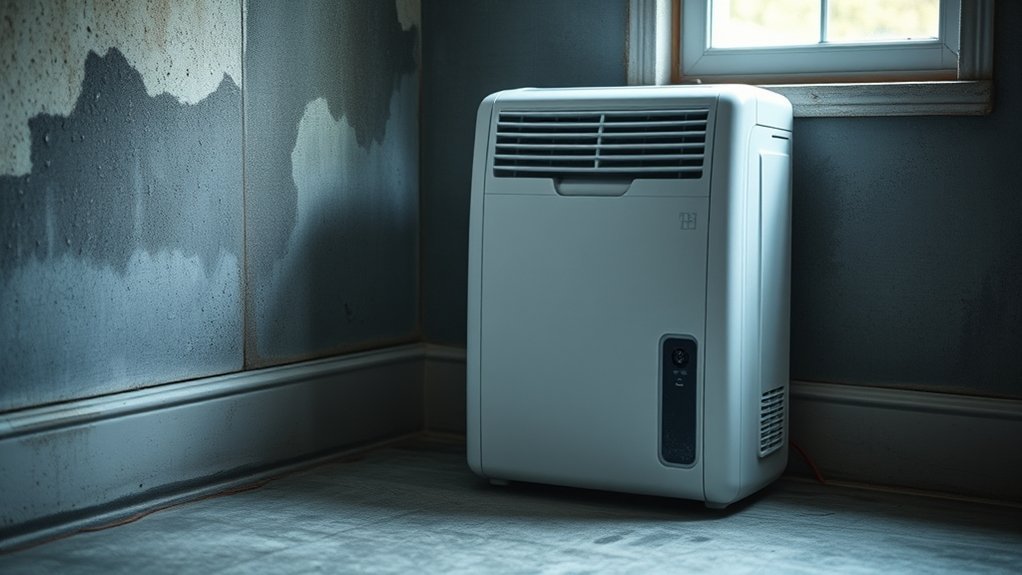
A dehumidifier does not create mold by itself. Its main job is to lower indoor moisture, which makes mold less likely to grow. The EPA recommends keeping indoor relative humidity below 60%, ideally between 30% and 50% when possible. The CDC recommends keeping home humidity no higher than 50% throughout the day.
The problem starts when the unit itself becomes damp and dirty. A full bucket, clogged filter, dirty intake grille, wet pump reservoir, or blocked drain hose can hold water, dust, and organic debris. If mold develops on surfaces in the airflow path, running the machine may move musty air and particles from those contaminated areas back into the room.
Is the Dehumidifier Actually the Mold Source?
| What You Find | What It Usually Means | What to Do |
|---|---|---|
| Unit is clean, but the room has visible mold | The room has an existing moisture and mold problem that the dehumidifier cannot remove by itself | Fix the water source, remove the mold safely, and use the dehumidifier to control humidity afterward |
| Bucket, filter area, or drain hose smells musty or has visible growth | Accessible parts of the dehumidifier may be contaminated | Stop the unit, unplug it, and clean only the parts your manual allows you to remove |
| Odor disappears after cleaning and full drying | The problem may have been limited to accessible wet or dirty parts | Resume use while monitoring odor, drainage, and room humidity |
| Strong musty odor returns immediately after accessible parts are cleaned | Contamination may remain in coils, fan housing, insulation, pump components, or another internal area | Stop using the unit and contact the manufacturer or a qualified appliance technician instead of disassembling sealed areas yourself |
Warning: If the unit smells strongly musty, has visible mold inside, leaks water, sparks, overheats, or is part of a recall, turn it off and unplug it before inspecting or cleaning it.
Should You Keep Running a Moldy Dehumidifier?
No. If you see mold inside the bucket, filter area, drain hose, or around the air intake, stop using the unit until the accessible contaminated parts are cleaned and fully dried. A contaminated dehumidifier may still remove moisture, but airflow through moldy or dirty internal surfaces can also move musty air and particles back into the room.
If mold appears only on removable plastic parts, manufacturer-approved cleaning may be enough. If mold appears to be deep inside the coils, fan housing, insulation, wiring area, or pump assembly, do not take the appliance apart beyond the instructions in the owner’s manual. Contact the manufacturer or an appliance technician, or replace the unit if it cannot be cleaned safely.
Why Mold Grows in Dehumidifiers
Mold grows where moisture remains long enough for spores to settle on material that can support growth. A dehumidifier naturally collects water, so standing water, dust, and poor drainage can create favorable conditions if the appliance is neglected. Areas to inspect include:
- Water bucket: standing water, slime, and mineral buildup can create odor and support unwanted growth.
- Washable filter or pre-filter: dust and lint can trap moisture and restrict airflow.
- Drain hose: clogs, low spots, and standing water can lead to biofilm and odor.
- Pump reservoir: pump models can retain hidden water if they are not maintained and dried correctly.
- Intake grille and coils: dust buildup combined with condensation can leave damp surfaces.
- Storage conditions: storing the unit while wet can cause odor and contamination before the next season.
The Frigidaire cleaning guidance recommends unplugging the appliance before cleaning, washing the bucket with mild soap and water, drying the unit before storage, and cleaning the filter and flushing drain hoses before reuse. Always follow the instructions for your exact model first.
Signs Your Dehumidifier Has Mold
If your dehumidifier starts giving off a musty odor, inspect it rather than assuming the room alone is responsible. Mold can smell musty before obvious growth is easy to see. You may also notice dark, green, gray, white, or fuzzy-looking spots on accessible parts, although color alone cannot identify a mold species.
Check the dehumidifier if you notice:
- Musty air when the fan turns on
- Visible spots in the bucket, lid, splash guard, filter, drain outlet, or hose
- Slimy buildup in the tank or drain path
- A filter that looks gray, dusty, clogged, or damp
- Water that remains in the bucket for extended periods
- Humidity staying high even while the unit runs
- Condensation, water stains, or mold returning in the room
The CDC says mold can appear in many colors and can smell musty. You do not need to identify the mold type before taking action. If you see or smell mold, remove it safely and correct the moisture problem.
How to Clean a Moldy Dehumidifier
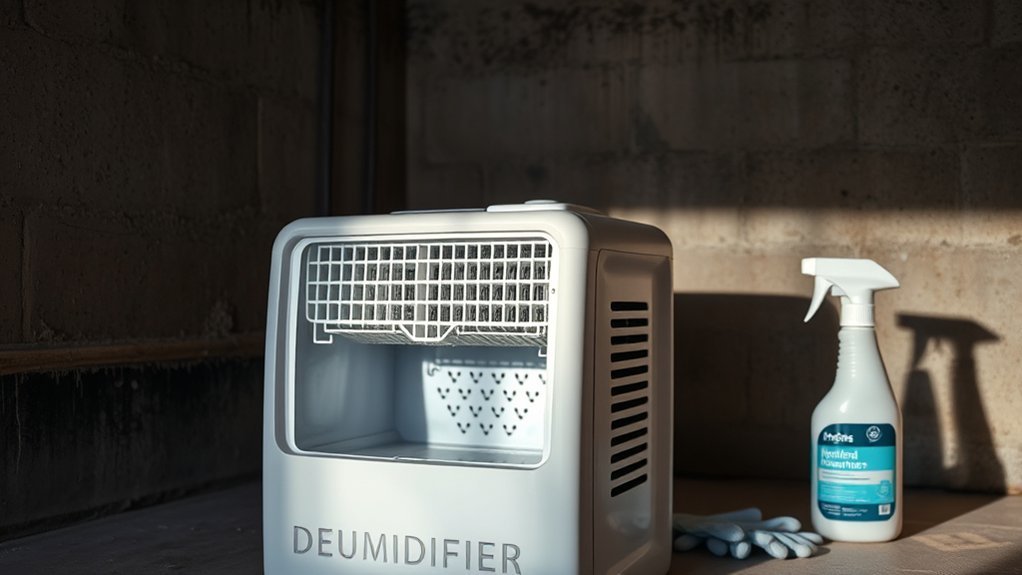
Start with the parts the manufacturer expects you to remove and clean. Do not spray water or cleaner into controls, wiring, motors, or sealed internal parts.
- Turn it off and unplug it. Never clean a dehumidifier while it is connected to power.
- Move it carefully. If mold is visible, avoid shaking the unit or unnecessarily disturbing contaminated surfaces.
- Wear appropriate protection. For visible mold cleanup, the CDC recommends protective gloves, goggles, and at least a NIOSH Approved N95 respirator.
- Empty the bucket. Pour out the water, then wash the bucket, lid, handle, and splash guard with warm water and mild dish soap if your manual permits it.
- Scrub accessible corners and seams. Use a soft brush on grooves where slime or buildup is hiding, provided the surface is manufacturer-approved for washing.
- Clean the filter. If your manual says the filter is washable, clean it as directed and let it dry completely. Replace it if it is damaged, disposable, or still smells musty after approved cleaning.
- Flush the drain hose if your manual allows it. Disconnect it as directed, rinse or flush it using the manufacturer-approved method, check for clogs, and reinstall it with the required drainage slope.
- Wipe the intake and exterior. Use a damp cloth with mild soap if permitted by the manufacturer. Keep excess water away from vents, buttons, controls, and electrical components.
- Dry everything fully. Let all washed removable parts dry completely before reassembly. Reinstalling a damp filter or bucket can restart odor and moisture problems.
- Check before returning it to service. After the accessible parts are clean and dry, test the unit only as permitted by the manual. Stop using it if strong musty odor returns, drainage fails, it leaks, or it develops unusual heat or electrical symptoms.
Note: The EPA says mold on hard surfaces can generally be scrubbed with detergent and water and then dried completely. Porous materials that become moldy may be difficult or impossible to clean completely.
Recommended Products
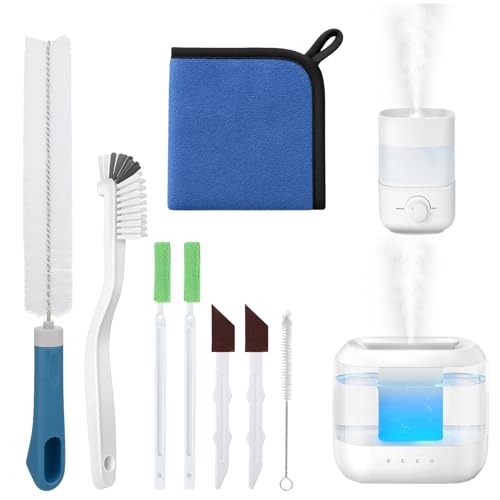
Humidifier Cleaning Solution:Still looking for a cleaning tool that can thoroughly clean your humidifier? Come and try our humidifier cleaning brush set!The nylon brush cleans the stains on the base, the sandpaper brush powerfully removes the severe scale at the bottom, and the long brush can easily reach the air outlet and the interior of the water storage tank, thoroughly cleaning every corner of the humidifier in all aspects, making your humidifier look brand new and more reassuring to use.

【All-in-One Dryer Duct Cleaning Kit】No more running to the hardware store for missing parts. This complete vent cleaning kit includes a heavy-duty dryer vent cleaning brush for 4-inch pipes, a set of flexible nylon rods, a dedicated lint brush, a dryer vent cleaner drill attachment, and protective gloves—everything you need in one box, ready to use right away.

All-in-One Dryer Duct Cleaning Kit — No more running to the hardware store for missing parts. This complete vent cleaning kit includes a heavy-duty dryer vent cleaning brush for 4-inch pipes, a set of flexible nylon rods, a dedicated lint brush, a dryer vent cleaner drill attachment, and protective gloves—everything you need in one box, ready to use right away.
What Not to Do When Cleaning a Dehumidifier
- Do not mix cleaning products. Never mix bleach with ammonia or other cleaners. Follow the label and appliance manufacturer’s instructions.
- Do not soak the appliance body. Water near controls, wiring, or the motor can create an electrical hazard or damage the appliance.
- Do not reinstall wet parts. A damp filter or bucket can allow odor and microbial growth to return.
- Do not ignore recurring mold. If accessible parts become moldy again quickly, investigate standing water, drainage, room humidity, leaks, and possible hidden internal contamination.
- Do not run a recalled unit. Check the CPSC dehumidifier recall page if your dehumidifier is older, secondhand, or potentially included in a recall.
How to Keep Mold Out of a Dehumidifier
To keep mold out of your dehumidifier, treat water management and cleaning as part of normal use. A unit that runs heavily in a basement, laundry room, or humid climate may need more frequent attention than one used occasionally. Your model’s manual should control the final maintenance schedule.
- Check and empty the bucket regularly. During heavy use, checking it daily is a practical habit when continuous drainage is not being used. Do not let collected water sit unnecessarily.
- Wash the bucket regularly. During heavy use, a weekly check and wash is a practical starting point unless the manual specifies another schedule. Clean sooner if odor or slime appears.
- Clean or replace the filter according to the schedule and method in the owner’s manual.
- Use a hygrometer to confirm that the room is actually reaching roughly 30% to 50% relative humidity.
- Keep airflow open by maintaining the clearances specified by the manufacturer around the intake and outlet.
- Use continuous drainage correctly when appropriate for a unit that runs frequently.
- Dry the unit before storage so water does not remain trapped for weeks or months.
Pro Tip: If you use gravity drainage, install the hose exactly as your manual requires and avoid low spots that trap standing water. A sagging or clogged hose can create the moisture problem you were trying to prevent.
Recommended Products

1-【Widely Application】The digital LCD monitor can be used in home, office, garage, schools, hotels, laboratories, kindergartens, aquaculture, instrument workshop, warehouse, reptile tank terrarium, aquarium, hermit crab habitat, and other places where temperature/humidity measurement is required.

1-【Widely Application】The digital LCD monitor can be used in home, office, garage, schools, hotels, laboratories, kindergartens, aquaculture, instrument workshop, warehouse, reptile tank terrarium, aquarium, hermit crab habitat, and other places where temperature/humidity measurement is required.

Face Icon Comfort Indicator: Humidity temperature gauge features face icons to indicate DRY/COMFORT/WET air conditions, quickly informs you how to adjust your humidifier or dehumidifier to achieve optimal comfort.
Can a Dehumidifier Kill Existing Mold?
No. A dehumidifier does not kill existing mold. It lowers moisture so conditions are less favorable for additional growth, but mold already on surfaces still needs to be cleaned, removed, or professionally remediated when appropriate. The EPA says moisture control is the key to mold control: clean up the mold and correct the water or moisture problem.
How Dehumidifiers Help With Mold Growth
A dehumidifier can help after cleanup because it keeps the room drier. That is useful in basements, laundry rooms, crawl-space-adjacent rooms, and other damp areas. Lower indoor humidity can also reduce condensation on windows, pipes, and cold surfaces.
Humidity control does not replace leak repair. If a roof, plumbing line, foundation, window, or HVAC drain keeps adding water, mold can return even while the dehumidifier runs.
Existing Mold Remediation
For small mold patches on hard surfaces, many homeowners can clean the area with detergent and water and then dry it completely. For porous materials such as carpet, ceiling tile, insulation, and some drywall, cleaning may not remove contamination fully because mold can grow inside the material.
After flooding, the CDC recommends cleaning and drying the home fully and quickly, ideally within 24 to 48 hours. After the water source is fixed and the mold is removed, a dehumidifier can help keep indoor humidity controlled. Do not use dehumidification as a cover-up for active growth, wet carpet, musty walls, or hidden water damage.
Which Dehumidifier Features Help Prevent Mold?
The best dehumidifier for mold control is not necessarily the model with the longest feature list. For mold prevention, accurate humidity control, accessible cleaning, reliable drainage, and enough moisture-removal capacity for the space matter more.
Recommended Products

Engineered with Dual Semiconductor Technology - Mecmic dehumidifier is designed with two semiconductor modules work together to remove moisture more efficiently than traditional single-semiconductor designs, up to 34 oz (1000 ml) of moisture per day under ideal conditions,helping your space feel fresher and more comfortable in less time. Specifically for bedrooms, bathrooms, closets, laundry rooms, RVs, and other compact areas.

【The Undisputed Champion — Industry-Leading Dehumidifier Brand】When you choose AEOCKY, you get double market validation. According to data independently verified by Stackline, a leading third-party data analytics company, AEOCKY was an industry‑leading dehumidifier brand on Amazon U.S. in 2025. This means you’re not just choosing a flagship product from a market leader, but a top-performing brand backed by independent market data and trusted by millions of real users, delivering the ultimate combination of performance, quality and trust.

Multi-Purpose Hose, 6ft Cut-to-Fit:This 6-foot hose is designed for various applications, including dehumidifier drainage and gardening tasks. It can be easily cut to the desired length for flexible use. Please confirm the required length before purchase.
What Humidity Setting Helps Prevent Mold?
Choose a dehumidifier with an adjustable humidistat so you can set and monitor a target rather than guessing. A setting around 45% to 50% keeps the room within the EPA’s preferred 30% to 50% range while providing a buffer below 60%. If the room still smells musty or shows condensation, verify the reading with a separate hygrometer and inspect for leaks, wet materials, or poor ventilation.
Moisture control is the real mold control. A dehumidifier helps only when the room is dry enough and the water source is fixed.
Does HEPA Filtration Remove Mold Spores?
Some dehumidifiers include additional filtration, but many only use a washable dust filter. A standard washable dehumidifier filter is not the same as a HEPA air purifier.
A HEPA filter can theoretically remove at least 99.97% of dust, pollen, mold, bacteria, and other airborne particles at 0.3 microns. A properly sized air purifier with true HEPA filtration can therefore reduce airborne particles, including mold particles and spores. It does not remove mold growing on surfaces, repair water damage, or lower room humidity.
Does Continuous Drainage Help Prevent Mold?
Continuous drainage can reduce the amount of time collected water sits in the bucket and can be useful when a dehumidifier runs frequently. It still requires correct installation and maintenance.
For continuous drainage to work reliably:
- Use the hose type and size recommended by the manufacturer.
- Keep a gravity-drain hose sloped as required by the manual unless the model uses a pump.
- Inspect the hose regularly for clogs, kinks, leaks, standing water, or slime.
- Flush and dry the hose before seasonal storage if the manufacturer recommends it.
When to Call for Mold Remediation
Professional help becomes more appropriate when mold is extensive, hidden, recurring, associated with contaminated water, or unsafe for the occupants to clean. A dehumidifier can help control moisture after the underlying problem is corrected, but it cannot remediate serious contamination by itself.
Consider professional remediation or specialized guidance if:
- The moldy area is larger than about 10 square feet, especially when contamination is hidden, recurring, or involves substantial porous material.
- Mold may be inside HVAC equipment or air ducts.
- The water came from sewage or another contaminated source.
- Mold keeps returning after cleaning and moisture control.
- You smell mold but cannot locate the moisture source or contaminated material.
- Large amounts of carpet, insulation, ceiling tile, drywall, or other porous material are moldy.
- Someone who would otherwise perform the cleanup has asthma, COPD, allergies, immune suppression, underlying lung disease, or another condition that increases mold-related risk.
The EPA says moldy areas smaller than about 10 square feet can usually be handled by homeowners in ordinary circumstances, while larger or complicated problems require additional remediation considerations. The CDC advises people with allergies, immune suppression, underlying lung disease, asthma, or COPD not to take part in mold cleanup. If symptoms are involved, use this article only as general home-safety information and ask a qualified healthcare professional for personal medical advice.
Frequently Asked Questions
Will a dehumidifier stop mold from spreading?
A dehumidifier can help make conditions less favorable for new mold growth by keeping humidity low, but it will not remove existing mold. You still need to clean or remove contaminated material as appropriate and fix leaks, condensation, or other moisture sources.
Should you use a dehumidifier if you have COPD?
A dehumidifier may help control excessive indoor humidity, but it is not a medical treatment. CDC advises people with COPD not to participate in mold cleanup or remain in a moldy home during cleanup. If humidity, mold, or cleaning products affect your breathing, ask a healthcare professional for advice specific to you.
What are the first signs of black mold?
You cannot reliably identify so-called black mold by color alone. Stachybotrys chartarum is greenish-black, but many molds can look dark. The CDC says you do not need to identify the species before removing mold and correcting the moisture source.
Can a moldy dehumidifier make you sick?
A contaminated dehumidifier can increase exposure to musty air and potentially mold particles when airflow passes over moldy internal surfaces. Mold exposure affects people differently, and people with allergies, asthma, COPD, chronic lung disease, or immune suppression may face greater risk. Stop using a visibly moldy or strongly musty unit until it has been safely cleaned, serviced, or replaced.
How often should you clean a dehumidifier?
Follow the maintenance schedule in your owner’s manual. During heavy use, checking the bucket daily and washing it regularly is a practical routine, while filters and drain components should be cleaned or serviced on the manufacturer’s schedule. Clean sooner if you notice musty odor, slime, visible debris, restricted drainage, or reduced performance.
Can I use water from a dehumidifier?
Treat water collected by an ordinary household dehumidifier as non-potable. A standard dehumidifier is not a drinking-water treatment system. Dispose of the collected water as directed by the appliance manufacturer unless the equipment is specifically designed and certified for another use.
Does a HEPA dehumidifier remove mold spores?
Only a unit with genuine HEPA-level filtration and adequate airflow can provide HEPA particle filtration. Many dehumidifiers use simple washable dust filters rather than HEPA filters. Even true HEPA filtration does not remove mold growing on surfaces, repair water damage, or replace humidity control.
Conclusion
A clean, properly maintained dehumidifier usually helps prevent mold rather than spread it. Keep indoor relative humidity around 30% to 50%, manage collected water correctly, maintain the filter and drain path according to the owner’s manual, and repair leaks or other moisture sources. If the dehumidifier itself smells strongly musty or has visible mold, stop using it until the accessible contamination is safely cleaned and dried. If odor returns after cleaning, contamination is deep inside the appliance, or the room has widespread, hidden, recurring, HVAC-related, or contaminated-water mold, get qualified help instead of relying on the dehumidifier alone.
Sources
- EPA Mold Course, Chapter 2: indoor humidity guidance below 60%, ideally 30% to 50%.
- EPA: A Brief Guide to Mold, Moisture and Your Home: moisture control and mold-prevention guidance.
- EPA: Mold Cleanup in Your Home: hard-surface cleaning, porous-material cautions, and the roughly 10-square-foot homeowner cleanup benchmark.
- CDC: Mold: humidity guidance, mold signs, health context, moisture correction, and rapid drying after flooding.
- CDC: Mold Clean Up Guidelines and Recommendations: respirator, glove, eye-protection, and higher-risk-person guidance.
- CDC: Facts About Stachybotrys chartarum: greenish-black appearance and guidance that mold species identification is unnecessary before removal.
- Frigidaire: Dehumidifier Clean and Care: manufacturer cleaning, bucket, storage, filter, and drain-hose guidance.
- EPA: What is a HEPA filter?: HEPA particle-removal performance.
- U.S. Consumer Product Safety Commission: Dehumidifier Recalls: current dehumidifier recall and fire-safety information.