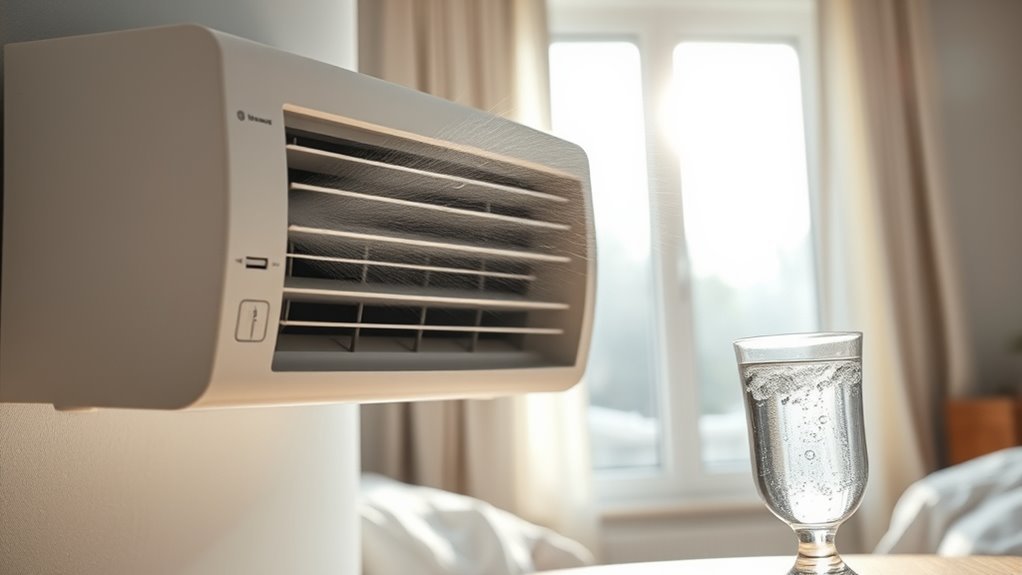
Yes, air conditioners dehumidify while they cool. Warm, humid indoor air passes over a cold evaporator coil, water vapor condenses on the coil, and the condensate drains away. How much moisture an AC removes depends on runtime, equipment size, airflow, indoor moisture sources, thermostat controls, and the condition of the system.
Quick Answer
An air conditioner removes humidity as a side effect of cooling, but it is not always a complete humidity-control solution. A correctly sized, well-maintained AC can keep many homes comfortable during hot weather. If indoor relative humidity stays above 60%, find the moisture source and consider a dedicated dehumidifier.
Key Takeaways
- AC dehumidification happens only when the evaporator coil is cold enough for moisture to condense.
- Oversized equipment may cool too quickly and shut off before removing enough moisture.
- Check indoor humidity with a hygrometer instead of judging only by how the room feels.
- Dirty filters, blocked drains, poor airflow, air leaks, and equipment faults can weaken humidity control.
- A dehumidifier is usually the better tool when moisture control is needed without additional cooling.
How Air Conditioners Remove Moisture
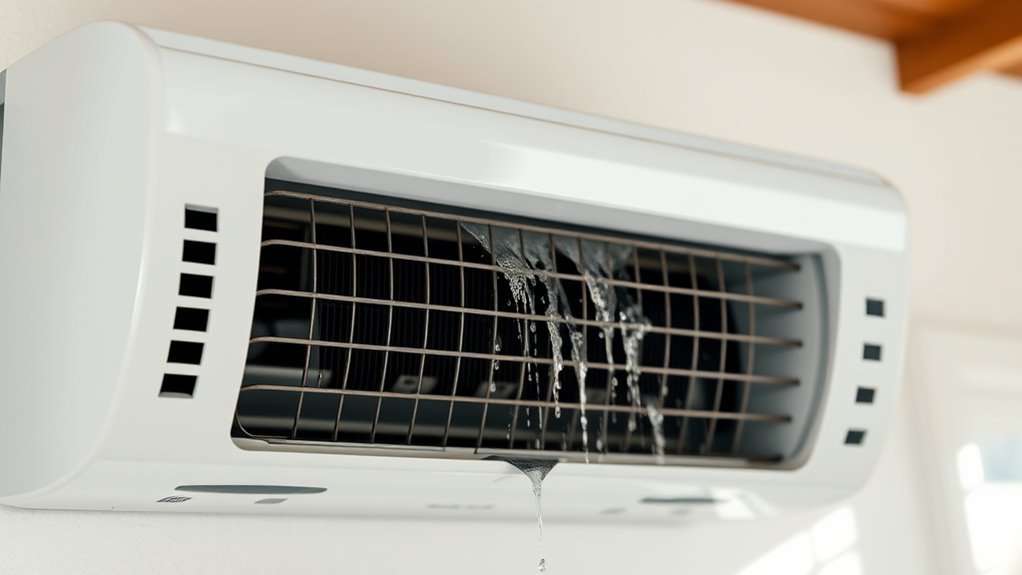
During cooling, the indoor blower pulls warm air through the return duct or intake and moves it across the evaporator coil. The coil is colder than the air’s dew point, so some water vapor changes into liquid droplets. Those droplets fall into a drain pan and leave through a condensate line or drain hose.
The system then sends cooler, drier air back into the room. This process removes both sensible heat, which lowers air temperature, and latent heat, which is tied to moisture removal. Airflow must stay within the manufacturer’s specifications so the coil can cool the air without freezing or losing efficiency.
An air conditioner can remove heat and moisture at the same time, but only while the cooling cycle keeps the evaporator coil cold and condensate is draining correctly.
What Indoor Humidity Level Should You Aim For?
The U.S. Environmental Protection Agency recommends keeping indoor relative humidity below 60%, and ideally between 30% and 50%, to reduce condensation and mold risk. A practical target for many air-conditioned homes is about 40% to 50%, provided the space does not become uncomfortably dry.
Use a digital hygrometer in the living area, away from supply vents, exterior doors, bathrooms, and direct sunlight. Give the reading time to stabilize. Relative humidity changes with temperature, so compare readings taken under similar conditions rather than reacting to a single short spike.
Note: Condensation on windows, pipes, or vents can signal high humidity, but it can also point to a cold surface, missing insulation, or an air leak. Treat it as a clue, not a complete diagnosis.
Why AC Dehumidification Varies
Two homes with the same indoor temperature can have very different humidity levels. AC moisture removal changes with equipment design, runtime, weather, airflow, and the amount of moisture entering or being produced inside the building.
- Equipment size: An oversized unit may satisfy the thermostat quickly, then stop before the coil has removed enough moisture.
- Runtime and controls: Longer, steady cooling cycles generally remove more water than frequent short cycles. Variable-speed equipment may provide better control when configured correctly.
- Airflow: A dirty filter, blocked return, closed register, dirty coil, or incorrect blower setting can reduce performance.
- Outdoor air leakage: Gaps around doors, windows, ducts, and attic or crawl-space penetrations can bring humid air indoors.
- Indoor moisture sources: Cooking, showers, drying clothes indoors, plumbing leaks, damp basements, and unvented appliances can add more moisture than the AC can remove.
- System condition: Low refrigerant charge, a dirty evaporator coil, a blocked condensate drain, or control problems can affect cooling and dehumidification.
Different AC types also behave differently. Central systems, window units, mini-splits, and portable air conditioners all remove some moisture during active cooling, but their controls, drainage methods, fan behavior, and published performance vary by model. Read the owner’s manual before assuming that “Cool,” “Dry,” and “Auto” modes work the same way on every unit.
Signs Your AC Is Not Dehumidifying Well
Your AC may not be controlling moisture well if the home reaches the set temperature but still feels clammy, indoor relative humidity remains above 60%, or musty odors and repeated condensation continue. Other warning signs include frequent on-off cycling, weak airflow, ice on the indoor coil, water around the indoor unit, or a condensate drain that is not flowing during humid cooling weather.
These symptoms do not identify one specific fault. An oversized system can short-cycle, while an undersized system may run for long periods and still fail to meet the total cooling and moisture load. High humidity can also come from duct leakage, building-envelope leaks, a wet crawl space or basement, bathroom ventilation problems, or hidden water intrusion.
Warning: Shut the system off and arrange service if you see ice on refrigerant lines or the indoor coil, smell burning, hear electrical arcing, or find water reaching electrical components. Do not open the refrigerant circuit or add refrigerant yourself.
Can Air Conditioners Handle High Humidity?
A properly sized air conditioner can handle normal summer humidity in many homes, especially when the building is reasonably sealed and indoor moisture sources are controlled. However, an AC is primarily designed to control temperature. During mild but very humid weather, the thermostat may not call for enough cooling runtime to reach the desired humidity level.
Persistent high humidity may require more than a lower thermostat setting. Check for water leaks, wet building materials, disconnected exhaust ducts, unsealed return ducts, open windows, and humid air entering from an attic, garage, basement, or crawl space. Fixing the source is usually more effective than forcing the AC to run colder.
How to Improve AC Dehumidification
Start with measurements and basic maintenance. Record indoor temperature and relative humidity, note how long the system runs, and check whether the home becomes humid at certain times, such as after showers, cooking, rain, or overnight. Then work through the steps below.
Recommended Products

Wellness Indicator: This humidity meter with humidity level icon indicates air conditions - DRY/COMFORT/WET, allowing this humidity sensor to ensure you’re always aware of changes to your home/household with just a quick glance

Smart Features: The Govee Wireless Thermometer Hygrometer supports all basic functions as well as smart functions such as remote monitoring and temp humidity graphs. Our humidity meters are reliable and easy to use for homes, greenhouses and more.(Only supports 164ft Bluetooth connection)

Maintain the Right Room Temperature and Humidity Levels: This wireless indoor thermometer/hygrometer combination is perfect to pair with humidifiers or dehumidifiers
Measure Humidity and Check the Settings
Use a hygrometer to confirm the problem. Keep windows and exterior doors closed while cooling. If your thermostat has separate humidity controls, follow the equipment manual or installer’s settings. On many systems, setting the fan to Auto prevents the blower from running continuously after the compressor stops, which may help avoid returning moisture from a wet coil to the room. Some systems are designed differently, so follow the manufacturer’s instructions.
If your unit has a Dry or Dehumidify mode, use it during warm, humid conditions when less cooling is needed. Dry mode is model-specific: some units limit fan speed, some adjust compressor output automatically, and some do not allow a temperature setting.
Clean or Replace Air Filters
Check the filter every month during heavy use. Clean a reusable filter or replace a disposable one when dirty, and follow the equipment manufacturer’s schedule. ENERGY STAR recommends regular filter inspection and HVAC maintenance; follow your system and filter manufacturer’s replacement schedule.
A clogged filter slows airflow, increases system strain, and can contribute to poor cooling or coil icing. Do not install a denser filter than the system can handle unless an HVAC professional confirms that the blower and ductwork can support it.
Keep Airflow Paths Open
Make sure return grilles and supply registers are not blocked by furniture, curtains, rugs, or stored items. Keep the outdoor condenser clear of leaves and debris. If several rooms have weak airflow, or closing registers seems necessary to balance temperatures, have the ductwork and blower settings checked instead of restricting the system further.
Have Refrigerant and Coil Performance Checked
Low or incorrect refrigerant charge can reduce capacity and efficiency. Refrigerant does not normally get “used up” in a sealed system, so a low charge may indicate a leak or an installation problem. A qualified technician should test the system, repair the cause, and charge it to the manufacturer’s specification.
In the United States, work that opens the refrigerant circuit or adds or removes refrigerant is regulated under EPA Section 608 technician-certification requirements. Homeowners should not attach gauges, vent refrigerant, or use a recharge kit on a residential split system.
Keep Condensate Drains Clear
Inspect the drain pan and accessible drain line for standing water, algae, dirt, kinks, or leaks. A blocked drain can cause water damage and may affect indoor humidity. Turn off power before working near the indoor unit, and use only the cleaning method approved by the equipment manufacturer.
A wet/dry vacuum may clear some accessible drain outlets, but drain layouts vary. Avoid pushing a rigid snake into delicate fittings or pouring chemicals into the line unless the manufacturer allows it. Call a professional if the drain repeatedly clogs, the pan overflows, or the line is concealed.
Reduce Moisture at the Source
- Run bathroom and kitchen exhaust fans that vent outdoors.
- Repair plumbing, roof, window, foundation, and condensate leaks promptly.
- Vent clothes dryers outdoors and avoid drying large loads indoors.
- Seal obvious air leaks and have leaky ducts repaired.
- Address damp basements and crawl spaces instead of relying only on colder AC settings.
Pro Tip: Keep a simple one-week log of temperature, relative humidity, weather, and AC runtime. Patterns can reveal whether the main cause is short cycling, nighttime moisture, shower use, rain, or a building leak.
When to Add a Dehumidifier
Consider a dedicated dehumidifier when indoor humidity regularly stays above 60% after obvious moisture sources and AC maintenance issues have been addressed. It can also help during rainy or mild weather when the home is humid but not warm enough to require long cooling cycles.
A portable dehumidifier is suited to one room or a limited area, while a whole-home unit can be connected to compatible ductwork for broader control. Choose capacity based on the space, temperature, dampness, drainage options, and manufacturer guidance. ENERGY STAR dehumidifier guidance explains that capacity is commonly rated in pints per 24 hours and that certified units include a humidistat that cycles around a selected RH target.
Remember that a refrigerant dehumidifier releases heat into the room. That heat may be welcome in a cool basement but can add to the cooling load in a warm living space. A whole-home design should be sized and installed by a qualified contractor.
Recommended Products
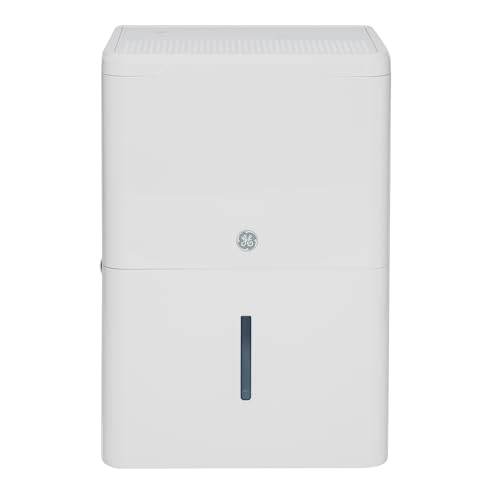
This small dehumidifier for bedroom, bathroom, basement use removes up to 25 pints of moisture per day. Perfect as a room dehumidifier for humid spaces up to 1,500 sq ft.
Remove up to 35 pints of moisture per day with this dehumidifier, perfect for bedrooms, basements, garages, and other humid spaces.
LARGE DEHUMIDIFIER: Effectively removes up to 50 pints of moisture daily, perfect for whole home moisture control including basements, garages, bedrooms, bathrooms, and high-humidity spaces up to 5000 sq ft.
AC or Dehumidifier: Which Works Better?
The better choice depends on whether your main problem is heat, moisture, or both. An air conditioner is the right first tool when the room is hot and humid. A dehumidifier is usually better when the temperature is already comfortable but the air remains damp.
| System | Main job | Best use | Important trade-off |
|---|---|---|---|
| Air conditioner | Cooling with incidental moisture removal | Hot, humid weather | May not run long enough during mild, damp weather |
| Dehumidifier | Targeted moisture removal | Damp spaces that do not need more cooling | Adds heat to the room and uses additional electricity |
| Both | Independent temperature and humidity control | Persistently hot, humid homes with verified moisture loads | Higher equipment and operating cost; proper sizing matters |
Recommended Products

Semiconductor dehumidifiers use thermoelectric cooling to remove moisture from the air. They create a drier, more comfortable environment by reducing humidity and improving air quality.

High Efficient Dehumidifiers for Home: This compact 44oz dehumidifier efficiently removes excess moisture in rooms with 86°F and 80% RH, collecting up to 11.8oz (349ml) of water in 24 hours. It maintains an ideal humidity level of 45%-55% while operating at ultra-low energy consumption (24W/hour, 576W/day). Perfect for bedrooms, bathrooms, and small spaces.

Upgrade High Efficient Dehumidification: Dehumidifier utilize semi conductor condensation technology, ensuring quiet operation while effectively extracting moisture from the air. This advanced feature helps keep humidity levels below 45%
AC Moisture Removal
An AC removes water only while conditions allow condensation at the evaporator coil. Its moisture-removal rate is not usually the primary consumer rating, and it changes with indoor temperature, humidity, airflow, compressor operation, and equipment size. A correctly sized system with long, steady cycles usually controls humidity better than an oversized system that repeatedly starts and stops.
Dehumidifier Advantages
A dehumidifier is designed and rated for moisture removal. Its capacity is commonly listed in pints or litres removed per 24 hours under specified test conditions, and a humidistat can cycle it around a chosen RH setting. This makes it easier to manage moisture when cooling is not needed.
Do not assume that a dehumidifier is always cheaper to operate. Compare each appliance’s wattage, daily runtime, and local electricity rate. Also account for the heat a dehumidifier releases indoors, which may make the AC run more in warm weather.
Frequently Asked Questions
What is the 3-minute rule for air conditioners?
On many air conditioners, the 3-minute rule is a compressor-protection delay. After the unit stops, it may wait about three minutes before restarting. It is not a rule for judging cooling capacity or dehumidification. Follow the timing stated in your model’s manual.
Is it cheaper to run an air conditioner or a dehumidifier?
A portable dehumidifier often draws less power than a central AC, but there is no universal answer. Cost depends on wattage, runtime, electricity price, climate, equipment efficiency, and whether the dehumidifier’s added heat makes the AC run longer.
How do I set my AC to dehumidify?
Select Dry or Dehumidify mode if your unit provides it, close windows and doors, keep the filter clean, and monitor the room with a hygrometer. Use the fan and temperature settings allowed by the manufacturer. If there is no Dry mode, use normal cooling and avoid forcing the room colder than necessary.
How long should you run Dry mode?
There is no universal duration. Run Dry mode according to the owner’s manual and stop when the room reaches a comfortable humidity level, ideally measured with a hygrometer. Some models control the cycle automatically, while others limit temperature or fan settings.
Does fan-only mode dehumidify a room?
No. Fan-only mode circulates air but does not make the evaporator coil cold enough to condense water. On some systems, running the blower after the compressor stops can re-evaporate moisture left on the coil.
Why is my home humid even though the AC is cold?
Common causes include oversized equipment, short cycling, poor airflow, dirty coils or filters, an incorrect refrigerant charge, drain problems, humid outdoor air leaking inside, wet basements or crawl spaces, and moisture from showers, cooking, laundry, or plumbing leaks.
Conclusion
Air conditioners do dehumidify, but moisture removal depends on more than the thermostat temperature. Correct sizing, steady runtime, clean airflow paths, proper refrigerant charge, clear drainage, and control of indoor moisture sources all matter. Measure relative humidity instead of guessing. If the home remains above 60% RH after maintenance and moisture-source repairs, use a properly sized dehumidifier or have an HVAC professional evaluate the system and building.
Sources
- ENERGY STAR: Room Air Conditioners — proper sizing, short cycling, and humidity removal.
- U.S. EPA: A Brief Guide to Mold, Moisture and Your Home — indoor humidity targets, condensation, and drain maintenance.
- ENERGY STAR: HVAC Maintenance Checklist — filters, airflow, refrigerant charge, coils, and condensate drains.
- U.S. EPA: Section 608 Technician Certification Requirements — regulated refrigerant service activities.
- ENERGY STAR: Dehumidifiers — humidistats, capacity, humidity targets, and efficient use.
- LG Support: Air Conditioner Takes a While to Start Cooling — the compressor-protection restart delay.