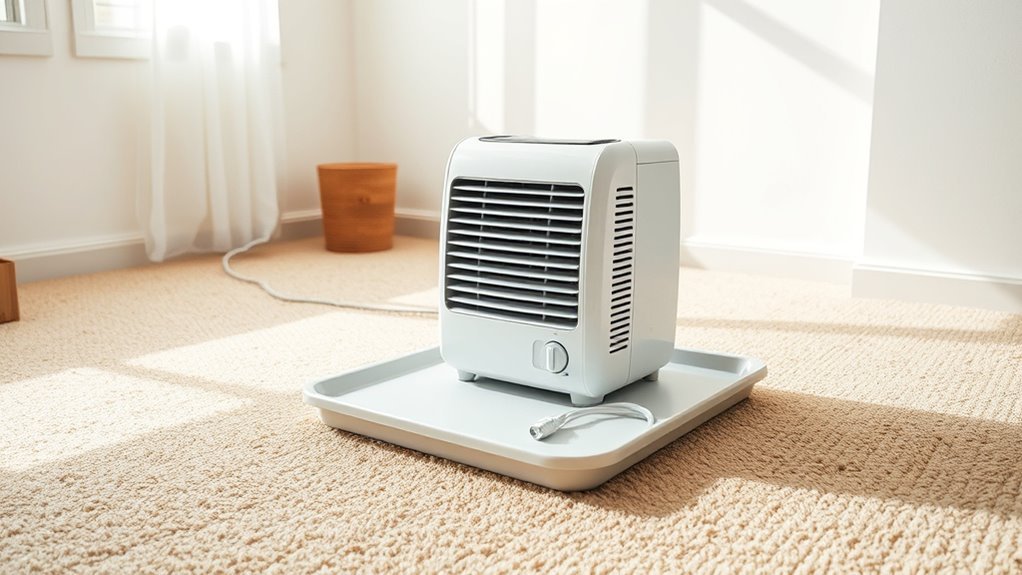
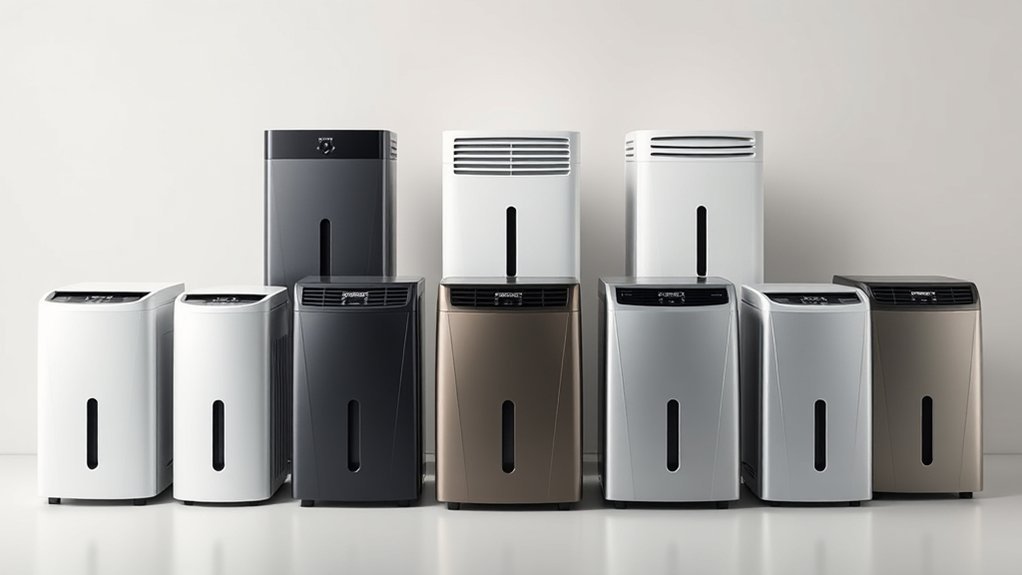
A super quiet dehumidifier should match both the room and the moisture problem. Compact thermoelectric, or Peltier, models are usually the best fit for bedrooms, closets, bathrooms, offices, and RVs because they avoid compressor cycling. However, they collect much less water than full-size compressor dehumidifiers.
For a damp basement or large room, a quiet-for-its-class compressor model is usually the more practical choice. It will still produce noticeable fan and compressor sound, but it can offer a humidistat, automatic defrost, continuous drainage, and far greater moisture-removal capacity.
- Published noise information and whether it applies only to sleep mode.
- Tank size versus daily moisture-removal capacity.
- Thermoelectric versus compressor performance.
- Gravity drainage, pumped drainage, and manual tank emptying.
- Room fit, controls, portability, and honest limitations.
Last reviewed: August 2026. Product listings, included accessories, warranty terms, certifications, and operating specifications can change, so confirm the current Amazon listing before ordering.
Quick Comparison of Super Quiet Dehumidifiers
| Product | Type | Noise information | Tank / rated removal | Best fit | Amazon |
|---|---|---|---|---|---|
| TABYIK 35OZ Quietest stated rating |
Thermoelectric | Stated 28 dB | 35oz tank; up to 16oz/day at 86°F and 80% RH | Bedside use and very small enclosed spaces | Check Current Amazon Availability |
| BEDRED CT11 95oz Largest mini-unit tank |
Thermoelectric | Approximately 28 dB is published; confirm the current listing | 95oz tank; reliable daily extraction figure not clearly established | Small rooms where fewer tank-emptying trips matter | Check Current Amazon Availability |
| TENKER 77oz Higher stated mini extraction |
Thermoelectric | Sleep mode marketed below 30 dB | 77oz tank; up to 35oz/day at 86°F and 80% RH | Bedrooms and other small enclosed rooms | Check Current Amazon Availability |
| BREEZOME 60 OZ Best timer controls |
Thermoelectric | Stated 35 dB in sleep mode | 60oz tank; up to 700ml/day at 86°F and 80% RH | Small rooms where scheduled operation matters | Check Current Amazon Availability |
| AEOCKY 3500 Sq.Ft Best balanced large-room pick |
Compressor | Quiet-for-class positioning; exact current dB rating should be confirmed | Up to 50 pints/day at 95°F and 95% RH; about 38 pints/day at 86°F and 80% RH | Large rooms, basements, and continuous drainage | Check Current Amazon Availability |
| AEOCKY 4500 Sq.Ft with Pump Best for upward drainage |
Compressor | Audible fan and compressor; exact current dB rating should be confirmed | Up to 80 pints/day in demanding warm, humid conditions | Large damp spaces where gravity drainage is impractical | Check Current Amazon Availability |
| DECIUU Max 100 Pint Best for very damp large spaces |
Compressor | Marketed as quiet-for-class; no dependable exact dB figure confirmed | 70 pints/day at 86°F and 80% RH; up to 100 pints/day at 95°F and 90% RH | Extra-large or persistently damp rooms | Check Current Amazon Availability |
TENKER Dehumidifier for Home (77oz Water Tank)
Best Higher-Output Mini Pick
Best fit: A small warm room where you want a larger tank and stronger stated thermoelectric collection.
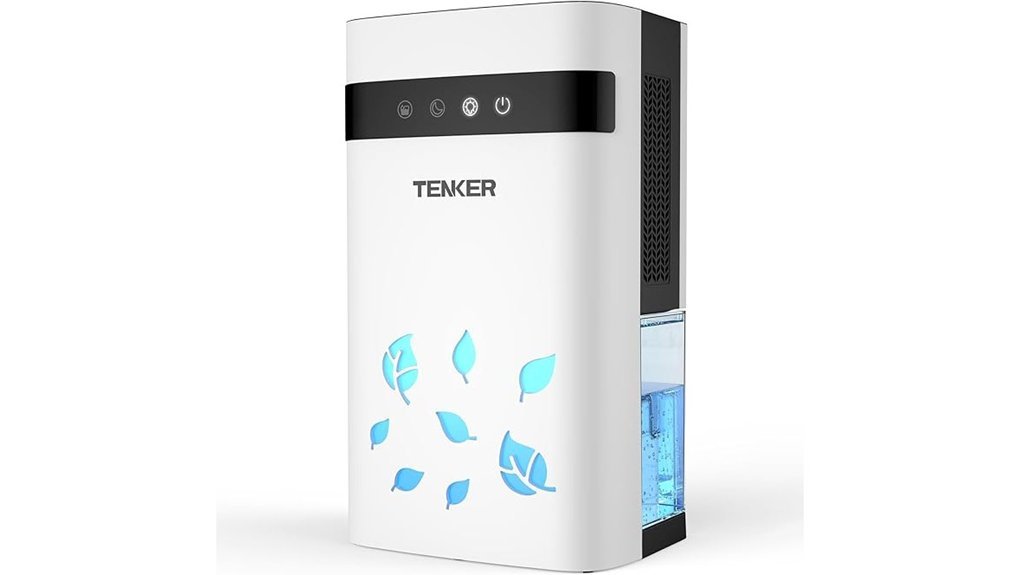
The TENKER uses semiconductor condensation with two fan speeds, including a lower-noise sleep mode. Its 77oz tank is paired with a stated collection rate of up to 35oz per day at 86°F and 80% RH. That is a best-case figure, so expect lower output in cooler rooms or when humidity is only moderately elevated.
Why you may like it: It combines a relatively large tank, automatic full-tank shutoff, sleep mode, a carrying handle, and seven-color lighting.
Who should buy it: People managing mild to moderate localized humidity in a bedroom, bathroom, closet, office, or RV.
Who should avoid it: Anyone dealing with seepage, persistent basement dampness, or a large open-plan room.
Pros:
- Sleep mode is marketed below 30 dB.
- Higher stated daily collection than the smaller TABYIK model.
- 77oz tank and automatic full-tank shutoff.
Cons:
- The maximum output depends on warm, high-humidity conditions.
- No confirmed continuous-drain connection.
- It still lacks compressor-level moisture-removal power.
BEDRED CT11 Dehumidifier for Home (95oz Tank)
Best Large-Tank Mini Pick
Best fit: A small enclosed room where a larger bucket is more useful than maximum portability.
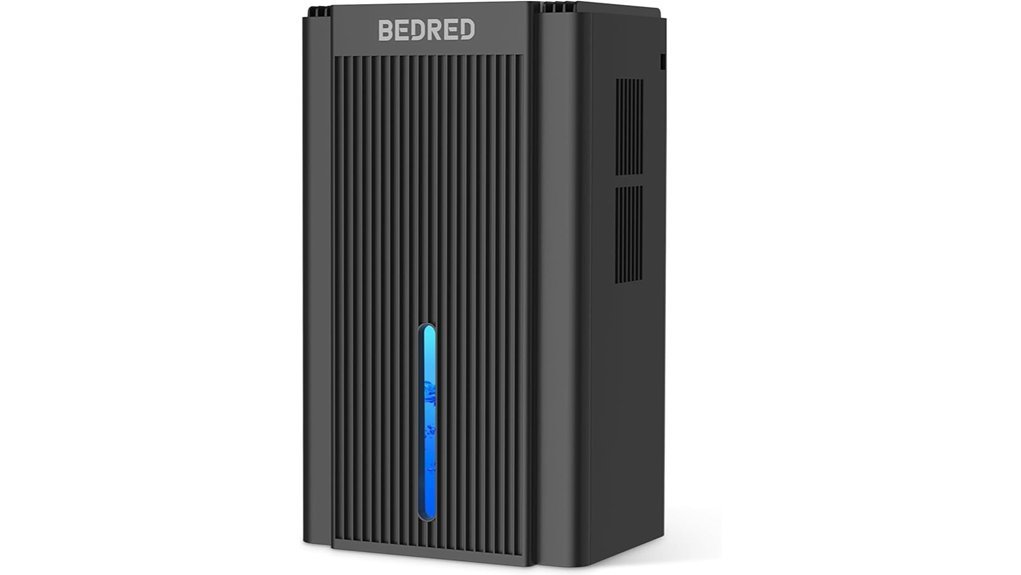
The BEDRED CT11 is a thermoelectric dehumidifier with a 95oz tank, automatic full-tank shutoff, sleep mode, and seven-color ambient lighting. Published product information places its sound near 28 dB, but the exact measurement method and operating mode should be checked on the current listing. The promoted 1,000-square-foot coverage should be treated as a marketing ceiling, not as proof of basement-level drying power.
Why you may like it: The 95oz tank can reduce emptying frequency compared with many mini dehumidifiers, while sleep mode and switchable lighting suit bedroom use.
Who should buy it: Buyers who want gentle moisture control in a bedroom, bathroom, office, closet, or similarly enclosed space.
Who should avoid it: Buyers who need a compressor, a drain hose, a precise humidistat, or rapid drying after a leak.
Pros:
- One of the largest tanks among the thermoelectric models compared here.
- Sleep mode and switchable ambient lighting.
- Automatic full-tank shutoff helps prevent overflow.
Cons:
- A dependable daily extraction rating was not clearly established.
- Square-foot marketing may overstate practical room control.
- Manual tank emptying is required.
AEOCKY 3500 Sq.Ft Compressor Dehumidifier
Best Balanced Large-Room Pick
Best fit: A basement or large room that needs real compressor capacity without moving to the largest cabinet.
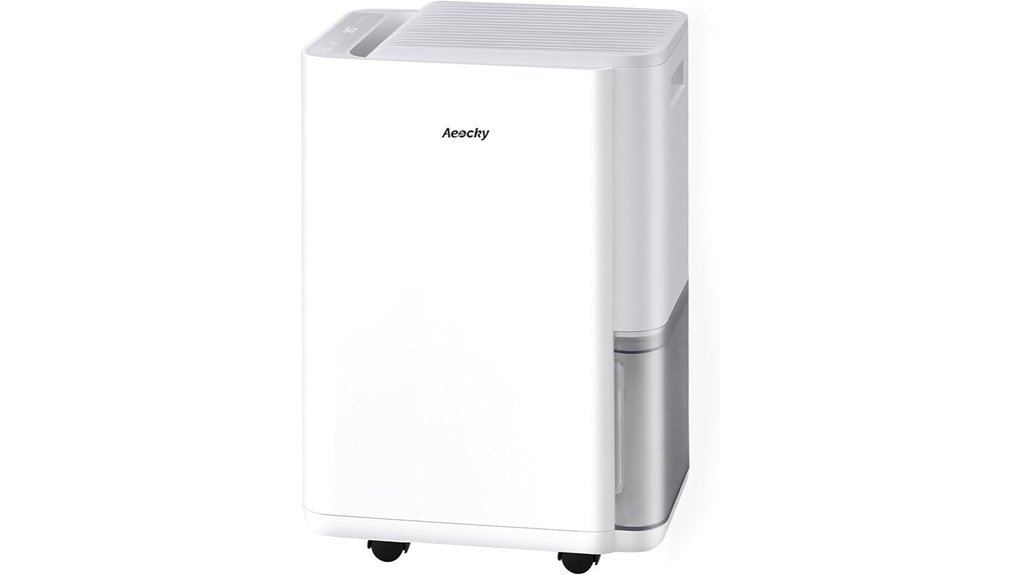
This AEOCKY compressor model is marketed for spaces up to 3,500 square feet. Its listing states a maximum of 50 pints per day at 95°F and 95% RH and about 38 pints per day at 86°F and 80% RH. It includes automatic humidity control, automatic shutoff, casters, and a gravity-drain option. Its fan and compressor will be more noticeable than any mini Peltier unit, so treat it as quiet for its performance class rather than near silent.
Why you may like it: It offers meaningful moisture removal, a humidistat, and continuous drainage in a relatively compact compressor design.
Who should buy it: Homeowners with a moderately damp basement, large room, laundry area, or multi-room zone with access to a lower drain.
Who should avoid it: Light sleepers placing a unit beside the bed or anyone who only needs mild closet humidity control.
Pros:
- Far greater extraction than a thermoelectric mini unit.
- Humidistat and continuous gravity drainage reduce daily attention.
- Casters make room-to-room movement easier.
Cons:
- Exact current sound output should be confirmed.
- Maximum pint ratings rely on demanding laboratory conditions.
- Gravity drainage requires the hose outlet to remain above the drain.
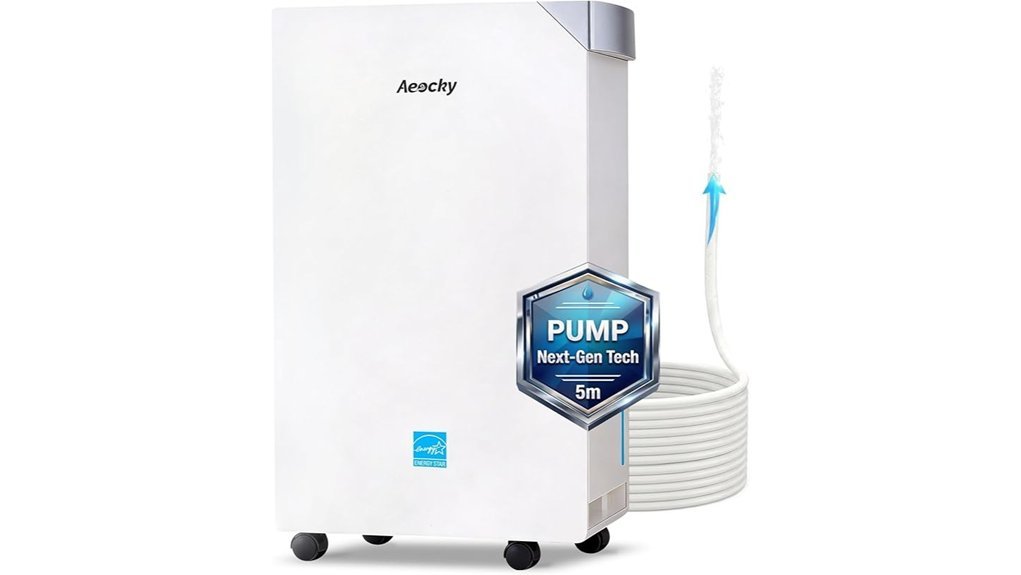
AEOCKY 4500 Sq.Ft Dehumidifier with Pump
Best for Upward Drainage
Best fit: A large basement or utility area where collected water must be pumped to a higher sink or drain.
This AEOCKY compressor dehumidifier is marketed for spaces up to 4,500 square feet and up to 80 pints per day under demanding warm and humid test conditions. Its key advantage is the integrated condensate pump, which can move water upward when a gravity hose cannot maintain a continuous downhill path. Confirm the current model number, pump lift, hose length, included accessories, and certification record before purchase.
Why you may like it: Pumped drainage can eliminate bucket carrying and offers more placement flexibility than gravity drainage alone.
Who should buy it: Buyers with a large damp basement, garage, or utility area where the nearest drain is above the unit.
Who should avoid it: Buyers with a small bedroom or anyone who does not need the cost and added mechanical complexity of a pump.
Pros:
- High-capacity compressor design for demanding spaces.
- Integrated pump supports upward drainage.
- Automatic humidity control helps maintain a selected RH level.
Cons:
- Larger and more expensive than compact models.
- The pump, fan, and compressor add mechanical noise.
- Pump lift and hose-routing limits must be checked before installation.
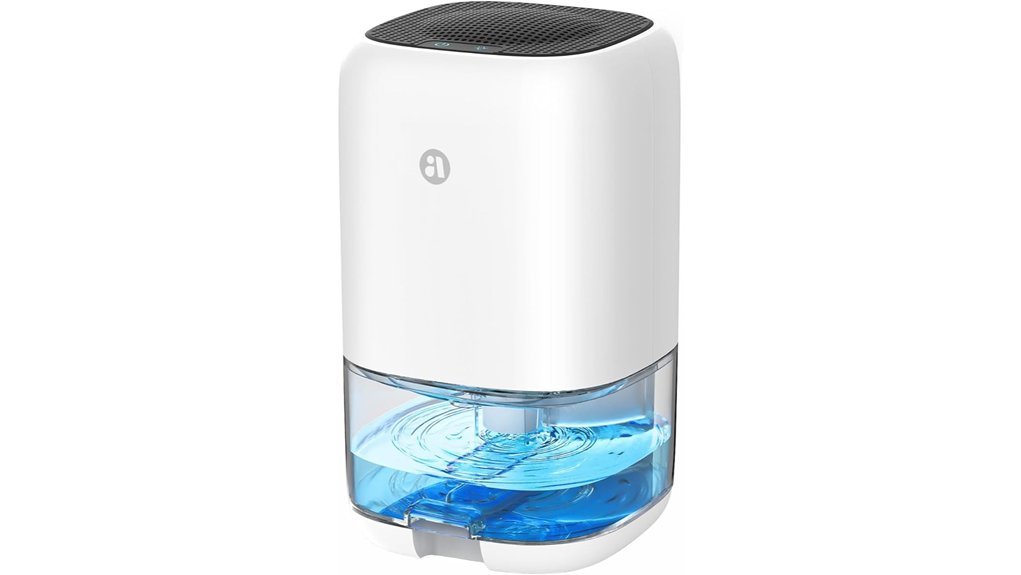
TABYIK 35OZ Dehumidifier for Bedroom and Small Spaces
Best for Bedside Use
Best fit: Mild condensation or mustiness in a small bedroom, bathroom, closet, office, or RV.
The TABYIK 35OZ is a compact Peltier dehumidifier with a published 28 dB operating figure. It has a 35oz transparent tank, built-in handle, seven-color light, and automatic full-tank shutoff. Under warm and very humid test conditions of 86°F and 80% RH, the listing states collection of up to 16oz per day.
Why you may like it: It is the easiest choice in this guide when low stated noise, simple controls, and a small footprint matter more than fast extraction.
Who should buy it: Light sleepers, renters, or RV users managing a localized humidity problem.
Who should avoid it: Anyone trying to dry a wet basement, manage water intrusion, or hold a large room at a precise humidity level.
Pros:
- Lowest clearly published noise figure in this comparison.
- Compact 35oz tank with automatic shutoff.
- Easy to carry and place in a small enclosed area.
Cons:
- Limited extraction compared with any compressor model.
- No confirmed built-in humidistat or continuous-drain connection.
- Performance falls as room temperature and humidity decrease.
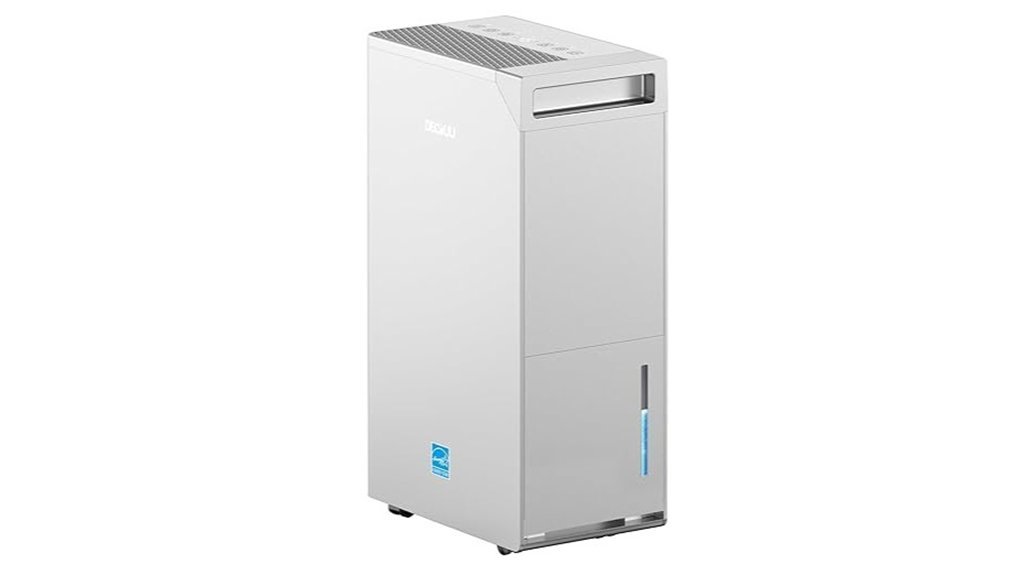
DECIUU Max 100 Pint Dehumidifier
Best for Very Damp Large Spaces
Best fit: An extra-large or persistently damp area where extraction capacity matters more than near-silent operation.
The DECIUU is marketed for spaces up to 5,000 square feet. More useful than the headline maximum is the test-condition breakdown: the listing states 70 pints per day at 86°F and 80% RH, up to 100 pints per day at 95°F and 90% RH, and about 50 pints per day at 80°F and 60% RH. It includes adjustable humidity control, automatic defrost, automatic shutoff, casters, a large tank, and continuous-drain options.
Why you may like it: It provides substantial rated capacity and automatic humidity management for spaces where mini dehumidifiers would be ineffective.
Who should buy it: Homeowners managing a large, persistently damp basement, garage, laundry area, or open living space.
Who should avoid it: Buyers seeking a compact sleep-focused unit or those with only a small localized humidity problem.
Pros:
- High rated moisture-removal capacity with clearer test-condition context.
- Adjustable humidistat and continuous drainage.
- Large tank, casters, and automatic defrost.
Cons:
- No dependable exact current sound rating was confirmed.
- Coverage claims still depend on layout, temperature, and moisture load.
- Bulkier and more power-hungry than thermoelectric models.
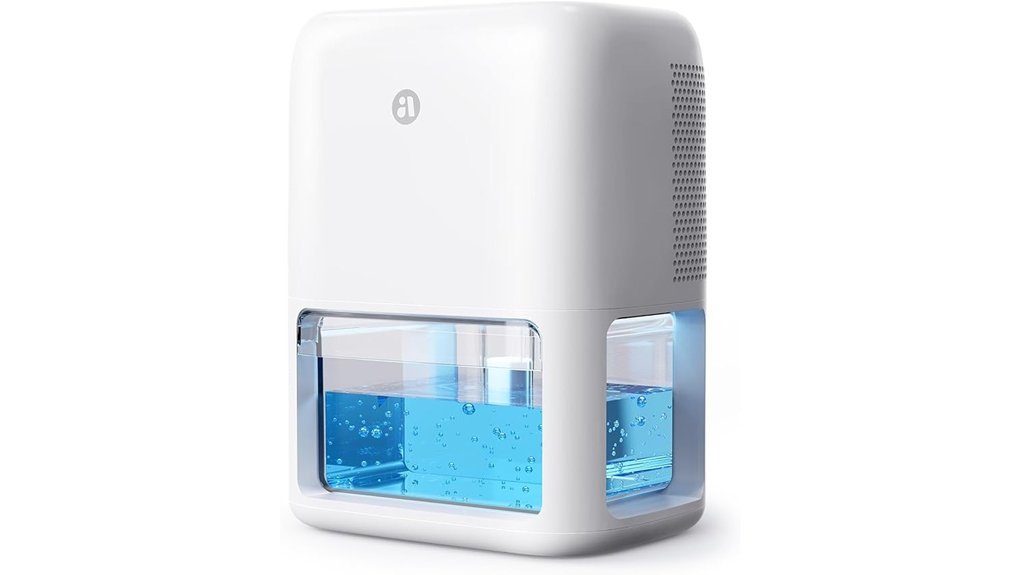
BREEZOME 60 OZ Quiet Portable Dehumidifier with Timer
Best Timer Controls
Best fit: Small-room users who want scheduled operation and a larger mini-unit tank.
The BREEZOME model uses dual-semiconductor condensers and has a 60oz tank, sleep mode, automatic shutoff, seven-color lighting, a carrying handle, and selectable 12-, 24-, 36-, or 48-hour timer settings. The listing states up to 700ml of collection per day at 86°F and 80% RH and about 35 dB in sleep mode.
Why you may like it: The timer makes it easier to schedule operation around sleep, work, or periods when you do not need the unit running.
Who should buy it: People treating mild humidity in a bedroom, office, bathroom, closet, cloakroom, or RV.
Who should avoid it: Buyers who need continuous drainage, a built-in humidistat, or fast basement drying.
Pros:
- Useful multi-step timer and sleep mode.
- 60oz tank with automatic shutoff.
- Stated 35 dB sleep-mode operation.
Cons:
- Manual tank emptying is required.
- Best-case extraction depends on high temperature and humidity.
- It is not a substitute for a compressor dehumidifier in severe dampness.
Factors to Consider When Choosing a Super Quiet Dehumidifier
Compare Noise Ratings Carefully
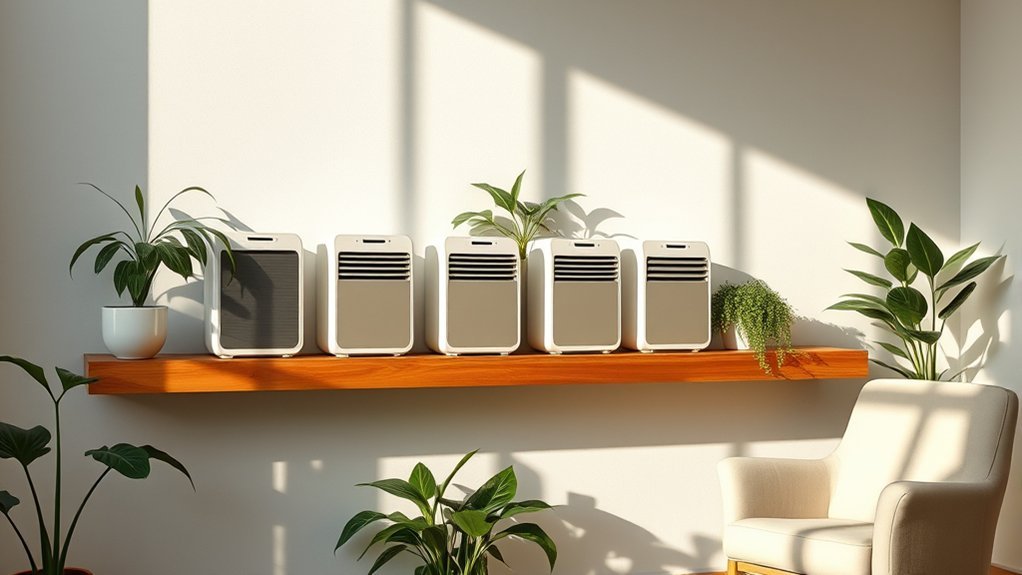
Compare published decibel ratings at the same fan setting whenever possible. A 28 to 35 dB thermoelectric model can be suitable near a bed or desk, while a compressor model may be quiet for its class yet remain clearly audible. Check whether the quoted figure applies only to sleep mode, the lowest fan speed, or a specific testing distance.
Thermoelectric vs. Compressor
Thermoelectric dehumidifiers are compact, light, and quiet, but they work best for mild localized humidity in small enclosed spaces. Compressor dehumidifiers remove much more water and commonly include a humidistat, automatic defrost, and drain connection, making them the better choice for basements and large rooms.
Daily Extraction Matters More Than Square Feet
Do not choose by a square-foot claim alone. Consider room size, current relative humidity, visible dampness, temperature, air leakage, laundry, and water seepage. Compare pint-per-day or milliliter-per-day figures only when the test conditions are also stated.
Check Current Energy Certification
For compressor models, look up the exact model number in the current ENERGY STAR product database rather than relying only on a marketplace title. The certified daily capacity may differ from a seller’s higher maximum figure measured under hotter and wetter conditions.
Tank Capacity and Drainage
Tank volume affects how often you empty the machine, not how quickly it removes moisture. A gravity hose is convenient when water can flow downhill to a drain. A built-in pump is useful when water must travel upward, but pump height and hose limits must be followed.
Operating Temperature and Defrost
Cool basements can reduce extraction and may cause frost on compressor coils. Check the minimum operating temperature and automatic-defrost feature. Thermoelectric models also lose effectiveness as temperatures fall, even though they do not use a conventional compressor.
Portability and Placement
Handles help with mini units, while casters matter for heavier compressor cabinets. Check dimensions, cord length, tank-removal clearance, required airflow space, and whether the exhaust will be blocked by a wall or furniture.
Safety, Cleaning, and Maintenance
Use the dehumidifier on a stable, dry surface with the required outlet type. Keep cords and hoses away from standing water, clean the tank regularly, wash or replace filters as directed, and keep air inlets and outlets clear. A dehumidifier can control moisture, but it does not repair leaks or remove existing mold contamination.
- Measure the room and check current RH with a hygrometer.
- Choose between near-silent mini-unit operation and high compressor extraction.
- Confirm the noise test mode and moisture-removal test conditions.
- Plan where the tank, gravity hose, or pump hose will empty.
- Verify minimum operating temperature, warranty, and included accessories.
Frequently Asked Questions
What Noise Level Is Quiet for a Dehumidifier?
A published figure around 28 to 35 dB is very quiet for a small thermoelectric dehumidifier. A compressor unit in the low-to-mid-40 dB range may be quiet for its capacity, but it will still be more noticeable because of airflow and compressor cycling. Always check the mode used for the measurement.
Can a Mini Dehumidifier Dry a Basement?
Usually not. Mini thermoelectric units are intended for localized moisture control in small enclosed areas. A damp basement generally needs a properly sized compressor dehumidifier with a humidistat and continuous drainage.
Does a Larger Tank Mean More Dehumidifying Power?
No. Tank size only determines how much collected water the unit can store before it must be emptied. Daily extraction capacity indicates removal power, and that rating is meaningful only when the test temperature and humidity are known.
Do I Need Gravity Drainage or a Pump?
Use gravity drainage when the hose can run continuously downhill to a floor drain. Choose a pump model when water must travel upward to a sink or elevated drain. Confirm maximum pump lift and hose length before installation.
How Do I Maintain a Dehumidifier?
Clean the filter and tank on the manufacturer’s schedule, keep air inlets and outlets clear, inspect drain hoses for kinks or buildup, and make sure the bucket is seated correctly. Unplug the unit before cleaning.
What Relative Humidity Should I Set?
A common starting point is around 45% to 50% RH. Adjust for comfort, climate, condensation, and the manufacturer’s guidance. Avoid setting the room unnecessarily dry because that can increase runtime and energy use.
Are Dehumidifiers Safe Around Pets and Children?
They can be used safely when installed according to the manual. Place the unit on a stable surface, keep electrical cords and drain hoses out of reach, prevent access to collected water, and never operate it near standing water or a damaged outlet.
Final Recommendation
For a bedroom or other small enclosed space: The TABYIK 35OZ is the clearest low-noise pick, the BEDRED CT11 offers the largest mini-unit tank, the TENKER 77oz has the strongest stated thermoelectric extraction in this group, and the BREEZOME 60 OZ adds useful timer settings.
For a basement or large room: The AEOCKY 3500 Sq.Ft offers a practical balance of capacity and continuous drainage. Choose the AEOCKY 4500 Sq.Ft with Pump when drainage must move upward, or the DECIUU Max 100 Pint when the space is especially large or persistently damp.
Make the final choice using verified noise information, realistic extraction at stated test conditions, drainage needs, operating temperature, and current model documentation rather than square-foot marketing alone.