Affiliate Disclosure: This article contains Amazon affiliate links. We may earn a commission from qualifying purchases at no additional cost to you.
Reviewed: August 2026. Product specifications and warranty terms can change, so confirm the current listing and user guide before ordering.
Desiccant dehumidifiers are not all designed for the same job. Renewable silica-gel systems protect small enclosed storage areas, while powered desiccant-rotor appliances circulate room air and collect liquid water. This guide compares two different desiccant-based solutions: the Eva-Dry EDV-365 for cordless moisture control in enclosed spaces and the Ivation 19 Pint Desiccant Dehumidifier for active humidity control in small rooms. They share a moisture-absorbing technology category, but they are not direct substitutes.
Quick Verdict
Choose the Eva-Dry EDV-365 for a closet, safe, RV storage compartment, boat cabin, or similar enclosed space where you want silent, cordless moisture absorption. Choose the Ivation 19 Pint when you need a powered desiccant-rotor unit with adjustable humidity, a collection tank, and continuous drainage for a small room.
Quick Comparison
| Product | Best For | Desiccant Type | Rated Coverage | Power and Water Handling |
|---|---|---|---|---|
| Eva-Dry EDV-365 | Closets, safes, boats, RV storage areas, and enclosed containers | Renewable silica-gel cylinders | Up to 400 cubic feet per cylinder | Cordless during use; each cylinder absorbs about 5–7 oz and renews on the electric blower base in about 2–3 hours |
| Ivation 19 Pint | Small bedrooms, hallways, utility rooms, and finished attics within the operating range | Powered desiccant rotor | Manufacturer-rated for up to 410 square feet | 390W on low or 670W on high; 0.75-gallon tank or included drain hose |
Important: Cubic-foot and square-foot ratings are not directly comparable. The Eva-Dry rating applies to each cylinder used in a small enclosed space, while the Ivation is designed to circulate and dehumidify air in a small room. Do not combine the two Eva-Dry cylinder ratings into a guaranteed open-room coverage figure.
Eva-Dry EDV-365 Renewable Dehumidifier for Small Spaces
Best for Enclosed Spaces
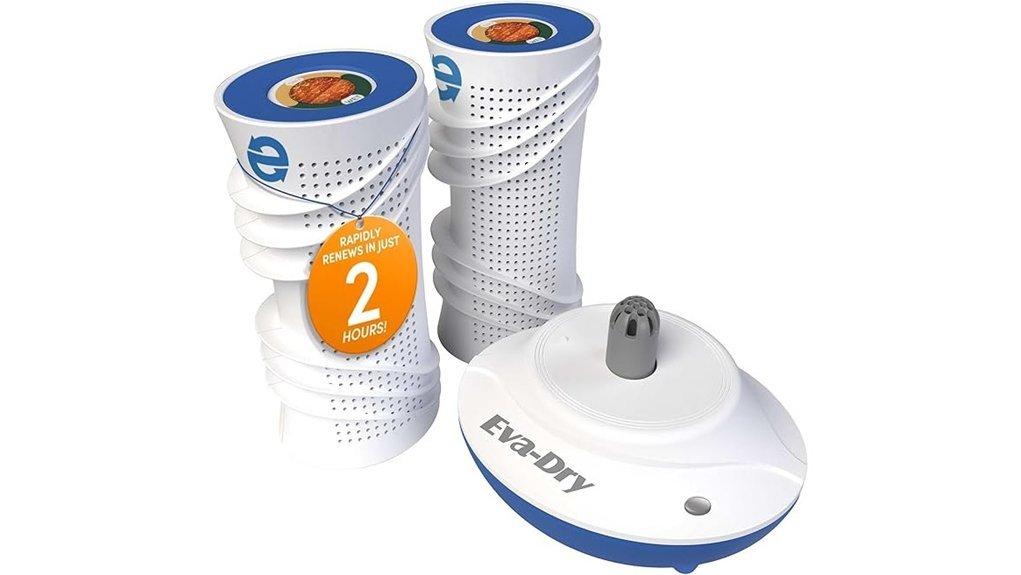
The Eva-Dry EDV-365 is a practical choice when you need cordless moisture absorption inside a closet, safe, boat, RV storage area, utility space, or storage container. It uses two renewable silica-gel cylinders rather than a powered desiccant wheel, so it works silently without a fan while the cylinders are placed in the target area.
Each cylinder absorbs moisture until its indicator beads change from orange to green. You then place the saturated cylinder on the included blower base for an approximately two- to three-hour renewal cycle. The cylinders require no electricity during normal moisture absorption, although the recharge base uses a 110–120V outlet. Run the renewal cycle in a well-ventilated, dry area, keep objects at least six inches away, and avoid touching the warm ventilation points.
Key Specifications
- Desiccant system: Two renewable silica-gel cylinders
- Manufacturer-rated coverage: Up to 400 cubic feet per cylinder
- Moisture capacity: Approximately 5–7 ounces per cylinder
- Renewal time: Approximately two to three hours per cylinder
- Power: Cordless during use; 110–120V electric blower base required for renewal
- Water tank or drain: None
- Operation: Silent while absorbing moisture
- Warranty: Five-year limited warranty on the cylinders and one-year limited warranty on the base, subject to current terms
Why You’ll Like It
The main benefit is convenient, spill-free moisture control in places where a power cord, water tank, or drain hose would be impractical. The included two-cylinder system also lets you protect two separate enclosed zones or rotate one cylinder into service while the other is being renewed.
Who Should Buy This
Choose the EDV-365 when your main concern is protecting stored clothing, documents, equipment, tools, or other belongings from excess moisture inside a relatively small enclosed area.
Who Should Avoid This
Skip it if you need rapid water removal from an occupied room, damp basement, active leak, or consistently wet area. It does not include a humidistat, fan, collection tank, or continuous drain, and its 400-cubic-foot-per-cylinder rating should not be treated as a square-foot room rating.
Pros:
- Works silently and without a power cord while absorbing moisture.
- Includes two renewable cylinders that can be rotated between use and recharging.
- Compact design suits closets, safes, boats, RV storage areas, and containers.
- Color-changing beads make it easy to see when renewal is needed.
Cons:
- Not a powered room dehumidifier or true desiccant-wheel appliance.
- Limited to smaller enclosed areas rated in cubic feet rather than open rooms.
- Each cylinder requires periodic renewal on the electric blower base.
- No adjustable humidity setting, water tank, or continuous drainage.
Ivation 19 Pint Desiccant Dehumidifier with Drain Hose
Best Powered Desiccant Rotor Option
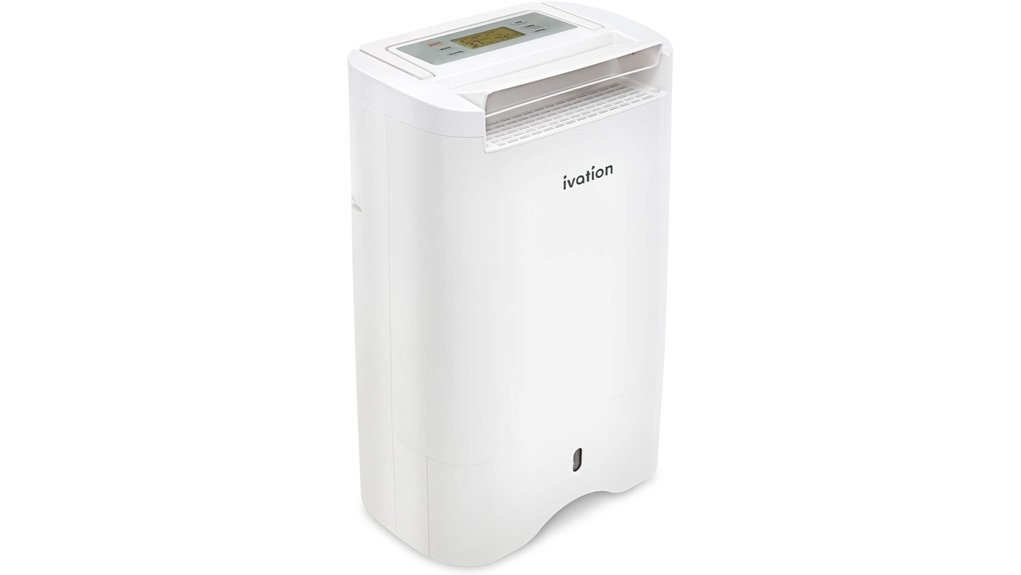
The Ivation 19 Pint Desiccant Dehumidifier is the stronger choice when you need active moisture removal in a small room. Its powered desiccant rotor is manufacturer-rated to remove up to 19 pints of water per day and serve spaces up to 410 square feet, although actual water removal will vary with room temperature, starting humidity, airflow, and operating mode.
Unlike the Eva-Dry system, the Ivation circulates room air, collects liquid water, and lets you select a target humidity level. It includes low, high, sleep, and continuous modes, an LCD control panel, adjustable display brightness, a timer, a swing vent, automatic restart, and safety shutoff. Sleep mode uses the lower fan and heat settings and dims the display, but the manufacturer does not provide a verified decibel rating.
Key Specifications
- Model: IVADDH09
- Dehumidifying capacity: Up to 19 pints per day
- Manufacturer-rated coverage: Up to 410 square feet
- Operating range: 34°F to 104°F
- Power consumption: 390W on low and 670W on high
- Water tank: 0.75 gallon, or 2.8 liters
- Dimensions: 12.5 inches wide by 8.5 inches deep by 19.5 inches high
- Net weight: 15 pounds
- Drainage: Removable tank or included continuous-drain hose
- Warranty: Limited one-year warranty, subject to current terms and exclusions
Why You’ll Like It
This unit offers more control than a renewable moisture absorber. You can set the desired humidity, use the collection tank for portable operation, or connect the included hose when you want to reduce manual emptying. Its desiccant rotor is also designed to operate at temperatures down to 34°F, giving it a broader cool-room operating range than many small compressor models.
Who Should Buy This
Consider the Ivation when you need regular humidity control in a small bedroom, hallway, utility room, or finished attic with a flat, dry placement area and a properly grounded 120V outlet. It is especially convenient when a safe gravity-drain route is available for the included hose.
Who Should Avoid This
Choose another size or type if you need to treat a large basement, commercial area, bathroom, wet location, or room below the unit’s rated operating temperature. The user guide says not to use this model in a bathroom and does not recommend using an extension cord. It may also be unsuitable when low electricity consumption is your highest priority, since the high setting draws up to 670 watts.
Pros:
- True powered desiccant-rotor design for active room dehumidification.
- Adjustable humidity control with low, high, sleep, and continuous modes.
- Offers both a 0.75-gallon tank and an included continuous-drain hose.
- Washable filter, timer, swing vent, auto-restart, and safety shutoff improve convenience.
- Rated to operate in temperatures down to 34°F.
Cons:
- Uses 390W on low and 670W on high.
- The 0.75-gallon tank may require regular emptying without continuous drainage.
- Its manufacturer-rated 410-square-foot coverage is not intended for large rooms or whole basements.
- The user guide says not to operate it in a bathroom or wet location.
- No verified decibel rating is provided, so it should not be assumed to be silent.
Fast Decision Shortcut
Need cordless protection for stored items? Choose the Eva-Dry. Need measurable room humidity control, a humidistat, and liquid-water drainage? Choose the Ivation. Need flood recovery, leak cleanup, or whole-basement drying? Choose neither.
How to Choose Between These Desiccant Dehumidifiers
Match the Product to the Space
Start by deciding whether you are protecting an enclosed storage area or controlling humidity throughout a room. The Eva-Dry’s cubic-foot rating is appropriate for closets, safes, containers, and similar confined spaces. The Ivation’s square-foot rating is intended for a small room where air can circulate through the appliance.
Compare Passive and Powered Moisture Removal
Renewable silica gel absorbs moisture gradually and works best for prevention and storage protection. A powered desiccant rotor moves substantially more air and collects liquid water, making it more suitable for ongoing room humidity, condensation, and dampness. Neither type repairs leaks or replaces water-damage equipment.
Check Energy Use and Drainage
The Eva-Dry needs no power while its cylinders are absorbing moisture, but electricity is required during renewal. The Ivation operates continuously from an outlet and uses 390W on low or 670W on high. Decide whether you prefer emptying its 0.75-gallon tank or routing the included hose downhill to a suitable drain without bends or blockages.
Consider Temperature and Room Size
The Ivation is rated for temperatures from 34°F to 104°F. It is useful in cool areas but is not designed for freezing conditions. Its stated 410-square-foot coverage should also be treated as a maximum manufacturer rating rather than a guarantee for every room. Severe humidity, open doors, poor airflow, and water intrusion can reduce real-world performance.
Check Placement and Electrical Safety
Place the Ivation upright on a flat, dry indoor surface with unobstructed airflow and a grounded outlet. Do not use it in a bathroom, near dripping water, or with an extension cord. For the Eva-Dry, the cylinders are cordless in service, but the blower base becomes warm during renewal and should be used uncovered in a dry, well-ventilated area.
Plan for Maintenance
Eva-Dry users need to monitor the bead indicator and renew each cylinder when saturated. Ivation users should empty and clean the bucket as needed, keep the air inlet and outlet clear, inspect the drain hose, and wash the filter approximately once per month. Allow the powered unit to dry before long-term storage.
Before You Buy
- Measure the actual room or enclosed storage volume.
- Decide whether you need passive protection or active water removal.
- Confirm that a grounded 120V outlet is available for the powered Ivation unit, and avoid extension-cord use.
- Do not operate the Ivation in a bathroom or another wet location.
- Plan a safe downhill drainage route before relying on continuous drainage.
- Renew Eva-Dry cylinders only in a dry, well-ventilated area with safe clearance around the blower base.
- Confirm the exact model number and current warranty terms on the product listing.
- Fix active leaks before depending on any dehumidifier.
Safety and Mold Note
A dehumidifier can reduce the moisture that supports mold growth, but it does not remove existing mold or repair a leak. Clean visible mold appropriately and correct the underlying water source. Keep the powered unit on a flat, dry surface, use a grounded outlet, maintain ventilation clearance, and never operate it in a bathroom, beneath dripping water, or where electrical components may become wet. During Eva-Dry renewal, keep the blower base uncovered and away from children and water.
Frequently Asked Questions
Are Both Products Desiccant Wheel Dehumidifiers?
No. The Ivation is a powered desiccant-rotor dehumidifier. The Eva-Dry uses removable silica-gel cylinders and does not contain a rotating desiccant wheel. Both rely on desiccant material, but they serve different spaces and moisture-control needs.
Does the Eva-Dry EDV-365 Need Electricity?
The cylinders do not need electricity while absorbing moisture. However, the included blower base requires a 110–120V outlet to renew a saturated cylinder. Renewal takes approximately two to three hours per cylinder.
Is Eva-Dry Coverage Measured in Cubic Feet or Square Feet?
Eva-Dry rates each EDV-365 cylinder for an enclosed space up to 400 cubic feet. That is a volume rating, not a 400-square-foot room rating, and it should not be used to predict performance in an open room.
Can the Ivation Be Used in a Bathroom?
No. Although some retail copy may associate this model with bathroom moisture, the IVADDH09 user guide says never to use the dehumidifier in a bathroom. Place it in a dry indoor location that follows the manual’s electrical and clearance requirements.
Will the Ivation Work Below Freezing?
No. Its published operating range starts at 34°F, which is above freezing. It can be useful in cool rooms, but it should not be used outside its specified temperature range.
How Often Should the Ivation Filter Be Cleaned?
The user guide recommends cleaning the washable filter approximately once per month. More frequent cleaning may be needed in dusty environments or when airflow becomes restricted.
How Does Ivation Continuous Drainage Work?
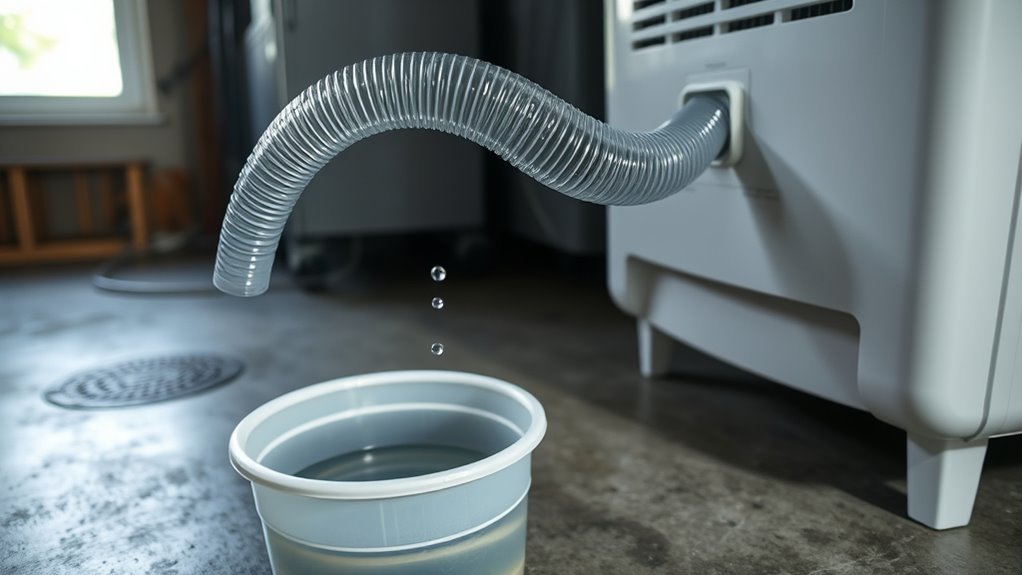
The included hose passes through the rear drain opening. Keep the hose free of bends or blockages, and leave the water bucket installed while the hose is connected. Check the hose and connection regularly for leaks.
Is the Ivation Silent?
No powered fan dehumidifier should be assumed to be silent. The Ivation includes a sleep mode that uses the lower fan and heat settings and dims the display, but the manufacturer does not publish a specific decibel rating.
Can These Dehumidifiers Remove Existing Mold?
No. They can help control excess humidity, which may make future mold growth less likely, but existing mold must be cleaned and the source of moisture or water intrusion must be fixed.
Conclusion
Final Recommendation
Pick the Eva-Dry EDV-365 when you need simple, silent moisture protection in one or more small enclosed storage areas and do not need active room-air circulation.
Pick the Ivation 19 Pint when you need a powered desiccant rotor, adjustable humidity control, and tank or hose drainage in a small dry room. Account for its electricity use, 34°F minimum operating temperature, and bathroom-use restriction before buying.
Neither product is a universal solution for large basements, flooding, active plumbing leaks, or extensive mold. Match the dehumidifier to the actual space, temperature, drainage setup, and amount of moisture you need to control.