
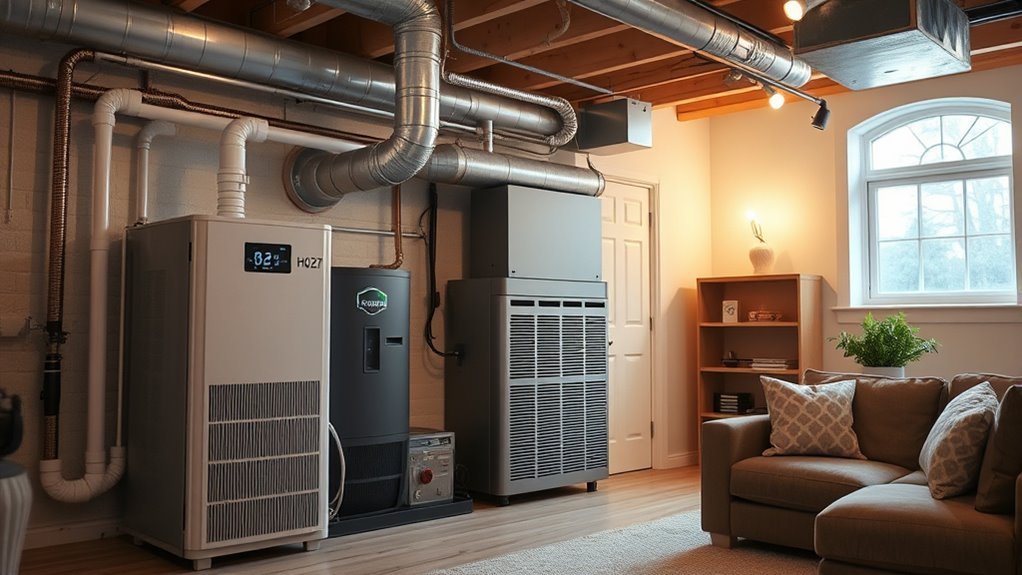
A whole house dehumidifier can be worth it when your home stays damp even after normal HVAC use, especially in humid climates, basements, crawl spaces, or homes with an oversized air conditioner that cools quickly but does not run long enough to remove moisture. It is not the right fix for every house, though. Before you spend the money, measure your indoor humidity, rule out leaks, and compare the cost against simpler fixes such as exhaust fans, air sealing, drainage improvements, or a portable dehumidifier.
Quick Answer
A whole house dehumidifier is worth it if your indoor humidity often stays above about 50% to 60%, you smell musty odors, portable units run constantly, or your AC short cycles. It usually costs more upfront than a portable unit, but it gives steadier whole-home moisture control.
Key Takeaways
- Aim for indoor relative humidity below 60%, with about 30% to 50% being a common comfort and mold-prevention target.
- A whole-house unit is best for persistent, home-wide dampness, not one isolated wet room or an unfixed leak.
- Many professional installs fall around $1,500 to $3,500, but difficult ductwork, pumps, electrical work, or access issues can push the price higher.
- A dehumidifier can improve comfort and reduce the need to overcool, but lower energy bills are not guaranteed because the unit also uses electricity.
- Professional sizing matters. Capacity, duct layout, drainage, controls, and climate all affect performance.
At a Glance
| Best For | Whole-home humidity problems, damp basements or crawl spaces, short-cycling AC systems, and homes in humid climates. |
| Difficulty | Professional HVAC installation recommended because the job can involve ductwork, electrical work, controls, and condensate drainage. |
| Tools Needed Before Buying | Hygrometer, moisture inspection, HVAC assessment, ductwork review, and contractor quotes. |
| Typical Cost | Often about $1,500 to $3,500 installed for many homes, with complex ducting, electrical upgrades, pumps, or difficult access costing more. |
How a Whole House Dehumidifier Works
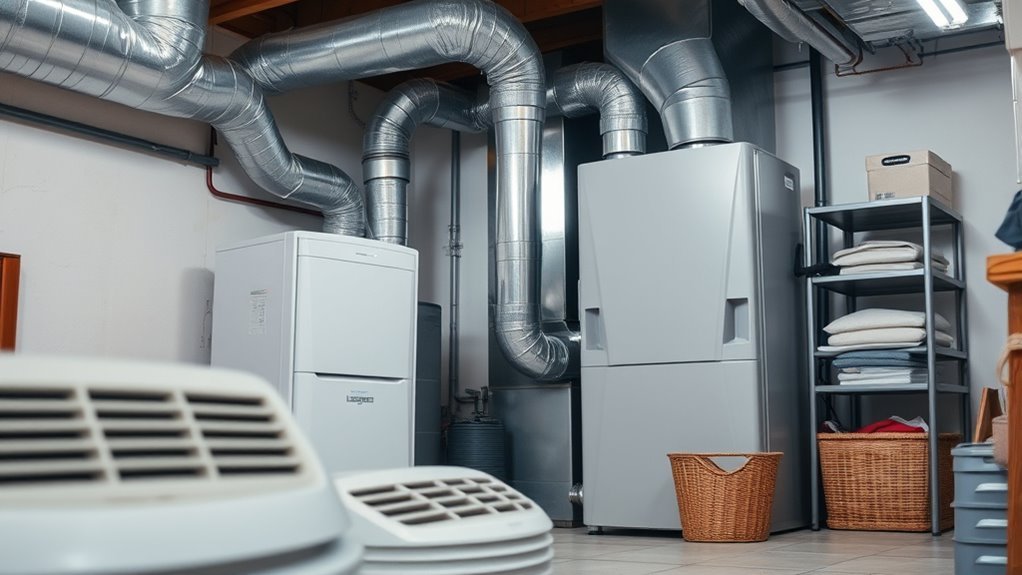
A whole-house dehumidifier is a ducted moisture-removal system. It draws humid indoor air into the unit, cools that air across a coil so water vapor condenses, drains the collected water away, and sends drier air back into the home. The system may connect to your HVAC return and supply ducts, use a dedicated return, or run as an independent ducted setup that serves the conditioned space.
The key difference from a portable dehumidifier is coverage. A portable unit treats one room or area. A whole-house unit is designed to manage humidity across much more of the home, as long as the duct layout, air balancing, capacity, and controls are right.
Most systems also include a humidistat, which lets you set a target relative humidity. Once the home reaches that target, the unit cycles as needed instead of running nonstop. ENERGY STAR notes that certified dehumidifiers use more efficient components to remove moisture, and certified models are available for both portable and whole-home setups.
What Indoor Humidity Level Should You Aim For?
Before deciding whether a whole house dehumidifier is worth it, measure your indoor relative humidity with a hygrometer. Do this in several areas: main living space, bedroom, basement, crawl-space access area, and any room that smells musty.
The U.S. Environmental Protection Agency recommends keeping indoor relative humidity below 60% and ideally between 30% and 50% when possible. In colder climates during heating season, ENERGY STAR notes that 30% to 40% RH may help prevent window condensation.
Note: A single high reading after a shower or cooking does not automatically mean you need a whole-house unit. Look for repeated readings above about 50% to 60%, musty odors, condensation, or damp areas that return after normal ventilation.
When a Whole House Dehumidifier Is Worth It
A whole-house dehumidifier is most worth considering when humidity is a repeated home-wide problem, not a one-time moisture event. It can be especially useful in humid regions, tightly built homes with poor ventilation balance, homes with damp crawl spaces or basements, and houses where the AC cools the air quickly but leaves it sticky.
Persistent Humidity Problems
If your home stays damp despite normal HVAC use, you may be dealing with a moisture load your air conditioner was not designed to handle. This is common during shoulder seasons when the AC does not run long enough to dry the air, or when an oversized AC short cycles.
Look for these signs:
- Indoor humidity often stays above 50% to 60%.
- Rooms feel clammy even when the thermostat is set low.
- Windows, supply registers, pipes, or basement walls show condensation.
- Musty odors return after cleaning.
- Portable dehumidifiers fill quickly or run nearly nonstop.
- Wood floors, trim, doors, or furniture show swelling, warping, or sticking.
- Basement or crawl-space air seems to affect the rest of the house.
Whole-Home Comfort Gains
Humidity changes how warm a room feels. In hot-humid climates, the U.S. Department of Energy has reported that higher indoor humidity can make the perceived temperature feel significantly warmer, which is why homeowners often lower the thermostat just to feel comfortable.
A dehumidifier can help by removing moisture directly, letting the AC focus more on temperature. That can improve comfort and may reduce the urge to overcool the house. Still, it is not a guaranteed energy-bill saver. The unit uses electricity, and the final cost depends on runtime, equipment efficiency, duct design, and your climate.
When a Whole House Dehumidifier Is Not Worth It
A whole-house unit is not always the smartest first move. In some homes, it is an expensive way to cover up a simpler problem.
It may not be worth it if:
- The issue is limited to one bathroom, laundry room, or small basement corner.
- You have an active roof leak, plumbing leak, foundation leak, or poor exterior drainage.
- Your indoor humidity is already usually between 30% and 50%.
- You live in a dry climate and only have short seasonal humidity spikes.
- A portable unit handles the problem without constant emptying or noise complaints.
- You rent and cannot modify HVAC ductwork.
- Your ductwork is leaky, undersized, or inaccessible and would need major upgrades first.
Warning: Do not use a dehumidifier as a substitute for fixing water intrusion. If moisture is coming from a leak, poor grading, a wet crawl space, missing exhaust ventilation, or a drainage problem, fix the source first.
Whole House Dehumidifier Cost and Installation
A whole house dehumidifier costs more than a portable unit because you are paying for higher capacity, duct integration, drainage, controls, and skilled labor. Current homeowner cost guides commonly place many professional whole-house dehumidifier installs around $1,500 to $3,500 installed, but real quotes vary by market and home layout. Complex installations can cost more, especially when they require new duct runs, an internal pump, electrical work, permits, or difficult attic/crawl-space access.
| Cost Factor | Why It Matters |
|---|---|
| Unit capacity | Larger homes, wet basements, and humid climates need more moisture-removal capacity. |
| Duct layout | A simple HVAC tie-in costs less than adding a dedicated return or independent ducting. |
| Drainage | Gravity drains are simpler; condensate pumps add cost and maintenance. |
| Electrical and controls | Some installs need new wiring, controller placement, or integration with the air handler. |
| Access | Attics, tight mechanical rooms, and crawl spaces can increase labor time. |
Professional installation is usually the safer choice. A poor install can create airflow problems, short cycling, drain leaks, noise, or negative pressure issues. Ask the contractor how the unit will be ducted, where it will drain, how it will be serviced, and how the humidistat will control operation.
Recommended Products

【The Undisputed Champion — Industry-Leading Dehumidifier Brand】When you choose AEOCKY, you get double market validation. According to data independently verified by Stackline, a leading third-party data analytics company, AEOCKY was an industry‑leading dehumidifier brand on Amazon U.S. in 2025. This means you’re not just choosing a flagship product from a market leader, but a top-performing brand backed by independent market data and trusted by millions of real users, delivering the ultimate combination of performance, quality and trust.

2500 Sq. Ft Dehumidifier - SEMKAP dehumidifier for basement features a quiet, high-performance compressor that removes up to 32 pints of moisture per day (at 95°F, 90% RH). Ideal for basements, offices, bathrooms, bedrooms, kitchens, stockrooms, living rooms, laundry rooms, garages, crawlspaces, or RVs. It helps maintain optimal humidity between 40%–60%RH for healthier, more comfortable living

32-Pint Daily Capacity for Spaces up to 2,500 Sq. Ft. — Designed to manage ambient moisture in large living spaces, finished basements, and storage areas. This unit removes up to 32 pints of water vapor every 24 hours under test conditions of 95°F and 90% RH, helping promote a more balanced indoor air environment across areas up to 2,500 sq. ft
How to Size a Whole House Dehumidifier
Dehumidifier capacity is commonly shown in pints per day, which tells you how much moisture the unit can remove under test conditions. ENERGY STAR explains that capacity and energy efficiency are the two primary performance ratings for dehumidifiers.
Do not choose a unit by square footage alone. A good HVAC contractor should consider:
- Home size and ceiling height.
- Climate zone and outdoor humidity.
- Basement or crawl-space moisture.
- Air leakage and ventilation rates.
- Existing HVAC size and runtime.
- Duct layout and airflow.
- How often indoor RH rises above the target range.
Pro Tip: Take humidity readings for at least a week before getting quotes. Record indoor RH, outdoor weather, AC runtime, and where the readings were taken. This gives your contractor better data than a single walkthrough.
Whole House Dehumidifier vs. Portable Units
Whole-house dehumidifiers and portable units solve different problems. A portable unit is cheaper and easy to move, but it only treats the area around it. A whole-house unit is more expensive, but it can manage moisture more evenly when the humidity problem affects multiple rooms.
| Feature | Whole-House Dehumidifier | Portable Dehumidifier |
|---|---|---|
| Coverage | Designed for broad, ducted coverage. | Best for one room, basement zone, or small problem area. |
| Upfront cost | Higher due to equipment and professional installation. | Lower; many units are plug-in appliances. |
| Maintenance | Filter cleaning/replacement, drain checks, annual service. | Tank emptying unless drained by hose, filter cleaning, coil cleaning. |
| Noise | Often installed away from living spaces. | Usually in the room where you hear it. |
| Best use | Persistent whole-home humidity. | Localized dampness or budget testing before a larger upgrade. |
If you are unsure, start with a hygrometer and, in some cases, a portable unit in the dampest area. If that unit runs constantly or fails to bring humidity down across the home, a ducted system may make more sense.
Recommended Products

【Reduce humidity - Enhance comfort】:Massive Capacity + Wide Coverage. This dehumidifier has dehumidification capacity ranging 45- 80 pints—outperforming standard units while covering 4,500 sq. ft. of living space. Great dehumidifier for basements, large house, garages, bedroom, bathroom and gyms where excess humidity triggers cause unpleasant odors and discomfort. The result? A noticeably drier, fresher, and more comfortable environment for your entire family.
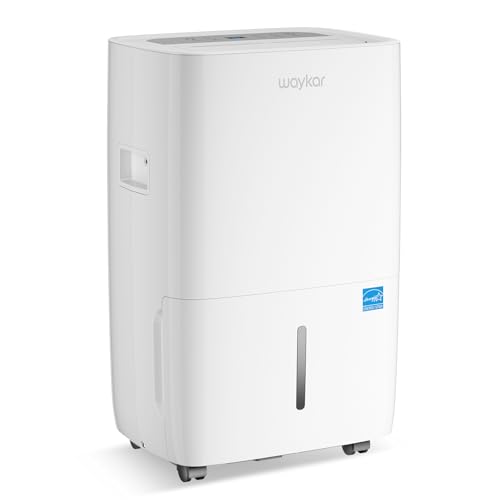
【80 Pint Capacity for Up to 5,000 Sq.Ft Spaces】Quickly removes excess moisture from basements, bathrooms, bedrooms, RVs, and other large living areas, delivering 80 pints per day (95°F, 90% RH).conditions. Designed as a powerful dehumidifier for basement, home, and large spaces, it helps eliminate damp air, condensation—and pet-related odors caused by excess humidity. Even during humid seasons, it works continuously to maintain a dry, comfortable, and healthier indoor environment.
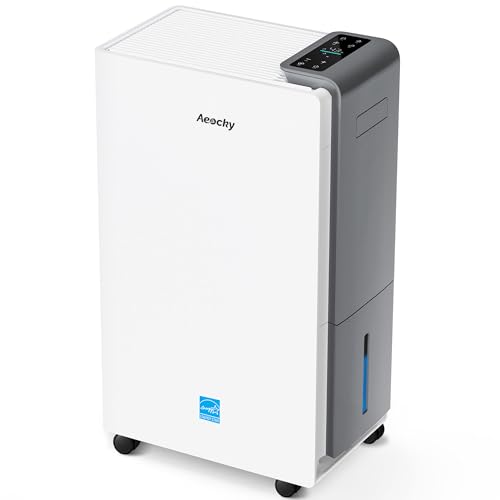
【ENERGY STAR 25 ≠ ENERGY STAR Most Efficient 2025】Don't fall for competitors' word games. With only 2.6% of ENERGY STAR models earning "Most Efficient 2025" title, these options are exceptionally rare on the market. RHEA-001 is one of the few to truly hold this top-tier certification. Many brands use misleading phrases like "Energy Star Efficient 25" or "Energy Star 25" to imply a standard they haven't met. Choosing them is a risk.With AEOCKY, you get verified performance and the peace of mind of authentic, top-tier efficiency.
Benefits of a Whole House Dehumidifier
The biggest benefit is steady humidity control. When indoor humidity stays in a healthier range, your home often feels cooler, less sticky, and less musty. Moisture control also helps protect wood, drywall, paint, flooring, and stored items from long-term dampness.
A whole-house dehumidifier may help with:
- Comfort: Drier air can feel more comfortable at a slightly higher thermostat setting.
- Odor control: Reducing dampness can reduce musty smells.
- Mold prevention: Lower humidity helps reduce the conditions mold needs, though it will not remove existing mold.
- HVAC support: It can help when AC runtime is too short to remove enough moisture.
- Convenience: A properly drained system avoids the constant bucket emptying of portable units.
- Whole-home consistency: Ducted control can reduce room-to-room humidity swings.
Moisture control is a home durability issue, not just a comfort upgrade. The U.S. Department of Energy says controlling moisture can improve comfort, reduce mold risk, and support home energy performance.
Downsides and Maintenance to Expect
A whole-house dehumidifier is not maintenance-free. It also is not silent, free to run, or guaranteed to reduce energy bills. Be honest about the tradeoffs before buying.
Main downsides include:
- Higher upfront cost than a portable unit.
- Electricity use during runtime.
- Added heat from the dehumidification process, which may matter in hot climates.
- Filter maintenance every few months or as the manufacturer recommends.
- Drain-line maintenance to prevent clogs or water damage.
- Installation complexity if the ductwork is tight, leaky, or poorly designed.
- Possible noise if the unit is installed near bedrooms or living areas.
Plan on checking the filter, keeping the drain clear, confirming the humidistat reading with a separate hygrometer, and having the system inspected during regular HVAC service.
Is a Whole House Dehumidifier Worth It?
A whole-house dehumidifier is worth it when the moisture problem is broad, repeated, and confirmed by humidity readings. It is especially compelling if you already spend time emptying portable units, lowering the thermostat to fight stickiness, or chasing musty odors that keep returning.
It is less compelling when the problem is small, seasonal, or caused by an unfixed water source. If a $200 to $400 portable unit, better bathroom ventilation, gutter repairs, or crawl-space sealing would solve the issue, start there before buying a ducted system.
| Choose a Whole-House Unit If… | Try a Simpler Fix First If… |
|---|---|
| Humidity is high in several rooms. | Only one small room is damp. |
| Portable units run constantly. | A portable unit controls the area well. |
| Your AC short cycles and leaves the house clammy. | The AC is working properly and RH stays in range. |
| Basement or crawl-space humidity affects the home. | You have an active leak that needs repair first. |
| You want quiet, automatic, whole-home control. | You are not ready for ductwork or HVAC modifications. |
Questions to Ask Before You Buy
Use these questions when comparing contractor quotes:
- What humidity readings did you measure, and where?
- What capacity in pints per day do you recommend, and why?
- Will the unit use the HVAC return, a dedicated return, or independent ducting?
- Where will the condensate drain, and is a pump needed?
- Will the system run the HVAC blower during dehumidification?
- How will the humidistat be controlled and calibrated?
- What maintenance does the filter and drain line require?
- Will the installation meet local code and manufacturer instructions?
- What warranty covers the unit and labor?
- Are there lower-cost fixes we should do first?
Recommended Products

Energy Efficient Whole House Dehumidifier: 90 pints per day at AHAM condition, 70 Pint at DOE, up to 2300 sq. ft, widely used in short buildings, crawlspace, Basement, multi-bedroom, commercial ,storage area, home, garage, large room, large-area housing, etc. quickly and effectively removes moisture with less energy than conventional dehumidifiers without racking up the energy bill, saving money, It will be the best crawl space dehumidifiers you will ever use

Semiconductor dehumidifiers use thermoelectric cooling to remove moisture from the air. They create a drier, more comfortable environment by reducing humidity and improving air quality.

[Commercial Grade Dehumidifier] This Airzentti crawl space dehumidifier with large capacity removes moisture from basement, attic, large room and small rooms efficiently up to 155 pints per day under nearly saturated condition (70 PPD in AHAM), with 220 CFM airflow, it is ideal for space up to 7,500 square feet.
Frequently Asked Questions
What are the cons of a whole house dehumidifier?
The main cons are upfront cost, professional installation, electricity use, filter and drain maintenance, possible noise, and the risk of poor performance if the unit is undersized or installed with bad ductwork. It also will not fix active leaks, drainage problems, or existing mold.
Should you use a dehumidifier if you have COPD?
Maybe, but measure first and treat this as indoor-air management, not medical treatment. If your home is damp or moldy, lowering humidity can help reduce moisture-related triggers. Do not overdry the air, and talk with your clinician if humidity changes seem to affect your breathing. The American Lung Association notes that dampness and mold can irritate the lungs and worsen respiratory problems.
Will a dehumidifier help dry out plaster?
Yes, a dehumidifier can help plaster dry by lowering air moisture, especially when paired with airflow and a fixed moisture source. However, do not rush drying with excessive heat, and do not close up walls until the material is dry. If the plaster was soaked by a leak or flood, consider a restoration professional.
How much does it cost to have a whole house dehumidifier installed?
Many installed whole-house dehumidifiers fall around $1,500 to $3,500, but your quote may be lower or higher depending on the unit size, ductwork, drain setup, electrical work, access, permits, and local labor rates. Get at least two or three HVAC quotes before deciding.
Does a whole house dehumidifier replace air conditioning?
No. A dehumidifier removes moisture, while an air conditioner removes heat and also removes some moisture as a byproduct. In humid homes, the two systems can work together, but a dehumidifier will not cool the home the way an AC does.
What should I set a whole house dehumidifier to?
A common target is around 45% to 50% relative humidity. Keep indoor humidity below 60% when possible, and avoid setting it so low that the air feels dry. In cold winter weather, you may need a lower target to reduce window condensation.
Conclusion
So, is a whole house dehumidifier worth it? Yes, if your home has repeated, measured, whole-home humidity problems that simpler fixes cannot solve. It can make the house feel less sticky, reduce musty odors, protect moisture-sensitive materials, and help your HVAC system handle humidity more effectively.
But it is not a magic fix. Measure your humidity first, repair leaks and drainage problems, check ventilation, and get a professional HVAC assessment. If the data shows persistent humidity across the home, a properly sized and installed whole-house dehumidifier can be a smart long-term upgrade.
Sources
- U.S. Environmental Protection Agency: A Brief Guide to Mold, Moisture and Your Home — indoor humidity targets and mold/moisture prevention.
- ENERGY STAR: Dehumidifiers — humidistat guidance, winter RH guidance, and efficient dehumidifier information.
- ENERGY STAR: Dehumidifier Testing and Capacity — capacity and energy-efficiency ratings.
- U.S. Department of Energy: Moisture Control — moisture control, comfort, mold prevention, and energy performance.
- U.S. Department of Energy Building America: Improving Comfort in Hot-Humid Climates with a Whole-House Dehumidifier — comfort and AC limitations in humid climates.
- HomeGuide: Whole-House Dehumidifier Cost — current installed cost planning ranges.


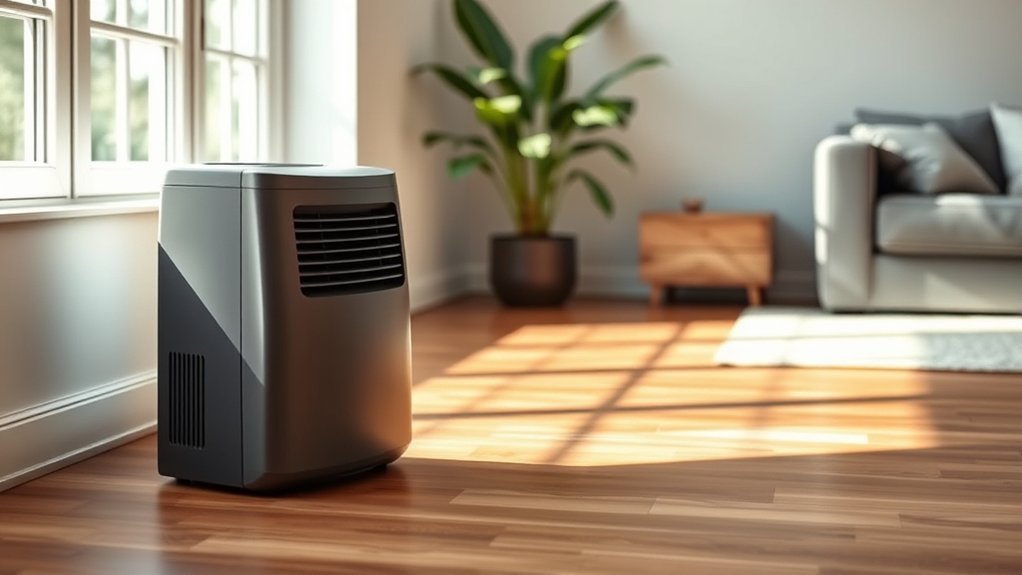
[…] Whole House Dehumidifier: 7 Signs It’s Worth It Guide […]