Last updated: August 2026
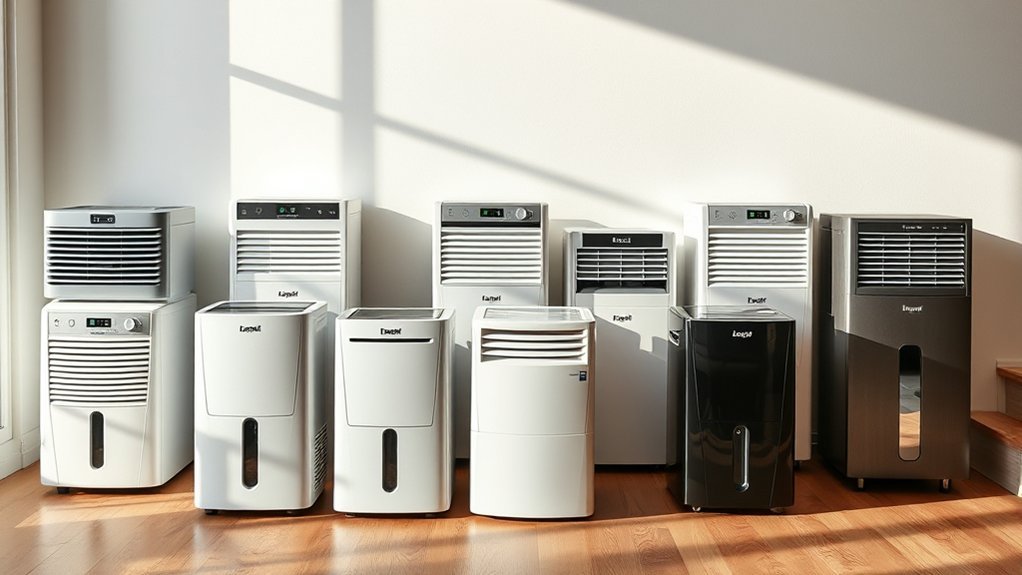
The best crawl space dehumidifier is not automatically the model with the largest pint number. Start with your crawl space size, moisture load, drainage route, temperature range, and whether you need ducting. Also compare ratings under the same test condition: a high saturation PPD figure is not directly equivalent to an AHAM or DOE rating. The ten models below all target crawl spaces or similar commercial moisture-control jobs, but they fit different installation needs.
Quick Verdict
- Best Overall: ALORAIR Sentinel HD55S for a compact, gravity-drain setup with a published 55-PPD AHAM rating.
- Best Large Pump Model: Waykar 130 Pints when water must be moved uphill or across a difficult route; compare its standardized 49.5-PPD rating rather than the 130-pint saturation headline.
- Best for Ducted High-Airflow Use: AVAHUM AM160P-3 for large spaces that need a pump and ducting-oriented installation, with model-label verification before purchase.
- Best Compact Pump Model: CADPXS Remois XP125 for smaller crawl spaces without a convenient floor drain.
- Best Large Gravity-Drain Model: Moiswell Defender M70 when a low drain is available and pump lift is unnecessary.
How we compared these models: We prioritized stated standardized capacity where available, drainage type, airflow, intended coverage, cold-weather features, installation practicality, warranty clarity, and honest limitations. Manufacturer coverage figures are useful starting points, but actual results depend on temperature, air leakage, standing water, soil moisture, and crawl-space sealing.
Quick Comparison of Crawl Space Dehumidifiers
| Model | Best For | Reported Capacity | Drainage | Listing Coverage | Amazon |
|---|---|---|---|---|---|
| ALORAIR Sentinel HD55S | Compact overall pick | 120 saturation / 55 AHAM PPD | Gravity | Up to 1,300 sq. ft. | Check Amazon Details |
| Waykar 130 Pints | Large spaces needing pump lift | 130 saturation / 49.5 standardized PPD | Pump + gravity | Up to 7,500 sq. ft. | Check Amazon Details |
| AVAHUM AM160P-3 | Ducted, high-airflow layouts | 155 saturation / 49.83 standardized PPD* | Pump + gravity | Up to 6,000 sq. ft. | Check Amazon Details |
| ALORAIR Sentinel HD55 | Compact gravity-drain use | 113 saturation / 53 AHAM PPD | Gravity | Up to 1,200 sq. ft. | Check Amazon Details |
| Moiswell Defender M70 | Large spaces with low drain | 145 saturation / 70 AHAM PPD | Gravity | Up to 6,000 sq. ft. | Check Amazon Details |
| CADPXS Remois XP145 | Transparent multi-condition ratings | 145 saturation / 60 AHAM / 38.05 DOE PPD | Pump + gravity | Up to 1,500 sq. ft. | Check Amazon Details |
| ARGENDON Shield 60P | Alternative 60-AHAM pump class | 145 saturation / 60 AHAM PPD | Pump + gravity | Around 1,800 sq. ft. | Check Amazon Details |
| CADPXS Remois XP125 | Compact pump-equipped use | 125 saturation / 55 AHAM / 36.68 DOE PPD | Pump + gravity | Up to 1,300 sq. ft. | Check Amazon Details |
| Airzentti 155 Pint | Very large moisture loads | 155 saturation / 70 AHAM PPD | Pump + gravity | Up to 7,500 sq. ft. | Check Amazon Details |
| HBN 125 Pint | Dual drainage and controls | 125 saturation / about 60 AHAM PPD | Pump + gravity | Up to 5,900 sq. ft. | Check Amazon Details |
ALORAIR Sentinel HD55S Crawl Space Dehumidifier
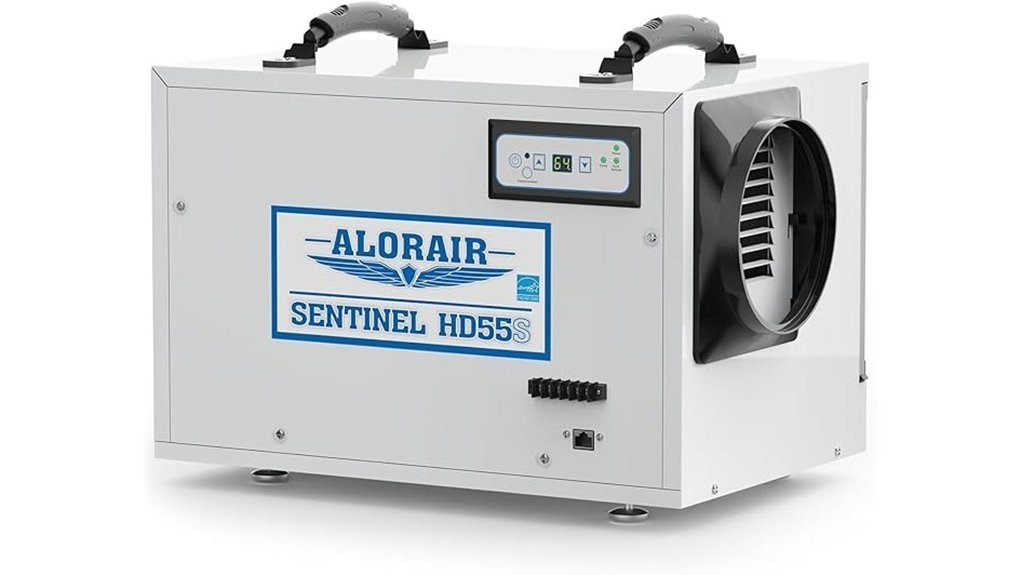
Best Overall for Small-to-Midsize Crawl Spaces
The AlorAir Sentinel HD55S is a compact metal-cased unit for crawl spaces where dependable gravity drainage matters more than a built-in pump. Its listing reports 120 pints per day under saturated conditions and 55 PPD under AHAM conditions, with coverage guidance up to 1,300 square feet. Auto defrost supports cooler operation, while continuous drainage reduces day-to-day maintenance. Because its capacity is clearly shown under two test conditions, it is easier to compare with other models than products that advertise only a high saturation figure.
Why You’ll Like It: It balances realistic AHAM capacity, compact dimensions, continuous drainage, and a long limited warranty without jumping to an oversized commercial unit.
Best For: Homeowners with an encapsulated or reasonably sealed crawl space up to about 1,300 sq. ft. and a nearby low drain point.
Who Should Avoid It: Choose a pump model instead if condensate must travel uphill or across a long route with no reliable downward slope.
Pros:
- 120 PPD at saturation and 55 PPD under AHAM conditions
- Compact metal housing with auto defrost and continuous gravity drainage
- Six-year limited warranty and protective filter for routine maintenance
Cons:
- No built-in condensate pump
- At about 41.7 pounds, installation may still require two people in a tight access area
- Coverage depends heavily on moisture load, sealing, temperature, and drainage setup
Waykar 130-Pint Commercial Dehumidifier with Pump
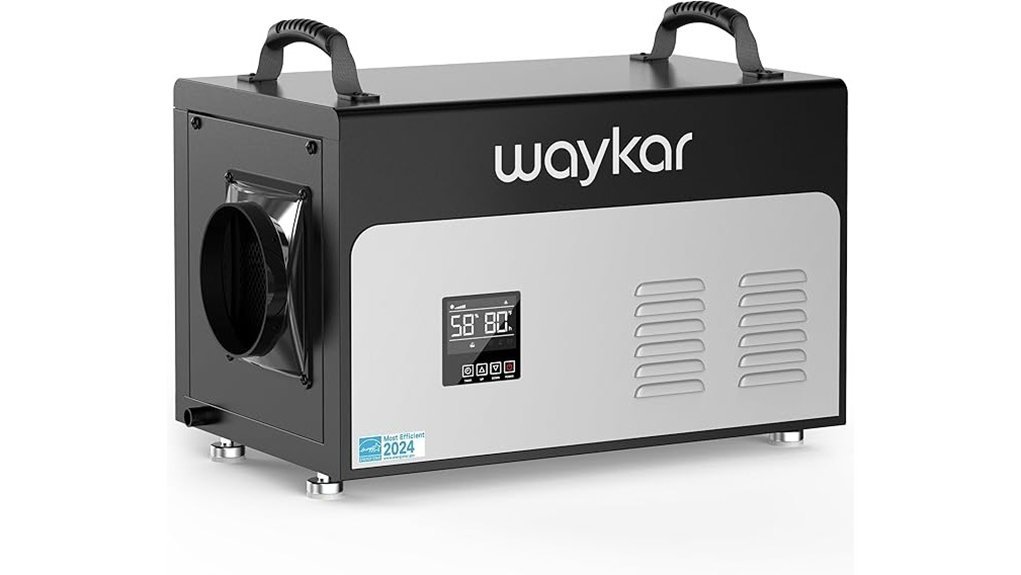
Best Built-In Pump for Large Areas
The Waykar CPG130A is aimed at large crawl spaces, basements, and light-commercial areas that need flexible drainage. The advertised 130 PPD figure is measured under hot, highly humid saturation conditions, while ENERGY STAR data lists a standardized water-removal capacity of about 49.5 pints per day. The linked listing gives coverage guidance up to 7,500 square feet, but syndicated specifications may show a lower figure, so treat square footage as a starting point rather than a guarantee. Its built-in pump can move condensate upward when a floor drain is unavailable, while a gravity-drain option works for simpler installations.
Why You’ll Like It: The pump solves one of the hardest crawl-space installation problems: getting water to a drain that sits above or far from the unit.
Best For: Large or difficult layouts that need pumped drainage, especially when a gravity-only route is not possible.
Who Should Avoid It: A smaller gravity-drain unit may be easier and less costly to run in a modest, well-sealed crawl space.
Pros:
- 130 PPD at saturation with about 49.5 PPD under the standardized ENERGY STAR test
- Built-in pump plus gravity drainage for flexible placement
- ENERGY STAR certification, metal construction, auto defrost, and restart memory
Cons:
- The 130-pint headline should not be compared directly with AHAM or DOE ratings
- Published coverage figures vary across listings and are not a guarantee for wet or unsealed spaces
- Pump-equipped commercial units need more installation planning than basic room dehumidifiers
AVAHUM AM160P-3 155-Pint Dehumidifier with Pump
Best for Ducted, High-Airflow Setups
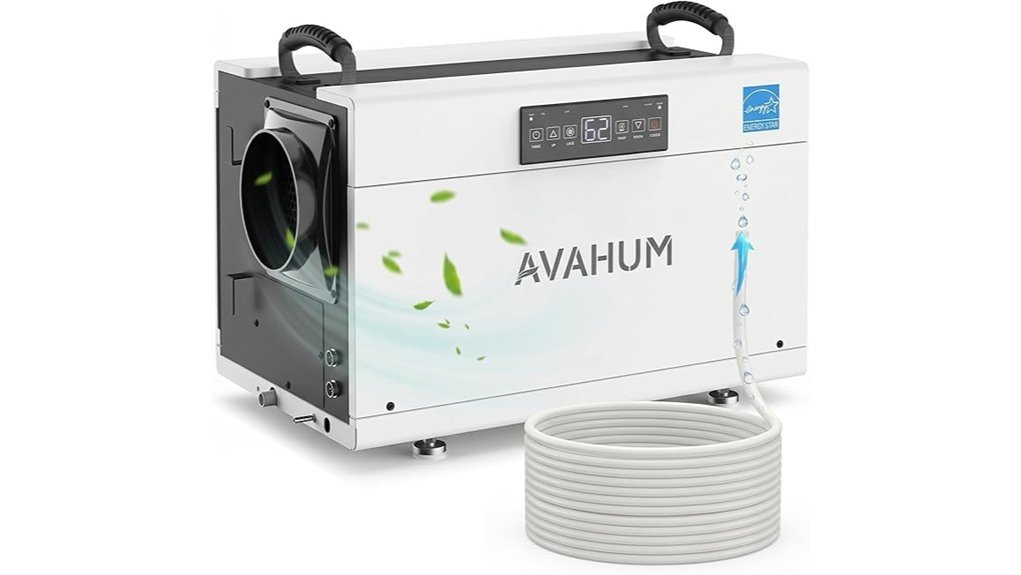
The AVAHUM AM160P-3 is marketed as a crawl-space and commercial dehumidifier with a built-in pump and a ducting-oriented layout. The linked listing advertises up to 155 pints per day under hot, highly humid conditions and coverage guidance up to 6,000 square feet. ENERGY STAR data for model AM160P lists a standardized water-removal capacity of about 49.83 pints per day. Because the listing name and certification record use slightly different model labels, confirm the label on the exact unit before relying on the certification or performance figures. Digital humidity controls, automatic restart, auto defrost, continuous drainage, and a washable filter support unattended operation.
Why You’ll Like It: It combines a pump, strong airflow, and ducting compatibility for buyers who need to distribute dry air beyond the immediate unit location.
Best For: Large crawl spaces, restoration work, garages, or utility areas where ducting and pumped drainage are part of the plan.
Who Should Avoid It: It is likely excessive for a small, lightly damp crawl space, and its power draw and installation needs should be checked first.
Pros:
- Built-in pump and ducting-oriented design for flexible installation
- High advertised saturation capacity with a standardized rating near 49.83 PPD for model AM160P
- Digital controls, auto defrost, restart memory, and a washable filter; verify the exact ENERGY STAR model match
Cons:
- The headline 155 PPD figure is based on more favorable conditions than standardized room-temperature ratings
- A large commercial unit may be unnecessary for smaller spaces
- Duct collars, hose routing, electrical supply, and service clearance must be planned before installation
ALORAIR Sentinel HD55 Commercial Dehumidifier
Best Compact Gravity-Drain Pick
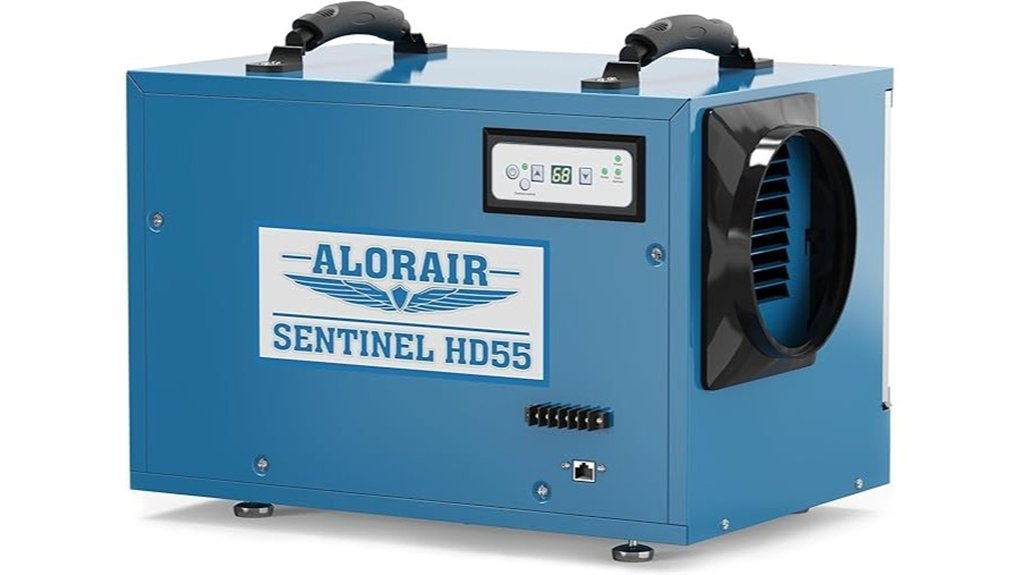
The AlorAir Sentinel HD55 is a compact crawl-space dehumidifier for buyers who have a dependable gravity-drain route. Its published figures are 113 PPD at saturation and 53 PPD under AHAM conditions, with coverage guidance up to 1,200 square feet. The metal casing, carrying handle, automatic defrost, automatic restart, and continuous drainage suit permanent or semi-permanent installations. It is close in capability to the HD55S, so compare current dimensions, included accessories, controls, and warranty terms before choosing between them.
Why You’ll Like It: It provides a realistic AHAM figure and commercial-style construction in a relatively compact format.
Best For: Smaller crawl spaces, basements, and storage areas with a floor drain or another downward condensate route.
Who Should Avoid It: Skip it when water must be lifted to a sink, exterior discharge point, or overhead drain line.
Pros:
- 113 PPD at saturation and 53 PPD under AHAM conditions
- Compact metal body with handle, auto defrost, and continuous drainage
- Six-year limited warranty
Cons:
- Requires a gravity-drain setup because no built-in pump is listed
- Very similar to the HD55S, so the better buy may depend on current listing details
- Not intended to compensate for standing water, active leaks, or an unsealed crawl space
Moiswell Defender M70 145-Pint Crawl Space Dehumidifier
Best Large Gravity-Drain Option
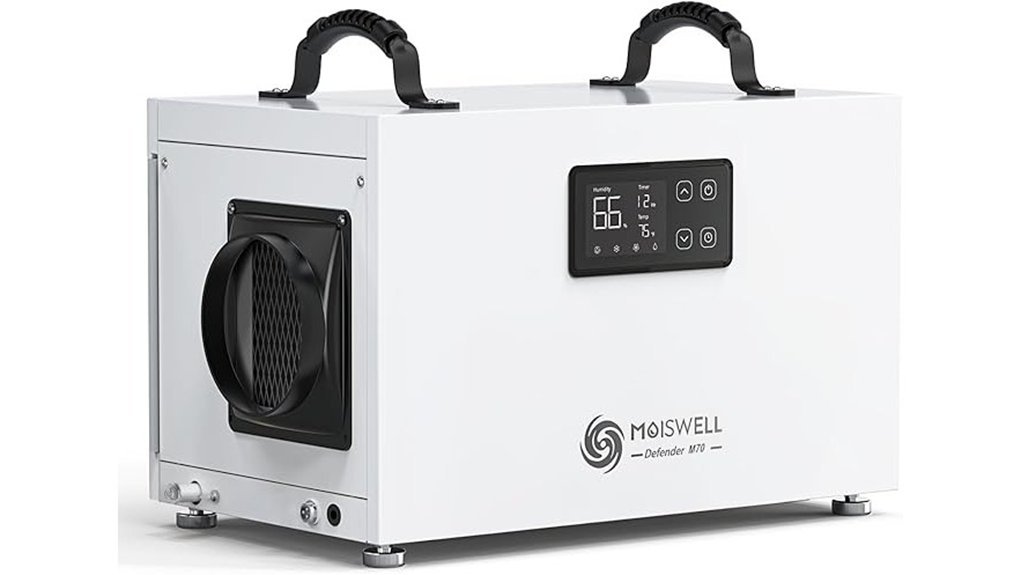
The Moiswell Defender M70 is designed for high moisture loads where a gravity drain is available. Its listing reports 145 PPD at saturation, 70 PPD under AHAM conditions, high airflow, and coverage guidance up to 6,000 square feet. Automatic humidity control, auto defrost, restart memory, and continuous drainage reduce manual attention. Unlike pump-equipped models in this roundup, the M70 is better suited to installations where the hose can maintain a continuous downward slope.
Why You’ll Like It: The 70-PPD AHAM rating provides a more useful basis for sizing than a saturation number alone.
Best For: Large sealed crawl spaces, basements, attics, or utility areas with a nearby low drain.
Who Should Avoid It: Do not choose it solely for the 145-pint headline if your site requires condensate to move uphill.
Pros:
- 145 PPD at saturation and 70 PPD under AHAM conditions
- Automatic humidity control, defrost, restart, and continuous operation features
- ENERGY STAR-certified model with continuous gravity drainage
Cons:
- No built-in pump is identified for this model
- At roughly 61 pounds, tight-access installation may be difficult
- Large manufacturer coverage figures may not reflect severe water intrusion or poor encapsulation
CADPXS Remois XP145 Dehumidifier with Pump and Hose
Best Clearly Labeled Capacity Comparison
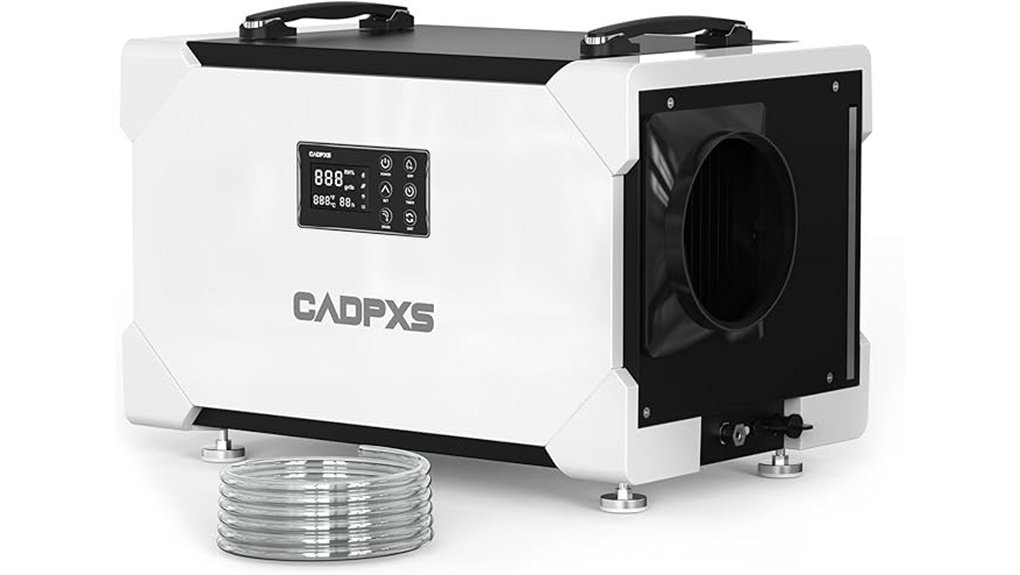
The CADPXS Remois XP145 stands out because its listing separates three capacity conditions: up to 145 PPD at saturation, 60 PPD under AHAM conditions, and 38.05 PPD under DOE conditions. It is rated for areas up to 1,500 square feet and lists 176 CFM airflow. A built-in pump and gravity-drain option make installation more flexible, while an LCD control panel, timer, memory function, and auto defrost support routine use. Those clearly separated ratings make it easier to compare honestly with other crawl-space models.
Why You’ll Like It: You get both drainage methods and a more transparent set of performance ratings instead of one oversized headline number.
Best For: Crawl spaces up to about 1,500 sq. ft. where a pump may be needed and buyers want clearer standardized capacity data.
Who Should Avoid It: A simpler gravity-only model may offer better value when the drain sits below the unit and pump lift is unnecessary.
Pros:
- 145 saturation, 60 AHAM, and 38.05 DOE PPD figures are separately identified
- Built-in pump plus gravity drainage for different layouts
- LCD controls, timer, auto defrost, memory function, and listing-stated limited coverage
Cons:
- At about 51 pounds, it is not a lightweight portable unit
- Pump systems add components that require correct hose routing and periodic inspection
- Coverage still depends on temperature, air leakage, and the actual moisture source
ARGENDON Shield 60P Crawl Space Dehumidifier with Pump
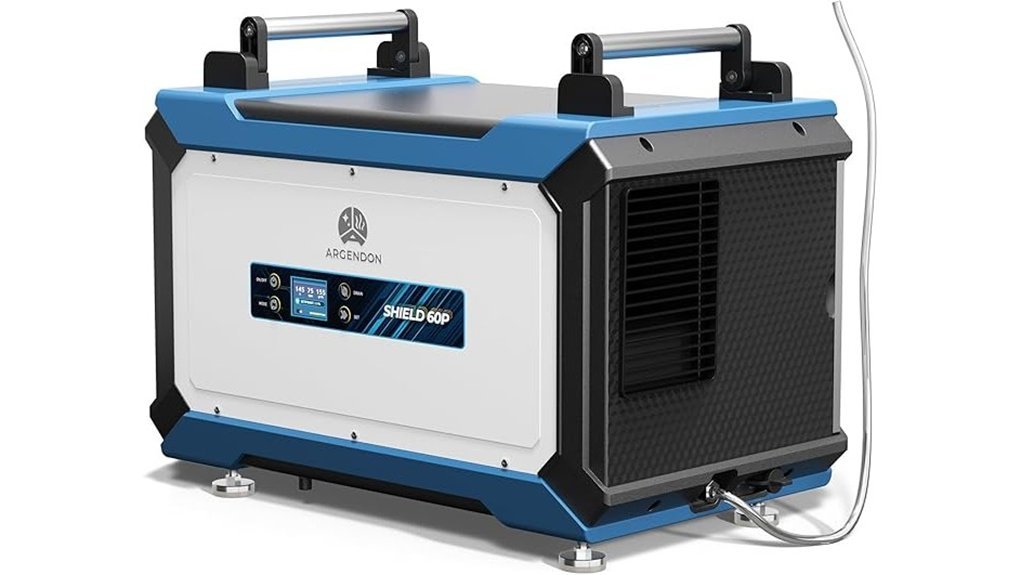
Best Alternative 145-Pint Pump Model
The ARGENDON Shield 60P pairs a built-in pump with gravity drainage for hands-off condensate removal. The current product information reports up to 145 PPD at saturation and 60 PPD under AHAM conditions, with coverage guidance around 1,800 square feet. Automatic defrost, restart memory, adjustable humidity control, and a basic protective filter support long-running installations. Because ARGENDON offers several similarly named models, confirm the exact model, airflow, hose length, included accessories, and warranty terms on the listing before ordering.
Why You’ll Like It: It gives buyers a pump-equipped alternative in the useful 60-PPD AHAM class without moving to the largest 7,500-square-foot units.
Best For: Medium-to-large crawl spaces where gravity drainage is uncertain and automatic pump drainage provides a safer layout.
Who Should Avoid It: Avoid relying on the brand-level description alone; verify the exact ASIN specifications and included parts for your installation.
Pros:
- 145 PPD saturation and 60 PPD AHAM capacity class
- Built-in pump plus gravity drainage, auto defrost, and restart memory
- Compact metal design with listing-stated five-year limited warranty language
Cons:
- Multiple similar ARGENDON model names can make comparison confusing
- Exact airflow and accessory details should be confirmed on the current listing
- Basic filtration protects the unit but is not a substitute for whole-home air cleaning
CADPXS Remois XP125 Crawl Space Dehumidifier with Pump
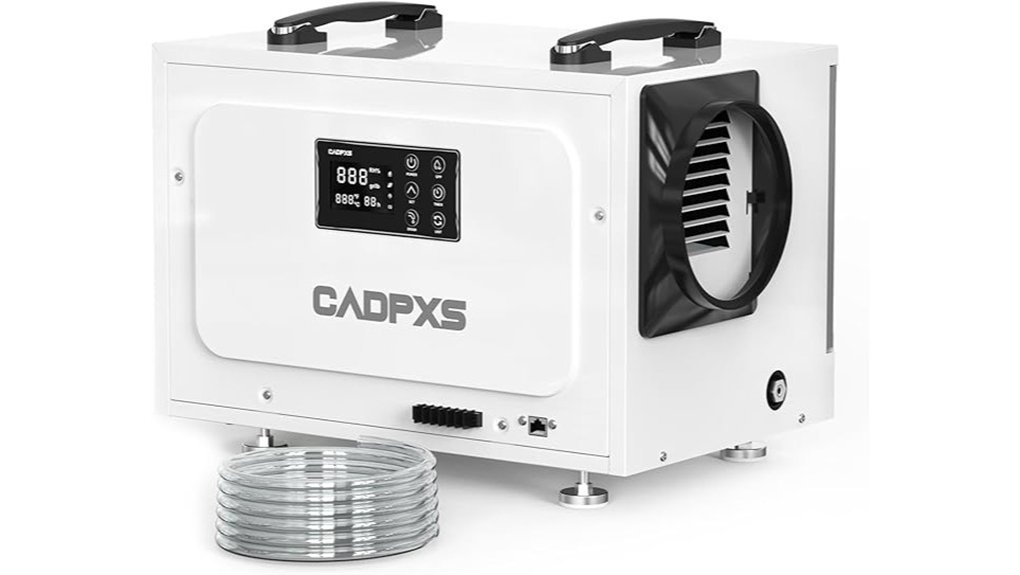
Best Compact Pump Model
The CADPXS Remois XP125 is a smaller pump-equipped option for crawl spaces, basements, garages, and storage areas. Its specifications list 125 PPD at saturation, 55 PPD under AHAM conditions, about 36.68 PPD under DOE conditions, 147 CFM airflow, and coverage guidance up to 1,300 square feet. The built-in pump can lift condensate through the included long hose, while gravity drainage remains available. Handles, adjustable feet, timer controls, auto defrost, and an optional remote-control system help with installation and operation.
Why You’ll Like It: It offers pump drainage in a capacity class closer to the compact HD55-series units, which can be a better fit than a 155-pint commercial model.
Best For: Small-to-midsize crawl spaces that need uphill drainage or flexible hose routing.
Who Should Avoid It: The optional remote is not normally included, so do not assume remote control is available out of the box.
Pros:
- 125 saturation, 55 AHAM, and approximately 36.68 DOE PPD ratings
- Built-in pump with long lift hose plus gravity drainage
- 147 CFM airflow, handles, adjustable feet, timer, and auto defrost
Cons:
- At about 50 pounds, it is compact but not especially light
- Remote control is optional rather than standard
- A pump is unnecessary expense and complexity when a simple gravity route is available
Airzentti 155-Pint Commercial Dehumidifier with Pump
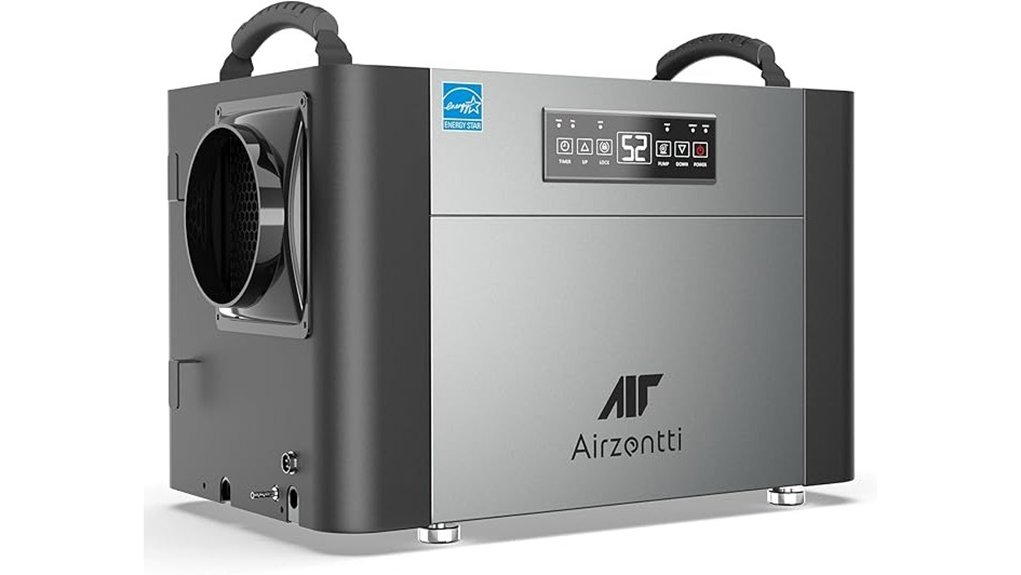
Best for Very Large Moisture Loads
The Airzentti 155-pint model targets very large crawl spaces, basements, warehouses, and restoration work. Its published figures include 155 PPD at saturation, 70 PPD under AHAM conditions, 220 CFM airflow, and coverage guidance up to 7,500 square feet. The built-in pump can move condensate upward, and a gravity-drain hose gives you a second installation path. Digital humidity settings, auto defrost, automatic drainage, restart memory, and a screen lock are useful where the unit will run with limited supervision.
Why You’ll Like It: It combines a 70-PPD AHAM capacity class with pump drainage and high airflow for demanding large-area applications.
Best For: Very large sealed crawl spaces, commercial utility areas, or restoration jobs with a confirmed electrical and drainage plan.
Who Should Avoid It: It may be unnecessarily large for a typical residential crawl space and should not be chosen on square-foot coverage alone.
Pros:
- 155 PPD at saturation and 70 PPD under AHAM conditions
- 220 CFM airflow with pump and gravity-drain options
- Listing-stated ENERGY STAR certification, auto defrost, restart memory, and control lock
Cons:
- Roughly 60-pound commercial format can be difficult to position
- High-capacity equipment can short-cycle or waste energy when badly oversized
- Requires careful clearance, hose routing, and access planning for maintenance
HBN 125-Pint Crawl Space Dehumidifier with Pump
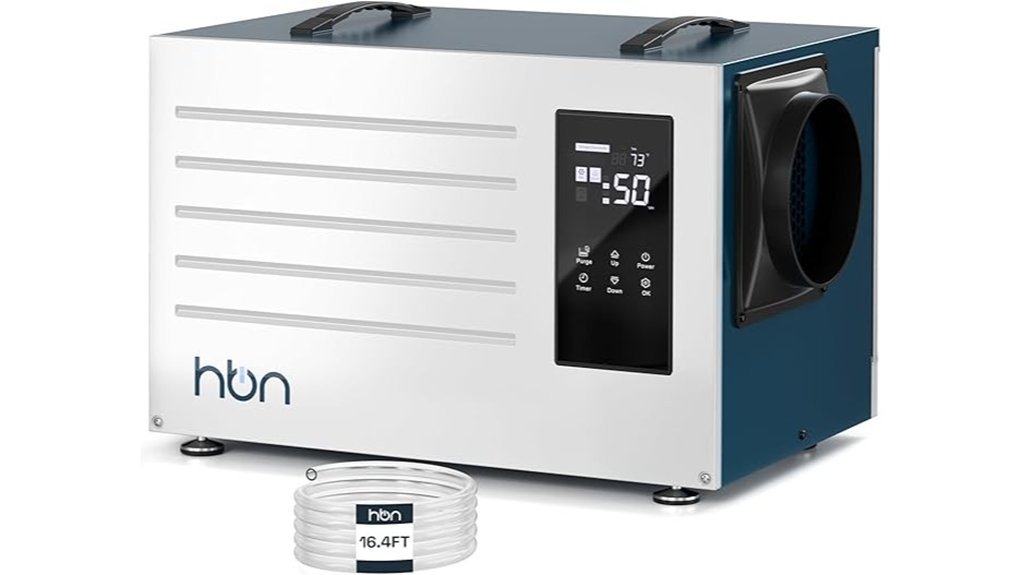
Best Controls and Dual Drainage
The HBN 125-pint dehumidifier combines pump and gravity drainage with touchscreen humidity controls and a 24-hour timer. Its listing advertises 125 PPD under saturated conditions, about 60 PPD under AHAM conditions, and coverage guidance up to 5,900 square feet. Automatic defrost and humidity sensing support continuous use, while the pump can lift condensate when a downward hose route is unavailable. Remote control is optional and sold separately, so it should not be treated as an included feature.
Why You’ll Like It: The combination of dual drainage, straightforward controls, and a midrange AHAM capacity makes it flexible for residential and workshop use.
Best For: Large crawl spaces, basements, garages, and workshops that need both pump and gravity-drain choices.
Who Should Avoid It: Confirm current warranty details and accessory inclusion if remote operation is important to you.
Pros:
- 125 PPD saturation and approximately 60 PPD AHAM capacity
- Gravity hose plus automatic pump lift for flexible drainage
- Touchscreen controls, timer, humidity sensing, and automatic defrost
Cons:
- Optional remote is not included by default
- Warranty scope can vary by component, so confirm current terms before purchase
- Manufacturer square-foot guidance may be optimistic for open, wet, or poorly sealed spaces
How to Choose a Crawl Space Dehumidifier
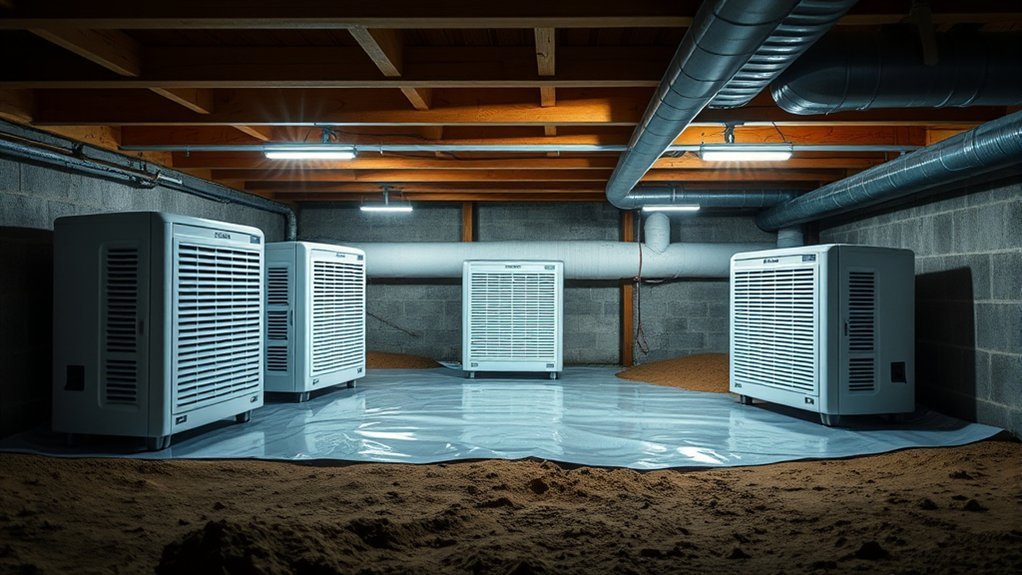
A crawl-space dehumidifier has to match the real installation, not just the advertised square footage. Before buying, measure the space, identify where the moisture comes from, confirm the drain route and electrical supply, and decide whether the unit will run free-standing or with ducts.
Compare Capacity Under the Same Test Condition
Capacity is normally shown in pints per day, but the test condition matters. Saturation ratings are measured in hotter and more humid air, so they can be far higher than AHAM or DOE figures. For the fairest comparison, use the standardized AHAM or DOE number when available. A 55-PPD AHAM model may be a better-defined choice than a model advertised only as 125 or 145 PPD at saturation.
Match Coverage to Moisture Load, Not Square Footage Alone
Manufacturer coverage ranges can help narrow the list, but they do not account for every site. A sealed 1,500-square-foot crawl space with mild seasonal humidity may need less capacity than a 700-square-foot space with exposed soil, plumbing leaks, poor grading, or frequent water intrusion. Correct standing water, drainage, grading, and air-sealing problems before expecting a dehumidifier to maintain the target humidity.
Choose Pump or Gravity Drainage
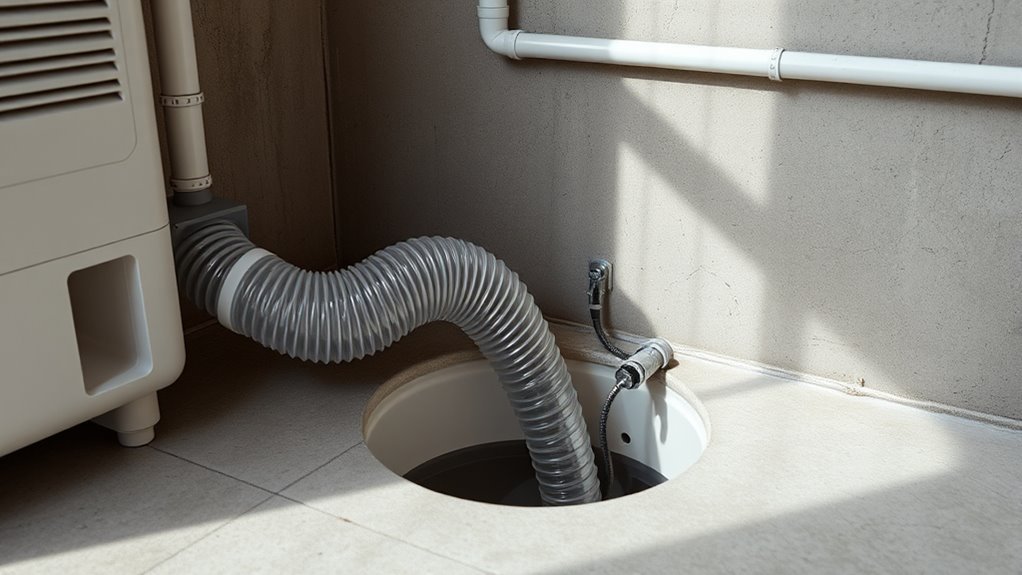
Gravity drainage is simple and reliable when the entire hose can slope downward to a safe discharge point. Choose a built-in pump when condensate must travel uphill, cross a long level run, or reach a drain above the unit. Check the stated lift height, hose length, discharge location, and whether a backup plan is needed if the pump or power fails.
Check Ducting, Placement, and Service Clearance
Not every crawl-space dehumidifier includes the same duct collars or accessories. If you plan to connect supply or return ducts, confirm the inlet and outlet dimensions, allowed duct length, required accessories, and fan capacity on the exact product listing or manual. Leave enough space to remove the filter, inspect the drain line, and service the pump or coil. Do not bury the unit behind insulation or place it where a leak could damage electrical equipment.
Use Airflow as a Distribution Guide
Airflow in cubic feet per minute helps show how quickly the unit can circulate air, but more CFM is not automatically better. High airflow can help large or ducted layouts, while a smaller sealed crawl space may work well with a lower-airflow model. Poor circulation, blocked vents, closed partitions, or long restrictive ducts can leave damp pockets even when the dehumidifier has enough capacity.
Check Temperature Range and Auto Defrost
Crawl spaces can be cooler than living areas. Confirm the manufacturer’s operating-temperature range and look for automatic defrost so frost does not build up on the coil. Auto defrost protects performance, but it does not make every model suitable for near-freezing conditions. In cold climates, pipe protection, insulation, and winter drainage routing also matter.
Compare Energy Use Realistically
ENERGY STAR certification is a useful efficiency signal, but actual operating cost depends on wattage, runtime, humidity setting, local electricity rates, and how well the crawl space is sealed. A correctly sized unit that cycles normally can cost less to operate than an oversized model running in a wet, open space. Avoid fixed annual-savings promises unless they are calculated from your own electricity rate and expected runtime.
Review Maintenance, Construction, and Warranty Terms
Metal housings, accessible filters, automatic restart, and clear drain connections are helpful for crawl-space use. Check how often the filter should be cleaned, whether the pump needs inspection, and how the coil can be serviced. Read the warranty carefully: a five- or six-year headline may apply only to the compressor or sealed refrigeration system, while labor, shipping, pumps, and other parts can have shorter coverage.
Before You Buy Checklist
- Measure the crawl space and note ceiling height, partitions, and access opening size.
- Fix active leaks, standing water, grading problems, and damaged vapor barriers first.
- Confirm a grounded electrical outlet that meets the manufacturer’s requirements.
- Choose gravity drainage only when the hose can maintain a continuous downward slope.
- Verify pump lift, hose length, duct collar size, and included accessories on the exact ASIN.
- Leave room for filter removal, drain inspection, and future service.
- Plan for condensate discharge that will not flow back toward the foundation.
- Compare standardized capacity ratings and read the current warranty exclusions.
Frequently Asked Questions
How Do Crawl Space Dehumidifiers Help Limit Mold Growth?
They lower relative humidity and keep wood, insulation, and other surfaces drier, which makes mold growth less likely. They do not remove established mold or fix the water source, so leaks, standing water, and contaminated materials still need proper attention.
Can I Install a Crawl Space Dehumidifier Myself?
A straightforward gravity-drain installation may be manageable for a capable homeowner, but electrical safety, drainage slope, condensate discharge, service clearance, and crawl-space sealing all matter. Pumped, hardwired, or ducted installations may be better handled by a qualified HVAC, electrical, or crawl-space professional.
How Often Should the Filter Be Cleaned or Replaced?
Inspect it monthly at first, then follow the manufacturer’s schedule. Many crawl-space filters need cleaning every one to three months, but dusty construction, exposed soil, pets, or renovation debris can require more frequent service. Replace damaged or non-washable filters with the specified type.
Do Crawl Space Dehumidifiers Need a Drain Hose?
Most dedicated crawl-space models are designed for continuous drainage and do not rely on a small collection bucket. Use the specified gravity hose or pump line, secure the connection, prevent kinks, and route the discharge where water cannot return to the foundation.
What Humidity Level Is Best for a Crawl Space?
A common operating target is around 45% to 55% relative humidity, with the goal of staying below 60%. The ideal setting can vary with climate, temperature, building materials, and condensation risk, so monitor conditions at more than one location in the crawl space.
What Is the Difference Between Saturation, AHAM, and DOE Ratings?
Saturation ratings are measured in hotter, wetter air and produce the largest pint number. AHAM and DOE ratings use more standardized conditions that are closer to common operating environments. Use the same rating type when comparing models; do not assume a 145-PPD saturation model is more powerful than every 70-PPD AHAM model.
Is a Built-In Pump Worth It?
Yes, when water must move uphill or cannot maintain a continuous downward slope. Gravity drainage is usually simpler when a low drain is nearby. A pump adds flexibility but also adds a component that can clog or fail, so keep the hose accessible and inspect it periodically.
Do I Still Need Crawl Space Encapsulation?
A dehumidifier works best after major moisture entry is controlled. Depending on the crawl space, that may include a ground vapor barrier, air sealing, drainage improvements, insulation work, and repair of leaks. The correct approach depends on local climate and building conditions.
Conclusion
Choose a crawl space dehumidifier by comparing standardized capacity, drainage requirements, airflow, operating temperature, and service access. For a compact gravity-drain installation, the ALORAIR Sentinel HD55S is the strongest all-around starting point in this list. For pumped drainage in a large space, compare the Waykar 130 Pints, AVAHUM AM160P-3, Airzentti 155 Pints, and HBN 125 Pints. The Moiswell Defender M70 is better suited to a large space with a reliable low drain, while the CADPXS XP125 and XP145 offer clearer multi-condition ratings and flexible pump setups.
Final Recommendation
Start with drainage, then capacity. Pick a gravity-drain model when the hose can slope safely downward; pay for a built-in pump only when the layout requires lift. After that, compare AHAM or DOE ratings under the same test condition and choose enough capacity for the moisture load without treating the largest saturation number as automatically best.