
If you need a commercial dehumidifier with a humidistat, compare moisture-removal capacity under the same test conditions, drainage design, operating temperature, airflow, installation space, and construction—not square-foot claims alone. The four models below suit demanding locations such as crawl spaces, basements, warehouses, storage areas, workshops, and large utility rooms. All provide automatic humidity control, but they differ significantly in pump capability, form factor, and standard-condition performance.
Last reviewed: August 2, 2026. This is an editorial comparison based on published specifications and buyer-use considerations, not a claim of hands-on testing.
Quick verdict:
- Best overall for large spaces: Yaufey 155 Pints Commercial Dehumidifier
- Best compact commercial option: ALORAIR Sentinel HD55
- Best rugged gravity-drain option: VEVOR 125 Pints Commercial Dehumidifier
- Best for low-clearance crawl spaces: ALORAIR Sentinel HD55S 120 PPD
How these models were compared: Priority was given to published AHAM or standard-condition capacity, drainage flexibility, humidistat control, low-temperature features, form factor, and maintenance access. Advertised coverage was treated as a secondary guide because moisture load and room conditions vary.
Important capacity note: “Pints per day” can be measured under different temperature and humidity conditions. A saturation or high-humidity rating will be higher than an AHAM-style rating. Compare units using the same test standard whenever possible, and confirm the current product listing and manual before ordering.
Quick Comparison
| Product | Best For | Published Capacity | Drainage | Key Consideration |
|---|---|---|---|---|
| Yaufey 155 Pints | Large rooms, facilities, and flexible drain layouts | Up to 155 PPD at 95°F and 90% RH | Built-in pump or gravity drain | Wheeled cabinet needs more floor space |
| ALORAIR Sentinel HD55 | Compact commercial and crawl-space use | 113 PPD at saturation; 53 PPD at AHAM conditions | Continuous gravity drain | No built-in condensate pump |
| VEVOR 125 Pints | Basements, storage rooms, and fixed installations | 125 PPD at saturation; 60 PPD at standard conditions | Continuous gravity drain | Heavy unit and no built-in pump |
| ALORAIR Sentinel HD55S 120 PPD | Low-clearance crawl spaces and basements | 120 PPD at saturation; 55 PPD at AHAM conditions | Continuous gravity drain | Requires a suitable downhill drain |
Yaufey 155 Pints Commercial Dehumidifier for Large Rooms
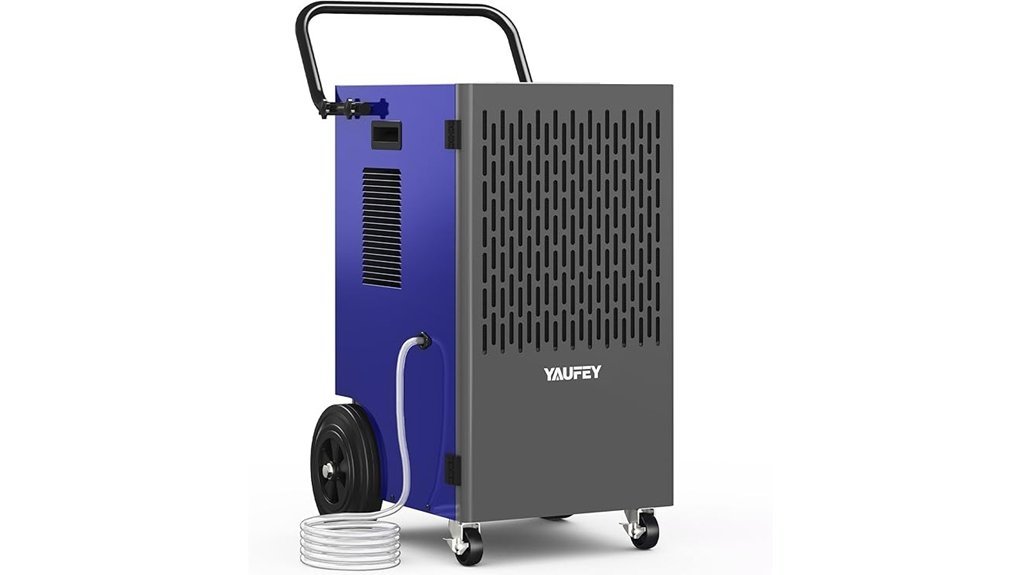
Best overall for large spaces: The Yaufey DP605C is a portable commercial dehumidifier for large basements, garages, storage areas, warehouses, and similar spaces where both capacity and drain flexibility matter. Its published maximum is up to 155 pints per day at 95°F and 90% relative humidity, with airflow rated at 164.7 CFM. The adjustable humidistat, 24-hour timer, auto defrost, and restart memory support longer operating cycles without requiring constant manual adjustment.
Why you’ll like it: The built-in condensate pump can move water through the included pump hose when the drain sits above the unit. Gravity drainage is also available. Wheels, handles, and a digital control panel make this a more practical option for facilities that need to move one machine between work areas.
Who should buy this: Choose it when you need a wheeled high-capacity unit, do not always have access to a lower floor drain, or want pump and gravity drainage in one machine.
Who should avoid it: A small crawl space or installation with limited floor clearance is better suited to a compact horizontal model. Its 155-PPD figure is a hot, very humid test-condition rating and should not be compared directly with an AHAM rating.
Pros:
- Highest published maximum capacity in this comparison.
- Built-in pump plus gravity-drain flexibility.
- Adjustable humidistat, timer, auto defrost, and portable design.
Cons:
- Large cabinet may be inconvenient in tight service areas.
- Maximum PPD rating is based on 95°F and 90% RH conditions.
- Requires routine filter, pump-reservoir, and drain-hose maintenance.
ALORAIR Commercial Dehumidifier 113 Pint (Sentinel HD55)
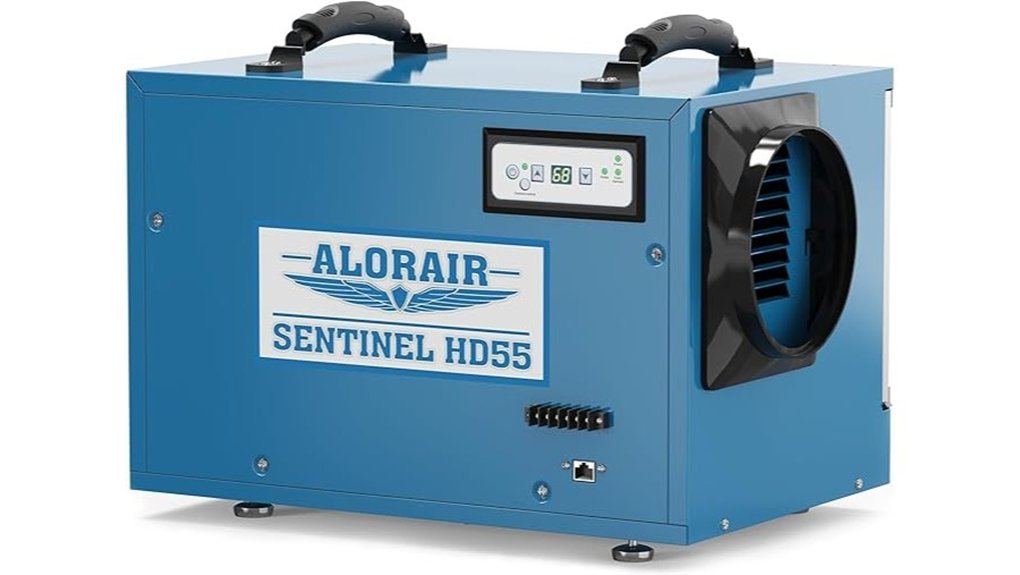
Best compact commercial option: The ALORAIR Sentinel HD55 is a low-profile metal dehumidifier intended for crawl spaces, basements, storage areas, workshops, and light commercial humidity control. The manufacturer publishes up to 113 pints per day at saturation and 53 pints per day at AHAM conditions, giving buyers a more useful standard-condition figure for comparison.
Why you’ll like it: Automatic humidity control, auto defrost, power-outage restart, a reusable filter, and continuous gravity drainage are packaged in a compact housing. The built-in humidistat can cycle the compressor to maintain the selected humidity instead of forcing continuous operation.
Who should buy this: It suits buyers who have a reliable downhill drain and want a compact commercial-grade unit rather than a tall wheeled cabinet.
Who should avoid it: This model does not include a condensate pump. Choose a pump-equipped unit when water must travel upward or when no lower drain is available.
Pros:
- Compact metal housing for demanding locations.
- Both saturation and AHAM capacity figures are published.
- Auto defrost and automatic restart support unattended humidity control.
Cons:
- Gravity drainage requires a correctly sloped hose.
- Optional remote-control accessories may be sold separately.
- Lower standard-condition capacity than larger commercial models.
VEVOR 125 Pints Commercial Dehumidifier with Drain Hose
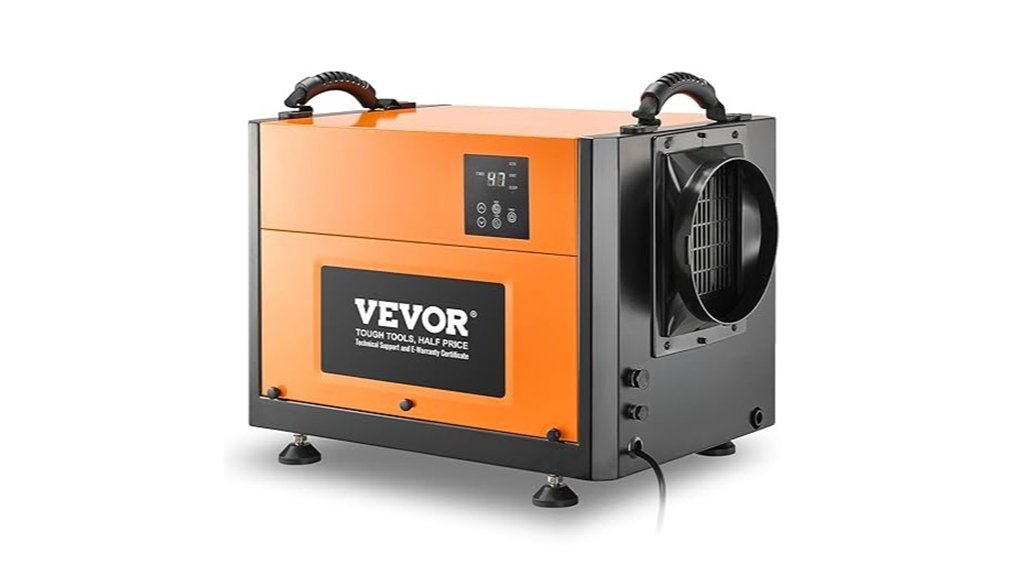
Best rugged gravity-drain option: The VEVOR 125 Pints Commercial Dehumidifier uses a galvanized-steel housing and is designed for crawl spaces, basements, storage rooms, warehouses, and job sites. Its published capacity is up to 125 pints per day at saturation and 60 pints per day under standard conditions, so the lower figure is the more useful one for comparing routine performance.
Why you’ll like it: Continuous drainage through the included hose reduces manual upkeep. Auto, drying, sleep, and smart-defrost modes add flexibility, while the compact horizontal shape can fit locations where a tall residential cabinet would be awkward.
Who should buy this: It makes sense for a semi-permanent installation with a nearby lower drain, especially when a metal housing and compact shape are priorities.
Who should avoid it: It relies on gravity drainage rather than a built-in pump. Confirm that the drain is below the outlet and that the hose can maintain an uninterrupted downward slope.
Pros:
- Heavy-duty galvanized-steel housing.
- Published saturation and standard-condition capacity figures.
- Continuous drainage and automatic defrost.
Cons:
- No built-in pump for lifting condensate.
- Heavy enough that installation and repositioning may require care.
- Advertised floor-area coverage should not replace moisture-load sizing.
ALORAIR Crawl Space Dehumidifier 120 PPD (Sentinel HD55S)
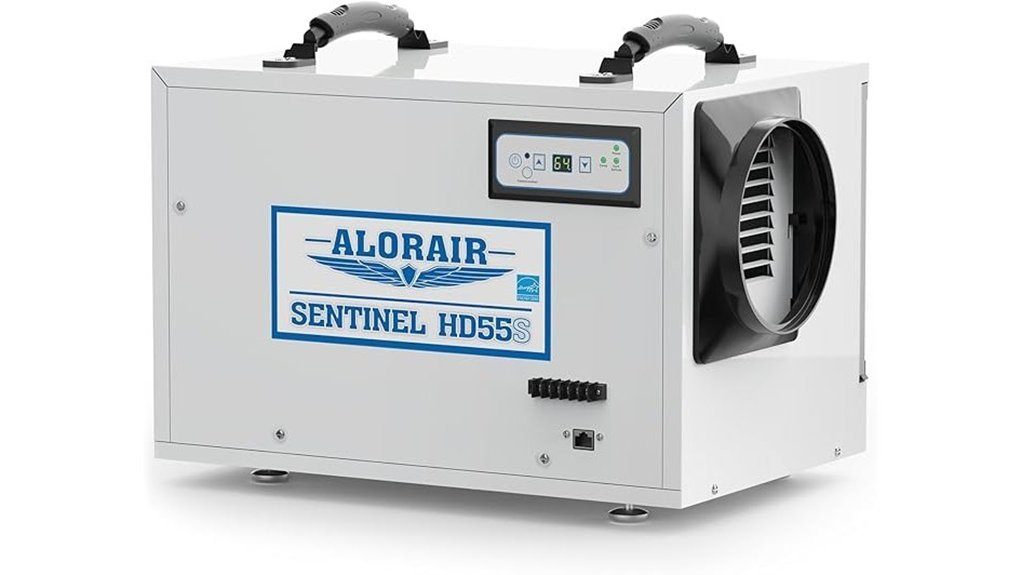
Best for low-clearance crawl spaces: The ALORAIR Sentinel HD55S is designed for crawl spaces, low-clearance basements, storage areas, and light commercial humidity control. The 120-PPD figure is a saturation rating; its comparable AHAM-condition output is 55 pints per day. Its metal housing, continuous drainage, and auto-defrost system suit locations where a standard room dehumidifier may be less practical.
Why you’ll like it: The built-in humidistat supports set-and-maintain operation, while the reusable filter helps protect internal components from dust. Automatic restart restores operation after a power interruption, and the low-profile body simplifies placement in tighter areas.
Who should buy this: Choose it for an encapsulated crawl space or low basement with a dependable floor drain, sump connection, or other downhill drainage route.
Who should avoid it: This is a gravity-drain model, so it is not the best choice when condensate must move uphill. It also requires enough service clearance for airflow, filter cleaning, and hose access.
Pros:
- Low-profile commercial-grade design for crawl spaces.
- Continuous gravity drainage with no collection bucket to empty.
- Published 55-PPD AHAM capacity and auto defrost.
Cons:
- No built-in pump.
- Very similar to the Sentinel HD55, so compare the exact ASIN and model label.
- Installation may require help because of the unit’s weight and tight-space placement.
Factors to Consider When Choosing a Commercial Dehumidifier With Humidistat
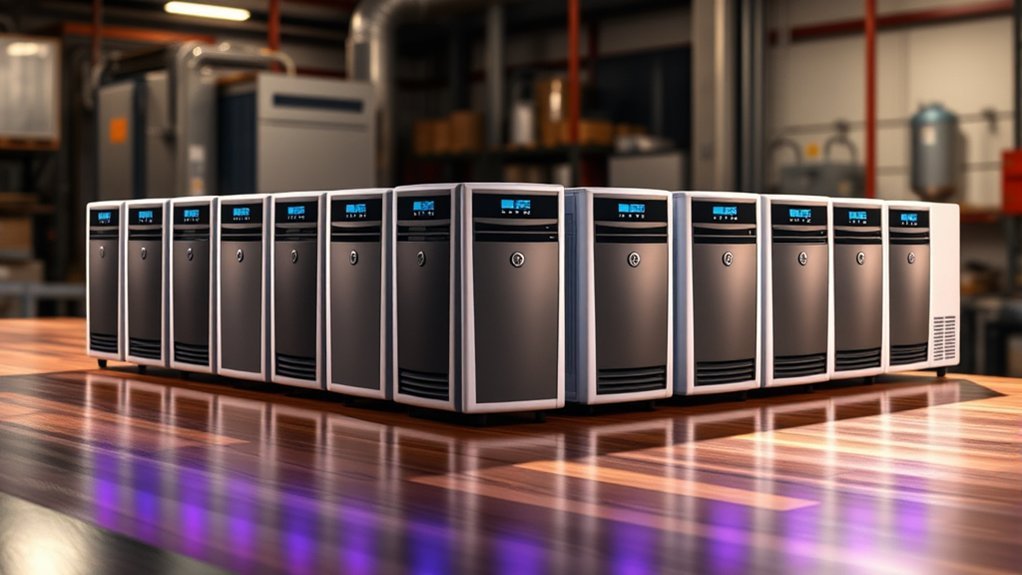
A commercial or industrial dehumidifier should be selected for the actual moisture load and job conditions, not only the advertised floor-area number. Use the checklist below to compare units on equal terms.
Compare Capacity Using the Same Test Standard
Check whether the stated pints-per-day rating was measured at saturation, at 95°F and 90% RH, or under AHAM or another standard condition. High-temperature, high-humidity tests produce larger numbers. For a fair comparison, use ratings measured under the same conditions and consider how cool the space becomes during normal operation.
Match the Unit to the Moisture Load
Square-foot coverage is only a starting point. Ceiling height, standing water, air leakage, outdoor humidity, porous materials, and the desired drying speed all affect sizing. Restoration work and active water intrusion require more capacity than routine humidity maintenance. Repair leaks and drainage problems before relying on a dehumidifier as the sole solution.
Humidistat Range and Control Accuracy
Choose a model with an adjustable humidistat that covers your intended setpoint. For many storage, basement, crawl-space, and workspace applications, a moderate target is more practical than an extremely low setting. Place a separate hygrometer away from the discharge air to confirm that the space is reaching the desired level.
Pump Versus Gravity Drainage
A gravity drain is simple and dependable when a floor drain or sump connection sits below the outlet. A built-in pump is more useful when water must travel upward to a sink or through a longer hose. Check maximum lift height, hose length, routing limits, and whether the pump has a manual purge function.
Temperature Range and Auto Defrost
Cool crawl spaces can cause frost to form on the evaporator coil. Auto defrost helps the unit recover, but moisture-removal performance still falls as temperature drops. Confirm the exact model’s minimum operating temperature and avoid blocking the intake or exhaust.
Airflow, Noise, and Placement
Airflow in CFM affects how quickly humid air reaches the coil. Leave the clearance specified in the manual, and use ducting only when the exact model supports it. Commercial units can be louder and transmit more vibration than residential models, so consider isolation pads and distance from occupied rooms.
Energy Efficiency and Electrical Requirements
Compare the efficiency metric and certification listed for the exact model, not the brand in general. Confirm voltage, amperage, circuit requirements, grounding instructions, and whether the manual prohibits extension cords. A larger saturation rating does not automatically mean lower operating cost in normal conditions.
Maintenance and Support
Look for a washable or replaceable filter, accessible coils, a cleanable drain line, error-code guidance, and a clearly stated warranty. Clean the filter on the schedule in the manual, inspect the hose for kinks or buildup, and keep the intake free of dust and stored items.
Before you buy:
- Confirm the exact ASIN, model number, and PPD test condition.
- Use the AHAM or standard-condition figure when available.
- Measure installation space and required service clearance.
- Choose gravity drainage or a pump based on the drain location.
- Check minimum operating temperature, voltage, amperage, and circuit needs.
- Verify the current warranty, included hoses, and replacement-filter availability.
Frequently Asked Questions
What Size Dehumidifier Do I Need for My Commercial Space?
Size the unit using moisture load, temperature, relative humidity, ceiling height, air leakage, drainage, and desired drying speed rather than a fixed “pints per square foot” rule. Start with the manufacturer’s AHAM or standard-condition capacity, then choose more capacity for active water intrusion, restoration work, or very humid conditions.
What Is the Difference Between Saturation and AHAM Capacity?
Saturation ratings are measured in hotter, wetter air and therefore produce a larger PPD number. AHAM or standard-condition ratings use less extreme conditions and are generally more useful for comparing routine performance. Do not compare a saturation figure from one model with an AHAM figure from another.
Do I Need a Built-In Pump?
You need a pump when condensate must move upward or when a gravity drain is unavailable. A gravity-drain unit is often simpler when you can route the hose continuously downhill to a floor drain, sump, or approved drain connection.
What Humidity Should I Set on a Commercial Dehumidifier?
The right target depends on the materials, use of the space, temperature, and moisture source. Avoid choosing an unnecessarily low setting, which can increase runtime without solving leaks or water intrusion. Use a separate hygrometer to verify the actual humidity away from the unit’s air outlet.
How Often Should I Clean My Dehumidifier?
Follow the manual for the exact model. In dusty commercial spaces, inspect the filter and drain system frequently, clean the filter when dirty, and check the hose for blockage or leaks. Disconnect power before servicing and keep the coils and vents unobstructed.
Can a Dehumidifier Prevent Mold?
Lower humidity can make conditions less favorable for mold growth, but a dehumidifier does not remove existing mold or repair leaks. Address water intrusion, wet materials, drainage, and ventilation problems, and use qualified remediation help when contamination is extensive.
How Long Do Commercial Dehumidifiers Typically Last?
Service life varies with operating hours, temperature, dust, drainage maintenance, installation quality, and component durability. No single lifespan applies to every installation. Warranty terms, replacement-parts availability, filter access, and service support are better purchase indicators than a broad life-expectancy claim.
Conclusion
Final recommendation: Choose the drainage layout first, then compare standard-condition capacity.
The Yaufey 155 Pints Commercial Dehumidifier is the strongest all-around option here for large spaces that benefit from a built-in pump and portable cabinet. The ALORAIR Sentinel HD55 is a compact gravity-drain choice with a clearly published AHAM rating. The VEVOR 125 Pints suits buyers who prefer a rugged steel housing and have a lower drain nearby, while the ALORAIR Sentinel HD55S is the better fit for low-clearance crawl-space installations. Before ordering, confirm the exact model, AHAM or standard-condition output, drain route, temperature range, electrical requirements, and current warranty.

[…] to pull water from indoor air, collect it in a bucket or drain, and cycle on and off with a humidistat. An air conditioner uses more energy when it must cool the room, run a compressor, move heat […]