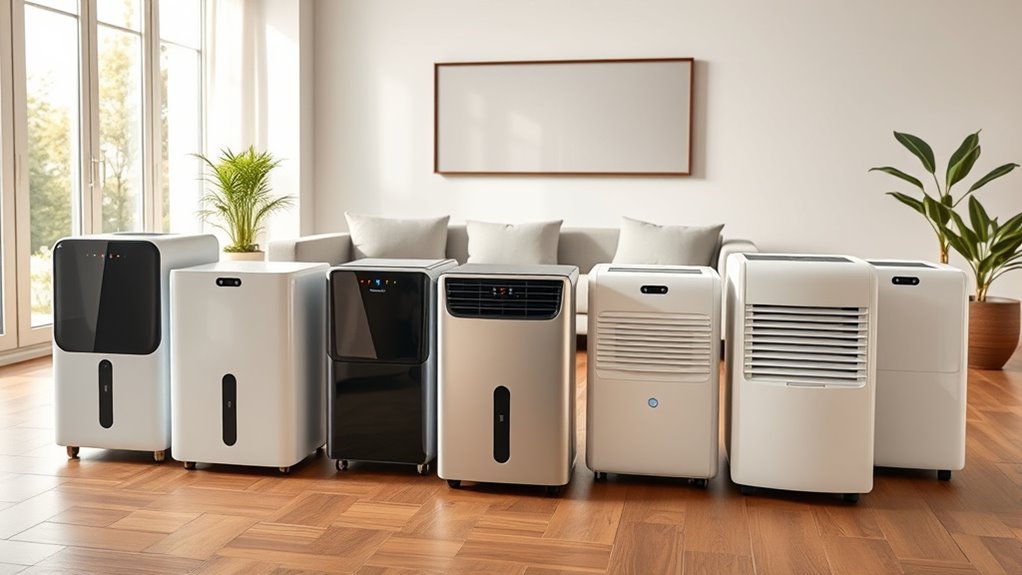
If you need a powerful high-capacity dehumidifier in 2026, these 90 qt class and commercial-grade units are built for basements, crawl spaces, garages, warehouses, and other damp areas where a small home unit may struggle. The Moiswell 155 Pint Commercial Dehumidifier is a strong fit for large spaces that need serious daily moisture removal, while the HBN Crawl Space Dehumidifier adds a built-in pump, timer, and precise humidity control. The ALORAIR Sentinel HD55S is a practical pick for colder crawl spaces, and the Airzentti 155 Pint Commercial Dehumidifier is designed for users who want pump drainage and wide coverage. Use this guide to compare capacity, drainage, defrost, warranty, and best-use cases before you choose.
Quick Verdict
For large basements, crawl spaces, and commercial moisture problems, choose a unit based on daily pint capacity, drainage setup, airflow, defrost protection, and space size. A built-in pump is worth it if your drain is above or far from the unit. Gravity drainage works well when you can run a hose downward to a floor drain.
- Best for large commercial-style spaces: Moiswell 155 Pint Commercial Dehumidifier
- Best for set-and-forget crawl space control: HBN Crawl Space Dehumidifier with Pump and Timer
- Best for cold, damp crawl spaces: ALORAIR Sentinel HD55S
- Best pump-equipped high-capacity option: Airzentti 155 Pint Commercial Dehumidifier
Quick Comparison Table
| Product | Best For | Key Strength | Drainage | CTA |
|---|---|---|---|---|
| 155 Pint Commercial Dehumidifier with Drain Hose | Large basements, crawl spaces, and commercial areas | 155 PPD capacity and Energy Star efficiency | Auto drain with hose | Check Price on Amazon |
| HBN Crawl Space Dehumidifier with Pump and Timer | Crawl spaces, basements, garages, and workshops | Built-in pump, timer, and precise humidity control | Dual drainage with pump | Check Current Amazon Availability |
| ALORAIR Crawl Space Dehumidifier 120 PPD Auto Defrost | Cold, damp crawl spaces up to mid-size coverage needs | Auto defrost and durable metal housing | Continuous drainage | Check Product Details on Amazon |
| 155 Pint Commercial Dehumidifier with Pump and Hose | Large basements, garages, warehouses, and restoration jobs | Built-in pump and wide coverage rating | Pump plus gravity hose | View Latest Deal on Amazon |
155 Pint Commercial Dehumidifier with Drain Hose
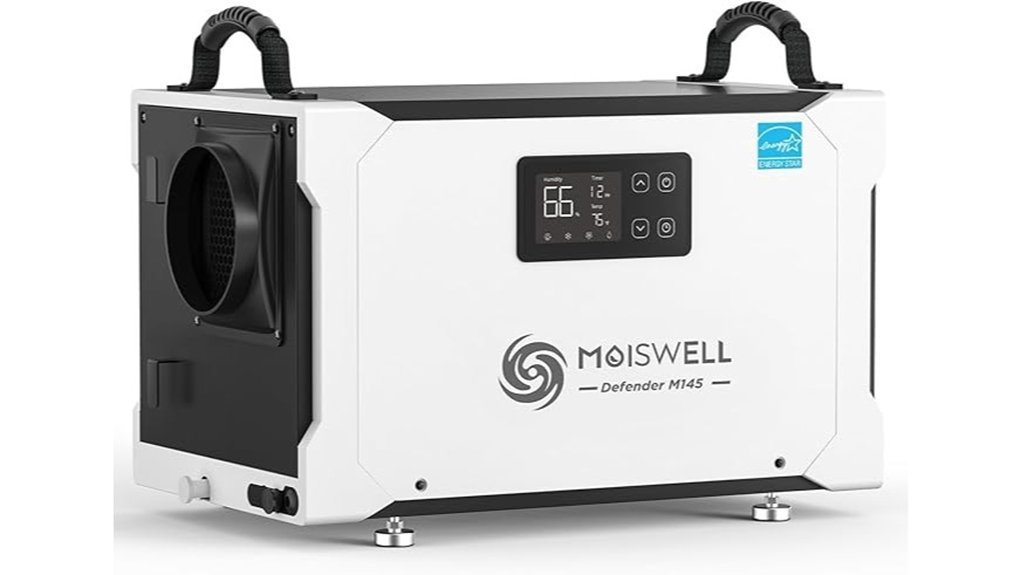
If you need a heavy-duty dehumidifier for a crawl space, basement, or other large commercial area, the Moiswell 155 Pint Commercial Dehumidifier is a standout pick for 2026. You get up to 155 pints of moisture removal per day, 265 CFM airflow, and coverage for spaces up to 6,000 sq ft. Its compact horizontal design fits tight areas, while the drain hose, auto drain, and auto restart simplify use. You can set your target humidity, rely on auto defrost, and save energy with Energy Star efficiency. Moiswell backs it with a 5-year limited warranty.
Why You’ll Like It: This model is built for buyers who want strong capacity without constant tank emptying. The horizontal shape can help in crawl spaces where height is limited, while the high airflow helps move damp air through larger areas faster.
Best For: Homeowners and commercial users who need a powerful, energy-efficient dehumidifier for crawl spaces, basements, or large areas up to 6,000 sq ft.
Who Should Buy This: Choose it if your space has persistent dampness, musty air, or recurring moisture problems and you have a good place to route a drain hose.
Who Should Avoid This: Skip it if you only need a small room dehumidifier or you do not have a practical drainage point nearby.
Pros:
- Removes up to 155 pints of moisture per day for heavy-duty performance
- Compact horizontal design fits tighter spaces and includes convenient auto drain, auto defrost, and auto restart features
- Energy Star certified and backed by a 5-year limited warranty
Cons:
- At 63 pounds, it may be cumbersome to move and install
- Higher capacity and commercial-grade features may be more than needed for smaller spaces
- Requires a drain setup, so it’s less convenient in locations without easy hose access
Buying Tip: Before ordering, measure the installation area and confirm that the drain hose can run safely without kinks, upward bends, or tripping hazards.
HBN Crawl Space Dehumidifier with Pump and Timer
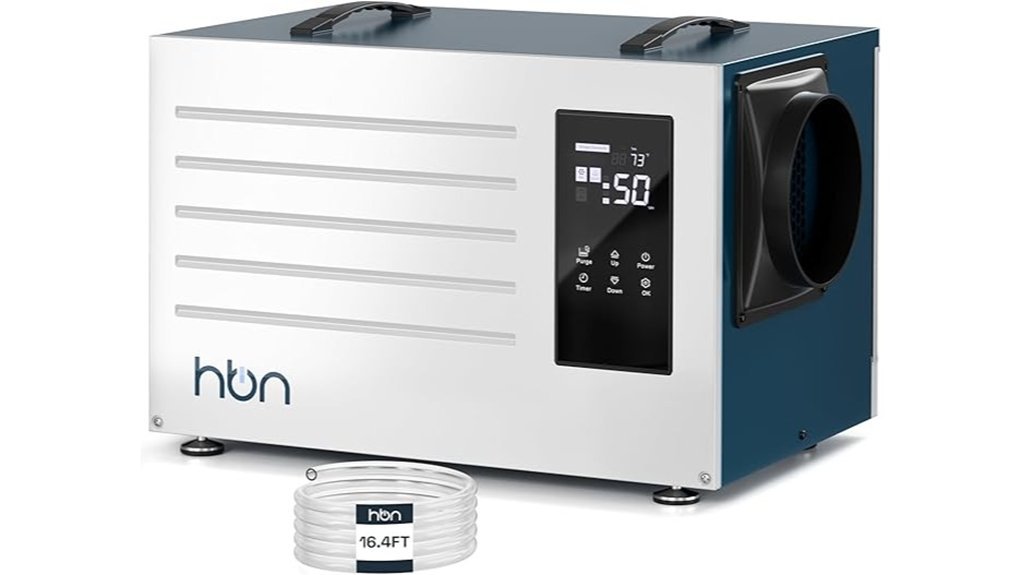
The HBN Crawl Space Dehumidifier suits you best when you need powerful, set-and-forget moisture control. You get up to 125 pints per day in extreme conditions, or 60 pints daily under AHAM testing, and it can cover spaces up to 5,900 sq. ft. You can dial humidity from 10% to 90% for precise control, while the automatic defrost helps it run efficiently in cold areas. The built-in pump lifts water up to 16.4 feet, and the 24-hour timer lets you schedule operation. You also get power-outage memory, TUV safety certification, and strong warranty support.
Why You’ll Like It: This is the most convenient choice if your drain is not directly below the unit. The built-in pump gives you more placement freedom, and the timer helps you control runtime instead of leaving the unit running without a plan.
Best For: Homeowners, property managers, and commercial users who need powerful, set-and-forget moisture control in large crawl spaces, basements, garages, or workshops.
Who Should Buy This: Choose it if your space needs pump drainage, flexible installation, and automatic operation after power interruptions.
Who Should Avoid This: Avoid it if you want the lightest possible unit or if you only need occasional moisture control in a small room.
Pros:
- High-capacity dehumidification handles up to 125 pints/day in extreme conditions and covers spaces up to 5,900 sq. ft.
- Dual drainage options, including a built-in pump that can lift water up to 16.4 ft, make installation flexible.
- Precise humidity control, automatic defrost, power-outage memory, and a 24-hour timer add convenience and reliability.
Cons:
- The remote control is sold separately, so it’s not included out of the box.
- Its larger size and commercial-grade design may be overkill for small rooms or light-duty use.
- Weight is not specified, which can make handling and installation planning less certain.
Pro Tip: A pump-equipped dehumidifier is especially useful when you need to drain into a sink, utility line, or higher drain point instead of a floor drain.
ALORAIR Crawl Space Dehumidifier 120 PPD Auto Defrost
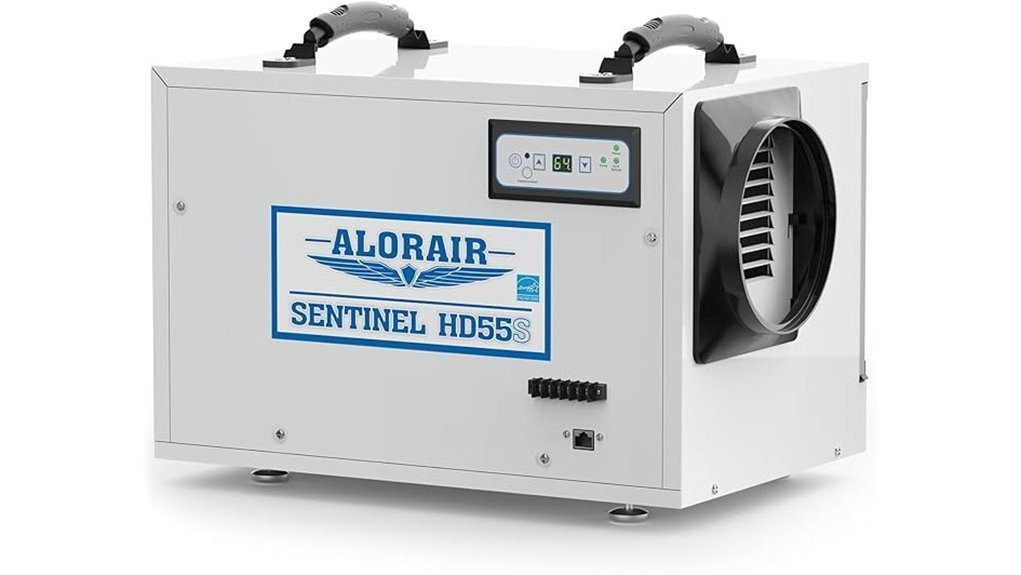
Need a crawl space unit that keeps working in cold, damp conditions? The AlorAir Sentinel HD55S gives you 120 PPD of moisture removal, with 55 PPD rated by AHAM, and covers up to 1,300 sq. ft. You get rugged metal housing, 130 CFM airflow, and continuous drainage, so you won’t keep emptying a tank. Its auto defrost system senses low temperatures, pauses the compressor, and melts ice to protect performance. A MERV-1 filter helps block dust, and cETL listing plus a 6-year warranty give you added confidence in tough spaces.
Why You’ll Like It: The ALORAIR unit is not the biggest coverage option here, but it is a smart fit when durability, cold-space performance, and continuous drainage matter more than maximum square-foot claims.
Best For: Homeowners or property managers who need a durable crawl space dehumidifier for cold, damp areas up to 1,300 sq. ft. with low-maintenance continuous drainage.
Who Should Buy This: Choose it for a crawl space, storage area, or damp under-house area where auto defrost and rugged construction are important.
Who Should Avoid This: Skip it if you need wide coverage for a very large basement, garage, warehouse, or whole commercial area.
Pros:
- 120 PPD moisture removal provides strong dehumidification for demanding crawl spaces.
- Auto defrost helps the unit keep working efficiently in colder conditions.
- Continuous drainage, cETL listing, and a 6-year warranty add convenience and peace of mind.
Cons:
- Best suited for smaller to mid-sized spaces, not large whole-home applications.
- At 41.7 pounds, it may be cumbersome to install or reposition.
- MERV-1 filtration is basic and primarily protects the unit, not advanced air purification.
Safety Note: In crawl spaces, keep the unit level, protect cords from standing water, and make sure the drainage route stays clear during long-term operation.
155 Pint Commercial Dehumidifier with Pump and Hose
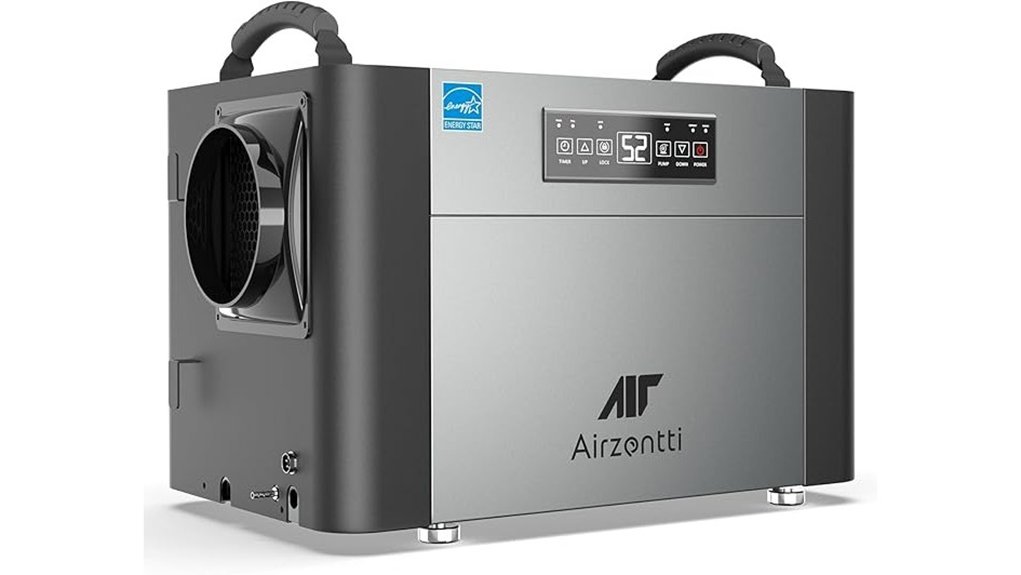
Airzentti’s 155-pint commercial dehumidifier handles serious moisture in spaces up to 7,500 square feet. You can use it in basements, attics, crawl spaces, garages, warehouses, and restoration jobs. Its 220 CFM airflow and 155-pint daily capacity tackle heavy dampness fast. The built-in pump lifts water up to 16.4 feet, while the 6.56-foot hose supports gravity drainage. You can set humidity, use the timer, and switch modes easily. Auto defrost, overflow protection, and a washable filter help you stay efficient. Energy Star and TUV compliance add peace of mind.
Why You’ll Like It: This model gives you both pump drainage and gravity drainage support, which makes it flexible for basements, garages, and job sites where the best drain point may not be close to the unit.
Best For: Homeowners, contractors, and restoration professionals needing powerful moisture removal for large spaces like basements, crawl spaces, garages, and warehouses.
Who Should Buy This: Choose it if you want high-capacity moisture removal, pump drainage, and flexible use across larger spaces.
Who Should Avoid This: Avoid it if you need a quiet bedroom unit, a small portable household model, or a unit that can be moved frequently without effort.
Pros:
- High 155-pint-per-day capacity handles serious dampness in spaces up to 7,500 sq. ft.
- Built-in pump drains water up to 16.4 ft, plus includes gravity drainage with a hose.
- Energy Star and TUV compliance, along with auto defrost and overflow protection, improve efficiency and safety.
Cons:
- At 60 lbs, it may be cumbersome to move or reposition frequently.
- Larger capacity and commercial design may be more than needed for small rooms or light moisture issues.
- Requires setup for pump or hose drainage, which may be inconvenient in some spaces.
Buying Tip: If you plan to use the pump, check the lift height, hose path, and drain location before setup so water can move away from the unit reliably.
Before You Buy Checklist
- Measure the space: Match the dehumidifier’s coverage rating to your actual basement, crawl space, garage, or commercial area.
- Check moisture severity: A mildly damp room may not need the same capacity as a wet crawl space or restoration job.
- Plan drainage first: Decide whether you need gravity drainage, a built-in pump, or both.
- Confirm outlet access: Use a safe, suitable outlet and avoid unsafe extension cord setups.
- Look for auto defrost: This matters in cooler basements and crawl spaces where coils can ice up.
- Check weight and access: A 40 to 60+ lb unit can be difficult to move through crawl space doors, stairs, or narrow utility areas.
- Review warranty terms: Longer warranty coverage can be valuable on high-capacity equipment used frequently.
Factors to Consider When Choosing a 90 Qt Dehumidifier
When you choose a 90 qt dehumidifier or a high-capacity commercial dehumidifier, start with its moisture removal capacity and make sure it matches the dampness in your space. You’ll also want to check the coverage area, drainage options, and energy efficiency rating so it fits your room and daily use. Don’t forget noise and portability, especially if you plan to move it often or run it near living spaces.
Moisture Removal Capacity
Moisture removal capacity is one of the most important specs to check, and it’s usually listed in pints per day (PPD), which tells you how much moisture a dehumidifier can pull from the air in 24 hours. When you choose a unit, match its rating to your space and moisture load. A higher PPD means faster humidity reduction, which helps when you’re dealing with basements, crawl spaces, or other damp areas. Check the maximum capacity at different humidity levels, since AHAM ratings can shift with conditions. For medium to large spaces, units around 90 to 155 PPD usually deliver strong, reliable control. Picking the right capacity also helps prevent mold growth and keeps performance steady instead of forcing the machine to work too hard.
Coverage Area Size
Coverage area should be one of your first checks, because 90 Qt and commercial-grade dehumidifiers can vary widely in how much space they can handle, from about 1,300 sq. ft. to more than 7,500 sq. ft. depending on the model. You’ll want to match the unit to your room size so it can control humidity without working too hard. In larger, damp spaces, look for stronger moisture removal rates and airflow, since those help the dehumidifier move and dry air faster. If you’re placing it in a basement or crawl space, make sure the model can handle that environment well. Features like auto defrost can help in colder areas, and higher airflow ratings usually mean quicker, more even coverage across the space.
Drainage Options
Drainage options are a big deal because they determine how easily you can keep a 90 Qt dehumidifier running without constant attention. You should compare gravity drains and built-in pumps before you buy. Gravity drains work well if you can place the unit above a floor drain and keep the hose sloping downward. Built-in pumps give you more freedom because they can push water upward and across longer distances. If you’re drying a basement or another damp space, continuous drainage can save you from emptying the tank over and over. Look for dual drainage setups when your layout changes or you want backup flexibility. Also check hose length, since you may need a longer hose for upward routing or a farther drain point.
Energy Efficiency Rating
Energy efficiency matters because it tells you how much moisture a 90 Qt dehumidifier can remove for the electricity it uses. You should compare energy efficiency ratings to see which unit gives you the best moisture removal for the lowest operating cost. Look for Energy Star certification, since it shows the dehumidifier meets strict EPA guidelines and can help you save on power bills. Check the wattage too, because lower wattage usually means less energy use. Match the moisture removal capacity, measured in pints per day, with your space needs so you don’t overpay for excess power. Also, choose a model that maintains target humidity efficiently at lower levels, which helps you control dampness without wasting electricity over time.
Noise And Portability
When choosing a 90 Qt dehumidifier, you’ll want to balance noise and portability so the unit fits your space and your routine. If you plan to run it in a basement, laundry room, or living area, look for quieter models that operate around 40 decibels, so they won’t interrupt conversations or daily tasks. You should also check airflow rate, since higher CFM can boost performance but may add noise. For portability, choose a unit with built-in wheels, sturdy handles, and a compact shape. Lighter models under 50 pounds are easier to move between floors or tight spaces like crawl spaces. If you’ll relocate it often, ergonomic handles and smaller dimensions can make setup and storage much simpler.
Warranty And Safety
After you’ve narrowed down a 90 Qt dehumidifier for noise and portability, it’s smart to look at warranty and safety next. You should compare coverage carefully, since some models only offer a 30-day money-back guarantee, while others back you with a 5- or 6-year limited warranty on parts and labor. Check for cETL or TUV certification, because those marks show the unit meets strict electrical safety standards. Look for auto defrost, too; it helps stop ice buildup and can improve performance and lifespan. A power outage memory function is useful if you lose electricity, since it restarts with your previous settings. Finally, consider the brand’s customer support and technical help, because responsive service can save you time and give you real peace of mind.
Smart Buying Tips for Basements and Crawl Spaces
Basements and crawl spaces often need more than a basic plug-in dehumidifier. Before you buy, think about where the water will go, how often the unit will run, and whether cold air could trigger frost on the coils. A crawl space model should be durable, easy to drain, and able to restart after power interruptions if you need long-term moisture control.
- For finished basements: Pay closer attention to noise, appearance, and placement.
- For crawl spaces: Prioritize auto defrost, continuous drainage, and compact dimensions.
- For garages and workshops: Look for rugged housing, high airflow, and simple filter access.
- For commercial or restoration use: Choose higher pint capacity, stronger airflow, and flexible drainage.
Frequently Asked Questions
What Maintenance Schedule Keeps a Dehumidifier Performing Efficiently Year-Round?
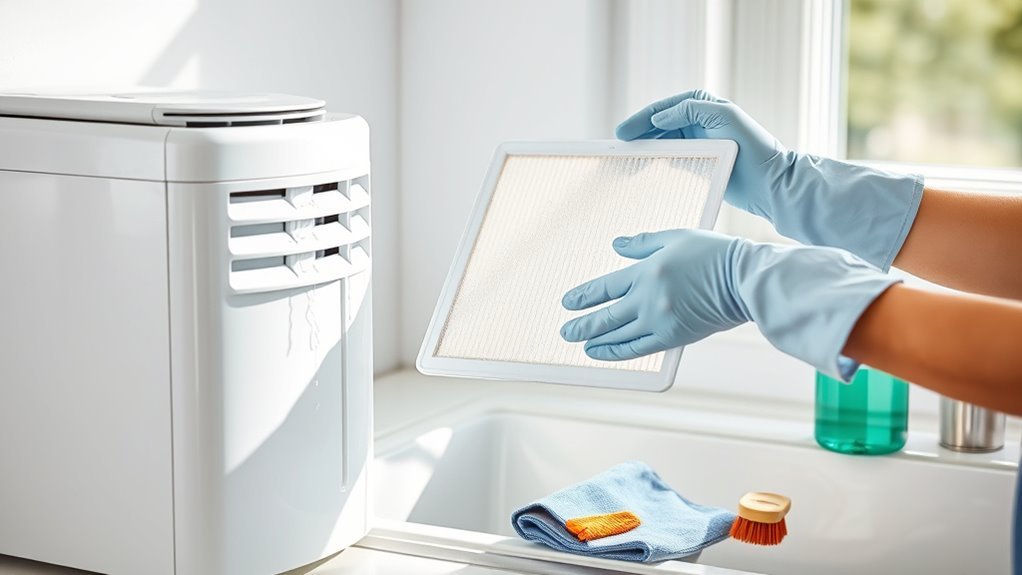
You’ll keep it efficient by emptying and cleaning the tank weekly if it has one, washing the filter monthly, checking coils and vents every two months, and inspecting the drain hose and controls seasonally for dust, leaks, and wear. If your unit runs in a dusty crawl space or workshop, check the filter more often.
How Much Electricity Does a 90 Qt Dehumidifier Use Monthly?
You’ll usually use about 200 to 500 kWh monthly, depending on runtime, humidity, and settings. If you run it constantly, costs can climb fast; energy-efficient models and good maintenance help you save. Using the correct capacity also matters, because an undersized unit may run too long while an oversized unit may cost more upfront than you need.
Can a Dehumidifier Remove Musty Odors From Finished Basements?
Yes, you can reduce musty basement odors with a dehumidifier. It lowers moisture, which helps stop mold and mildew growth, but you’ll also need to clean surfaces and improve ventilation for lasting results. If the smell remains, check for leaks, wet insulation, damp carpet, or hidden mold sources.
Is Smart-Home Integration Available on Modern 90 Qt Dehumidifiers?
Yes, you can find smart-home integration on some modern 90 qt dehumidifiers. You’ll control them with apps, voice assistants, and schedules, though many models still skip it, so check connectivity before buying. For crawl spaces and commercial-style units, pump drainage, auto restart, and humidity memory may be more important than app control.
What Noise Levels Are Acceptable for Bedroom Use?
You’ll want a bedroom dehumidifier that stays around 40–50 decibels, which is like a quiet fan. Below 40 dB is ideal if you’re sensitive, and sleep mode should keep noise even lower. Most high-capacity commercial and crawl space units are better suited for basements, garages, utility rooms, and crawl spaces rather than bedrooms.
Do I Need a Built-In Pump or Is Gravity Drainage Enough?
Gravity drainage is enough when the unit can sit above a floor drain and the hose can slope downward the whole way. Choose a built-in pump when the water needs to move upward, across a longer distance, into a sink, or to a drain line that is higher than the unit.
What Humidity Level Should I Set for a Basement?
Many homeowners aim for a comfortable indoor range around the mid-40% to 50% area, but the right setting depends on your climate, basement condition, and moisture level. If the space still smells musty, feels damp, or shows condensation, you may need a lower target humidity plus better ventilation or leak control.
Final Recommendation
Choose the Moiswell 155 Pint Commercial Dehumidifier if you want a strong large-area option with drain hose operation and energy-focused performance. Pick the HBN Crawl Space Dehumidifier if you want pump drainage, timer control, and a set-and-forget crawl space setup. Go with the ALORAIR Sentinel HD55S if you need a durable unit for cold, damp crawl spaces rather than the largest possible coverage rating. Choose the Airzentti 155 Pint Commercial Dehumidifier if you want a high-capacity model with both pump and gravity drainage flexibility.
The best choice is the one that fits your space size, drainage path, and moisture severity. A powerful unit can protect your home, reduce humidity, limit musty odors, and make basements or crawl spaces easier to manage.
Conclusion
Choosing the right 90 qt dehumidifier or high-capacity commercial dehumidifier comes down to your space, drainage needs, and how much maintenance you want to handle. If you’re dealing with a damp basement, for example, a model with a pump can save you from constant emptying and keep moisture under control more easily. If you’re working in a crawl space, auto defrost, continuous drainage, and a compact body may matter more. Pick one that matches your crawl space, basement, garage, or commercial area, and you’ll protect your home, reduce humidity, and make the air feel much more comfortable.