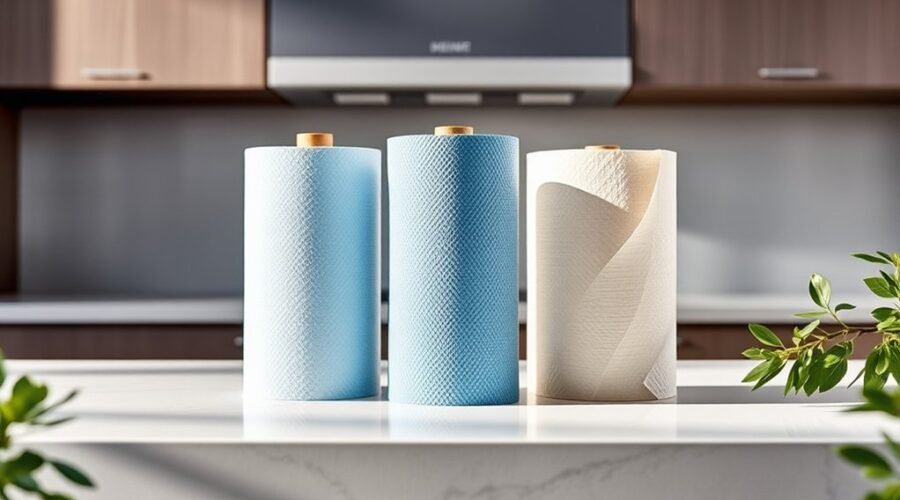
Looking ahead to 2027, these three cleaning picks cover two different needs: a reusable paper-towel alternative and two disposable paper-towel options. Papaya Swedish Dishcloths are designed for repeated kitchen cleaning and can be washed and reused. Viva Signature Cloth Choose-A-Sheet focuses on wet strength and scrubbing performance, while Save Trees Bamboo Paper Towels offer a bamboo-based disposable option with FSC-certified sourcing and plastic-free packaging. The best choice depends on whether you prioritize reusability, heavy-duty cleaning, or a more sustainability-focused disposable towel.
Disclosure: This article contains affiliate links. We may earn a commission if you buy through qualifying links, at no extra cost to you.
Quick Verdict
- Papaya Swedish Dishcloths: Best fit if you want a washable, compostable replacement for many everyday paper-towel jobs.
- Viva Signature Cloth Choose-A-Sheet: Best fit if you want a conventional paper towel with strong wet durability for scrubbing and deep cleaning.
- Save Trees Bamboo Paper Towels: Best fit if you want disposable paper towels made from responsibly sourced bamboo with plastic-free packaging.
| Product | Type | Best For | Key Strength | Main Trade-Off |
|---|---|---|---|---|
| Papaya Swedish Dishcloths | Reusable cellulose-cotton cloth | Reducing disposable towel use | Washable, quick-drying, compostable at end of life | Needs rinsing, washing, and air-drying |
| Viva Signature Cloth Choose-A-Sheet | Disposable paper towel | Deep cleaning and scrubbing | 2X more durable when wet vs. the leading value brand | Still creates disposable paper waste |
| Save Trees Bamboo Paper Towels | Disposable bamboo paper towel | Bamboo sourcing and lower-plastic packaging | 150 sheets per roll, half-sheet perforations, FSC-certified bamboo | Disposable and may cost more than basic paper towels |
Papaya Swedish Dishcloths for Kitchen (2-Pack)
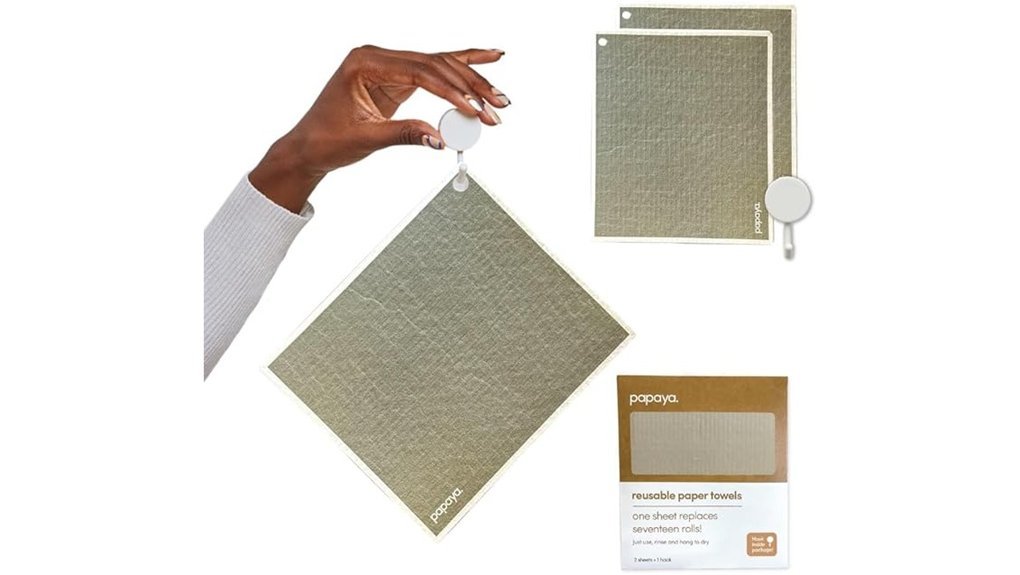
For shoppers who want a reusable alternative to disposable paper towels, Papaya Swedish Dishcloths are a practical option. The brand describes them as a blend of 70% cellulose and 30% cotton, and says each sheet is 100% compostable at the end of its useful life. They can be hand-washed for everyday care, placed on the top rack of a dishwasher for deeper cleaning, or machine washed and air-dried. Papaya also states that one sheet can replace about 17 rolls of regular paper towels, although actual replacement rate will depend on how often and how heavily you use it.
Best For: Households that want to reduce disposable paper-towel use for counters, spills, dishes, and routine kitchen cleanup.
Why You’ll Like It: It combines reusability with simple care and can handle many jobs normally assigned to paper towels, rags, or sponges.
Pros:
- Made from a 70% cellulose and 30% cotton blend.
- Reusable and washable, with top-rack dishwasher cleaning supported by the brand.
- Compostable at the end of its useful life according to the manufacturer.
Cons:
- Requires rinsing, washing, and air-drying between uses.
- Not a direct substitute for disposable towels when you need to clean up substances you do not want to rinse from a reusable cloth.
- Replacement rate and lifespan depend on cleaning habits and frequency of use.
Viva Signature Cloth Choose-A-Sheet (6 Big Rolls)
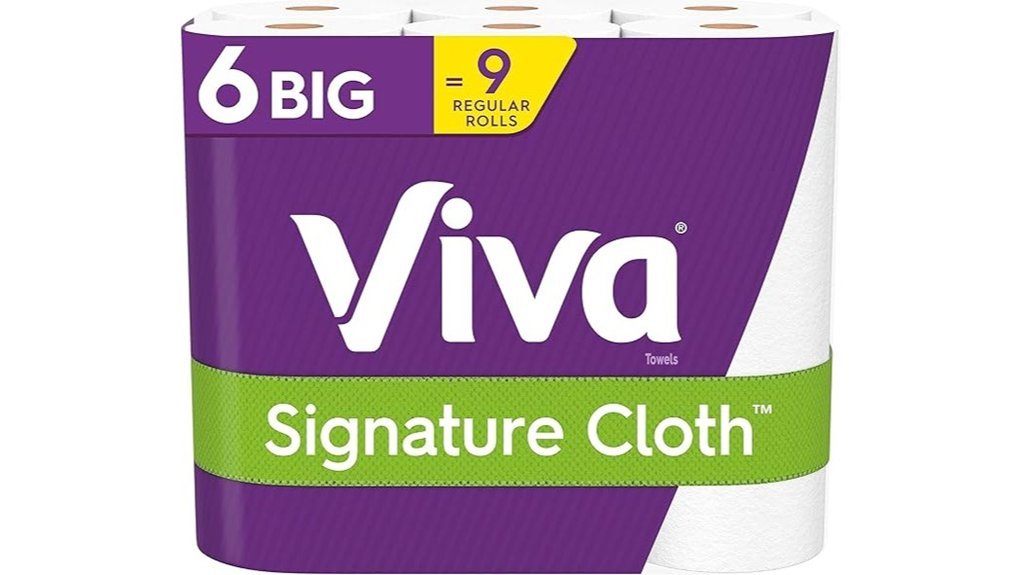
Viva Signature Cloth Choose-A-Sheet paper towels are aimed at shoppers who want a conventional disposable towel with a cloth-like feel and strong wet performance. The six-big-roll pack is listed as the equivalent of nine regular rolls, with 78 sheets per roll. Viva states that Signature Cloth towels are 2X more durable when wet than the leading value brand. The cloth-like texture is designed for deep cleaning and scrubbing, and the sheets can also be rinsed and reused for some tasks before disposal.
Best For: Tough kitchen and bathroom cleanup where wet strength and scrubbing ability matter more than maximum disposability savings.
Why You’ll Like It: Choose-A-Sheet lets you use a smaller section for light jobs, while the stronger wet construction is useful for stuck-on messes.
Pros:
- Wet durability: Manufacturer claims 2X more durability when wet versus the leading value brand.
- Flexible sheet size: Choose-A-Sheet helps match the amount of towel to the task.
- Cloth-like texture: Designed for scrubbing and deeper cleaning.
Cons:
- Still a disposable product, even though some sheets can be rinsed and reused briefly.
- The six-roll package may require more storage space than a small pack.
- Brand-name heavy-duty towels may cost more than basic value options.
Save Trees Bamboo Paper Towels (12 Rolls)
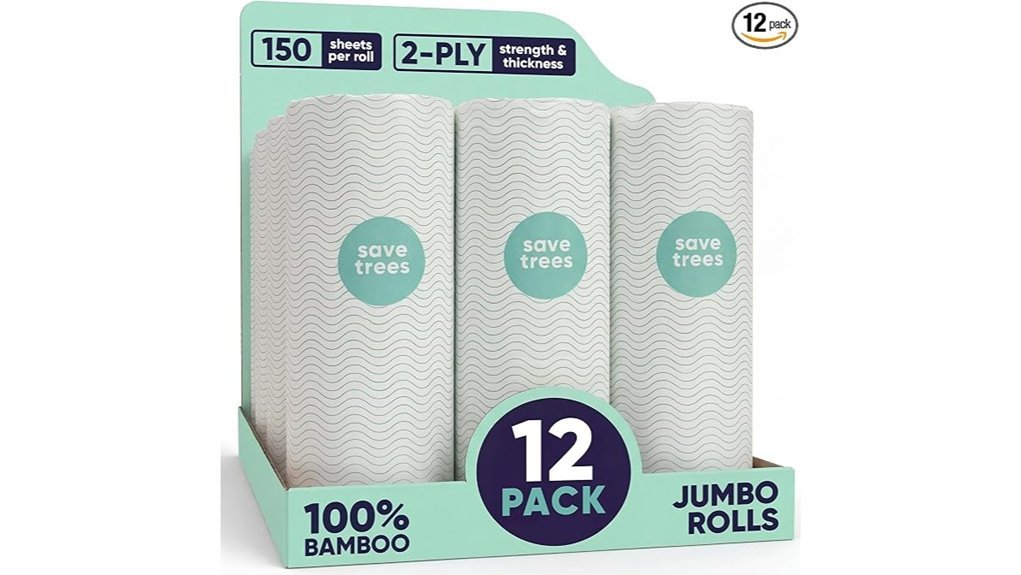
Save Trees Bamboo Paper Towels are a disposable option for buyers who prefer bamboo-based paper products. The brand lists the 12-roll box at 150 sheets per roll, with perforations that allow half-size sheets for smaller jobs. Save Trees also states that its bamboo is FSC-certified and responsibly sourced. The current product information says the towels contain no added scents, no PFAS, and no pesticides, while the packaging is 100% plastic-free, recyclable, and compostable.
Best For: Shoppers who want disposable paper towels with bamboo sourcing, half-sheet sizing, and plastic-free packaging.
Why You’ll Like It: The half-sheet format can reduce overuse on small spills, while the 150-sheet rolls provide a clear quantity for comparing value.
Pros:
- FSC-certified bamboo: The brand identifies the bamboo as responsibly sourced.
- 150 sheets per roll: Provides a substantial sheet count in each roll.
- Plastic-free packaging: The brand says the packaging is recyclable and compostable.
Cons:
- Still creates disposable waste after use.
- May cost more than conventional value paper towels.
- Composting suitability depends on what the towel was used to clean and on local composting rules.
Factors to Consider When Choosing Paper Towels and Reusable Alternatives in 2027
Before choosing between disposable paper towels and a reusable cleaning cloth, compare material, absorbency, wet strength, care requirements, sheet size, disposal method, and cost per use. A strong disposable towel may be easier for messy one-time jobs, while a reusable cloth can reduce how often you reach for a fresh sheet.
Material and Sustainability Claims
Look beyond broad terms such as “eco-friendly.” More useful details include whether the product uses renewable fibers, whether a forestry certification such as FSC is provided, whether the item is reusable, and whether the packaging contains plastic. Compostable claims also need context: a product may be compostable by material, but towels contaminated with cleaning chemicals, grease, or other unsuitable waste may not belong in a home or municipal compost stream.
Absorbency and Wet Strength
For spills, absorbency determines how much liquid a towel or cloth can hold, while wet strength determines whether it stays together during wiping and scrubbing. Viva specifically markets its Signature Cloth towels as 2X more durable when wet than the leading value brand. Reusable cellulose-cotton cloths such as Papaya serve a different purpose: they can be rinsed, washed, and reused rather than discarded after each light cleaning job.
Versatile Usage Options
Think about the jobs you perform most often. Disposable towels are convenient for quick spills, greasy messes, and situations where you do not want to wash a cloth afterward. Reusable cloths are well suited to counters, appliances, dishes, and routine wiping. Choose-A-Sheet or half-sheet perforations can also help you avoid using a full sheet for a small task.
Durability and Longevity
Disposable towels should remain strong enough when wet to finish the job without tearing apart. Reusable cloths need a different kind of durability: they should tolerate repeated rinsing and washing while still drying well between uses. Papaya recommends hand washing for routine care and allows top-rack dishwasher or machine washing for deeper cleaning, followed by air drying.
Cost-Effectiveness Analysis
Compare cost per sheet for disposable products and cost per use for reusable options. Larger packs can lower the per-roll or per-sheet cost, but only if you have the storage space and will use them. Reusable cloths can reduce repeat purchases, but their real savings depend on how long you keep each cloth and how often it replaces a disposable towel in your routine.
Maintenance and Care
Disposable paper towels require almost no maintenance, while reusable alternatives need regular cleaning. Follow the manufacturer’s care directions and allow reusable cloths to dry fully between uses. Replace a reusable cloth when it becomes damaged, develops persistent odor, or no longer cleans effectively. For food-contact areas, avoid using the same cloth across raw-meat cleanup and ready-to-eat surfaces without proper washing and sanitation.
Packaging and Disposal
Packaging can be part of the buying decision. Save Trees states that its paper-towel packaging is 100% plastic-free, recyclable, and compostable. For the towels themselves, disposal depends on what they were used for and on local rules. Papaya says its reusable sheets are compostable at the end of their lifecycle. When in doubt, follow the manufacturer’s disposal guidance and your local composting or waste requirements.
Frequently Asked Questions
Are Paper Towels Biodegradable or Compostable?
Many paper towels are made from plant-based fibers and will break down over time, but that does not mean every used paper towel belongs in compost. Compostability depends on the product, any additives, what the towel was used to clean, and local composting rules. Towels contaminated with harsh cleaning chemicals, grease, or other unsuitable waste should generally be kept out of compost unless local guidance says otherwise.
How Do I Store Paper Towels for Longevity?
Store unused paper towels in a clean, dry area away from leaks, high humidity, and direct contact with dirty surfaces. Keep bulk packs wrapped until needed so the rolls stay dry and protected. Reusable cloths should be stored only after they are clean and fully dry.
Can I Use Paper Towels for Personal Hygiene?
Paper towels can be used for simple hand drying, but they are not always ideal for repeated use on the face or other sensitive skin because texture varies by product. For personal hygiene, use a product intended for that purpose when softness, skin sensitivity, or repeated contact is a concern.
Are There Any Paper Towels Suitable for Sensitive Skin?
If skin sensitivity matters, look for unscented products and review the manufacturer’s material and additive information. Save Trees currently states that its bamboo paper towels have no added scents, no PFAS, and no pesticides, but that does not automatically make any paper towel hypoallergenic or suitable for every skin type.
How Do Paper Towels Compare to Reusable Cloths?
Disposable paper towels are more convenient for one-time messes and situations where laundering is undesirable. Reusable cloths require washing and drying, but they can reduce the number of disposable sheets used for routine cleaning. A practical household setup may use both: reusable cloths for everyday wiping and disposable towels for messes you would rather throw away.
Conclusion
The right choice depends on how you clean. Choose Papaya Swedish Dishcloths if reusability is your main goal, Viva Signature Cloth Choose-A-Sheet if you want strong wet performance for scrubbing, or Save Trees Bamboo Paper Towels if you prefer a disposable bamboo option with FSC-certified sourcing and plastic-free packaging. Comparing material, wet strength, sheet sizing, care needs, and disposal method will help you choose the option that best fits your kitchen and cleaning routine.