3 Best Small Energy Efficient Dehumidifiers for 2026
Affiliate Disclosure: This article contains Amazon affiliate links. If you buy through these links, the site may earn a commission at no extra cost to you.
Quick Verdict: Choose a plug-in tank model for small bathrooms, bedrooms, RVs, offices, kitchens, closets, and wardrobes where you need active moisture removal.
If you want the 3 best small energy efficient dehumidifiers for 2026, focus on compact models that match your room size, moisture level, and noise needs. Good options include the TABYIK 38OZ, Small Dehumidifier with Auto Shut Off and Night Light, and 44oz Small Portable Dehumidifier. You’ll get quiet operation, auto shut-off, low-power moisture control, and moisture removal up to 16 ounces per day, depending on the model and room conditions.
These small dehumidifiers are best for bathrooms, closets, bedrooms, RVs, wardrobes, kitchens, offices, and other compact spaces where a full-size compressor unit would feel too large. Before you choose one, check the listed coverage area, tank size, daily moisture removal, and whether a plug-in model fits your space.
How We Chose These Small Dehumidifiers
The best pick depends on where you plan to use it. We focused on small-space suitability, low power use, noise level, portability, tank size, auto shut-off, and whether each model solves a clear moisture-control problem without being too bulky for compact areas.
Quick Comparison of Small Energy Efficient Dehumidifiers
| Product | Best For | Listed Coverage | Moisture Removal | Key Feature | CTA |
|---|---|---|---|---|---|
| TABYIK 38OZ Small Quiet Energy-Saving Dehumidifier Best Everyday Pick |
Bathrooms, RVs, bedrooms, kitchens, and wardrobes | Up to 280 sq. ft. | Up to 11 oz. per day | 38 oz. tank and below 30 dB operation | Check Price on Amazon |
| Small Dehumidifier with Auto Shut Off and Night Light Best for Bedrooms |
Bedrooms, offices, closets, RVs, and bathrooms | Small spaces | Up to 16 oz. per day | 42 oz. tank and 7-color night light | Check Price on Amazon |
| 44oz Small Portable Dehumidifier for Home Bedroom Best Feature Set |
Small bedrooms, bathrooms, closets, and RVs | Up to 215 sq. ft. | Up to 11.8 oz. per day | Modes, timers, mood lights, and auto defrost | Check Price on Amazon |
Before You Buy
- For small rooms: Pick a plug-in model with a water tank because it can remove more moisture per day.
- For bedrooms: Look for quiet operation, sleep mode, auto shut-off, and a tank that is easy to empty.
- For bathrooms and RVs: Prioritize portability, auto shut-off, and a tank size that fits your daily routine.
TABYIK 38OZ Small Quiet Energy-Saving Dehumidifier
Best Everyday Pick
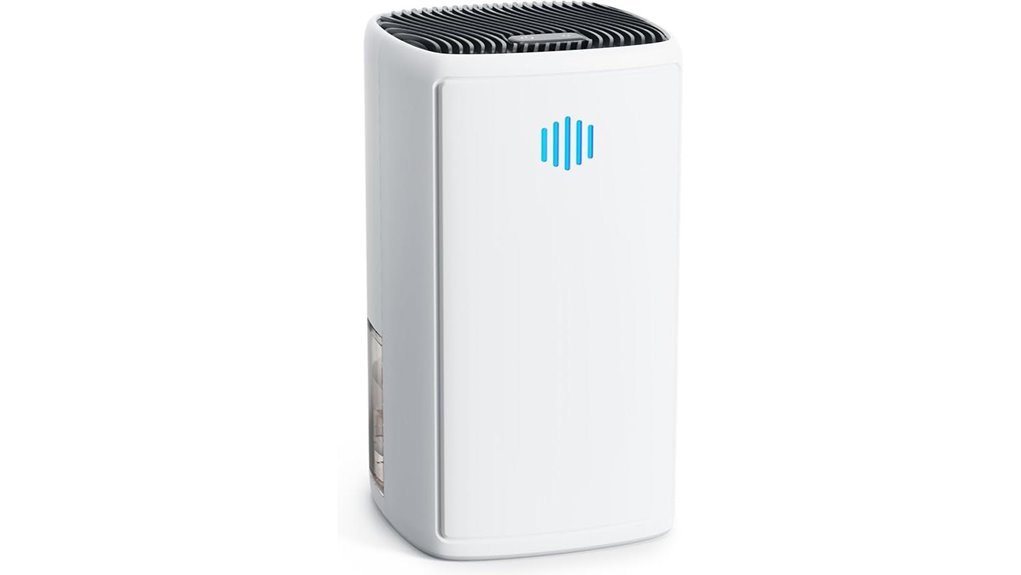
The TABYIK 38OZ dehumidifier is a smart pick when you need quiet moisture control in small spaces. You can use it in bathrooms, closets, RVs, bedrooms, kitchens, and wardrobes, and it covers up to 280 square feet. It removes up to 11 ounces of moisture in 24 hours, while running below 30dB, so it won’t disrupt your day. Its 38-ounce tank, compact 5.91 x 5.91 x 11.42-inch frame, and 1.3-kilogram weight make it easy to place. You also get auto shut-off, a red full-tank light, and auto defrost for colder conditions.
This model is a good fit if you want continuous plug-in operation and a visible water tank. The 38-ounce tank gives you more room before emptying, while the below-30dB noise claim makes it suitable for bedrooms, offices, and shared living spaces where loud fan noise would be annoying.
Why You’ll Like It: It balances compact size, quiet operation, and a useful tank capacity, so it feels practical for daily humidity control in small living spaces.
Best For: People who need a compact, quiet dehumidifier for small spaces like bathrooms, closets, RVs, bedrooms, kitchens, or wardrobes.
Who Should Buy This: Buy it if you want a plug-in mini dehumidifier that can run regularly in a bathroom, bedroom, wardrobe, kitchen corner, or RV without taking up much space.
Who Should Skip It: Skip it if your space is larger than the listed coverage area or if you need fast moisture removal after leaks, flooding, or severe dampness.
Pros:
- Quiet operation below 30dB makes it suitable for bedrooms and other living spaces.
- Compact, lightweight design is easy to place in tight areas.
- Auto shut-off, red full-tank light, and auto defrost add convenience and safety.
Cons:
- Best suited for small spaces, so it may not be enough for larger rooms or heavy moisture problems.
- 11 ounces per day is modest compared with larger-capacity dehumidifiers.
- Requires regular tank emptying since it uses a 38-ounce reservoir.
Buying Note: Choose this one if you want a compact plug-in dehumidifier with a practical tank size and quiet operation for everyday moisture control.
Small Dehumidifier with Auto Shut Off and Night Light
Best for Bedrooms
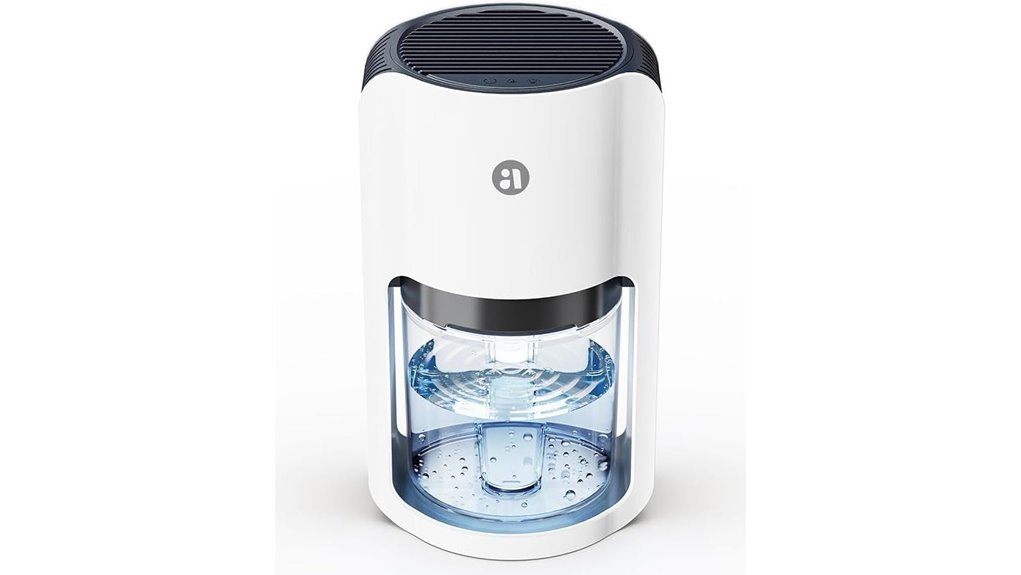
Need a compact, quiet dehumidifier for bedrooms or closets? You can use this small unit in bedrooms, bathrooms, closets, RVs, or offices. Its Peltier system removes up to 16oz of moisture a day, while the 42oz tank lets you run it longer between dumps. When the tank fills, auto shut off kicks in and a red light warns you. Automatic defrost helps it stay reliable in cooler spaces. At about 28dB, it won’t disturb sleep or work. The 7-color night light adds a soft glow, and the built-in handle makes moving it easy.
This model is a strong choice if you want more daily moisture removal than the smallest units but still want a quiet, portable design. The night light is not essential for dehumidifying, but it can be useful in a nursery, bedroom, bathroom, or hallway where you want a soft glow at night.
Why You’ll Like It: It combines a larger 42oz tank, quiet operation, auto shut-off, and a soft night light, making it easy to place near sleep or work areas without feeling too industrial.
Best For: People who want a compact, quiet dehumidifier for small spaces like bedrooms, bathrooms, closets, RVs, or offices.
Who Should Buy This: Buy it if you want a bedroom-friendly mini dehumidifier with a bigger tank than many small models and a little extra convenience from the handle and night light.
Who Should Skip It: Skip this one if you do not want mood lighting or if you prefer a basic no-light unit with fewer features.
Pros:
- Quiet operation at about 28dB makes it suitable for sleep, work, or study.
- Auto shut off with a full-tank red indicator helps prevent overflow.
- Built-in handle and 7-color night light add convenience and usability.
Cons:
- Best suited for smaller spaces, not heavy-duty whole-home dehumidifying.
- 42oz tank may still require regular emptying in humid conditions.
- Works best in moderate conditions and may be less effective in larger or very damp areas.
Buying Note: Pick this model if you want a quiet bedroom-friendly dehumidifier with a larger tank than many mini units and a built-in handle for moving it around.
44oz Small Portable Dehumidifier for Home Bedroom
Best Feature Set
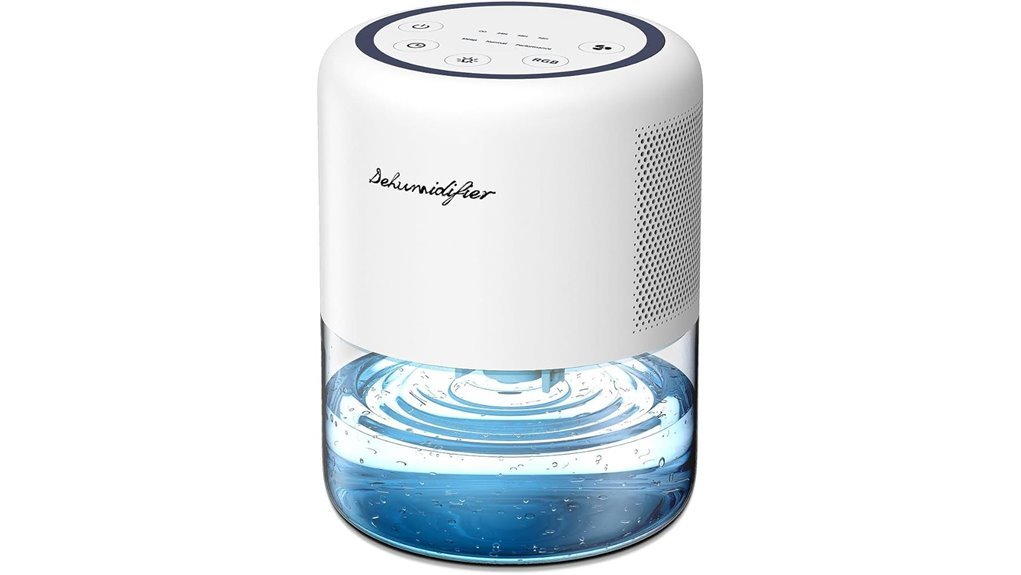
For bedrooms up to 215 square feet, this 44oz Windangel dehumidifier keeps humidity in the ideal 45%–55% range. You can collect up to 11.8 ounces of moisture every 24 hours while using just 24 watts while running. Its 44-ounce tank, auto shut-off, and red indicator help you avoid spills. At 5.91 x 5.91 x 8.46 inches and 2.6 pounds, you can move it easily. Choose Sleep, Normal, or Performance mode, and set 24, 48, or 72-hour timers. Enjoy 10 mood lights and auto defrost for colder nights.
This is one of the more feature-rich small dehumidifiers in the list. The three operating modes help you choose between quieter use and stronger performance, while the timers are useful if you do not want the unit running all day. It is a practical choice for a bedroom, small bathroom, RV, or closet where you want more control than a one-button mini unit provides.
Why You’ll Like It: It gives you more control than a basic mini unit because you can choose different modes, use timers, and move it easily between small rooms.
Best For: People looking for a compact, low-power dehumidifier for small bedrooms, bathrooms, closets, or RVs with easy portability and simple humidity control.
Who Should Buy This: Buy it if you want a compact room dehumidifier with a bigger tank, timer options, different running modes, and auto defrost for more flexible use.
Who Should Skip It: Skip this model if you want the simplest possible device without lights, modes, or timer settings.
Pros:
- Covers up to 215 square feet while helping maintain a comfortable 45%–55% humidity range.
- Offers convenient features like auto shut-off, auto defrost, 3 operating modes, and 24/48/72-hour timers.
- Lightweight and portable, with mood lighting and a compact design that fits easily in small spaces.
Cons:
- The 44oz tank may need frequent emptying in especially humid conditions.
- Best suited for small rooms, so it may not be powerful enough for larger spaces.
- Features like mood lights may be unnecessary for users who want a more basic dehumidifier.
Buying Note: Choose this option if you want timers, operating modes, and a larger tank in a compact unit for a small bedroom or RV.
How to Choose the Right Small Dehumidifier
The easiest way to choose is to start with your room size. For bedrooms, RVs, offices, bathrooms, closets, and wardrobes, a plug-in tank model is usually practical because it can collect moisture continuously while it is running.
You should also think about how often you want to maintain the unit. A tank model needs emptying. If your space is very humid, a small tank can fill faster than expected. If your space is only mildly damp, a compact low-power unit may be enough.
Pro Tips for Better Moisture Control
- Place the dehumidifier where air can move around it instead of blocking the vents against a wall.
- Keep bathroom doors or closet doors slightly open when possible so moisture does not stay trapped.
- Empty tank models before they reach the limit, especially during humid weather.
- Do not expect a mini unit to solve water leaks, standing water, or severe dampness. Fix the moisture source first.
Factors to Consider When Choosing a Small Energy Efficient Dehumidifier
When you’re choosing a small energy efficient dehumidifier, you’ll want to weigh energy consumption, coverage area, and moisture removal so it matches your space. You should also check the noise level if you plan to use it in a bedroom or office. An auto shutoff feature can help you save power and prevent overflow.
Energy Consumption
Energy consumption is one of the most important factors to check when choosing a small energy-efficient dehumidifier. You should compare wattage first, because lower numbers usually mean less electricity use. Then look for energy-saving features like auto shut-off and defrost modes, since they help the unit run only when needed and cut your costs. Make sure the dehumidification capacity matches your needs; if you choose a model that’s too powerful, you may waste energy. Check the daily operating cost, and aim for a unit that uses less than 1 kilowatt-hour per day for economical performance.
Coverage Area
Another key factor to check is coverage area, since the most efficient dehumidifier won’t perform well if it’s sized for the wrong space. You’ll find small models built for tiny bathrooms and closets, while larger compact units can suit living rooms or basements. Coverage can vary widely, so don’t guess. Read the manufacturer’s specifications and match them to your room’s size. A unit that works well in 280 square feet may struggle in a bigger area, and an oversized model can waste energy in a small room. When you choose the right coverage, you help the dehumidifier run efficiently and avoid unnecessary power use.
Moisture Removal
Moisture removal capacity matters just as much as room size, because even a compact dehumidifier has to pull enough water from the air to make a difference. You should check how much moisture it can extract each day, since the models here remove about 11 to 16 ounces depending on humidity and temperature. That range can be enough to keep a cramped space comfortable. Also, look for units that match your area, with some designed for small rooms and enclosed spaces. Auto shut-off helps by stopping overflow when the tank fills, so the unit keeps working safely.
Noise Level
Noise level is a big deal when you’re choosing a small energy efficient dehumidifier, especially if it will run in a bedroom, office, or study area. You’ll want a model that stays quiet enough to fade into the background, not compete with your sleep or concentration. Many small units operate below 30 dB, which is typically calm enough for everyday use. If you want even less sound, look at Peltier models, which often run around 28 to 30 dB and stay quieter than compressor-based units. Some dehumidifiers also include sleep modes that cut noise further at night. Always check the manufacturer’s noise rating before you buy so you can pick a unit that fits your space and keeps things peaceful.
Auto Shutoff
Auto shutoff is a must-have because it keeps your dehumidifier from overflowing once the tank is full. You won’t have to worry about spills, leaks, or extra cleanup because the unit powers down on its own at capacity. Many models also give you a clear signal, like a red light, so you can see when it’s time to empty the tank. That simple alert adds convenience and helps you avoid unnecessary wear. By stopping operation at the right moment, auto shutoff protects the unit from water damage and can extend its life. It’s especially useful in bedrooms and offices, where you want quiet, uninterrupted performance and peace of mind. It also helps you save energy by preventing the dehumidifier from running longer than needed.
Portability
Portability matters when you want a small dehumidifier you can move easily from room to room. You’ll want to check weight and size first, because compact, lightweight units are easier to place in tight spaces. Built-in handles make carrying simpler, especially if you move the unit often between bedrooms, closets, bathrooms, or RVs. Also make sure the power cord can reach a suitable outlet wherever you plan to use the dehumidifier.
Small Dehumidifier Buying Tips
- Measure the room first: A mini dehumidifier that works in a closet may not keep up in a larger bedroom.
- Check the tank size: A larger tank can reduce how often you need to empty it, especially in humid weather.
- Match the power style to the space: Use plug-in models in small rooms where you need continuous moisture collection.
- Look for auto shut-off: This feature helps prevent overflow when the tank gets full.
- Consider noise: For bedrooms and offices, look for quiet models around the 28 to 30 dB range.
- Think about cold rooms: If the space gets cool, auto defrost can help the unit keep working more reliably.
Safety and Use Note
A small dehumidifier can help reduce excess moisture, but it should not be used as the only solution for leaks, flooding, visible mold, musty drywall, or serious condensation problems. Fix the moisture source, clean affected surfaces properly, and use ventilation when needed.
Frequently Asked Questions
How Often Should I Clean a Small Dehumidifier?
You should clean your small dehumidifier every 2 to 4 weeks, and empty the tank daily. If you use it often or in dusty spaces, you’ll need to clean it more frequently to keep it efficient. For plug-in tank models, rinse and dry the tank so moisture does not sit inside for too long.
Can Small Dehumidifiers Remove Mold Spores?
A small dehumidifier can help lower humidity and discourage mold growth, but it won’t reliably remove airborne spores by itself. You’ll still need cleaning, ventilation, and filtration for real protection if mold is already present.
Do Energy-Efficient Models Work in Cold Rooms?
Yes, you can use some energy-efficient dehumidifiers in cold rooms, but you’ll get better results from models rated for lower temperatures. A unit with auto-defrost is helpful because frost can reduce performance in cooler spaces.
How Noisy Are Rechargeable Dehumidifiers Overnight?
Rechargeable silica-gel dehumidifiers are usually silent while absorbing moisture because they do not run a fan or compressor. Plug-in mini dehumidifiers may make a soft fan sound, so check the listed dB rating if you plan to use one near your bed.
What Size Room Suits a Mini Dehumidifier Best?
You’ll get the best results in a small room or enclosed area, like a bathroom, closet, RV, car, wardrobe, cabinet, or compact bedroom. It won’t handle larger spaces, basements, leaks, or severe dampness well, so you’ll need a bigger unit there.
Is a Rechargeable Dehumidifier Better Than a Plug-In Dehumidifier?
A rechargeable model is better for tiny enclosed spaces where silence, portability, and cord-free placement matter most. A plug-in model is better for small rooms because it can actively collect more moisture into a tank.
Where Should I Place a Small Dehumidifier?
Place it near the dampest part of the space while keeping vents clear. Avoid pushing it tightly against walls, towels, clothes, or boxes because blocked airflow can reduce performance.
Final Recommendation
For a small bedroom, bathroom, RV, office, closet, or wardrobe, choose one of the plug-in tank models because it gives you daily moisture removal, auto shut-off, and straightforward ongoing use.
Conclusion
When you choose the right small energy efficient dehumidifier, you make your space feel more comfortable without asking your power bill to work overtime. For bedrooms, RVs, bathrooms, offices, closets, and wardrobes, the plug-in tank models give you useful moisture removal and convenient features.
Whether you need something for the bathroom, closet, bedroom, RV, office, or wardrobe, each option here offers a gentle, low-key way to keep excess moisture in check. Pick the one that fits your room size and routine, and you’ll enjoy a fresher, more pleasant space with less fuss and more peace.