Disclosure: This article contains Amazon affiliate links. If you buy through a qualifying link, we may earn a commission at no extra cost to you.
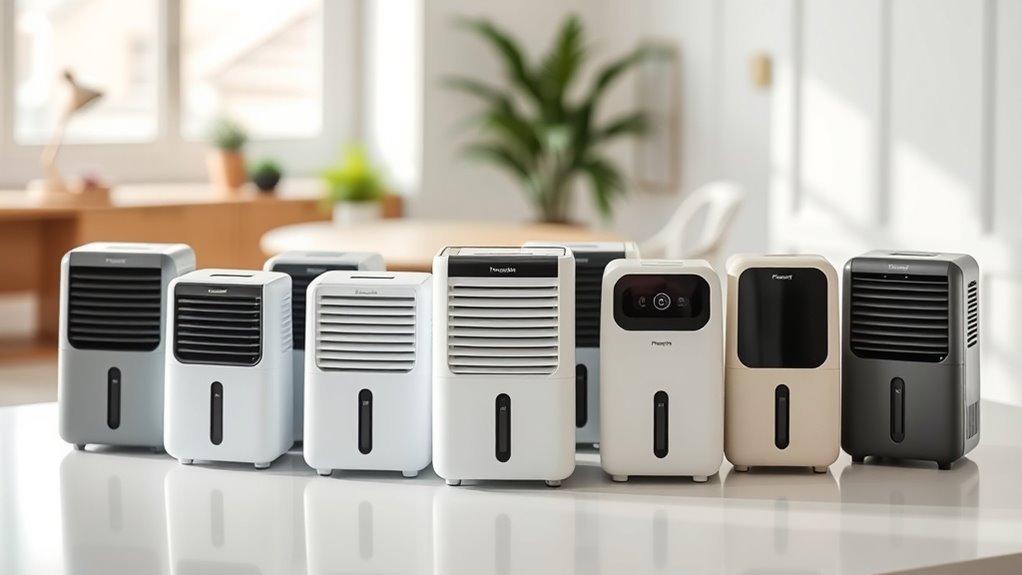
If you need better humidity control in a basement, crawl space, garage, bedroom, or another damp area, the right dehumidifier depends on the moisture load, drainage access, operating temperature, noise tolerance, and how often you can reach the unit. This 2026 guide compares six relevant options, from portable residential models to compact commercial crawl-space units. The Vellgoo is the strongest all-around residential choice, while the ALORAIR, HBN, and CADPXS models are better suited to continuous drainage in crawl spaces or demanding basement conditions.
Quick Verdict
- Best overall for large residential rooms: Vellgoo 4,500 Sq. Ft Dehumidifier
- Best compact crawl-space option: ALORAIR Sentinel HD55S
- Best for medium-size rooms: KNKA 2,500 Sq. Ft Dehumidifier
- Best crawl-space model with a pump: HBN 125-Pint Dehumidifier
- Best gravity-drain commercial option: CADPXS Remois X125
- Best quiet residential alternative: AEOCKY Boreas 50-Pint Dehumidifier
Important: A dehumidifier removes moisture from indoor air, but most portable and crawl-space models do not bring fresh outdoor air into the building. If you specifically need mechanical ventilation or a whole-home fresh-air system, look for a ducted ventilating dehumidifier designed for that purpose.
Quick Comparison
| Product | Best For | Capacity Note | Drainage | Amazon |
|---|---|---|---|---|
| Vellgoo 4,500 Sq. Ft | Large rooms and basements | Current listing shows 70 PPD maximum and 56 PPD standard; verify the selected variation | Tank or continuous hose | Check Price on Amazon |
| ALORAIR Sentinel HD55S | Crawl spaces and basements | 120 PPD at saturation; 55 PPD at AHAM conditions | Gravity drain | Check Price on Amazon |
| KNKA 2,500 Sq. Ft | Bedrooms, bathrooms, and medium-size rooms | 34 PPD at 95°F/90% RH maximum conditions | Tank or continuous hose | Check Price on Amazon |
| HBN 125-Pint | Large crawl spaces where pumped drainage is needed | 125 PPD at 95°F/90% RH; 60 PPD at AHAM conditions | Gravity drain or built-in pump | Check Price on Amazon |
| CADPXS Remois X125 | Continuous gravity drainage in confined spaces | 125 PPD saturation; 55 PPD AHAM; 36.68 PPD DOE | Gravity drain | Check Price on Amazon |
| AEOCKY Boreas | Quiet residential humidity control | 50 PPD maximum-condition claim; not a DOE rating | Tank or continuous hose | Check Price on Amazon |
Fast Choice Guide
- Choose Vellgoo, KNKA, or AEOCKY when you want a movable upright unit with a tank and optional hose drainage.
- Choose ALORAIR or CADPXS when the unit will stay in a crawl space and can drain continuously downhill.
- Choose HBN when condensate must be pumped upward or to a drain that is not below the unit.
Vellgoo 4,500 Sq. Ft ENERGY STAR Dehumidifier
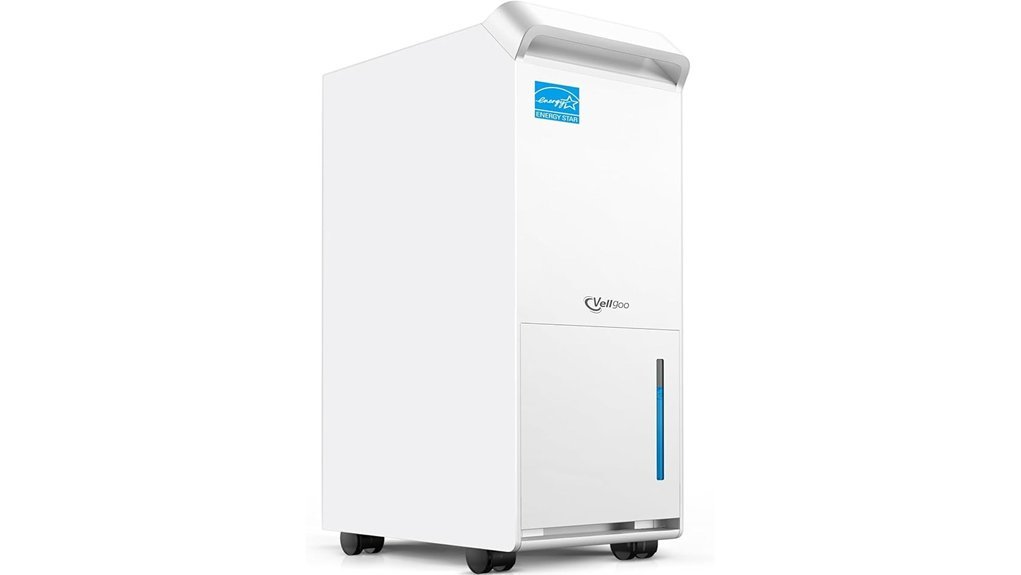
Best Overall for Large Residential Spaces
The Vellgoo is a practical choice for a large basement, garage, laundry area, or open living space where you want automatic humidity control and flexible drainage. The current Amazon listing displays both a 70-pint maximum-condition figure and a 56-pint standard-condition figure, while older variation text may show different capacity and coverage numbers. Confirm the selected variation before ordering. Its ENERGY STAR positioning, washable filter, caster wheels, tank option, and continuous-drain setup make it easier to use for ongoing residential moisture control.
Best For: Homeowners who want a portable, energy-conscious dehumidifier for a large indoor area.
Why You’ll Like It: It combines a large-room design with adjustable humidity control, multiple drainage choices, and straightforward maintenance.
Who Should Avoid It: Buyers with a small room or anyone who specifically needs a ducted fresh-air ventilation system.
Pros:
- 56-pint standard-condition capacity is stronger comparison data than the larger maximum-condition claim.
- Automatic humidity control helps reduce unnecessary cycling.
- Washable filter and continuous-drain support simplify routine use.
Cons:
- The listing contains variation-dependent capacity and coverage wording, so buyers should verify the exact option selected.
- Larger portable units need adequate floor space and airflow clearance.
- A gravity drain hose must slope downward continuously to work properly.
ALORAIR Crawl Space Dehumidifier (120 PPD Saturation)
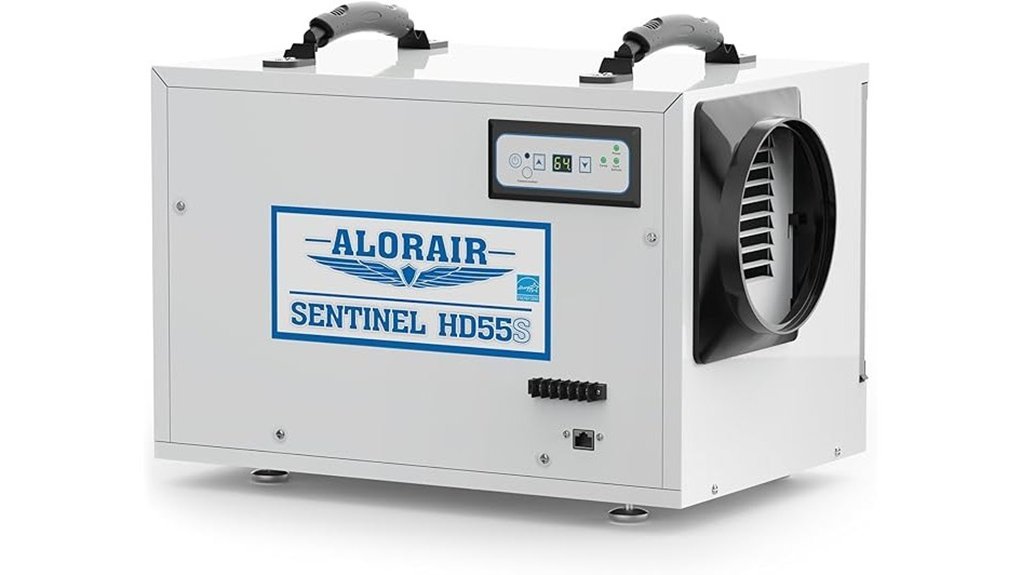
Best Compact Crawl-Space Pick
The ALORAIR Sentinel HD55S is designed for crawl spaces, basements, storage areas, and other locations where continuous drainage matters more than portability. Its 120-pint figure is a saturation-condition rating; the more comparable AHAM rating is 55 pints per day. The manufacturer lists coverage up to 1,300 sq. ft., gravity drainage, auto defrost, metal housing, and a six-year limited warranty; warranty terms should be checked before purchase. This makes it a stronger fit than a standard bucket-style room unit for long-running moisture control in a confined area.
Best For: Crawl spaces and basements with a suitable gravity-drain point.
Why You’ll Like It: The compact horizontal design, automatic defrost, and continuous drainage reduce the need for frequent access.
Who Should Avoid It: Buyers who need pumped drainage above the unit or a lightweight appliance that moves easily from room to room.
Pros:
- 55 PPD AHAM capacity is clearly separated from the 120 PPD saturation claim.
- Metal housing and compact proportions suit demanding crawl-space installations.
- Auto defrost and gravity drainage support continuous operation.
Cons:
- Gravity drainage requires a lower drain location and correct hose slope.
- It is heavier and less convenient to move than a portable room dehumidifier.
- It does not provide fresh-air ventilation by itself.
KNKA 2500 Sq.Ft Dehumidifier with Drain Hose
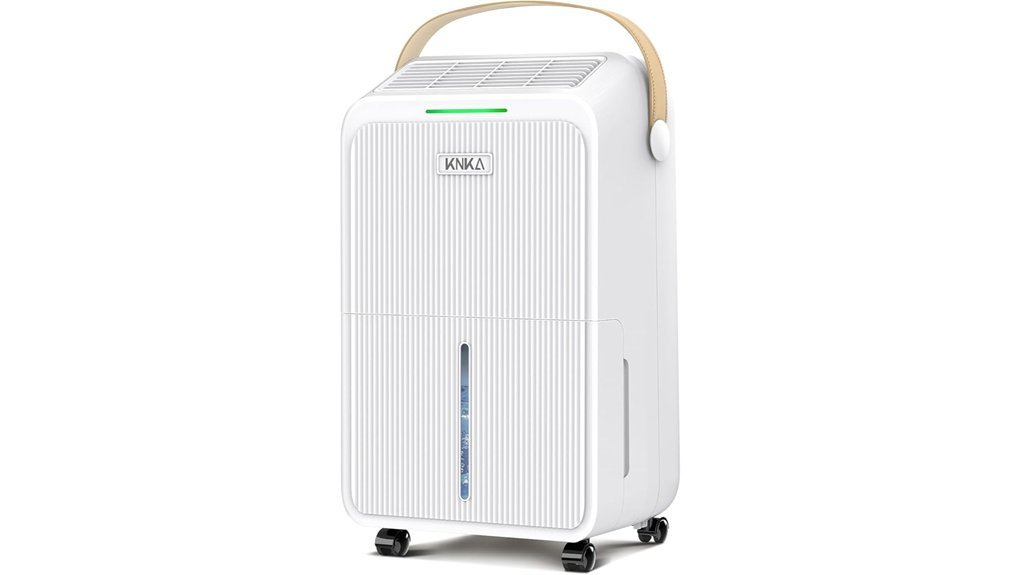
Best for Medium-Size Rooms
The KNKA is marketed to remove up to 34 pints per day at hot, humid maximum conditions and for spaces up to 2,500 sq. ft. Because that 34-pint figure is not presented as a DOE or AHAM rating, it should not be compared directly with the standardized ratings of the commercial crawl-space models. It includes dehumidifying, continuous, and clothes-drying modes, plus adjustable humidity control, a 3-liter removable tank, a drain hose, automatic shutoff, and a washable filter. Its portable upright design is easier to use in bedrooms, bathrooms, laundry rooms, and finished basements than a heavier crawl-space model.
Best For: Buyers who want a portable unit marketed for quiet operation in a medium-size residential area.
Why You’ll Like It: It offers both tank collection and continuous drainage, along with wheels and simple digital controls.
Who Should Avoid It: Owners of very wet crawl spaces or large commercial areas that need a higher standardized moisture-removal capacity.
Pros:
- Its maximum-condition 34-pint claim can suit many residential rooms when the space is not severely wet.
- Tank and hose drainage provide flexible installation options.
- Sleep mode, child lock, timer, and washable filter add everyday convenience.
Cons:
- The 3-liter tank will require frequent emptying in a very damp room.
- The 34-pint claim uses hot, humid test conditions and is not a directly comparable DOE or AHAM figure.
- It is not designed as a permanent whole-home ventilation appliance.
HBN 125 Pint Crawl Space Dehumidifier with Pump
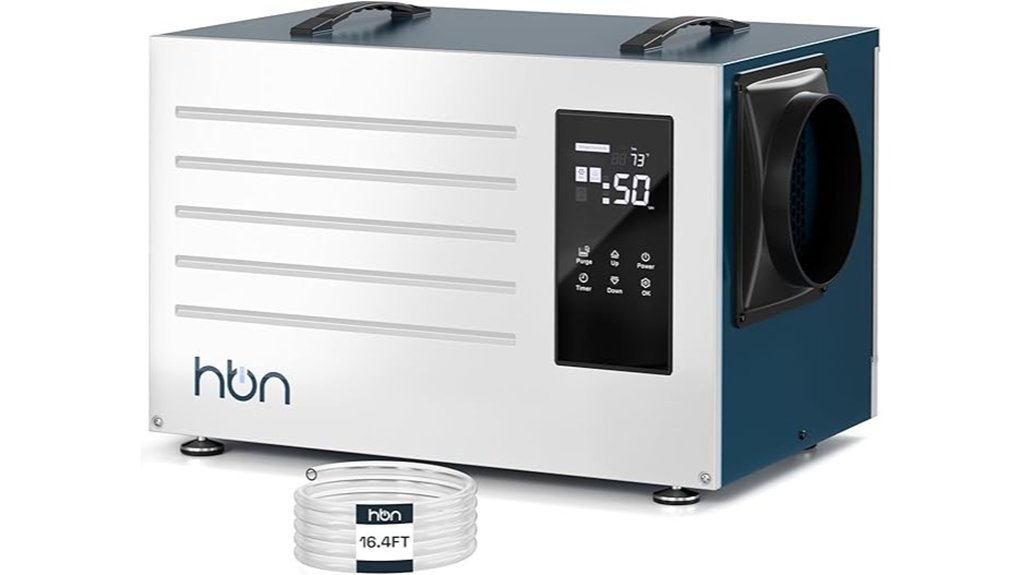
Best Crawl-Space Pick With a Pump
The HBN is the most flexible drainage option in this roundup because it supports both gravity drainage and pumped drainage. Its 125-pint figure is measured at 95°F and 90% relative humidity, while the current listing also states 60 pints per day under AHAM conditions. The manufacturer markets it for large basements, crawl spaces, and commercial areas, with a touchscreen, adjustable humidity control, automatic restart, and a 24-hour timer. Treat the advertised 5,900-sq.-ft. coverage as a best-case guide rather than a guarantee for very wet spaces.
Best For: Installations where condensate must be pumped to a higher drain or across a longer route.
Why You’ll Like It: The built-in pump gives you more placement freedom than gravity-only crawl-space models.
Who Should Avoid It: Buyers who only need a small bedroom dehumidifier or who have no convenient power and drainage route.
Pros:
- Built-in pump and gravity-drain options support more installation layouts.
- 60 PPD AHAM capacity is suitable for demanding moisture-control jobs.
- Touchscreen, timer, and automatic restart reduce hands-on management.
Cons:
- Larger and heavier than a portable residential unit.
- The advertised 5,900-sq.-ft. coverage may not reflect severe water intrusion, air leakage, or unusually wet conditions.
- Pump systems add components that may require periodic inspection and cleaning.
CADPXS 125 Pints Crawl Space Dehumidifier
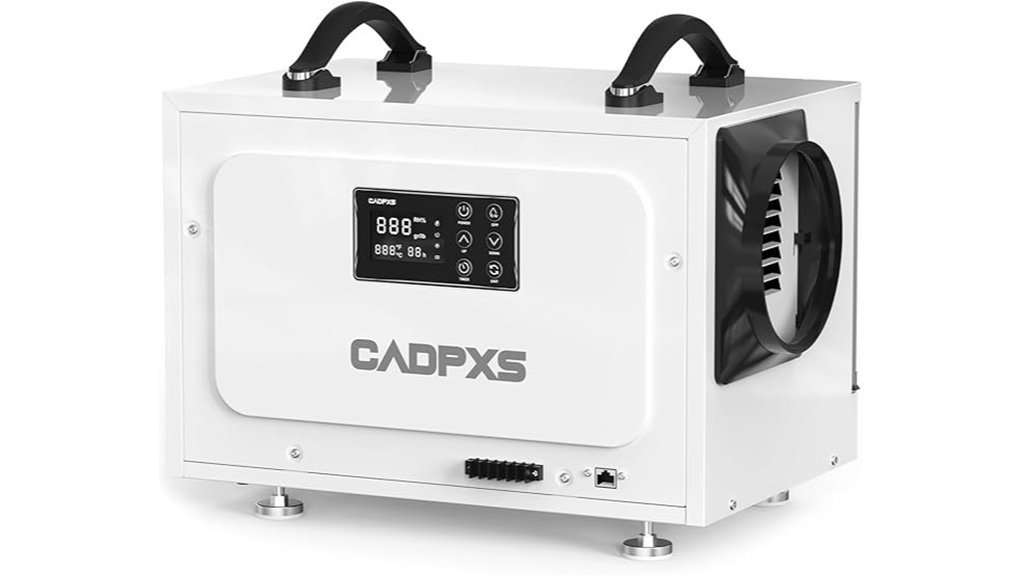
Best Gravity-Drain Commercial Option
The CADPXS Remois X125 is a compact commercial dehumidifier designed for crawl spaces, basements, storage rooms, and similar high-moisture locations. Its published ratings are 125 pints per day at saturation, 55 pints under AHAM conditions, and 36.68 pints under DOE conditions. The unit is listed for areas up to 1,300 sq. ft. and includes a gravity drain hose, washable filter, auto defrost, memory restart, timer, and adjustable feet. The DOE figure is the most conservative comparison point in the listing.
Best For: Buyers who want clearly stated test-condition ratings and have a dependable lower drain point.
Why You’ll Like It: The compact design, continuous gravity drainage, and published DOE, AHAM, and saturation figures make comparison easier.
Who Should Avoid It: Installations that require condensate to travel uphill, unless a separate pump is added.
Pros:
- Capacity figures are available under multiple recognized test conditions.
- Memory restart and auto defrost are useful in unattended spaces.
- Compact horizontal design is easier to position in many crawl spaces.
Cons:
- Gravity drainage limits placement when no lower drain is available.
- Commercial-style noise may be noticeable near occupied rooms.
- It is less portable than an upright room dehumidifier with caster wheels.
AEOCKY 50 Pint Dehumidifier for Home and Basement
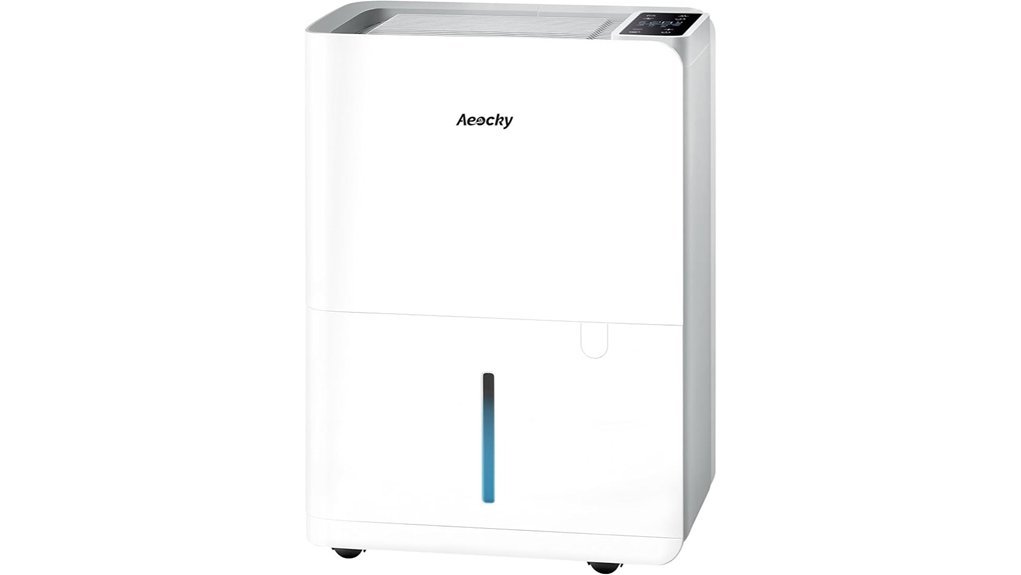
Best Quiet Residential Alternative
The AEOCKY Boreas is a residential compressor dehumidifier marketed for spaces up to 3,500 sq. ft., with a 50-pint-per-day claim measured under hot, very humid conditions. It offers adjustable humidity control, fan-speed control, a timer, child lock, a 0.8-gallon tank, and continuous drainage. The manufacturer lists operation around 40 dB and a three-year machine warranty. Treat the sound figure as a manufacturer claim that can vary with fan speed, room acoustics, and measurement distance.
Best For: Homeowners who want a quieter portable dehumidifier with simple controls and hose drainage.
Why You’ll Like It: It balances residential styling, low-noise positioning, and automatic humidity management.
Who Should Avoid It: Buyers who need a metal crawl-space unit, a built-in condensate pump, or commercial-duty airflow.
Pros:
- Designed for quieter residential operation.
- Adjustable humidity, fan speed, timer, and child lock improve daily usability.
- Includes both tank and continuous-drain options.
Cons:
- The 50-pint figure is a hot, high-humidity maximum-condition claim rather than a directly comparable DOE rating.
- Gravity drainage still requires a lower outlet and proper hose slope.
- It is not a substitute for a dedicated crawl-space or whole-home ventilation system.
Factors to Consider When Choosing a Dehumidifier
Choose a dehumidifier by comparing standardized moisture-removal capacity, room conditions, drainage access, operating temperature, noise, and maintenance needs. Square-foot coverage is useful as a starting point, but it should not be the only sizing factor.
Compare Capacity Under the Same Test Conditions
Capacity is measured in pints of water removed over 24 hours, but the number changes with temperature and relative humidity. A commercial crawl-space model may advertise 120 or 125 PPD at hot, saturated conditions while delivering about 55 to 60 PPD at AHAM conditions. Compare DOE with DOE or AHAM with AHAM whenever possible. Do not compare a saturation rating directly with a standardized portable-unit rating.
Check Energy Efficiency
For portable residential models, look for a current ENERGY STAR certification and compare the Integrated Energy Factor when it is available. Smart humidity control can also reduce unnecessary runtime by cycling the compressor after the target humidity is reached. Avoid relying on a fixed dollar-savings promise because operating cost depends on local electricity rates, humidity, room temperature, and daily runtime.
Size for Moisture Load, Not Just Floor Area
A mildly damp finished basement and a wet crawl space of the same size do not need the same machine. Consider standing water, air leaks, soil moisture, laundry activity, outdoor humidity, ceiling height, and whether doors stay open. In severe conditions, fix leaks and drainage problems before expecting a dehumidifier to solve the entire issue.
Choose the Right Drainage Method
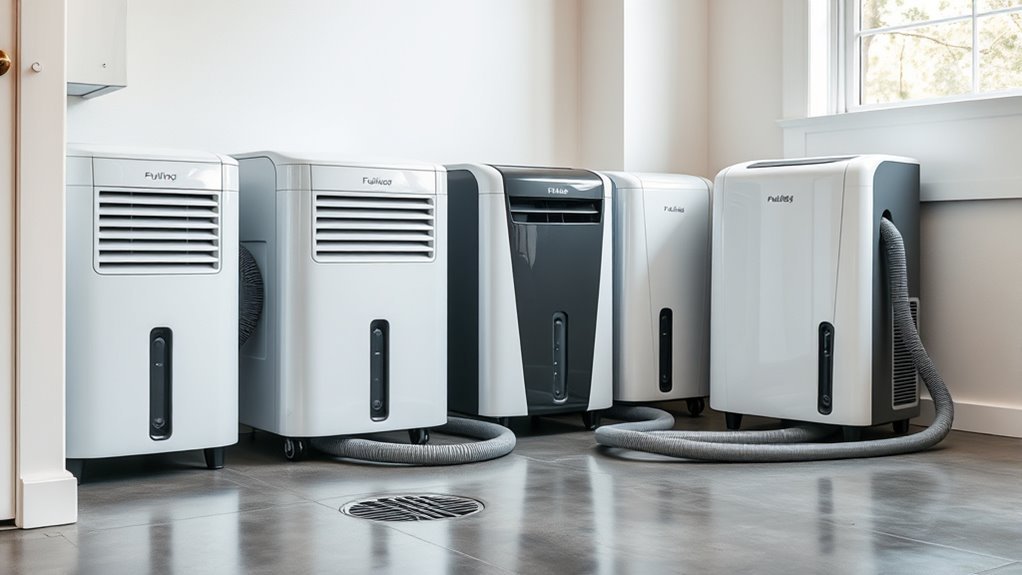
A tank is convenient for occasional use, but it requires regular emptying. Gravity drainage is better for continuous operation when a floor drain or other lower outlet is available. A built-in pump is useful when water must travel upward or across a longer distance. Keep every hose free of kinks and follow the manufacturer’s installation instructions.
Consider Noise and Placement
Portable bedroom models often prioritize lower sound levels, while commercial crawl-space units prioritize airflow and moisture removal. Keep intake and exhaust openings clear, allow the recommended wall clearance, and avoid placing a louder unit directly below or beside a sleeping area when possible.
Portable vs. Crawl-Space Design
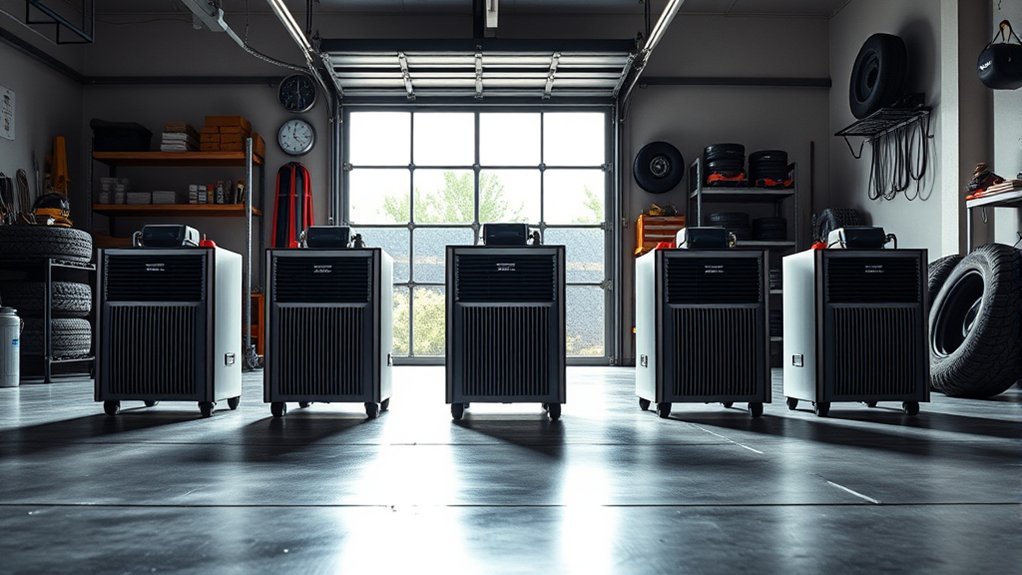
Choose an upright unit with caster wheels if you plan to move it between rooms. Choose a compact horizontal crawl-space model when the unit will stay in one location and drain continuously. Confirm dimensions, weight, filter-access direction, electrical requirements, and drain routing before purchase.
Useful Features
Helpful features include automatic defrost, memory restart after a power outage, a washable filter, a timer, a humidity display, child lock, and pump drainage. Smart or app controls can be convenient, but they should not take priority over correct sizing, reliable drainage, and accessible maintenance.
Frequently Asked Questions
Is a Dehumidifier the Same as Ventilation?
No. A standard dehumidifier recirculates indoor air and removes moisture. Ventilation brings in outdoor air and exhausts indoor air. Some ducted whole-home products can combine these functions, but the portable and crawl-space units in this guide should not be described as fresh-air ventilation systems.
How Do I Maintain My Dehumidifier for Optimal Performance?
Clean the filter on the manufacturer’s schedule, keep the intake and outlet clear, inspect the drain hose for kinks or buildup, empty and clean the tank when used, and check that the humidity sensor is not blocked. Disconnect power before cleaning or moving the unit.
What Humidity Setting Should I Use?
A setting near 50% relative humidity is a practical starting point for many indoor spaces. Adjust it based on condensation, musty odors, comfort, and the manufacturer’s guidance. Setting the target much lower than necessary can increase runtime and energy use.
Can I Use a Dehumidifier in Winter?
Yes, but confirm the model’s minimum operating temperature. Cooler air holds less moisture, and frost can form on coils when a unit is used below its intended temperature range. Auto-defrost helps, but it does not make every model suitable for an unheated winter space.
How Do I Compare a 125 PPD Crawl-Space Unit With a 50-Pint Home Model?
Check the test conditions. A 125 PPD commercial claim is often measured at saturation conditions, while a portable model may use a different standardized condition. Look for AHAM or DOE ratings before deciding which machine removes more moisture in a typical basement.
Should I Choose Gravity Drainage or a Pump?
Choose gravity drainage when the hose can run continuously downhill to a safe outlet. Choose a built-in pump when the condensate must travel uphill or the drain is not lower than the unit. Follow the maximum lift and hose-length limits in the product manual.
Can a Dehumidifier Fix a Water Leak or Standing Water?
No. A dehumidifier can reduce moisture in the air after the water source is controlled, but it does not repair plumbing leaks, foundation seepage, roof leaks, or poor exterior drainage. Stop active water entry and remove standing water before relying on a dehumidifier for ongoing humidity control.
Final Recommendation
For a large residential basement or living area, the Vellgoo offers the best balance of portability, automatic humidity control, and drainage flexibility, but confirm the exact listing variation before ordering. The KNKA and AEOCKY are easier choices for medium-size or occupied rooms, while the ALORAIR and CADPXS are better for compact crawl-space installations with gravity drainage. Choose the HBN when a built-in pump is essential.
Compare capacity ratings under the same test conditions, confirm the drain route and temperature range, and remember that these products remove indoor moisture rather than supplying fresh-air ventilation.