Updated August 2026.
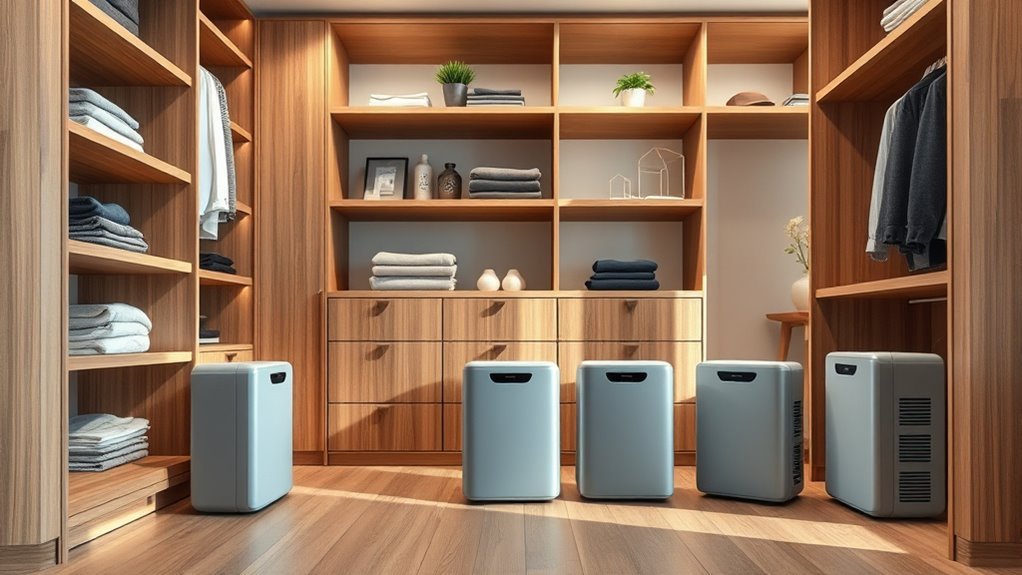
If you are comparing the best fan-assisted dehumidifiers for small rooms, focus on moisture-removal capacity, tank size, operating noise, controls, and the actual dampness of the space. The six compact electric models below use a fan to move air across a thermoelectric or Peltier cooling surface. They are best for bedrooms, bathrooms, closets, offices, RVs, and other enclosed spaces with light to moderate humidity. They are not substitutes for a properly sized compressor dehumidifier when a basement is very damp, water is seeping in, or condensation is widespread.
Quick verdict: The Tenergy Sorbi is the most useful dual-purpose pick because it combines compact moisture collection with a True HEPA filter. Choose the BEDRED 95OZ when a larger tank matters most, the NeedDuck 44OZ for flexible modes and timers, or the avylo 35OZ when the lowest listed sleep noise is your priority.
Before you buy: Advertised square-foot coverage is not the same as standardized moisture-removal capacity. For these small thermoelectric units, room temperature, relative humidity, door position, ventilation, and moisture sources can greatly affect results.
Quick Comparison
| Product | Best For | Tank | Notable Feature | Main Limitation |
|---|---|---|---|---|
| Tenergy Sorbi | Moisture control plus air filtration | 1 liter | True HEPA filter and adjustable fan speed | Light-duty capacity in larger or wetter rooms |
| BEDRED 95OZ | Longer intervals between tank emptying | 95 ounces | Sleep mode and seven-color light | No verified standardized pint-per-day rating |
| NeedDuck 44OZ | Customizable daily use | 44 ounces | Three modes, four timer options, auto defrost | Designed for gradual moisture reduction |
| BeOkay 58OZ | Long timer settings and mood lighting | 58 ounces | Five timer choices and three operating modes | Not intended for severe dampness |
| Windangel 44OZ | A balanced small-room feature set | 44 ounces | Listed 349 ml/day under warm, humid test conditions | Output drops as conditions become cooler or drier |
| avylo 35OZ | Quiet nighttime operation | 35 ounces | Listed below 25 dB with auto defrost | Small tank and condition-dependent output |
Tenergy Sorbi 1000ml Air Dehumidifier with HEPA Filter
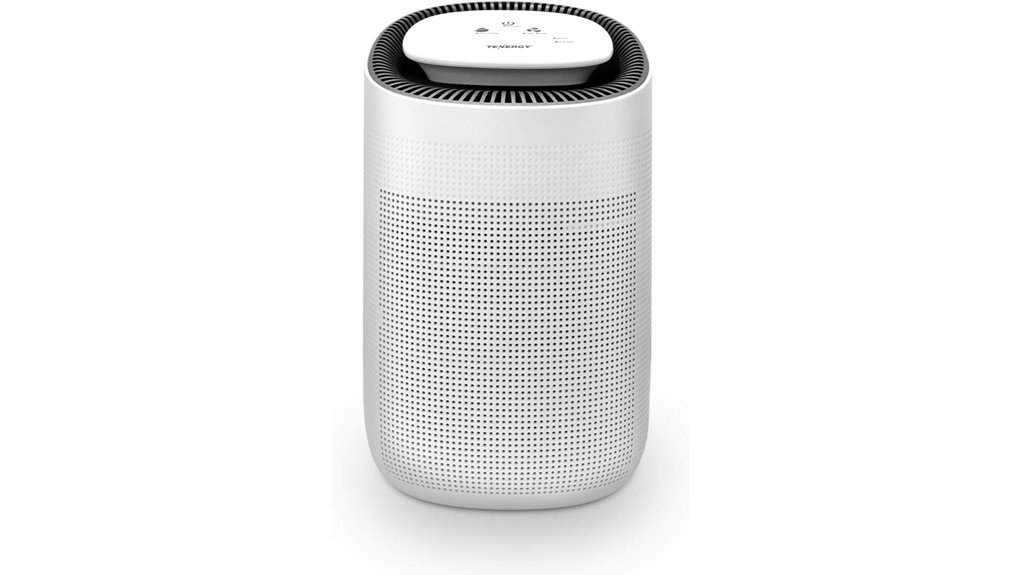
The Tenergy Sorbi is the strongest fit for shoppers who want light moisture control and particle filtration in one compact appliance. It uses Peltier technology, includes a removable 1-liter tank, and adds a True HEPA filter. The manufacturer lists moisture collection of up to 750 ml per day, but that figure is measured in warm, highly humid conditions, so normal room results may be lower.
Why You’ll Like It: Adjustable fan speed, touch controls, a water-level sensor, and automatic shutoff make it easier to manage than a basic one-speed mini unit.
Best For: Closets, small bathrooms, compact offices, and bedrooms where both humidity and airborne particles are concerns.
Who Should Avoid It: Buyers trying to dry a wet basement, control active water intrusion, or dehumidify a large open floor plan.
Pros:
- Combines a compact Peltier dehumidifier with True HEPA filtration.
- Includes touch controls, adjustable air speed, auto shutoff, and a water sensor.
- One-liter tank offers reasonable capacity for a small-space unit.
Cons:
- The maximum removal claim depends on warm, very humid test conditions.
- The filter adds a replacement and maintenance cost.
- Not powerful enough for severe dampness or large rooms.
BEDRED 95OZ Quiet Home Dehumidifier with 7-Color Light
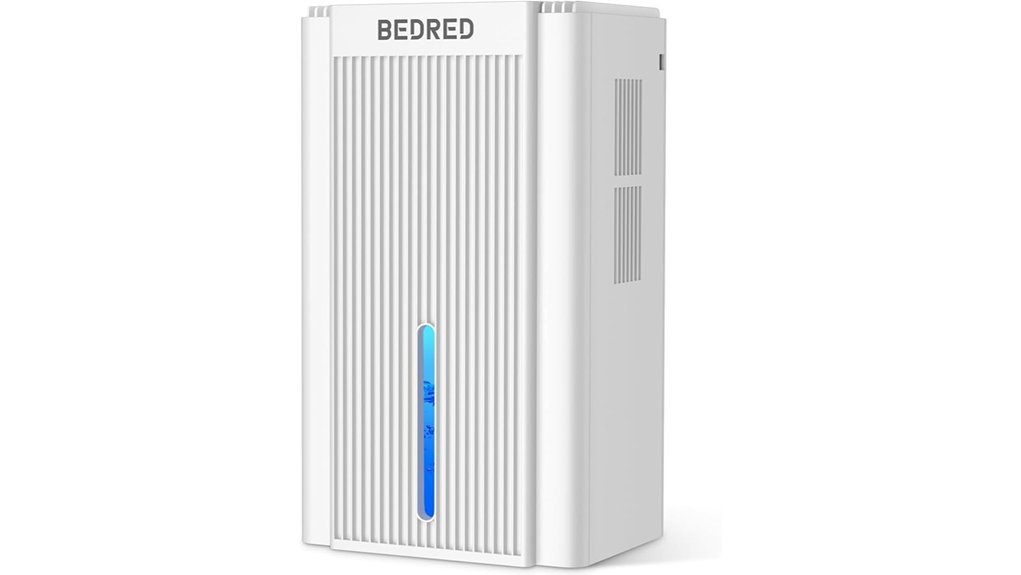
The BEDRED 95OZ model is a practical option when you want a larger reservoir in a compact thermoelectric design. Its 95-ounce tank, automatic shutoff, sleep mode, and seven-color ambient light are convenient for bedrooms, bathrooms, or RVs. The listing advertises broad room coverage, but it does not provide a standardized pint-per-day capacity, so treat this as a light-duty small-room appliance rather than a substitute for a compressor dehumidifier.
Why You’ll Like It: The larger tank can reduce how often you empty collected water, especially when humidity is mild and steady.
Best For: Users who value tank size, simple automatic operation, and a sleep-friendly lighting option.
Who Should Avoid It: Anyone who needs fast drying, a drain hose, a precise humidistat, or verified high-capacity moisture removal.
Pros:
- Large 95-ounce tank for a compact thermoelectric model.
- Automatic shutoff helps prevent tank overflow.
- Sleep mode and seven-color lighting suit bedroom use.
Cons:
- No verified standardized moisture-removal rating was found.
- Advertised square-foot coverage should not be treated as guaranteed performance.
- The tank still requires manual emptying.
NeedDuck B-2 Quiet Portable Dehumidifier with 44oz Tank
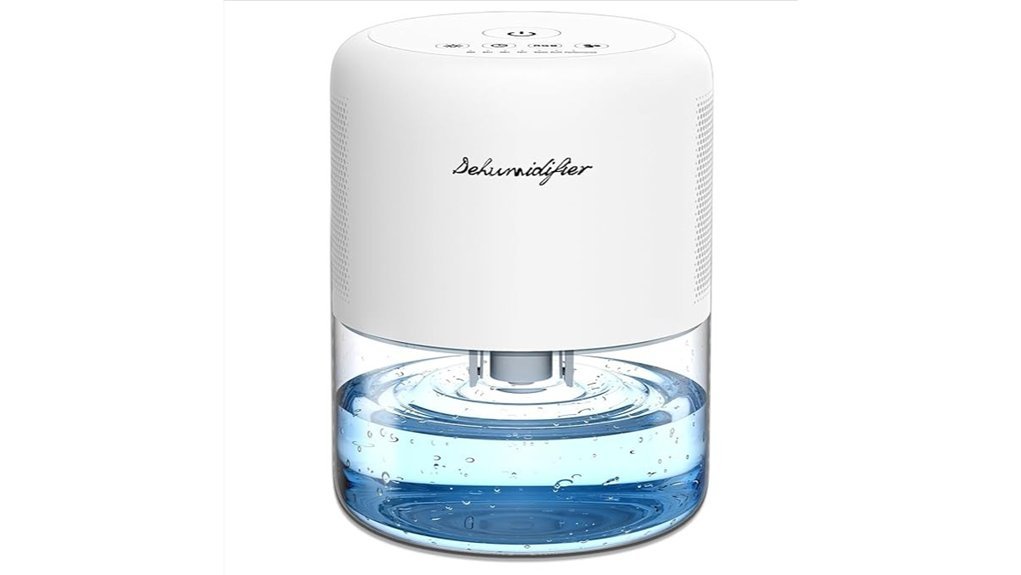
The NeedDuck B-2 is designed for gradual humidity reduction in enclosed small spaces. It has a 44-ounce tank, three operating modes, four timer choices, automatic shutoff, and automatic defrost. The listed 215-square-foot coverage is best treated as a placement guide, not a promise that the unit will solve heavy dampness throughout a room of that size.
Why You’ll Like It: Sleep, Auto, and Performance modes make it easier to balance noise, energy use, and moisture collection through the day.
Best For: Bedrooms, offices, bathrooms, closets, and RVs where flexible controls matter more than maximum extraction speed.
Who Should Avoid It: Buyers who want a built-in drain hose, fast basement drying, or a compressor-class pint rating.
Pros:
- Three modes and continuous, 24-, 48-, or 72-hour timer options.
- Automatic defrost and automatic shutoff improve convenience.
- Compact 44-ounce design is easy to place in tight rooms.
Cons:
- Moisture removal is intentionally gradual.
- Tank emptying may be frequent in persistently humid conditions.
- Decorative lights may be unnecessary for some buyers.
BeOkay 58OZ Small Home Dehumidifier with 10 Color Lights
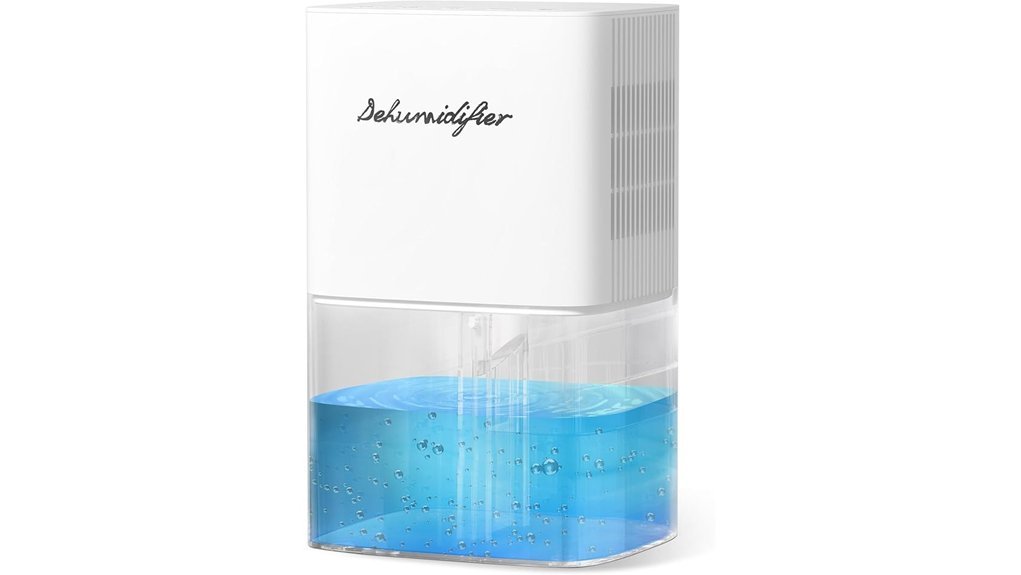
The BeOkay model stands out for its 58-ounce tank and unusually flexible timer settings. It offers sleep, normal, and performance modes; timers for 24, 48, 72, or 96 hours plus continuous operation; automatic shutoff; automatic defrost; and ten lighting colors. Its listed sleep noise is below 40 dB, but room acoustics and placement can change how noticeable the fan sounds.
Why You’ll Like It: The longer 96-hour timer option gives you more scheduling control than most compact models in this roundup.
Best For: Bedrooms, bathrooms, offices, and other enclosed rooms where timers and adjustable lighting are useful.
Who Should Avoid It: Shoppers who need continuous hose drainage, heavy-duty drying, or a precisely adjustable humidity target.
Pros:
- 58-ounce tank is larger than many compact alternatives.
- Five timer choices and three operating modes improve flexibility.
- Automatic defrost and shutoff reduce routine supervision.
Cons:
- Thermoelectric output remains modest compared with compressor models.
- Lighting features add complexity for buyers who want basic controls.
- No standardized pint-per-day rating is provided.
Windangel 44oz Portable Dehumidifier for Small Rooms
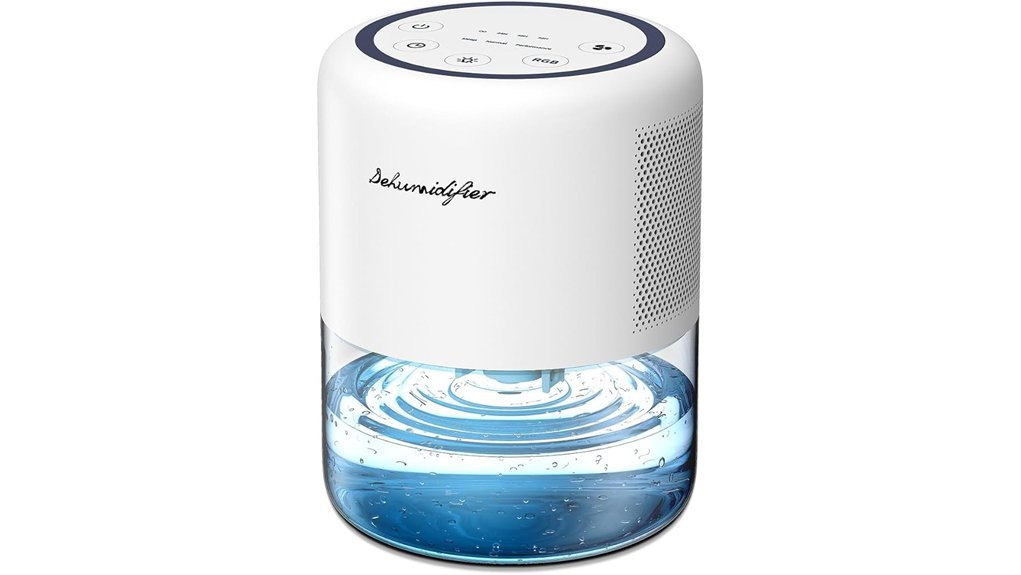
The Windangel 44oz model gives buyers a clearer performance reference than many generic mini units. The listing states collection of up to 349 ml, or 11.8 ounces, in 24 hours at 86°F and 80% relative humidity. That is a warm, very humid test condition, so expect lower collection in cooler or drier rooms. It also includes three modes, four timer settings, automatic shutoff, automatic defrost, and adjustable mood lighting.
Why You’ll Like It: The product provides a defined test-condition output, making it easier to compare honestly with other small thermoelectric models.
Best For: Bedrooms, bathrooms, closets, kitchens, or RVs with mild condensation or seasonal humidity.
Who Should Avoid It: Anyone expecting a small unit to maintain a large open room or correct water intrusion.
Pros:
- Listed moisture-removal figure includes its temperature and humidity conditions.
- Three modes, four timer settings, and adjustable lighting offer useful control.
- Automatic shutoff and defrost support easier daily operation.
Cons:
- Real-world output may be much lower outside warm, humid conditions.
- The 44-ounce tank still requires manual emptying.
- Not designed for wet basements or large living areas.
avylo 35OZ Small Portable Dehumidifier with Auto Shut Off
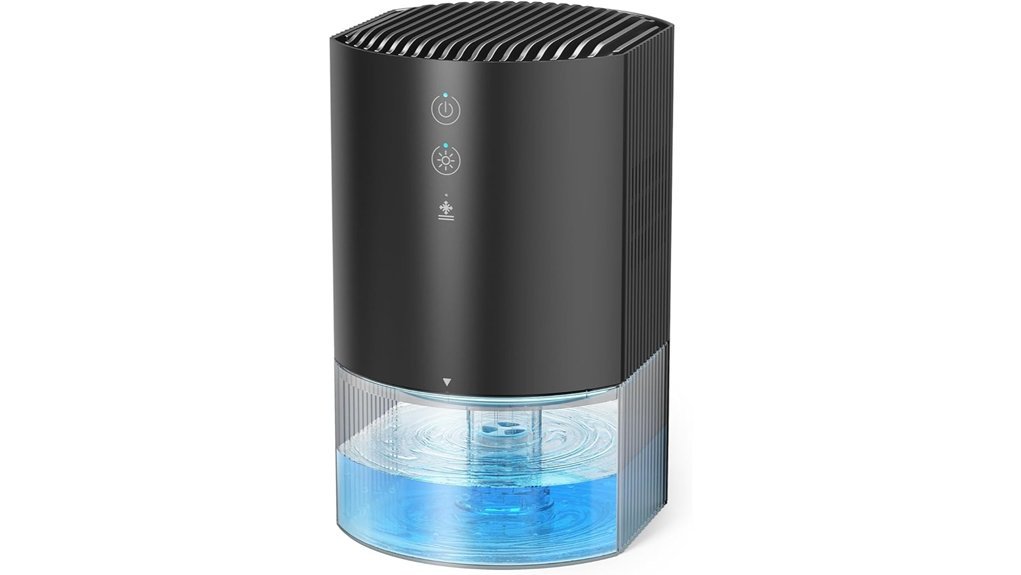
The avylo 35OZ model is the best fit here for shoppers focused on low listed operating noise. The manufacturer states output of up to 16 ounces per day at 75°F and 80% relative humidity and a sound level below 25 dB. It also includes automatic shutoff, automatic defrost, a twist-lock tank, and a visible water level. Treat the 330-square-foot claim as an upper placement estimate for light humidity rather than guaranteed drying capacity.
Why You’ll Like It: The compact shape, low listed sound level, and simple safety features suit bedside or office placement.
Best For: Bedrooms, dorm rooms, wardrobes, small bathrooms, offices, and RVs where quiet operation is important.
Who Should Avoid It: Users who need a large reservoir, hose drainage, or high-capacity moisture removal.
Pros:
- Listed below 25 dB for quiet use.
- Automatic shutoff, red full-tank light, and auto defrost improve convenience.
- Twist-lock 35-ounce tank is designed for easier removal and cleaning.
Cons:
- Maximum output is based on a high-humidity test.
- Smaller tank may fill sooner than the 44- to 95-ounce alternatives.
- Not suitable for major moisture problems or open-plan areas.
Factors to Consider When Choosing a Fan Dehumidifier
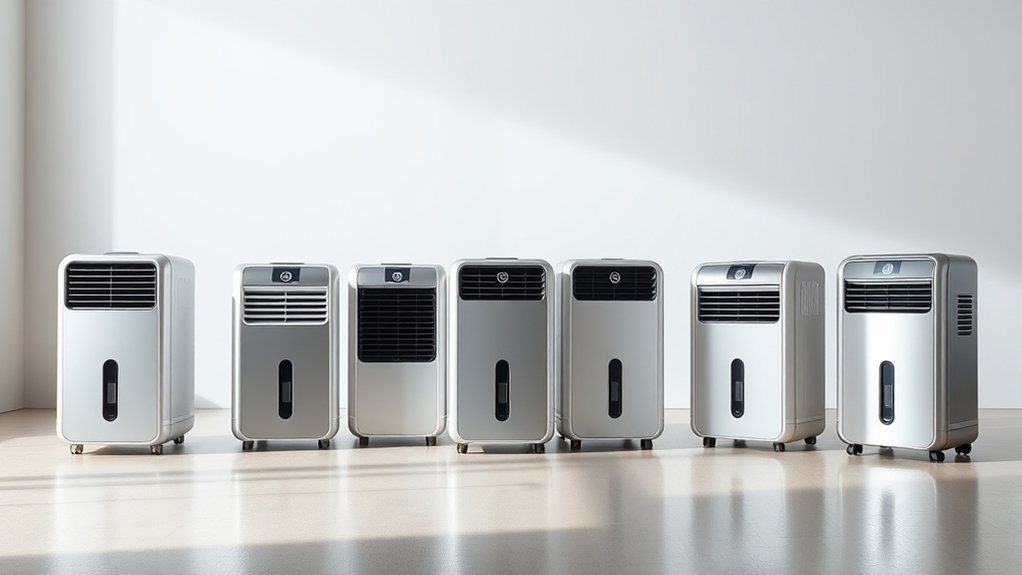
“Fan dehumidifier” is not a precise capacity class. In this guide, it means a compact fan-assisted thermoelectric or Peltier dehumidifier. These models can be useful in small enclosed spaces, but their performance should be judged by actual water removal, operating conditions, and room dampness—not tank size or square-foot advertising alone.
Moisture Removal Rate
Look for a daily water-removal figure and read the stated test conditions. Warm air at high relative humidity contains more available moisture, so a model tested at 80% RH may collect much less water in a cooler room at 55% RH. When no standardized capacity is listed, treat the product as light duty and use a separate hygrometer to see whether it is making a meaningful difference.
Room Size and Dampness
A small closed bathroom or closet is easier to manage than a drafty bedroom of the same floor area. Consider open doors, ventilation, shower steam, laundry drying, exterior leaks, and how often humid air enters. For consistently damp rooms, wet walls, or basement seepage, use a properly sized compressor model. ENERGY STAR explains that portable dehumidifier capacity is measured in pints per 24 hours and should be matched to both room size and moisture conditions. Review ENERGY STAR dehumidifier sizing guidance.
Tank Capacity Is Not Drying Capacity
A 95-ounce tank only tells you how much collected water the reservoir can hold. It does not prove that the unit removes moisture faster than a model with a 35-ounce tank. Compare daily extraction first, then choose a tank that fits how often you are willing to empty it.
Noise Level
Check whether the listed noise figure applies to sleep mode or maximum fan speed. Hard floors, corners, shelves, and hollow furniture can amplify vibration. Place the unit on a stable, level surface with the required clearance around its vents.
Auto Shut-Off and Defrost
Automatic shutoff is important for tank-based units because it stops operation when the reservoir is full or removed. Automatic defrost can help protect the cooling surface in cooler conditions, but it does not turn a small Peltier model into a cold-basement dehumidifier. Follow the operating-temperature range in the manual.
Humidity Target
Use a separate hygrometer instead of relying only on how the room feels. The U.S. EPA generally recommends keeping indoor relative humidity between 30% and 50% and below 60% to reduce conditions that support mold growth. A dehumidifier does not remove existing mold or repair a moisture source. See the EPA’s mold and moisture guidance.
Maintenance and Placement
Empty and rinse the tank regularly, wipe the air intake, clean or replace filters as directed, and keep vents unobstructed. Do not place the unit where it can be splashed, tipped over, covered by fabric, or operated against the instructions in its manual.
Frequently Asked Questions
Are Compact Fan Dehumidifiers Good for Basements?
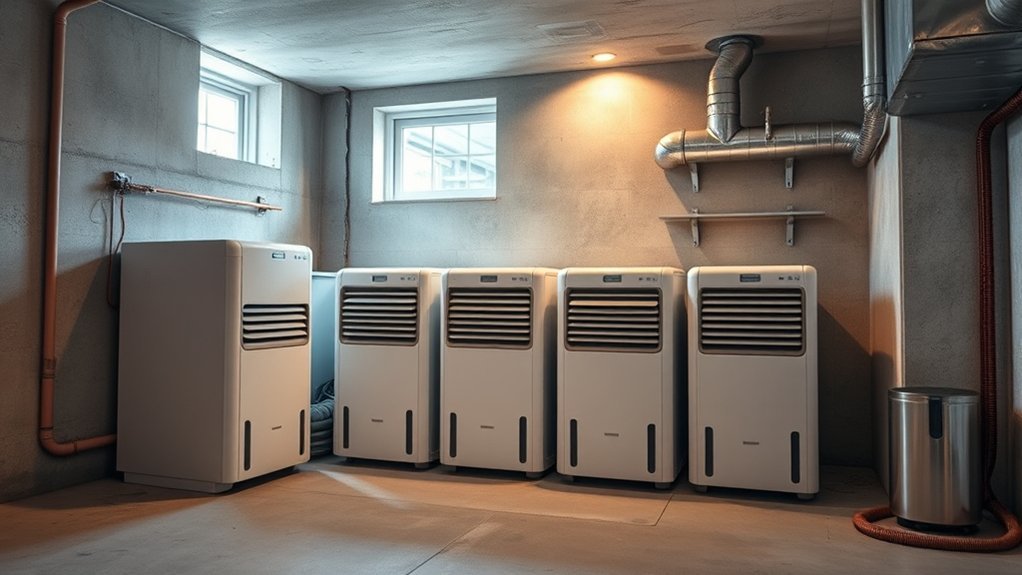
Only for a small enclosed area with mild humidity. A damp basement usually needs a compressor dehumidifier with a verified pint-per-day capacity and, ideally, continuous drainage. Fix leaks and water entry before relying on any dehumidifier.
Do Fan Dehumidifiers Work Better in Warm Rooms?
Compact thermoelectric models generally collect more water in warmer, more humid conditions. Compare claims only when the test temperature and relative humidity are similar.
Are Fan Dehumidifiers Safe to Run Overnight?
A properly maintained unit with automatic shutoff can be suitable for overnight use when the manufacturer permits it. Keep it upright on a stable surface, leave its vents clear, use the correct power supply, and follow the manual’s placement instructions.
How Much Electricity Do Fan Dehumidifiers Use?
Power use varies by model and mode. Check the wattage label, then multiply watts by operating hours and divide by 1,000 to estimate kilowatt-hours. For example, a 30-watt unit running for 10 hours uses about 0.3 kWh.
Can a Small Dehumidifier Prevent Mold?
It may help lower humidity in a suitable small space, but it cannot guarantee mold prevention or remove existing growth. Clean affected surfaces appropriately, repair leaks, improve ventilation, and keep indoor humidity controlled.
How Often Should I Clean a Fan Dehumidifier?
Inspect the tank and vents at least weekly during regular use. Empty the tank before water sits for long periods, and clean the reservoir and filter according to the product manual. Clean more often if you notice dust, odor, film, or reduced airflow.
Conclusion
For a compact fan-assisted dehumidifier, choose by real moisture load and daily extraction, not by the biggest square-foot number. The Tenergy Sorbi is the most versatile option when HEPA filtration matters, the BEDRED 95OZ offers the largest tank, and the NeedDuck, BeOkay, Windangel, and avylo models provide different balances of timers, operating modes, lighting, and listed noise.
Final recommendation
Choose one of these compact units for mild humidity in a closed small room. Choose a higher-capacity compressor dehumidifier instead when humidity stays high across a large area, the room smells persistently musty, surfaces remain wet, or water is entering the building.