If you’re choosing a dehumidifier for a Swiss home in 2026, focus on more than pint capacity. You’ll want enough moisture-removal power for your room size, quiet operation for bedrooms, reliable drainage for basements or laundry rooms, and safe electrical compatibility for Switzerland.
This guide compares five dehumidifiers for different needs: the Midea Cube 20 Pint for smart everyday control, the PLUSCENT 32 Pint for larger spaces, the Aiusevo AS280 for flexible home and basement use, the Glowells 21 Pints for quiet-leaning rooms or RV-style spaces, and the AMEIFU PC-450 for smaller damp areas where low noise matters most.
Affiliate disclosure: As an Amazon Associate, this site may earn from qualifying purchases. Before buying for Switzerland, always check the current listing for voltage, frequency, plug type, warranty, shipping, and return terms.
Quick Verdict
- Best Smart Design Pick: Midea Cube 20 Pint if you find a compatible version for your electrical setup.
- Best for Large Spaces: PLUSCENT 32 Pint for bigger rooms, open areas, and laundry drying after compatibility checks.
- Best Flexible Home Pick: Aiusevo AS280 for bedrooms, storage rooms, and basement use with continuous drainage.
- Best Quiet/RV Pick: Glowells 21 Pints for quiet-leaning operation and compact mobility.
- Best Compact Quiet Pick: AMEIFU PC-450 for smaller rooms, closets, bathrooms, or mild dampness.
Important Safety Note for Switzerland
Many Amazon.com appliances are made for the US market. Switzerland commonly uses 230V/50Hz power and Type J sockets, so do not plug a US-only 120V dehumidifier directly into a Swiss outlet. A simple travel plug adapter does not change voltage. For a compressor appliance, the safest choice is usually a Switzerland/EU-compatible model with the correct voltage, frequency, plug, warranty, and seller support.
How We Chose These Picks
We compared each unit by moisture-removal rating, claimed coverage, drainage setup, tank size, portability, noise level, control features, and suitability for different Swiss home situations. Because electrical compatibility can change by seller and market, treat every Amazon.com listing as a product to verify before purchase, not as automatically ready for Swiss outlets.
Quick Comparison
| Product | Best For | Moisture Removal | Coverage | Key Caution | Check Price |
|---|---|---|---|---|---|
| Midea Cube 20 Pint | Smart everyday humidity control | 20 pints/day, about 9.5 L/day | Up to 1,500 sq. ft., about 139 m² | Confirm voltage, frequency, plug type, and local warranty before buying | Check Price on Amazon |
| PLUSCENT 32 Pint | Large rooms and laundry drying | 32 pints/day, about 15.1 L/day | Up to 2,500 sq. ft., about 232 m² | Needs proper hose setup for continuous drainage | Check Price on Amazon |
| Aiusevo AS280 | Basements, bedrooms, and flexible room use | 21 pints/day, about 9.9 L/day | Up to 1,500 sq. ft., about 139 m² | Small tank may need frequent emptying | Check Price on Amazon |
| Glowells 21 Pints | Quiet rooms, apartments, and RV-style spaces | 21 pints/day, about 9.9 L/day | Up to 1,500 sq. ft., about 139 m² | Check temperature limits and power compatibility | Check Price on Amazon |
| AMEIFU PC-450 | Quiet small-space moisture control | Up to 40 oz/day, about 1.2 L/day | Marketed for small to medium spaces | Not the best choice for wet basements | Check Price on Amazon |
Midea Cube 20 Pint Dehumidifier with Smart Control
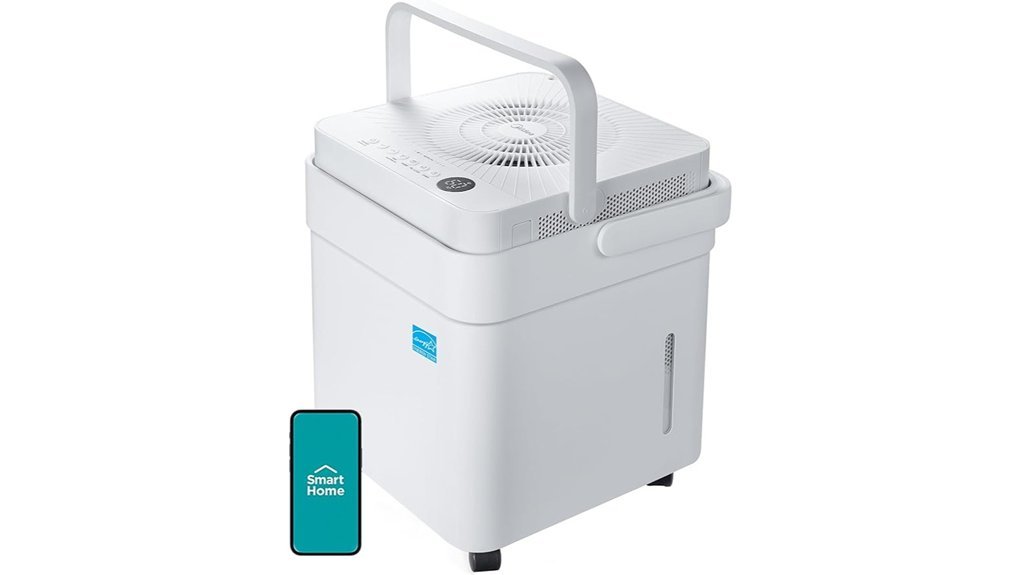
Best Smart Design Pick: The Midea Cube 20 Pint Dehumidifier is a strong option if you want a smart, space-saving unit for everyday moisture control. It is designed for spaces up to 1,500 sq. ft. or about 139 m² and can remove up to 20 pints of moisture per day, about 9.5 litres.
Its lift-and-twist cube design helps it store more compactly when not in use, while the 3.2-gallon tank reduces how often you need to empty it compared with smaller-tank models. Smart app control and voice control with Alexa or Google Assistant can be useful if you want to adjust humidity settings without walking to the unit.
Swiss Buyer Note: Do not assume the Amazon.com version is safe for Swiss outlets. Confirm the exact voltage, frequency, plug type, and warranty support before purchase. If the linked model is US-only, choose a Switzerland/EU-compatible version instead.
Why You’ll Like It: This model works well for buyers who want a balance of capacity, smart features, and lower-maintenance tank emptying. It is especially useful for bedrooms, living rooms, and general dampness control when the correct local version is available.
Who Should Avoid It: Skip it if you need coverage beyond its rated room size, if you do not want Wi-Fi setup, or if the current listing does not clearly match your Swiss voltage and plug requirements.
Best For: Homeowners who want smart humidity control for medium-size rooms and everyday living spaces.
Pros:
- Smart Control: App and voice control can make daily adjustments easier.
- Large Tank: The 3.2-gallon tank can reduce frequent emptying.
- Space-Saving Design: The cube layout helps with storage when the unit is not in use.
Cons:
- Electrical Check Needed: The exact listing must match Swiss power requirements before use.
- Coverage Limit: Best for rooms within its rated coverage range.
- Setup Needs: Smart features require Wi-Fi and app setup.
PLUSCENT 32 Pint Dehumidifier for Home
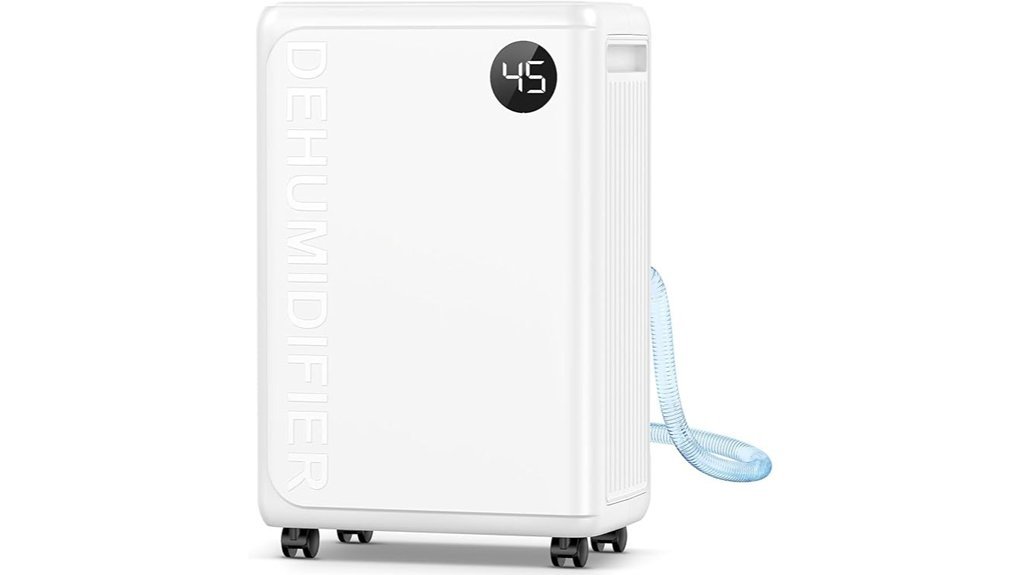
Best for Large Spaces: The PLUSCENT 32 Pint Dehumidifier is the strongest-capacity option in this roundup. It removes up to 32 pints of moisture per day, about 15.1 litres, and is marketed for spaces up to 2,500 sq. ft. or about 232 m².
This makes it a better fit for open living areas, larger bedrooms, laundry rooms, and damp ground-floor spaces where a smaller unit may run too often. The three operating modes include a laundry-drying option, while the 24-hour timer helps you control run time.
Swiss Buyer Note: Check the product label and current seller information for voltage, frequency, plug type, and warranty support before buying for Switzerland.
Why You’ll Like It: The higher moisture-removal rating, continuous drainage option, washable filter, and 360° wheels make it practical for larger homes where humidity changes from room to room.
Who Should Avoid It: Avoid it if you only need a small bathroom or closet unit, or if you cannot set up the drain hose correctly for continuous drainage.
Best For: Buyers who need more drying power for larger rooms, laundry drying, or persistent household humidity.
Pros:
- Higher Capacity: Removes up to 32 pints per day for stronger moisture control.
- Quiet-Leaning Operation: The listing notes a 39-42 dB range, which may suit many home settings.
- Useful Controls: Includes timer settings, child lock, and multiple modes.
Cons:
- Setup Required: Continuous drainage needs correct hose placement and slope.
- Regular Maintenance: The washable filter still needs routine cleaning.
- May Be Too Much for Tiny Rooms: Smaller rooms may not need this capacity.
Aiusevo AS280 Dehumidifier for Home and Basement
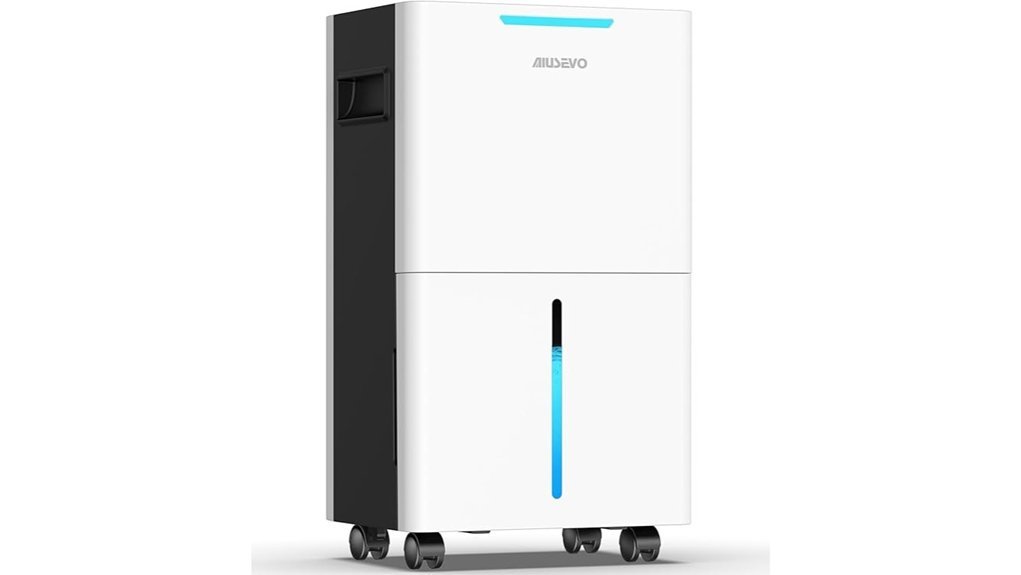
Best Flexible Home Pick: The Aiusevo AS280 Dehumidifier is designed for spaces up to 1,500 sq. ft., about 139 m², and removes up to 21 pints per day, about 9.9 litres. That makes it a practical middle-ground pick for bedrooms, basements, storage rooms, or smaller living areas.
You can adjust the target humidity, choose from multiple modes, and move the unit with its handles and wheels. The water tank is convenient for occasional use, while the continuous drainage option is better if you want it running for longer periods in a damp basement or utility room.
Swiss Buyer Note: Confirm the exact electrical rating before buying. Also check whether warranty support applies if the product is imported instead of bought through a Swiss or EU seller.
Why You’ll Like It: It gives you a useful balance of moisture removal, portability, and drainage flexibility without jumping to the largest unit in the list.
Who Should Avoid It: If your room is very damp or you want long unattended operation, the small tank may feel limiting unless you use continuous drainage.
Best For: Homeowners who want a movable dehumidifier for bedrooms, basements, laundry areas, or mixed daily use.
Pros:
- Removes up to 21 pints of moisture per day for medium-size spaces.
- Multiple modes and adjustable humidity settings help match different rooms.
- Handles and wheels make it easier to move between areas.
Cons:
- The small water tank may need frequent emptying in very damp conditions.
- Noise may be noticeable on stronger fan settings.
- Coverage may not be enough for very large open spaces.
Glowells 21 Pints Dehumidifier for Home and RV
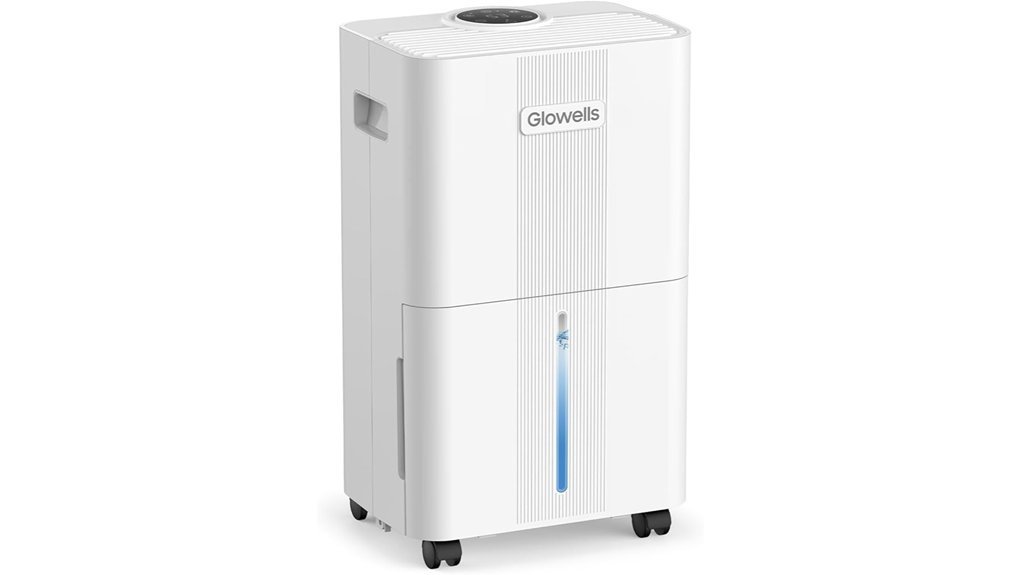
Best Quiet/RV Pick: The Glowells 21 Pints Dehumidifier is designed for homes and RV-style spaces up to 1,500 square feet, about 139 m². With a moisture-removal rating of 21 pints per day, about 9.9 litres, it can help control damp air in bedrooms, living rooms, kitchens, and compact mobile spaces.
The custom humidity mode lets you adjust the target level in small increments, which is useful if you want more precise control. It also has a compact body, swivel casters, and a continuous drainage option for regular use.
Swiss Buyer Note: Check voltage, frequency, temperature range, plug type, and seller support on the current listing before using it in Switzerland.
Why You’ll Like It: This model is attractive if you want quieter operation, simple mobility, and adjustable humidity without choosing a very large appliance.
Who Should Avoid It: Avoid it for spaces above the listed temperature limit or for very wet basements where a larger tank or higher capacity may be easier to manage.
Best For: Homeowners, apartment dwellers, and RV users who need quieter humidity control in medium-size spaces.
Pros:
- Quiet-Leaning Operation: A good fit for bedrooms and living areas if the listing’s noise claim matches your tolerance.
- Custom Humidity Control: Adjustable humidity settings help you fine-tune the room.
- Easy Mobility: Compact design and swivel casters help with room-to-room movement.
Cons:
- Limited Tank Capacity: The 2L tank may require frequent emptying in high humidity.
- Power Use: Compare expected run time with your energy goals.
- Temperature Limit: Confirm the listed operating range before using it in hot or cold spaces.
AMEIFU PC-450 Dehumidifier with 135 OZ Water Tank
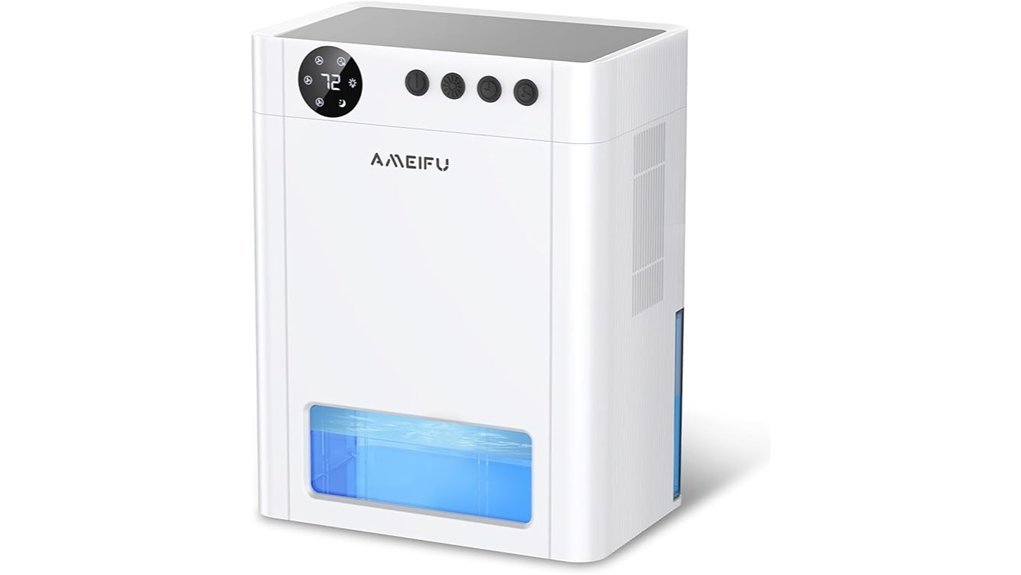
Best Compact Quiet Pick: The AMEIFU PC-450 dehumidifier is best viewed as a compact option for mild dampness rather than a heavy-duty basement machine. It has a 135-ounce tank, about 4 litres, and can collect up to 40 ounces of moisture per day, about 1.2 litres.
Its semiconductor design helps keep operation quieter than many larger compressor-style units. Available product data lists sleep-mode operation around 35 dB, so it may suit bedrooms, wardrobes, small bathrooms, offices, or other areas where a large rolling dehumidifier would feel too bulky.
Swiss Buyer Note: Check the adapter, voltage input, plug type, and warranty support before buying. Small plug-in appliances still need the correct electrical rating for safe use.
Why You’ll Like It: If your main concern is quiet operation and occasional moisture control in a smaller space, this model is easier to live with than a large compressor dehumidifier.
Who Should Avoid It: Do not choose it as your main solution for a wet cellar, large laundry area, or serious condensation problem. A higher-capacity compressor model will usually be more appropriate for those jobs.
Best For: Buyers who want a quiet, lower-capacity unit for small rooms, closets, bathrooms, or mild humidity issues.
Pros:
- Large Tank for Its Class: The 135-ounce tank reduces emptying compared with many mini units.
- Quiet Operation: Sleep-mode noise is lower than many full-size compressor units.
- User-Friendly Features: Timer settings, auto shut-off, and LED lighting add convenience.
Cons:
- Lower Daily Extraction: It removes much less water per day than 20-32 pint compressor models.
- Not Ideal for Wet Basements: Better for mild dampness than persistent moisture problems.
- Listing Checks Needed: Confirm voltage, plug, warranty, and current product details before buying.
Factors to Consider When Choosing Dehumidifier Switzerland
When choosing a dehumidifier for Switzerland, look beyond the product name. The right unit should match your room size, moisture problem, drainage setup, noise tolerance, and local electrical requirements. These factors will help you avoid buying a unit that is too weak, too loud, or unsuitable for your home.
1. Swiss Electrical Compatibility
Before buying any appliance from Amazon.com, check whether it supports Switzerland’s household power setup. Look for clear information on voltage, frequency, plug type, warranty coverage, and seller support. If the listing is made only for 120V use, do not connect it directly to a Swiss outlet. When in doubt, choose a product version sold for Switzerland or the wider European market.
2. Coverage Area Requirements
Match the dehumidifier to the real size of your room. A 1,500 sq. ft. rating is about 139 m², while 2,500 sq. ft. is about 232 m². Larger spaces, open layouts, and damp basements usually need higher pint or litre-per-day ratings. Smaller bedrooms, bathrooms, and wardrobes may only need a compact model.
3. Water Tank Capacity
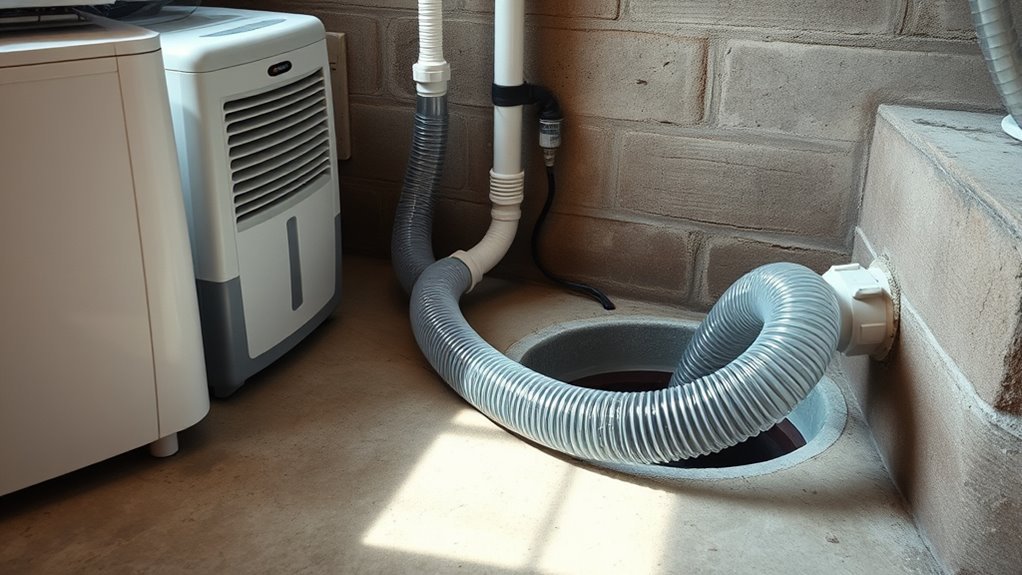
Water tank capacity affects how often you need to empty the unit. A 2L tank can fill quickly in damp conditions, while larger tanks are easier for regular use. If you plan to run the unit in a basement, laundry room, or storage area, choose a model with continuous drainage and make sure the hose can slope properly toward a drain.
4. Daily Moisture Removal
Do not compare coverage alone. A compact semiconductor unit may be quiet, but it may remove far less water per day than a compressor dehumidifier. For persistent dampness, condensation, or laundry drying, prioritize daily extraction capacity. For mild dampness in a small room, a quieter compact unit may be enough.
5. Noise Level Considerations
Noise matters if the unit will run in a bedroom, nursery, home office, or living room. Models in this article range from compact low-noise units to larger compressor models. Lower fan settings, sleep modes, and quiet operation ratings can help, but stronger drying modes may still sound louder during active moisture removal.
6. Energy Efficiency Ratings
Energy use matters because dehumidifiers often run for many hours. Look for wattage, auto humidity control, timer settings, and current efficiency labels. A correctly sized unit can also save energy because it does not need to run constantly to keep up with the room.
7. Drainage Options Available
Most dehumidifiers offer either manual tank emptying, continuous hose drainage, or both. Manual emptying is simple for occasional use, but continuous drainage is better for basements and long run times. Make sure the hose connection is secure and positioned to avoid backflow or leaks.
8. Control Features Offered
Helpful controls include adjustable humidity targets, digital humidistats, timers, auto shut-off, auto restart, defrost mode, child lock, and app control. Smart controls are convenient, but basic humidity control is more important than extra features if you simply need reliable moisture removal.
9. Maintenance and Warranty
Choose a model with accessible filters, simple tank cleaning, and clear warranty support. Clean the filter regularly, empty and rinse the tank, inspect drainage hoses, and watch for frost or unusual noise in colder rooms. If you are importing a product, check whether warranty support applies in Switzerland.
Pro Tip: Use a separate hygrometer in the room. Many homes feel more comfortable around 40% to 55% relative humidity, but try to avoid sustained humidity above 60%, especially in basements, bathrooms, and rooms with condensation.
Final Recommendation
If you want the strongest drying power, start with the PLUSCENT 32 Pint after confirming Swiss electrical compatibility. If you prefer smart controls and a space-saving design, compare the Midea Cube 20 Pint, but only buy a version that matches your local power setup. For flexible room-to-room use, the Aiusevo AS280 is a practical middle choice. If quiet operation matters most, compare the Glowells 21 Pints and AMEIFU PC-450, but choose the AMEIFU only for lighter moisture problems.
Frequently Asked Questions
What Is the Best Humidity Level for Swiss Homes?
A practical target for many homes is around 40% to 55% relative humidity. Try to avoid sustained humidity above 60%, especially in bathrooms, basements, and rooms with condensation. Use a hygrometer so you can measure the room instead of guessing.
How Often Should I Empty My Dehumidifier’s Water Tank?
Empty the tank whenever the full-tank indicator activates. In very damp rooms, this may be daily or even more often with a small tank. For basements or long run times, continuous drainage is usually more convenient.
Can Dehumidifiers Help With Allergies in Switzerland?
A dehumidifier can help reduce damp conditions that support mold and dust mites, which may reduce common indoor allergy triggers. It is not a medical treatment, though. If allergies or breathing symptoms continue, speak with a qualified health professional and address mold, leaks, and ventilation problems directly.
Are There Energy-Efficient Dehumidifiers Available in 2026?
Yes, many modern dehumidifiers include energy-saving features such as humidistats, timers, auto shut-off, auto restart, and efficient compressors. Check the current product label, wattage, and local efficiency information before buying, especially if you expect the unit to run for many hours.
What Maintenance Is Required for Dehumidifiers in Cold Climates?
Clean the filter, empty and rinse the tank, inspect the drain hose, and check the coils for frost buildup. If you plan to use a dehumidifier in a cool Swiss basement, look for auto defrost and confirm the minimum operating temperature on the listing.
Can I Use a US Dehumidifier in Switzerland?
Only if the exact unit is rated for Switzerland’s voltage and frequency or you have a safe, properly rated electrical solution. Do not plug a US-only 120V dehumidifier directly into a Swiss outlet. A plug adapter changes the plug shape, not the voltage. Check the label, manual, and seller information before purchase.
Is a Compact Semiconductor Dehumidifier Enough for a Basement?
Usually, a compact semiconductor unit is better for mild dampness in small spaces. For a wet basement, laundry room, or persistent condensation, a higher-capacity compressor dehumidifier with continuous drainage is usually the better choice.
Conclusion
The best dehumidifier for Switzerland depends on your room size, moisture level, noise tolerance, drainage setup, and electrical compatibility. The PLUSCENT 32 Pint offers the strongest drying power in this list, while the Midea Cube 20 Pint stands out for smart controls and a space-saving design if you find a compatible version. The Aiusevo AS280 offers flexible home and basement use, the Glowells 21 Pints suits quieter rooms or RV-style spaces, and the AMEIFU PC-450 works best for mild dampness in smaller areas. Before you buy, confirm voltage, frequency, plug type, warranty, drainage setup, and current product details so the unit fits your Swiss home safely and effectively.