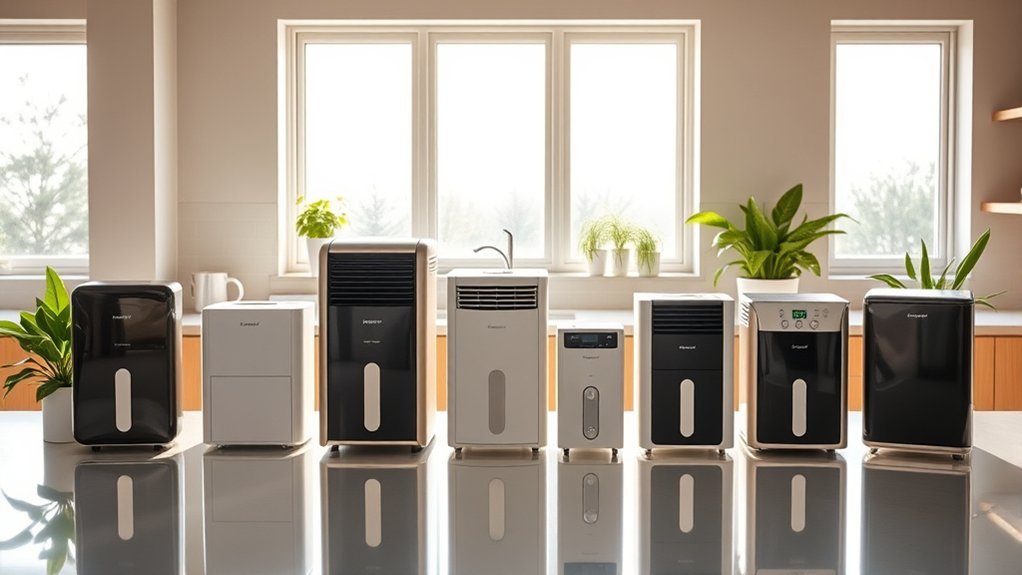
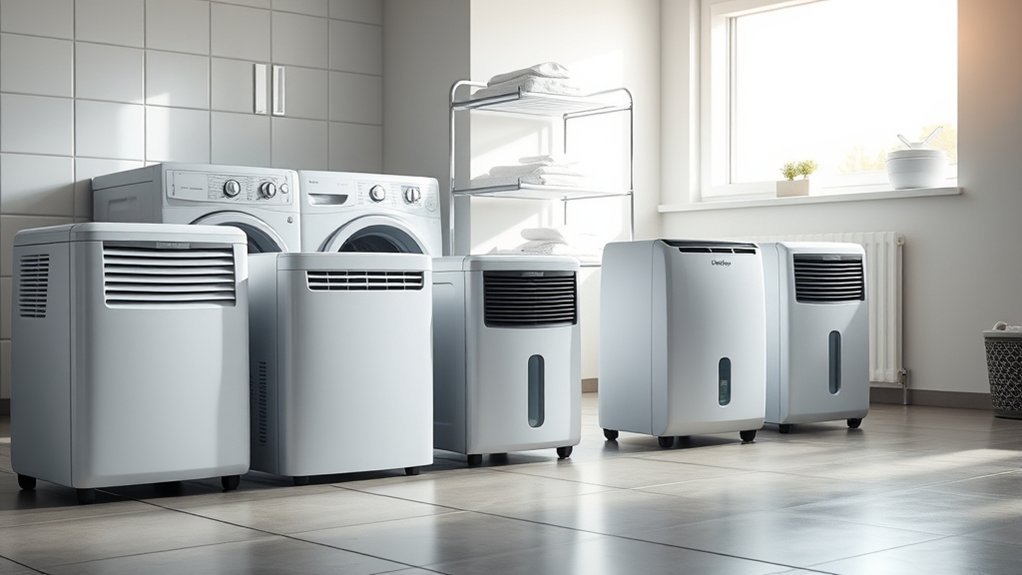
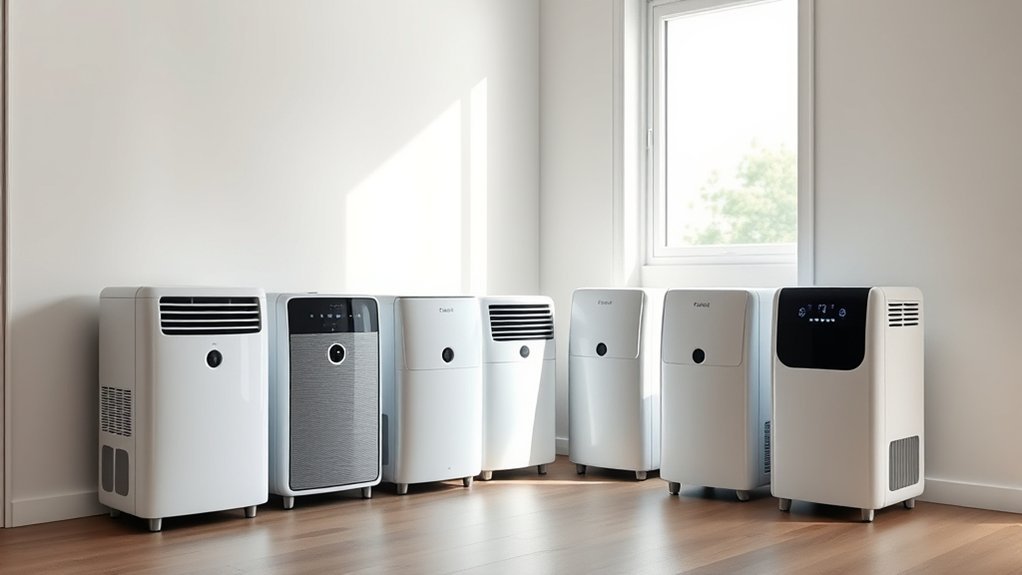
The best dehumidifier for multiple rooms depends on how those rooms connect. A portable unit can work well in an open-plan area, a basement with open doorways, or several rooms when you move it where moisture is highest. It will not dehumidify closed, separated rooms as evenly as a ducted whole-home system. For large connected spaces, the Gasbye, AEOCKY, Vellgoo, Frigidaire, and Yaufey models offer higher advertised capacity, while the PLUSCENT, KNKA, Midea, and Aiusevo models are easier to place in smaller zones.
Affiliate disclosure: As an Amazon Associate, we may earn from qualifying purchases at no extra cost to you. Product specifications, certifications, warranty terms, and availability can change, so confirm the exact model details before ordering.
Quick answer: Choose a high-capacity model with continuous drainage for a large open area. The Gasbye is a strong all-around large-space option, the Frigidaire 50 Pint is the clearest smart-control choice, and the PLUSCENT or KNKA may be easier to move between medium-size rooms.
Important: Advertised “maximum” pint ratings may be measured in hotter and more humid conditions than standardized ratings. Compare the exact DOE-rated capacity, drainage setup, operating temperature, and model number on the current listing.
Quick Comparison: Dehumidifiers for Multiple Rooms
| Model | Best Use | Advertised Capacity | Drainage | Key Advantage | Amazon |
|---|---|---|---|---|---|
| PLUSCENT 32 Pint | Medium connected areas | Up to 32 pints/day; up to 2,500 sq. ft. | 2L tank or continuous drain | Portable, quiet-focused design | Check Amazon |
| Aiusevo AS280 | Bedrooms, laundry rooms, smaller basements | Up to 21 pints/day; up to 1,500 sq. ft. | 2L tank or continuous drain | Compact compressor-based option | Check Amazon |
| Gasbye 4500 Sq.Ft. | Large open basements and living areas | Maximum claim up to 115 pints/day | 1.7-gallon tank or continuous drain | Large tank and high moisture-removal claim | Check Amazon |
| Midea 22 Pint | Smaller connected areas and room-by-room use | 22 pints/day; up to 1,500 sq. ft. | 0.8-gallon tank or hose drain | Established-brand compact pick | Check Amazon |
| AEOCKY 80 Pint | Large connected spaces | Maximum claim up to 80 pints/day; up to 4,500 sq. ft. | Tank or continuous drain | Energy-focused design and auto-defrost | Check Amazon |
| Vellgoo 64 Pint | Large homes, garages, and basements | Maximum claim up to 64 pints/day; up to 4,000 sq. ft. | 5.5L tank and multiple drain options | Flexible drainage and humidity controls | Check Amazon |
| Frigidaire 50 Pint Wi-Fi | Remote monitoring in a large room or basement | About 50 pints/day | Tank or continuous drain | Wi-Fi control and washable filter | Check Amazon |
| Yaufey 80 Pint | Very large connected areas | Maximum claim up to 80 pints/day; up to 5,000 sq. ft. | 1.06-gallon tank or continuous drain | Wide humidity setting range | Check Amazon |
| KNKA 2500 Sq.Ft. | Medium-size rooms and portable use | Maximum claim up to 34 pints/day | 3L tank or included drain hose | Quiet-focused operation and mobility | Check Amazon |
PLUSCENT 32 Pint Dehumidifier for Home
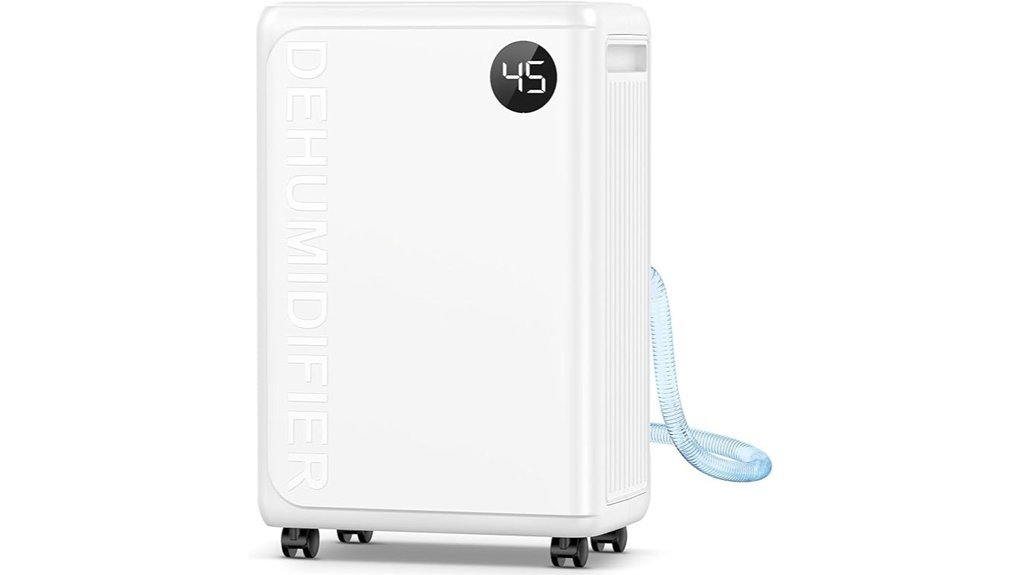
The PLUSCENT 32 Pint Dehumidifier is a practical choice when you want one portable unit for a basement zone, living area, bedroom, or laundry space. The listing advertises removal of up to 32 pints per day and coverage up to 2,500 sq. ft. Its DEHU, CONT, and DRY modes let you switch between normal humidity control, continuous operation, and laundry drying.
Why you’ll like it: A 24-hour timer, touch controls, wheels, and carrying handles make it easier to move and schedule than a heavier large-capacity model. The seller-reported 39–42 dB noise range also makes it appealing for living areas.
Who should buy this: Households with moderate humidity in connected medium-size spaces or buyers who plan to move the unit from room to room.
Who should avoid this: Homes with severe moisture across several closed rooms or anyone who cannot empty the 2L tank and has no suitable gravity drain.
Pros:
- Three operating modes for normal control, continuous use, and laundry drying.
- Wheels and handles support room-to-room use.
- Continuous drainage can reduce tank-emptying work.
Cons:
- The 2L tank may fill quickly in damp conditions.
- Advertised coverage assumes favorable airflow and should not be treated as guaranteed whole-home coverage.
- Seller-reported noise and capacity should be confirmed on the current listing.
Aiusevo AS280 Dehumidifier for Home and Basement
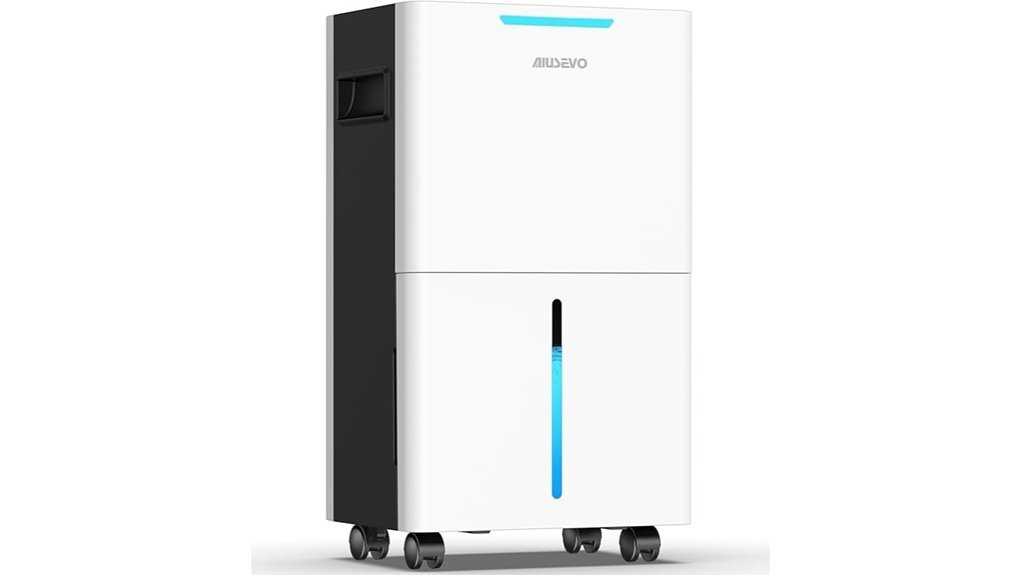
The Aiusevo AS280 is a compact compressor dehumidifier advertised for spaces up to 1,500 sq. ft. and moisture removal up to 21 pints per day. It is better suited to a bedroom, bathroom, laundry room, RV, or smaller basement area than to an entire divided home.
Why you’ll like it: DEHU, DRY, and CONTINUOUS modes provide useful flexibility, while the timer, removable tank, automatic shutoff, handles, and wheels simplify everyday use.
Who should buy this: Buyers who need a smaller portable unit and have access to a nearby drain or do not mind checking a 2L tank.
Who should avoid this: Anyone trying to treat a large open basement or several closed rooms with one unit.
Pros:
- Compact footprint for bedrooms, laundry areas, and smaller basements.
- Multiple modes for humidity control and clothes drying.
- Tank and continuous-drain options.
Cons:
- A 2L bucket may require frequent emptying.
- Lower capacity than the large-space models in this guide.
- Coverage claims depend heavily on temperature, humidity, and airflow.
Gasbye 4500 Sq.Ft. Energy Star Dehumidifier
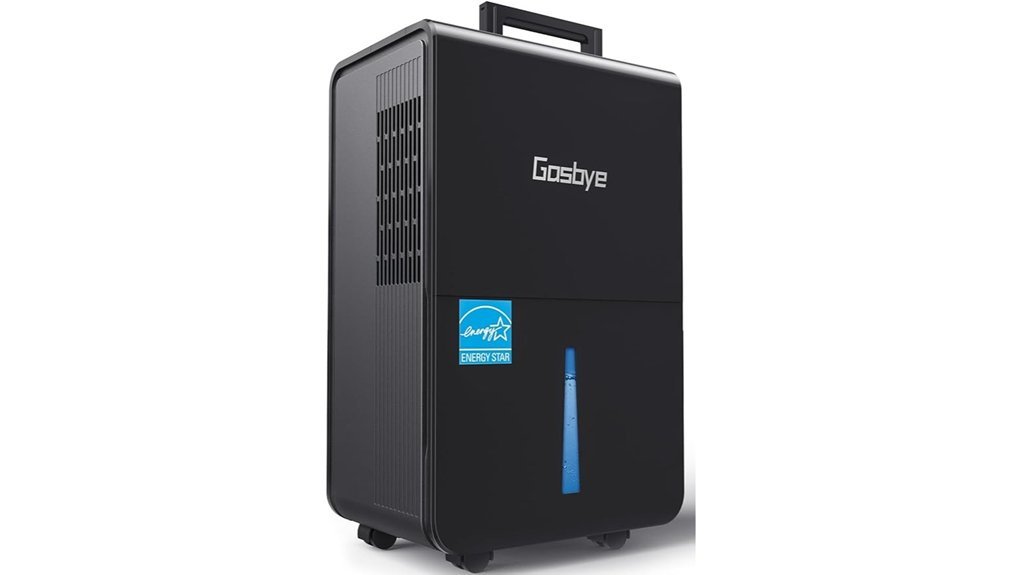
The Gasbye 4500 Sq.Ft. model is built for a large open basement, living level, or other connected area with substantial moisture. Its listing advertises a maximum removal rate of up to 115 pints per day under hot, highly humid conditions. That maximum claim should not be compared directly with a standardized DOE pint rating without checking the exact test conditions.
Why you’ll like it: The 1.7-gallon tank is larger than many portable units, and continuous drainage is available when you can place the machine above a suitable drain. Automatic humidity control, auto shutoff, and restart features support longer unattended operation.
Who should buy this: Buyers with a large connected space, a dependable drain location, and a need for higher moisture-removal performance.
Who should avoid this: Anyone who needs a lightweight machine for frequent stair carrying or expects one portable unit to evenly treat closed bedrooms across a house.
Pros:
- Large tank and high advertised maximum capacity.
- Continuous drainage is useful for persistent basement humidity.
- Automatic humidity control reduces unnecessary operation.
Cons:
- At about 43 pounds, it may be awkward to carry between floors.
- The “115-pint” maximum may use different test conditions than standardized ratings.
- Certification and warranty terms should be confirmed for the exact current model.
Midea 22 Pint Energy Star Dehumidifier (White)
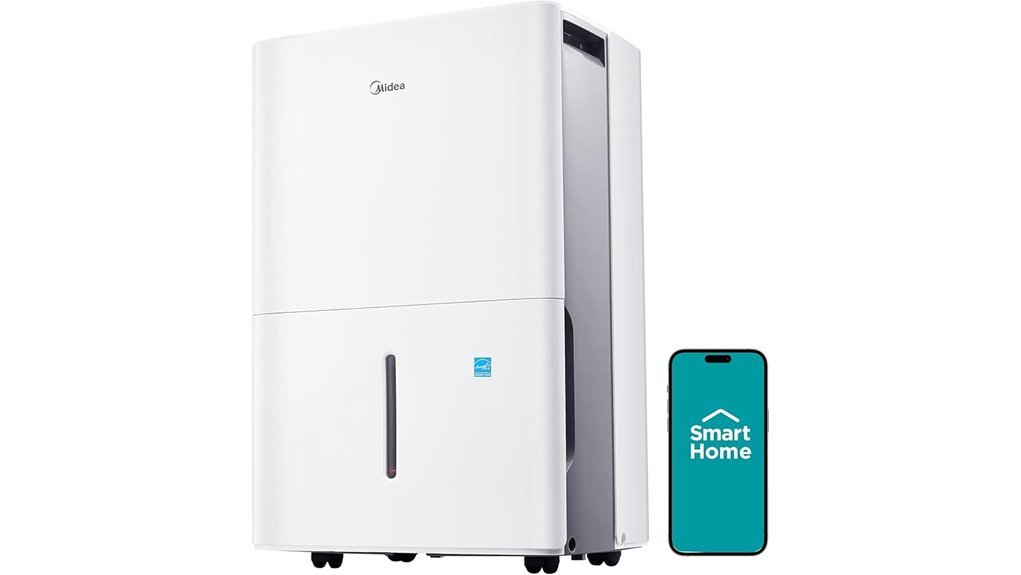
The Midea 22 Pint Dehumidifier is designed for spaces up to about 1,500 sq. ft., making it a better fit for a bedroom, bathroom, medium room, or smaller connected basement zone than for a whole divided home. Its wheels and built-in handles help when you need to move it between rooms.
Why you’ll like it: The unit offers adjustable humidity control, auto restart, auto defrost, a reusable filter, and an optional gravity-drain connection. The listing reports operation around 47 dBA.
Who should buy this: Buyers who prefer a recognizable appliance brand and need moderate moisture removal in one area at a time.
Who should avoid this: Buyers who need a large bucket, an included drain hose, or high capacity for a very damp open basement.
Pros:
- 22-pint capacity is suitable for smaller and medium-size areas.
- Reusable filter and standard controls keep maintenance simple.
- Wheels and handles help with room-to-room movement.
Cons:
- The 0.8-gallon tank may fill quickly in high humidity.
- A drain hose is generally not included.
- Smart-app or voice-control support can vary by model variant, so verify the exact listing before buying.
AEOCKY 80 Pint Energy Star Dehumidifier
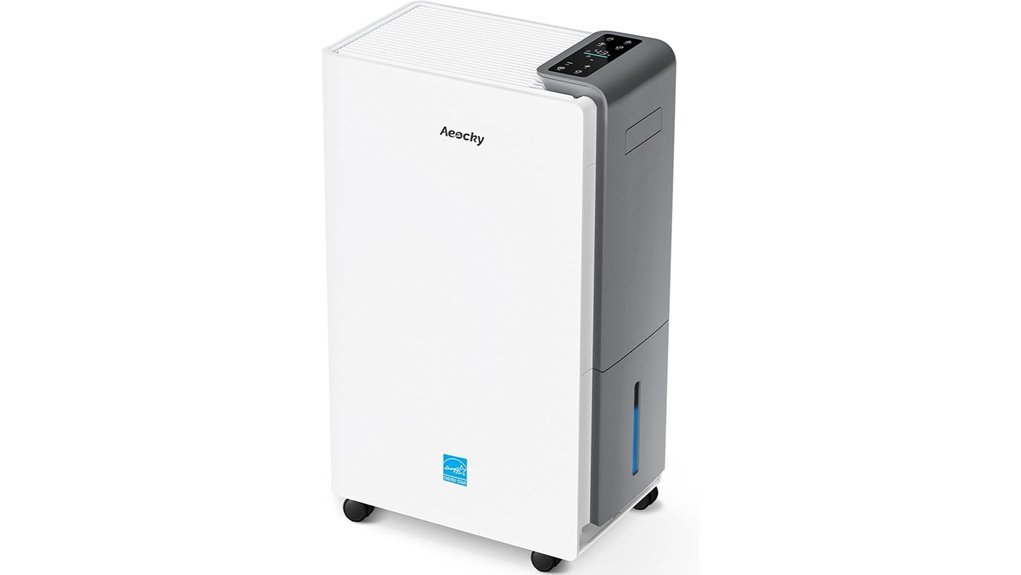
The AEOCKY model is advertised for areas up to 4,500 sq. ft. with a maximum moisture-removal claim of up to 80 pints per day. It suits a large open basement or connected living area better than a group of closed rooms. Check the exact standardized capacity and model number before comparing it with 50-pint DOE-rated machines.
Why you’ll like it: Intelligent humidity control, continuous drainage, auto defrost, auto restart, and seller-reported operation around 44 dB make it suitable for longer use in occupied spaces.
Who should buy this: Buyers who prioritize energy efficiency, low-temperature support, and automatic control in a large connected area.
Who should avoid this: Anyone who needs a verified multi-year warranty without reviewing the current manufacturer terms or who plans to carry the unit frequently.
Pros:
- High advertised maximum capacity for large connected spaces.
- Auto-defrost and continuous-drain support improve basement usability.
- Quiet-focused operation compared with many high-capacity units.
Cons:
- The maximum pint claim may use hotter, wetter test conditions than the standardized rating.
- Large size reduces portability compared with compact models.
- Warranty length and ENERGY STAR designation should be checked for the exact model being sold.
Vellgoo 64 Pint Energy Star Dehumidifier
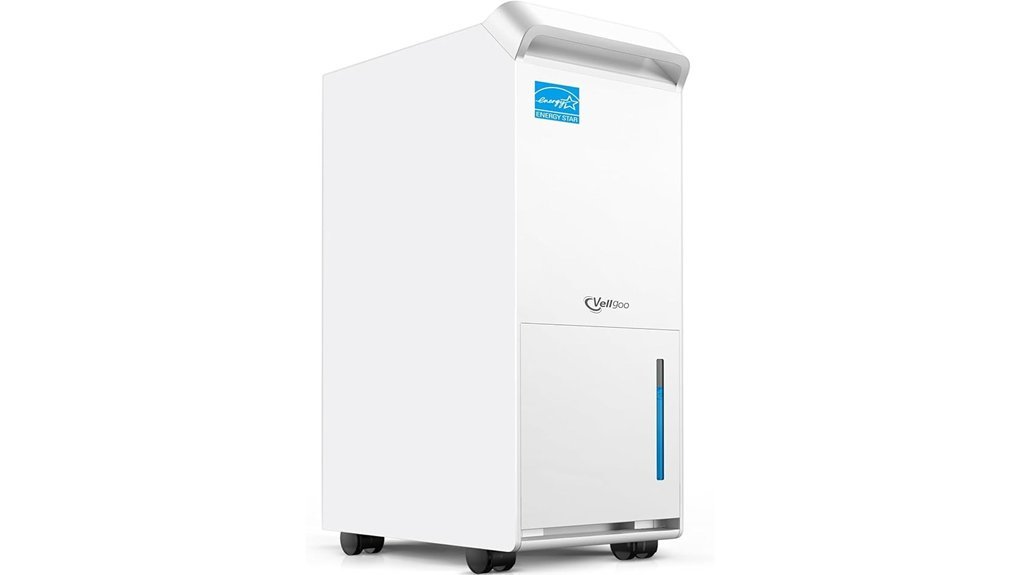
The Vellgoo is advertised for spaces up to 4,000 sq. ft. with a maximum moisture-removal claim of up to 64 pints per day. It is a useful option for a large basement, garage, or open living area where you can take advantage of continuous drainage.
Why you’ll like it: Smart humidity control, a 24-hour timer, automatic defrost, automatic restart, and multiple drainage choices make it easier to manage persistent moisture without constant adjustment.
Who should buy this: Buyers who want a large-space unit with a relatively generous 5.5L tank and several drainage options.
Who should avoid this: Anyone with limited floor space or anyone comparing maximum seller claims without checking the standardized pint rating.
Pros:
- Multiple drainage methods support different room layouts.
- Automatic controls help maintain a selected humidity level.
- Large-area design is suitable for open basements and garages.
Cons:
- The advertised 64-pint maximum may not equal the standardized capacity.
- The 5.5L tank can still require regular emptying in severe humidity.
- Its larger body may be harder to position in a bedroom or narrow hallway.
Frigidaire 50 Pint Dehumidifier w/WiFi
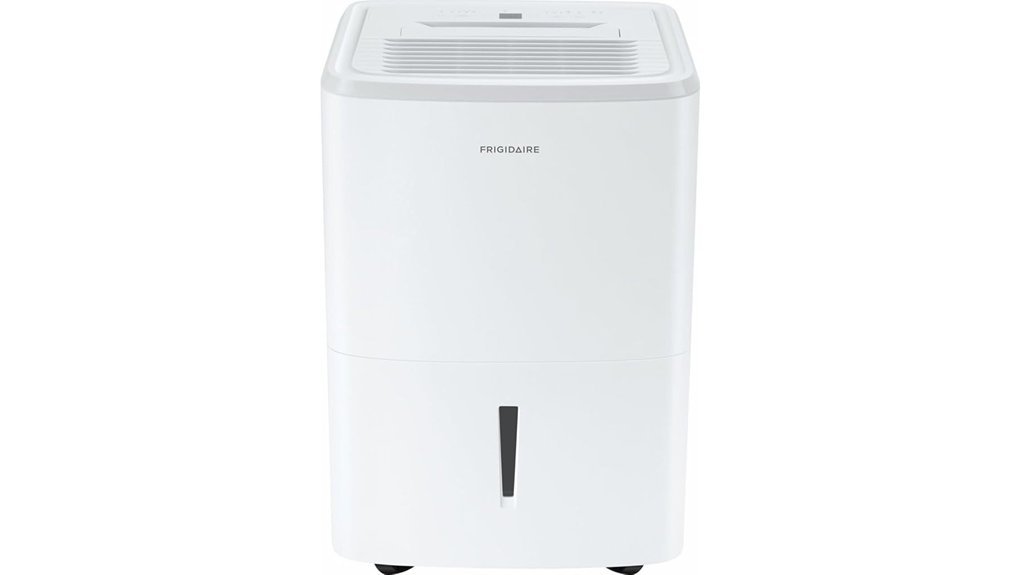
The Frigidaire 50 Pint Dehumidifier with Wi-Fi is the most straightforward choice here for buyers who want remote monitoring and control. It is intended for a large room, basement, garage, or connected area rather than guaranteed whole-home coverage through closed doors.
Why you’ll like it: Wi-Fi access, custom humidity control, a washable filter, automatic shutoff, and continuous-drain capability can reduce the amount of hands-on checking required.
Who should buy this: Buyers who want a verified 50-pint-class unit from an established brand and value app control for a basement, cabin, or frequently unattended space.
Who should avoid this: Anyone with unreliable Wi-Fi, no drain access, or a preference for simple controls without app setup.
Pros:
- Wi-Fi control supports remote adjustment and monitoring.
- Washable filter avoids frequent replacement-filter purchases.
- About 50 pints per day of standardized moisture removal suits larger areas.
Cons:
- App setup and cloud connectivity add complexity.
- A full bucket still requires attention when continuous drainage is not used.
- It is heavier and less convenient for frequent stair-to-stair movement than compact units.
Yaufey Energy Star Dehumidifier for Home (80 Pints)
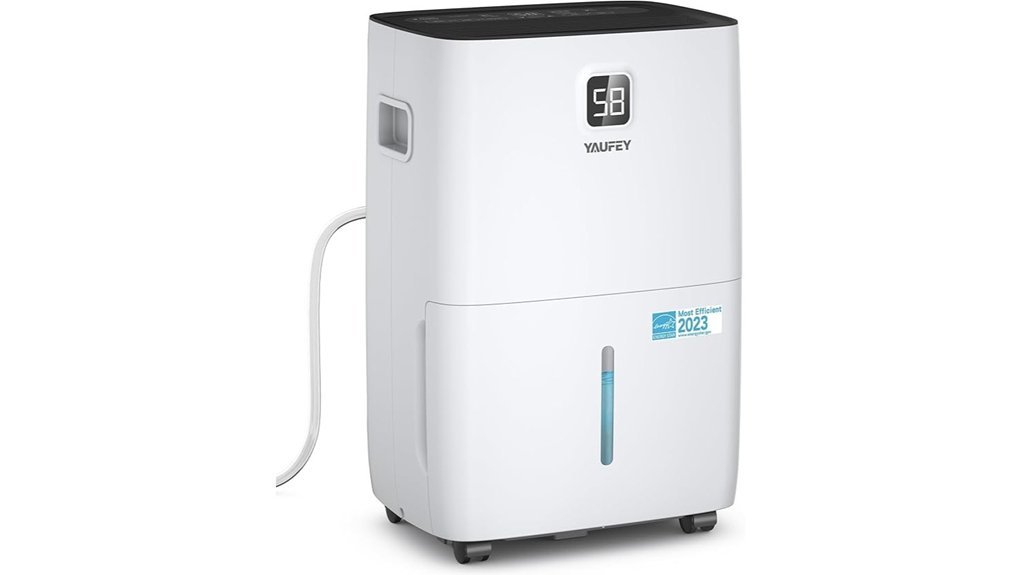
The Yaufey is advertised for areas up to 5,000 sq. ft. and a maximum removal rate of up to 80 pints per day under hot, highly humid conditions. It is best considered for a very large open basement or connected floor rather than separate closed rooms.
Why you’ll like it: Adjustable humidity settings, multiple operating modes, fan-speed control, a washable filter, automatic shutoff, and continuous drainage provide useful control for changing seasonal conditions.
Who should buy this: Buyers who want a large-area portable unit with a broad humidity setting range and do not need app-based Wi-Fi control.
Who should avoid this: Anyone who expects the 1.06-gallon tank to run for long periods in severe humidity without a drain hose.
Pros:
- Large advertised coverage for open connected spaces.
- Multiple modes and fan speeds allow more flexible operation.
- Washable filter and continuous drainage simplify routine use.
Cons:
- The 80-pint figure is a maximum claim and may not match the standardized rating.
- The bucket may fill quickly in a very damp basement.
- Certification and warranty details can vary by exact model and listing.
KNKA 2500 Sq.Ft Dehumidifier with Drain Hose
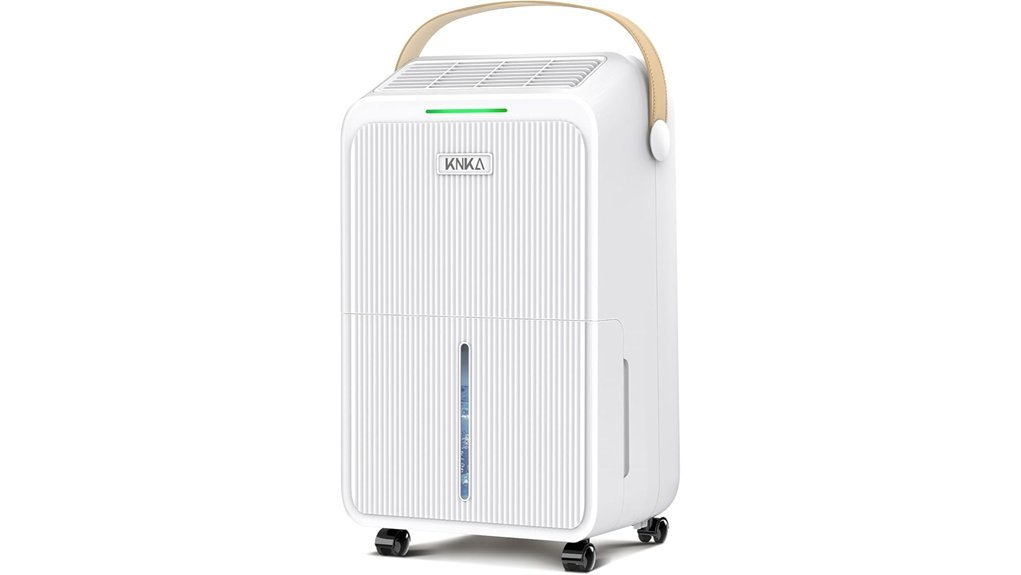
The KNKA 2500 Sq.Ft Dehumidifier is advertised to remove up to 34 pints per day under hot, highly humid conditions. Its size and wheels make it a reasonable choice for rotating between a basement area, kitchen, living room, or bedroom instead of leaving a heavier unit in one place.
Why you’ll like it: DEHU, DRY, and CONT modes, a 24-hour timer, smart humidity adjustment, a 3L bucket, and an included drain hose give it a useful mix of portability and automatic control. The listing reports noise as low as 37 dB.
Who should buy this: Buyers who want a mid-capacity model that is easier to move between rooms and includes a short drain hose.
Who should avoid this: Buyers who need high-capacity whole-basement performance or a pump that can move water upward.
Pros:
- Three operating modes and adjustable humidity control.
- Wheels improve portability between rooms.
- Includes a drain hose for gravity-fed continuous drainage.
Cons:
- The 3L tank may fill quickly in persistent dampness.
- The included hose is short and requires a lower drain point.
- The 34-pint figure is a maximum seller claim, not necessarily the standardized capacity.
Factors to Consider When Choosing a Dehumidifier for Multiple Rooms
The right choice depends on more than the largest square-foot number. Room layout, standardized capacity, drainage, operating temperature, noise, mobility, and the amount of moisture entering the home all affect real-world performance.
1. Room Layout and Airflow
A portable dehumidifier works best in one room or an open connected area. Open doors and clear airflow paths can help it influence nearby spaces, but closed bedrooms and separate floors restrict air movement. For several closed rooms, use more than one portable unit or consider a properly sized ducted whole-home dehumidifier.
2. Moisture Removal Capacity
Capacity is measured in pints removed per 24 hours under stated test conditions. Do not assume that every “80-pint” or “115-pint” marketing claim uses the same standard. Look for the current DOE-rated capacity on the exact product label or listing, then size up when the area is very damp, cool, or frequently exposed to outside air.
3. Coverage Area Requirements
Square-foot claims are only a starting point. Ceiling height, doors, stairways, foundation moisture, laundry use, ventilation, and outdoor humidity can change the load dramatically. A smaller unit may be enough for one bedroom, while a large open basement usually benefits from a higher standardized pint rating and continuous drainage.
4. Energy Efficiency
Choose an ENERGY STAR certified model when the exact model number can be confirmed. Efficient compressors, coils, and fans can reduce electricity use, but avoid assuming a specific dollar saving because runtime, climate, utility rates, and humidity load vary by home.
5. Drainage Options
A bucket is convenient when no drain is nearby, but it stops the machine when full. Gravity drainage works only when the hose can slope continuously downward to a floor drain, sink, or condensate pump. A built-in pump is better when water must travel upward, but none of the models above should be assumed to include one unless the current listing says so.
6. Noise Level
Noise matters in bedrooms and living rooms. Seller-reported dB numbers are useful for comparison, but fan speed, compressor cycling, floor vibration, and room acoustics affect what you hear. A sleep mode, lower fan speed, and stable placement on a hard, level floor can make operation less distracting.
7. Operating Temperature
Compressor dehumidifiers can lose effectiveness as temperatures fall, and frost may form on the coils. For a cool basement, check the minimum operating temperature and confirm that the model includes automatic defrost. Do not rely only on a large square-foot claim.
8. Portability and Design
If you plan to use one dehumidifier in several rooms, compare weight, wheel quality, handle placement, cord storage, and whether stairs are involved. Wheels help on one floor but do not make a 40-pound unit easy to carry upstairs. A smaller model may be more useful if mobility is the main goal.
Before you buy:
- Measure the connected area and note which doors stay closed.
- Check the standardized pint rating, not only the maximum marketing claim.
- Plan the drain route before choosing continuous operation.
- Confirm the minimum operating temperature for a cool basement.
- Check the exact model’s ENERGY STAR status, warranty, hose, and smart features.
Frequently Asked Questions
How Do I Determine the Right Size Dehumidifier for Multiple Rooms?
Add the area only when the rooms are openly connected and air can circulate between them. For closed rooms, size each room separately or plan to move the unit and allow enough time in each area. Use the standardized pint rating, moisture severity, temperature, and drainage access—not square footage alone.
Can One Portable Dehumidifier Handle Several Closed Rooms?
Not evenly. A portable unit mainly treats the air that can reach its intake. Open doors and fans may improve circulation, but separate closed rooms often need individual units or a ducted whole-home system.
Can a Dehumidifier Reduce Allergens in the Air?
A dehumidifier is not an air purifier and does not directly capture most airborne allergens. Keeping humidity under control may make conditions less favorable for mold growth and dust mites, but filtration, cleaning, leak repair, and ventilation may also be needed.
How Often Should I Empty the Water Tank?
Empty it whenever the full-tank indicator appears. In very humid conditions, a small bucket may fill more than once per day. Continuous gravity drainage can reduce maintenance when a properly sloped hose and safe drain point are available.
Are There Dehumidifiers With Smart Home Integration?
Yes. The Frigidaire model in this guide includes Wi-Fi control. Other products may use “smart” to describe automatic humidity sensing rather than an app, so verify the exact model’s Wi-Fi, app, and voice-assistant support before purchase.
What Maintenance Is Required for a Dehumidifier?
Clean the reusable filter as directed, wash and dry the bucket, inspect the drain hose for kinks or buildup, keep the air intake and outlet clear, and check the coils for dust. Place the unit on a level surface and follow any settling instructions after transport.
Conclusion
Final recommendation: For a large open basement or connected living area, start with the Gasbye, AEOCKY, Vellgoo, Frigidaire, or Yaufey, then compare their exact standardized capacity and drainage setup. Choose the Frigidaire 50 Pint when Wi-Fi control matters most.
For room-by-room use, the PLUSCENT and KNKA balance capacity with mobility, while the Midea and Aiusevo fit smaller zones. No portable model should be treated as a guaranteed replacement for a ducted whole-home dehumidifier across several closed rooms.