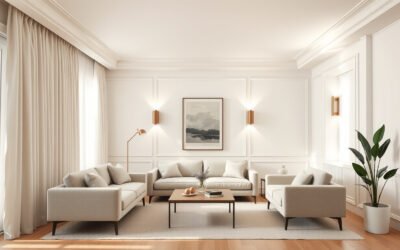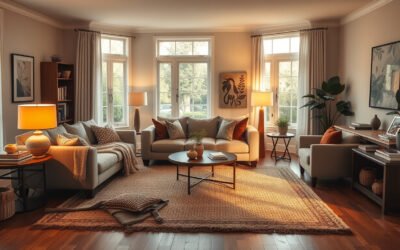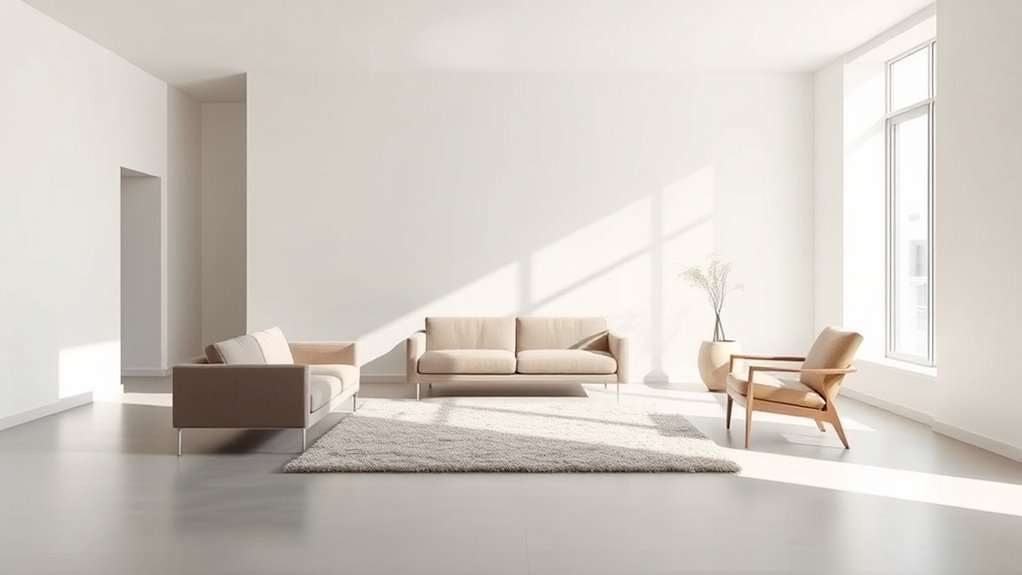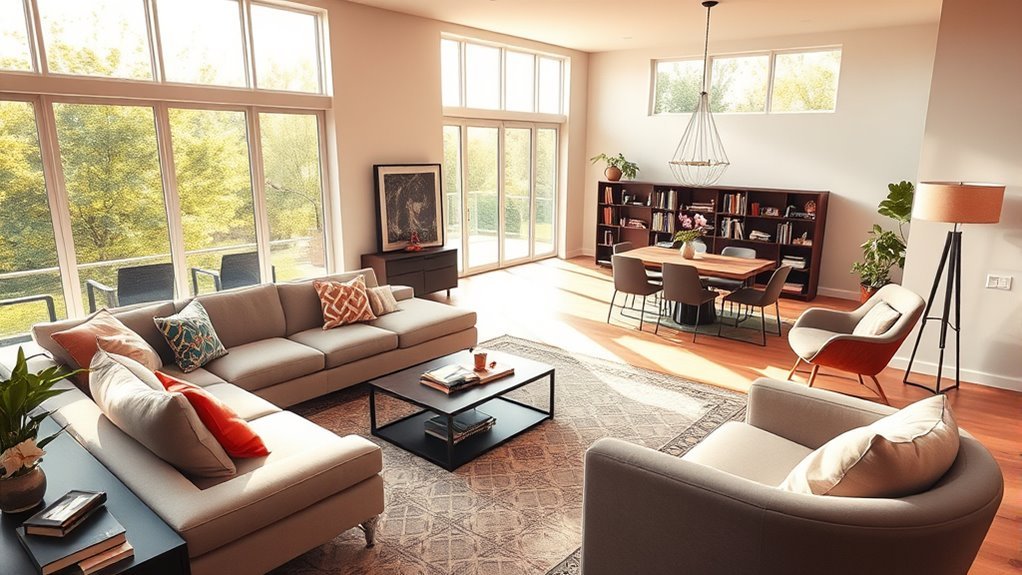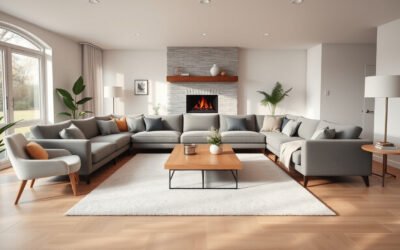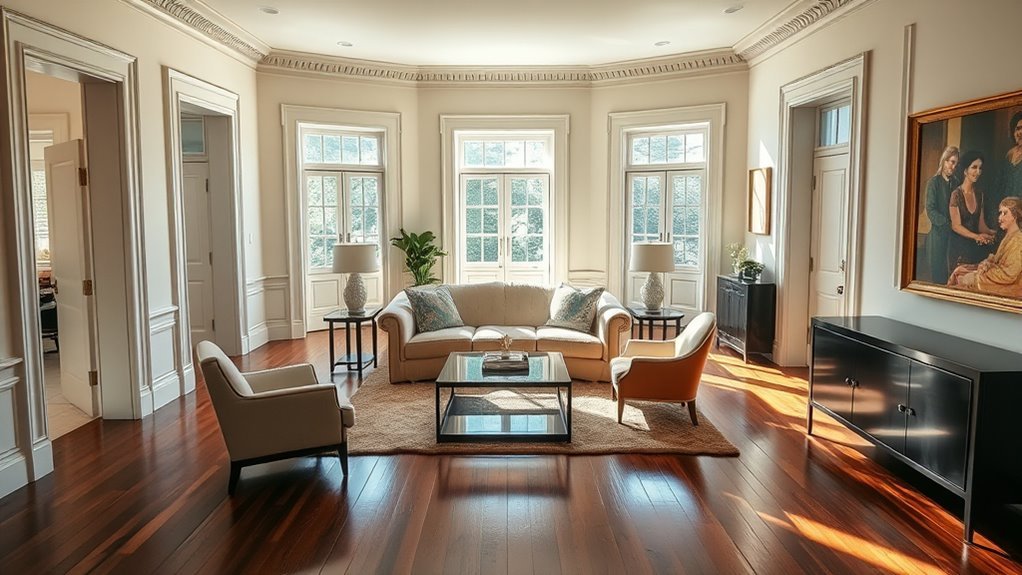
Arranging seating in a living room with multiple doorways is a space-planning puzzle, but it is not impossible. The goal is simple: keep the main paths open, protect every doorway, and pull the seating close enough together that people can talk without feeling like they are sitting in a hallway.
Quick Answer
To set up seating in a living room with multiple doorways, map the door swings and walking paths first, then float seating around a focal point without crossing those paths. Aim for about 36 inches on main walkways, use rugs to define zones, and choose flexible pieces like swivel chairs, benches, or modular seating.
Key Takeaways
- Plan the walking routes before placing furniture; doorways should stay easy to see, open, and use.
- Float seating away from walls when needed so the conversation area sits between doorways instead of blocking them.
- Use an area rug, lighting, and small tables to make the seating zone feel intentional.
- Choose furniture that can shift as the room changes, such as swivel chairs, storage ottomans, nesting tables, and modular pieces.
- Treat design “rules” as helpful guidelines, not strict laws; comfort, clear movement, and safety come first.
At a Glance
| Time Required | 30 to 60 minutes for measuring, taping, and testing a layout |
| Difficulty | Easy to moderate, depending on room size and number of doorways |
| Tools Needed | Tape measure, painter’s tape, graph paper or phone notes, furniture dimensions, and a helper for moving heavy pieces |
| Cost | $0 if rearranging existing furniture; $20 to $50 if buying tape, rug pads, or cord covers |
Common Layout Challenges in Multi-Access Living Rooms
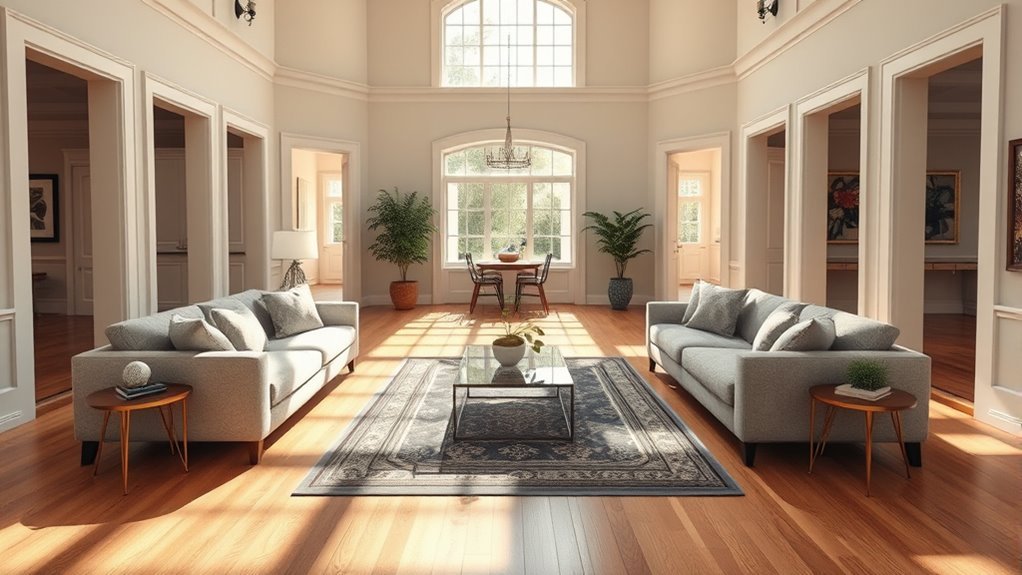
A living room with several entrances can feel tricky because every wall seems to be interrupted by a doorway, hallway, stair opening, or pass-through. That leaves fewer obvious spots for a sofa, TV, console, or reading chair.
The biggest mistake is treating the room like a standard four-wall box. In a multi-access living room, the “invisible furniture” matters just as much as the sofa: the walking paths, door swings, sightlines, and space people need to move through the room comfortably.
Common problems include:
- Doorways competing with the focal point: A fireplace, TV, or picture window may sit between two entrances.
- Traffic cutting through the seating area: People may walk between the sofa and coffee table to reach another room.
- Furniture backs facing entrances: This can make the room feel closed off unless the layout is balanced with a console, rug, or lighting.
- Oversized sofas: A deep sectional can quickly block a doorway or shrink the main route through the room.
- Floating furniture that feels unfinished: Seating placed away from walls needs a rug, table, or lamp to feel intentional.
Note: The 36-inch walkway guideline is a practical, accessibility-minded target for main paths. Private homes are not always governed by public accessibility standards, but the U.S. Access Board’s accessible-route guidance is a useful reference when you want a room that feels easier to move through.
Measure Doorways, Pathways, and Furniture First
Before moving furniture, take 10 minutes to measure and mark the room. This step prevents the most common problem in multi-access living rooms: a layout that looks good from one angle but fails once people start walking through it.
- Measure the room: Note the length and width of the living room, plus any alcoves, windows, fireplaces, built-ins, radiators, vents, and stair openings.
- Measure every doorway: Include the door width, trim, and the direction each door swings. For sliding or pocket doors, note the clear opening.
- Draw the natural paths: Mark how people move from one doorway to the next. These are your no-block zones.
- Measure your furniture: Write down the full width, depth, and height of sofas, chairs, ottomans, tables, and media pieces.
- Tape the footprint: Use painter’s tape on the floor to test the sofa, chairs, and coffee table before lifting anything heavy.
For the main route through the room, aim for about 36 inches of clear walking space when possible. A short pinch point near a doorway may still function if it remains open and easy to pass through, but avoid creating a narrow squeeze as the normal route.
Warning: Do not block doors or windows with large furniture. The U.S. Fire Administration recommends making sure doors and windows are not blocked as part of a home fire escape plan.
Choose a Focal Point Without Blocking Traffic
A room with multiple doorways still needs a focal point. Without one, the seating can feel scattered. The focal point gives the furniture a reason to face a certain direction.
Your focal point might be:
- a fireplace;
- a TV or media wall;
- a large window or view;
- a bookcase wall;
- an artwork or gallery wall;
- a central coffee table in a conversation-focused room.
Once you choose the focal point, place the largest seating piece first. In many multi-access rooms, that means floating the sofa instead of pushing it against a wall. A floating sofa can sit parallel to a traffic path while keeping the walkway open behind it or beside it.
If the back of the sofa faces an entrance, soften it with a slim console table, a lamp, or a bench. This makes the sofa feel like a planned room divider rather than a barrier.
Optimal Seating Arrangements for Easy Access and Conversation
The best seating arrangement depends on where the doorways sit. Start with the path people use most often, then build the seating area beside that path instead of across it.
Recommended Products
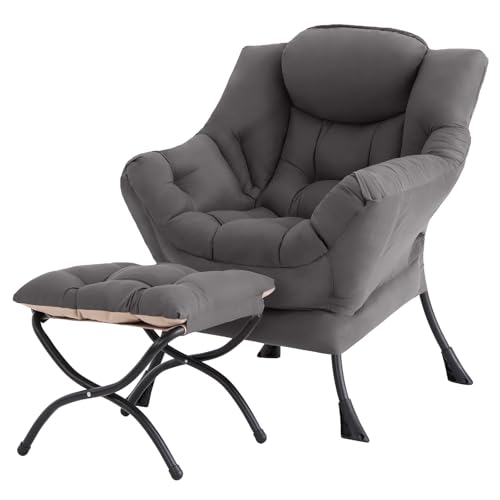
Strong and High-quality Living Room Chairs: Our lazy chair with ottoman is made of sturdy rust-proof pipe steel frame and soft PP cotton. This makes our lounge chair can be used for a long time without rust and has a longer service life. Heavy-duty steel pipes can prevent chair from deformation or dent. This comfy chairs for living room can hold up to 400 pounds. Besides, We have designed a protective padded cushion under the chair to reduce a certain amount of wear.
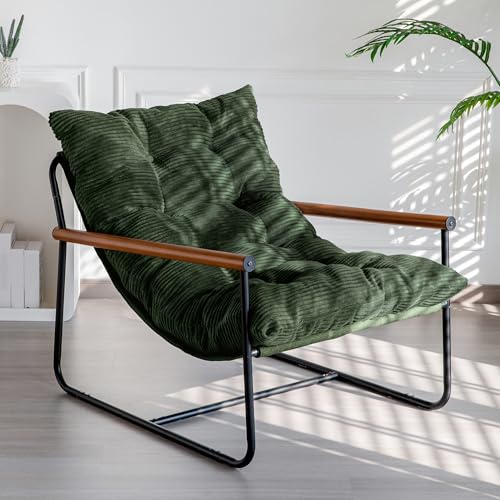
Minimalist Accent Chair: The tufted craft adds to the artistic style, which can meet the needs of most home décor styles. This accent chair has opted for a minimalist design in its appearance. The soft colours give a feeling of peace and relaxation.

360-Degree Swivel: This 360° swivel accent chairs set of 2 offers a stylish and contemporary touch to your space. With its compact size, this multi-functional chair is perfect for bedroom, living room, small spaces for reading corner, entrance, balcony or vanity chair, footstool, making it a versatile choice for any room
Option 1: Floating Sofa With Two Chairs
This is often the strongest layout for a living room with two or three entrances. Place the sofa facing the focal point, then set two chairs across from it or at a soft angle. Leave the main walkway behind the sofa or along one side.
This layout works well when the room needs both conversation and TV viewing. It also keeps the corners lighter than a large sectional would.
Option 2: Sofa and Swivel Chairs
Swivel chairs are especially useful in rooms with several doorways because they can turn toward a TV, fireplace, window, or conversation area without needing to be dragged across the floor.
Use swivel chairs when the focal point and the main entrance are not on the same wall. They make the room feel more flexible and less locked into one direction.
Option 3: Small Sectional With the Open Side Facing Traffic
A sectional can work, but only if it does not cut off a doorway. Choose a compact sectional or chaise that opens toward the center of the room, not across the main path.
If the chaise blocks the natural route, switch to a sofa plus ottoman. You will get the same lounging comfort with more flexibility.
Option 4: Two Loveseats or Apartment Sofas
In a square room with doorways on opposite sides, two smaller sofas facing each other may work better than one large sofa. This creates a clear conversation cluster while leaving traffic to move around the outside.
Keep a coffee table or ottoman centered between them, and avoid making people walk through the middle of the seating group to reach another room.
Option 5: Bench or Ottoman Near a Doorway
When a full chair would crowd a doorway, use a backless bench, pouf, or storage ottoman. These pieces provide extra seating without creating a tall visual wall.
A backless piece is also easy to move during gatherings, making it ideal for rooms that shift between quiet evenings and family visits.
Pro Tip: Keep about 16 to 20 inches between a sofa and coffee table in most rooms. That distance is close enough to reach a drink but usually leaves enough knee room for comfort.
Creating Zones in Your Living Room Layout for Functionality
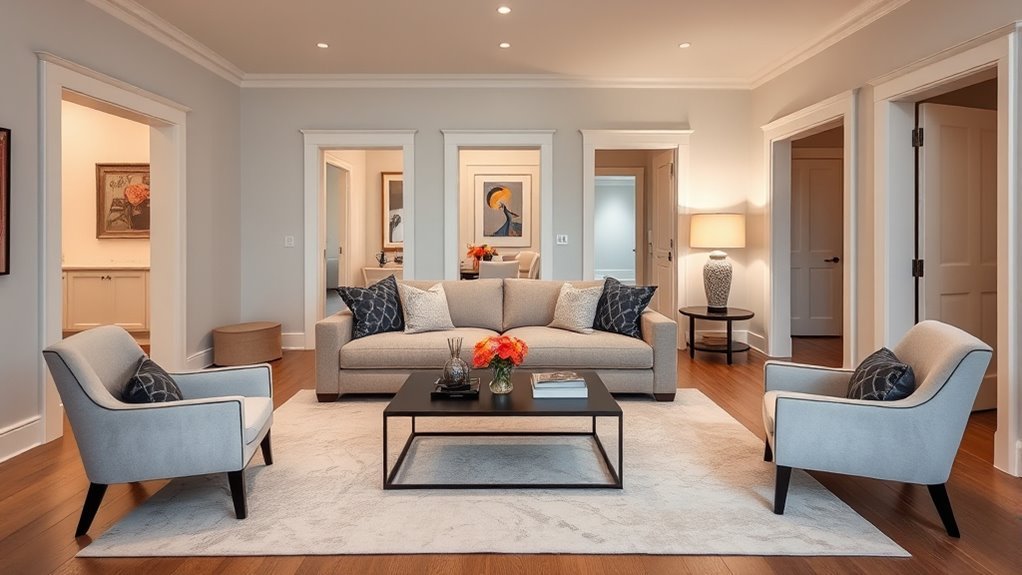
Zones help a multi-access living room feel calm instead of chopped up by doorways. A zone is simply a defined area for one activity, such as conversation, TV viewing, reading, play, or a small work corner.
Use these tools to create zones without blocking movement:
- Area rugs: Place the rug under the seating group so the furniture feels connected. Keep rug edges out of the busiest walking lines when possible.
- Lighting: Use a floor lamp beside a reading chair, table lamps near a sofa, or wall sconces where floor space is tight.
- Low bookcases: A low shelf can divide a seating area from a walkway without making the room feel closed.
- Console tables: A slim console behind a floating sofa gives the seating zone a finished edge.
- Round tables: Round coffee tables and side tables are easier to move around in rooms with several traffic paths.
If the living room also serves as a playroom or dining overflow space, keep that secondary zone near the doorway that supports it. For example, a toy basket near the hall to the bedrooms makes more sense than placing it across the main path from the sofa.
The easiest way to make a multi-doorway living room feel larger is to protect the pathways first and decorate the spaces between them.
Use Versatile Furniture to Maximize Space
Versatile furniture is your best friend in a living room with multiple doorways. The fewer heavy, fixed pieces you use, the easier it is to keep the room open and comfortable.
Look for pieces that solve more than one problem:
- Storage ottomans: They work as footrests, extra seating, hidden storage, and a coffee table with a tray.
- Nesting tables: Pull them out when guests need a spot for drinks, then tuck them away.
- Swivel chairs: They adapt to several focal points without changing the floor plan.
- Modular sofas: They let you change the chaise side or rework the layout as your needs change.
- Benches: They add seating without a bulky back blocking sightlines.
- Wall-mounted shelves: They provide storage without taking up floor space near doorways.
Also pay attention to furniture height. Lower-profile pieces can help a busy room feel less crowded, especially when you need furniture near a doorway. If you mix sofas, chairs, and ottomans, try to keep seat heights within about 4 inches of each other so guests do not feel like one person is perched high while another sinks low.
Recommended Products

【Soft and Comfortable Material】 The surface of stool made of high-quality teddy fabric that is super soft to the touch, bring you a warm feeling and compliments any decor style.
Small, Narrow, or Awkward Living Room Solutions
Some multi-access living rooms are not just busy; they are small, narrow, or oddly shaped. In those rooms, every inch matters.
If the Room Is Narrow
Use a slim sofa along the longest uninterrupted wall or float a small sofa parallel to the walkway. Choose armless or narrow-arm chairs to save width. Replace a rectangular coffee table with a round or oval one so people can move around it easily.
If Every Wall Has a Doorway
Float the seating group in the center and use a rug to anchor it. Place the largest piece so it does not face directly into the busiest doorway. A narrow console behind the sofa can create a soft boundary without blocking traffic.
If the TV Wall Conflicts With Traffic
Use a swivel mount, a smaller media console, or a corner TV placement. Do not force the sofa across a doorway just to face the screen straight on. Angled chairs or swivel chairs can help the room support both viewing and movement.
If You Need Extra Seating for Guests
Store lightweight stools, poufs, or folding chairs nearby. Bring them out for company and move them away from doorways afterward. Permanent furniture should serve daily flow, not only occasional entertaining.
Layout Mistakes to Avoid
A multi-access room can go wrong quickly when furniture is chosen before the traffic pattern is clear. Avoid these common mistakes:
- Blocking the shortest route: People will still use the shortest path, even if furniture is in the way.
- Buying a sofa before measuring doorways: Measure the room and delivery path before ordering large furniture.
- Using a rug that is too small: A tiny rug can make the seating feel disconnected. At least the front legs of the main seating pieces should usually touch the rug.
- Letting cords cross walkways: Route lamp and charger cords along walls or use cord covers.
- Putting tall furniture beside doorways: Tall pieces can make entrances feel narrow and can block sightlines.
- Overloading the corners: Corners near doorways often need breathing room, not another accent table.
Note: Rugs can define zones beautifully, but loose throw rugs and clutter are common trip hazards. The CDC lists throw rugs and clutter among home hazards that can contribute to falls, so use rug pads, low-profile edges, and clear paths.
Final Safety and Flow Check
Once the seating is in place, walk the room as if you are using it on a normal day. Carry a laundry basket, hold a drink, or walk through with another person. These small tests reveal problems that a floor plan may miss.
Use this final checklist:
- Can every door open fully enough for normal use?
- Can people move from one doorway to another without turning sideways?
- Are windows, doors, and escape routes free of large furniture?
- Can someone seated reach a table or surface?
- Does the seating face a clear focal point?
- Can guests talk without raising their voices?
- Are rug corners flat and secured?
- Are cords kept out of walkways?
- Does the room still feel open when all chairs are pulled into use?
If the answer is no to more than one of these questions, remove one piece of furniture before buying anything new. In rooms with multiple doorways, editing often improves the layout more than adding another item.
Frequently Asked Questions
How do you arrange a living room with two entrances?
For a living room with two entrances, keep the path between the entrances clear and place the seating beside that path, not across it. A floating sofa with two chairs often works well. Aim the seating toward a focal point, then use a rug to define the conversation area.
What is the 2/3 rule for living rooms?
The 2/3 rule is a flexible proportion guideline, not a strict law. It is often used to keep furniture from looking too large or too small. For example, a coffee table may look balanced when it is about two-thirds the length of the sofa, and a sofa should feel proportionate to the wall or zone it sits in.
What is the 3-5-7 rule of decorating?
The 3-5-7 rule is a styling guideline that uses odd-numbered groupings to make decor feel natural. You might style three objects on a side table, five pillows across a large sectional, or seven mixed textures in a room. It helps with visual rhythm, but it should not override comfort or traffic flow.
What is the 4-inch rule for seating in a living room?
The 4-inch seating rule means the seat heights of sofas, chairs, and ottomans in the same conversation area should ideally stay within about 4 inches of one another. This helps people sit at similar eye levels and keeps mixed furniture from feeling awkward or mismatched.
How much space should be left near doorways?
Leave enough space for the door to open and for people to pass comfortably. About 36 inches is a strong target for main walkways. At a doorway or short narrow point, the route may be tighter, but it should never feel blocked or unsafe.
Can a sofa face away from a doorway?
Yes, a sofa can face away from a doorway if there is still a clear path behind it. To make it feel intentional, place a slim console table, lamp, or bench behind the sofa. Avoid placing the sofa so close to the doorway that it feels like a wall.
Is a sectional a bad idea in a room with multiple doorways?
A sectional is not automatically bad, but it must be scaled carefully. Choose a compact or modular sectional and keep the chaise away from the main traffic path. If the sectional blocks a doorway, use a sofa with a movable ottoman instead.
Where should the TV go in a living room with many doors?
Place the TV on the wall that allows seating to face it without crossing a major walkway. If no full wall is available, consider a corner setup, a smaller media console, or a swivel mount. Do not sacrifice doorway access just to center the TV.
Conclusion
A living room with multiple doorways works best when you design the empty space first. Measure the room, protect the door swings, keep the main paths open, and then build a seating zone that supports conversation, comfort, and daily movement.
Once the pathways are clear, the rest becomes easier. Use a rug to anchor the seating, choose flexible furniture, keep tables within reach, and let the room’s focal point guide the arrangement. With thoughtful placement, even a busy multi-access living room can feel welcoming, balanced, and easy to live in.
Sources
- U.S. Access Board — Guide to the ADA Accessibility Standards: Accessible Routes — supports the 36-inch accessible-route reference and clear-path planning.
- U.S. Access Board — Entrances, Doors, and Gates — supports doorway clearance and maneuvering considerations.
- U.S. Fire Administration — Home Fire Escape Plans — supports keeping doors and windows unblocked for escape planning.
- CDC — Facts About Falls — supports the caution about throw rugs, clutter, and trip hazards.