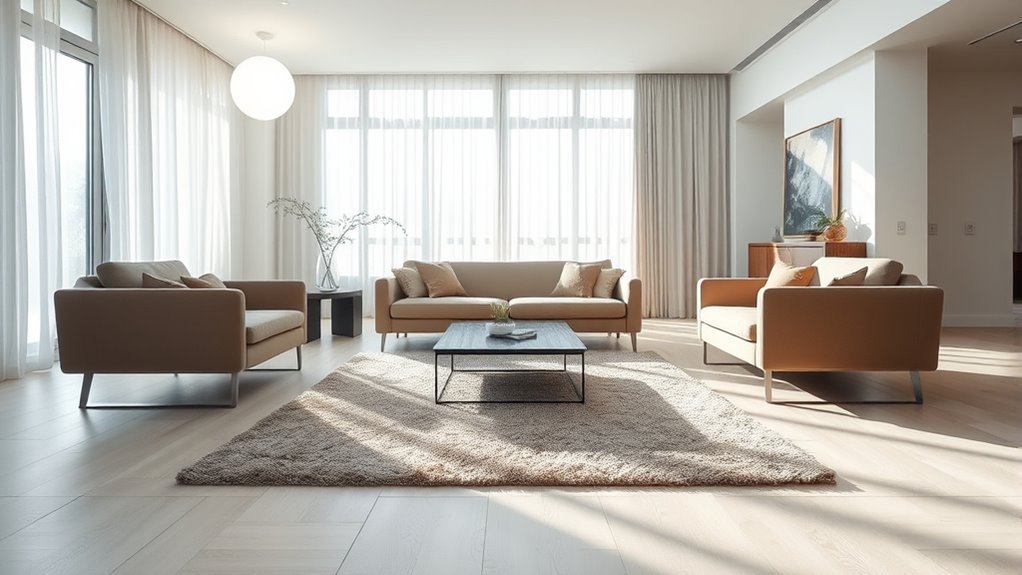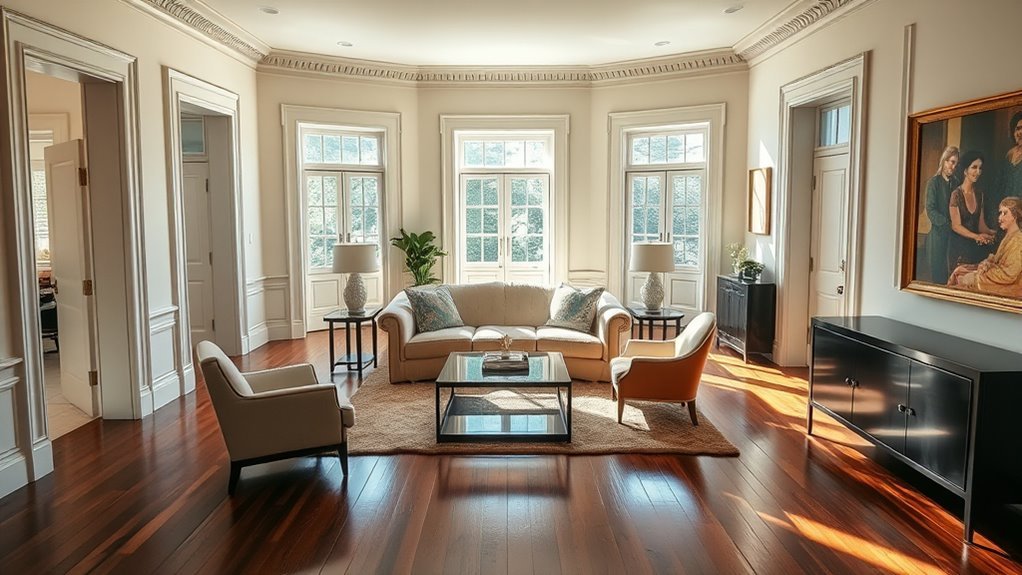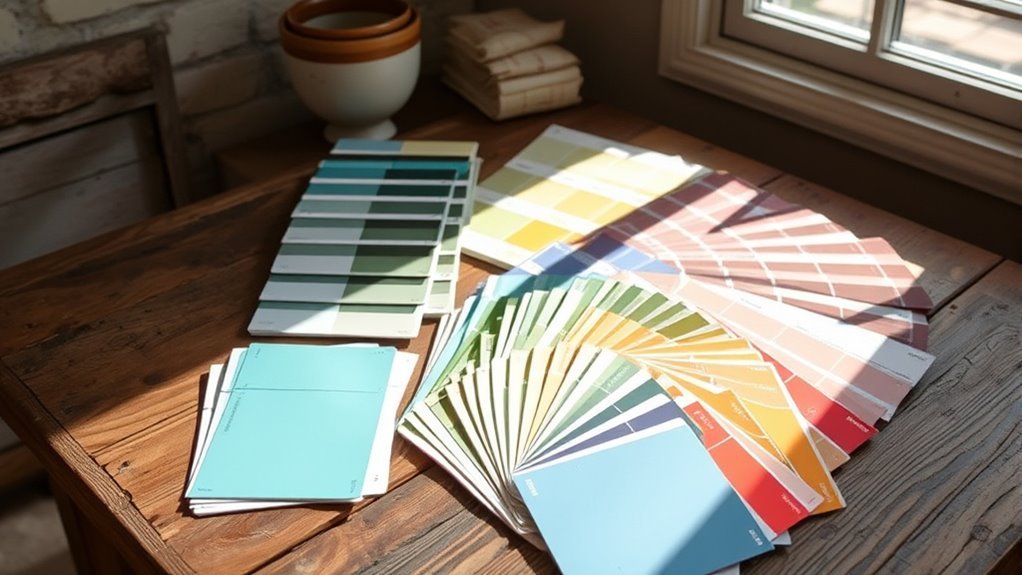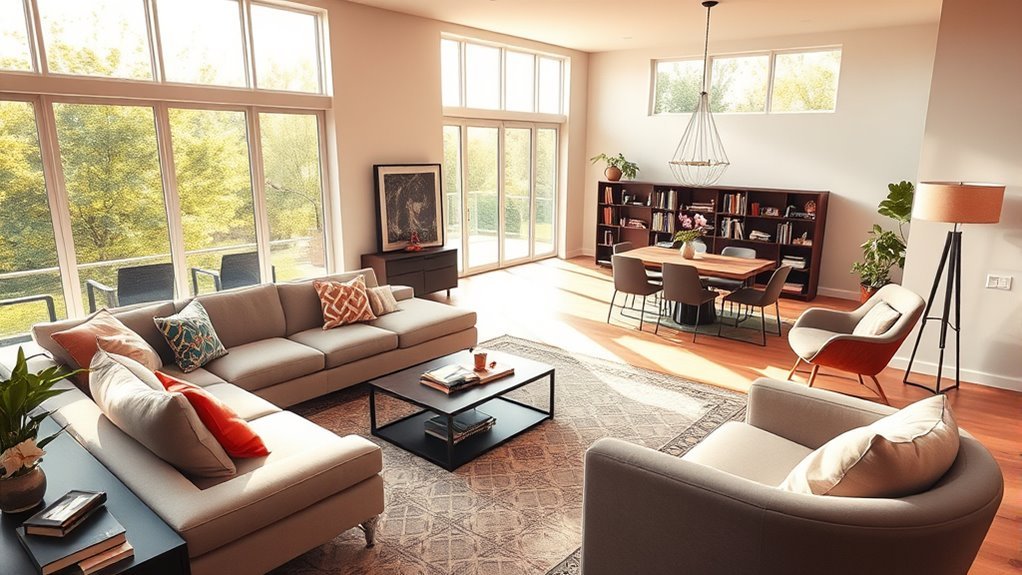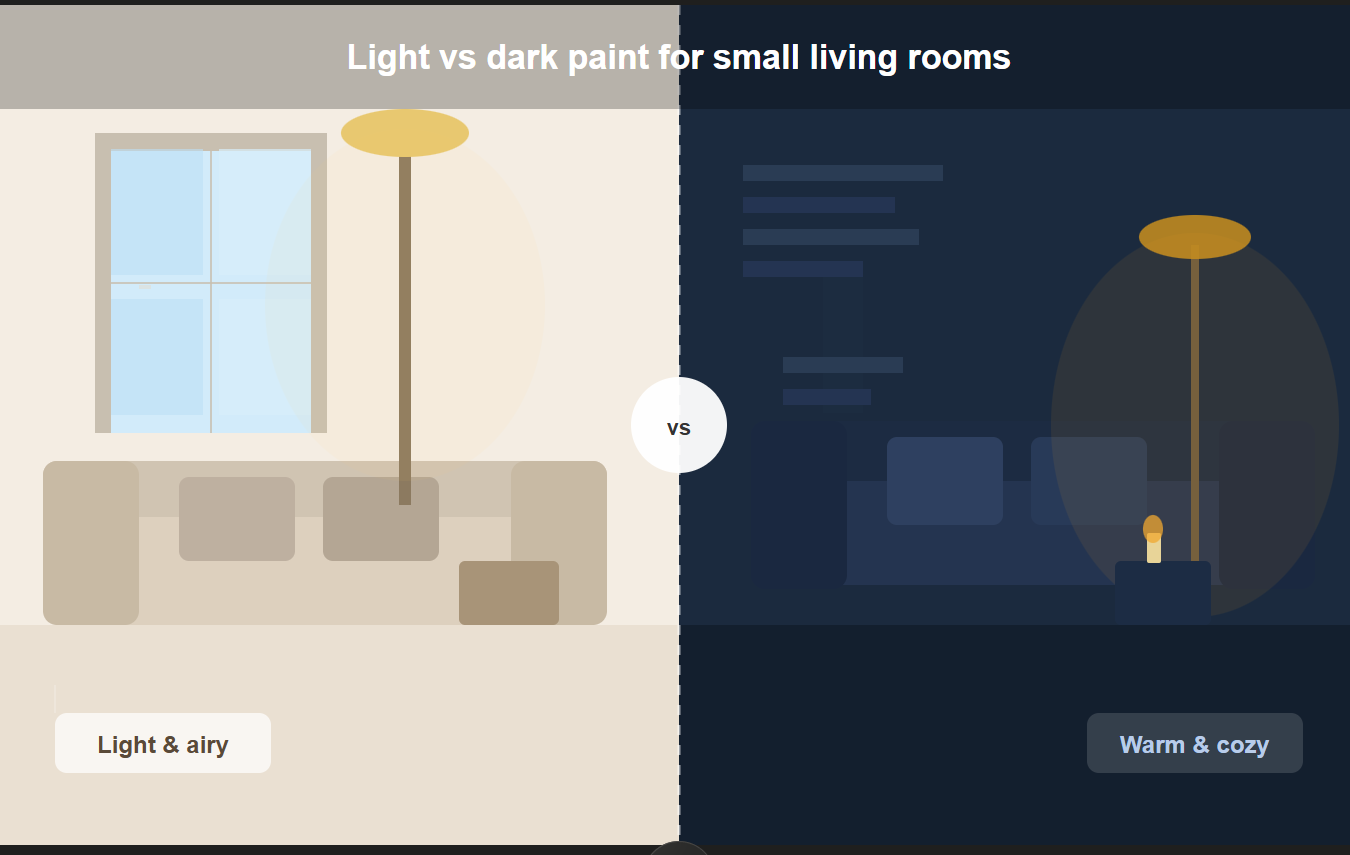
Your living room feels smaller than it should, and you have already moved the furniture twice. Often, the real issue is on the walls. Weighing light vs dark paint for a small living room comes down to four practical factors: your natural light, your furniture weight, your paint sheen, and how you use the room day and night.
Quick Answer
Light paint colors with a Light Reflectance Value (LRV) between 60 and 85 make a small living room feel larger and brighter by bouncing available light across the room. Dark paint colors (LRV under 25) blur corner shadows to create a cozy, dramatic atmosphere, provided you pair them with layered 2700K–3000K lighting and contrasting lighter decor.
Key Takeaways
- Target the right LRV: Warm light neutrals (LRV 60–75) outperform stark cool whites (LRV 85+) in dim rooms because cool whites often read gray and shadowy without strong sunlight.
- Support dark walls with multi-point light: Deep navy, charcoal, or olive walls absorb 75% to 97% of light, requiring floor lamps, sconces, and table lamps rather than a single ceiling fixture.
- Match sheen to color depth: Use matte or eggshell on dark walls to prevent shiny roller glare, and choose washable eggshell or satin on light walls to wipe away scuffs easily.
- Use color drenching to erase borders: Painting walls, baseboards, and the ceiling in one unified shade stops the eye from tracking where short walls start and end.
- Test samples across 24 hours: Observe large swatches on multiple walls in morning, midday, and evening lamp light before committing to a full gallon.
How Light Colors Affect Small Living Rooms
Light colors such as warm whites, soft creams, pale greiges, and muted pastels reflect a high percentage of natural and artificial light. By bouncing brightness into corners, light walls push visual boundaries outward and make a tight living room feel open and airy.
Designers measure this bounce using Light Reflectance Value, or LRV, which ranks colors on a scale from 0 (absolute black) to 100 (pure theoretical white). Any shade above LRV 50 reflects more light than it absorbs. Popular small-space staples such as Sherwin-Williams Alabaster SW 7008 (LRV 82) and Benjamin Moore White Dove OC-17 (LRV 83.16) reflect over 80% of available light while holding enough creamy pigment to avoid feeling clinical.
Light shades also offer long-term decorating flexibility. Because the walls stay visually quiet, you can swap in patterned area rugs, textured curtains, or bold accent chairs over time without repainting.
On the practical side, pale walls show everyday handprints, pet marks, and furniture scuffs faster than mid-tone or dark shades. Choosing a scrubbable eggshell or satin finish lets you wipe away marks without leaving dull patches.
How Dark Colors Transform Small Spaces
Dark paint does not automatically shrink a room. Deep shades with an LRV below 20—such as Benjamin Moore Hale Navy HC-154 (LRV 8.36), forest green, or warm charcoal—absorb light and soften the shadows where walls meet, creating visual depth and a tailored, enveloping feel.
This receding effect is strongest when you use color drenching: painting the walls, baseboards, crown molding, doors, and ceiling the exact same deep hue. High-contrast white trim frames every edge of a small room like a grid, reminding your eye of the tight dimensions. Painting all surfaces one color erases those stopping points so the room reads as a unified whole.
To keep a dark room inviting rather than cave-like, balance the deep pigment with multi-point lighting and high-contrast textures. Pair moody walls with a cream or camel sofa, a pale natural-fiber rug, warm wood tables, and brass or glass lamps that catch and scatter light.
Warning: Avoid dark paint in windowless or dim rooms if you rely on a single overhead ceiling fixture. Without layered lamps and sconces at eye level, low-LRV walls absorb most ambient light and make the room feel oppressive.
Quick Verdict: Light vs Dark Paint for a Small Living Room
Choosing between light and dark paint depends on whether your priority is maximizing daytime brightness or creating evening intimacy. Both palettes succeed in compact living rooms when matched with the right sheen, furniture contrast, and lighting plan.
| Feature | Light Paint (LRV 55–90+) | Dark Paint (LRV 3–25) |
|---|---|---|
| Room feel | Open, airy, expansive | Cozy, cocooning, intimate |
| Best for | Daytime spaces, rentals, flexible decor | TV/media rooms, evening lounging, dramatic style |
| Furniture pairing | Works with light, mid-tone, or dark furniture | Best with cream, tan, pale wood, and metallic accents |
| Recommended finish | Eggshell or satin for easy spot-cleaning | Matte or low-luster eggshell to prevent glare and lap marks |
| Maintenance | Shows scuffs faster; resists burnishing in eggshell/satin | Hides dark marks; shows pale dust and oily fingerprints |
| Lighting needs | Amplifies modest natural or artificial light | Requires 3+ layered light sources (ambient, task, accent) |
| Mood | Calm, crisp, uplifting | Sophisticated, moody, grounded |
Choose light paint if your living room is used heavily during the day, has limited lighting fixtures, is a rental, or needs to accommodate frequent decor changes.
Choose dark paint if you use the room primarily in the evening for movies or conversation, have strong sunlight or multiple lamps, and want a cozy, boutique-style focal space.
Decision Checklist Before You Choose a Paint Color
Evaluate your living room’s physical constraints before picking up paint chips. Compass orientation, ceiling height, and existing furniture finishes dictate how a shade will actually look on drywall.
- Check window orientation: North-facing windows bring in cool, bluish indirect light that can make pure white look gray; choose warm whites, creamy beiges, or rich moody tones instead. South- and west-facing rooms get intense warm sunlight that supports almost any palette, while east-facing rooms are bright in the morning and cooler by late afternoon.
- Weigh your largest furniture pieces: If you already own an espresso leather sofa, dark walnut shelving, and heavy drapes, dark walls can make the room feel bottom-heavy unless you add a large cream rug and light artwork.
- Measure ceiling height: Rooms with ceilings under 8 feet feel taller when the ceiling is painted a crisp lighter shade or color-drenched to match the walls with zero trim contrast.
- Match flooring undertones: Honey oak and warm pine floors pair cleanly with creamy whites, warm greiges, olive green, and navy. Cool gray laminate or tile works better with soft off-whites, slate blue, or charcoal.
- Consider primary room hours: A daytime reading and work space benefits from high-LRV walls (LRV 60–85), while an evening TV den thrives with low-glare dark walls (LRV 5–25).
- Inspect drywall texture: Bumpy plaster or patched drywall shows fewer flaws under flat or matte paint than under reflective satin finishes.
Key takeaway: Never choose a paint color by its name or online photo alone. Match the LRV, undertone, and sheen to your window direction and furniture contrast.
Recommended Products

PAINT + PRIMER: KILZ TRIBUTE is a low VOC, 100% acrylic advanced technology paint and primer in one formulated for superior hide and coverage with exceptional durability. Paint and primer covers light-medium stains and light-dark color changes.
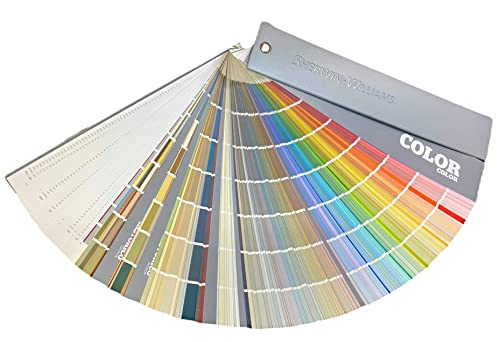

Easily mix, match, and plan flawless color schemes with this expansive card deck featuring 200 colors
How to Maintain Light and Dark Paint
Keeping painted walls fresh requires matching your cleaning method to both the pigment depth and the surface sheen. Scrubbing the wrong finish can leave permanent shiny spots known as burnishing.
Color Maintenance Tips
For light-colored walls in busy living rooms, select a washable matte, eggshell, or satin formula. Wait at least two to four weeks after painting for the latex film to cure fully before doing any deep washing, though you can blot fresh spills gently after four to six hours.
For dark walls, dust surfaces monthly with a dry microfiber cloth or a soft vacuum brush attachment. While deep shades hide dark shoe scuffs, pale household dust and skin oils from hands show up against dark matte pigment if left to build up.
Pro tip: Before buying a full gallon, paint a two-foot square sample on two different walls—one next to a window and one in a shaded corner—or use movable peel-and-stick swatches. Check them at 9 a.m., 2 p.m., and 8 p.m. under your regular lamps.
Cleaning Strategies for Walls
When spot-cleaning either palette, always dust first so you do not rub loose grit into the paint film. Dampen a soft, non-abrasive sponge with plain warm water and gently wipe the mark. If water alone does not lift the smudge, mix warm water with a few drops of mild dish soap.
Wash the wall from the bottom upward using light circular motions, then rinse immediately with a clean damp sponge and pat dry with a soft towel. Washing from the bottom up prevents dirty soap drips from running down dry lower walls and leaving stubborn streaks. Never use glass cleaner, abrasive scouring pads, or harsh solvent sprays, which strip paint resin and leave pale rings on dark walls.
Note: Paint finish affects light behavior as much as color does. According to Sherwin-Williams guidance on light and gloss, higher gloss levels reflect more directional light than matte finishes, which can intensify brightness on light walls but create distracting glare on dark walls.
How Paint Color Shapes the Mood of Your Living Room
Paint color sets the emotional temperature of your living room the moment you step inside. Light neutrals and soft pastels create an airy, serene backdrop that reduces visual clutter and keeps daytime routines feeling energized.
Deep tones like midnight blue, espresso, terracotta, and sage-charcoal create a sense of shelter and intimacy. Instead of fighting a small room’s compact footprint, dark walls lean into it—turning an awkward small box into an intentional library, lounge, or media room.
You can also blend both moods. Painting three walls a warm alabaster or greige while using a deep shade on a built-in bookcase wall or fireplace surround adds architectural weight without sacrificing overall brightness.
Lighting Strategies That Boost Your Paint Color
Paint color and lighting cannot be separated; paint only looks as good as the light hitting it. Adjusting your bulb specifications and fixture heights can keep a light room from looking sterile and stop a dark room from feeling gloomy.
Layered Lighting Techniques
Build three distinct layers of light in a small living room: ambient, task, and accent. Ambient lighting provides overall illumination, task lighting (such as a reading floor lamp beside the sofa) illuminates specific seating zones, and accent lighting (such as picture lights or LED shelf strips) washes light directly across the walls.
Pay close attention to bulb specs. According to the U.S. Department of Energy Lighting Facts guidelines, warm white bulbs between 2700K and 3000K are best for living spaces because they cast a flattering, cozy glow, whereas cool 4000K–5000K bulbs can make paint look harsh and institutional. Choose LED bulbs with a Color Rendering Index (CRI) of 90 or higher so your wall color and undertones look true after sunset.
Using Natural Light to Your Advantage
Maximize whatever daylight enters your living room before choosing your final swatch. Hang curtain rods 4 to 6 inches above the window frame and extend them 6 to 10 inches past each side so open drapes stack against the wall instead of blocking the glass.
In dim north-facing rooms, sheer linen or cotton curtains let daylight filter through while softening sharp shadows. Hang a large wall mirror perpendicular to or directly opposite a window to bounce natural light deeper into shaded corners.
Placing Fixtures Strategically
Relying solely on recessed ceiling cans (downlights) pushes light straight onto the floor while leaving the top edges of your walls and ceiling in shadow. Counteract this by placing wall sconces, torchiere floor lamps, and table lamps with white or ivory shades around the perimeter of the room to diffuse light outward across the painted surfaces.
How to Mix Light and Dark Colors for Contrast
You do not have to commit to an all-white or all-dark room. Following a balanced 60-30-10 color ratio—60% dominant wall color, 30% secondary furniture and rug tone, and 10% accent decor—keeps a small living room cohesive.
If you choose light walls (60%), anchor the lower half of the room with a medium-to-dark sofa or area rug (30%) and add black metal lamps, deep-toned throw pillows, or framed art (10%). The dark elements ground the room so pale walls feel curated rather than unfinished.
If you choose dark walls (60%), reverse the formula. Use a light-colored sofa, an ivory or jute rug, and pale wood or glass tables (30%), finished with warm brass, chrome, or light ceramic accents (10%). Glass and acrylic coffee tables are especially helpful in dark-walled small rooms because they let light pass through to the rug underneath.
Practical Tips for Picking the Right Paint Color
Follow these six steps in order to narrow down your options and avoid costly repainting:
- Measure your natural light first: Stand in the room at morning, noon, and late afternoon to see whether sunlight is warm and direct or cool and shadowed.
- Check the LRV number on the back of the swatch: Aim for LRV 60–78 for a forgiving, bright light neutral, or LRV 5–20 for a rich, intentional dark shade.
- Identify the undertone by comparing whites: Place your chosen paint chip next to a sheet of printer paper to immediately spot hidden yellow, pink, blue, or green undertones.
- Hold swatches vertically against your sofa and floor: Always view paint samples upright on the wall rather than flat on a table, since vertical surfaces reflect light differently than horizontal ones.
- Decide how to treat the trim and ceiling: Use a crisp white (LRV 82+) on trim for classic contrast with light walls, or paint the trim and ceiling the same shade as dark walls for a seamless color-drenched look.
- Select the right sheen before ordering: Pick matte or eggshell for dark walls to eliminate shiny spots, and eggshell or satin for light walls that need easy cleaning.
Recommended Products

PERFECT SAMPLES: These 12" x 9" white, styrene panels provide a smooth, warp-free surface for testing up to 5 color samples with paint, stain or other coatings.

Brand: Benjamin moore
!["BENJAMIN MOORE" CLASSIC COLORS FAN DECK [CASE OF 1]](https://m.media-amazon.com/images/I/41Xq67AO80L._SL500_.jpg)
Very good condition
Paint Brands to Compare for Small Living Rooms
Paint brands differ in pigment density, resin durability, and exact sheen percentages. Comparing how each manufacturer formulates its interior finishes helps you get even coverage in fewer coats.
Benjamin Moore offers seven core interior sheens (from Flat and Ulti-Matte to High Gloss) and prints LRV scores on every color page, with popular small-room staples like Revere Pewter HC-172 (LRV 55.05) and White Dove OC-17 (LRV 83.16). Sherwin-Williams prints LRV values on the back of its color chips and provides durable washable lines such as Emerald and Duration Home. Behr, sold at The Home Depot, outlines traffic-based durability in the Behr interior paint sheen guide and reaches up to LRV 94 with Ultra Pure White PR-W15. Valspar, widely available at Lowe’s, breaks down room-by-room luster options in the Valspar paint sheen guide. Farrow & Ball is prized for small spaces thanks to its Farrow & Ball Estate Emulsion (2% sheen), a chalky ultra-matte finish that gives dark colors velvety depth without glare.
Whichever manufacturer you prefer, review their paint finishes side by side in store, as one brand’s eggshell can be as shiny as another brand’s satin.
Recommended Products
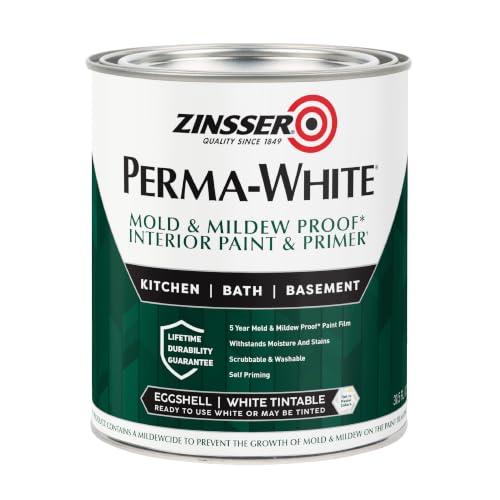
Self-Priming formula - requires no sanding

Use for a variety of indoor and outdoor project surfaces including wood, metal, plaster, masonry or unglazed ceramic

Use for a variety of indoor and outdoor project surfaces including wood, metal, plaster, masonry or unglazed ceramic
Common Mistakes to Avoid in a Small Living Room
Small living rooms magnify subtle color and lighting missteps because the walls sit closer to your seating area and light fixtures. Watch out for these six common pitfalls:
- Painting a dim room stark cool white: High-LRV cool whites (LRV 88+) need abundant daylight to shine; in a low-light room, they look dingy and gray compared to a softer warm white or cream (LRV 70–82).
- Pairing dark walls with a single overhead light: One ceiling fixture casts harsh downward shadows and leaves dark corners looking hollow.
- Ignoring floor and sofa undertones: A cool blue-gray wall paint next to warm honey-oak floors or a camel sofa makes the wood look orange and the walls look icy.
- Using satin or semi-gloss on dark walls: Higher sheens reflect light like a mirror on dark pigment, highlighting every roller mark, drywall seam, and patch.
- Leaving a stark white ceiling over dark walls in a low room: A bright white ceiling atop dark walls creates a sharp horizontal line that visually lowers an 8-foot ceiling.
- Skipping primer under deep colors: Dark paints mixed in an ultradeep base need a gray-tinted primer to achieve true color depth and prevent patchy flashing.
Frequently Asked Questions
Does dark paint make a small room look smaller?
No, dark paint does not automatically make a small room look smaller. When paired with matte finishes, color-drenched trim, and layered 2700K–3000K lighting, deep shades blur corner shadows so wall boundaries appear to recede. Dark paint only feels cramped when used in a dim room with a single overhead light and heavy dark furniture.
What is the best color for a small living room?
Warm whites, soft greiges, and pale sage greens with an LRV between 60 and 83 are the most reliable colors for small living rooms. Shades like Sherwin-Williams Alabaster (LRV 82) or Benjamin Moore White Dove (LRV 83.16) bounce light cleanly while staying warm enough to prevent shadowed corners from looking gray.
What color paint makes a small room look bigger?
Light neutrals with an LRV between 65 and 85—such as creamy off-whites, pale warm grays, and soft sand tones—make a small room look biggest. Painting the walls, baseboards, and ceiling in the same light shade removes high-contrast trim lines, allowing the eye to travel uninterrupted across the space.
Should the ceiling be lighter than the walls in a small living room?
A lighter ceiling helps a small living room with mid-tone walls feel taller by drawing the eye upward. However, if you use very light walls or very dark walls, painting the ceiling the exact same shade as the walls eliminates the hard visual line where the wall ends, which often makes low ceilings feel higher.
Can I use black or charcoal paint in a small living room?
Yes, black or charcoal paint (LRV 3 to 10) works well in a small living room if you balance it with at least three light sources, light-colored upholstery, and reflective accents like mirrors and brass lamps. Choose a matte or dead-flat finish so the dark walls look velvety rather than shiny.
What paint finish is best for a small living room?
Eggshell is the best all-around paint finish for light and mid-tone small living rooms because it offers a soft, low-glare sheen that stands up to gentle spot-cleaning. For dark paint colors, a washable matte finish is better for walls to hide drywall imperfections and prevent glare, paired with satin or semi-gloss on baseboards and doors.
Should I use an accent wall in a small living room?
Use an accent wall in a small living room only if it highlights a natural focal point, such as a fireplace wall, built-in shelving, or the wall behind the main sofa. Keep the remaining three walls a coordinating lighter neutral so the room stays bright while gaining visual depth.
How do I test paint before choosing a color?
Apply two coats of sample paint onto poster boards or use large peel-and-stick swatches so you can move them around the room. Tape them vertically against both a sunlit wall and a shaded wall next to your sofa and flooring, then check the color in morning, afternoon, and evening lamp light before buying gallons.
Final Verdict: Light or Dark Paint?
Your living room’s natural light and primary hours of use should drive your decision. If your space is dim during the day and you want an airy, low-risk backdrop that works with any furniture, choose a warm light neutral with an LRV between 60 and 83 in an eggshell finish.
If your room gets strong daylight—or you use it mainly at night and plan to add warm 2700K–3000K lamps at multiple heights—a matte dark shade applied across walls and trim will give your small living room rich, cozy depth. Order two or three large samples, test them vertically against your walls for a full day, and let your room’s light make the final call.
References and Further Reading
- Sherwin-Williams: Light Reflectance Value guidance
- Sherwin-Williams: How gloss level affects light reflection
- Sherwin-Williams: Alabaster SW 7008 color specifications
- Benjamin Moore: How to choose a paint finish
- Benjamin Moore: Cleaning painted walls
- Benjamin Moore: White Dove OC-17 LRV and color data
- Benjamin Moore: Hale Navy HC-154 LRV and color data
- U.S. Department of Energy: Lighting Facts (CCT and CRI guidelines)
- Behr: How to choose an interior paint sheen
- Valspar: How to choose a paint sheen or finish
- Farrow & Ball: Estate Emulsion technical sheen specifications