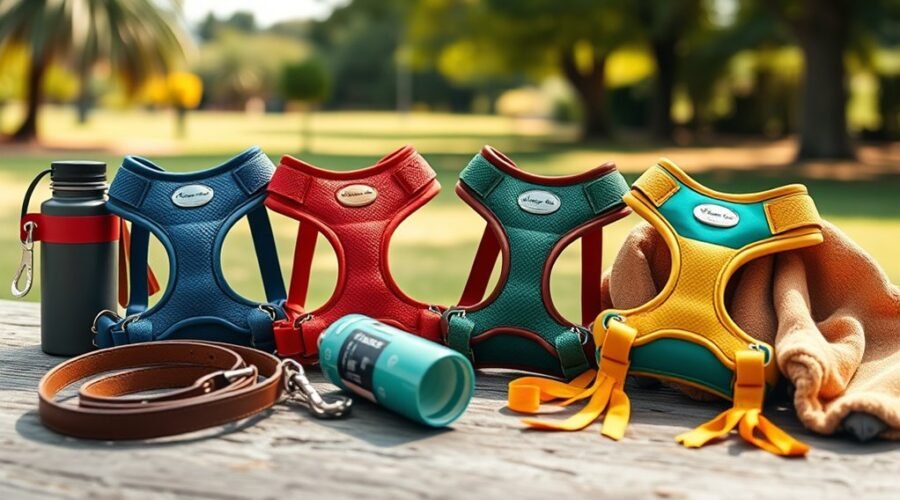
If you need a dog harness for walking, visibility, comfort, or better everyday control, these four options cover different needs. The Noxgear LightHound focuses on nighttime visibility, the Voyager Step-in Air offers lightweight step-in comfort, the Authentic Puppia RiteFit provides extra fit adjustment, and the Dogline Unimax adds a structured vest, reflective details, and a built-in handle.
Important car-safety note: A comfortable walking harness is not automatically a crash-protection harness. None of the four products below should be described as independently crash-test-certified based on the verification used for this update. For vehicle crash protection, choose a dedicated independently certified restraint and follow its installation instructions.
Affiliate disclosure: This article contains Amazon affiliate links. If you buy through them, the publisher may earn a commission at no extra cost to you.
Quick Comparison
| Harness | Best For | Main Strength | Important Limitation |
|---|---|---|---|
| Noxgear LightHound | Night walks | 360° illumination and rechargeable lighting | Requires charging and is not a certified vehicle crash restraint |
| Voyager Step-in Air | Easy everyday walks | Breathable mesh and simple step-in design | Size names should not be confused with breed size |
| Puppia RiteFit | Dogs between standard sizes | Adjustable neck and chest fit | Designed mainly for everyday walking rather than heavy-duty control |
| Dogline Unimax | Training, working, and active use | Built-in handle, reflective trim, and structured vest design | More substantial than a lightweight mesh walking harness |
Noxgear LightHound Reflective Dog Harness, Small
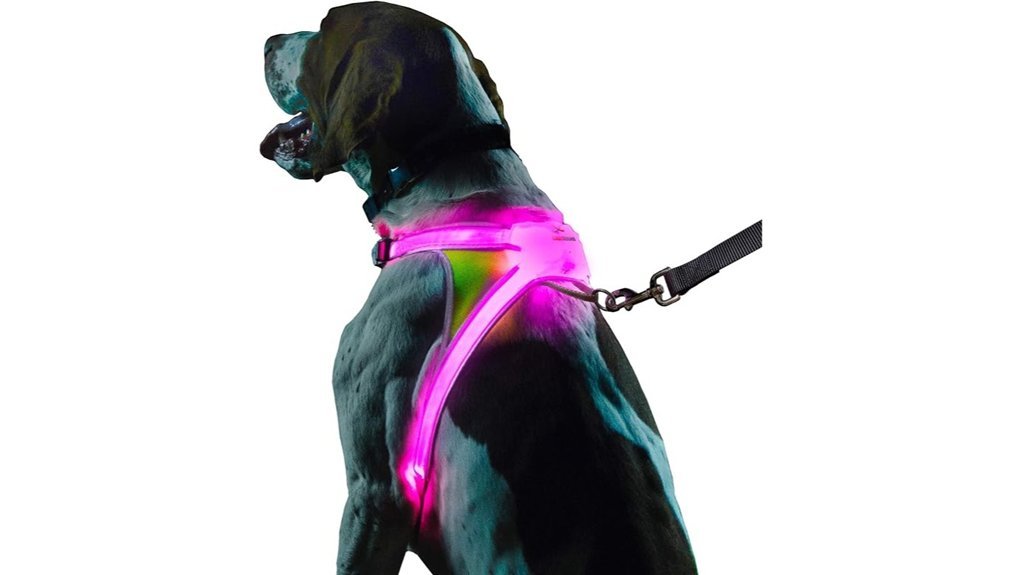
The Noxgear LightHound stands out primarily as a light-up dog harness for nighttime visibility. Its 360° illumination helps a dog remain visible from different directions, and the manufacturer currently states visibility of up to approximately 1/4 mile. It offers eight solid colors and six multicolor flashing modes, making it useful for evening walks, early-morning outings, and other low-light activities.
The harness uses durable Cordura fabric and has adjustable neck and chest areas to help create a secure fit. Its rechargeable battery provides up to about 12 hours of illumination. The light unit can be removed so the fabric harness can be machine washed according to the manufacturer’s care guidance.
Why You’ll Like It: It solves a specific problem that ordinary reflective harnesses cannot fully address: keeping your dog illuminated even when there is little external light to reflect.
Pros:
- 360° illumination improves visibility from multiple directions.
- Rechargeable lighting eliminates the need for disposable batteries during normal use.
- Adjustable construction helps accommodate different body shapes.
- Harness fabric can be machine washed after following the light-unit removal instructions.
Cons:
- The lighting system needs regular charging.
- The electronic light component requires more care than a basic fabric harness.
- It should not be treated as a certified automotive crash-restraint harness.
Voyager Step-in Air Dog Vest Harness – Large
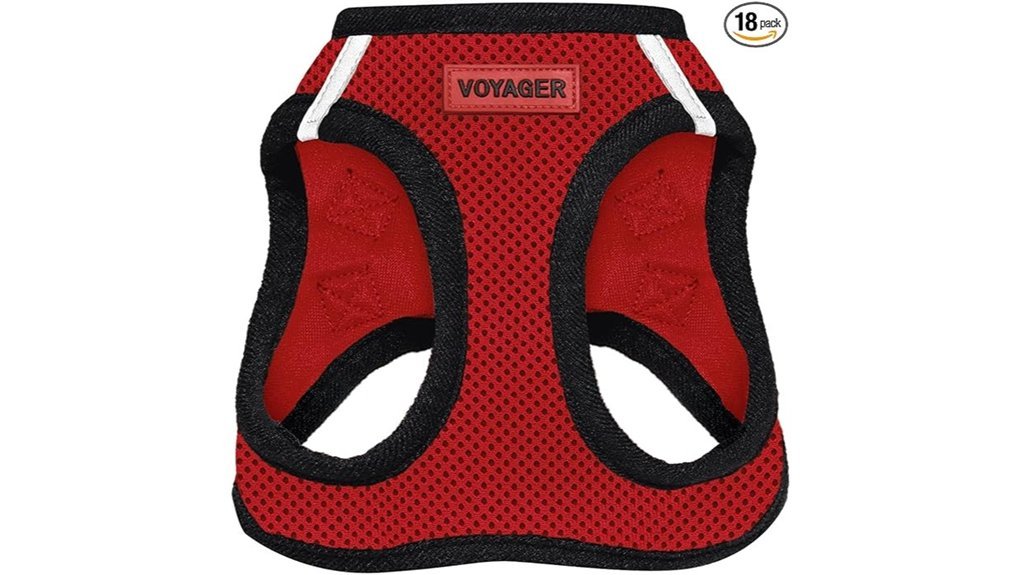
The Voyager Step-in Air Dog Vest Harness uses a soft, breathable air-mesh design intended for comfortable everyday walking. The listed Large variant is designed around chest measurement rather than large-breed classification, so owners should measure carefully instead of choosing by the word “Large” alone.
Two reflective bands improve visibility during early-morning and evening walks. The harness also combines a hook-and-loop fastener, buckle, and double D-rings. Its step-in design is especially convenient for pets that dislike having a harness pulled over their head.
Why You’ll Like It: It keeps the wearing process simple—your pet steps in, you secure the closures, and you attach the leash to the D-rings.
Pros:
- Soft breathable mesh suits routine walking in different seasons.
- Step-in design is quick and easy to put on.
- Reflective side bands improve low-light visibility.
- Multiple closure points help keep the harness properly secured when correctly fitted.
Cons:
- The “Large” size name does not mean it is intended for a large-breed dog.
- Accurate chest measurement is essential because sizing should not be chosen by breed or weight alone.
- It is an everyday walking harness, not a verified crash-protection restraint.
Authentic Puppia RiteFit Harness with Adjustable Neck, Red, Medium
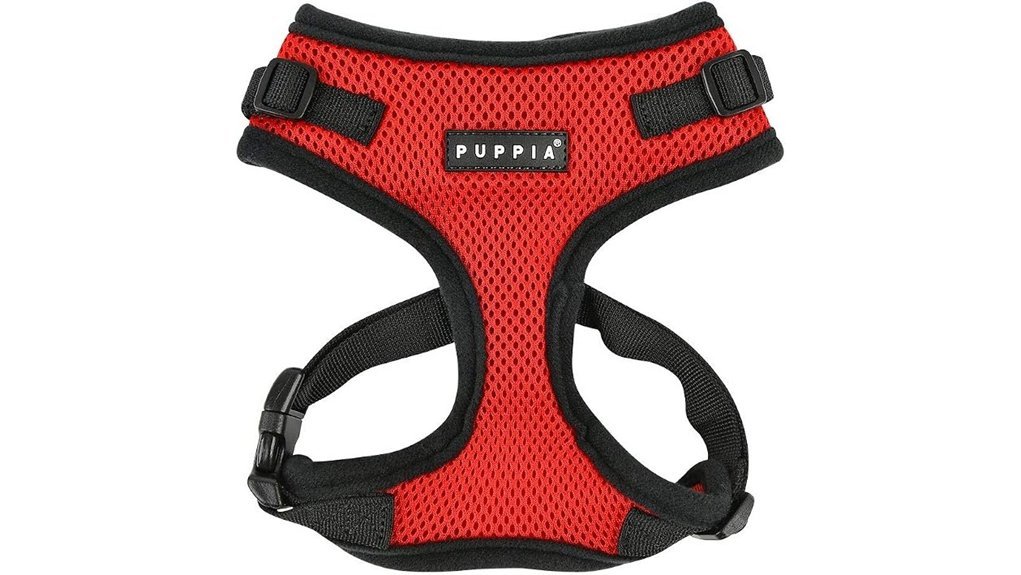
The Authentic Puppia RiteFit Harness is useful for dogs that fall between typical harness sizes. Its adjustable neck closure and adjustable chest belt provide more flexibility than a completely fixed vest-style fit.
The harness uses lightweight soft mesh to help keep everyday walks comfortable. Puppia currently offers the RiteFit in multiple sizes and colors, so owners can focus primarily on neck and chest measurements rather than being limited to the red version shown here.
Why You’ll Like It: The combination of neck and chest adjustment can make fitting easier for dogs whose proportions do not match a standard fixed-size harness.
Pros:
- Adjustable neck and chest areas provide greater fitting flexibility.
- Soft mesh construction is designed for comfortable everyday use.
- Available in multiple current color choices.
- A useful option for dogs that sit between standard sizes.
Cons:
- You still need accurate neck and chest measurements before ordering.
- The lightweight walking-oriented design may not suit owners looking for a substantial working-dog vest with a control handle.
- It should not be used as evidence of automotive crash protection.
Dogline Unimax Multi-Purpose Vest Harness for Dogs
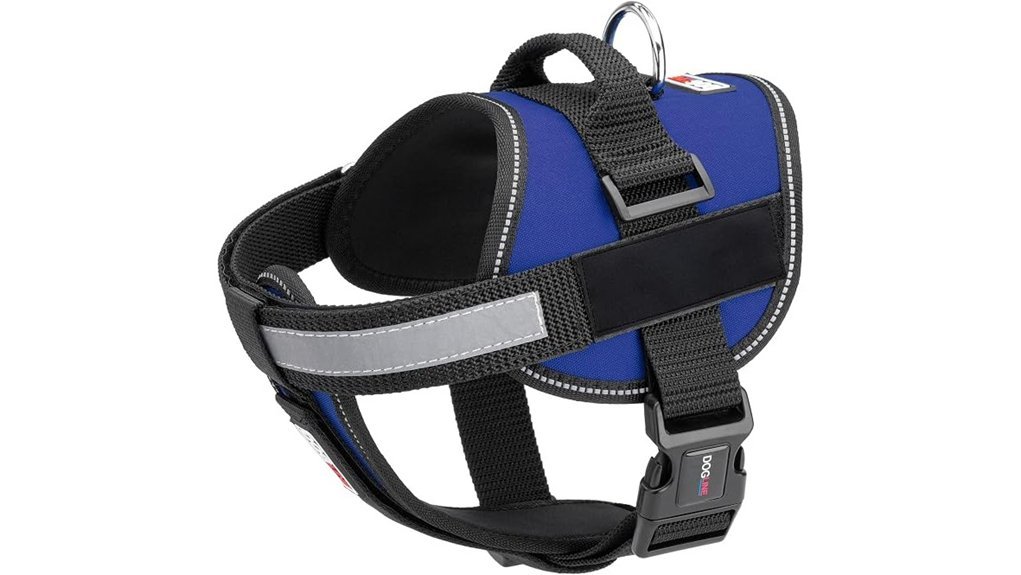
The Dogline Unimax Multi-Purpose Vest Harness takes a more substantial approach than the lightweight mesh options above. It uses durable, weather-resistant materials with padded neoprene lining and includes adjustable front and underbelly straps.
A removable chest plate, quick-release buckle, reflective trim, and built-in top handle make it useful for situations where owners want extra control. Dogline also markets the Unimax for several activities, including walking, training, working use, sport, and vehicle restraint.
Important distinction: A manufacturer’s vehicle-restraint use claim should not be confused with independent crash certification. If crash protection is your priority, use a restraint specifically certified for that purpose.
Why You’ll Like It: The handle and structured vest design can provide more hands-on control than a minimal everyday mesh harness.
Pros:
- Durable, weather-resistant construction suits active use.
- Padded neoprene lining adds comfort.
- Built-in handle provides an additional control point.
- Reflective trim improves visibility in lower-light conditions.
- Adjustable straps and removable chest plate add versatility.
Cons:
- The more structured design may feel bulkier than a lightweight step-in mesh harness.
- Proper girth measurement is still required to select the correct size.
- Vehicle-restraint marketing should not be interpreted as independent crash certification.
Factors to Consider When Choosing a Dog Harness in 2026
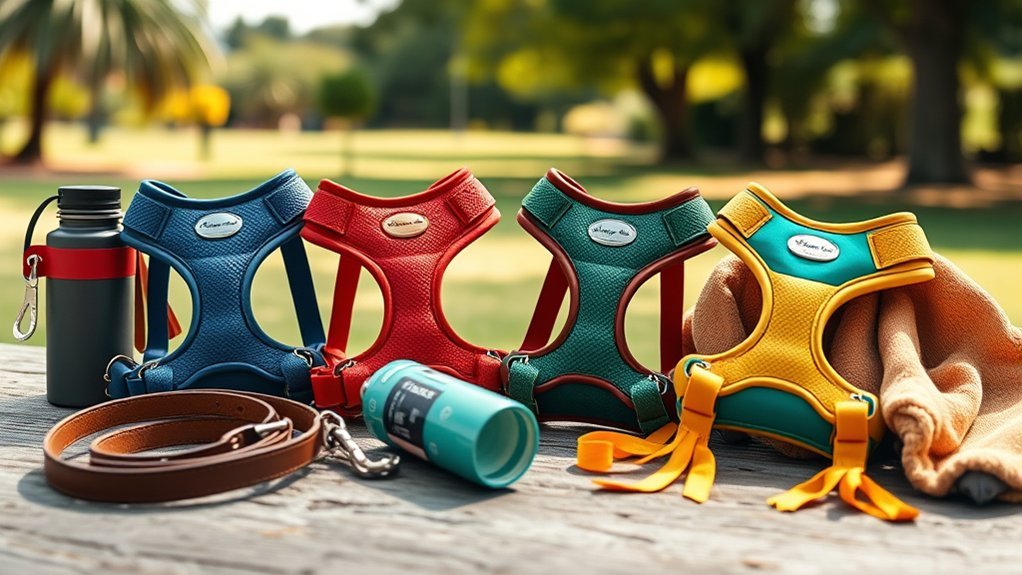
Choosing the right dog walking harness involves more than picking a size or color. Fit, comfort, leash attachment, visibility, durability, and ease of use all affect how practical the harness will be for you and your dog.
Harness Types Overview
Different harness styles solve different problems. Step-in harnesses are convenient for pets that dislike equipment going over their heads. Adjustable harnesses give you more control over neck and chest fit. Reflective or illuminated harnesses are useful for early-morning and nighttime walks. More structured multi-purpose vests may add a handle, removable panels, or extra adjustment for training and working use.
Walking Safety Features
For walking, look for secure buckles, strong leash attachment points, reflective material where useful, and a fit that reduces the chance of backing out. A handle can also help when you need closer control. Inspect the harness periodically for frayed webbing, damaged stitching, cracked buckles, or loose hardware.
Comfort and Fit
A comfortable dog harness should sit securely without restricting normal movement. Soft mesh can help with lightweight everyday use, while padded neoprene may feel better on a more structured vest. Adjustable neck and chest areas are especially useful when your dog falls between sizes or has unusual proportions.
The fit should be snug enough that your dog cannot easily slip out but should not pinch, rub, or interfere with breathing and shoulder movement. Check the fit again after your dog grows, gains or loses weight, or receives a major haircut.
Visibility and Reflectivity
Reflective strips help when external light such as headlights reaches the harness. An illuminated harness can provide active light even when little light is available to reflect. For example, Noxgear currently states that the LightHound provides 360° visibility up to approximately a quarter mile. Visibility equipment can make a dog easier to notice, but it does not replace a leash, attentive handling, or normal road-safety precautions.
Durability and Materials
Match construction to the way you plan to use the harness. Lightweight breathable mesh is convenient for normal neighborhood walks. More durable nylon or Cordura-based designs can make more sense for rougher outdoor use. Padded linings can reduce rubbing, while weather-resistant materials are useful when the harness will regularly encounter rain, mud, or wet grass.
Ease of Use
A harness that is difficult to put on often becomes frustrating for both owner and dog. Step-in designs can simplify the process, while quick-release buckles make removal easier. Adjustable models may take longer to set up initially but can provide a better fit once properly adjusted.
Size and Adjustability
Do not choose a harness solely by labels such as Small, Medium, or Large. Those labels vary widely between brands. Measure the chest girth at the widest area behind the front legs and measure the neck when the manufacturer requests it. Then compare those measurements directly with the specific product’s size chart.
A common comfort check is to make sure the harness is snug without digging into the body. Follow the individual manufacturer’s fitting instructions because different designs sit on different parts of the neck, chest, and shoulders.
Control and Handles
A built-in handle can be useful when you need to keep your dog close for a short period, help guide the dog through a crowded area, or provide additional control during training. However, a handle does not automatically make a harness suitable for lifting a dog unless the manufacturer specifically permits that use.
Car Travel Safety
A walking harness and a dog car safety harness serve different purposes. Some products may be marketed for vehicle restraint or distraction reduction, but that does not automatically establish crash protection. If you want a harness specifically for crash safety, look for independent testing or certification and use the restraint exactly as instructed.
For current independently certified options, you can review the Center for Pet Safety certified product list.
Before You Buy: Quick Checklist
- Measure your dog’s chest and neck where required.
- Check the manufacturer’s exact size chart instead of relying on breed.
- Decide whether visibility, lightweight comfort, adjustability, or extra control is your main priority.
- Check how the harness attaches to the leash.
- Review washing and drying instructions before cleaning.
- Inspect buckles, stitching, webbing, and D-rings regularly.
- Use a dedicated certified restraint if automotive crash protection is the goal.
Frequently Asked Questions
How Do I Measure My Dog for a Harness?
Use a flexible tape measure around the widest part of your dog’s chest, usually just behind the front legs. Measure the neck as well if the manufacturer’s size chart requires it. Compare the numbers with that specific harness’s chart rather than choosing a size based only on breed, body weight, or your dog’s usual clothing size.
Can Harnesses Be Used for Training Purposes?
Yes. A properly fitted harness can give you useful control during training and walking. However, an ordinary harness does not automatically stop pulling. Leash skills, reinforcement, and consistent training are still important, and owners seeking a dedicated no-pull design should choose a harness specifically made for that purpose.
Are There Harnesses Specifically for Small Breeds?
Yes. Many harnesses are made in very small sizes, and products such as the Voyager Step-in Air are specifically aimed at cats and smaller dogs. Always use actual chest and neck measurements because two dogs of the same breed can require different sizes.
How Do I Clean My Dog’s Harness?
Follow the care instructions for the specific harness. Cleaning requirements differ between models. Some fabric harnesses can be machine washed, while others recommend hand washing or a delicate cycle. Electronic components such as a removable light module may need to be removed first. Air drying is generally safer when the manufacturer recommends it.
Can These Harnesses Be Used in a Car?
Do not assume that a walking harness provides crash protection. Dogline markets the Unimax for vehicle restraint, but a manufacturer use claim is different from independent crash certification. For crash protection, select a dedicated independently certified automotive restraint and follow its installation instructions.
What Materials Are Best for Dog Harnesses?
The best material depends on the activity. Breathable mesh works well for lightweight everyday walking, while strong nylon or Cordura-style fabrics can better suit rougher outdoor use. Padded neoprene can improve comfort on structured harnesses, and reflective materials are useful when low-light visibility matters.
Conclusion
The best dog harness depends on the problem you need to solve. Choose the Noxgear LightHound when nighttime visibility is the priority. The Voyager Step-in Air is a practical choice for small pets that benefit from a lightweight step-in design. The Puppia RiteFit makes sense when neck and chest adjustability are especially important, while the Dogline Unimax offers a more structured design with a built-in handle for training, working, and active use.
Whichever model you choose, measure your dog carefully and check the fit regularly. For car travel, keep walking comfort and crash protection separate: use a dedicated independently certified restraint when automotive safety is the priority.