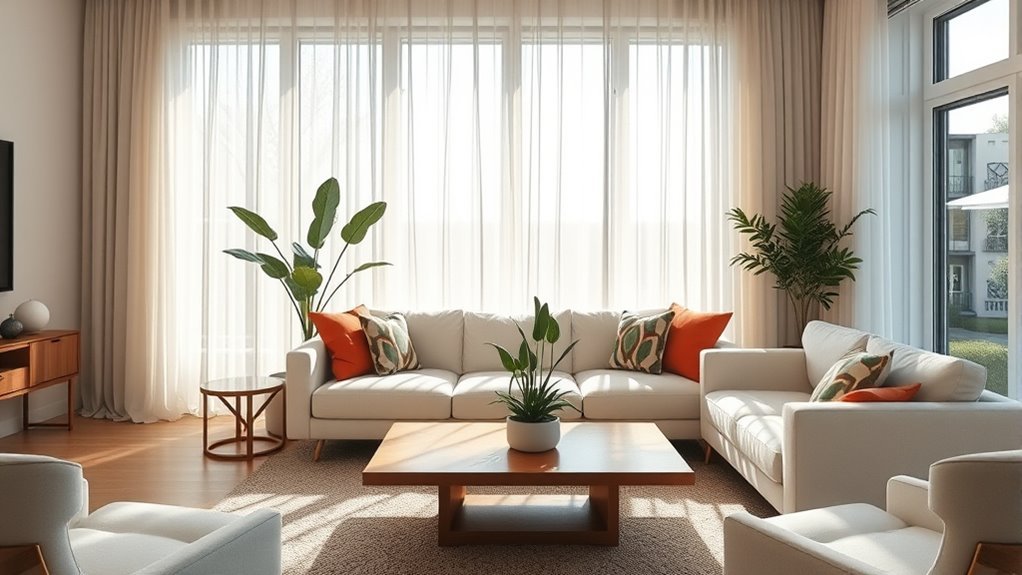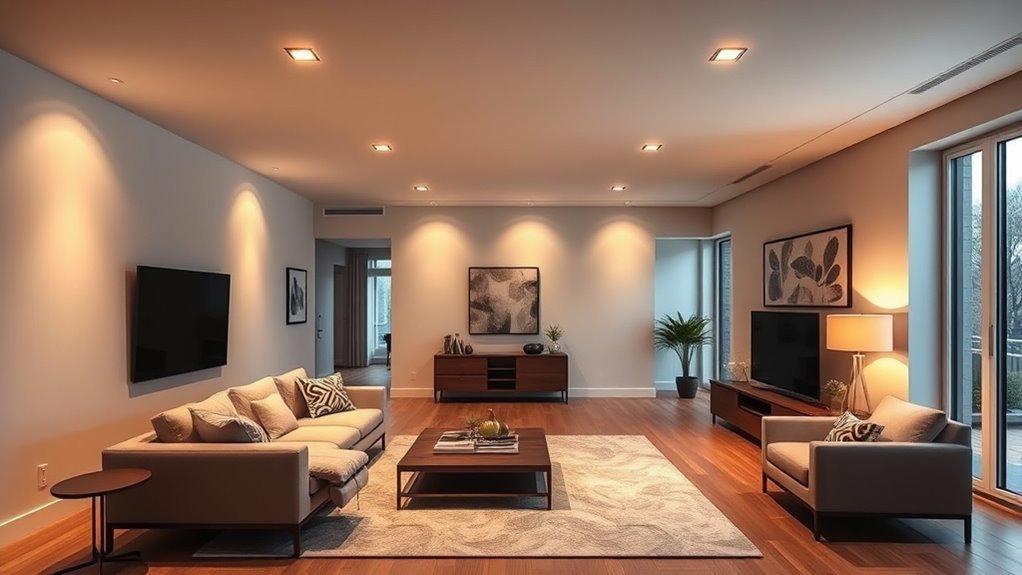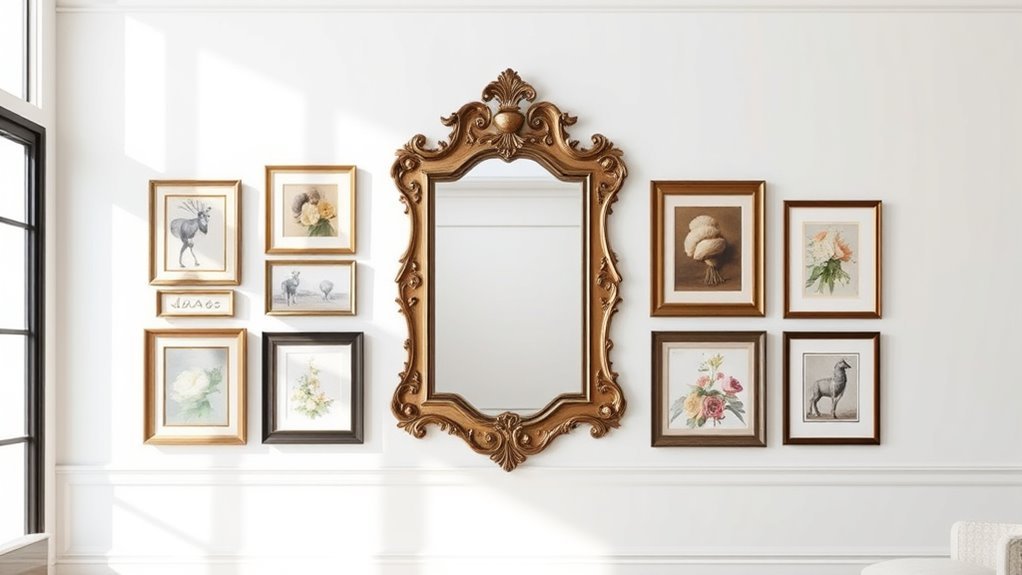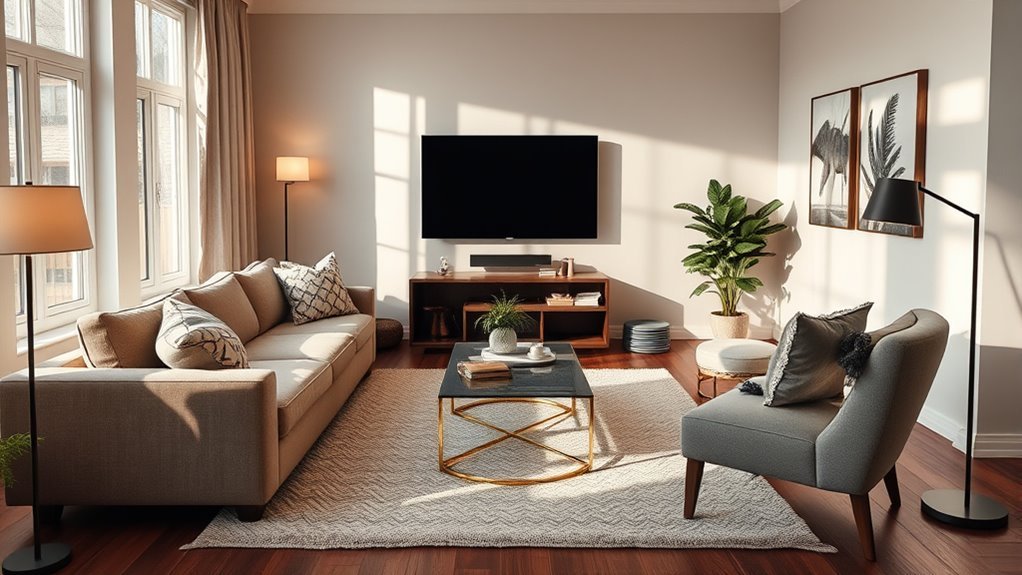
A living room can feel awkward fast when the TV, sofa, and walkways compete for space. Start by treating the TV as your main focal point, then place seating where people can watch comfortably and still talk with ease. Use clear pathways, balanced spacing, area rugs, and personal decor to create a room that works for movie nights, reading, and everyday relaxing.
Quick Answer
Arrange your living room furniture around the TV by placing the screen across from the main sofa and keeping the TV near eye level. Set seats close enough for easy viewing, but angle chairs so the room still supports conversation. Leave clear walking paths and use rugs, tables, and lighting to define each zone.
Key Takeaways
- Place the TV where the main seating area has a clear, comfortable view.
- Keep seats close enough for conversation while maintaining good screen distance.
- Leave open pathways so people can move through the room without squeezing past furniture.
- Use rugs, lamps, and accent pieces to define separate activity zones.
- Mount or place the TV at seated eye level to reduce neck strain.
Identify Your Living Room’s Focal Point and Layout
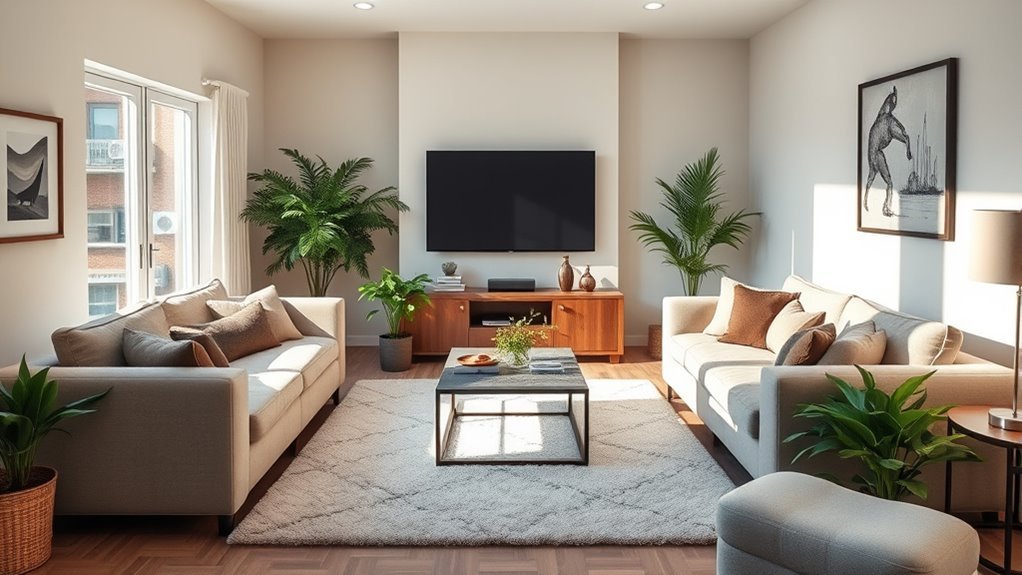
When you arrange your living room, first choose the main focal point. In many homes, the TV fills that role, but a fireplace, large window, or built-in shelves may also draw attention.
Measure your room before you move furniture. Common living room sizes, such as 12 by 16 feet or 15 by 15 feet, give you enough room for a sofa, chairs, tables, and clear paths when you plan the layout with care.
Place the TV where your main seating area can face it without glare from windows. If your room has more than one focal point, angle furniture so the layout supports both screen time and conversation.
Choose a Furniture Arrangement for Better TV Viewing
For comfortable TV viewing, match your seating distance to the size of the screen. Put your main sofa where it faces the TV directly, then angle side chairs slightly inward so guests can talk without blocking the view. Keep the TV at a height that lets viewers look straight ahead instead of tilting their necks.
Recommended Products

[Securely supports TVs up to 70''] The full motion TV wall mount fits most 32''-70'' flat and curved TVs with VESA patterns 75x75 to 400x400mm. Designed for installation on 8”/12”/16” wood studs, concrete, and brick walls. Please make sure that the above conditions are met before using it.

Universal Design: This full motion TV mount fits for most of 42-90 inch TVs up to 132lbs with VESA size 200*100mm to 600*400mm available and max 16" Wood Stud space. Not perfect fit your TV? Please contact us and we'll do our best to solve the problem for you! If you need the screw M8*50, please message us to get it which be sent from USA.

Universal TV Mount - This full motion TV mount fits most 26-60 inch TVs with vesa patterns range from 100x100mm(4x4”) to 400x400mm(16x16”) and holds up to 77 lbs./35kg. Please check TV weight, size, vesa, and input access before purchase.
Ideal Viewing Distance
The right viewing distance helps you watch TV without eye strain. As a general guide, place seating about 1.5 to 2.5 times the diagonal screen size from the TV.
| TV Size | Ideal Viewing Distance |
|---|---|
| 32″ | 4 – 6.5 feet |
| 50″ | 6 – 10 feet |
| 55″ | 6.5 – 11.5 feet |
| 65″ | 8 – 13.5 feet |
| 75″ | 9.5 – 15.5 feet |
Make sure each seat has a clear sight line to the screen. Test the layout from every chair before you settle on the final arrangement.
Focal Point Considerations
Place the TV across from the main seating area to create a natural viewing zone. This simple choice makes the room feel organized and easy to use.
Avoid placing the TV directly opposite bright windows, since glare can make the screen hard to see. If you can’t move the TV, use curtains, shades, or an adjustable mount to control light and viewing angles.
Mount the TV near seated eye level when possible. For many rooms, that means the center of the screen sits roughly 42 to 48 inches from the floor, but your sofa height should guide the final position.
Seating Arrangement Tips
Place the main sofa where it faces the TV first, then build the rest of the seating around it. Add chairs at a slight angle to create a more social layout.
Leave about 18 inches between the coffee table and the sofa so people can reach drinks and snacks without crowding their knees. Keep side tables within easy reach of seats, especially near reading chairs and recliners.
Pro tip: Use painter’s tape on the floor to test sofa, table, and TV placement before you move heavy furniture.
Optimize Seating for Comfort and Conversation
A good TV layout should still make guests feel welcome. Arrange seats close enough for easy conversation, then keep the screen visible from the main spots in the room.
Mix sofas, chairs, ottomans, and benches when your space allows it. Different seating types help the room serve family time, entertaining, and quiet nights at home.
Recommended Products

3 Piece Sofa Set Combination: You will get a 3-seat sofa, a loveseat, and a ottoman chaise. The living room furniture set includes a movable, storage-equipped ottoman that can be freely repositioned to serve as a chaise lounge. Both sofas feature side storage pockets for holding remote controls, books, and other small items. The storage ottoman is very convenient for storing throw pillows, blankets, etc., allowing you to access them anytime.

Delivered in 3 Separate Packages: Considering the large volume of product packaging, in order to meet practical needs and facilitate transportation, this 4-seater L-shaped couch will be divided into 3 separate packages for delivery, so they may not arrive at the same time. Package 1: one single sofa and one ottoman. Package 2: 2 single sofas and 2 throw pillows. Package 3: left and right armrests for the couch

Product Dimensions: 18.90"L x 16.73"W x 31.10"H; Seat Dimensions: 15.75"SD x 16.73"W x 17.32"H; Backrest Height: 14.57"H; Weight: 9.26 LBS.
Arrange for Easy Movement
Traffic flow matters as much as screen placement. People should be able to walk from the entry to the sofa, coffee table, and other rooms without stepping around clutter.
- Keep clear walking paths between doorways, seating, and major furniture pieces.
- Leave enough space around the coffee table so guests can move safely.
- Place side tables close to seats so people can reach drinks without standing up.
Prioritize Conversation Areas
Arrange sofas and chairs so they face each other instead of forming a strict theater row. This layout keeps the TV useful without making every seat feel disconnected.
Keep conversation seats within about 5 to 8 feet of one another when the room allows it. In larger spaces, create more than one seating group so small groups can talk with ease.
| Tips for Conversation Areas | Details |
|---|---|
| Seating Arrangement | Face sofas and chairs toward each other |
| Pathways | Keep routes open for natural movement |
| Side Tables | Place them within arm’s reach |
| Multiple Zones | Create separate areas for larger rooms |
Ensure Comfortable Seating Heights
Seat height affects comfort more than many people expect. Most sofas and chairs work well when the seat sits about 17 to 19 inches from the floor.
- Match table height: Choose coffee and side tables that sit close to the height of nearby seats.
- Protect legroom: Keep about 18 inches between the coffee table and seating.
- Align the screen: Place the TV near seated eye level to support relaxed viewing.
Create Functional Zones for Different Activities
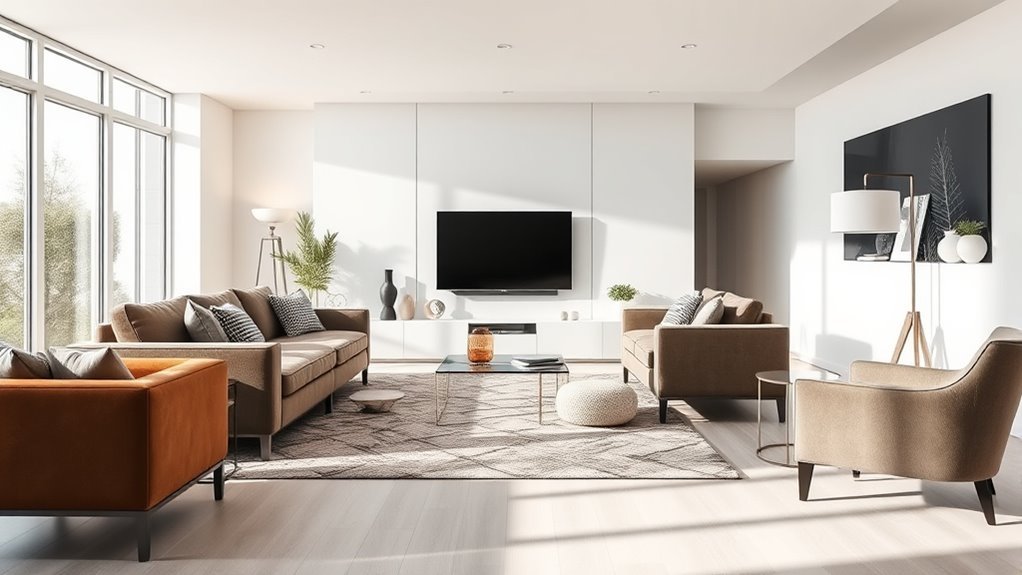
Your living room may need to support more than TV viewing. It might also serve as a reading spot, play area, work corner, or place to host guests.
Use area rugs, lamps, and furniture placement to mark each zone without adding walls. This approach keeps the room open while making each area feel intentional.
Here’s a simple guide:
| Zone | Suggestions |
|---|---|
| TV Viewing | Arrange seating so it faces the screen |
| Reading Nook | Add a comfortable chair and lamp |
| Socializing Area | Place chairs or a sofa facing each other |
| Multi-functional | Use ottomans or convertible sofas |
Choose multi-use pieces when space feels tight. Storage ottomans, nesting tables, and slim consoles add function without crowding the room.
Recommended Products

Heavy-Duty Support: Built with thick MDF panels for strong structural support, this storage ottoman bench holds up to 660 lbs. The cushioned top features high-density foam and breathable linen fabric, providing a comfortable seating experience

Spacious Hidden Storage: This square coffee table comes from our LIRY Collection—cleverly conceals a 56-gallon storage compartment underneath to neatly stow away your blankets, pillows, and books, promoting your living room tidy and organized

【QUICK ASSEMBLY, EASY FOLDAWAY】This storage ottoman from the SONGMICS MAZIE Collection has a foldable design that allows quick setup in seconds by simply inserting the bottom panel. Easily fold and store it under the bed or in a closet when not in use
Evaluate Room Size and Traffic Patterns
Room size shapes every furniture choice. A compact living room needs fewer pieces and lighter visual weight, while a larger room can handle sectionals, accent chairs, and multiple zones.
Effective furniture placement starts with room measurements, clear walking paths, and a focal point that anchors the layout.
- Measure the room: Note wall lengths, window placement, door swings, and outlets before you choose a layout.
- Map traffic flow: Keep clear paths between entries, seating, and shared spaces.
- Place large pieces first: Use sofas, sectionals, and media units to define each functional zone.
Scale also affects how balanced the room feels. Large furniture can overwhelm a small room, while tiny pieces can make a big room feel scattered.
Avoid Common TV Layout Mistakes
Many living rooms feel uncomfortable because one piece sits in the wrong place. A TV mounted too high, a sofa pushed too far away, or a blocked walkway can make the whole room harder to use.
Avoid placing every seat in a straight line unless you want a theater-style setup. For most homes, a softer U-shape or L-shape gives you better balance between watching TV and talking.
Note: The best layout depends on your room shape, window placement, and how your household uses the space.
Personalize Your Living Room With Thoughtful Accessories and Decor Choices
A strong layout creates function, but decor gives the room its personality. Use photos, books, art, plants, and souvenirs to make the space feel like yours.
Layer soft textures through pillows, throws, and rugs to add warmth. Repeat a few colors or materials across the room so the design feels connected rather than random.
| Element | Purpose | Tips |
|---|---|---|
| Personal Items | Reflect your style | Choose meaningful pieces |
| Decorative Accessories | Add character | Mix useful and decorative items |
| Textures and Colors | Create warmth | Use varied materials |
Refresh small decor pieces when your taste changes. Swapping pillows, lampshades, or art can update the room without moving major furniture.
Frequently Asked Questions
What Is the 2/3 Rule Furniture?
The 2/3 rule suggests that a main furniture piece should take up about two-thirds of the wall or item it relates to. For example, a sofa often looks balanced when it spans about two-thirds of the wall behind it. A media console also tends to look best when it extends beyond the TV width.
Is There a Free App That Can Help Me Rearrange My Room?
Yes, free room-planning apps can help you test furniture layouts before you move anything. Apps such as Room Planner and Homestyler let you create a room plan, place furniture, and compare different arrangements. Always measure your real room first so the digital layout matches your space.
What Is the 4 Inch Rule for Seating in a Living Room?
The 4-inch rule means nearby seat heights should stay within about 4 inches of one another. This keeps chairs, sofas, and ottomans feeling visually balanced. It also helps guests move between seats without a sharp change in comfort.
What Are the Four Rules in Furniture Arrangement?
The four core rules are to choose a focal point, create conversation areas, protect clear pathways, and match furniture scale to the room. These rules help the layout feel comfortable and easy to use. Start with the focal point, then adjust seating and tables around it.
Should a Sofa Always Face the TV?
Your sofa does not always need to face the TV straight on. In rooms used for both watching and entertaining, you can angle the sofa or add side chairs to support conversation. The main goal is to keep the primary seats comfortable for viewing.
How Do You Arrange a Small Living Room With a TV?
In a small living room, use fewer furniture pieces and choose slim tables, wall-mounted shelves, or storage ottomans. Place the sofa across from the TV if possible, then keep chairs light and easy to move. Use one rug to anchor the seating area without dividing the room too much.
Conclusion
The best TV-centered living room gives you a clear view, comfortable seating, and enough open space to move easily. Start with the TV and main sofa, then build conversation areas, pathways, and activity zones around them. Add personal decor last so the room feels warm without becoming cluttered. With a thoughtful layout, your living room can support movie nights, quiet mornings, and relaxed time with guests.